

Daniel 5 - A Warning to America
Given on
Given in
Downloads
Downloads
To download a file, right-click (or long press) a link above and choose Save As.
Daniel 5 discusses the last hours of the mighty Babylonian Empire, one of the greatest empires of all time. In that story is a solemn warning for America, also one of the greatest empires of all time. What is that warning and what and what can we, as Christians, do to prepare ourselves for the End of the Age.
Transcript
This transcript was generated by AI and may contain errors. It is provided to assist those who may not be able to listen to the message.
We want to go back to the book of Daniel. A little bit of review before we go into Daniel chapter 5. We're going to take a look at the last half of Daniel chapter 5 at the last few hours of the Babylonian Empire, one of the great empires the world has ever seen.
We're going to see from a biblical perspective the very last few hours of that empire. We know as a matter of history that that empire came to an end on October 12th, 539 BC. Now, as it turns out, one of the members in the Chicago church gave me a Holy Day calculator. I don't know how far into the BC years I can go or how far into the future I can go with that calendar.
But when I looked at the date, October 12th, that had a certain ring to it. As it turns out, the fall of the Babylonian Empire took place on the third day of the Feast of Tabernacles on 539 BC. Interesting. Three is one of the Bible's numbers for finishing things, completeness. It's also a number of years when God has mighty interventions. So interesting that that took place on the third day of the Feast of Tabernacles on 539 BC. At this point, in chapter 5 of Daniel, Daniel is now in his early 80s. He's now in his early 80s. King Cyrus II of Persia is now taken over the rule of that kingdom, the kingdom of the Medes and Persians.
They are gobbling up all sorts of territory all around them. What remains is the gem in the eyes of so many, the eyes of the world, and that's Babylonia. So he set his eyes, he set his heart to conquer Babylon. But as we take a look today, brethren, at chapter 5 of Daniel, as we take a look at the very quick exit from history of the Babylonian Empire. I want to make a parallel with another mighty empire. Some people would say it's the most, it's the mightiest empire the world has ever seen, and that is the American Empire, because we also will go very quickly.
Going back to Babylon, it didn't seem possible that this empire was going to come to such a sudden end. Like Rome, it was at the height of its power. It was the most important trade center, a great cultural center, a great tourism center in the world. It was renowned for its hanging gardens of remarkable works. It was an enormous city, tremendous fortifications, one of the best armies in the world. They certainly were ready for any kind of a siege.
Back in those days, siege warfare was something that was fairly prominent. They had several years worth of materials in terms of food to eat. Right through the heart of town, they had the mighty Euphrates River, one of the world's great rivers, going right through the heart of town. They had a tremendous water supply. I've given you these numbers, I think the last time we were going through Daniel, but just as a matter of repeating for emphasis.
If you were going to take on Babylon, and you were going to try to conquer Babylon, you had a city that was roughly two-thirds of the size of the city of New York City today. You had a city that had three walls surrounding it. The first wall was 22 feet thick. Then you had a space of about 40 feet. And then another wall 25 feet thick. So if you were able to breach the first wall, there was a kill zone in there of about 40 feet where they would be able to shoot arrows, throw spears, boulders, boiling oil, water, whatever, to hurt you.
If you got through that wall, there was another wall, and that wall was 12 feet thick. Now these walls were 90 feet high, nine stories. There were a number of towers on those walls, 360 to be exact. And on top of the walls, you could write a chariot to abreast. It was something. People thought this will never end, and yet it did. People may think America will never end, but it will.
And we're going to take a good look at not Daniel chapter 5, but another chapter in the book of Ezekiel that will show us just that. So there's a tremendous warning here for America as we take a look at Babylon. There's a warning here for us as Christians as well. Take heed, lest you fall. And of course our sermonette today about humility fits right in. Fits right in. Let me give you a little bit of a summary of what we've already covered in Daniel chapter 5.
We've covered the first 17 verses. We'll start in verse 18, as we did in the sermonette, or we covered in the sermonette today. But in the first 17 verses, verse 1 of Daniel chapter 5, we see where the king in a show of bravado, in a show of what he felt was security, has this tremendous party for many of the people who run his realm.
Now the Syrian army, Cyrus' army I should say, it was right outside the board, right outside the walls. And so he thought, well, to help people to enjoy what we have here, to show them the words of no danger, we're going to have this tremendous party. So it was a false sense of bravado.
Verses 2 through 4, we see how that king, Belshazzar, not a humble king, and as the sermonette was pointing out, he's going to pay for his lack of humility that evening by dying. But he was mocking the great god. Brethren, do we have a false sense of security in this country with our tremendous, you know, the fact that we've got two huge oceans on either side of us. We've got relatively friendly borders to the north and south of us. We've got the most vaunted military the world has ever seen. We have guns and butter. I mean, are we much like Babylon? I think that we are. In verses 5 through 16, we see the handwriting on the wall. And again, from a political perspective, from a historical perspective, do we in America see the handwriting on the wall? And that's the last part of what we covered last time, starting in verse 17. We're going to see where Babylon's fate is sealed. Of course, the same is true with our country if we don't come to national repentance. So that being the case, having gone through all of that, let's turn over to Daniel chapter 5.
Daniel chapter 5. By the way, I brought my phone with me. I didn't bring my phone with me. I was telling the folks this last week in Chicago. I did a very bad job of this last week in Chicago. I kept on talking about my phone. I didn't need a repair. My watch needs repair. And they won't get that back to me for maybe as much as six weeks. They've got to order parts and this and that and the other. And Swiss Army watch, they're not that common. So I've got to use this as a timepiece. I'm not going to use this to call an order of pizza or get us ready for the hungry dog or anything like that or the hungry badger or thirsty badger, whatever that badger is. Hungry or thirsty or both. But I'm using it as a timepiece. Okay.
Daniel chapter 5. Let's break in here to verse 18.
It says, O King, the Most High God gave Nebuchadnezzar. The Most High God gave Nebuchadnezzar.
We made mention this is one of the great themes of the book of Daniel.
God gave this king what he had. The Most High God gave Nebuchadnezzar, your father, a kingdom and majesty, glory, and honor. All of that came from God.
It's not to say that Nebuchadnezzar wasn't bright, wasn't shrewd, wasn't a cunning man because he was all of those things, but he wouldn't have had any of that had God not given it to him.
Verse 19. Because of the majesty that he gave him, again God gave him, all peoples, nations, and languages, trembled and feared before him. Whomever he wished, he executed. Whomever he wished, he kept alive. Whomever he wished, he set up. Whomever he wished, he put down.
Notice something, brethren. When God gives a king authority, then God turns it over to that king.
It's not to say God can't intervene because God has and will, but God's making a statement here in verse 19. People want kings. They want human rulers. Much better to have God as our ruler.
But if people want fallible kings, they're going to get fallible in flawed and faulty rulership. And we have labored with that since the time of Adam and Eve.
Verse 20. But his heart was lifted up, and his spirit was hardened in pride.
He was the post from his kingly throne, and they took his glory from him.
Again, going back to what we heard earlier in the sermon at.
Verse 21. Then he was driven from the sons of men. His heart was made like the beast. His dwelling was with the wild donkeys. They fed him with grass like oxen. His body was wet with the dew of heaven till he knew the most high God rules in the kingdom of men, and appoints over it whomever he chooses. And again, this is the theme, one of the great themes of the book of Daniel. God makes and un-makes kings. Verse 22. But you his son, Belshazzar, have not humbled your heart, although you knew this. Although you knew this.
In the Old Testament, which was largely written in Hebrew, there are different languages of play in this book, but in the Jewish mind, when you know something, you're supposed to do it. When you know the right, you're supposed to do the right.
And so here we see where it says Belshazzar, he knew what is, in this case, it says, in talking about Nebuchadnezzar, probably was his grandfather.
He was, you know, Belshazzar was not humbling himself, and he's going to pay a price.
Notice the severity of that. Notice the power of that. And that God who holds your breath in his hand and owns all your ways, you have not glorified. Once again, kudos to the sermonette fellow. You know, he very well is bringing forward the point I'm wanting to bring forward as well.
So here we've got a world ruler who was disregarding God, disrespecting God, and God is not going to just allow this to continue to go on.
Now, brethren, I want to put a marker here, and Daniel, and let's go over. There's a couple of concepts I want to, and I've discussed this with you in time has passed, but I want to go through this again, because we're going to see this, and this plays into a discussion about our nation today. Let's go over to the book of Genesis. There's one concept here in Genesis chapter 15 you want to take note of.
Genesis chapter 15 and verse 16.
But in the fourth generation they shall return here, for the iniquity of the Amorites is not yet complete. The iniquity of the Amorites is not yet complete. Concept number one, God gives us time to repent. God gives us time to repent. Mr. Bratton-Sebek read to us, Daniel chapter 4 and verse 29, God gave Nebuchadnezzar one full year, 12 months, to think about what he had just heard, what Nebuchadnezzar had just heard. So God gives us time to repent. God gives Babylon a time to repent. God gives America a time to repent. That's concept number one. Let's go over to Hebrews chapter 12 now and see concept number two, which we want to put together because this also plays on what I want to discuss with you regarding the prophecies about the end of our age in Ezekiel chapter 7. Hebrews chapter 12 verse 16 and 17. Hebrews 12 verses 16 and 17.
Lest there be any fornicator or profane person like Esau, who for one morsel of food sold his birthright. Esau didn't have a sense of value. He disregarded something that was truly very, very valuable. He was thinking about the moment. He was thinking about his physical needs.
He was being short-sighted. Like Esau, who for one morsel of food sold his birthright.
For you know that after it when he wanted to inherit the blessing.
Now later on in Esau's life he came to see his great mistake. It says here, in the middle of verse 17, he was rejected for he found no place for repentance, though he sought it diligently with tears. So are we saying here that God simply won't let the poor man repent? Is that what this is talking about? The answer to that is no. That's not what this verse is talking about. What this verse is talking about is Esau, as we saw in verse 16, didn't have regard for his birthright. And brethren, quite frankly, as I take a look at our national news, I don't think a lot of our younger Americans have regard for what we have as a nation.
But Esau made a decision. He made a bad decision. Bad decisions have bad consequences.
There came a time where he saw that he had made a bad decision. He was living through the bad consequences, and he wished he could unring the bell. But that can't be done. When it says there there was no place found repentance, he couldn't undo what he had done. Even though he was crying about it and probably crying out to God, he had made a decision. And things, you know, because he had made a certain decision, that's the way things were going to be.
So the second concept to remember, there comes a time when time is up. When time is up. There came a time when Noah closed the door of the ark. There's coming a time when Jesus Christ is going to return. There are certain times where God gives us plenty of rope. Then there comes a point where God says, enough is enough. The times of the Amorites will be full. The days of America's sins will be full. And then God says, he will act. He will strike. Okay, let's go back now to Daniel chapter 5. Daniel chapter 5. I think we were finished verse 23. Let's go to verse 24.
Then the fingers, if you probably have a little number next to that word, you have a center reference in your Bible. It will say palm, which is a better translation, because the whole hand was being seen here. Not just fingers. The whole hand was being seen here.
Then the palm of the hand was sent from God. This writing was written.
And this is the inscription that was written. Verse 25. Many, many, tekel, you farson.
Verse 26. This is the interpretation of each word. Many. God has numbered your kingdom and finished it. Or another way of saying this. Your days are numbered, and the days have come to an end.
Verse 27. Tekel, you've been weighed in the balances and found wanting.
True for Babylon, going to be true for United States of America. Verse 28. Verez, your kingdom has been divided and given to the Medes and Persians.
So here we see where they are going to lose the kingdom. As prophecy shows, we are going to lose this nation. There's going to be a wailing and a gnashing of teeth. Like, it's unimaginable.
Verse 29. Then Belshazzar gave the command, and they clothed Daniel with purple and put a chain of gold around his neck and made a proclamation concerning him that he should be the third ruler in the kingdom. So typical of human beings. Perhaps he is grasping at straws here.
Perhaps being superstitious that maybe he can placate Daniel's God by honoring Daniel.
That's not going to work. That doesn't go anywhere with the great God.
Verse 30 and 31. That very night Belshazzar, king of the Chaldeans, was slain.
Arcan back to our sermonette today. He wasn't humble. He paid a price.
Darius the Mede, or Darius the Mede, depending upon how you want to pronounce that, received the kingdom being about 62 years old. So how did this mighty city fall? I'm sure most of you remember the story here. Let me quote the historian Herodotus. Herodotus writes this, The Persians entered, they diverted the Euphrates to some degree, they entered this stream which had now sunk so as to reach midway up a man's thigh and thus got into the town. But as it was, the Persians came upon them by surprise and took the city, owing to the vast size of the place, the inhabitants of the central parts, didn't know what was taking place. As one part of the city was being captured, the other part of the city had no clue what was going on.
They were engaged in festival, put on by the king. They continued their dancing and reveling until their captivity came. The city was taken without resistance, Herodotus says. The city was taken without resistance. I want you to keep that thought in mind because we're going to take a look at a prophecy in just a few moments where it appears that with all of our abounded technology and military might, that this nation also may go down with very little fight.
If you would turn over now to the book of Ezekiel, because there is a tremendous lesson for us, a warning for us, not that Daniel chapter 5 specifically and explicitly talks about the United States of America. It does not. But as we take a look at Babylon, God wants us to learn from history. If we take a look at Babylon and what happened to Babylon, there's so many lessons for us as a nation and us as individuals to learn. Brethren, when you studied history, and I'm talking to an older group here for the most part. You know, we've got the little Jacob who's really young. But for the most part, the time when you and I went through junior high and high school, we actually learned history. We actually had civics classes. We know the country is supposed to function. Today, I don't think they even go through that very much anymore. But we learned that in World War I and World War II, God intervened on our behalf, and we were able to defeat the enemy. In World War II, for example, early, very early on, we were able to break both the Japanese and the German codes. They never knew we had broken the codes. And even after we had broke the codes, we couldn't always use the information because we used it every time. They would be wise to it. So we had to pick and choose which battles we were going to really be up for and which battles we would just allow to take place as they normally would. And that, of course, you had to have the wisdom of Solomon to plan those kinds of things.
So God intervened in World Wars I and II to come to our aid. But, brethren, in World War III, God is going to intervene to help our enemies. God is going to intervene to help our enemies because we also need to be spanked. We also need to learn some of the very same lessons that Babylon had never learned. As I was thinking about this material, I was looking at Babylon and America and looking at some of the parallels. Both Babylon and America were or are considered one of the great empires of their times. Both were or are very prosperous. Both had or have vaunted militaries the best there were. Both feel or felt they were unconquerable. Both were or are arrogant in their own eyes and both disrespected and disregarded the true God. A lot of parallels there. I'm sure there can be more. Remember our two concepts. God gives time to repent, but there comes a time when time is up. Now, having said that, we're over here in Ezekiel 7. We're going to look at the downfall of our nation. We're going to take a look at modern-day Israel.
The background to Ezekiel 7 is emphasizing a very special point. The point that is being emphasized in Ezekiel 7 is that because people have refused to come to know God properly by following Him, by following His will, they are going to be able to know God in a whole different way. People are going to be able to know God through His severe judgment. Let's take a look at that. We're going to skip around a little bit in chapter 7 just to make this point. Chapter 7 verse 4.
My eye will not spare you, nor will I have pity, but I'll repay your ways and your abominations will be in your midst. Then you shall know that I am the Lord. Then you shall know.
We drop down to verse 9. My eye will not spare, nor will I have pity. I will repay you according to your ways and your abominations will be in your midst. Then you shall know that I am the Lord who strikes. In the very last verse of the chapter, verse 27, the king will mourn, the prince will be clothed with desolation, the hands of the common people will tremble. I will do to them according to their way and according to what they desire. I will judge them. Then they shall know that I am the Lord. Three times for emphasis. God says, you didn't really want to come to know me and follow my laws and follow my ways and you rebelled and refused and made fun and hurt my people. Well, there's a price to be paid for that. There's a price to be paid for that. If you take a look at verse 19, Ezekiel 7, 19, they will throw their silver into the streets. Their goal will be like refuse. Their silver and their gold will not be able to deliver them. In the day of the wrath of the Lord, in the day of the wrath of the Lord, this is prophetic language talking about the time just prior to the second coming of Jesus Christ. Talking about the day of the Lord, the day of God's wrath, and it's during the day of God's wrath that Jesus Christ does come.
They will not satisfy their souls and will be filled with their stomachs because their stumbling block of iniquity. So this chapter is time stamped for the end of the age. It is a prophecy for Israel. Let's take a look now. Let's run through the chapter, verse by verse, at least most of this chapter. Verse 7, verse 1, Moreover, the word of the Lord came to me, saying, Notice this is not what somebody thinks. This is God prophesying. This is God foretelling what's going to happen to our nation. Verse 2, And you, Son of Man, says the Lord God, to the land of Israel. To the land of Israel. Now why do I keep on saying this is for our day to day? As you know, the northern tribes went into captivity in 722 BC. 722 BC. This was probably written somewhere around 575 BC. This was written nearly 150 years later. Couldn't be talking about ancient Israel. They had gone captive a long time prior to this. It's talking about modern Israel.
And you, Son of Man, thus says the Lord God, to the land of Israel. And end. The end has come upon the four corners of the land. Again, one of our main thoughts today. There comes a point where enough's enough. God says, and end. And it says here, the four corners of the land. In other words, the whole nation is going to face total destruction.
And I can't, you know, we go through so many of these prophecies on trumpets and other times, we'll be going through more as we cover the starting chapter 7 of Daniel going forward.
As we've made mention, the first six chapters of Daniel are largely Christian living. There are some prophecies, but it's largely Christian living. The last six chapters of Daniel is not so much Christian living, but largely prophecy. And I think it's interesting the way God worked that. That he wanted us to understand how we should be living in relation to understanding prophecy.
Verse 3. Now the end has come upon you, and I will send my anger against you, and I will judge you according to your ways, and I will repay you for all your abominations. So again, God is saying, end has come. That first principle, the Genesis 15 principle, you know, there's a time when God gives us plenty of rope, but there's also a time like we see in Hebrews where that rope comes to an end. Now we can combine verse 3. Let's read verse 6. An end has come. So God was repeating this again for emphasis. An end has come. The end has come. It has dawned for you. Behold, it has come.
Verse 7. Doom has come to you. You who dwell in a land. The time has come. A day of trouble is near.
Not of rejoicing in the mountains. So again, the time has come. We see that in verses 3, 6, and 7.
Again, for emphasis. Going back to verse 4. My eye will not spare you, nor will I have pity, but I will repay you your ways, and your abominations will be in your midst.
Then you shall know I am the Lord. So we covered that. Verse 5.
Thus as the Lord, a disaster, a singular disaster. Behold, it has come. It has come.
Brethren, how many singular disasters can the Bible speak about?
One. Put a marker here. Let's go over to Matthew 24.
Again, there are so many ways this chapter is date-stamped for our day-to-day. Matthew 24. Verse 21.
For then there will be great tribulation, such as not been since the beginning of the world, until this time no, nor ever shall be a singular time.
Matthew 24, 21. And unless those days were certain, no flesh should be saved. But for the elect's sake, those days will be shortened. So again, this is talking about a singular time, a very specific time in world history. And we're living at that time.
And of course, what it talks about here in verse Matthew 24, 21, talking about a great tribulation, a great tribulation. That's talking about a time where Satan's wrath is on our nation and on the people of God. Go back to Ezekiel chapter 7.
Ezekiel chapter 7 verse 8.
Now upon you I will pour out my fury and spend my anger upon you. I will judge you according to your ways and I will repay you for all your abomination. See, brethren, God is patient. And we wonder, well, how can all these people who do so many evil things, how can they prosper? Well, there comes a time when enough is enough. God allows the wicked to prosper. Does that mean we should be wicked so we can prosper? Of course not. We want to prosper spiritually. But I want to, there's another prophetic catchphrase here in verse 8 talking about God's fury. Whenever you see this in Scripture, talking about God's fury, that's a prophetic word of great significance.
Let's turn over to the book of Isaiah.
Isaiah chapter 63. Isaiah chapter 63 verse 3. Christ speaking here. Isaiah 63 verse 3. I have trodden the winepress alone. Now the word winepress, can you think of someplace else that's used? We're going to go there in a little bit. But Christ says, I have done this myself because only I can do it.
Only I can wage war righteously. I have trodden the winepress alone. And from the peoples no one was with me. For I have trodden them in my anger and trampled them in my fury.
The word fury here is linked to the end time events. Their blood has sprinkled upon my garments. And we're going to see that in just a moment. Their blood has sprinkled upon my garments. And I have stained all my robes for the day of vengeance in my heart. And the year of my redeemed has come.
The day of vengeance, the year of my redeemed, is talking about the day of the Lord.
Brother, we know prophetically, the last three and a half years before the return of Jesus Christ, the Bible refers to those last three and a half years as the time of the Gentiles.
We know that last three and a half years before the return of Christ is the Great Tribulation. It lasts all three and a half years. We also know that that last year is the day of the Lord. So the last year before Christ returns, you've got the Great Tribulation, Satan's wrath, and you also have the day of the Lord, God's wrath happening at the same time. Now let me say, if you and I are not repentant people and we are alive on earth, those are really bad times. Satan's got a madon and so does God. I mean, where are you going to hide? You can't hide anywhere, right? So this is what verse 4 here is talking about, the day of vengeance, the year of my redeemed. Verse 5, I looked, but there was no one to help. Again, only Christ could do this. And I wondered that there was no one to uphold. Therefore my own arm brought salvation for me and my own fury. It sustained me. So verse 6, I have trod down the peoples in my anger, made them drunk in my fury, and brought down their strength to the earth. So again, God is taking the, as we heard in the sermon today, God is taking those who aren't humble and humbling them.
Prior to the time when God's kingdom is going to start in the millennium. Let's go to Revelation chapter 19. Revelation chapter 19. Let's put some scriptures together that go together.
Revelation chapter 19. Revelation chapter 19.
In verse 11, Now I saw heaven opened, and behold a white horse. And he who sat in him is called Faithful and true. And in righteousness he judges and makes war. This is why Christ alone can do this. Mankind doesn't wage war in righteousness. God and Jesus Christ can. We drop down to verse 15.
Now out of his mouth goes a sharp sword, that with it he should strike the nations, and he himself will rule them with a rod of iron. He himself treads the winepress.
We read about that a moment ago. He himself treads the winepress of the fierceness of his wrath, the fierceness of his fury of Almighty God. And he has on his robe and his thigh written, King of kings and Lord of lords. Then I saw an angel standing in the sun, and cried with a loud voice, saying to all the birds that fly in the midst of heaven, Come and gather yourselves for the supper of the great God, that you may eat the flesh of the kings and flesh of captains and flesh of mighty men, the flesh of horses and those who sit on them, the flesh of all people free and slave, both small and great. So here we're seeing the end of the age. We're seeing the great battle of God Almighty, where people feel they are going to depose this power coming from heaven. They're going to try, but they're not going to succeed. Revelation chapter 14. Revelation chapter 14 verses 19 and 20. So the angel thrust his sickle into the earth, gathered the vine of the earth and threw it into the great winepress of the wrath of the fury of God. And the winepress was trampled outside the city and became blood out of the winepress up to the horse's bridles for up to 1,600 furlongs. Location of this, when it's talking about outside the city, it's talking about to the east of Jerusalem, Kidron Valley, Valley of Jehoshaphat. You know, people think everything's going to take place in Armageddon. Armageddon is 55 miles to the north. Armageddon is nothing more than a staging area. The battle is going to be right in the environs of Jerusalem. Chapter 16 of Revelation verse 14. Notice how this is being done, who's leading this satanic charge by the earth's armies. Chapter 16 verse 14, For they are spirits of demons, performing signs which go out of the kings of the earth and of the whole world, to gather them to the battle of that great day of God Almighty. And this is the name of that battle, the battle of that great day of God Almighty. People want to call it Armageddon.
We all know what that means, but technically this is the name right there. Okay, let's go back to the book of Ezekiel. Ezekiel chapter 7. I want to draw your attention to something in verse 9.
Ezekiel 7.9. My eye will not spare, nor will I have pity. I will repay you according to your ways, and your abominations will be in your midst. And then you shall know, and here's something interesting. God reveals one of His names here. This is a special revelation of one of God's names. Then you shall know that I am the Lord who strikes. That I am Yahweh, Amaka.
I am the Lord that strikes the blow. Now, it's pretty profound when God uses something to say, here's another one of my names. I'm the God who spanks. I'm the God who disciplines. I'm the God who corrects. I'm the God who strikes. Verse 10. Behold the day, behold it has come, doom has gone out, the rod has blossomed, pride has butted. In other words, in the heyday when all this arrogance is at its best, people are so full of themselves. Just like, you know, Belshazzar. Let's have a party. Let's invite thousands of people who help run the government. Let's drink and be merry and let's take the goblets we took out of the Temple of the God of Israel. Let's bring them. Let our wives and concubines and let's all drink out of those very fine pieces of golden silverware.
Well, they paid a price for that, didn't they? Violence, verse 11. Violence has risen up into a rod of wickedness. None of them shall remain, none of their multitude, none of them, nor shall there be wailing for them. Brethren, do you think there's gonna be a lot of wailing when the United States of America goes down? There's gonna be a lot of rejoicing. Now people, they will rejoice when we go down, but then what the world is going to quickly see, and of course there won't be much time after we go down for the rest of the world to go through life as we know it.
But forget about the charity of the Americans as we always, you know, go to the various disasters around the world. People won't be seeing America there. We will not be in existence at that point.
So they're gonna, they may think that this is a great day, but not really.
Verse 12 and 13. The day has come, the day draws near, let not the buyer rejoice, nor the seller mourn. For the wrath is on the whole multitude, the seller shall not return to what has been sold, though he be still alive. For the vision concerns the whole multitude shall not turn back, no one will strengthen him who lives in iniquity. Let me read verse 12 and 13 out of the New Living.
The New Living translation is actually very good, if you like another translation as opposed to the New King James. The New Living says this with regard to verses 12 and 13. There is no reason for buyers to rejoice over their bargains, that they find, or for sellers to grieve over their losses. For all of them will fall under my mighty anger, and if any merchants should survive, they will never return to their business. For what God has said applies to everyone. It will not be changed. Just like Esau, he may seek it with repentance, but you know you've made bad decisions, bad consequences are coming your way. And the New Living ends verse 13 by saying, not one person whose life is twisted by sin will recover. Interesting. Not one person whose life is twisted by sin will recover. This brings us, brethren, to Ezekiel chapter 7 verse 14.
I've commented on this a number of times, but I wanted to read it to you and have us think about this. They have blown the trumpet and made everyone ready, but no one goes to battle, for my wrath is on their multitude.
We've often speculated that this may be a verse that talks about the downfall of the United States of America. I say, speculate. It says here, they have blown the trumpet, the call to war goes out.
We have a structure ready and in place, but our soldiers, our military, doesn't heed the call or doesn't answer the call, for whatever the reason. Do we know that at this point? No. Again, this is speculatory. Could it be that we will have EMPs all over the place? You know, those electric pulse deals where everything that's electronic gets fried. All of our vaunted software that runs so much of every, even today, they've got bullets that can be used along those lines. Certainly, the missiles, our vaunted navy, and our submarines, and so forth. If everything gets fried, how does our military respond? Because we're so entrenched in the mechanisms of things, of the electronics of things. And so, it appears that modern day Israel, because that's who this is to, we don't respond. Babylon was taken without resistance. Maybe the same thing will be true for our nation. How does that work? Verse 17, Ezekiel 7, 17. Every hand will be feeble. Every knee will be as weak as water.
You know, I think we're seeing a deterioration of the moral fiber of our nation.
And as you and I see the deterioration of the moral fiber of our nation, we can begin to see the fact that our national will to do things isn't what it once was. There are too many people in this nation who always want to seem to think we are the bad guys. And a lot of our kids today, as they're going through school, what are they learning in a lot of our history classes? They're learning about all of America's mistakes, not the greatness of this nation, not the founding fathers and what they had intended. Going back to chapter 7 of Ezekiel verse 15. The sword is outside and pestilence and famine within whoever is in the field will die by the sword and whoever is in the city, famine and pestilence will devour. So whether you're in a place where you think you're protected or outside of a place, either way, your life is going to be forfeit. And here in verse 15, remember the four horsemen of the apocalypse. You've got the third seal of famine, you've got the fourth seal of pestilence, you've got the fifth seal of the great tribulation, second seal of war as well.
Just a couple more verses. Verse 19. Then they will throw their silver into the streets, their gold will be like refuse. We as Americans think we can buy our way out of everything, not this.
Their silver and their gold will not be able to deliver them. In the day of the wrath of the Lord, in the day of His fury, they will not satisfy their souls. You can't eat gold, you can't eat silver if the land's not producing. If the shelves are empty, that's not going to do you any good. You can't make a sound with all those greenbacks.
Nor fill their stomachs because it became their stumbling block of iniquity.
Verse 26. Disaster will come upon disaster, rumor will be upon rumor. Then they will seek a vision from a prophet, but the law will perish from the priest and the council from the elders.
It's like back in the days of Noah. Hey, you know, this rain's getting pretty deep. This water's getting pretty deep. Guy out there has got a boat. Big one. Let's go and get Noah's boat, the one we laughed about. Well, the people got to that ark and the door was closed. The door was closed. There's coming a point, brethren, and you know, you know, I'm not going to turn there for a lack of time, but in Amos chapter 8 verses 11 and 12, there's coming a famine of the Word.
There's coming a time when people are going to want to turn to God, but like we said earlier, there's a time when your bad decisions are going to catch up with people's bad decisions are going to catch up with them. Final notes. Final notes. And I plan to give a sermon on this after I get back from Michigan.
Incidentally, unfortunately, you know, well, fortunately last month I was here for three Sabbath services. This month, this is it. This is it. Last two Sabbaths and last three, the rest of the Sabbath will not be here in Beloit. Next week in Chicago, the next two in Michigan.
I've been asked to give a sermon in Michigan for their 50th anniversary for the Ann Arbor Church's 50th, and what I plan to speak on is how do we survive and thrive in God's church at the end of the age? How do we survive and thrive in God's church? And I'm gonna, I don't have the whole sermon done yet. I'll give you the outline today. You deserve something since I won't be here for so long. Point one. We must have a one-on-one relationship with God. That is everything to us.
A one-on-one relationship with God. Let's go to Isaiah chapter 55.
Isaiah chapter 55 verse 6.
Seek the Lord while he may be found, call upon him while he is near.
And brethren, that's true for us. We can find him. He is near.
Let the wicked forsake his way. Well, we're not the wicked, but we've got our share of sins we need to get rid of, right? All of us. And the unrighteous man is thoughts. Let him return to the Lord, and he will have mercy on him, and to our God, for he will abundantly pardon.
Notice verse 8.
So we must really merge with God's mind. We must merge with God's heart. We must have that tremendous one-on-one relationship. And brethren, if we've got a tremendous one-on-one relationship with God, it doesn't make a difference what our mate does, or our children do, or our grandkids do, or our best friends in the church do, or how many splits come and go.
If we have a relationship with God, that is everything. I'm not talking about a relationship with an organization. I'm talking about a relationship with God. Point number two.
How do we survive and thrive at the end of the age? Cling to the trunk of the tree.
Cling to the trunk of the tree. John 1717. Let's go over there. John 1717.
Sanctify them. Set them apart. By your truth, your word is truth.
Now, brethren, if we have that one-on-one relationship with God, then we want to have a tremendous relationship with His Word, the Bible. That is what we cling to. There's all sorts of things that come and go in the church.
This thought, that thought. People want to say, this is something new.
Here in a recent Bible study, Mickey mentioned to those who attend a study about George Carlo's book that I, back in 1995, was looking for material to give our people when the World Wide Church of God was saying, you know, everything we're doing is wrong and no one really believes that it's right and so on and so forth. And so when I was living in West Virginia, I ordered Dr. Bakiyoki's, what became his doctoral thesis. I ordered that by the case. His book on the New Testament Sabbath, I ordered that by the case and I distributed those because they defended the faith. And then I found this book by George Carlo that first came out defending the Sabbath, using the same arguments we would use. That book first came out eight years, it was either six or eight years before George Washington, our first president, was ever born. There's nothing new.
There's nothing new. So stick to the trunk of the tree. People come and say, well, I want to, we should be doing this in the church. I'm not talking about ways of getting out the gospel, but you know, some sort of a scriptural thing for doing something new. You know what you know.
You know how to keep the Sabbath in the Holy Days and you know about tithing. Stick to the trunk of the tree. Herbert Armstrong taught that. It served us well in all those years. When people got away from that, we got away from the truth, didn't we? Stick to the trunk. And number three.
We must be about our Father's business. I think one of the opening lines that our sermonette man, Mr. Bratton Sevek, talked about what salvation is and why we have salvation.
We must, you know, Luke chapter two. Let's turn there. Last scripture for today.
Luke chapter two. Jesus Christ is a 12 year old, reasoning with the men of learning.
Luke chapter two, verse 49. Why do you seek me? Do you not know? I must be about my Father's business.
We have been called to do God's work. Not our own. Not United Church of God's.
Not any organization's. We've been called to do God's work. Now it just so happens we believe we're doing that. But we want to have that one-on-one relationship with God. We want to cling to the trunk of the tree. And we want to do His bidding. We want to follow His will. We want to do His work. And if we are caught up in that, then we can set aside everything that we are. And we're going to be able to not only survive, but thrive as the end of the age approaches.
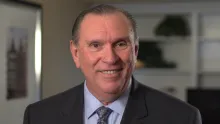
Randy D’Alessandro served as pastor for the United Church of God congregations in Chicago, Illinois, and Beloit, Wisconsin, from 2016-2021. Randy previously served in Raleigh, North Carolina (1984-1989); Cookeville, Tennessee (1989-1993); Parkersburg, West Virginia (1993-1997); Ann Arbor and Detroit, Michigan (1997-2016).
Randy first heard of the church when he was 15 years old and wanted to attend services immediately but was not allowed to by his parents. He quit the high school football and basketball teams in order to properly keep the Sabbath. From the time that Randy first learned of the Holy Days, he kept them at home until he was accepted to Ambassador College in Pasadena, California in 1970.
Randy and his wife, Mary, graduated from Ambassador College with BA degrees in Theology. Randy was ordained an elder in September 1979.
playlist
