
Steve Shafer
This sermon was given at the Branson, Missouri 2013 Feast site.
This transcript was generated by AI and may contain errors. It is provided to assist those who may not be able to listen to the message.
Well, thank you for that beautiful piece of official music that was very, very inspiring. I enjoyed it very, very much. Well, good afternoon, everyone. It's nice to see a big audience out there. It's really nice to have a large crowd here in Branson. Really looking forward to coming here for quite a while. Now this is our first feast in Branson as well. First time we've been went up to Lake of the Ozarks several times back in the 70s, but it's our first time to Branson. And we've been greatly looking forward to being here, but as Mr. Dobson mentioned, this is not exactly going to turn out to be the feast we were anticipating originally because we're planning on being here with Evelyn's mom, Ruth Misznick, and since we were transferred to Seattle, we haven't had too much time to really spend with her. And so we were looking forward to having the feast together here. We flew out here Southwest Airlines, which has flights to Chicago, then directly down here to Branson. And we were on the taxi coming out here when Evelyn got a call from Nancy, saying that Al had found Ruth collapsed on the floor and they were taking her to the hospital. We arrived here, checked into the hotel, and we were waiting to be seated for dinner, and Evelyn got another call saying that her mom had died.
So it's quite a shock to all of us. But there are some events that just take place, and they happen so suddenly, that you have no way of really anticipating those events or planning for them in advance. And it's been a shock to Al and to the Sealeek family, and to Ruth's two sisters, Nancy and Margie, who are both all here, and Evelyn's brother Larry, who's here with us as well. We have a whole family here together. But events happen. You can change your life. You can change your life. That can happen to the nation as well. Our nation was unprepared for 9-1-1.
And the State Department and our current administration seemingly was unprepared for last year's 9-1-1 attack on our consulate in Benghazi, Libya.
And of course, just recently, there's been another event that's taken place, but recently here, this not too long ago, this past month or so, the people in Colorado are totally unprepared for the recent flooding. Many people lost their homes, lost all their belongings, just very suddenly. Like they were saying, that that was like a 500-year flood. They haven't had flooding like that in 500 years. So we can't always foresee or totally prepare for events, which at times can come upon us very suddenly and very unexpectedly. For the past three years, my wife and I have been living in the Seattle area, where I was born and raised, and we've been pastoring the Seattle and Cedar Woolley congregations on behalf of Denny and Leanne Lugar. Denny called us about three years ago when he was chosen to be president and asked if we would come back knowing that we were from Seattle and knew some of the people there. He asked if we would come out there to Seattle and pastor for him while he served as president of Cincinnati. We were totally unprepared for Denny's sudden death this past March.
We just thought he had a problem with prostate, but didn't realize he had cancer. In fact, Leanne was out there visiting family at the time and had to drive to go home quickly to Cincinnati. Then, on one Sunday, everyone got a call from Leanne. We were living in their home because they were renting their home to us while we were out there serving. She told him, how fast can you be out of our home? She wanted to get Denny home to see his family before he died. He said, we can be out in one week. We did. Evelyn was scrambling and packing everything up. Fortunately, my sister lives on Maybridge Island, which is about five miles across Puget Sound from Seattle. She had an apartment that was available there. It's hard to move quickly into something when you have a pet and so on on short notice, but that was available. So we were able to move over there. So that worked out. Actually, they brought Denny back sooner than they thought. They brought him back on a Friday. We were still there. We moved on Sunday. He was so weak, they could barely get him into the bedroom. It was just a shock to all of us. So something's happened so suddenly, there's just no way to really prepare for them in advance.
And you know, look at what's happening in our nation. Our nation is now rapidly losing its former prosperity. Blessings it's had and enjoyed for so many years. We are now in a rapid state of decline as a nation. Even many in the news realize that. As I said, I was born and raised in Seattle. Evelyn and I lived there for 19 years. We were married from 1970 to 1989 before I was transferred to Michigan. We lived there 19 years. We still have our home in Michigan, but we moved to Michigan 1989.
We were a floor gone quite a ways. Then we came back to Michigan to serve for Denny in 2010, after being gone for, what, 21 years. I grew up in Seattle as a boy, a beautiful city. I loved it. I thought there's no place in the world like the Pacific Northwest and like Seattle. We came back in 2010. I'd come back just to visit a little bit in time or two, but I could not believe the change that takes place in the city of Seattle.
Seattle now is probably one of the most liberal cities in the United States of America. It's just shocked to be there and walk down the streets. It's so sad because it was such a beautiful place when I grew up there. But you know, Washington State has now legalized both marijuana and same-sex marriage. In Seattle, just this past summer, they had a totally nude bicycle march through Seattle. They showed on the news because they had to blur it out, of course.
Also had a gay march. Not only that, that wasn't good enough. They had a transvestite march, all protected by and blessed by the Seattle police.
That's how liberal Seattle has become. It's just so sad when I think of my boyhood going up there in the 50s, which begs this question, where are we now as a nation? And where's our nation headed? What's going to happen in the years ahead? When will the next sudden event happen that will turn our world upside down? Is the world about to change? And is that change to be brought about by man's doing or by God's doing? And will that change involve all of us who are here now observing this piece of tabernacles? And are we here at this very critical and pivotal time in history to prepare for those changes which will surely come to pass in the upcoming years? And if so, if we've been called to help to prepare for those changes that are going to take place, how can we prepare for what lies ahead? And how can we prepare to help Christ change this world when he returns? That is what we'll look at today on this first day of the piece of tabernacles here in Branson, Missouri. What must we do to prepare for our lives ahead? And what must we do to prepare for the upcoming kingdom of God, which we will celebrate over this coming week? And how can we help prepare to help Christ change the world when he returns? The title for my sermon here this afternoon is the form of a question. My title is, Are You Prepared? Are You Prepared? Now, before we look at how we can prepare for what lies ahead, first I want to look at the role that history plays in the rise and fall of nations.
As we know, it all began with Abraham and with the faith of Abraham. Let's go back there and begin in Genesis 12. Very familiar section of Scripture, but one I'm going to take a little bit of a different look at in a moment, a couple verses at least. Genesis 12, verse 1, Now the Lord had said to Abram, Get out of your country, leave your family, leave your father's house, and go to a land that I will show you. And if you do that, if you have the faith to do that and to trust God that far, he said that I will make you a great nation and I will bless you. I'm going to make your name great, and you're going to be a tremendous blessing. And I will bless those who bless you, and I will curse him who curses you. And in you, in your descendants, all the families of the earth shall be blessed.
Now stop right there and think about that for a moment. What if you were asked to do that? What if you were asking, I want you to leave your family, I want you to leave your home, and I just want to pay back a few things that you can bring along and follow me, and I'm going to take you somewhere, and you don't know where it is, but just trust me.
And you were asked to, if you were asked to have by God today to leave your family and go to an unknown land that God would show you, would you go? Would you have the faith to do that? I have to wonder, I don't know if I have the faith to do that or not.
What you do, as Abraham did, would take a strong element of faith, wouldn't it? I want to look at something rather unusual, and the way the next two verses are worded. I want to look at it from a literary point of view of how this is worded, verses 4 and 5. Verse 4, so Abram departed as the Lord had spoken to him, and Lot went with him. And Abram was seventy-five years old when he departed from Haran. Then verse 5, then Abram took Sarai, his wife, and his brother's son, and all their possessions that they had gathered, and the people to whom they had acquired in Haran. And they departed to go to the land of Haran, or excuse me, the land of Canaan, so they came to the land of Canaan. Now, if you're playing real close attention to those two verses, you might have noticed something rather unusual. If we stop to think about it, these two verses are not written in normal chronological order.
If you're going to leave your home to go to an unknown land, you would first gather your family and your possessions before you would depart.
So a more logical way for this to have been written, literally, from a literary point of view, would be as follows. Then Abram took Sarai, his wife, and Lot, his brother's son, and all their possessions that they had gathered, and the people whom they had acquired in Haran. And they departed to go to the land of Canaan. And so Abram departed as Lord had spoken to him, and Lot went with him, and Abram was 75 years old when he departed from Haran. So they came to the land of Canaan. That would be a more logical and more chronologically correct way of wording it.
So why then, with verse 5, I should say, preceding verse 4, why then did God aspire to be written the way it is? To be written the other way around. With Abram departing first, and then taking his family and his possessions second, the way it's written, at least the way it's recorded.
See, it's written this way to emphasize to all of us the readers of this, and to point out that Abraham had determined to do what God told him to do without doubting, without trying to second guess what God was up to. In verse 1, God said, Get out of your country. In verse 4, so Abram departed as Lord had spoken to him. Departed, in verse 4, is listed before Abram took his family and sessions in verse 5. To emphasize Abraham's complete trust in God, and his willingness to put the future control and outcome of his life totally into God's hands. That's a tremendous lesson of faith. I'm pointing this out because, as the people of God today, we must do the same. We have to be prepared for what lies ahead, and first and foremost, we, like Abram, Abraham, I should say, must totally trust the outcome of our lives, and be willing to turn the total control of our lives over to God. And we may all especially have to do that in the years ahead of us. Are you and I prepared to do that? Are you and I prepared for what lies ahead?
Now, the theme of this year's video is from Philippians 2.5. Let this mind be in you, which is also in Christ Jesus. Now, didn't Christ have to do the same as Abraham did? Didn't he have to totally put the control of his life into his Father's hands?
And didn't he do that? And when in his very darkest hour, he prayed, Father, if it is your will, take this cup from me. Nevertheless, not my will, but yours be done. Luke 22, verse 42. Now, the history of God's people, Israel, began with Abraham.
Is that role of history an important one to remember when it comes to the rise and fall of God's people, especially to the rise of God's people at first? Let's go to Deuteronomy chapter 32. I want to look at Deuteronomy 32 for a minute.
Deuteronomy 32, let's begin in verse 1.
Give here, O heavens, and I will speak, written in poetic form here. And here, O earth, the words of my mouth, let my teaching drop as the rain, my speech distill as the dew, as raindrops on the tender herb, and as showers on the grass. For I proclaim the name of the Eternal, as I ascribe greatness to our God, for He is the rock, His work is perfect, for all His ways are justice, and God is a God of truth and without injustice, righteous and upright is He. They have corrupted themselves, now referring prophetically to what happened to Israel. They have corrupted themselves. They're not His children. They're not acting like His children anymore because of their blemish, a perverse and crooked generation they've become.
Do you thus deal with the Eternal?
There, my margin has it here. Do you thus repay the Lord, O foolish and unwise people? Is that how you're paying God? By doing what you're doing? Is He not your father who bought you?
Has He not made you and established you? In other words, don't you remember your history? Have you forgotten your history of who you are and where you came from and who got you to where you are? Do you not remember who established you and who blessed you to become a great nation? Going on, verse 7. Remember the days of old. Consider the years of many generations. Ask your father. He'll show you. Somebody's got to remember your history. Ask your elders. They should be able to tell you.
When the Most High divided their inheritance to the nations, when He separated the sons of Adam and set boundaries of the peoples according to the number of the children of Israel, for the Lord's portion is His people. He wanted all you as His portion.
Jacob is a place of His inheritance.
God wanted the descendants of Abraham and Isaac and Jacob to be His inheritance. What were they before God established them as a nation of His people? And where were they? Verse 10. He found them in a desert land, in a wasteland where there wasn't any water, where they would have died if God didn't provide for them.
He found them in a wasteland in a howling wilderness. He encircled them. He instructed Him, and He kept them as the apple of His eye. Now stop and think right there. We're God's people today, aren't we? Hasn't God done that for each and every one of us?
Before God called us, many of our lives were a wasteland in a wilderness before God encircled us and instructed us. And we have now been kept as the apple of His eye. God wants us to be His inheritance.
See, there are parallels between our history and Israel's history.
Continue with the history of the rise of Israel, verse 11, Deuteronomy 32. As an eagle stirs up its nest and hovers over its young, spreading out its wings and taking them up, carrying them on its wings, so the Lord alone led him. And there was no foreign God with him. Not to begin with. He made him ride in the heights of the earth that he might eat the produce of the fields. He made him draw honey from the rock and oil from the flinty rock, curds from the cattle and milk of the flock with fat of lambs, and rams of the breed of beige and goats with a choicest wheat, and you drank wine, the blood of the grapes.
Book of Deuteronomy was written at the end of their 40 years of wandering in the wilderness, just before they were to enter into the promised land.
And during those entire 40 years, God miraculously provided for them, gave them food, gave them water. He kept them as the apple of his eye. He took care of them. Even though many of them continually complained, and even though many of them lacked faith, and even wanted new leaders. Moses, we don't want you anymore.
And even though many of them were turning away from God, no longer trusting God.
And you know, you think about our nation today, the same could be said of our nation today.
Which leads to this question, where are we today, as a nation that God established and blessed with great prosperity?
To our name, the United States of America became great. And to where it became, not only a great nation, but the greatest nation the earth has ever known, and most prosperous nation the earth has ever known.
All by God's doing. But how many know that history today?
And to what it established for the United States of America, all of the families of the earth have been blessed by the United States of America, just as promised to Abraham so many years ago.
But where are we today?
And why are we where we are today? Is Deuteronomy 32 still applicable to God's nation and to God's people today? Know what happened to Israel as we ask, has this not also happened to the United States of America today? Isn't this a parallel with what's happened to us? We read on here in Deuteronomy 32. Verse 15, But Yerushran grew fat and kicked.
Now, Yeshiran is a prophetic word, symbolic of Israel. Comes from a prime Hebrew word which means to be straight, pleasant, and prosperous. James and Fawcett Brown says this, this is a poetic name for Israel. The metaphor here used is derived from a pampered animal, which instead of being tame and gentle, instead it becomes mischievous, vicious, inconsequence of good living and kind treatment.
Adam Clark's commentary says this, Yeshiran, the upright, this is a palliative is here put for Israel. And as it comes from Yashar, he was right, straight. It may be intended to show that the people who once not only promised fair but were upright, walking in the paths of righteousness, should in the time signified by the prophet not only revolt from God, but actually fight against him like a full-fed horse who not only will not bear the harness but breaks away from his master and endeavors to kick him as he struggles to get loose. And all this is spoken prophetically, is intended as a warning. So we can now read this verse with more understanding. Verse 15, But yeshiran grew fat and kicked. You grew fat and you grew thick. You became obese with prosperity. Then he, what did he do? He forsook God, who made him. And he scornfully esteemed the rock of his salvation. They provoked him to jealousy with foreign gods. With abomination they provoked him to anger. They sacrificed to demons, not to God. To gods he did not know. To new gods, new arrivals, that your fathers did not fear. And of the rock who begot you, you are unmindful. And have forgotten the God who forgot you. You have forgotten your history. You have forgotten to establish you as a nation, and who made your name great. And he gave you great wealth and prosperity.
So that then is a very brief history of the rise and prophetic fall of God's people. It happened to ancient Israel. It's happening again to modern-day Israel, right before our very eyes. It's very sad to see.
But it's happening just as warned, as God warned, just before Israel was about to enter the Promised Land. God warned what was happening. And I have to ask, are we at that time today? Are we at the time just before the time of entering the Promised Land?
Are we close to the time when God's people today will be entering the real Promised Land? When God's people will be entering into the Kingdom of God at Christ's return? See, are you prepared for what lies ahead?
Which leads to this question then. What must we do to prepare for what lies ahead of us?
First, we don't know exactly what's going to happen right around the corner, or when it's going to happen. We don't know when something might happen that would once again turn the world upside down, or turn our world upside down.
And as the people of God today, there is little, very little we can do to prepare physically for what lies ahead. For the most part, we are weak. Probably weak people. Relatively powerless in the overall scheme of things, physically speaking. And nearly anything and everything we now possess could be gone tomorrow. We just don't know.
Anything we possess could easily be taken away from us very quickly. Which is why Christ said what He did to His disciples to record in the Sermon on the Mount. Let's go over to Matthew 6. Matthew 6.
Verse 19. Well, Christ said this, Do not lay up for yourselves treasures on earth, where moth and rust destroy, and where thieves break in and steal, but instead lay up for yourselves treasures in heaven. Where neither moth nor rust destroys, and where thieves cannot break in and steal.
In another parable, Christ put it this way. Let's go to Luke 12.
Luke 12, beginning in verse 16. And then He spoke a parable to them, saying, The ground of a certain rich man yielded plentifully, and he became very prosperous.
And he thought within himself, saying, Well, what shall I do since I have no room to store all my crops? I'm overflowing with goods. Oh, I know what I'll do.
I'll pull down my barns, and I'll build greater barns and bigger barns to store my stuff in. Because today, people have a lot of stuff stored in different places. And sometimes that's what they do. They build bigger barns. To store more stuff in.
And I will say to my soul, verse 19, So you have many goods, laid up for many years. I don't have to worry about anything. I'm set.
Take your ease, eat, drink, and be merry.
But God said to him, Fool, this night your soul will be required of you. Then whose will these things be which you have provided?
So is he who lays up treasures for himself, but is not rich toward God.
To prepare for what lies ahead.
We can't store it physically. That's not going to do us any good.
To prepare for what lies ahead, first and foremost, we must prepare spiritually. We must become rich toward God.
We must come to trust and believe God, as Abraham did. And we must be willing to put the total control and outcome of our lives into God's hands, even as Abraham had to do. Let's go to Hebrews 11. Reiterates the story of Abraham. Hebrews 11, verse 8, By faith Abraham obeyed when he was called to go out to the place which he would receive as an inheritance. And he went out having no idea where he was going. No idea of God's plan for him, what God was going to do, what God had in mind. He said, well, God must know what he's doing. I'm going to go.
And by faith he dwelt in the land of promise as in a foreign country, dwelling in tents with Isaac and Jacob, the heirs with him of the same promise. You know, stop and think about that. We're in a somewhat similar situation today, even here in the United States of America. Regardless of what kind of a house or home we happen to live in, it's only a temporary dwelling.
And more and more, the United States, which is a latter day land of promise, prophetically speaking, is now becoming, I mean, sad. It's almost now like we're living in a foreign nation. It's not the nation I knew when I grew up.
And we're all now waiting for what's described in the next verse in verse 10.
For he waited for the city which has foundations, whose builder and maker is God.
And we are all now waiting for the kingdom of God. By before the kingdom of God arrives, we'll face many, many more trials, I'm sure. The difficulties might even face some seemingly impossible situations that might come up in the years ahead.
If you have any time things like that happened last year or so, or something happened, you try to work something out and you just can't work it out. It's just like you hit a brick wall or a stumbling block. No matter what you try to do, you run into an obstacle. Maybe there's a spiritual reason for that. The time may be getting close to where we will all literally have to put the control and outcome of our lives into the hands of God. And to prepare for what lies ahead, first and foremost, we must learn to put the control and outcome of our lives into the hands of God, no matter what happens, no matter what we face, no matter how impossible it might seem. The question is, we realize that if my time might come, we're going to have to do that, but what does that take? What does it take to do that? Well, our faith must be strong, and we have to learn to live by faith. But there's something else we need, too. Something else we all need. What additional spiritual quality will it take to be able to live by faith and to put the total control and outcome of our lives into the hands of God? And what does this additional quality have to do with why we're here, observing the Feast of Tabernacles? In order to live by faith, the second quality is needed. And that additional quality is hinted at in the verse we just read in Hebrews 11-10, for he waited for the city which has foundations whose builder and maker is God. He waited for the city. To wait for that city, Abraham first had to know that city was coming. He had to have a clear vision of the reality of that future city, that kingdom, and what it represented. He had to have a vision of the future reality of the kingdom of God. It had to be real to him. See, you can't have faith without vision, and you can't have vision without faith. They go hand in hand. How important is spiritual vision? Let's go back to Proverbs 29 verse 18. Proverbs 29 verse 18. I'm reading from the New King James, where it says, Where there is no revelation, the people cast off restraint, but happy is he who keeps the law. Where there is no revelation, the people cast off restraint. Or as my margin has it, where there is no prophetic vision, the people cast off restraint. And as the old King James has it, where there is no vision, the people perish.
So to hold to the path we are on, and to learn to live by faith, and to put the control of our lives in the hands of God, we have to have vision.
Vision of the future reality and surety of the kingdom of God has to be real to us. We must know it is real, we must know it is certain.
And it is going to come to pass just as God has promised.
Now Christ knew that Peter and James and John would be three of his leading apostles. He knew they are going to face many, many, many trials and difficulties and impossible situations in their ministry in the future. They are going to have lots of persecution, a lot of things they are going to have to face and deal with. Christ knew they would need a vision of the reality of the kingdom of God to fulfill the calling that they were being given. Let's go to Matthew 17.
Matthew 17 will begin in verse 1.
Now after six days, Jesus took Peter and James and John, his brother. He led them up on a high mountain by themselves, and then he was transfigured before them, and his face shone like the sun, and his clothes became as white as the light. And behold, Moses and Elijah appeared to them in this vision, talking with him. And then Peter answered and said to Jesus, Lord, it is good for us to be here. If you wish, let us make here three tabernacles, one for you, one for Moses, and one for Elijah, which indicates to me this vision of the reality of the kingdom of God may even happen during the Feast of Tabernacles. Going on in verse 5. And while he was still speaking, behold, a bright cloud overshadowed them. And suddenly a voice came out of the cloud, saying, This is my beloved Son, in whom I am well pleased. Hear him. And when the disciples heard it, they fell on their faces and were greatly afraid. But Jesus came and touched them and said, Arise, and do not be afraid. You know, as the sermonette man said, Be still.
And when they lifted up their eyes, they saw no one but Jesus only. As they came down from the mountain, Jesus commanded them, saying, Tell the vision to no one until the Son of Man is risen from the dead. So this was not reality, but it was a vision of the sure reality of the kingdom of God.
Which from this time forward was forever going to be embedded into the minds of Peter and James and John. They were going to never forget this. It was all real to them.
And many years later, toward the end of his life, Peter wrote his second epistle to the brethren who were scattered throughout Asia Minor, who were being grieved by many, many trials, both without and within the church. And Peter still had the vision that Christ gave him of the sure reality of the kingdom of God when he wrote his second epistle, Second Peter. And he tried to pass on that reality and that assurance to the scattered brethren who experienced all kinds of trials and difficulties in their life. They were getting discouraged. Let's go there to Second Peter, chapter 1. Second Peter chapter 1, verse 16, where Peter wrote, For we did not follow, come ye, devise fables. We're not telling you fables. For we made known to you the power and the coming of our Lord Jesus Christ, but we were eyewitnesses of His majesty. We saw the glory that you're going to get in God's kingdom. We saw the reality of it. We were witnesses of it. Eyewitnesses. It's not a fable.
For he received from God the Father honor and glory, when such a voice came to him from the excellent glory, This is my beloved Son, in whom I am well pleased. And we heard his voice, which came from heaven, when we were with him on the holy mountain. And so we have the prophetic word confirmed, which you do well to heed, as a light that shines in a dark place, until the day dawns and the morning star rises in your hearts.
Of course, we know Christ also raised up the apostle Paul, turned his life around. And Christ knew that Paul would need a clear vision of the reality of the kingdom of God as well. He knew he would need that embedded into his mind to sustain him through his many trials and seemingly hopeless situations that he faced in his ministry. And that Paul would need to use that vision to ensure and encourage others who would be going through very difficult discouraging trials themselves. So the apostle Paul also received a clear vision of the reality of the coming kingdom of God. Let's go to 2 Corinthians chapter 12. 2 Corinthians chapter 12, beginning in verse 1, where Paul wrote, it is doubtless not profitable for me to boast. I will come to visions and revelations of the Lord. I know a man, he says, in Christ. And he's reading this between the lines, you realize that Paul's talking about himself. I know a man in Christ who 14 years ago, whether in the body I do not know, or whether out of the body I do not know, he said, no, this is so real what I saw. I don't know if I was really there or it was just a vision of something, but I can't tell. It was like I was really there. It was so real. I do not know, but God knows, but such a one was caught up to the third heaven. And I know such a man, he's talking about himself. Again, whether in the body or out of the body I do not know, God knows. How he was caught up to paradise and heard an inexpressible word which is not lawful for a man to utter. Or, as the Living Bible paraphrases it, things so astonishing that they are beyond a man's power to describe or put into words. That's what we have to look forward to. That's a reality.
Paul, of course, could not foresee all the trials that he was going to go through. He had no way of preparing for that, as he described in the previous chapter here, as he responded to the boasting of false apostles and deceitful workers who were influencing the church at Corinth. Let's go back there to chapter 11, 2 Corinthians, begin in verse 22, and he's speaking of these false teachers. He said, are they Hebrews? So am I. Are the Israelites? So am I. Are they of the seat of Abraham? So am I. Are the ministers of Christ? I speak as a fool. I am more, in labors more abundant, in stripes above measure, in prisons more frequently, in deaths often. From the Jews, five times I received 40 strikes minus one. Three times I was beaten with rods once I was stoned and left for dead. Three times I was shipwrecked. A night and a day I've been in the deep, in journeys often in perils of waters and robbers and my own countrymen and the Gentiles. In perils in the city and in the wilderness and in the sea and among false brethren. In weariness and toil and sleeplessness often, in hunger and thirst and fast things often, in cold and nakedness. Besides the other things what comes upon me daily, my deep concern for all the churches and all the trials and difficulties God's people are facing. But in spite of all those trials, Paul remained faithful to his calling to the very end of his life as he tells us in his very final epistle in 2 Timothy. 2 Timothy chapter 4 verses 7 and 8. His final epistle and towards the end of that final epistle he says this, verse 8 of 2 Timothy 4, Finally there is laid up for me the crown of righteousness which the Lord, the righteous judge will give to me on that day and not to me only but also to all who have loved his appearing.
He knew he was about the end of his life and I forgot to read verse 7 but he said I fought the good fight, I finished the race, I've kept the faith so there's light up for me a crown of righteousness. And all who live by faith and all who put the outcome of their lives into God's hands as Abraham did will receive that same blessing that Paul describes here. And also to all who maintain a curved vision of the sure reality of the kingdom of God that was given to Peter and James and John and to the apostle Paul. So what must we do then to prepare for our lives ahead? Well, we have to continue to live by faith and we must maintain a clear vision of the reality of the soon coming kingdom of God. Are we all doing that? Are we prepared?
Finally then, how can we prepare to help Christ change the world when he returns? It's going to be a huge job as described in the sermon this morning. A lot of work to do. It's going to take a thousand years of work. A lot of changes are going to have to come about and a lot of people are going to resist those changes. But how can we prepare for that? How can we prepare to help Christ make those changes when he returns? In what way does the world need to be changed? In what way does the world need to be changed? Can you describe it? If you want to put your thumbs down to the nitty-gritty, somebody asks you what needs to be changed in the world? What's the number one thing that needs to be changed? And what can you and I do now at this very moment to help bring about that change? What does the world need to be changed into? The world needs to be changed into the spiritual image and likeness of Jesus Christ and God the Father.
How then can we prepare to help Christ do that? Do what he needs to do to change his role when he returns? How can we prepare to help Christ do all that? We can help prepare by becoming like Jesus Christ now and like God the Father. By allowing God through his Holy Spirit to transform us into spiritual image and likeness of Christ now by having the mind of Christ in us, which is one of the main reasons we're here observing the Feast of Tabernacles.
We must prepare for the Kingdom of God by becoming like Jesus Christ.
But a bigger question maybe is this. How do we do that? How do we become like Jesus Christ? What does that take? What must we do to become like Christ and like God the Father?
You know, Christ tells us he made it very plain what we must do.
He made that very plain at the very beginning of his ministry on the Sermon on the Mount. To prepare help, Christ changed the world. We must live by what Christ taught in the Sermon on the Mount as recorded in Matthew 5, 6, and 7. I'm not going to read the whole thing. You can be turned there if you want. I'll read some verses here, but I want to just highlight some of the main points that he made. He said in there, he said, we must be the salt of the earth. We must preserve God's Word and God's way of life and God's laws and God's principles. We have to be the salt of the earth. We have to be preserving agents. We must receive God's truth and God's laws and God's way of life in the calling that God has given us, and we must preserve that. We must be the light of the world. Matthew 5, 14. So people can look at our lives and say, wow, what an example you are. Even though they might not understand what we believe. Because we're going to have to show others how to live and their relationship with God and their relationship with one another.
That they may see our good works. Matthew 5, verse 16.
And we must not only keep the letter of the law, we also have to keep the spirit of the law.
We must not get angry without a cause. We must control our anger and our feelings. We must never lust. And we must turn away immediately from anything that could cause us to do so.
We must strive to keep our commitments. As it says in Matthew 5, 37, our ye should be yea and our nay nay. We must be true to our word. People know them when we tell them something is the truth. And we make a promise we're going to keep that promise. They can count on it.
We should be truthful to all of our words.
And we should not only love our neighbor as ourself.
Oh, we've got to go a lot farther than that if we're to be like Jesus Christ and prepare for our lives ahead. We have to come to love our enemies and bless those who curse us and do good to those who rightfully use us and persecute us. Matthew 5, verse 44. Wow, that's a tough one. How are we doing in that one? Are we prepared? Am I prepared? Am I ready?
And we must not do our deeds before men to be seen by them. Instead, we should not let our left hand know what our right hand is doing. Matthew 6, verses 1 to 3. And we should always try to forgive others. Let's read that. Matthew 6, verse 14. For if you forgive men their trespasses, your heavenly Father will also forgive you. Didn't Christ forgive us? Even when we were pretty green under the gills, so to speak.
But if you do not forgive men their trespasses, neither will your heavenly Father forgive your trespasses. So we must learn to forgive, forgive and put things behind us, put things into God's hands, and let bygones be bygones, and not hold grudges or resentment. Are we doing that? Are we prepared? We should fast without appearing to men to be fasting. Matthew 6, verses 16 to 18. We should be very cautious as to what we allow into our minds. It's a very dark world. There's a lot of stuff there that Satan liked to get into our minds that could destroy us. Matthew 6, verse 22. The lamp of the body is the eye. Therefore, if your eye is good, your whole body will be full of light. But if your eye is bad, your whole body will be full of darkness. Therefore, the light that is in you is darkness. How great is that darkness!
We must not serve two masters. Verse 24. No, no one can serve two masters, for either he will hate the one and love the other, or else he will be loyal to the one and despise the other. You cannot serve God and mammon. Therefore, I say to you, verse 25, do not worry about your life, what you will eat or what you will drink. Don't worry about your body, what you will put on. Is not life more than food and the body more than clothing?
What then should be our number one concern? Verse 33. This is the only thing we need to be concerned about, the main thing. Seek first the kingdom of God and his righteousness. And all these things I'll be taking care of. God will take care of them. God can see knows everything that happens. He knows all of our needs. He knows what we have to have. No matter what happens, if we're prepared spiritually, if we are rich towards God, then God can take care of anything that he needs to take care of.
If we seek first the kingdom of God and his righteousness, all these things will be added to you. Therefore, do not worry about tomorrow. We don't know what's going to happen tomorrow. We don't know what the next thing will be that's going to turn the world upside down. But don't worry about it. For tomorrow, we'll worry about its own things sufficient for the days it's own trouble. And every day there is a lot of trouble somewhere in the world.
And sometimes it hits close to home. Let's also judge ourselves, not judge or condemn others. Matthew 7, verse 1, judge not thee be not judge. For with what judgment you judge, you will be judged. And what measure you use, it will measure back to you. And why do you look at the speck in your brother's eye at that little problem your brother has? But you don't consider the plank in your own eye?
Or how can you say to your brother, let me remove the speck in your eye and look a plank is in your own eye. First, remove the plank from your own eye and then you will see clearly to remove the speck from your brother's eye. Are we doing that? Are we prepared? Am I prepared? Are you prepared? It's going to be easy to be prepared. Second, it's going to be easy to be difficult to prepare to rule with Christ and prepare for what lies ahead. Matthew 7, verse 13, enter by the narrow gate, for wide is the gate, and broad is the way that leads to destruction.
And there are many who go that way. But narrow is the gate, and difficult is the way which leads to life. And there are few who find it, and probably fewer still, who when they do find it, they stay on it, no matter how difficult. They want to stay on the difficult road. They don't want the easy way out. They want to grow in faith and learn to put control their lives into God's hands. So Christ himself told us it would not be easy.
It's going to be difficult. There are many trials and obstacles. But Christ in us can give us the faith and the power to continue moving forward, regardless of any roadblocks we might face. So what must we do then to prepare for what lies ahead? Matthew 7, verse 24, whoever hears these sayings of mine and does them, I will liken him to a wise man who built his house on the rock.
We have to apply the things that he says here daily in our lives. And if we don't, verse 25, the rain descended. Excuse me, if we do, I should say, if we do, then the rain descended and the floods came and the winds blew and beat on that house and it did not fall for was founded on the rock. But everyone who hears these things of mine and does not do them will be like a foolish man who built his house on the sand.
And then, with something very unexpected comes, it turns the world upside down and the rain descends and the floods came and the winds blew and it beat on that house and it fell and great was its fall.
So what must we do to prepare? We must do what Christ tells us here as given in his Sermon on the Mount. Then concludes with this statement here in verses 28 and 29 of chapter 7. And it was so when Jesus had ended his sayings that the people were astonished at his teaching. Why were they astonished? Because he taught them as one having authority and not as the scribes.
He knew what he was talking about. He knew this is real. He knew that all his followers are going to face these things. They'd have to learn how to apply these things if they're going to prepare to rule with him in his kingdom when he returns. As we begin to conclude, how important is this Feast of Tabernacles? Well, I have to sit here and wonder and ask myself. I think this is, wow, I started in 1964. It's getting up close to 50 Feast of Tabernacles now for me.
But I have to ask, how many more Feast of Tabernacles do we have?
How much more time are we going to have to prepare?
How many more years will we have to prepare for what lies ahead and to prepare to rule with Christ? Well, we don't know. But we do know that God's Word is sure.
And that the condition our initiative is now in was prophesied thousands of years ago. We've already read, due to my 32, and how Yeshurun or Israel would grow fat and kick against God and forsake God and provoke God to anger with foreign gods and abominations.
And that they would forget the rock that begot them and the God who fathered them. That's already happened. That's already taking place right now. We're already there. We're on the downhill slide. Our nation is in sharp decline.
And you look at our leaders that we have, they don't know how to turn it around. Not a clue.
They've all forgotten their true history.
See, the Book of Deuteronomy also prophesied what would happen when that time came. Let's just look at a few verses there as we get ready to conclude. Let's go back to Deuteronomy 28. Deuteronomy 28. We're just going through a little bit of this. We're all familiar with the blessings and cursings just to see where we are right now. Deuteronomy 28 verse 1.
Again, just there about to enter the promise line. God said, here's, if you do this, this is what your future is going to be. If you come to pass, if you additionally obey the voice of the Lord your God to observe carefully all his commandments, which I command you today, that the Lord your God will set you high above all the nations of the earth. And in spite of some, I'm not going to understand in some areas, basically, as a nation we were applying many of God's principles. As the top covered in the sermon this morning, as well that we became prosperous. And we became high above all the nations of the earth. Higher above the nations of the native nations ever achieved. Greater blessings and prosperity of any nation in history. After World War II, the United States of America was set high above all the nations.
And we inherited all the blessings that were recorded here in Deuteronomy 28 verses 1 to 14. Verse 13, the Lord will make you the head and not the tail. And we were. When I was a boy growing up, we were. So after World War II, 1950s, I was born in 1941, just shortly before Pearl Harbor was bombed.
And the Lord will make you the head and not the tail. And you shall be above and not be beneath, if you heed the commandments of the Lord your God, which I command you today, and you are careful to observe them. Verse 15, however, But it shall come to pass, if you do not obey the voice of the Lord your God, to observe carefully all his commandments and his statutes, which I command you today. All these curses are going to come upon you, and they're going to begin to overtake you. Today, the blessings of verses 1 to 14 have been removed. They're gone. And many curses have now come upon us, and they're overtaking us.
And we could go on and on about that. Before we conclude, let's just note in particular two of those curses. Deuteronomy 28, verses 43 and 44. Are we here? Is this where we are today? Okay. The alien who's among you shall rise higher and higher above you, and you shall come down lower and lower. And he's going to lend to you, but you shall not lend to him because you're going to be broke.
And he should be the head, and you should be the tail. When I was growing up, the United States was the greatest lending nation in the world. After World War II with the Marshall Plan, we built the world from the privileges of World War II. We could afford to lend money to anyone, even if they didn't pay us back, as many didn't. But now, with the greatest debtor nation in the world, it's ever, ever imagined. We can't even begin to imagine the debt we've accumulated. We're right now at about 18 trillion dollars in debt. Such a huge debt, there's no way it could ever be paid back. We're getting to a point where we can't even pay the interest on it.
How can you have prosperity with a debt like that? You become a slave. And we are. We're coming to slave.
So what does that pretend for the future? You know, let's take a look at one city that we lived in Flint, Michigan, for a number of years.
Not far from the city of Detroit. Back when I was growing up, Ford Chrysler, Chevrolet, General Motors.
That was the auto industry of the world. Detroit became one of the most prosperous cities in the world in the 1950s and 60s.
With a booming economy due primarily to the American automobile industry.
This past July, Detroit became the largest city in America to declare bankruptcy. It's unemployment is twice the national average. It's over 15 percent.
It's murder rate is historically high levels. Murders take place every day just about in Detroit.
It takes nearly an hour for the police to respond to any emergency, where on the average it takes about 11 minutes. But in Detroit, over an hour. Because they don't have much of a police force. They can't afford to pay their police or their firemen. They're bankrupt.
Forty percent of the city of Detroit's lights don't work, and they don't have the money to fix them.
Approximately 78,000 homes and businesses are abandoned in Detroit. They don't even have the money to tear them down and rebuild. They're just sitting there. Kids go in their smoke pot, whatever else they do.
City of Detroit is nearly 18 billion, not million, 18 billion dollars in debt.
Bankruptcy means public pension funds are going to be cut and greatly reduced.
So much for union guarantees.
Is that what's in store for the rest of America?
We'll soon see.
But this we do know, Deuteronomy 28 verses 43 to 44, has now come to pass. How far will it go before it's over?
Verse 45. Moreover, all these curses will come upon you and pursue you and overtake you until you are destroyed, because you did not obey the voice of the Lord your God to keep His commandments and His statutes which He commands you. And they shall be upon you for a sign and a wonder and on your descendants forever, because you did not serve the Lord your God with joy and gladness of heart for the abundance of everything that He gave you.
Let's conclude with very sobering thought that the Apostle Paul wrote to the church at Rome, as recorded in Romans 13. Romans 13.
Just look at two verses here. Romans 13 verses 12 and 13. Romans, or 12 to 14, I should say. Last three verses of Romans 13. Romans 13 verse 12. And boy, this is sure true.
When you look around the world and you look around the United States and see where we are, you will see where we are. The night is far spent. The day is at hand. Therefore, let us cast off the works of darkness and let us put on the armor of light. Let us walk properly, as in the day, not in revelry and drunkenness, not in lewdness and lust, not in strife and envy. Learn to get along with one another, support one another, love one another, be there for one another, and put on the Lord Jesus Christ, and make no provisions for the flesh to fulfill its lust. Are you and I doing that? Are we putting on the Lord Jesus Christ? Because that is what this Feast of Tabernacles is all about. And putting on Christ and putting on the mind of Christ is the theme of this year's Feast video as well. So are we all doing that? Are we putting on Christ? Are we developing that? Are we having the mind of Christ in us? Are you prepared for what lies ahead?
Are you prepared to rule with Christ and to help Christ change the world when He returns? Are you prepared?
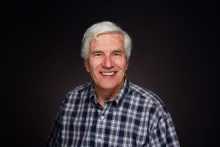
Steve Shafer was born and raised in Seattle. He graduated from Queen Anne High School in 1959 and later graduated from Ambassador College, Big Sandy, Texas in 1967, receiving a degree in Theology. He has been an ordained Elder of the Church of God for 34 years and has pastored congregations in Michigan and Washington State. He and his wife Evelyn have been married for over 48 years and have three children and ten grandchildren.
