

Steve Shafer
This transcript was generated by AI and may contain errors. It is provided to assist those who may not be able to listen to the message.
Well, good afternoon, everyone, and good afternoon to everyone online. I appreciate Dr. Comit's sermonette on anger. Evel and I do our best to control our anger. We don't watch the news. That's about the only way we can do it. Otherwise, I think it's a... I just had to try to really work on putting Dr. Comit's points into practice as I was watching the news. I don't know if that worked or not. It would be hard. Anyway, it's really good to be here with all of you. I know there's a few of you here, and I'd welcome all of you in line, too. I'm glad to have you here with us for the Sabbath Day service. Today, I want to continue my series of sermons on the life of Abraham, just to review quickly. In Part 1, I covered what happened prior to where he was first mentioned in the Bible in Genesis 12, verse 1. In that sermon, we looked at who he would have known and been acquainted with at that time. Going all the way back to Adam in the Garden of Eden, how he would have had connections. We also looked at where he was born in the city of Ur, which was at that time the largest and greatest city on the earth. At the time Abraham was young, and he would have been living there with his family as a young man in the city of Ur. That's where he was apparently born, right near there.
At that time, Abraham lived there. It was the greatest, I said, the most prosperous city in the world. Abraham's family was very prosperous. He was a very wealthy family, as you read in Genesis 13, too, which tells us that Abram was very rich in livestock, in silver, and in gold. It's interesting. You hear what God calls him. He's a very wealthy individual, and he lives in the wealthiest city in the world. He's a wealthy individual within that city. But then his family suddenly left Ur to go 600 miles north to the city of Haron. Now, why would they make that kind of a move at that particular time? We also saw in Part 1 that Abraham's father, Terah, served other gods, as we were told in Joshua 24, verse 2. God had to call Abraham out of family that worshipped foreign gods. But that was not the only reason. As we also saw in Part 1, his life was in danger. Thus, when God chose Abraham, he brought him out of Ur of the Chaldeans, Nehemiah 9, verse 7, with then note of why and from whom his life was in danger. We then conclude in Part 1 by showing that it was Nimrod who was a threat to Abraham's life. Then in Part 2, we looked at how the life of Abraham was connected to the Tower of Babel, which was built by Nimrod, who in reality was a mighty hunter. It says he was a mighty hunter, but in reality he was a mighty hunter of men, in opposition to the true God, especially. We also showed that the Tower of Babel was in close proximity to the city of Ur, and that Nimrod had a territory or a kingdom that he ruled over, which was called the Land of Nimrod, in Micah 5, verse 6. We then noted the main material Nimrod used in building the Tower of Babel, that he used man-made bricks rather than stones, which can only be created by God, and which are all unique, rather than bricks, which are all the same. Bricks are all identical. Made by men, they're all identical. We then showed what that symbolized in Part 2, and how it ties into what we see happening right now today here in the United States of America. Then Nimrod set out to build a city. He set out to build the city of Babylon. As I said in that Part 2, it was that what he was really trying to build. He was really trying to build a society that would be contrary to the way of God, and that would leave God out of the picture. We then concluded Part 2 by quoting from Scott Ashley's recent Beyond Today editorial entitled, An Unrecognizable America. So today, then, in Part 3, in the life of Abraham, we will look at his formative years. We will look at what happened in his life after he departed from Aaron at age 75. We will look at both his successes and his failures and his shortcomings, and at lessons all of us can learn from those various aspects of Abraham's life. So I want to begin this way. Then what do we mean by the word formative?
Vocabulary.com says this, defines it this way, formative is a word that describes something that made you who you are. You might call your adolescence your formative years because that time period has such a strong influence on the rest of your life. The word form means to shape. So something that is formative is capable of shaping or molding someone. Now for most of us, those were our late teenage and early adult years, maybe say between 17 and 23. And those are especially for people in that age group that especially need to be aware of worldly influences that could shape the rest of our lives for the better or for the worst.
An individual's life between age of 17 and 23 is grounded on godly morals. You can just about guarantee. Now look at that aspect of his life. See, if that aspect was grounded on godly morals, you can almost guarantee his or her life will be successful morally speaking because that's pretty going to mold you the way you're going to be the rest of your life for the most part. They often shape what we would become. For Abraham, we'll be looking at what made him who he became after he left Heron at the age of 75.
Of course, there were major decisions that he made prior to that when he was much younger. Critical decisions. Like not following the god of his father, Tara, nor allowing the gods of his father, Tara, I should say to adversely influence him. And by willingly following God's call for him to leave his father's house, and the prosperity and security he could have had by staying in her. He had lots of security there. His friends were there. Everything was familiar was there. There's a lot of wealth there. He had a lot of that wealth. His father was probably very prominent in that city as I covered previous sermons. So he had a reason for staying there.
Before we begin looking at the former reviewers of Abraham, which begin in Genesis 12 verse 4, I want to look at one of the... it's actually amazing. I want to talk a little time here, in a few verses right there in Genesis 12 at the beginning, because I want to look at one of the most profound covenants in the entire history of the world. Not just in the Bible, but the entire history of the world.
There has never been... I don't think you can research history. I don't think there's ever been another covenant like it. That covenant is given to us in three verses leading up to Genesis 12 verse 4. So let's turn there to Genesis 12. You can put a marker there. We'll be in Genesis 12 for the most part of the sermon. But Genesis 12 verse 1 begins by saying that the Lord had said to Abraham... and we covered when he said that in part 1 of this series. But now let's look more closely at what God said. Continuing in verse 1, he said, Get out of your country, from your family, and from your father's house, and go to a land that I will show you. I said in part 2, I think it was about 48 years old, probably when he left Haran, put it all together. So now it's about 25 years later, age 75, when Abram is finally ready to leave Haran, to follow God's instructions. But notice the covenant promise that God made to Abram once he left his country and family in his father's house. And also realize... I think we need to stop and just think and realize how extremely difficult this would have been. You know, what if someone asked you to leave your home? You've been situated there for 25 years or so, maybe longer. And someone asked you to leave your home, leave your family, and even leave your country and move to an unknown destination.
Would you or I have been going to do that?
Probably not.
But now that Abraham has taken that first very giant leap of faith, he left, as God said, finally.
Hearing is God's unconditional covenant promise going forward here in Genesis 12. This is an amazing covenant promise. Because from this point on, once he's made that first step of leaving, now this is an unconditional covenant promise. Genesis 12, verse 2.
I will make you a great nation, because here's his promise. Now that you've made this first step, I will make you a great nation, and I will bless you. I will make your name great, and you shall be a blessing. And I will bless those who bless you, and I will curse him who curses you. And in you, Abraham, in you and your descendants, all the families of the earth shall be blessed. You know, stop and think about this. It's an amazing covenant promise.
Normally, a covenant is an agreement between one or two parties, excuse me, between two or more parties. And if you do this, then I will do that. That's usually what a covenant is. You do this, and I'll do this in return. But once Abraham left his country and family in his father's house, then this promise from this point forward becomes unconditional. And it's a three-fold covenant promise. Let's break this down. Let's look at it. Number one, it promises a personal blessing. I will bless you, and I will make your name great. Number two, it promises a national blessing. I will make you a great nation.
And number three, it promises an international blessing. I will bless those who bless you, and I will curse you, who curses you, and in you, in your descendants, all the families of the earth will be blessed.
And God, who cannot lie, has kept all three of those covenant promises.
Abraham's name is still known and respected throughout most of the world. And it's known and highly respected by all Christians and Jews. It's also respected by most Muslims. See, God has kept his promise to Abraham to make his descendants into a great nation. Also, think of that. In the 20th century, Great Britain became the greatest empire of the world to just every now and the United States of America became the greatest single nation the world has ever known.
So why is that? Most people don't have a clue. Why did the United States of America become a great nation? Why do we, as citizens of the United States, enjoy the highest standard of living any people have ever enjoyed in the history?
It's not because of anything we did or anything we deserved. It's because of God's unconditional promise to Abraham, which stated, in you, all the families of the earth are going to be blessed. Stop and think about that.
In the history of the world, not that I know of anywhere, there has never been one nation that has risen to be a blessing to all the other nations of the world. Not like the United States has.
Not until now.
Just think about that. All the nations of the world have been blessed because of the United States of America.
Why? Because of God's promise to Abraham. Let me ask this.
Was there a condition whereby those blessings could be removed? Let's go to Deuteronomy 28. We're familiar with Deuteronomy 28, the blessings and curses chapter, but we're just going to look at a few verses here. But you stop and read these verses, and you start to think about the United States and where we are, and the blessings that God gave to God as to where we are now, and the blessings we've had. They come for that promise that God made to Abraham and to his descendants. Genesis 28, excuse me, Deuteronomy 28, verse 1. God says, as you come to pass, if you diligently, referring to the descendants of Abraham, and Jacob, as you come to pass, if you diligently obey the voice of the Lord your God, to observe carefully all of his commandments which I command you this day. At least you try to, as our nation has done. Not perfectly, of course, but we've we've had come that direction. We've had laws that tie in with God's laws, which I committed, that the Lord your God will set you high above all nations on the earth. And that's amazing because that has happened. The United States in the 20th century was set high above all the other nations on the face of the earth, especially right after World War II.
Verse 10, then all peoples of the earth, they're going to see that you are called by the name of your God, and they should be afraid of you. Amazing. All nations of the earth have feared the United States of America because of where God has placed us in the technology and the advancements we've had.
Verse 15, But as you come to pass, if you do not obey the voice of the Lord your God, to observe carefully all His commandments and His statutes and try to try to at least follow the best you can God's ways, which I command you today, that all these then all these curses will come upon you and overtake you. We can all read and evaluate the rest of what it says for ourselves, but just one that I want to point out especially. Note what it says if we turn away from God as a nation, start going that direction.
Notice verse 21, The Lord will make the plague cling to you until it has consumed you from the land which you are going to possess.
That's happened. COVID-19 is clinging to us. It's been clinging to us for a year, probably clinging to us most of next year.
And it's affecting us as a nation, it's affecting our economy. It's affecting every aspect of our lives.
Why has this happened to us? Verse 47, Because you did not serve the Lord your God, but joy and gladness of heart. You were thankful for all the tremendous blessings that you've had and you enjoyed.
You have not served the Lord your God, but joy and gladness of heart, for all the abundance of everything that He has given to you.
But instead of then being thankful for the blessings that we have received as a nation, I mean, here's the other side of the coin. Instead of being thankful for all those blessings, we have now done what instead?
We are now kicking God and God's Word out of our country.
And we're even saying, I've heard this being said on some, we're now saying that our nation was founded on and is based on hatred and evil. There were a nation that hates other nations and we're an evil nation. There are some that have said that after all the blessings we've had. And they say, oh, forget about any of this stuff. We're a secular nation and we need to go to the world and apologize because we're based, society's based on hate and evil.
On this past, I'm going to, I'm going to, I tested what I'd say this, I'm going to go ahead and say it. On this past, January 20th, we entered a new era in America.
It was a event that will begin a new period in the history of the United States. It's going to begin a new epoch.
An epoch which will go down in history is an extremely notable event. An event that will change the course of history for the United States. That kind of a change only happens on very rare occasions.
But once it happens, it's generally irreversible.
You know, right now we still live in a country whose constitution guarantees freedom of religion.
And we're the only nation that I know of in history. It might be in a, I don't know if there's a skeptic or not, I don't know. As far as I know, we're the only nation in the history of the world whose declaration, whose, I come to you with declared independence from other countries. It's happened a lot of times by a lot of countries, but we're the only nation that I know of in the history of the world whose declaration of independence makes reference to God.
Here's part of what it says. In Congress, July 4th, 1776, the unanimous declaration of the 13 United States of America, the first paragraph then states that they are entitled to follow, quote, the laws of nature and of nature's God. That's part of our declaration. We're here to follow God and nature's God. The second paragraph then states, we hold these truths to be self-evident that all men are created equal and they are endowed by their creator with certain unangle rights and among these are life, liberty, and the pursuit of happiness.
But how much longer are we going to be able to maintain those rights? That's now in question.
Now, on Friday evening, February 5th, on TBN, which is the Trinity Broadcasting Network, there was a one-hour program titled, Pastors in Trouble. Ellen was scrolling through the channels a little bit at that time looking for something. As you saw, I just happened to see that. We were just getting to right at the time. I was about to start and saw pastors in trouble. What's that about? That sounds interesting. So I watched it. It was hosted by a former pastor and former Seventh-day Adventist by the name of Matthew Staver, S-T-A-V-E-R, who became a lawyer.
He formed an organization called Liberty Consul. It consists of a group of lawyers who give free legal counsel to pastors in the United States who are being sued, fined, and threatened with imprisonment.
And he saw this happening. He formed a legal council to defend them, and he defends them free of charge. He doesn't charge them anything.
He gets his money from donations.
And he's received like a couple hundred thousand dollars in donations. It's funded to him to help these pastors in trouble.
What are they being threatened for? Why are they in trouble? What do they do?
They're being threatened for exercising their constitutional right of freedom of religion, for holding religious services in their churches contrary to their governor's directives.
The four pastors interviewed were from... The first one was from Pasadena, California, whose church is located in the former grounds of Ambassador College. I showed a picture of it. I thought, wow!
With all things.
Another was from the state of Colorado.
Another was from Chicago, and the fourth was from the state of Maine.
So this is where we are today.
Is there a promise for the people of God, a positive promise for the people of God? Indeed there is. Let's turn there and read it. Psalm 91. Just look at a few verses here. Psalm 91, beginning in verses 7 to 10. Amazing promise. And you almost can see the reality of this today.
A thousand may fall at your side, but you're not going to be able to see it. You're not going to be able to see it. But you're going to be able to see it. You're going to be able to see it. A thousand may fall at your side, and ten thousand at your right hand, but it should not come near you. Only with your eyes shall you look and see the reward of the wicked. But because you have made the Lord who is my refuge, David wrote, even the Most High, your dwelling place, no evil shall befall you. Nor shall any plague befall you.
Like COVID-19, have a devastating effect on you as a whole. No shinning flood come near your dwelling.
Now then, let's look at the formative years of Abraham. We'll look at the years that made him who he became. The years that left him the legacy of being known as the father of the faithful.
He wasn't that way automatically. He didn't become that way right away. He had to go through many trials and tests and difficulties to maintain that legacy. And those years began in Scripture in Genesis 12, verse 4. And following in Abraham's journey of faith, and that is where we begin in Genesis 12, verse 4.
He can come back there. We either follow up time now from the sermon, Genesis 12.
We begin at age 75 when he departed from Haran. That was when his formative years began. Those years that really shaped who he became. Now that his father, Terah, was dead, Abraham finally leaves Haran. His sister, Terah, died in Haran. So he waited until his father died, and then he finally left Haran out on his own. Where does he go from there? And who goes with him? And what is his ultimate destination? Genesis 12, verse 5.
Then Abram took Sarai, his wife, and brought his brother's son, in all their possessions that they had gathered, and the people whom they had acquired in Haran, and they departed to the land of Canaan. So they came to the land of Canaan. And after he left Haran, he followed what became a major trade route to the land of Canaan.
And beside his wife Sarai, who else came with him? Lot, his brother's son, says. He took his nephew Lot with him. Stop right here. Just think for a second. Who was Lot? Lot was a part of his family. Now what was Abram told to do by God? He was told to get out from your family. Genesis 12, verse 1. Well, he takes his family with him. But he says, get out from your family. When God tells you something, there's a reason for it. He has a reason why he tells you that.
By taking Lot with him, he was not acting in total faith and obedience to God. He didn't really look at it. And as I said, there was a reason that God told Abram to leave his family, including Lot. And it won't be long before we understand why God told him that. We won't find out today, but next sermon you probably will get there. Although we can also understand why Abram did not want to leave Lot behind, he was a part of his family. What city did they first come to?
They first came to the mountain city of Shechem, Genesis 12, verse 6. Abram passed through the land to the place of Shechem, as far as the Tabernoth tree. Abram passed through the land to the place of Shechem, as far as the Terabith tree of Mira, and the Canaanites were then in the land. Shechem was located in the mountain valley between Mount Gerizim and Mount Yebo. He was about 40 miles from Jerusalem. It's actually the city where Solomon's son, Rehoboam, was coordinated to be the king of the northern ten tribes of Israel, 1 Kings 12, verse 1.
It later became the city of Nablus, N-A-B-L-U-S, the remains of which were discovered in 1903. In fact, she discovered ancient Nablus. Today it's the city in Palestine with a population of about 1,000 people. It's Palestine with a population of around 50,000. Here at the Taboranth tree of Mira, which undoubtedly was some kind of a local shrine, it's probably some kind of a pagan shrine, and then boy, he said, this place, something remarkable happens. What was that?
Jesus 12, verse 7. Then the Lord appeared to Abram. All of a sudden God appears to him there. He's at this pagan shrine and God appears to him. And he said, to your descendants I'll give this land. And there he built an altar to the Lord who had appeared to him.
So it was remarkable. The remarkable thing that happened was God appeared to him, but that was not the only remarkable thing that happened. What else happened? God made a remarkable and almost unbelievable promise to Abram. What promise was that? Then the Lord said to him, to your descendants, I will give this land. Do you see all that land out there, Abram? All that land of Canaan, where all those foreign people lived, where they wished for all these false gods and everything, all this pagan stuff that's going on. See all that land? I'm going to give that to you. I'm going to give that land to your descendants.
The entire land of Canaan. The vast majority of people on the face of the earth today do not realize that the entire earth belongs to God. All land belongs to God because he's the one who created it. It's his, and he can give it to whoever he wants to give it to, whoever he chooses. God can see that those whom he gives it to can inherit it. He can see that they inherit it, and he can see that they lose it.
And to those who are faithful to God, like Abram, they were going to receive that inheritance. What will be their inheritance? Those who are faithful to God. What's going to be their inheritance? What does it say? It says, they shall inherit the earth. Matthew 5, verse 5. Christ himself said that they shall inherit the earth. I'm going to give the entire earth, all the land on the earth, to my people who are faithful to me.
I think it's noteworthy that it is at the place of a probable pagan shrine where God makes his promise to Abram and his descendants. Why? Why is that so notable? Because in essence, God is telling Abram that right now the entire world worships foreign gods. They worship idols and foreign gods. But through you, Abram, and your descendants, they will someday come to our worship, me, the true God.
And when that time comes, the entire earth is going to be blessed. What did Abram do after God appeared to him and made this promise? It says, he built an altar to the Lord who had appeared to him. So in the place of a pagan altar, then, Abraham built an altar to the true God. And from that time forward... Just think about that. They all knew the shrine was there. It was probably a pagan shrine. Now it's an altar to the true God built by Abraham. Now everyone who passes by this shrine or this altar, they would know that this altar represented the God of Abraham.
It announced to the whole, all the local residents, anybody that passed by it, that the God of Abraham had come into the land of Canaan.
Where did Abraham go from there? He continued going up in elevation to the mountain west of Bethel, Genesis 12, verse 8. Or, as a New Living Translation, what correctly renders it, after that Abram traveled southward and set up camp in the hill country between Bethel on the west and Ai on the east. So where did Abraham go from there? He continued going south and up in elevation to a place that would become extremely significant to the nation of Israel and to the entire world, where he built another altar to God.
What place was that? That place was Jerusalem, called Salem, in Genesis 14, verse 18. So what happened next in the formative years of Abraham that helped him grow in faith? In Genesis 12, verse 10, there's virtue in the sermon as well of a different famine, but it's interesting. Now, there was a famine in the land, and Abram went down to Egypt to dwell there, for the famine was severe in the land. This famine led to a major test for Abraham. A test that would help him realize something extremely important that he needed to understand.
It would help him to realize the true depth of his faith, which at this point was still somewhat shallow. Isn't that also how God works with all of us? You know, we get baptized, we make an unconditional commitment to God of baptism. What happens after that? Then God allows us to go through some major trials and tests to help us see our areas of weakness. Here's an extremely important thought to keep in mind and understand. God doesn't necessarily allow us to go through very trying circumstances to see what we're going to do.
That's what a lot of people think about. Let me go through all this, see how he reacts. No. I think it's far more deeper than that, more and more important. I think it allows us to go through those trying circumstances to reveal us to ourselves. So we can see the areas of our life that need to be spiritually strengthened. That's an extremely important lesson to learn from the life of Abraham. I think he was trying to show Abraham. I'm going to show you, Abraham, you don't have as much faith as you think you have. You may think you're really depending on me, but I'll put you in a situation.
You're going to see maybe you're not as strong as you need to be. Maybe you see areas where you need to strengthen your life. A lot of times we can go through trials, and that's what we learn. We learn where we're weak, where we need to strengthen ourselves spiritually. How did Brahm is Brahm when this famine struck? Did he go to God and ask him what he should do? He's in this... He's got this famine. He says, Well, God, I need to... I need a direction here. Should I stay here? Are you going to leave this famine?
How long are we going to go? Should I go somewhere where there isn't a famine? Like maybe Egypt? But did Abraham at this point go to God and ask him what he should do? What does this verse tell us? It says, A Brahm went down to Egypt to dwell there.
It didn't say anything about him stopping and praying and asking God, What should I do here? I'm in a crossroads? No, it just says he went down to Egypt to dwell there. So it implies that instead of seeking God's counsel, he used his own judgment and did what seemed best in his own eyes. Now stop and just think of all the trials we've gone through. Do any of us ever do that? You know, Egypt at that time was located in what was called, at that time, the Fertile Crescent. It was a place where there was plenty of food and where the famine had not yet reached.
So it was very logical for a bomb to go there. Now let's go down there. Look at Egypt's... Wow, they've got lots of prosperity down there, a lot of food. Nile River, flying them lots of food and crops and a lot of prosperity. It was a logical place to go.
But there's a spiritual lesson there for all of us. What does Egypt represent in the Bible? In the Bible, Egypt represents the world. You know, we have to be very careful. And I look in our history even now, in the few years we've been in the church, to look back and all the things we've gone through, I thought, wow, what an important lesson this is from Abraham.
We have to be very careful when major trials come along. Why? Because they can cause us to revert to our default position. What position is that? Do we all have a default position? If we do, what position is that? Something really rough comes along. It's a position that is most comfortable to all of us.
That's our default position. What's most comfortable? And that's the position of going back into the world. That's most comfortable. We keep them out of the world, and it's very comfortable to go back into the world. It's a position of seeking to deliver ourselves from the crisis at hand. Isn't that the way we like to do it? Get this crisis while you try to deliver yourself from it. Just stop and think in our history, recent history, isn't that precisely what happened to many in God's church back in 1995?
We had to choose between following the then leader of the church, or living by faith and following God in God's Word, by continuing to keep God's Sabbath and Holy Days. I went through that time. Maybe some of you did. I'm sure some of you did. It was hard. You didn't know what should we do. It's comfortable to stay there, go along with the changes no matter what. But you stepped out on faith to follow God. You didn't know what the future was going to hold. We still have a church to go to, but to be a church there we could go to.
Would we be able to keep our jobs? If we lost our job, we could fight another job. And those who worked for the church knew they were going to get fired. I knew, Ellen and I knew, that if we follow God, we're going to be fired for not following the leader of the church at that time. So, I had to step out on faith. I never anticipated I would have to do that that way. But our journey of faith has many parallels to Abraham's journey of faith.
What happened immediately after Brahm and Sarah entered Egypt? Did Abraham go immediately to his default position? What position was that? Did he involve saying something that was not totally true? Did Abraham tell his wife to lie? Did he tell her to lie for her sake or for his sake? Did he tell her to lie in order to secure safety for himself? Did he tell her to lie to save his own skin?
Let's read it for ourselves. Genesis 12, beginning with verse 11. It came to pass when he was close to entering Egypt that he said to Sarai his wife, Indeed, I know that you are a woman of beautiful continents. Therefore, verse 12, it will happen when the Egyptians see you. They will say, this is his wife, and they will kill me.
They will say, they will want you. The only way they can do that is to get rid of me. They are going to kill me so they can have you. They will say, this is his wife, and they will kill me, but they will then let you live. Now, did Abraham know that was the case? Or did he assume that was the case? He assumed that would be the case. Always be very careful about making assumptions. What did Brahm then tell Sarai? Stop and think of it. I want you to think of you as Sarai. Well, he still told her. Verse 13. Please, he tells her, he says, please say, you are my sister. That may be well with me. Not you.
Tell her you are my sister so that you can be well with me.
For your sake, and that I may live because of you, that I may live.
You know, he told her to say what we would call a white lie. That she was his sister. Of course, in actuality, she was his half-sister. As we were told in Genesis 20, verse 12. Genesis 20, verse 12 says this, But indeed she is truly my sister. She is the daughter of my father, but not the daughter of my mother, and she became my wife.
chilling on the She was the daughter of Abraham's father, Tara. She was the daughter of Abraham's father, Tara, but not the daughter of Abraham's mother. So, Sarai was in actuality Abraham's half-sister. What was Abraham trying to do by using this somewhat deceptive tactic? He was seeking to protect himself, and he was doing what seemed right and seemed best in his own eyes. What does Proverbs 12 and 15 tell us?
It tells us that the way of a fool is right in his own eyes, but he's counsel is wise. In this case, Abram acted foolishly by doing what seemed right in his own eyes, instead of seeking counsel from God.
But Abraham was a righteous man in God's eyes, and because he was, and because God was going to fulfill his promises through Abraham, God continued to work things out in his favor and direct the course of his future events. Even though Abraham's heart was, in essence, devising his own ways at that time, God was going to continue to direct his steps, because he knew Abraham was the person he was working with, and he knew Abraham's heart.
But he was directing his own steps. We're told this in Proverbs 16.9, where it says, A man's heart plans his way, but the Lord directs his steps. That's what I was actually talking about when the person is saying, Well, I'm going to do this in my life, I'm going to do this, and God says, Wait a minute, I have another plan for you. But even if this could even apply here to Abraham, or if Abraham is directing certain things he's going to do that he thinks is right, and God says, Wait a minute, no. I don't want you going down to Egypt.
It's not where you should go. I've got another plan for you. I'm going to direct your steps in another direction, even though you think that's the way you should go. That's what you're planning. I want to ask all of this question, as I had to ask myself as I had read this and studied it and thought about it.
Would you or I have done what Abraham did if we had been in that same situation? Here's what Paul wrote as recorded in 1 Corinthians 10, verses 11-13, as rendered by the New Living Translation. 1 Corinthians 10, 11-13, New Living Translation. All these events happened to them as examples for us. These events happened to Abraham so they could be examples for us, so we can learn from this. They were written down to warn us who live at the time when this age is drawing to a close. That's especially true right now, because right now this age is drawing to a close.
If you think you are standing strong, be careful, for you too may fall into the same sin. But remember that the temptations that come into your life are no different from what others experience. They are no different from what Abraham experienced. We all go through these things. What then happened when they came into Egypt? Genesis 12, verses 14 and 15. So it was when the Brahm came into Egypt that the Egyptians saw the woman, that she was very beautiful. And the princes of Pharaoh also saw her, and they commended her to Pharaoh, and the woman was taken to Pharaoh's house. Wow! That was not what Abraham had anticipated.
His plan backfired. Now instead of Abraham's life being in jeopardy, it was Sarah's life that was in jeopardy. She is going to be taken into the king's harem. What did Pharaoh, the king of Egypt, then do? He thought that was a great idea. He sent Abraham as a compensation for having Abraham's sister into his harem. He sent Abraham many gifts, his compensation for Abraham's supposed sister. Verse 16, he treated Abraham well for her sake. He had sheep and oxen and male donkeys and men with female servants and camels. Now there was no immediate threat of Sarah being violated, as she would have had to have gone through a preparation process first before being chosen to spend the night with Pharaoh.
But stop and just think. How do you think Sarah fell at this point? How was she feeling? Knowing that her husband had let her go into Pharaoh's house to be part of his harem, eventually.
How do you think she felt? I wonder what her thoughts toward her husband were at this point. What were your thoughts, then, as a woman, if that happened to you? I'm sure they weren't very pleasant thoughts. In order to save his own life, he instead endangered her life. I can imagine that for most marriages that would have been the end of the remarriage. That was all over. That would have ended it. The relationship. So now the story here is becoming very dramatic. What happened next to save the day? Verse 17. But the Lord plagued Pharaoh and his house with great plagues because of Sarai, Abram's wife. What happened to save the day was God intervened. He didn't allow it to be carried out. God intervened to save the day. How did he intervene? He intervened by sending great plagues on Pharaoh and on Pharaoh's house. He didn't tell us what those plagues were, but Pharaoh got the point. Amazingly, Pharaoh attributed those plagues as coming from the God of Abraham. As he discovered, she was not Abram's sister, but she was actually his wife. Verse 18. Pharaoh then called to Brahm and said, What is this you have done to me? Why didn't you tell me she was your wife? It was seen that Pharaoh immediately knew that the plagues were because of Abraham, and that they were from the God of Abraham. He said, known that. Why had he known that? How would he have known that? Why would his thoughts go in that direction? What would have caused Pharaoh to realize that Sarai was probably his wife rather than his sister? Well, remember, Abraham was a prince, and his reputation was known far and wide. It was not long after the flood when all this happened. Pharaoh knew that Abraham was a direct descendant of Noah. He also would have known that the God of Abraham was the God of Noah.
And then it was the God of Noah and Abraham who had just destroyed the world with the flood. The God of Abraham was rightly feared by all at that time, even by the Pharaoh. Thus, when he and his household were greatly plagued, they immediately realized that plagues had to be coming from the God of Abraham.
Genesis 12 verses 18 through 20. Again, verse 18, Pharaoh called Abram and said, What did you have done to me? Why did you not tell me that she was your wife? Why did you say instead that she is my sister? I might have taken her as my wife. Know, though, for here is your wife. Take her and go your way.
So Pharaoh commanded his men concerning him, and they sent him away with his wife and all that he had. Where did Abraham and Sarah with all their possessions go from there? Genesis 13 verses 1. Then Abram went up from Egypt, he and his wife, and all that he had, and lot with him. It says, to the south, it has got an asterisk there in its capital letters. You might wonder why the word south there is capitalized. It is because the actual Hebrew word used there is negev, N-E-G-E-V. From Egypt, they actually went to the negev. This word can mean south in different usages, but here this is not really indicating a direction. If it were, it would not be capitalized. Here the negev is a location, not a direction. It is a location. The negev, which in Hebrew literally means a dry wasteland or desert area, was a southern area of the land of Canaan. Today it is a southern area, a desert area of the nation of Israel. It is a negev, a desert area south of Israel today. It is located northeast of Egypt. So if we wanted to indicate the direction from Egypt, they actually would have traveled north or northeast. Here is how the New Living Translation renders Genesis 13.1. So they left Egypt and traveled to the negev, a brahm with his wife, and Lot, and all they owned. We'll conclude there this time. We'll conclude this part of the journey of going in faith with Abraham here. Next time in Part 4, we'll see why God told Abraham to leave his family. And we'll see why taking Lot and all that he owned with him was a big mistake. But there is much more to the formative years of Abraham than I had realized, and there is still a number of valuable lessons that we can learn from most formative years. So thus this will turn out to be at least a five-part series within a four-part series. But we'll pick up the story next time on March 13th.
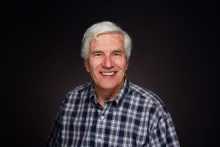
Steve Shafer was born and raised in Seattle. He graduated from Queen Anne High School in 1959 and later graduated from Ambassador College, Big Sandy, Texas in 1967, receiving a degree in Theology. He has been an ordained Elder of the Church of God for 34 years and has pastored congregations in Michigan and Washington State. He and his wife Evelyn have been married for over 48 years and have three children and ten grandchildren.
