


John Elliott
This transcript was generated by AI and may contain errors. It is provided to assist those who may not be able to listen to the message.
What do you want out of life? Let me answer that in one word. Happiness. Right? Don't we all want to be happy? Thomas Jefferson wrote, and it became, of course, a hallmark of the United States of America, that we are all equal and independent, and we're sort of heading down this road, all of us, in the pursuit of happiness. And this country is unique on Earth in that the individuals of the country are the least fettered and hampered in that pursuit. You just have a pretty much clear road ahead to go for it. In fact, since he said those words, this country has in large part gotten rid of a lot of the other roadblocks, including the ones that are in the Bible, to a human pursuing happiness. And it's kind of the rushes on. And you read and you see people really going for what they hope to be a happy state. Happiness is something that God has. He is the most happy individual. He and Jesus Christ are the happiest individuals there are, and I think we can prove that. They want humans to be happy. And so, let's ask the question. Are you happy? Go ask your neighbors. Are you happy? Look at the masses of humanity and try to assess. Is this happiness thing working out? There's a lot of effort being spent on trying to be fulfilled and happy in this life. And there are many ways that people are trying to bring happiness into their life. There are limitations to that. And sometimes people feel impeded, and it's not fair. I was born, I was growing up, and I was destined to happiness, and then it happened. Maybe a war took place. Maybe some health issue came along. Maybe an accident came along. And it took away my chance for happiness. Therefore, in this life, I cannot be happy because of something. And those things we call tragedies. And we award those people millions of dollars in settlements to try to... I'm sorry you can't be happy, so here have some money. You know, how can one be happy? How can one have a happy life? I'd like to talk to you about that today in a sermon entitled, Are You Ready to Be Happy? Are You Ready to Be Happy? It's important that we consider that the human state without happiness is not much of a place to be in. And sadly, some choose not to go on with life if they enter a phase where happiness just seems out of reach. Others feel life is unfair and focus on the fact that there are certain aspects of life that just aren't fair, it's just not right. And they are riveted on the fact that there can be no happiness and it's just not just.
Today, let's take a look at taking responsibility for happiness as an individual, not looking at anything or anyone or pointing any fingers or claiming any limitations whatsoever. Because I think I can show you from the Bible that you can be happy starting today if you take responsibility for that happiness. Now, how many people are happy? You look around in the world, okay, there's three in the front row, but if you look around in the world, how many people out of six and a half billion or seven billion people are really happy?
You could take whole blocks of people and sort of discount them because of the type of constraint they're in politically or domestically, environmentally. There's a lot of factors that just cause people to, that are in this world to just be in a state that we would say, that's unfortunate. I'm so blessed to be where I am, at least I have a chance at happiness. How many people who are in the lap of luxury are happy? What about those who have a lot of stuff? You know? Lots of money, rich! There's a very, very wealthy man that Mr. Armstrong used to quote a lot because he had the one-liner at the end of his life.
You know, I'd give all my billions for one happy marriage. What about individuals who are trying to be happy? Are they happy?
You know, there seem to be many things that block our chance at happiness. And we can sort of make a list. It's too bad. My appearance isn't the best, so I can't be happy.
My health isn't great, so I can't be happy. I don't have enough stuff. And at my job, it doesn't look like I'm going to get much more stuff. So I can't be happy. I don't have those cool toys that are out there. I have too many bills, deep in debt. Others don't admire me enough. Maybe you're lacking the stun factor. You know, you look in the mirror, I wasn't born with the stun factor, so I can't be happy. You know, the list could go on and on. I'm too tall, I'm too short. You know, there are many things where I don't have to take responsibility for my happiness. You see? It's out of my hands. Fate decided. And so I'm going to be a rather boring individual. Well, let's take a look at would personal responsibility and opportunity change that. In fact, it is absolutely vital. See, man's way comes from this knowledge that is gained from the tree of knowledge of good and evil. It is the human mindset. It's the mind that we picked up from a different source than God. It's what is logical to us. It's what makes sense to us. And out there on the highway of life, everybody's trucking down this highway according to the logic that's between our ears. If half the marriage is in a divorce and 95% of those who are yet married say they're not happy, how many people in the world really consider themselves to be happy? You know, people will do a lot to try to bring happiness to their life. Think of all the things that people will do. The extremes that they will go to, be it sports or be it surgery or be it pursuing wealth or pursuing entertainment or pursuing travel. My wife and I saw a couple recently who had been on over 50 cruises, you know, 50 on a ship where everything is taken care of for you, you know, and you can kind of go see the world. And they've been around the world. The only thing was they didn't look happy. And they were on their 51st cruise. Still going. Still trying. This way is kind of trial and error. You think of people, they'll try for happiness, they'll become passionate about something. Maybe you're one of those. You have this thing. It's a hobby or it's a passion. Whatever it might be. Maybe you like, let's say, you like to fly. You're all about flying. You've always been about flying. And then you reach 60 years old and you have a heart attack or something and they pull your pilot's license. You can't fly anymore. What a tragedy. Oh, no. Can you imagine? The heartache? I mean, the person's life is over. It was all about flying and now he can't fly. The person's all about mountain climbing. He climbed mountains my whole life. And now I'm going to go for the big one. I'm going to climb McKinley or I'm going to, you know, climb Kilimanjaro or something. And the doctor tells you, you've got a condition with your heart and your blood pressure. You can't go above 5,000 feet anymore. You can't even drive up to Flagstaff, Arizona.
Oh, what a tragedy. His whole life is over because he was all about climbing. She was all about sewing and she sewed and she stitched and she sewed and she knitted and it was all about sewing until she went blind. Oh, poor thing. You know, we pursue these things with vigor, don't we? It was all about cliff jumping until the day he jumped off a cliff and to shallow water accidentally.
You know, now he can't move below the neck. Or try this one. She was all about loving her husband. Her life was her husband. Her whole life was wrapped around her husband and then he died.
And it's over for her. You see what we do when we pursue happiness, when we go down the road in anything that is sort of materialistic or anything that really appeals to us and we really dive into that and look for fulfillment.
It's just a matter of time until those things terminate.
This road of trial and error was, thankfully, walked down in a big way by King Solomon.
He did it all. He did everything. He tried everything. He had a fabulous life. He had the best life. He lived in the palace. He was the king of the empire.
He had all the servants and all the armies and he had all the respect and the honor and all the wisdom. He had all the women, too. It seems like he just had everything.
He followed that logic. There's a book called Great People of the Bible and How They Lived.
Regarding Solomon, it says, once the immediate problems of food-raising and labor were settled, the palace and all those people and all those concubines and all their kids and all that's going on and all this wealth that you have, now you have to have food, labor.
He begins to establish diplomatic relationships with neighboring countries. He already controlled trade between most of those countries because the trade routes ran through Israel.
Now you're managing trade. You're managing foreign countries and guess what? Those foreign countries are your enemies.
So, he often sealed diplomatic ties by marrying foreign princesses.
You would marry the daughter of the king of the foreign lands so that you were pretty much guaranteed he wasn't going to come attack you and kill his daughter and his grandkids.
Solomon then had a harem including Moabite, Ammonite, Edomite, Hittite, Phoenician women, among others.
He had relations with Egypt and had a wife of the Egyptians. Things begin to get very, very complex.
Solomon lived this life that seems really great and yet it was intensely complex and complicated.
One of his most impressive business ventures was horse trading, horse and chariot trading.
Egypt was known for its war chariots and Cilicia in southern Turkey was known for its swift horses. Solomon, evidently, according to the records, would buy these in bulk at real low prices and then resell them and make money from them.
And also be paid, once he sold them, for their keeping, their food, the transportation. He was reaping quite a bit of profit.
But those required building stables and he is very well known for the many, many stables that were in his building program.
His prospering economy not only dictated the building of stables but also store cities to hold the monthly food requisitions from each district.
Each city usually served the dual purpose of storage and defense. You've got food storage. You've got defense against enemies.
Now, Solomon built all of this. He had it all. He was the wealthy guy and at the end of his life, thankfully, he writes the book of Ecclesiastes.
And he says, you know what? This is a bunch of hooey. This is useless. This is worthless. There's just nothing to this.
I've tried it all and there's nothing to it.
I'm glad that we have his account because it's not like you or I probably are going to be able to try the limits that he did with all of his gardens and farms and treasures.
The tons and tons of gold that he had were just incredible.
It says in 2 Chronicles 9, verse 13, The weight of gold that came to Solomon every year was 25 tons.
We think of an ounce of gold being worth about $1,000 a day. But 50,000 pounds?
You figure that out in Detroit, ounces? I don't even know what that would be worth.
But that was annual. Plus, the other tributes that were given to him in verse 14, other traveling merchants and traders brought in things, all the kings of Arabia and the governors.
It's one thing to look at a person and say, was he successful? Well, in a monetary way, I guess he was successful.
We know about him, so he's legendary. But was he happy? No, Solomon was not happy.
His life was beset with a lot of problems and challenges.
Don Marquis made a statement, Fate often puts all of the material for happiness and prosperity into a man's hands just to see how miserable he can make himself.
And the book of Ecclesiastes really speaks to that.
Remember, he's the one that talked about dwelling on the corner of a housetop?
On the housetop, over in the corner, when you have a contentious woman, and he had a thousand women?
The point is that Solomon was very wise, but he didn't apply the wisdom that God gave him.
In the 17th chapter of Deuteronomy, God tells the kings, Do not go out and buy horses.
Depend on me for your protection.
Depend on me for your strength and might. Don't go buying horses.
Don't build or buy chariots.
Solomon knew that. He had to write out a copy of the Pentateuch because he was a king, but he didn't choose to apply it.
God certainly was not leading his life.
So let's ask the question, where does happiness come from?
We've looked at the road, we've seen people go down it, we see people around us.
Are we ready to jump in there, maybe get a fast car and head down that road to happiness with the rest of the world?
Where does happiness come from?
There are a lot of opportunities that come to us in life. What should we choose? A lot of possibilities.
Life is kind of like a smorgasbord.
You're going to one of those restaurants where there's no waitresses, you just pay your money, and then you go into islands full of food.
You say, this is going to be great.
I'm going to go make some choices that are going to make my tummy happy.
So you start down, ooh, look at that, look at that, oh, I don't know about that, but look at this, oh, and that, and that, and that, and that, and that, and that, and that, and that, and that, and that, and that.
And then when you're done with that, you think, oh, look over there, there's some of that, and that, and that, and some of this to drink.
Now, just, you've been there.
Remember how you felt in the parking lot afterward?
Did those choices tend to be happiness at the end?
Did they lead you to happiness? Well, it's kind of like the possibilities in life.
You know, when you're young or old or in between, you look at, ooh, look at all these possibilities, look at all these things that are for sale, look at all these people and things and events and happenings and possibilities, and there's your smorgas, where you think, ooh, I'm going to choose some things that are going to make me happy.
And we all sort of go about that.
How do those choices impact happiness?
Which of those choices destroy happiness?
Actually take away the opportunity for it in some cases.
There was a newscaster a number of years ago, Eric Severide, and I believe he was with CBS.
Eric Severide made a statement.
The affluent society, speaking about this country, the affluent society is turning our cities into the most affluent slum on Earth.
What's an affluent slum?
There's lots of wealth, lots of things, but the people in the slum are unhappy.
The wealthiest bunch of unhappy people on the Earth live in this country.
Some try to find happiness in sin.
That's very appealing. When I say sin, it's not, ooh, not the nasty stuff.
No, sin just means not loving others, being self-focused.
Oh, okay. I'll go out here and I'll focus on myself, and it doesn't matter what anybody else wants.
Might be driving real fast in your car, you know, and taking away the safety and the space that other drivers actually have or are entitled to.
Might be running a few red lights and taking away people's safety or enjoyment in various things.
But it's thrilling, you know, it's exciting. Who cares about them? It's about me. Are humans happy when they're sinning?
You know, it's a compulsion for humans to sin. It's part of our nature. We want to be self-focused.
But are we happy when we're sinning? Afterwards, are people happy?
If you look at entertainment about sinning, afterwards, are those who sinned even in the entertainment happy? Are they even portrayed as happy? You know, you can lie on television, you can lie with the movies, you can lie with books, but does anybody ever portray sin as having a wonderful ending at the end?
Everybody knows that there's no happiness. Albert Hubbard wrote, men are not punished for their sins, but by their sins.
And the end result of sin makes everybody miserable.
Benjamin Franklin said, sin is not harmful because it's forbidden, but it is forbidden because it is hurtful.
So right there we find a recognition that breaking the laws of God is not going to be where happiness dwells.
No matter how much it's pushed, no matter how cool it is, no matter how many famous people do it, it's not going to be found there.
Others seek happiness and pleasure and recreation. Sure, we can do that. Just go on vacation for the rest of your life. Just live it up.
Surely that's where we can find it.
There was a person named Debolzak who said this, in diving to the bottom of pleasure, we bring up more gravel than pearls. It's not in pleasure. Pleasure seems good for a moment, but there's no happiness there.
We need to realize that Satan is the source of pain.
Before we get into how to be happy, we need to realize what happiness isn't.
Happiness is not anything to do with Satan because he is a master of deception.
He likes to sucker humans into losing their happiness and eventually, hopefully, losing their eternal lives.
That's what he's about. He doesn't want competition for eternity.
So he is the source of pain. And no matter how it is sold, sin is pain.
If you're breaking the laws, if you are not loving others, it brings pain.
One little example comes from Proverbs 9 and verse 17. Proverbs 9 and 17.
One of these wise Proverbs written by Solomon, who had experience, says, Stolen water is sweet. Now put whatever definition you want on water. But it's something that's really not yours. It's not really your right to have. And so it's stolen. And it's sweet, whatever it is.
And bread eaten in secret is pleasant. So maybe that's what we ought to do.
Maybe we ought to go out and snitch and steal and swipe and use others and take what really doesn't belong to us and have relationships that really aren't ours.
And it's kind of living on the edge. It's kind of like walking up to the edge of a cliff. You know? Ever walked up to the edge of a cliff? A really steep cliff, a thousand, two thousand feet deep?
A canyon below you? You walk up there and you look over? I have.
It used to be really thrilling. After you hang around cliffs for a while, it's not so thrilling, but it's still just as dangerous. But you know, when you look over something and you stand there and you look down, you think, Wow! This is really something. Let's say your cliff is a little bit high, only maybe 30 feet high, 20 feet high.
It's still a little breathtaking, and maybe there's water down below. There's a lake.
Now we've got a potential of real happiness here. If you jump off the cliff into the lake, what you're going to do is your body is going to sense that you're falling, and then falling really, really fast. And your stomach goes up in your chest, and you can't breathe. But the exhilaration that, I'm going to die, is there. It's kind of like bungee jumping, but not hitting the ground, you know?
We talked to Rio Knudsen about that. And it's the thrill of going through the process, but somehow escaping at the end.
And it's really a rush. It's really a rush. So maybe happiness is there. You have thrill-seekers, and that's what they live on. They're adrenaline junkies, thrill-seekers.
So what we're looking at here, this stolen water is sweet.
Bread eaten in secret is pleasant. You're cheating fate.
But here's the deal, verse 18. He does not know that the dead are there.
There's a way that seems exciting to man.
The end, you know, the end is not what we're looking for.
The dead are there. You go around taking from other people, you will end up, as Christ defined society, in a kind of a dead state.
The walking dead. The zombies who are making the motion of going through life, but there's no real feeling. There's no real purpose.
You know, they'll try it with alcohol, then they'll try it with drugs, they'll try it with this thrill, they'll try it with that, they'll try it with money, they'll try it with gambling, they'll try everything.
And they're just kind of stumbling through life, looking for happiness.
You only need one secret. One secret.
But before I give you that secret, let's go to chapter 8, verse 34. Just back up here a little bit.
Blessed is the man who listens to me.
Essentially, this is coming from God. I know Solomon's saying it to the children, but he's saying it because God has inspired him.
Blessed is the man who listens to me, watching daily at my gates, waiting at the posts of my doors.
You know, there is a way that seems right to a man, but we don't know the way that leads to happiness, that leads to life. It's not in us.
It's not in man to know that direction.
Verse 35, For whoever finds me finds life, and obtains favor from the Lord. But he who sins against me wrongs his own life, and all those who hate me love death.
So begin to see the secret here of life, happiness, living, is seeking God, trying to find him. Most people can't find God, the real true God.
But therein lies something that is not death or kind of this living state of being dead.
Let's go look now at one secret for happiness. Follow the Bible, even when it doesn't seem best.
Now that's really the thing that will start you down the road of happiness today. That will start putting joy in your heart today. If you follow the Bible, especially when it doesn't seem right. Remember, the way that seems right to a man is the wrong way.
Jesus said, wide is the way that leads to destruction. That's the way that everybody's headed.
So when it seems logical, light bulbs should go off. We should say, wait a minute, something is wrong here. What we're actually asked to do is something that is illogical.
Something very illogical. Satan is a liar, you see.
Satan is telling you that this way, this direction, what everybody's doing, all these possibilities, these are going to be good for you. He's a liar. He's selling pain. That's not going to be fun after all. If we get that message right off the bat, we're going to save ourselves a lot of misery. Let's go to Psalm 128 and the first six verses and find the way to true happiness. Psalm 128, beginning in verse 1.
Blessed, very blessed, is everyone who has a deep respect of God, who walks in his ways. You see, walks in his path. There's another path that's narrow, it's not well known. But those who walk in that path are blessed. Verse 2, when you eat the labor of your hands, in other words, when you get the consequences of your choices, what's going to happen? The consequences that come back to you, you shall be happy. Let's put this back in order, make it very clear. If you respect God and you walk in his path, the consequence, the labor or the consequence of that comes back to you in the form of happiness.
Now most people would say, well, that's dumb. Religion, we're finally getting rid of religion and God. We're really clearing the way here for the fast track down the road to happiness, the big wide highway. But it turns out we're learning something here that's different than what we've been programmed by. What's going on? Your wife. Ah, you're not stealing things here. You have a wife or you have a husband. You have a relationship. And you are a husband and you are a wife. You are attending to your responsibilities and commitments. Shall be like a fruitful vine in the very heart of your house. Ah, you have a home. You have a house. This is starting to sound a little like the, I don't know, the nuclear family that everybody makes so much fun of anymore. And yet all of us really were designed to be part of a nuclear family. Happiness, a wife, a home, your children, like olive plants all around your table. There's relationships and responsibilities. There's fulfillment. There's a potential for happiness. Behold, thus shall the man be blessed who deeply respects the Lord. The Lord bless you out of Zion. And may you see the good of Jerusalem. All the days of your life, yes, may you see your children's children. It's not just about your family, but then your kids' families and your grandchildren. That still doesn't necessarily define happiness other than those who are walking in God's ways having those things will be happy. But lasting happiness isn't just because you have a house and a wife and kids. And read your Bible every day. Lasting happiness comes from a different source. It comes from God. Remember, God, back in 1 John, is defined as love. And if we look at the fruits of the Holy Spirit in Galatians 5, 22, it says, The fruits of having God living in you is love. Well, that's what God is. You'd expect love to be there. And that love is an active, away from self, serving and helping any and everybody as much as possible. And what comes next is joy. There's happiness. See, God is the happiest because He is loving and serving and giving and is doing all He can for everybody He can. And therefore, there is joy at the right hand of God forevermore. There's joy in the kingdom of God. God is all about happiness. The happiest beings in the world are in the God family because they are the ones who contain this love, this active service from self. And the byproduct of that is joy. Now, when we begin to then love God and walk in His way, we then put ourselves, second, and others equal or before us. The byproduct of God's Spirit is love and joy and peace. It doesn't make sense to us. It should be, no, no, no, no, no. That's not the way to happiness. The way to happiness is, get, get, get, get, get, get. Get it on sale. Get it for free. Win it. Win the lottery. Get the latest stuff. Be the most popular. And yet, what creates joy? It's not being more, having more, not getting more attention or more thrills. The thing that creates happiness, if you really want to be happy today, the thing that creates happiness is serving others. It's an odd thing. We would never stumble upon that on ourselves. But it's contributing, serving, helping the lives of others, including the family of God, your mate, your children, your church, your neighbors, your friends, not just your selfish empire, but other humans who have needs. Let's go to Hebrews 12 and 2. Notice how happy Jesus Christ was in a certain situation. Hebrews 12 and 2.
Looking unto Jesus, the author and finisher of our faith. He's the originator of our faith. He's the perfecter. He's the finisher. He has the power to give you and me eternal life. He's the one that thought it up with his Father. They created the process of life itself and the process of salvation. So we're listening, we're looking to Jesus, who for the joy that was set before him endured the cross. There was so much joy set before him that he went through scourging, shredding, nudity, bleeding on a cross in public, death in a terrible, painful situation. He did this with joy! How can you compare the two? What was the joy that was set before him? Well, it certainly wasn't the cross. He didn't enjoy that. But there was a joy that was set before him. Let's read it. Who for the joy that was set before him, he endured these, despising the shame, and he sat down at the right hand of God. What is the joy? The joy is found in the previous verse. It's the race that you and I participate in. It is us being in his family.
He was so excited to be able to serve you and me with developing the creation, bringing it on, bringing on human life, coming through it all, coming down, sacrificing himself so that you could be his brother or sister for eternity. He was so excited. He's so happy to be involved in that, that he endured the worst of the worst that he could go through.
See, God is focused on serving others at any cost, and that brings joy. In a human form, we can look at 1 Thessalonians 2, verse 19, and we see the ministry, what brings them joy.
Paul says here in 1 Thessalonians 2, verse 19, For what is our hope, or our joy, or our crown of rejoicing? What makes us happy? Is it not even you in the presence of our Lord Jesus Christ at his coming? That's what makes them happy. That's what makes you and I happy when we help each other and we stir up the love and good works in each other. We devote our lives to encouraging and helping, preaching the gospel and helping any and all that the Father is drawing to be there in the Kingdom. It's not about me. It's not about you. It's about others. And that brings joy. Verse 24, You are our glory and our joy.
As I said before, in Jeremiah 10.23, it says, O Lord, I know that the way of man is not in him to direct his steps, his paths. We don't know how to walk. We don't know how to find happiness. We have to understand that. Therefore, we need what is called meekness. Priuities is the Greek word. Meekness is a unique word. It means to consider yourself absolutely incapable of directing your life and being totally reliant on God to do that for you. That's really what meekness means. And if you think that, no, I'm not really there. No, I know how to direct my life.
I know that somewhere down this highway, I'm going to find what I'm looking for. But then you're not meek.
We need to have God direct our life. And without that, we're not going to be happy or joyful. Proverbs 16.25, There's a way that seems right to a man. But the end thereof is the way of death.
Now, you might think, whoa, he's telling me that all the fun in life is off the table. All that neat stuff, all those opportunities. And all we've got over here on this table is some bright crisp and water. Bright crisp and warm water. Not so. Not so. Let's look at it this way. How would you like a lifetime full of travel? Every year of your life to go on a special trip. How would you like friends? Not just two or three or five or ten or fifty. I mean a lot of friends. How would you like respect and admiration from your family, from your friends, from people at school, people at work, people in the neighborhood, from hundreds of people, maybe thousands of people. How would you like to have money? I mean money enough to cover everything and some surplus with God making sure that you had enough. How would you like love in all of its forms and lots of it? Sounds pretty good, doesn't it? Well, let's just run down those in a different kind of order. Feast of Tabernacles.
A whole church full of friends that goes to as many churches and feasts as you can go to or summer camps or whatever you get involved in. A network of friends. It's funny, I was thinking today, you know, you can take a vacation pretty cheap if you're in God's church.
All you've got to do is get one of those credit cards that give you sign up. They immediately give you enough miles to go on a free trip, and then you can cancel the card. Seriously, I've done it about five or six times, so I know what I'm talking about.
Okay, then where are you going to go? Well, where do you know people in the church? Where do you know friends from the feasts that always say, hey, why don't you come see us in Alaska, Australia, Florida, you know, wherever? We'd love to see you. Call them up. Hey, guess what? How about if I come see you? No, I mean, yes, come on. You know, these things work out pretty well. I imagine the average person wouldn't understand the network of friends that you can have or you probably do have developed through your life in the church.
What about respect? Can you imagine getting the kind of respect that you have if you were going down life's highway? And you know the number of people that tell you, wow, I just really admire you. I respect you. I respect your wife. I respect your kids.
It's really something. They'll come over and tell you when you're out at the restaurant. I just had to stop by and tell you what a really nice family you have. I just want to tell you what a really nice neighbor you are. I want to tell you how glad you are.
You're our favorite people staying here at our motel. You're our best employee. We couldn't get along without you. Sorry we can't pay you anymore, but I just wanted to let you know. We're going to double your responsibilities in half your hours. But I just wanted to let you know how we admire you. And where do we get that from? Where do we get that from? Living God's way of being honest, having the integrity, from serving, from the abilities that God helps us with. What about money?
Well, doesn't God say in Malachi, I believe it's the third chapter, that if you pay your tithes, your first tithes to God, your festival tithes, that tithes to the widows every third year, give offerings. Will I not open the windows of heaven so that your blessings will be greater than you can receive it? That was said to physical Israel, and yet at the same time to us who get the spiritual blessings, can you imagine being richer than owning the entire material universe, let alone the invisible universe as co-heirs with Christ and God the Father?
That's a lot of wealth right there. And yet, didn't we all find that when we are faithful with our tithes, even when we can't afford it, we take the tithes right off the top before even looking at the rest of whatever money we get? We give that to God in a faithful way, that things work out. Things work out in ways that you just can't explain. You can't figure it out on paper. And blessings come that aren't just cash, opportunities and gifts and blessings or events or things happen. And God is involved in that.
And all that passion and love and romance, when people are married and focused on being responsible mates, responsible in the sense of making your mate happy, fulfilling their needs, really taking care of their needs, the love and the loveliness of it all doesn't get better. It's nothing like Satan broadcasts out there that's cheap and trivial. It is really what humans want. What enables us to have internal joy? Is it physical things? Are you still thinking, well, if I could just get that bigger iPod with a larger hard drive, I'd just have that larger high-definition television, bigger car, more powerful boat, faster airplane, better looks, just that special line of clothing from that one designer.
I could just have a few less wrinkles, dress size smaller, muscles just a little larger, different colored eyes, something. Then I would be happy. Well, let's take a look at a scripture in Romans 14 and verse 17. Whatever it is that you're pursuing, that new motorcycle or that trip, let's just notice here in Romans chapter 14 and verse 17, some insight again from a source that isn't common to us. Romans 14 and 17. For the kingdom of God, now you can look at this in two ways.
You can look at the kingdom of God as a destination. Someday you want to be in the kingdom of God. Or the kingdom of God is shed abroad in our hearts. Now we are directly connected to God and His kingdom through His Spirit. So the kingdom of God in the sense that, yes, I am about God, godliness, the God family, that, it says here, is not eating and drinking. The kingdom of God is not eating and drinking. Now Paul may be talking about various issues here, but he states this God, godliness, our life, in preparation, pursuit of the kingdom, is not about anything physical.
It's not about the food, not about the filet mignon. It's not about, you know, some fish or some special thing. It's not about physical things you can own or possess, your house, your land, whatever. No, but righteousness. Righteousness, which is love for others. And peace and joy in the Holy Spirit. The kingdom of God is about loving others and having joy, happiness. So, whenever you think of God and Christ, think of the happiest individuals that exist, and anything radiating out from them and those they are connected to are all about happiness and joy.
That's what it's about. And it's not about the physical things. It's about righteousness. It's about what God has done for you and me. He's done everything He can. He continues to do everything He can. He will do everything He can for you and me and all humanity. Everything possible. And all He asks is that we do the same. That we join them in that mentality.
And there lies joy. There lies happiness. Our mind needs God's way. It needs it every day. And whenever we live God's way, whenever we make the choice, we become happy. Happiness is a state of mind. In Philippians 4, verse 11, the Apostle Paul found that while loving the brethren, serving the brethren, trying to help people get in the kingdom, serving and giving all that He could, writing letters and encouraging people, no matter what came along, happiness was there.
Philippians 4, verse 11, not that I speak in regard to need. He wasn't worried about His needs. Sometimes we get all concerned about our needs. Next time I'll be talking about finances and how to provide and be provided for. Paul wasn't worried about need. For I have learned in whatever state I am to be content. He was okay with the physical things. I know how to be abased. I know how to abound. Everywhere and in all things I have learned to be both full and to be hungry. It's not about that. Happiness isn't about water and food. Verse 13, but I can do all things through Christ who strengthens me. The focus has to be about God. Every day it has to be about God.
How should you approach your life tomorrow and the rest of your life? Let's turn to Luke 12, verse 29 and let Jesus Himself answer that. Luke 12, verse 29. Again, we need to be meek. We need to say, Look, I don't know how to pursue happiness. I realize I need God to be the one to tell me this every day.
He gave us the model prayer outline. In that prayer outline, it shows us the mentality that we are to have and its mind off of self throughout the entire thing. But He says here in Luke 12, verse 29, Do not seek what you should eat or what you should drink, nor have an anxious mind. Happiness isn't about the physical.
Don't worry about it, but don't seek those things. Don't go after them and say, Oh, I'm going to pursue this. I'm going to pursue that. Nice clothes, good looks, better house, better car. That's not where it's at. Don't have an anxious mind about those things. If you get disabled and you can no longer do a hobby, or if something happens and you're no longer able to have or do or be part of the physical realm in the way that you were when you were young, don't worry about it. Don't worry about it, He says. For all these things the nations of the world seek after. It's the people in the nations. In other words, all humanity is going down this road trying to find happiness. It's the direction they're going, and they are seeking after what they eat, what they drink, what they wear, what they can do, trying to be happy. For all these things the nations of the world seek after. Now, are those bad things? Notice the next phrase. And your Father knows that you need these things. We need a certain amount of things. You are a very complex human being. Think how complex you are. And in your complexities you have certain wants, desires, passions, needs. There aren't really true needs, are there? But wow, you just would... It's kind of like having children. We had three little children once. As their father and mother, do you think that Mary and I had an inkling of what they like to eat? Think that they had some idea of what they like to wear, what kind of clothes to buy for them or provide them with, what activities they might like to go to, maybe a trip to some famous amusement park they'd heard of. Wouldn't that... Maybe some little gift or something, toy trinket, that kids really liked at their age? You know, that's what parents do. That's what parents know. And it says right here, your father knows that you need these things. It dawned on me about a decade ago that, you know, my father in heaven is a lot smarter than I am. I mean, he knows everything. He knows how many hairs are on my head. And it says right here, Jesus is telling us, He knows everything you need and want before you ask. So though, why am I bothering to tell him what I would like? So I quit. For a decade, I've not asked God for anything for myself other than to help me serve others. I ask Him for help in doing my job and helping loving others, helping love my wife. Get up in the morning and I pray, help me love you, help me love my wife, help me somehow get past this selfish carnal mind that I have and reach out and help others when it's inconvenient to do so. And that's what my prayers, that's what my day with God's help is pointed towards. Do you know what the last decade has been like in my life with all the trivia, all the physical things? We could spend hours. I wished I had written it down. It's too late. I can't even remember. All the wonderful things that God has brought on, dreams that I'd had since childhood have come true, absolutely, and beyond. Even things I didn't know I would like. You know, God is just like a father. But He says, you know what? Verse 31, you seek the kingdom of God. You live my way of love. You devote yourself to serving others, and all these things will be added to you. And I'll tell you what, there's walking, talking proof that that is true. Now, you and I have the opportunity to choose in life to achieve true happiness in a crazy world. But it's up to us to decide what we will do. God puts a challenge before us in Deuteronomy 11, verse 26. Let's just go there briefly.
Deuteronomy 11, verse 26. It's all about choice and consequence. So He lays this out and says, Behold, I set before you a blessing and a curse. In other words, I set before you happiness and unhappiness. Notice how He defines it in verse 27. It makes it crystal clear. The happiness, the blessing, if you obey the commandments of the Lord your God, which I command you today. There's where happiness is. And the commands of God are all collapsed into love God with passionately.
And love your neighbor as passionately as you love yourself. In verse 28, and the curse and the unhappiness, if you do not obey the commandments of the Lord your God, but turn aside from the way, from the path, which I command you today to go after other things. So, brethren, we have a choice. And happiness isn't something that you have or you don't have. Happiness begins every day when you wake up. The opportunity to be happy is a daily opportunity.
It's fresh and new every day. And no two days are alike. Every day starts with the same choices. You can go passionately after the physical and run through life and fill up your life and eat and breathe and touch and do and see and drive and smell everything. And at the end of the day, you can drop in bed finally. And are you happy? Well, I don't know. I sure did a lot. I saw a lot. Or you can get up and you can pray and you can devote yourself to being serving, giving, thoughtful and helping like you never have before. And at the end of the day, you'll be really surprised because there's a lot at work.
And love has the byproduct of joy. True, honest, away-from-self love has the beautiful byproduct of joy. And it's a daily product. I'd like to close by reading 1 Timothy 6, verses 6-16. 1 Timothy 6, beginning in verse 6. Paul says, Now godliness with contentment is great gain. What does that mean? Godliness. What is godliness? That is loving, serving, giving. That's what God is. And so, godliness is being that active form of love. And being content with that is great gain. For we brought nothing into this world and it's certain we can carry nothing out.
And having food and clothing, with these we shall be content. Remember, content was mentioned in verse 6. Godliness with contentment, being content with food and clothing. In other words, it's not about the clothing, is it? It's not about what brand name there is or how good it looks. It's not about the food itself. It's not about eating gourmet food.
And growing bigger and bigger, like Solomon says, the more you eat, the better the food, the bigger you get. It's not about that. It is godliness. And having these things we need to live, that's where contentment comes from. Verse 9, but those who desire, there's a mentality, a desire to have something else, to have and to be. They fall into temptation and a snare, and into many foolish and harmful lusts, which drown men in destruction and perdition.
That road to hobbies, to things, to whatever, it's a snare. Verse 11, but you, O man of God, flee these things and pursue righteousness. What is righteousness? It's love for others. Godliness. What is godliness? It's love for others. Faith. What is that? That's trusting God that you should love others. Love. What is love?
It's loving others. The next word should be perseverance, persevering in love for others. And meekness, knowing that I don't know how to live this life and be happy. So I must totally trust God and rely on Him to direct me. And I have to get that direction every day on my knees. There's the source of happiness. There's the whole thing. Verse 13, I urge you in the sight of God, who gives life to all things.
Verse 14, that you keep His commandment without spot, blameless until our Lord Jesus Christ's appearing. And then He talks about Jesus Christ. What a great, powerful being He is. Verse 16, who alone has immortality. In other words, He has the ability to make things immortal. Dwelling in unapproachable light, whom no man has seen nor can see, to whom be honor and everlasting power. That's where we're headed. Where happiness is. Forever and ever. And it's all of its extremes. The beginning of the sermon I asked you, are you ready to be happy? If so, let's be happy.
Verse 13, I urge you in the sight of God, who gives life to all things, blameless until our Lord Jesus Christ's appearing. And that's where we're headed.
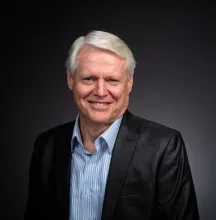
John Elliott serves in the role of President of the United Church of God, an International Association.
