
John Elliott
This transcript was generated by AI and may contain errors. It is provided to assist those who may not be able to listen to the message.
We come into this world as babies and as children, and we look around and we observe, and we accept what's here. We accept our culture, we accept our environment, we accept our parents, we accept the system that exists in society. We link psychologically to it. It becomes our town, our country, our culture, with our types of food, our types of landscapes. And this psychological connection will tend to stay with us through life. And as people even migrate, they'll feel more comfortable in something that they identify with, environmentally, culturally, that they had when they were young, even with foods.
We tend to embrace, then, what's around us, and it becomes, from childhood, ours, with what was established there in its comforts, its entertainments, forms of transportation, communication, clothing, housing, recreation.
It sort of forms life, and we grow up in these things. Now, for those of us who are a little bit older than children, let's pause and think. What happened to those environments and those systems since childhood? It's interesting to watch movies that were made at the time of your childhood. Ever do that? I remember seeing this when I was a kid, and you see it again, and you look now with a new set of eyes as the film goes through streets, and it goes through civilization and society, and you begin to say, wow, that's really different. It's changed, in a sense. What happened to those environments since our childhood? Well, it's called development. There have been development projects, and there have been upgrades, and things have improved. Things back then have a similar infrastructure, but it looks dated, doesn't it? It looks poor, in a way. Not as flashy, not as big, not as this and that.
Houses today are a lot larger, and they're a lot nicer, more luxurious. They have entertainment features in them. You think of when you were a child, if you go back and look at that house, it might be quite small, and you wonder how did that family even fit in there? Where today, a couple may have what would then be a mansion, multi floors, lots of room. There's only two people living there, but that's kind of expected. Vehicles today are faster. They're more luxurious. They have every imaginable option, almost as standard anymore.
They have entertainment in them. And today, not just a vehicle for a family, but it seems like everyone has a vehicle, or two, or three.
AM radios, which were a standard in about everywhere you went, today, ultra-high-definition video with surround sound is expected on everything from big screens, homes, cars, personal devices, and earbuds. Think of a trip to the park. Today, people have luxury vacation destinations globally to every park in the world.
Cruising, all types of things. Even traveling into space. People are lining up to pay for travel there.
Communication transformed from simple devices is suddenly a myriad of ways to communicate. From your pocket, from anywhere, everywhere.
Communication connecting with everyone, everywhere.
Home meals used to be something your mom made. If you could afford it, you'd have two or three meals a day.
And that was kind of your family culture. People say, I remember how a mom or grandma used to make, and I really like that dish. We bind psychologically to that which we enjoyed as youth. Fast forward, today, people dine out or are provided with foods from many different sources of all types of cuisines available anytime, everywhere.
Comforts have risen to the forefront of everyday life. Even the dress styles today have abandoned the discomforts of the past and moved to comfort the styles, the fabrics, the furnishings, the work and the comfort at work, the chores, the ease.
We're a society that is advancing, as it were.
An interesting byproduct of these upgrades and advancements is that all the previous ones are in the trash.
Everything about that? The old homes that got torn down are in the landfills. The cars, the televisions, the trinitrons, all the advanced types of radios and DVD players and 8-track players.
All of that goes in the trash, along with iPhone 1, iPhone 2, iPhone 3, iPhone 4.
The old playstations, the old things that people thought were so advanced and you just had to have them.
Landfills have become small mountains, literally.
In them are children's toys, things that people used to use, bicycles, railroads.
You can go online and sit just fine in your country. Railroads no longer in service.
And it'll look like a grid of roadways in red just evaporated.
What else is out there? Airplanes.
Airplanes of all sizes, stacked in junk fields. The computers, the cruise ships of old.
They're dated. They're too small. They don't meet the current upgrade requirements. And filled as well as all types of former pleasure boats and RVs, just stacked and junked. Furnishings.
Things discarded because they are no longer of value to anyone.
And yet things that people spent dear money for to try to upgrade and advance their lives. How far will that trend go? Let's go to Revelation chapter 18.
Revelation chapter 18 will begin in verse 11.
It says, And the merchants of the earth, those who are selling the latest advancements, pushing the luxuries, pushing the comfort, the ease, the upgrades, the merchants of the earth, will weep and mourn over her when this Babylon the Great falls, for no one buys their merchandise anymore. So pushing right up to the very end, during the Great Tribulation, we find this continues. This is what drives nations, drives the world economy. It's what drives wars. It's what drives natural resources and the fighting over natural resources.
These merchants in verse 12 are selling types of gold and silver. In other words, things that are precious to people. Precious stones and pearls and fine linen and purple silk and scarlet. Every kind of citron wood, every kind of object of ivory, every kind of the most precious wood, bronze, iron, marble, cinnamon, can I throw in plastic? And incense and fragrant oil and frankincense and wine and oil and fine flour and wheat and cattle and sheep and horses and chariots and bodies and souls of men.
Even things that would discuss us today will be done as people pursue this acquisition of more and better.
When you and I see these things, what do we think? In verse 15, the merchants of these things who became rich by her will stand at a distance for fear of her torment, weeping and wailing and saying, alas, for that great city that was clothed in fine linen, purple and scarlet, adorned with gold and precious stones and pearl. In other words, that which was the goal, the ultimate, the best of the best, for in one hour such great riches came to nothing. All that humanity has striven for at its zenith in one hour came to nothing. Now, let's talk about that for a moment. When we think of value and what you and I are pursuing in life, and that all that this society is piling up and driving itself toward is going to come to absolute nothing, then what real value is in it? What real value is in it? In verse 19, they threw dust on their heads and they cried out weeping and wailing, because, see, they didn't really have any ambition, no goal beyond stuff.
In verse 20, notice this, Rejoice over her, O heaven, and you holy apostles and prophets, for God has avenged you on her. There's a distinct correlation, I should say, contrast. It's a distinct correlation or contrast between the two. One is light and one is darkness. One is right, one is wrong. One is the everlasting kingdom of God and the saints and eternal life, and the other is something transient, temporary, really worthless. Is there any correlation between it and the members in God's church? Well, there shouldn't be, right? There shouldn't be, but is there a correlation? I don't know about you, but I'm a human being. I grew up in the culture. I appreciate things and improvements and advances.
What correlation should there be in my life between things, stuff, and also the pursuit of godliness? Let's look in James 4, verse 1. That which is written to the church can't just point at the world and say, us and them, but rather sometimes us and us. It does wear off on us, and we are here to come out. We didn't came out. We are to come out. We are to separate ourselves from these mindsets. James 4, verse 1. Where do wars and fights come from among you? Good question. We see where the wars and fights come from in civilization and society, and where that takes them for the return of Christ. Do they not come from your desires for pleasure that war in your members? You lust and do not have. I want more. I want better. I want advancement. I want that, and that's really what I'm here for. You murder and covet and cannot obtain. You fight in war, yet you do not have because you do not ask, and you ask and do not receive because you ask amiss that you may spend it on your pleasures. Well, that's what society is all about, the pursuit of happiness, pleasures. And everything is being developed and market and sold to us so that we'll buy it today and throw it in the trash tomorrow to buy something even better. Where does that take us in life? God created this physical universe for mankind. It's a good place. It's a very, very good place. It's awesome. It's exciting. There's things to see. And God presents us with those things so that we will give Him glory. He wants us to see those things. He wants us to do certain things. He wants us to have blessings. But the physical things that this world craves we see are never enough. They always want to throw them away and do something better. Man continually becomes bored with what he has, whether it's his physical possessions, his spouse, his job, where he lives, what he does. It becomes this obsession for something new, something exciting, something more thrilling, something that appeals and excites the five senses more.
Man has already been to the moon, and now he wants to go to Mars. There was nothing on the moon. There's less on Mars.
Today, the title of the sermon is, This World is Not Enough.
There is a balance between what is in the physical environment. And when we think of the Feast of Tabernacles, we think of a godly environment with good food and second tithe, the festival tithe that we can go and enjoy the feast, those physical things. What is our purpose for going to the feast? Is it to go there to see and to have more and to do more? Or is it to go there and worship God and show appreciation to God for his creation, for calling us, for his spiritual family, for the kingdom of God that's coming, for the plan of salvation, for the return of Jesus Christ, for us being able to participate in that?
When we think of the festivals of God, they all involve food except one. That one has spiritual food. They are focusing us on what is important in life. And in living this life, physical things are necessary. Food, clothing, housing, raiment, transportation, communication, all of these things are important. But they're not what is vital by any means. Let's go back to Genesis 1 and verse 27. When we look at the Genesis account of creation, I'll just drop right down to the end of it.
In verse 27, so God created man in his own image. In the image of God, he created him. Male and female, he created them. Now, humans who just like everything about themselves will then just focus on the man or focus on the woman. It's about romance.
It's about this. It's about that. And it's about all that we can do, and off they go in a different direction. If you don't think so, let's just look over in chapter 3 and verse 5. Genesis 3 and verse 5. So they're told, you know, you've got everything here, and you've got God. You've got all this wonderful creation, and God said it was good. So it's nothing wrong with things. Food and environment and all the things that God made, the animals and seeing them, naming them. But they're told, for God knows that in the day you eat of this forbidden fruit, your eyes will be open, and you will be like God, knowing good and evil.
Advancement. You can be improved. You can have more for yourself. So when the woman saw that the tree was good for food, for herself, and that it was pleasant to the eyes and a tree desirable to make one wise, she took of the fruit, ate, gave it to her husband, and he ate, and they're off for advancement. They're off in the physical realm. When man wants more physical and pursues physical, he detaches himself from godliness.
It's always the case. When you pursue the physical, and that's your objective, you leave behind godliness. If you pursue godliness, you leave behind the pursuit for the physical. You can't have both. You can't be double-minded. Now, you can do very well in the physical realm and have a lot of things if you are spiritually driven, because God's way works.
But if you are physically driven, you cannot have good relationships with God and man by ignoring them and by promoting something simply for yourself. In Ecclesiastes chapter 1, we see an example of an individual who tried both, both at the same time.
This is David's son Solomon, an individual that God respected. God chose to build the temple for him. God chose to give him great wisdom. Ecclesiastes... and we'll start in chapter 1 and verse 1. Now, the words of the preacher, or the teacher, the son of David, king in Jerusalem. And he begins with this Old English word, vanity. This is an Old English word.
It's translated from the Hebrew word, habel, and it means vapor. According to Brown, Driver's Big, it has one meaning, and that is vapor. Now, in order to understand how that carries forward, Strong says it's transitory, emptiness. It's kind of like vapor. What does vapor do? If you see a cloud, what does it do for you? Not much. It's just there, and then it's not there. It's transitory. It's there, and then it's gone. It's a vapor. It's something that, in and of itself, doesn't accomplish anything in the long run.
So if we read on down here, he says this, vapor of vapor, says the preacher. Vapor of vapor, all is vapor. So you could say transitory. You could say, you know, short lived, short lived of short lived. What prophet has a man from all his labor in which he toils under the sun? One generation passes away, another generation comes.
The old stuff goes out. Did you ever watch the old, old movies? You know, when you were a kid, now those were cool TV shows and movies, and that kind of represented who you were. Now it looks a little dorky, probably, if you're getting up there. But it was the generation before. It was their movies and their old TV shows that looked really odd. Now those old offices and the secretaries in the offices and the landlines they had, and those old cars that they drove around, it just looked odd. Now that generation is gone with all of its stuff.
Your generation came in and replaced all that stuff. Now probably you're looking back at your generation, all that stuff is long out the door and replaced. Maybe a generation or two more. So he's saying here, the earth abides forever, but these generations and their stuff keeps going. The sun also rises, the sun goes down, it hastens to the place where it goes, the wind goes toward the south, turns around, goes to the north, whirls about continually. All the rivers run into the sea. In verse 8, All things are full of labor. Man cannot express it.
You know, where you live, there's a lot of things to do. Things have to be cleaned. Things have to be trimmed, pruned, mowed. You have to be trimmed, pruned, mowed, as it were, bathed. Then whatever else you have has to be maintained and bathed and washed. After a while, you think, wow, this just wears me out. So next he says in verse 8, The eye is not satisfied with seeing. It doesn't matter how many trips we go on, how many things we see, how good the definition is, we're not satisfied we want to see something else, nor the ear filled with hearing.
We want more. We want to refresh that. We want to upgrade that. Dropping down to verse 14, I have seen all the works that are done under the sun, and indeed all is vapor and a grasping for the wind. It doesn't last. It's going to go in the landfill, no matter what you build it.
Go back to what Solomon built. You can't find it today. It's just not around. Go back to some of the things that you built. Maybe you've been in a career a long time. And you go back, oh, that which I built, they've removed. They've torn it down.
They've built something else. They've improved it. That thing that I used to make in my corporation, that particular item that used to be the big deal of the day, that thing is so auraled and archaic, and the company went out of business, and somebody overseas is now building something that's 20 times faster and better. And so all this labor, he says, all the works that are done under the sun, verse 14, and indeed all is very temporary.
Verse 16, I communed with my heart, and I said, look, I've attained greatness. I've gained more wisdom than all who were before me in Jerusalem. My heart is understood, great wisdom and knowledge. I set my heart to know wisdom, to know madness and folly. I tried entertainment. That also is a grasping for the wind. It's like a good joke that makes you laugh, and then you want another joke to make you laugh. And the old plot lines of the books you've read, well, you know the plots, the films you've watched, well, you know how they go, the songs you sung, you know, you want something new and more entertaining.
For in much wisdom is much grief, and he who increases knowledge increases sorrow. Materialistic quest for life ends up in a life apart from God. Notice in the next chapter in verse 1, I said it in my heart, come now and I will test you with mirth. So Solomon now becomes our guinea pig, our test lab for things. He's going to start with laughter, mirth. Therefore, enjoy pleasure, but surely this was also a vapor. I said of laughter, madness, and of mirth, what does it accomplish?
I search my heart how to gratify my flesh with wine. While guiding my heart with wisdom and how to lay hold on folly, till I might see what was good for the sons of men to do under heaven all the days of their life.
I made myself works great. I built myself houses and planted myself vineyards. I made myself gardens and orchards. Notice how myself keeps coming in here. And planted all kinds of fruit trees in them. I made myself water pools from which to water the growing trees in the grove. I acquired male and female servants. I had greater possessions of herds and flocks than all who were in Jerusalem before me.
And I also gathered for myself silver and gold and the special treasure of kings and the provinces. And I acquired male and female singers, the delights of the sons of men and musical instruments of all kinds. So I became great and excelled more than all who were before me in Jerusalem. And my wisdom remained with me. Whatever my eyes desired, I did not keep from them. I did not withhold my heart from any pleasure. Verse 11, Then I looked on all the works that my hands had done, And the labor in which I had toiled, and all indeed was vapor.
A grasping for the wind. There was no profit under the sun.
Verse 26, For God gives wisdom and knowledge and joy to a man who is good in his sight. So striving to grasp the wind or to catch the wind is a useless prospect. Going after that for yourself is to actually miss it. When in fact, as we see in verse 26, all of those things are things God wants you and I to have. And they are built into godliness. For God gives wisdom and knowledge and joy to a man who is good in his sight. But to the sinner, He gives the work of gathering and collecting that He may give to Him who is good before God. It's like Jesus said, you know, there are treasures that people pile up where moth and rust and a few other things, corrupt, moss and decay and wood rot and, you know, just the aging of things and the irrelevance of things and ultimately, they go in the trash. The pursuits of materialism are never enough. They are never enough. In chapter 5 and verse 10, He who loves silver will not be satisfied with silver. I've known a few individuals who have owned silver, actually, who have owned some silver. But in gaining great amounts of silver, the individuals have told me it became a burden. Now you've got something you have to look out for, to protect, to worry about, to wonder if that investment is going to work out or somebody is going to steal it. And they're not satisfied with silver because what are you going to do with it? Nor he who loves abundance with increase. So if you like a lot and you want more, well, you can't deal with a lot to begin with. More of a lot is just overload. This also is a vapor, he says. In verse 11, when goods increase, they increase who eat them. That's sort of the rule. If you have a lot more to eat and you're going to use it all up, you're going to be bigger. He found that. So what profit have the owners except to see them with their own eyes?
You can look at this stuff, but what does it do for you? An example, a modern example. Go anytime to a marina or an RV storage place and just look. Look at the money. If you can imagine how much is out there, you probably can't even imagine what a boat, a pleasure boat, or some type of a yacht costs.
But if you could, just imagine the wealth that's there or any of these RV storage lots. Take a picture, if you will. Now go back on any holiday or any other day, take another picture and notice, they're all still there. They're all still there. Nobody's using them. The storage rates are extreme.
The marina rates are high. And what he's saying here is, look, is the goods increase? What are you going to do with this stuff? Maybe you also have a private jet somewhere. What's it doing? Well, it's taking up space. It's costing you money. What are you going to do with that?
And your boat and your house and all these other things? Except to see them with their eyes. You know, ultimately, all that stuff ages and those boats go into the trash, those RVs all go into the trash, those houses get sold, and all the effort and work that went into all that gorgeous landscaping, all the upgrades and everything else goes with them. It just goes with them. It's a paradox that if you could have everything in the whole universe, if it was yours, just think about it.
It's yours. If you had everything in the whole universe, just hold on to that now. You've got it all. Now let's go to 2 Peter 3 and verse 10 for just a moment. Keep holding it. 2 Peter 3 and verse 10. Got it? Don't let anybody get it away from you. 2 Peter 3 and verse 10. But the day of the Lord will come as a thief in the night in which the heavens will pass away with great noise, the elements will melt with fervent heat, both the earth and the works that are in it will be burned up.
Now what do you have? You had everything. Now you've got nothing. So just to go sort of way beyond what Solomon tried, this world is not enough, and it was never intended to be enough. In Ecclesiastes chapter 3 and verse 9, we bump into something else from the lips of Solomon that is profound. It's just a little statement. It's dropped there, but it's huge. Ecclesiastes chapter 3 and verse 9. He goes on, What prophet has the worker from all in which he labors? Verse 10, I have seen the God-given task with which the sons of men are to be occupied.
So we're supposed to be human. We're supposed to have tasks. We're supposed to dress and keep. We're supposed to have occupations. We're supposed to do well. We're supposed to have increase in our families and our children. Life is supposed to be good, right? But going on here, verse 11, He has made everything beautiful in its time. Also, He has put eternity in their hearts. Now we shift to a totally different concept than the pursuit of materialism or the acquisition of materialism, the upgrading of materialism, which is all going to be burned up.
God has put something else in us, eternity, in our hearts. Humans want to live beyond this life. Humans imagine, and they've been tricked into believing, that there is an eternity waiting for everyone. Even if they believe in evolution, many of them think, well, somehow I'll just go into the ether, or I'll just be absorbed, but I'm not going to be gone. Because God put this eternity into our hearts. So this world is not enough for humans.
It never was enough for humans, and it was never intended to be enough for humans. God put something else in our hearts that goes beyond it for all eternity. If we go to 1 Timothy 6 and verse 6, 1 Timothy 6 and verse 6, Now godliness with contentment is great gain. Wow, we just suddenly married the two. We married the physical realm, and we married eternal life, eternity, in the same individual, and we have godliness and great gain in very contented people.
For we brought nothing into this world, and it's certain we can carry nothing out. And having food and clothing with these, we shall be content. That's not like you have to wear the same clothes until you die, you have to live in the same house, you have to drive the same car. He's not saying that. He's talking about being contented with the physical realm as it exists in its own right. And that right is to provide us with life, whereby we can go through the process of salvation.
This process of salvation needs humans. Those humans need food, they need a place to live. And he said, you know, I'll look after you. You work on the righteous part in Matthew 6, verse 33. You work on the spiritual part, and these other things will be added to you. Don't worry about that. So having food and clothing with these, we shall be content. But those who desire to be rich... I would say we are all rich compared to any time in history. But those who desire to be richer... You don't consider yourself rich.
None of us consider ourselves to be rich. No, those rich people are... So it's always something way above what you have. So those who desire to be more, have more than what they have, better than what they have... That's what their goal is.
Notice, they fall into temptation and a snare, and into many foolish and harmful lusts, which drown them in destruction and perdition. It takes them away from God. That is not the focus of godliness. It is riches for me. For the love of money... Nothing wrong with money. I've hoped that God would help me win the lottery many times.
And in His wisdom, that has never happened. And I hope it never does. Because you see what happens when people get driven, and it's all about themselves, and marriages break apart, whole life ways get changed, and they often get suicidal, their world breaks apart, and they're in far worse shape afterward. Why? Well, because this love of what money can do for me, distracts us. It's a root of all kinds of evil. Not money, the love of money. Not things, the love of things. Not upgrades and enhancements, the pursuit of more and better for me, like Solomon did. All kinds of everything for me. That is a root of all kinds of evil.
From which some have strayed from the faith in their greediness, and pierced themselves through with many sorrows. Don't think that God blesses an individual who is financially just takes off. It may have nothing whatsoever to do with God. It may have everything to do with society and the pursuit of riches. It is possible to get rich. If you abandon God, godliness, the principles of godliness start breaking rules, mix in with this system we call society, the world. Yes, as we saw there in Revelation, the beginning of this message, people do very well in that system until it all comes down.
You and I have an opportunity in verse 11 to pursue God, but you, O man of God, or lady of God, flee these things. Run from them. Flea means to absolutely bolt. Run for your life.
And pursue righteousness, godliness, faith, love, patient endurance, gentleness.
So we are here to pursue God, godliness, God's family, God's mindset, eternal life.
Notice in verse 12, fight the good fight of faith. Lay hold. It means to grab it with all your might, like you're climbing up a cliff and you're slipping, but there's that one thing and you grab that branch and you lay hold of it. Lay hold of eternal life to which you also were called. That's what we're here for. God places on this earth in this wonderful world, and He can bless us, He can bring all these wonderful joys and give us experiences, a lot of them actually, through the Feast of Tabernacles, through a tenth of our income being available every year to go celebrate the Feast. It's a wonderful time. But we do that to lay hold on eternal life to which you were called.
In Romans chapter 8 and verse 19, we find that in ourselves, with this mindset, we crave eternal life. Romans 8 verse 19, from the King James Version, it says, For the earnest expectation, earnest expectation of the creature, that is from the Greek ketisis, meaning the thing formed, it's you. The earnest expectation of you, the created human, waits for the manifestation of the sons of God. That's why we go to the Feast. We're looking forward to the resurrection, where we are manifested as the divine sons of God, reigning with Christ. That's why we're here today. We came here to declare this is the Sabbath, this is the seventh day. This is picturing our being in the kingdom of God, the body of Christ. And it's our earnest expectation. In verse 20, for the created human, that's you, were made subject to, there's that word, vanity, vapor, transient, temporary. And we're told in James, we're like a vapor. So we were created subject to vapor, being like a vapor, because the created thing itself shall be delivered from the bondage of corruption. Corruption is you decomposing in your grave. You are bound there by the gates of the grave. You will be delivered from the bondage of corruption. Jesus said, the gates of the graves of church members will not prevail. They will open. And we will be resurrected, as he says here in verse 19. Our earnest expectation waits for the revealing of the sons of God. That's what we're here for. That's what we're focused on. Not this physical stuff, it's nice to have it, but that's not why we're here. In verse 22 from the New King James Version, Not only that, but we also who have the firstfruits of the Spirit, even we ourselves groan within ourselves eagerly waiting for the Sonship, the redemption of our body. So we will die and we will be resurrected, or some will be alive when Christ returned and they will be changed, Paul says in 1 Corinthians 15. So this physical environment undergirds the opportunity for humans to live, to come to know God, to go through the process of salvation, through the new covenant that God gave us through the blood of Jesus Christ. And afterward, this physical universe will have no purpose, because everything will be new heavens and new earth. We'll be spirit beings.
Let's go back to Ecclesiastes as we wrap this up, chapter 9, and look at a balanced life like we should live.
Ecclesiastes chapter 9, we see that Solomon was our test case. He tested these things out. But he also gave us some lessons here that are vital. Ecclesiastes chapter 9, beginning in verse 7. So go eat your bread with joy. That's what we should do. We need bread. We should have joy, because we are right in God's eyes. And drink your wine with a merry heart.
For God has already accepted your works. Do you realize that? God is accepting your repentance. God is accepting your good works through His Holy Spirit. God is pleased and proud when we pursue godliness. He has accepted your works.
Let your garments always be white.
He's talking here about the virgins, the ten virgins, the bride making herself ready. Her garments are being made white through the blood of Christ. Let your garments always be white. Be that virgin bride of Christ spiritually. And let your head lack no oil. Remember the ten virgins? What do the five wives have? Oil. We need that Holy Spirit. We need that relationship with God to be strong in godliness.
Verse 9, Live joyfully with the wife whom you love all the days of your vapor life. Or, live joyfully with the husband whom you love all the days of your vapor life, which He has given you under the sun all the days of your vapor, for that is your portion in life and in the labor which you perform under the sun. It's a good life. And God has created us with humans to appreciate our environments, our cultures, our foods, to enjoy the type of environmental creation that He's placed around us, identify with that, to be human, to enjoy humanity. But He says in verse 10, Whatever your hand finds to do, do it with your might, for there's no work or device or knowledge or wisdom in the grave where you are going. That all has its place, but that doesn't last. Whatever it is that we do physically goes away when we die. Your life and mine has a purpose beyond stuff. We're here to be children of God and His kingdom. In fact, God wants you to have everything, and the world is not enough. He wants you to have more than everything in the world and everything in the universe. Everything that exists. And not just the stuff that's going in the trash or in the garbage. He wants you to inherit all the riches that will exist throughout eternity. Now, how's that? Let's go to Romans 8, verse 16.
Romans 8, verse 16 and 17. The Spirit itself bears witness with our spirit that we are children of God. And if children then heirs, there it is, who owns everything? God, Jesus Christ.
He then says, we are heirs. Heirs of God and joint heirs with Christ.
God wants you to have everything along with Him. If indeed we suffer with Him, that we may also be glorified together. So we need to be focused on being godly, children of God, and ultimately we get it all. How interesting. So in conclusion, we see that Solomon became an example of trending towards hedonism. It's all about me and all about what I can see and feel and do. Solomon had wisdom, he had wealth, he had power, and yet without godliness, Solomon declared, everything under the sun is vapor. It's meaningless. It's transitory. Everything. Well, it's not. Everything physical has its place, including your mind, your body, and the things around you. But the Bible actually has these things in place for us to develop a spiritual relationship with God and ultimately be spirit beings with God forever. So use the Bible to consider your purpose, to consider your ways, your future, your priorities. Let's conclude with Solomon's words in Ecclesiastes 12 and verse 13. Let us hear the conclusion of the whole matter. Here's how he sums it all up. Fear God and keep his commandments, for this is man's all. There it is. Our focus, all of our focus, our reason for being, our reason for existing, our reason for being called at this time, for being in the church, our reason is to keep God's commandments. Love God with your heart, soul, and mind. Love your neighbor as yourself. The world is not enough if lived without godliness as its purpose. It's simply meaningless. However, the kingdom of God is everything, and pursuing a godly life brings fulfillment now and will last forever in the kingdom of God.
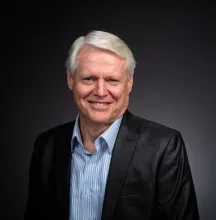
John Elliott serves in the role of President of the United Church of God, an International Association.
