
Robin S Webber
This transcript was generated by AI and may contain errors. It is provided to assist those who may not be able to listen to the message.
Well, good afternoon once again, everybody, and welcome to our webcast audience and those that may be hearing this message in the weeks or years down the line. I hope that it will be as poignant when you hear it as it should be germane to our audience right here. I know what I wanted to mention today is that it's so nice seeing a lot of people that I don't normally have an opportunity to see, so we're glad to see some of you. And let's make sure that we get together pointing this way so you just don't think it's you.
But it's so nice to see so many, many people, even though we miss those that I mentioned in the announcement period that are not with us. I would, to begin this message, just simply invite all of you to join me in Scripture. And if you would turn over to the prophet Isaiah's message in Isaiah. And I'd like to pick up the thought, if we could, in Isaiah 6 and verse 8.
And as we open our Bibles, it's always remember, if we're going to open our Bibles, we are going to open up our hearts, because it is God's Word that hopefully will penetrate all of us on this day. In Isaiah 6 and verse 8, it simply says this, And also I heard the voice of the Lord, saying, Whom shall I send? And who, who will go for us?
The end of the verse simply says this. Then I said, Here am I. Send me. This is the opening Scripture that I hope that we can build upon in the course of this second message. We are having our annual member meeting this evening. And I think much of what I'll share with you this afternoon is to our church.
Not just a church as an organization, but to recognize that each and every one of us is the church. The church is just a fancy word from Ecclesia, which means called out ones, those that are set apart by God. And so each and every one of us in that sense bears the name and the sense individually, just as clean, you're going to be baptized tomorrow.
And you're going to hear the words that in that sense, I do not baptize you into any church sect, creed or denomination. But I baptize you in the name of the Father and of the Son and of the Holy Spirit for the remission of your sins. Now, this doesn't count right now, but I'm just reminding you don't have any water right now.
We're almost there. But to recognize that we are baptized individually before God. Want to think about it this way, we're individually wrapped by God the Father through Jesus Christ. But then also, we're put into the body, the body of Christ, a spiritual organism. So there is, in a sense, an individuality, and there's also a collectiveness to what God does for each and every one of us.
And in giving this message today, I hope that you will take it personally, with a P, personally. And also, at the same time, you will be able to experience it collectively. For each of us, each and every one of us is a light, and that's what God has called us to be.
But also, I would hope and pray that as a congregation, when we think of our meeting this evening, that there's a collectivity, and that sometimes when you walk into a service, you experience the Spirit, and you experience the love, or you don't experience that Spirit, you don't experience that love. It is shallow. It is not bright.
It is not shining. And so, when we think about this, when we recognize that God was intervening with Isaiah, and Isaiah responded, we need to understand something very, very important. It is here that we come to realize that God has not only interrupted—that's the key phrase I like to use—interrupted human history, but by the Holy Spirit, interrupts our own human personal story. Why? That we might ultimately interrupt by His grace and by the guidance of His Spirit, the lives of others.
Have you ever just thought of it that way? That God has called you, by your example, by your words, to interrupt the course of time, to interrupt not only your course, but the life of another that glorifies God, that changes the equation altogether, and not looking over your shoulder wondering who else is going to do it, but that you have been guided, and you have responded to the words of Isaiah, Here am I.
Send me. So what holds us back from all of that sometimes in our Christian walk? Let me just share some words with you that you'll smile once you hear about it, because sometimes you feel the guidance of God's Spirit, you feel the lead that He is trying to provide you through that, and then come up three little words. You might want to jot them down. They're not real long. That's the problem. These are little, little words, but they have big, big meanings as to what we do with them, how we grapple with them, as to whether or not we handle them or they tackle us out of doing the right thing for God.
Three simple words. Ifs, ands, and buts.
Ifs, ands, and buts. How often have we stopped for a moment and we know what is needed? It might even be a little bit scary to do it, but then we are by those three little words. Ifs, if I do this, or an, what might happen? But what will people think? And it winnows down our witness as the disciple of Jesus Christ, as a child of the Father. A couple weeks ago, a couple sermons ago, I gave a message again about Caleb. And there's that famous line, though, that is in front of Caleb when Caleb, but, but, Caleb had a different spirit. We also think of Noah in Genesis 6 where it says where God was going to have judgment on the on the earth, and it says, but Noah found grace. So we look at this and we recognize that, that but, and what we do with it, how we hold on to it, to a better conclusion than our own human nature would allow us to have can make a difference. It's interesting when you think of ifs, ands, and buts.
There are actually neutral terms.
They don't bite on their own. It's which handle that you use when they come your way.
It could be a blessing. It could be the handle of blessing. Or it could be the handle of opportunity lost, at least for now. When the challenge comes to you, as the challenge came to Queen Esther of Persia, when her cousin had to tell her for such a time as now, the kingdom has come.
And if, and if, you do not accept the challenge, it will happen, but it will not be by you.
What happens when ifs, ands, and buts come our way? I'd like to quote Victor Frankel. Victor Frankel was an Austrian psychologist. Jew was in the concentration camps. So he had a lot of experience with having to make decisions just to live another moment, to live for another day. And Victor Frankel said this, between stimulus and response, there is a space. There is a space.
And in that space, in that space, is our power to choose our response.
Which handle will we use when it comes to the ifs, ands, and buts? And in our response lies our growth and our freedom. So with all of that said, put out before you with the introduction. Today, I want to introduce you to another man, other than Caleb, other than Noah, who was introduced in Scripture with a butt in front of his name. At a very dramatic moment, dramatic drama in the early church, in one sense later on he became the glue to a great degree that kept that early church that is written about in the book of Acts. He held it together by his example, by moving beyond the ifs, the ands, and the buts, and then going home and it would have, should have, and could have.
Simply by being there for others, being there for others, we are not only individually baptized before God the Father and in Jesus Christ, we also are a family. We are the family of God, and we need to be there for one another. So I want to speak to each and every one of us. Again, I really want to make this point individually and collectively, how such a life and such use of the Holy Spirit can light up our lives as a witness. Because I'm going to share something with you, maybe even during this message, because you can say, if, well, if I want to hear Weber today, if I really want to go down this seeming rabbit hole that he might be leading us to, and by the way, I didn't like his last sermon, so I just want all the ands.
Just joking, kind of. So the title of my message is simply this, two words.
I've been trying to work on getting my titles down shorter. Here it goes, but Barnabas. But Barnabas. Join me if you would in Acts 4. In Acts 4, Matthew, Mark, Luke, John, got the book of Acts there. In Acts 4, let's pick up the story and just get to get reacquainted with our friend Barnabas. In Acts 4, in verse 32, Now the multitude of those who believed were of one heart, and they were of one soul. And neither did anyone say that any of the things he possessed was his own, but they had all things in common, and with great power the apostles gave witness to the resurrection of the Lord Jesus, and great grace was upon them all. Nor was there anything among them who lacked, for all who were possessors of lands or houses sold them, and brought the proceeds of the things that were sold, and laid them at the apostles' feet. And they distributed to each as anyone had need.
And Joseph, who was also named Barnabas by the apostles, which is translated son of encouragement, a Levite of the country of Cyprus, having land sold it and brought the money, and he, note, laid it at the apostles' feet. What is this leading to? And for you and I to observe this day and develop in the days, the weeks, and the rest of our life. Point number one, Barnabas was wholehearted and big-minded. He was wholehearted, wholehearted and big-minded.
We find here that Barnabas, in that sense, was a man of Cyprus. He was a Jew of the dispersion, a Jew of the diaspora. But we also notice that his original name, Hebrew, was Joseph, but he was given the name. He was nicknamed, imagine this, he was nicknamed Barnabas out of the Greek, by the apostles, which is translated son of encouragement or the son of comfort.
Interesting. When you recognize that, we say, well, where's that going?
The Greek in this is the same Greek root as Pericletus, the same that is used for the Holy Spirit. What it's really saying when you think about it is, oh, there's the Holy Spirit man.
There's a man full of the Holy Spirit. God gives us his Holy Spirit and the knowledge of it to comfort us, to dwell within us, to encourage us in faith and not fear, and to move beyond the ifs, the ands, and the buts of how we've handled them until maybe you've heard this message before.
What else about him? What else about him? The Holy Spirit man. It says here that he was a Levite.
Levites are a people who were called to serve at the temple. God ordained the whole tribe of people, were to have service towards him for everyone. Now, they were not of the Aaronic priesthood, but these were Levites and they were served. So what is going on here?
I said he had a heart, but he had a big mind, and what was happening here was, yes, he had been a Levite. He came by almost genes of serving and giving and helping the people of God, but now he was recognizing something. Here's what I want to share with you. That God was doing something new. He was doing something new. He was tabernacling with man to the Holy Spirit. The temple was going to be in the hearts of men and women, and maybe beyond what the Jewish community at that time recognized. He recognized that he literally had been called to be on the ground floor of that experience. It thrilled him, and he surrendered everything, everything, his heart, his mind, his treasure. There wasn't a sense enough that he couldn't give to be a part. He was wholehearted behind what God was doing. He recognized that God was in the process of creating a new creation, and not just only a chosen people of old that had been chosen for 1,500 years, but something new was happening in the land, something that God had interrupted human history, something where he had sent his son to interrupt human history.
He was the disciple of Jesus Christ. He was a child of the Father, and he wanted to be a part of that.
There's going to be a new kind of temple, a new kind of way of being a human being, a new way, and a new kind of priesthood that the priesthood was now in heaven.
It wasn't based upon pedigree. I believe I, or if you've been of the house, I was a priest, my family's, oh, the priest, no, no, no, no, no. Every member in the new family reported to the Lord Jesus Christ and the heavenly priest above, and he wanted to be a part of that, faithful surrender. Here's what I want to share with you, please.
Kind of builds upon what Dennis mentioned earlier.
His example of laying his offering before the apostles was in stark contrast out to that which was going to follow, and we're not going to have time to go into all of it. And sometimes, you know, you and I, we like the verses delineated by numbers. You do? You do. Okay. Oh, April's, yeah, I know. April, April, yeah, I do. Okay, so do I, April. A little back and forth here going on. So anyway, or the chapters. The chapters can serve us, and sometimes they harm us because they cut us right off in the middle of the story. Why is this even being mentioned? What's he doing laying all of his treasure down before these apostles with this fledgling movement? That's kind of who's coming through the door to get us. But he's wholehearted.
He's big-minded. He recognizes the divine interruption.
Has entered his life and responds like an Isaiah.
Isaiah, God saying, whom then shall I send before me?
And Isaiah and Barnabas, right, coming along, said, send me. He laid everything down.
That is in oppositesity of what the next chapter is. Ananias and Sapphira come along. Ananias and Sapphira. Mr. and Mrs. Simon Lagree.
And they're playing church. They're showing up. They're pretending they are all in.
And yet they're holding back. They're playing games with God. Barnabas has already gotten that one figured out. You play games with God. There's only going to be one winner long term. He gives us all. You see, this was dynamic, this area between chapter 4 and 5. The church was on a roll, Acts 2, Acts 3 through Acts 4. We just heard about the church prayed to God that the people would be taken out of prison. Things are happening. Boom, boom, boom. And then you have Ananias and Sapphira. They, by their attitude, are trying to put a stick into the spokes of the wheel.
Just like Achan did back in the Old Testament to where Israel is going to move into the promised land. They, God gave them Jericho and then Achan did a number. This is the New Testament Achan pretending. Not just not giving funds. It's more than funds. God doesn't need our funds. He needs our heart. He needs our vision. He needs our big-mindedness. He needs us not to look at the next person what they're doing, but what you're doing today in your lives. Point number two. Barnabas allowed people to grow beyond their past. People, excuse me, Barnabas allowed people to grow beyond their past. Back in the late 60s, some of you that are baby boomers. I happen to be one.
Know what baby boomers are, don't you? They're recycled teenagers.
They're still listening to the music that they grew up with. When music was music, no. But a lot of us remember Simon and Garfunkel's bridge over troubled, talking to the right group. Join the crowd. We're all baby boomers. No, I'm not going to sing it. Okay. No opening prayer could solve my voice, so it's okay. Bridge, here's what I want to share with you. Barnabas predated the lyrics of that song by 2,000 years. Barnabas was a bridge over troubled waters. Never, dear friends in San Diego and those that are watching this, never underestimate how God is going to use you to be a bridge over troubled waters. And you talk about trouble. This was almost like double trouble.
We see that Barnabas, at this point, not only gives his wealth, gives his money from his property, his financial resources, but he gives himself and he puts himself on the line. Acts 9, join me if you would in Acts 9, please. And let's pick up the thought if we could in verse 15. Acts 9 verse 15. This is back in Damascus, and Jesus Christ is talking to Paul, but the Lord said him, Go, for he is a chosen vessel of mine to bear my name before Gentiles, kings, and the children of Israel, for I will show him how many things he must suffer for my name's sake. Pardon me. He's actually at this point speaking to Anna Nias, but he is defining how Paul, the enemy of the church, is going to be utilized.
And then the rest begins to happen. He begins to preach, saw, once those eyes are open and he knows that God truly is on his side and that vision is true, that he is teaching and he is preaching there. Verse 21. Then all who heard were amazed and said, Is this not the man who destroyed those who called on this name in Jerusalem, on his name in Jerusalem, and has come here for that purpose, so that he might bring them bound to the chief priest? But saw and creased all the more in strength and confounded the Jews, who dwelled in Damascus, proving that Jesus is the Christ. Now, after many days for passages plotted to kill but their plot became known to Saul and they watched the gates day and night to kill him. And then the disciples took him by night and lit him down through the wall in a large basket. You can just imagine how that must have been for Saul at that time. You know where he can then drops and drops and then thawed, but at least you're out of Damascus.
Marvelous things were happening through this man named Saul.
He was on fire. He was like a human volcano. But now notice.
Then the disciples took him by night and they lit him down. Now, verse 26, one of the most important verses in the book of Acts.
All things change here. There is a dynamic interruption by God into the body of Christ at that time. And when Saul had come to Jerusalem, he tried to join the disciples.
But they were all afraid of him, Saul. And based upon his history up to that point, they had every human reason to be afraid. And they didn't believe.
Even after the other reports had come to them from Damascus, and they did not believe that he was a disciple. What would you have done? Where would you have stood?
I wonder if today, let's use the example of Putin, of Russia.
With all that has gone over there in the Eurasian land, that's Europe, European mass of land between these two Slavic nations. And all of a sudden, you find that Putin has come knocking at the door of Kiev and say, I'm not the man that you've known. I've completely changed.
We are all Ukrainians. Now that puts it into context. Would you be the first to go up and hug him and shake his hand? Welcome in, bro! What would you have done? What do you do sometimes in your life where people have totally changed, been transformed, not the same person? And yet, you keep your distance. Notice this. One of the great, one of my favorite verses in the Bible that I try to hold up as a standard, but myself talking to you, I'm talking to myself, I can fall flat.
But there's the word, that's the title of the message, but Barnabas took him and brought him to the apostles and he declared to them how he had seen the Lord on the road and that he had spoken to him and how he had preached boldly at Damascus in the name of Jesus. So he was with them at Jerusalem coming in and going out and saw, he, Saul spoke boldly in the name of the Lord Jesus and disputed against the Hellenest, the Greek Jews, but they attempted to kill him. And when the brethren found out, they brought him down to Caesarea. Half the time Paul was too hot to handle.
Notice, you have to keep on getting him out of town, right? But here's the thing, what was happening?
I've used the example of Putin and with the Ukrainians. Have you ever gone by a pet store and you see in the window there's a mother dog and then you have four or five puppies nursing, you know? But you know what? There's always one that can't quite get in. As much as they want to, they're so cute. Even the rungs of the litter are cute. And so there's that one little gets kicked out. Boom! You know, just boom, like that. That's what they were doing to Paul.
They were all receiving the nourishment of God and somehow they felt he shouldn't receive it. But Barnabas, wholehearted, big-minded, and Barnabas, key point, Barnabas, point number two, Barnabas allowed people to grow beyond their past.
Barnabas's heart and head was where God's head was. Where others saw a spy or a threat, Barnabas saw a miracle. He saw where God is and plunged into the same ditch. He had that God-like quality of seeing what people could be rather than where they started. He fully grasped that God's role is to choose his family. And our responsibility as members in the body of Christ are to accept them. God chooses whom he will choose. He will honor whom he will honor.
Our role as a San Diego church family, our role as an individually wrapped Christian, is to recognize as we were forgiven as if we are to forgive people, but to accept the people that God has forgiven because they have turned to him. Now, when we notice Acts 9, verses 28 and 30, which I just read, one thing.
One thing.
Barnabas's example of love and encouragement fueled the fire of Paul's engine.
He knew he had a friend. He knew that he was not alone.
Can you see yourself? And you don't have to be a Barnabas or a Paul or one of those four bust of leaders on Mount Rushmore. God will use anybody and everybody. We've all got different personalities. It's never the sound or the loudness of the voice, but it's that still small spirit of entreatment that can make all the difference in the world. I know that you want to be that kind of a person. That's why I'm sharing this with you. I want to be that kind of a person, but fear gets in the way. 1 John 4, 18 says that love cannot be perfected by fear. Fear pushes us back rather than embracing that something new is happening here, something dynamic.
God can change lives as much today as he did in the Easter age, and we need to be ready to prepare to accept that. 3 Barnabas understood new meant new. Barnabas understood that new meant new.
Jesus had said in Matthew 28, 19-20, I'm not going to turn there, he said, go you therefore into all the world and preach to all of the world and preach what I have shared with you. It's interesting that in Acts 1 and verse 8, I will turn over to Acts 1 and verse 8, he even kind of said how this was going to work out in Acts 1 and verse 8, but you shall receive power when the Holy Spirit has come upon you, and you shall be witnesses to me in Jerusalem and in all Judea and Samaria, where's this going? Okay, and the ends of the earth.
God was doing something new. He was expanding his family beyond genetics, beyond genes, beyond one ethnic group. This was going to be a worldwide endeavor to Samaria.
You mean we've got to deal with them, too? Hello? Is there anybody else up there?
And Ethiopia and the ends of the earth, that and that, the Greek mind would have been either the pillars of Hercules, Gibraltar, that area, and or also Ethiopia, which in that time was taught to be the ends of the earth. And you know how that works out in the book of Acts with a eunuch.
Something different was occurring. God says, I do all things new. Behold, I create all things new. 2 Corinthians 5, 17.
Jesus, when he came to earth by the Father, interrupted human history with a message, with a reality. All things were going to now change.
And yet, we know that at times there was foot dragging in the early church, even with Peter when he visited Cornelius. He was on trial. Now, he was a little bit slow on the draw, even with that one.
He was slow around the draw than the gentile Cornelius.
He was going through the ifs, the ands, and the buts. Then he finally got it. He surrendered to God. He went and visited Cornelius. But it's interesting. God, who knows that sometimes, even in our courage, He'll ask us to do what only we ought to be doing, because we were rescued, and we were put into salvation. But He also asks us to do something, but sometimes He waits.
So Peter's there with Cornelius. And then He has to go back and talk to the hometown crowd. What are they going to that same group? What are the apostles back at home going to think?
And Peter's talking to them. He says, what am I supposed to do? I was talking to them, and all of a sudden the Holy Spirit came down on the gentiles. What am I supposed to do? See, God, that may not happen to you tomorrow, Colleen. Okay, so you will be immersed most likely, unless some new thing happens. But God gave them the Holy Spirit. And then Peter says, what am I supposed to do? What am I supposed to do? Am I going to forbid baptism after God's already given the Holy Spirit? Kind of a reversal, but I think they were baptized in that sense. So often we can go along in life, and we hold on to old tunes, old melodies, old lyrics that we're familiar with. Just like the Israelites and the Jews had, they'd been God's only chosen people for nearly 1,400 years, and they didn't realize that God had interrupted their lives.
Simple question I have for all of us, and I'm talking to myself, how often do you and I recognize that God, through the Holy Spirit, is interrupting? I like that word because it's a word of power. You've been interrupted, especially when you weren't ready to be interrupted, but God is the master of timing, and God continues to interrupt His saints today.
As we're gathering together individually here today and tonight collectively as a church family, I would like to see us be in the spirit of Barnabas, the spirit of comfort, the spirit of encouragement, the spirit of faith, the spirit of courage. Encouragement is giving God's courage to others by being by their side, by connecting with them, by to recognize that, as Dennis was bringing out, there's sometimes when we just all need to pray together, to bond together, and to recognize that we're not alone. Point number three. Barnabas was willing to share the stage with others.
Barnabas was willing to share the stage with others. Jeremy, if you would, in Acts 11 for a second, please.
In Acts 11.
In Acts 11 and picking up the thought in verse 25.
Then Barnabas departed for Tarsus to seek Saul, and when he had found him, he brought him to Antioch. So it was that for a whole year they assembled with the church and taught a great many people, and the disciples there were first called Christians in Antioch, which was the third city, third great city of the Roman Empire, crossroads between the west and the east. What's going on here? Initially, Barnabas had stuck his neck out in Jerusalem for Paul, for Saul.
Now he was going to stretch. Barnabas had initially gone up to be in Syria to encourage, as scripture brings out, seems wherever Barnabas was, he just spread encouragement, but he recognized something. It wasn't about him. There was going to have to be another voice along with his. So he had stuck his neck out. Now he's going to stretch.
Saul was over in Tarsus at that time. Saul was over in Tarsus.
It seems as if Saul was so hot to handle that God kind of put him, in a sense, on ice cubes for a while, for about 10 years. I don't think he went dead. I think there's a lot. If you know Paul, he wasn't going to be. One thing about Paul, he could never be quiet.
And so he was doing a lot of learning about this revelation that Jesus had given him in the wilderness and was probably sharing it and working it through with his family and with the community in Tarsus. But now Barnabas stretches out and he brings Saul. And then we now begin to have the beginning of what we might call the dynamic duo, kind of the Lou Gehrig and Babe Ruth of the New Testament, side by side, this team. As we look in Acts 11, verse 30, then this they also did and sent it to the elders by the hands of Barnabas and Saul. Just a little light. Whenever there's a mention of a name, Barnabas and Saul, that normally means a point of order who's in charge. It's even like when the ordination of the deacons in Antioch starts with Stephen. So it kind of shows a lineup, okay? Right now at this point, we see this and he sent it to the elders by the hands of Barnabas and Saul. So Saul is being mentored by Barnabas, who's a wonderful mentor. We later on see in Acts 13 too, if you could just stay there with me, where it says, now separate to me Barnabas and Saul for the work of which I have called them to.
Saul, no excuse me, Barnabas and Saul. Now the work that is there is in the first missionary journey and what happens is they go to Cyprus. And in Cyprus, they have a confrontation with a magician and Saul takes the lead. You know, Saul is kind of the living volcano and Barnabas is kind of the still, loving, encouraging, warm, waves, loves everybody. Sometimes you need to have that mixture, right? And so what happens here is something very dynamic occurs here as we look at. Notice verse 13. After all of this goes on, you see a great sea change now in the book of Acts. Now when Paul and his party set sail from Paphos, they came to Perga in Pamphylia, and John departing from them returned to Jerusalem. Whoa, whoa, wait a minute.
I'm not talking to you. I'm not talking to you, Bob. You can come back. Just know he said, wait a minute. He left. So anyway, that the point is this. It had been Barnabas with Saul, kind of what we may call the second guy. Now it's Paul and party. What? And where?
In Cyprus? On Barnabas' home turf? On his home turf of all places?
What's happening here? Not only to Barnabas, but to you and me. Barnabas came to embrace the words of John the Baptizer. Just jot down if you want to for reference John 3, 27 through 30. It was simply this. I must decrease that he might increase.
Oh, that's powerful words.
God, I came in the spirit of Elijah. I was the man out in the wilderness. I had all of Jerusalem coming down and visiting me. They couldn't believe what you were doing through me.
And I even said, behold, the Lamb of God.
Hmm.
And yet to do God's will, John had to say, I must decrease that he might increase.
Will we be willing? Will we be able to say that this year as something comes into our life?
That we have always done, that we've always performed, whether in services, whether in our extended family, to recognize that there is a time to say, thank you, God, for whatever I have done. But I recognize now that you're moving along with your plan. I'm not going away, but I recognize, as Barnas was said, I recognize what you're now doing through no longer Saul, but he takes his Roman name, Apoll, and I can live with that. Philippians 2. Philippians 2. Just join me over there for a second. I think it's important to point this out to all of us. Philippians 2.
Therefore, if there is any consolation or comfort, like Pericles, in Christ, if any comfort of love, if any fellowship of the Spirit, if any affection and mercy fulfill my joy, being like-minded, having the same love because of one accordant of one mind, and let nothing, nothing, be done through selfish ambition or conceit, but in lowliness of mind, let each esteem others better than himself.
Let this mind be in you, which was in Christ Jesus, who, as Philippians continues, did not hold on to being in heaven above, but loosened his grip, humbled himself, and came the likeness of man.
Are these just words? Are these just platitudes?
Or is this the reality check that God would have us think about on this day, as the ifs and the ands and the buts come our way, and recognize maybe God has another purpose for you.
God never closes one door that he doesn't open another door. God never closes a door that he doesn't open another door for you to serve him in a unique way.
In all things grace. Grace as you enter opportunity, and grace as you leave that responsibility, recognizing that God will have you utilized by him to serve in another way. I'm going to go to the last point. I'm going to skip a point just for sake of time.
Point number four, then. By the way, with all of what I've said about Barnabas, he's not Jesus. Okay, you already knew that, but I just thought I'd remind you.
The point is simply this. Barnabas was human, and so are we. And to recognize that human nature is always around the corner. Always around the corner, and to be aware of that, and to keep it in check. We know that the famous story in the book of Acts, Acts 15, 36 through 38, there was this gigantic, not gigantic, I was not the fly in the wall, but there was a dynamic disagreement between Paul and Barnabas as to using John Mark. It seems as if John Mark had bailed ship in Cyprus and walked away from them, perhaps in what Paul thought was the time of need.
Now they were moving forward, and Paul said, no, no, no, no, no, no, no, no, no, no, no, no, no, no, no, we're not going to use him. Barnabas, remember? Remember what he did?
No, doors closed. He ain't coming.
Kind of interesting to, on one hand, receive mercy and a new future ahead of you, and to just simply freeze frame somebody, take a snapshot, and just leave them where you found them without thinking that they're growing, without thinking that they're maturing, and you're just going to leave somebody where you knew them years ago, rather than recognizing what God can do, and to recognize mercy for me, forgiveness for me, but not for thee. Paul had, for the moment, forgotten.
And he didn't mean to forget it. It just happened, of the mercy of God towards him, and how somebody had stood by him. At the same time, Barnabas had some flesh in this game, because John Mark was his nephew, and blood runs thicker than water. Have you ever heard that before? And so, this splits up the dynamic duo, and God is still served by it, because now they're spread out, rather than being together. But we forget. As we move away from this Sabbath day, and the Sabbath experience in this message, can we, in some way, if we have something against somebody, give them, I'm not just saying wash away things if they have not changed, but can we give people new starts?
But for spring, giving somebody a new start. But for Dan, giving somebody an open door.
By gym, opening up the door and letting a new fresh breeze come into a new life.
Now longer, no longer alone, but together in a family, in the San Diego family.
Are we ready? Do we just read these stories and think that God has stopped interrupting lives?
Or will we have the love and will we have the courage?
Like a Barnabas, whom then, therefore, shall I send before me? Here I am, I said.
It's interesting. I'll just share this with you.
About Barnabas being human. Then we'll conclude.
Because you read Barnabas, you go, I don't know.
Man of the Holy Spirit. But it's interesting, the book of Galatians, where Peter has come up and Paul is there.
That can be a crowded room with those two in there, right? Just think about it.
And Barnabas is there. And what does Peter do in Antioch?
He goes and sits with the Jews.
The old ideas, the old mind, not sitting at the same table as Gentiles.
And Paul is right there as a reporter and he says, even Barnabas, even Barnabas, my hero, my mentor, even Barnabas got carried away that evening.
He who had actually gone up there, but out of fear, out of the ifs, the ands, and the buts, Barnabas for the moment took his foot off the pedal of God's Holy Spirit and cowered.
Barnabas was a human being and we all make mistakes.
But the one thing I'll share with you of an encouraging note at the end, at the end, the Apostle Paul does mention his old friend Barnabas.
Still a co-labor in the work. He mentions him in scripture.
At the very end of his life, Paul, who had no use for John Mark, otherwise known as Mark, the one that wrote the Gospel. Mark is in Rome.
With Paul, he's there, just as his cousin did, comforting Paul as he is imprisonment in Rome. And later in the books of Timothy, he says, tell Mark to come to me. Tell Mark to come to me, because he is of much value in my ministry. Isn't that wonderful? Isn't that how our relationships ought to be? As we move away from this meeting tonight, this service right now, we go into our world, we go into our families, we go into our jobs, we're in our neighborhood, but for Rosie, but for Lori, but for Victor, but for Lance, but, but, but, but, but, but, but, but, but that a light might shine into a world.
Things to think about. I'll leave you with this thought.
It's interesting that the disciples, the apostles, gave a new name to Joseph. They gave him a new name to call him for what he was, the son of encouragement, that Holy Spirit man. What does it say in Revelation 3, 12? It says, for those that follow me, I will give them what? A new name. Nice being with all of you new name people this afternoon.
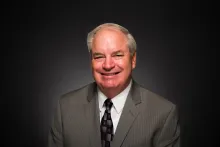
Robin Webber was born in Chicago, Illinois, in 1951, but has lived most of his life in California. He has been a part of the Church of God community since 1963. He attended Ambassador College in Pasadena from 1969-1973. He majored in theology and history.
Mr. Webber's interest remains in the study of history, socio-economics and literature. Over the years, he has offered his services to museums as a docent to share his enthusiasm and passions regarding these areas of expertise.
When time permits, he loves to go mountain biking on nearby ranch land and meet his wife as she hikes toward him.
