
Robin S Webber
This transcript was generated by AI and may contain errors. It is provided to assist those who may not be able to listen to the message.
I want to build upon a theme and a concept that I started during the Peace of Tabernacles in the Eighth Day Festival during the Oceanside Experience. It's a concept and a theme that has personally struck me deeply. As your pastor, I want to begin sharing that. I'm going to begin sharing that in a series of messages over the course of this year. They're not necessarily going to be consecutive, as there are other things to discuss, but I think this is going to be hopefully exciting to you. Hopefully, it's as exciting to you as it is to me. I want to just go back a moment and develop a couple of thoughts before we actually spring into the series itself with some very basic biblical concepts that maybe we've never quite had constructed this way.
Let's think for a moment that when God chose to interrupt human history—and he did, because it says in the Book of Galatians, when the time was fulfilled, which was speaking that there was a time in human history that God decided to interrupt human history by sending his Son to this earth.
Later on, it says that in the Book of Mark, Mark 1, 14-15, it says, and Jesus came into Galilee preaching the gospel of the kingdom of God, saying that the time is at hand. Repent and believe the gospel. It's very interesting when you look at the language that is used there—the words—that the kingdom is at hand.
Other translations, other than the King James, will say that the kingdom is near, that wherever Jesus, that king of that kingdom, God's answer for human society, that where he was, the kingdom was. Now, it had not in any way come to its fullness, and we look forward to that in the future. But when God sent Christ to this earth, the kingdom of God was inaugurated. Let's keep that thought in our mind. Now, let's take it just a step further. Join me if you would. Let's open up our Bibles on this Sabbath day, and join me if you would in Acts 1 and verse 8.
In Acts 1—which is interesting because many a Bible will basically just tell us that it is the acts of the apostles. And they didn't act. They were actors in this kingdom story. We might also say that it was also better, perhaps, called the acts of the Holy Spirit, because that's what made all the difference in the actions of these men. But notice in Acts 1 and verse 8 a direct responsibility that Jesus gave these disciples, now about to be apostles. In Acts 1a, but you shall receive power when the Holy Spirit has come upon you, and you shall be witnesses to me in Jerusalem and in all Judea and Samaria and to the ends of the earth. And to be witnesses.
Now, the word for witness there is mardas. And that is where we derive the word martyr. Now, when we think of the word martyr, we think of normally one that has given up their entire life, have been killed and have been slain for the name of Jesus Christ. But the word martyrs itself out of the Greek is speaking also about a witness, somebody that can actually give verifiable testimony to something or to somebody. So, to be a martyrs, you don't have to die. You can also be a martyrs, you can be a witness and be a living witness and a testimony about an action and or about an event, about a happening, about a person that you know, you know what happened. And therefore, not only by your word, but by your life's actions, you can give testimony that is verifiable, that can go to the bank, and that is true. Now, when he mentions this about these gentlemen that he's speaking to in that upper room, we recognize that they had an incredible opportunity and responsibility that perhaps has not been visited on all of us. The 12 are the 12. The 12 are the 12. These are the apostles, and their names are written on Jerusalem above as it comes down. Understand that. You understand that. I understand that. Thank God for them. But that does not let us off the hook, but allows us to be on the floor, to be in the game, to be there as witnesses of God the Father and Jesus Christ to everyone, to everyone of whom we come into contact with.
Let's understand something. If you'll join me in Matthew 1331, just building on this for a moment, Matthew 1331, would you join me? The first Gospel in Matthew 1331. We're going to build to a point here, systematically.
Matthew 13. Here we go. In Matthew 1331, let's take a look at this. Another parable. A parable is just another word for, frankly, kingdom talk. Because parables that Jesus used were normally defining and explaining God's purposes surrounding the concept, surrounding the subject of kingdom. And another parable he put forth, saying, the kingdom of heaven, that's the phraseology that Matthew used, which is synonymous with the kingdom of God, is like a mustard seed which a man took and sowed in his field, which indeed is the least of all the seeds, but when it is grown, it is greater than the herbs and becomes a tree, so that the birds of the air come and nest in its branches. Now, let's unpack this for a moment, these couple verses. It says that the kingdom of heaven is like a mustard seed. It's small.
But from that, from that, grows ultimately the kingdom of God. Now, again, as I stated, when Jesus came, who is Messiah, who is the anointed, who was the inaugurator of that kingdom on earth and was sent, he planted the flag of the kingdom in his person on this earth, that something had changed, that God had interrupted human history once and forever. But we look here that also we have a role in this. We also have witnesses of Jesus Christ believing that God the Father sent him. We have a witness as well that God not only interrupted human history—stay with me now, please—God not only interrupted human history declaring and proclaiming the kingdom of God through Christ.
But then he chose to interrupt our lives, our lives, our lives, in a miraculous way through his calling and our acceptance. But now let's take it a step further. Are you with me? Something maybe you've never thought about? That we are witnesses, and we are part of the seed, the seeds of the kingdom. Remember, we're called first fruits. Where does fruit come from? Fruit also comes from seeds. And as we experience and utilize God's Spirit, we are also individually seeds of that kingdom.
That is, God is interrupting human history—stay with me again, think this through—as God is interrupting human history. And God then has interrupted our—are you with me?—our personal story.
Thus then, we have the privilege of interrupting the life of others.
Let's go to Isaiah 6 and verse 8 for a moment. Join me if you will, back in the Old Testament.
A beautiful, beautiful verse as to what God is doing through these seeds of the kingdom. In Isaiah 6 and verse 8, we take a look here.
And a question goes out from God. And also, I heard the voice of the Lord saying, Whom shall I send? Whom shall I send? This is a question. And who will go for us? And then I said, Isaiah speaking, the echo comes back from the man, Here I am. Send me. And he said, Go and tell this people.
Now again, am I equating us in that sense with, again, the twelve apostles and or Isaiah, one of the great prophets of antiquity? No, but we are all in God's service. I want to show you how this works for just a moment. Again, one more scripture. Okay? One more scripture. Show me over in Acts 4.13. In Acts 4.13, we're going to sew these all together into a tapestry that declares our involvement. In Acts 4.13, this is after Peter and John had been hauled before the Sanhedrin and the Jewish authorities. I just want you to notice this. Now, when they saw the boldness of Peter and John, you know, they just, we're going to grab these, you know, Galileans. We're just going to grab them. We're going to make them shake in their boots. And, you know, what do they know? Now, when they saw the boldness of Peter and John and perceived that they were uneducated and untrained men, they marveled. Now, why did they marvel? Did they marvel because they were untrained and uneducated? No, that did not marvel them. That's what they thought that they had gotten. And they realized that they had been with Jesus. They had been with Jesus. There was a contrast, and that's the word that we're going to build on in this series. There was a contrast.
These men broke all expectations because of what they spoke and how they acted and how they came upon other human beings. God had interrupted the earth through Christ, and then God the Father has interrupted our lives, and then they interrupted the lives of the Sanhedrin.
Here's where we're going, friends. Oftentimes, in what I say, the Church of God structure, we often look at the kingdom of God as being a future event and activity—the kingdom of God. It is coming. But we have to recognize that God does not just look at things as a future event with Him, who is outside of time and space. There is a past, there is a present, and there is a future. And in His mind, they are seamless. When Jesus came, He inaugurated the kingdom.
Oh, it's not here in its fullness. Just look out the door, and we know all of what I mentioned earlier about what's happening next week and the challenges, even our own nation. No, it is not here. But at the same time, it is here in the presence of Jesus Christ living in us as His witnesses and the witnesses that God the Father sent Him. My question simply to you is this. As we open up this series, it says, Can people tell, whether it be our mates, since He's right upstairs, our coworkers, people that we come into contact, even in challenging situations, our schoolmates, members in our own congregation, members in our family that don't know Christ, have not surrendered themselves to Him?
Could they tell—this is just the basic question I have for you— could they tell that you have been with Jesus? That's how the book of Acts opens. And this is how we open up this series that we'll get to maybe every three weeks, four weeks. I'm going to bring you another part of the series. There's other things to discuss. But this series is about our role, our call, to be witnesses. I'm talking to you. I'm talking to you, and I'm talking to myself, because I'm not totally there yet. And I see myself here, so I know who I'm talking to.
But my simple question is this. Do you consider yourself a kingdom-bringer? Do you consider yourself a kingdom-bringer? Not just one that projects into the future that the kingdom is coming, but in your part and in your role as a witness of the life, the death, the resurrection, the ascension, the exaltation of Jesus. Is your life changed? And because you've experienced the love of God, and the mercy of God, and the grace of God, do we therefore walk in wisdom of being a kingdom-bringer in the here and the now?
Well, here we go. That's the beginning of the series. It's going to be about taking different individuals that God has laid out before us in Scripture as to how they were a kingdom-bringer in their time and in their way. And we're going to learn lessons from each and every one of them. So here we go. We're going to start right now so that we can learn from them how to be a kingdom-bringer. And today we're going to talk about somebody that you all know very, very well. You might want to just jot down—if you have pencil and pen by your desk, just jot down this name.
I'm going to spell it for you for a moment, because we all know this individual. His name is—it's a very important individual in the Bible, by the way—and his name is Joseph. J-O-S-E-S. Joseph. You all know Joseph, don't you? I'm kind of having fun with you for a moment, because that may not necessarily ring a bell all at once, but allow me to share you a little bit about Joseph, who was a kingdom-bringer in his day and in his time, and in a very special way. This is a gentleman that, you know, it's like any book, like the Book of Acts.
He was not in the beginning of the book, and neither was he at the end of the book. He's not really sometimes what you think is, you know, his name is not up on the marquee of the Book of Acts. You can think of Peter, you might want to think of John, you might want to think of Paul. But we're going to talk about an individual that, when he comes into this story, the way that he went about this is quite incredible.
To recognize that his quiet performance, his quiet performance, perhaps created the loudest message in the Book of Acts. It's an incredible story, and we're going to share it for just a few highlights as we're going to unpack this story. What a chapter that he wrote. Joseph wrote a story that was not about, in that sense, all the good arguments.
We don't have a lot of his sermon presentations, his gospel witnessing, shaking up the crowd. But it's what he did in a very quiet and a very deliberate manner. He was very steady, steady as she goes. One of those rocks that you want around that pillar that is always going to be there. And it is that quiet performance that stole the show from the Book of Acts.
He is the human glue that God used to keep things together in some pretty tense times in the Book of Acts. He believed that he was the human glue and the adhesive to bring people together, but he also helped to expand the story. So let's find out who I'm talking about. Join me if you would over in Acts 4. The suspense is over. Our first kingdom bringer in the series. In Acts 4, we're going to start in verse 32. Now, the multitude of those who believed were of one heart and one soul.
Neither did anyone say that any of the things that he possessed was his own. But they had all things in common. And with great power the apostles witnessed to the resurrection of the Lord Jesus. Great graces upon them all. Nor was there anyone among them who lacked for all those who were processors of lands or houses sold them, and brought the proceeds of the things that were sold. And laid them at the apostles' feet, and they distributed to each as anyone had need.
This was a very unique time. Shortly after Jesus' life, his death, his resurrection, the early ecclesia, the Jesus followers, the Jesus believers, were in a very unique communal assembly for those times. It was unique that they came together. Almost like it says that the ecclesia is like the temple of God, fitly framed together. They were almost seamless in what they were doing. Because Jesus had said that, you've seen the angel, you've seen him go up, just as he's gone up, you're going to see him come down.
Well, what would you have thought? That the time is short so that they had all things in common. They were so excited about what they were learning, what they were being called to, and had surrendered. Then notice verse 36. And Joseph, who—oh, there's the name Joseph.
And Joseph, who was also named Barnabas by the apostles, which is translated Son of Encouragement, a Levite of the country of Cyprus. Having land, sold it, and brought the money and laid it at the apostles' feet. Here we have the first mention of Joseph. Joseph was his generic name. Barnabas, which was his nickname—nice nickname, when you understand what it means. That's the brand.
And the brand is the kingdom of God. Because that name Barnabas, when it is translated, has a very unique meaning. The name Barnabas, which comes from the translated Greek, from the Aramaic, is Barnbouk, or Son of Prophecy, as manifested in exhortation or consolation. Consolation, when you console somebody, you are comforting somebody.
When you go to the very Greek, the word paracletus is there, which we normally attach to the Holy Spirit and or the Comforter. God had said, I will send a Comforter. And so what you really have here, if you break it down, is, here's the Holy Spirit, man. Here's the encourager. Here is the Comforter. Now, with that stated, he was already at no quantity amongst the twelve.
And yet notice here, it says that he, having land, sold it and brought the money and laid it at the Apostles' feet. He was a man from Cyprus. He was a Jew, a Hellenistic Jew, from Cyprus, what you would call a Jew of the Diaspora. He was a Levite. The Levites had at one time served in the Tabernacle, had served in the Solomon's Temple, later the Herodian Temple. They were a people called a service around a family.
But that had now changed. We're no longer dealing with the Israel of old, but the Israel of God, the spiritual Israel of God, Galatians 6, 16. And that Israel of God was not about who your daddy was, but about our Heavenly Father. It did not have a cast of priests out of the house of Aaron, that every man, every woman was called together in this faith community. It was unique that we were not only to serve God, that here we were in this temple, this temple that God was producing, a living temple, made out of flesh and blood with the presence of God in them by the Holy Spirit.
And he got that. He was a man of vision, seemingly a man of means. And he wholeheartedly came and offered everything that he had. Allow this to be the first principle of being a kingdom builder there. Number one, Barnabas—I'll call this from now on—was wholehearted. He was wholehearted. And he was a wholehearted man because he had the vision. He understood it and gave every bit of his being.
Now, what happens here, Acts 4 to Acts 5 is interesting. Sometimes chapter breaks, the Cardinal Usher, who created all these chapters, it works for us, it works against us. But this works against us because this is an ongoing story. Because in chapter 5, we find out the story about Ananias and Sapphira. And this is important to recognize that Acts is written somewhat as a future chapter of the Old Testament, of what God had done with ancient Israel.
Remember how ancient Israel was on a roll that it had gone into the Promised Land, and across to Jordan, and that they thought everything was moving, moving, moving for them? You know, hey, we'll just send a few people to the city of Ai, and it'll just crumble.
Look what happened to Jericho. But something happened there. We recognize that somebody was not following the instructions of God. They were being, do I dare say, a phony and or half-hearted. We know the story of Achan. Israel was told, don't take anything out, anything out of Jericho. But Achan had different thoughts, and he buried it underneath the soil of his tent, as if nothing had happened. Now here we are, the Book of Acts, the spiritual Israel of God, Galatians 6, 16. Tremendous things have happened. Three thousand people are converted on that.
Three thousand men, who knows how many more, are baptized on that day of Pentecost. Other miracles are occurring. The Israel of God is on a roll. The future looks unlimited. But somebody does something that they're a phony.
They're acting like they're a part, that they're in the presence of this living temple of God. And they're hiding something. They're purporting to be something that they're not. Ananias and Sapphira hold back. And I hope they enjoyed it, because they paid dearly for what they did. Acts 5 tells us that God called them out to the Apostle Peter. God was showing that what he was calling this to was serious business. It was not theory.
It was not just simply myth or invention. That there is a God that is in charge of our lives and in charge of the Ecclesiast, in charge of the body of Christ. And they died. Here's what I want to share with you. Simply put, Barnabas was a man of vision. He knew where that calling came from. He knew what Jesus Christ had done for him. And he surrendered it.
He not only surrendered his financial resources, but his life resources. And the contrast was incredible. Between the end of Acts 4 and Acts 5, the contrast. It was very obvious that Barnabas, and perhaps had seen Jesus, had been perhaps part of that greater grouping beyond the 12 that had followed Jesus. But he got it. And he was wholehearted. Let's go to Mark 12.28 for just a second. Let's build on this so that you and I, like Joseph, like Barnabas, can be kingdom builders.
Mark 12.28. Join me there, if you would, please. In Mark 12.28, here's the command of God. Sometimes we say, how do we bring it down? How do we just package it? Well, this is it. Mark 12.28. And Jesus, a man had come to him, saying then, what is the first commandment? And Jesus answered, the first of all commandments is here. O Israel, the Lord our God, the Lord is one.
In the Hebrew sense, to hear was to obey. They were not two different poles, like the North Pole and the South Pole. They were one. If God said something, and we heard that in the first message, if God says something, you do it. Do it in faith, knowing that Father knows best.
And it says then, and you shall love the Lord your God with all of your heart, with all of your purpose, all your being, with all of your soul, with all of your mind, and with all of your strength. This is the first commandment. And the second is like none to it. You shall love your neighbor as yourself. There are this, there, this is, excuse me, this is no other commandment greater than these.
This is what Barnabas was about. And this was a Barnabas that understood that God, the God of his forefathers, but now his personal God through Jesus Christ, just like it says in Ezekiel, that he'd been given a new heart, a new mind, a new spirit, that he was to be a witness. He didn't delegate it to somebody else. He was to be a witness that he had been with Jesus. Before we move to the next point, can people know that something's different? Not just by your good arguments, but by your exampling the king of the wonderful world tomorrow, today? That there's something different about you? That there is a contrast, just like Acts 4 to Acts 5? That there's a contrast? That you're not just like the disciples uneducated and or unlearned? But there's something people can learn from you. There's something different. You're not just a kingdom seeker, but you in part are a kingdom bringer. Can you go out this week and by having a wholehearted attitude and approach and exampling of Jesus Christ be a kingdom bringer? Let's go to point number two. Barnabas allowed people to grow beyond their past. Barnabas allowed people to grow beyond their past. Let's go back to Acts 9. In Acts 9, we pick up the story. It's a great story. In Acts 9, we pick up the story. We pick up the story. We pick up the story. We pick up the story. It's a great story. It's a great story. It's a great story. It's an indication out of the scriptures that we try to glean. Now he's moving toward Jerusalem. He wants to meet those that had met Christ on the road to Damascus. No bones about it. He tried to join the disciples. But they were all afraid of him and did not believe that he was a disciple. Now this is even as news had been spreading out there that was coming Jerusalem way. Something was really unique about Saul. He was preaching and teaching and moving people. But you have to remember that the disciples were men. They remembered what Saul had done. Also, sometimes the disciples were characters. They were sometimes on the run. They were men. They also made their mistakes. So did Barnabas. We'll finish this message with that. But then notice one of the great words out of scripture. I think some of the greatest words in scripture are those that are the smallest. This is one of them. If you look at verse 27, notice what it says. It says, but. Sometimes we look at but as but. But here is not a negative. Taken by itself, it is a positive. It is one of the great words of scripture. That is why you have to read the book and the words. If you go back to Genesis 6, it says, but Noah. introduction to Noah. But Noah found grace. God had interrupted his life. And the rest is history. But Noah found grace. You can go to Numbers 14. The insurrection in Israel. Against Moses. And with the spies, and not believing the spies had gone into the land and they come back. Israel has a hissiphite. And it says about the two men that stood up. But Caleb had a different spirit. Here, then, is the third great but, b-u-t, of scripture. But Barnabas took him and brought him to the apostles. And he declared to them how he had seen the Lord on the road, that he had spoken to him, and how he had preached boldly at Damascus in the name of Jesus. So he was with them at Jerusalem coming in and going out. Barnabas was a kingdom bringer. He was an ice breaker. He was one brave dude, as we might say today. He did not look at what Saul had done and freeze-framed him, taken a snapshot of his past, and held it up. That's all that you could see. Here's Saul. Saul of Tarsus, persecutor of the church.
Barnabas remembered when God through Christ had done for him, had forgiven his past. This is the essence of Christianity. And we are to love our neighbor as ourselves, and as God has loved us. And with that love, and with that courage, that'd be scary stuff, humanly. Saul, trying to get in there, sometimes, have you ever had bunnies, or you've had dogs or cats? There's always the runt of the litter. Trying to bring pumpkin, the cat in here. The little runt, trying to get in with the rest of the little babies to feed on the mother, gets kicked out. No, you're not accepted. You're not like us. You're kind of like, no, no, you can't come in. No trespassing. No trespassing. And then Barnabas takes him by the heart. Barnabas takes him by the hand and brings him before the Big 12. Because he believed in the one that was above the Big 12. That his sins had been forgiven. And that he had heard about Saul, and had the spiritual guts and the determination and the fortitude.
To take that man into the apostles. And the rest is history. Let's think about this for just a moment. Is it any wonder that his name is Barnabas? Son of encouragement? Son of comfort? Holy spirit man? Oh no, perhaps he was not a Peter. He was not a John. He was not Paul. That gigantic, dynamic personality. But his quiet going about doing the right thing at the right time with the person that comes into his life at the end of the day made history. What a story he wrote. Are you like Barnabas? Are you a kingdom bringer? Are you that seed of the kingdom in the events that you come upon with the people that you come upon? Do you ever just let go of what a person has done in the past that when you really do see true movement, conversion, repentance, somebody really dealing with themself, that you give them room, that you give them space? You know, Jesus himself is an infant in the tummy of Mary and Joseph came into Bethlehem and it said that there's no room in the end. Well, that's kind of where the apostles were. They kind of put up a big sign saying, no room in the end for Saul of Garses. Barnabas took down that sign. He said there's room for all. And this is my brother. Receive him.
We find then that Barnabas has such a wonderful example. Who in your life right now only asks, who are you not living in your life? Because of perhaps what they've done. You've written them off. You're not allowing to see God's story in them. Developing. But have just freeze-framed them. Snack them cold like they're in ice and never allow them to grow and to glorify God. Maybe we have some homework here. Maybe we have some hard work. Remember, God interrupted human history, sent Christ.
God interrupted our lives through Christ and called us to be his child. God has also interrupted our life that to whomever we come upon, that we can create a contrast and a difference in approach. So that maybe, just maybe, as God deals with that person, they can see that you and I, in that proverbial sense, have been with Jesus. Let's go to point number three.
Barnabas understood excuse me just a second here. Barnabas understood. Point three. Barnabas understood that new meant new. Barnabas understood that new meant new. Join me if you would in Acts 11. In Acts 11, it's the story of the opening up of Antioch. It's a springboard from Jerusalem. In Acts 11-19, join me there. Now those who were scattered after the persecution that those who were overstieving traveled as far as Phoenicia, Cyprus, and Antioch, preaching the word to no one but the Jews only.
But some of them were men from Cyprus and Cyrene, who when they had come to Antioch, spoke to the Hellenest, preaching the Lord Jesus. And the hand of the Lord was with them, and a great number believed and turned to the Lord. And the news of these things came to the ears of the church in Jerusalem, and they sent out who?
Barnabas, the icebreaker, to go as far as Antioch. It seems that things were stirring now. Antioch was one of the great cities of the Empire, it was the third city of the Empire after Rome and after Alexandria. Antioch was the queen of the East. Antioch was where Asia met Europe.
Asia was, excuse me, Antioch was the city of about a half a million people. It had sprung up during the time of just post-Alexander, and was established by one of his generals, Antiochus Seleucia. Antioch, a great city. Things were stirring there. But, whoa, whoa, whoa, wait a minute, something new was happening. Because again, remember the challenge was for the early church, which was very what we may call messianic Jewish in nature, was that they didn't quite get the equation of the Gentiles. How were they going to fit in? Now all of the, some of these Gentiles are beginning to mix with the Jewish Christians in Antioch, and they're all worshiping God and Christ.
So, when Barnabas came, when he came, you know, number one, he showed up. You know, just showing up sometimes, hear me please as a kingdom bringer, when we need courage and a little wisdom, just showing up is the biggest part of what we need to do sometimes, presence. And when he came and had seen the grace of God, he was glad, and encouraged them. Remember, he was the son of encourage, and he encouraged them. He didn't stand off and say, no, no, you're not, not, not quite where I want you.
They are, they are not, they are, no. He was so happy and glad, and with purpose of heart—it wasn't about him—but with purpose of heart, they should continue with who? The Lord. It wasn't his story, it was God's story, it was Christ's story. And for the Lord, it wasn't his story, it was God's story, it was God's story, it was God's story.
And for he was a good man, full of the Holy Spirit, speaking of Barnabas and the faith, and a great many people were added to the Lord, and then Barnabas departed for Tarsus to seek Saul. Now, let's understand something.
Barnabas understood that God was doing something new. New means new. Just jot down 2 Corinthians 5 verse 17, where God says, Behold, I do a new thing. I'm in the process of a new creation. God had said all the way back in the prophets that his people were to ultimately be a light to the Gentiles, and now they are through Jewish Christians. But sometimes the Jewish Christians back then didn't understand the magnitude of what that light would be.
It had to be revealed to them through experience, and revealed to them through a kingdom-bringer that had the spiritual fortitude and guts and wisdom and love and joy to be able to say, Welcome! We are not a closed society. Jesus came and died for all, and in him we have one Father above.
And so we look at this, that God is revealing himself, but sometimes what we do, even we that are Christians today in the 21st century, we're still operating off of old rhymes, old melodies, old themes, old ways that perhaps we experienced in the youth of our conversion, or the youth of our experience in understanding the purpose of God, rather than recognizing that God is still revealing things to us today.
The poem is read differently by the man that is 80 years of age than when he was 20 years old, to experience, and experiencing the word of God and reading it, and not encapsulating God into our image, but allowing God to make us into his image. Barnabas got it! He was excited! He wasn't into quotas. He wasn't in one in one on one.
That's too many. You're going to outweigh the Jewish Christians in Antioch. He was excited. Are we excited as kingdom bringers? That we are looking for the new God. God uses the word new. He's not talking about new and improved, like what you get on a shelf. That comes in a smaller package, but costs more. He's talking about shaking things up. He's talking about interrupting human history. He's talking about interrupting our lives. He's talking at times about us by our example of being with Christ, of having that example in us that we can interrupt and make an impact on people.
Don't have to shout. Don't have to scream. Show up. Be present. Be expectant that God's Spirit will lead you. Sometimes in arenas that you never thought you might be in. Point number four. Barnabas was humble and willing to share the stage. Barnabas was humble and willing to share the stage. Verse 25, Rosewood says, Then Barnabas departed for Tarsus to seek Saul, and when he had found him, mission accomplished. He brought him to Antioch. And so it was for a whole year they assembled with the church and taught a great many people, and the disciples were first called Christians in Antioch.
Let's get a sense of what's happening. After that encounter with the apostles, Saul of Tarsus seems to have gone back to his homeland in Cilicia, which is in southeast modern-day Turkey, in one of the great cities of that area called Tarsus. That was his home. I would suggest that he probably went back to share his revelation with those that he grew up with, share his revelation with his family, and it seems there was a challenge that is mentioned there later on in the epistles.
But he was kind of put on hold. He kind of was there, not only the apostles, but he was too hot to handle. So he's kind of put over here on ice for about seven or eight years after that. But he's developing his understanding of Christ.
He's developing his understanding of a greater exodus than his people experienced at Passover. He is probably in that sense developing and growing as to how he'll communicate the gospel in the future. But notice what happens here. Barnabas goes to Tarsus. He goes out and seeks after Saul. Paul. See, what we recognize here the first time is that he stuck his neck out for Paul.
He stuck his neck out for Paul with the apostles in Jerusalem. There's a time to stick your neck out for somebody. Are you hearing me as a kingdom bringer? There's a time to stick your neck out for somebody. There's also a time to stretch your neck. To stretch. To stick. To stretch. And to go out on the limb for somebody. Could Barnabas have done it all by himself? I think God inspired him to recognize that he needed to share the stage with Saul and Tarsus. And that he did.
We're going to develop this story for a second because we're going to begin to see the dynamic duo of Saul, Paul, Barnabas come together. One of the great lineups of history. You know, when you think of baseball, oftentimes you go back to the 20s and the 30s, you think of the murderer's row of the New York Yankees, and in third and fourth position were Lou Gehrig and Babe Ruth.
Hello? Anybody out there? How do you get past those two? They were kind of the dynamic duo of that time. Well, we're not playing baseball here. On God's scorecard, this is the gospel or kingdom of God. And what lined up here was an incredible duo.
And we notice here in Acts 13 in verse 1, and in the church there was that Antioch, there was certain prophets and teachers, Barnabas Simeon, who was called Major, Lucius of Cyrene, Menian, who had been brought up with Herod the Tetrarch, and Saul. And they ministered to the Lord and fasted, and the Holy Spirit said, Now separate to me Barnabas and Saul for the work to which I have called them.
And so the people fasted, they laid hands on them, and they were sent forth on a mission to do a work. To do a work. And that's what they did. And they went out on that first missionary journey. And it was incredible. So the first thing we recognize is that Barnabas, who had been given the commission to go to Antioch to stir up the Gentile community, reaches out, goes the extra distance, and brings Saul back into the picture. If you don't see my arm, it's out over here, it's going to come back in the video, and brings Saul front and center on stage to stay now in the rest of the Book of Acts.
I would suggest that Barnabas has incredible noteworthy contrasting humility as a man. And men, you know, it's hard to let go of something when you're in charge. No, you even look at sports. How many men just keep on going when they don't even have it because they don't want to leave the stage. They don't want to leave that center spot. That's not just sports. That can be an administration. That can be anywhere. Barnabas was willing to share the stage. But now I'm going to take it a step further, because you notice what happens here. Go to Acts 13. This is where they go to Cyprus.
So being sent out by the Holy Spirit, they went down to Seleucia, and from there they sailed to Cyprus. And then they arrived in Salamis, and they preached the word of God and the synagogue of the Jews. And they also had John Mark as their assistant. Now, what is interesting in all of this is they go to Cyprus. Remember, Cyprus is the home of Barnabas.
He's the local homeboy. He's coming back to preach the gospel. Right there. Hold her. Paul, don't you worry about this. I'm from here. I get it. Just watch. Of course, you could never put Paul just aside based upon his temperament and personality. Which the rest of the story bears out, but I need to skip on that. Because I want to bring you to the point. Notice verse 13. Verse 13 says this. After everything that happens in Cyprus, because Paul really saw really comes to the fore there. I think he still saw at this point. He really comes to the fore, and there's a switch of roots that happens here. Notice verse 13. When they go down, every time you see the mention before this, it's Barnabas and Paul. In Scripture, you will always find the primary individual by who is mentioned first. So at this point, it's Barnabas. Barnabas brings Saul to the apostles. Barnabas goes and gathers up Saul out of Tarsus. Barnabas and Saul are commissioned to do a work. Here in his own home turf, notice this. At the end of that, now when Paul and his party set sail from Paphos, and they came to Perga and Pamphylia, and John departing from them, returned to Jerusalem. Ooh! But when Paul and party, Barnabas is not even mentioned here. He's just part of the party. This is home. This is where Israel is. And God does a number on him and is working with him. And you don't see any protests from Barnabas. You know, what's incredible about Barnabas is to recognize that, hmm, you think of Jesus, to be with Jesus is to experience and to portray the humility. Not to portray it like an actor, but to to see the vibe of it, that he had that humility that he let go, just as Jesus let go of heaven to come to this earth. Barnabas was willing to see where God was leading and followed along. That also is a part of being a kingdom bringer. It's recognizing that we're not alone in this. That we've got to at times come and we've got to at times go. If there's a kingdom bringer, it would have been John the Baptist. And Barnabas is emulating John the Baptist, and it comes out of John 3, 27, verse 30. John 3, 27, verse 30, where John the Baptist, he's watching Jesus. You know, John the Baptist is like in the spirit of Elijah. Everybody's coming down the Jordan River. Everything's happening. And then all of a sudden the crowds begin to disappear. People begin following him who he has been proclaiming all along would come and recognized that here is the Lamb of God. And John made this startling statement. You can tell that John knew his cousin, Jesus, and in that sense had been with Jesus when he came out to the Jordan. Got it! And John said, I must decrease. That he might increase.
That's big. That contrasts with our basic human nature. Hmm? Do you agree? Still working on that one. You are too. Let's be honest. Let's not go anonize in Sapphira. But let's recognize what God's calling us to. That people might witness a distinctive contrast between the ways of this world and the ways of God. I want to share one more story here.
Point number five. Barnabas was a brother in adversity. You pick up the story in verse 14. Verse 14. Excuse me. In Acts 14-19. Then Jews came from Antioch and Iconium, came there and had them persuade the Moltitudes that they stoned Paul, dragged him out of the city, supposing him to be dead.
Verse 20. However, when the disciples gathered around him, he rose up and went into the city, and the next day he departed with Barnabas to Derby. Interesting. Barnabas is mentioned. I would suggest that Barnabas was a part of that party that came and gathered around him and helped him revive. Barnabas did not ditch his friend.
Barnabas could have said, well, I guess it's me and God, and I'm moving on. Paul did his thing, and maybe he said one word too many, a little bit volcanic, and it's over. Paul was known for that. Barnabas could have said, okay, I'm ready to go on. Barnabas did not. I would suggest that this quiet man of God's spirit was by his friend, by his brother at that time.
I just want to share a thought with you, and you'll know the verse, Proverbs 1717. You can just jot it down. And in Proverbs 1717, it says that there is a brother that is born for adversity, a brother that is born for adversity. And I would suggest that Barnabas was that brother, that God planted into his life a spiritual brother, born for adversity. I would suggest that it was probably not the first time that Barnabas pulled Paul away from adversity and danger because of the boldness of Paul, just how he was. And yet he would not leave his brother alone. Can we be a kingdom-bringer?
Can people know that when we think of Christ, we know that Christ said that he will never leave us nor forsake us? That God has given him charge of us. And in John it says that he will not allow one to be snatched away. How precious we are. That's a part of being a kingdom-bringer. And the lives of others that may not at this time even be called to the gospel, being called to Christ, being called to be a child of the Father.
But they see a contrast. They see something different than they expected from you and from me. It may not just be a neighbor in the community. Oftentimes the greatest challenges of relationships are those that are closest between a husband and a wife, between a father and a child, between a mother and a daughter, between brethren, between spiritual family. Let's begin to conclude here. I just want to share one more thing here.
This is important for all of us. This is called kind of the pinch test. And if we pinched Barnabas, we would find out that he was a human being. And that's point number six. This kingdom-bringer was a human being. I'm just going to go over this in general. And Acts 15, well, let's go to Acts 1536. Acts 15, it's very short here. Acts 1536, we notice what happens here. Then after some days, part of the Bible says, let us now go back and visit our brother in every city where we have preached the word of the Lord and see how they are doing.
Good idea! Let's do it! Now Barnabas was determined to take with them John, called Mark. Could have just been up there, but that's not the story. But Barnabas insisted that they should not take with them the one who had departed from them in the city of Barnabas. They did not take with them the one who had departed from them in Pamphylia and had not gone with them to do the work. Disagreement. Now, if you go to Colossians 4 and verse 10, you will also find out that John Mark, known as Mark, writer of the Gospel, who has just the story, was the cousin and or the nephew of Barnabas.
Blood runs thick. Here's the story I want to share with you. I want you to get. Paul saw the need to focus on mission. Good idea? Absolutely. Absolutely. Onward and upward. Got to get it done. Barnabas saw relationships. And I would suggest that he would have done this even beyond a blood member just doing the story of Barnabas.
It's very interesting here that Paul, that Barnabas had stuck his neck out for, stretched his neck for, gone out on the lymphore, had risked his life for at the walls of that city to pick up the living bones of Paul to help him live for another day. All that had been done for Paul. And yet, at that moment, he could not do that for John Mark. To forgive. To let the past be the past. To freeze frame John Mark for what he had done. And finally, Barnabas had the mind of Christ. He'd been with Christ because he always looked at the Christian pilgrim as to where they were headed, rather than looking at their luggage as to where they had been from. Barnabas had an amazing ability to recognize, and something that I've mentioned many times before, but he recognized that it is our responsibility not to choose God's family, not to accept them, to embrace them. I'm not talking about being dumb. I'm not talking about being a Pollyanna. I'm not talking about not using wisdom. I'm talking about receiving people because we are people, they are people, we are all people, and to recognize if God has had mercy and forgiven our past and gives us another opportunity, and says, Return! Return! Return! The Bible is about a book of return. Then how about us giving people space to return? Now, there was a blow-up. They separated. Paul took Sylvanus. Barnabas took Mark. And what could have been division became multiplication, because now the two dynamos separated with two new assistants, and the gospel spread, in spite of themselves, in spite of their disagreement. Because God can take lemons and make lemonade out of it. God wants to use us, but His purpose will stand one way or the other. But we have that opportunity as first fruits and as kingdom-bringers and as witnesses in small ways, little ways during the day to make that difference, to create that contrast. And if anybody knows that we've been with Jesus, Jesus above at the right hand of God will know that we've been with Him. And so will His Father, by the mercy and by the understanding that we give others, and also to recognize His return. Now, let me finish one other thought here. In Galatians 2, verse 11, and then I'm going to wrap it up. Thanks for staying with me. In verse 11, this is the story where, real quickly, we're back in Antioch, the Jews are mixing with the Jewish Christians, are mixing with the Gentile Christians. We are one family. There is no Jew. There is no Gentile, no male, no female, no slave, no master. We're having a meal together, which is very important to the Christian community to break bread, which you'll often see in the Scriptures. But Peter has come to see what's going on. They've sent Barnabas. Now Peter's up there. Peter, who had even been revealed to, that, you know, the Gentiles were now going to be a part of the family, but Peter gets the shakes. Of course, remember Peter in the Gospels. And sometimes that carries over, even when we've been converted and have God's Spirit. He gets nervous, and so he does not eat with the Gentiles. It's like shunning them. It's like separating them. It's like saying, you can be in the room, but not at the table. You can come to the drinking fountain, but you can't drink. And notice what it says here, verse 13, Galatians 2. You know, you got to pinch yourself. Barnabas was a human being, and the rest of the Jews also played the hypocrite with him, speaking of Peter. So that here's another small word. Even, I mean, the way you do this, are you with me? Even Barnabas, Mr. Holy Spirit Man, Mr. Encourager, the man that had been the first to go up from Jerusalem to talk to the Gentiles, even Barnabas got the shakes and was carried away with their hypocrisy. In that room is not the contrast that God wanted. Jesus Christ came and died for all men.
And for a moment, Barnabas succumbed to peer pressure, rather than the Spirit of God. I only say that to recognize that, like the Apostle Paul would later say, I have not yet apprehended, probably thinking about Barnabas and himself, I have not yet apprehended. But for that which I have been called to, I move towards that upward call.
So Barnabas had more homework. He had more hard work. And I have every confidence that God brought him along to do that which he needed to be. Let's understand that Barnabas was a human. But let's also understand that there's a future. And I want to share something that's very important. We recognize that later on that Second Timothy 4-11. I'll just go there. Second Timothy 4-11. Second Timothy 4-11. We notice this. It's never, like Yogi Berra used to say, it's never over till it's over.
There is reconciliation in the Christian family, in the body of believers. God is a reconciler. He reconciles all things through Jesus Christ. Some things that have been nasty, some things that are sinful, some things that are wrong, some things that we regret. But there is reconciliation. And you as a kingdom bringer and me as a kingdom bringer are called to reconcile. We've got homework this week. We've got heart work this week. Who have we not reconciled with?
In love and with wisdom. Notice in verse 11 of Second Timothy 4, the last epistle, the last love story of Paul going out to the flock. Only Luke is with me. Get Mark! Get Mark! Don't expel him. Get Mark and bring him with you. Notice this. For he is useful. His youthful indiscretions have been forgiven and forgotten. God is using him.
He is useful to me for ministry. We also find over in the book of Philemon, verse 23, Mark is there with him. They came together again. This can happen if we're a kingdom bringer. We recognize that God has not only interrupted human history, but has allowed us to interrupt our human nature. Move into other people's lives and create a contrast.
Not leave an individual out of our lives because of what they did. Bring them back in because of what God the Father did through Christ for us. I want to thank you for your support.
You know it's interesting too. When you recognize here, my eyes will fall on it. I'm going to read the verse of 1 Corinthians 9, verse 6. I actually start in verse 5. Do we have no right to take along a believing wife, as do others, like the brothers of the Lord and Peter? See, Paul ultimately did not believe in cancel culture because of what somebody did long, long ago.
He brings up Barnabas's name. He brings up his spiritual power, his mentor. Is it only Barnabas and I who have no right to refrain from working? God's love in Paul, God's love in Barnabas, made all the difference because they loved one another at the end, just as God has loved us in spite of ourselves. Not because of what we've done wrong, but because of what God did through Christ, that our sins and shortcomings might be pulled away from us as far as east is from the west. What do we learn then about being a kingdom-bringer?
Two quick points. Think about the impact that Barnabas, Jesus, son of encouragement, son of the Holy Spirit, man of the Holy Spirit, How did he impact and make a difference on the life of the Apostle Paul, perhaps his main student, as the mentor that God selected to bring Saul of Tarsus into the community of the church and Paul, his buddy, and his companion to learn?
Number one, is it possible that when Paul wrote Romans 2 and verse 11, when it says that God is no respecter of persons? It doesn't limit God as to who God is going to use and who God is going to work through and who God wants in his family in the here and now.
Did Barnabas come to mind? Did Barnabas come to mind? Because of Barnabas and his interruption of seeking after Paul, Saul of Tarsus, bringing him to the apostles? I simply ask you a question. And how you live your life this coming week will be your answer. That this message has made a difference in your life, that you're going to take your calling seriously. To recognize that the kingdom of God is not just something to wait upon and wait for, but to enact in your life in small and direct ways in what comes your way and lies in your path.
Number two. When Paul wrote 1 Corinthians 13 about love, and love suffering long, and love being patient, and love not keeping score, love being kind, might we suggest that Barnabas was used of God to enable Paul to draw upon a human example of the spirit of the living God and Christ dwelling in this man of Cyprus? That Christianity is not just theory, but it's reality as to how we express it. And that is a contact sport. Christianity is not for sissies, but it's for those who recognize that their life has been interrupted once and forever to make a difference.
Number three. God in the future says that he's going to give us a new name. Barnabas was given a new name. Joseph was given a new name. Joseph was his generic name. Barnabas was the brand. And underneath that brand name were the ingredients mentioned. And I leave it with you in this first in a series of Kingdom Bringers. What were those ingredients? Ben with Jesus.
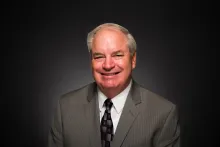
Robin Webber was born in Chicago, Illinois, in 1951, but has lived most of his life in California. He has been a part of the Church of God community since 1963. He attended Ambassador College in Pasadena from 1969-1973. He majored in theology and history.
Mr. Webber's interest remains in the study of history, socio-economics and literature. Over the years, he has offered his services to museums as a docent to share his enthusiasm and passions regarding these areas of expertise.
When time permits, he loves to go mountain biking on nearby ranch land and meet his wife as she hikes toward him.
