

Paul Moody
This transcript was generated by AI and may contain errors. It is provided to assist those who may not be able to listen to the message.
My attention today isn't necessarily to give a travel blog of our trip to Ghana in Nigeria. Mr. Mickelson covered a number of the events that occurred in his message last week. But I would like to talk about something that, in my mind, did formulate while I was on the trip, because it was a subject that had come up before I left, and various circumstances that we faced along the way. Perhaps helped that topic as it was forming in my mind. Today I'd like to talk about the battle for the truth.
And that is the title of my message today, The Battle for Truth. Brethren, whether you realize it or not, you and I and the rest of the Church of God are standing on the front lines in a modern-day battle for truth. Following Jesus Christ's arrest shortly before his persecution, he was called and stood under examination before Pontius Pilate. And in John 18 we see some of the dialogue which took place between them. I would like to start there today. If you'll follow me, please. In John 18 we're going to begin in verse 33.
John 18, verse 33. And it says, And Jesus, or then Pilate, entered the praetorium again. He called Jesus, and he said to him, Are you the king of the Jews? And Jesus answered him, Are you speaking for yourself about this, or did others tell you this concerning me? Pilate answered, Am I a Jew? Your own nation and chief priests have delivered you to me. What have you done? Jesus answered, saying, My kingdom is not of this world. If my kingdom were of this world, my servants would fight, so that I should not be delivered to the Jews.
He said, But now my kingdom is not from here. Pilate therefore said to him, Are you a king then? Jesus answered, You say rightly that I am a king, for this cause I was born, and for this cause I have come into the world, that I should bear witness to the truth. He said, Everyone who is of the truth hears my voice.
And Pilate said to him, Well, what is truth? And then he said this, and he went out again to the Jews, and he said to them, I find no fault in him at all. Pilate asked Jesus Christ the question, What is truth? You know, it appears to have been a rhetorical question. Perhaps it was sarcastically. Pilate apparently didn't stick around for an answer, or even seemed to necessarily want one. But again, the question was asked, What is truth?
The Roman Society of Jesus' day was much like our society today in many ways. The Roman Empire was the great superpower of its day. And because of that, there was a level of freedom and independence that existed for the citizens of that empire. Transportation and commerce by land and sea was highly developed. It was effective for trade and communications. It was very fast by the standards of the day. And as a result, information freely traveled, money and goods were exchanged, and culture was shared. The Romans of that day and age enjoyed entertainment of many types.
They enjoyed the arts of many types. Superstitions and paganisms abounded throughout their belief systems. And sexual perversion in the empire was rampant. Again, much was in line and similar to the day in which we live today. In such an atmosphere, the acceptance of a morally defined truth, and the acknowledgement that there is absolute universal truth that applies to all, is often scoffed at.
In fact, in conditions where such abundant options exist, the human tendency is to want to define truth for themselves. What is truth? Pilate was asking. Well, in that day and age, it was something that was generally defined by the individual.
And what might have been truth to one person may not have been truth in perspective of another. What is truth? It's a question I was asked in the day of Jesus Christ, and, brethren, it is a question that is alive well today. It is, in fact, often asked in our age. You and I today live in what's called a postmodern era. And postmodernism is a cultural phenomenon which began coming to light in this country in the 1960s and 70s, and it very much solidified itself in our culture in the 1990s.
Many of individuals from my generation, I was born in 1974, basically anyone from my time on, grew up in a postmodern way of thinking. And many have become grounded in that philosophy and mindset. It's a thinking that rejects many of the absolute beliefs upon which Western civilization has been established. And it's become the philosophy of, anything goes, find your own truth. I think we could all say we see signs of that as it exists around us in our society today.
Postmodernism produces the standpoint that truth is not absolute or objective, and if it is, it can't be known. And what might be your opinion doesn't necessarily have to be my truth or my opinion, because I'm coming from a different perspective.
Postmodernism produces a standpoint, again, that truth is not absolute and objective. And it dictates that truth is relative to personal experience and perspective. In other words, truth to one person is defined about in a way in which he views this world through the lens of his experiences, through the lens of his relationships, and the various opportunities that he's had in this life.
That is what a person comes to in terms of evaluating what is truth. Postmodernism says that what is truth for you may not be truth for me, because my perspective is different than yours, and who's to say that my truth is not just as valid as yours? And so this is the mindset that we're facing in the world around us. It's the mindset that our children are facing as they go through school, all the way from grade school up through college in the educational system. It's the mindset of their peers that there are no absolutes, and basically now truth is in the eye of the beholder.
I'd like to quote for you today from a Barna group research results that were released back in February of 2002. The report is titled, Americans are most likely to base truth on feelings. And you can go find the full context and printout of this survey. You can find it online at www.barna.org. Again, it's titled, Americans are most likely to base truth on feelings.
And it said, quote, In two national surveys conducted by the Barna group, one among adults and one among teenagers, people were asked if they believed that there are moral absolutes that are unchanging, or if they believed that moral truth is relative to circumstances. By a margin of 3 to 1, 64% of adults said that truth is always relative to the person in their situation.
Since that perspective was even more lopsided among teenagers, 83% of whom said moral truth depends on the circumstances, and only 6% of whom said moral truth is absolute. 6%. The report went on to reveal that less than one out of three born-again Christians adopt the notion of absolute moral truth. Again, that report was done in 2002, almost 13 years ago. The teens that they evaluated in that are now the young adults of our day and age, and it's the philosophy that is driving the mindset of our times. Rather than those are sobering statistics, and I hope we can appreciate the perspective that it is, in fact, created in our society.
Those statistics should show us how society around us views truth. We don't have to look very hard to actually see the consequences and the results that we're living with on a day-to-day basis that are spawned from postmodernism.
Postmodern way of thinking has given us such things as political correctness. Again, that philosophy has been with us for a number of years, but over the last 30 years, these things have become more and more entrenched. Political correctness. Situational ethics are a result of postmodern thinking. A culture of tolerance has basically erupted in this country. If there are no absolute truths and no absolute moral standards, who are you to judge the way somebody else lives their life? The way a person acts, the way they treat their spouse, how they raise their children. In fact, it's not only that we can't be judgmental, we are expected to be anti-judgmental. Postmodernism has brought about multiculturalism, which is the belief that no culture can be considered any better than another in terms of how they live their life, and maybe how they treat their spouse, how they raise their children, what God they worship, how they walk through those religious practices. Again, there can't be a right or a wrong. There has to be tolerance for how everybody does those things.
Postmodernism in the religious circles of Christianity has produced feel-good religion. It's the health and wealth gospel as opposed to digging into what is the absolute truth recorded in God's Word. What is the absolute moral standard by which we must live this life? Health and wealth gospel come as you are, Jesus loves you just as you are, as a result of a postmodern way of thinking. For our children in school, everyone now is a winner. They're no losers, and there are programs now that go out to award every level of mediocrity. Postmodern person is judged by style, no longer morality. They're judged by the clothes they wear, the job they work, the car they drive, the house they live in. It's a judgment on status and style as opposed to perhaps character and morality for standing on absolute truth. Brethren, you and I are living in an age where war has been waged against absolute truth, and the consequences of it have been absolutely destructive to the fabric of the moral society of this nation. The moral fabric of our nation is unraveling. Postmodernism and that thinking is largely a result of many of the problems that we are currently facing today. So again, there is a war on truth. There is a war on absolute truth. And as the people of God and the Church of God, we need to recognize that we must be a people who recognize, acknowledge, and live according to absolute moral truth.
Now what's interesting is if you lay the timeline of the development of the postmodern era over the timeline of the explosion of the Information Age, what you find is those two are very closely connected. You can lay one on top of the other and they line up very closely. And there seems to be a connection in the two. Because you see, suddenly everyone can share their opinion with the world and everyone's entitled to their own version of truth and it's laid out there for everyone to see. How confused then do you think that will make society around us? There's no absolute truth, but everyone can express opinion and express what is truth for them. How do you think all those opinions will line up in terms of somebody actually seeing for themselves what is absolute truth?
When we were traveling through Nigeria, Dari had two GPS systems because we were actually going out into areas that were unfamiliar even to him. And I enjoyed the fact that we were able to get out on the road and do a bit of traveling through Nigeria. We were able to leave from Lagos and go east and south down to O'Wary, but we were able to take a detour down to the Niger Delta area to visit one of the congregations that had requested a visit from the United Church of God down there. And then eventually, as we're making our way back up through Benin City, O'Wary, making our loop back to Lagos, we were able to take an extension and go north, west, and visit some of the families that were spread across that region. One family, specifically. And so we were traveling into some remote areas, some areas that Dari wasn't totally familiar with himself. And so he brought two GPS systems along with us. And what was interesting is we would come up to an intersection and Google Map on one device would say, turn left now. Right at the same time, he had Microsoft Map running on another system, and often it would say, turn right now. So you're sitting at the intersection, you have two opinions of which way to go. Dari, look at the street this way, look down the street that way, and do the only logical thing you could do, which was roll down the window and ask for directions. Again, in the abundance of opinions, sometimes it is hard to find the truth. And like today, all of us have done Google searches. I'm not singling out Google. We've gotten online, we've done searches to look up information, try to get instruction on certain things. In fact, I did some searches on the Internet related to my message today. What we find is that there's a glut of information that's readily available on the Internet about any given topic. And what's interesting is that it basically leaves the consumer to read through it all and decide for themselves what they'll accept as truth or not.
Fact is, in the face of information overload, some can actually lose their way. They can actually become deficient in their knowledge of the truth. They read through the mountain of information and they say, you know what, I don't know what to believe anymore. What is truth? Everyone has their opinion. Everyone has their specific angle on, if we want to talk biblically, there's an angle from every different direction on about any doctrine of the Bible you would want to consider. People read through that and at times people say, you know what, I just don't know what to believe. And ask the question, what is the truth? Again, with the explosion of information, if you're not close to God, if you're not studying His Word, if you're not familiar with what this book says, it's very easy that you could go out and be pulled off the path and confused as to what is absolute truth. I've seen it happen in the world with individuals I've known, seen it happen in the Church of God. So, brethren, we need to understand that in the end, postmodernism is not for us. The conclusion that there is no absolute truth is not for us. Postmodernism, in fact, is a contradictory philosophy. It really doesn't hold water. Because you see, postmodernism says that there are no absolute truths, and yet it holds to that statement as true. So, if you say it's absolutely true that there are no absolute truths, then, of and by itself, the statement is contradictory. It's self-contradicting, and it cannot be true. To be constant to the philosophy, you would have to say that it's absolutely not true that there are no absolute truths, which means there is truth. To flip that on the other side, I could say that it absolutely is true that there are absolute truths, and that statement is true. And it works every time. To say that there are no truths, and that is the truth, is not true.
It is true, brethren, that not all things are true. But to state that nothing is true is not true. We live in a world that wants to deny the existence of absolute truth. The question is why? Why would you want to say there are no moral absolutes? Or you can discover truth for yourself, based on your experiences and your circumstances. This world does not want absolute truth or universal truth because it would make man accountable. You see, suddenly, if there is truth you have to submit to, if there is absolute truth, if there is actually a being that determines what is truth, and that standard is laid out, then suddenly mankind can't decide for himself what is truth, how he will live. Again, it makes them accountable in a way that they do not want to submit to. In this country and in this world, there is a battle being waged against absolute truth. And as the Church of God, we must understand that we are on the front lines of seeking after truth, living it, and defending it. And you can bet it will bring us into conflict with this world. The question for us, brethren, today, the things we must be able to answer is, number one, what is absolute truth? What is it? Who defines it? And what, then, are we to do about it? To go back to John chapter 18, where we left off, verse 37 once again, Jesus before Pilate, breaking into the middle. Jesus Christ said, He came into the world that He should bear witness to the truth. And everyone who is of the truth hears My voice. And so absolute truth is what Jesus Christ came to teach. It was the truth that His Father had sent Him to deliver. And Jesus said that those who embrace the truth, those who abide in it and seek after it and live it, those will hear. Those will understand. Those will hear the sound of His voice. They will hear the message He brought. So, brethren, what is absolute truth? Absolute truth is the words of understanding in life that have been delivered to mankind by God the Father, missed on Jesus Christ. Back just a page or so in John chapter 17, Jesus is praying shortly before His arrest. John chapter 17 and verse 14. Familiar words to us. We read through it on the Passover. John 17 verse 14, Jesus Christ praying, and He says, I have given them Your word. Speaking of the disciples and those He came and taught. And He says, And the world has hated them, because they are not of the world, just as I am not of the world. And so the message of truth, which came from the Father, is what Jesus Christ delivered. Verse 15, He says, I do not pray that you should take them out of the world, but that you should keep them from the evil one. They are not of the world, just as I am not of the world. And in verse 17, He says, Sanctify them by your truth. Your word is truth.
And so the word of God is truth. God the Father, as the source of that word and that truth, is the author of all truth. And as Christians, as God's word, is what we have recorded in the Scripture, which defines what will be truth for us. It is truth from the mouth of God, from the source of all truth, and for you and I, this word is absolute truth. Jesus prayed that His disciples, as well as those who would follow, would be sanctified by God's truth. To be sanctified means to be set apart for a holy purpose. And so we prayed that we would be set apart for a holy purpose by the truth of God in us. If we study it, if we learn it, if we have God's Holy Spirit working with us and dwelling in us, and we come to understand the truth that God has lined out for us and implement it in our life, we will be set apart from the rest of this world by the truth. God's word is truth. The works He does are performed in truth as well. Let's look at a few Psalms, Psalm 33. Psalm 33, beginning in verse 4. Again, we're going to see the nature of God is founded in truth. All that He does, all that He has to say, what He performs through us and in this world, it's all done and based in truth. Psalm 33, beginning in verse 4. It says, For the word of the Lord is right, and all his work is done in truth. He loves righteousness and justice. The earth is full of the goodness of the Lord. And so whatever God has to say, whatever He has to do, it is done in absolute truth. There are no double standards with God's word. There's no situational ethics. There's no misdirection, no gray areas. It's only truth. God's word, and as we look at the Bible, it's how we understand that it's the inspired word of God. God's word agrees with itself from beginning to end. You have various authors spread across over a thousand-year period of writing the words that we have contained here in this book. And they don't contradict. They are in agreement. They support one another. And it is proof to us that the mind of God and the inspiration of God and the truth of God is behind the words that we have here recorded in Scripture. So all that God has to say and do is done in absolute truth. Postmodernism says that truth does not transcend cultures or eras. In other words, what is truth for you may not be truth for me, okay? And what was truth for my parents or my grandparents or previous generations may be no longer applies today. You and I need to acknowledge that God is the author of all truth and that His truth stands the test of time. From the beginning to the end, God's truth is secure, it's absolute, and it works. Psalm 100, verse 5.
Psalm 100, verse 5.
It says, For the Lord is good, His mercy is everlasting, and His truth endures to all generations. And so God's word is true to all generations, to all peoples. It's not bound by culture. It's not contained by decades or centuries that the truth doesn't transcend across time.
We do live in a different day and age, but you see the principles by which we live our life has not changed. You know, we may communicate over a smartphone as opposed to a rotary dial phone. We may have high-speed Internet to look things up as opposed to necessarily going to the library and pulling the book off the shelf. But the truth of God is steadfast, immovable, and applies today just as much as it ever did from the beginning. God's word is true. Psalm 119, verse 160.
Psalm 119, 160.
It says, The entirety of your word is truth, and every one of your righteous judgments endures forever.
So, brethren, we can depend on God's word. We can depend on the entirety of the biblical record that we have. God's word is inerrant as it was delivered in the original text. We do understand that there are places where there could perhaps be a certain level of mistranslation into the English, but God's word as it was delivered in its original text is without error, without fallacy. And God's word is truth. You and I can never assume that we can pick and choose what it is that we like or don't like about this book. You can never afford to flip through this and say, well, I'll take this up as truth to me. This over here, I don't choose to allow it to apply. That's not how God's word works. It applies to all of us, each and every one of us. And if not necessarily that God's word was written to us, the Bible and the books of the Bible were not written to us in terms of being addressed to us, but it was written and recorded and preserved for us. Let me give you an example. The book of 1 and 2 Corinthians were not written to us. It was from Paul that the church added in Corinth. Okay. 1 and 2 Timothy was not written to us. It was written from Paul to Timothy. Yet it was recorded and preserved for us. Miraculously, by God, the word is for us. It was delivered, as we have it today, for us. The principles that apply are for us. The book of Corinthians addressed specific issues and problems they were having in the church in Corinth. And yet we read through that and we understand the principles by which we apply problems and issues that we deal with in the church today. Okay. God's word was not written to us in terms of being addressed, but it was written for us. And it's important we recognize it as the truth that has been delivered even to our day and age today. Again, clearly God is the source of truth. He defines what truth is. He is the author of truth. And we need to look through His word to understand truth. In a world of an age that is trying to destroy truth, trying to say that it is not absolute, trying to say you can discover truth for yourself. More than ever, you and I need to delve into the word of God to discover what it is that He says are the moral truth by which we must live our lives. Additionally, God gives us understanding of His truth so that we can enter into a personal relationship with Him. Apart from the truth, we could not have the relationship with God that we have in our lives today. John 4, breaking into the middle of the account, John 4, verse 19.
You have to stick with me. I gave my teaching Bible away when I was in Nigeria, and I ran to the bookstore last night, yesterday afternoon, and picked this one up. So some of the pages are still stuck together. John 4, verse 19, middle of the context of Jesus Christ and the Samaritan woman at the well.
Jesus said to her, There's a prescribed way by which we must come before God, by which we must worship before Him. There's a basis by which our relationship with Him is built, and is built on spirit and truth. Worship God and spirit means that we approach Him from the perspective of a converted and a transformed heart. It means that we have access to the Spirit of God. It's working with us, or it's dwelling in us through the conversion process, and we must approach Him through that relationship.
Truth is the basis of our relationship with God, and it's a necessary condition in our ability to come before Him in a manner that's pleasing and undefiled to Him. We come before God through the sacrifice of Jesus Christ, through the name and the authority of Jesus Christ, which is true. Our relationship with God is based on, in many ways, repentance and forgiveness, which is true.
And through obedience, brethren, we come before God. And obedience, we live before Him, which is true. It's not enough to simply say that we are spiritual or that we're religious, as some do. It's not enough to pick and choose what we'll accept as truth and cast the rest aside. There is, in fact, a difference between those who embrace absolute truth, embrace the truth of Scripture, and worship God according to that.
There's a difference between them and those who do not. In Ghana on the Sabbath, we had services with a brethren and a kra. And on the Sabbath, we met at their local rented facility, which, if you follow along on the blog, there's a picture posted of it. It was sort of an open-air, gazebo-type facility. And we all met under that facility. And the way the grounds were arranged was that there were other sections around that could be rented by other groups for various reasons. Sometimes there's weddings or various parties or even other church groups that will meet in adjacent areas to where we assemble on the Sabbath there in Ghana.
And sometimes individuals will leave in as they're passing by stop and listen to what is going on in our service, again, because it's open to the public in that way. Now, on the Sabbath, as we were there, we were conducting services, and actually another religious group came in and set up in the adjacent section next to where we were, and beginning having their Sabbath service.
And if you were there to see their service as opposed to our service, you would see there were quite some big differences. I had the opportunity to get the first split sermon, so I got up, I began to speak. I'm turning to Scriptures, I'm preaching from the Word of God.
And at the same time, as they're conducting their services, they're busy flopping around, they're rolling on the ground, they're having a spiritual revival of some sort, shall we say, but it wasn't according to what we would consider to be the Spirit of God.
As I'm speaking back over my shoulder, their minister's walking around, he's thumping people in the middle of their forehead, they're staggering around, falling on the ground, supposedly having demons come out of them. Brethren, there is a difference between those who embrace the truth of God, who see it for what it says, who practice it and live it, who teach it. There's a difference between those individuals and individuals who do not, and the difference is oftentimes dramatic. As the Church of God, we must seek after the truth of God.
We must seek after and ask, what does he want? What does his Word say? How should we worship before him? We should seek after those things, and by his Spirit and through his Word, he does reveal what is the truth in those matters, and it's up to us then, brethren, to implement those truths in our life. Now, what is it that we're looking for?
As we're traveling through Ghana, as we're traveling through Nigeria, we get visit requests from individuals that have had contact with the United Church of God, or perhaps they've received the Good News magazine. Again, last week, Mr. Mickelson explained the two Sabbath-keeping, Holy Day-keeping churches that we met with on our travels through Nigeria.
What is it that we're looking for when we meet with those individuals? Well, the first group we met with, the contact was actually made from a young man who was a member of the congregation. So he was sort of the representative, and he had contacted Dari, requested a visit, he had received much of our literature and studied through it, and come to believe that what we were doing is true. They had been keeping the Sabbath and the Holy Day to a certain degree in their church congregation for a while. But it was this young man who requested the visit, and as a result, the leaders of the church congregation agreed to come together and meet with us.
And we had a cordial visit, and it was a time that we could exchange information, come to find out a little more who they are. They could learn a little more who we are. But what we're looking for, brethren, is people that are seeking after truth. Again, just because someone or a group keeps the Sabbath, keeps the Holy Days, doesn't necessarily mean that we're on the same page in our approach to things.
As I just explained, there was another group that was assembled on the Sabbath, and they were falling down and rolling on the ground and chanting and doing various things that were obviously quite apart from what it is that we do. In the Church of God. The Sabbath in the Holy Days is a basis by which we can open the door and have open dialogue back and forth.
But again, what we're seeking is people who are diligently looking for the truth of God in His Word. They're seeing the truth for what it says, and they're making changes in their life, and they're wanting to come in more into conforming with the truth of God. The second group that we went to visit, again, was a contact that was made this time, not from a member, but from the pastor of that group. And he said, you know what, we, ten years ago, came to knowledge of the Sabbath by studying the Scripture. We changed from Sunday to Saturday, and people left. They had 300 people when they started. A while later, as they began studying the Word of God, they realized it was holy days, not holidays.
They made the change. More people walked out the door. They came to see clean and unclean. They gave up pork and various other foods. People walked out the door. Now with the group of 50 to 60, it's the pastor that's been in contact with Dari for a few years now. And he wants to have close relationship and interaction with the United Church of God. Now, I would say it was a very positive visit, and what struck us as most positive was the fact that he says, we want to know, we want to learn what God's Word says, the Scripture.
We don't want to be caught up in culture and tradition and doing things as it's done, as business as usual in our society around us. What does God's Word say? What does he require? That is how we want to live. And, brethren, that's the basis by which we look for fruit when we visit either an individual or a church congregation. Because if they're looking for the truth, and we are looking for the truth, and the source of truth is God's Word, then we have commonality in which we can have a relationship and learn and grow.
So now, Dari will be going back and conducting workshops before the Holy Days, and both those congregations in which we met with the leaders. But again, truth is the basis of what we're doing. It should be the basis in which we live our life.
When we look around the Church of God today, is this a place where truth is known? Is it a place where truth is practiced? And is this a place where the truth of God is defended? In fact, it must be, brethren. 1 Timothy chapter 3 at least describes what the Church of God should be. 1 Timothy chapter 3, beginning in verse 14.
Here are Paul's words to Timothy.
1 Timothy 3 verse 14. He says, These things I write to you, though I hope to come to you shortly, but if I'm delayed, I write to you so that you should know how you ought to conduct yourself in the house of God, which is the Church of the Living God, the pillar and ground of the truth.
The Apostle Paul called the Church of God the pillar and ground of the truth. And just as a pillar supports the structure of a building, the truth is to be supported in all that we say, all that we do, and how we live our life as members of the Church of God. The Church of God is a place where God's absolute truth is to be found. It's a place to where it's to be practiced. It's a place where it is to be preserved. And as the ground of truth, this is where we must be finding truth fixed and established.
The truth doesn't just simply necessarily come on its own. It doesn't just fall out of this book onto the table. We need to have a close relationship with God. We need to pray, study, fast, meditate, exercise our spiritual disciplines. When we pray to God, we are communicating. We are speaking to Him. When we read God's words, He is speaking to us. So we need to worship in spirit and in truth and look to His word to see what it is that is absolute truth. What it is we must apply to our lives, both as an individual person and as the Church of God. Again, this must be a place where God's truth is found, practiced, and preserved.
As Christians, we need to be committed to the truth. We need to reflect it in everything that we do. When people look at the Church of God, they should see that God's way works. It is working because we are living our lives established on His truth. God's absolute truths work every time they are tried. When we have problems, when we have difficulties, when our relationships begin to falter, it is a result of the fact that we have strayed from the absolute truth of God.
Brethren, you and I need to be right with God before we can be right with one another. If you are right with God, but I am not right with God, how in the world can we be right with one another? We must each work on our individual relationships.
We are coming up to the Passover and the Spring Holy Days, again, a time of overcoming, a time of putting sin out of our life, of reminding ourselves of the sacrifice that was made for us so that we could be in covenant relationship with the Father.
But, you know, we are in this relationship together. And Passover, in many ways, is about unity. We take of the same bread, we drink of the same blood. Jesus Christ. Passover is about unity. Again, I would just suggest to each and every one of us, we need to be right with God and the truth of God's Word. We're going to be completely and fully right with one another in that process as well. As the Church of God, we must not only know the truth and live according to the truth, but we must also defend the truth of God in our lives. Because it's a battle. As we've already seen, we live in a world that likes to throw absolute truth out the window. He tries to pry it away from those that would hold on to truth and live their lives according to truth and make righteous judgments according to truth. So again, to defend truth is truly an absolute battle. We're being attacked from many angles. In an HS rejected absolute truth, those who hold to it will often find themselves on the front lines of contending for the faith once delivered. And the question becomes, are we up for the challenge? Are we up for the challenge? Notice Paul's warning to the elders in Ephesus. Acts 20, verse 27.
Paul's making his travels back to Jerusalem shortly before his arrest. The elders of Ephesus come out to meet him. And in Acts 20, verse 27, he has some important instructions for them.
Acts 20, verse 27. Paul says, You see, Paul had previously spent three years in Ephesus teaching them. And he says, I'm not shunned to declare to you God's truth, His Word, the gospel of the kingdom of God. Verse 28.
He says, And so what Paul's saying is that there would actually be those from outside the church that would come in. It would be wolves in sheep's clothing. They would come in and try to destroy the truth and to overthrow the faith of those who are established in the truth of God. But it doesn't stop there. Verse 30. It says, And so there would be those who would rise up even among the ministry and even among the congregation and teach perverse things. Things which were apart from the truth. Things which turned people's focus away from God and oftentimes turned their focus on man.
They would teach things that would build a following to themselves that would point to themselves for purpose of dishonest gain. Verse 31. Paul says, And so the Church of God needed to understand that there would be attacks against the truth of God. It would be attacks against the people of God, both from outside and internally. And Paul's warning to the shepherds was that they needed to be on guard. They needed to be ready. They needed to be willing to defend against those things.
Again, holding to the truth of God is a battle. Paul warned Timothy of much the same thing in the Church. Let's go to 2 Timothy 2. 2 Timothy 2, beginning in verse 15.
When I go to 2 Timothy, my radar goes up and I read it, I would say, in a higher level of alertness because you see this was the last book that Apostle Paul wrote before his death. He knew his time was short. He knew his death was at hand. So when I read this book, I say, okay, what is the message that he's wanting to convey to Timothy at the end of his life? And 2 Timothy is rather a strong book. 2 Timothy 2, beginning in verse 15, he says, Be diligent to present yourself approved to God, a worker who does not need to be ashamed, rightly dividing the word of truth. He says, But shown profane and idle babblings, for they will increase to more ungodliness, and their message will spread like cancer. 3 Timoneus and Philetus are of this sort who have strayed concerning the truth, saying that the resurrection has already passed, and they overthrow the faith of some. False teaching from those who had strayed from the truth of God was already having an impact on the Church in that day, and Paul was warning Timothy beyond guard. You need to be dedicated to rightly dividing the word of truth, to studying God's word, and you need to defend against those who would try to pull people away from the soundness of God's truth. When false teachings pop up in the Church of God, three things generally happen. Number one, some will analyze the teachings, they will recognize them for what they are, and they will not be deceived. They will know the truth, they will remain steadfast to the truth. Second thing that often happens is that some will hear the false teachings, and they will buy in. They'll be deceived. They will turn from the truth once delivered. And the third thing that often happens is that some will simply become confused to the point that they throw up their hands, they walk away, because they don't know what to believe anymore. And they ask the question, what is truth? What is truth? Paul's warning to Timothy is to guard against those things, defend against such things, remain steadfast in the truth, shown profane in idle babblings before they gain recognition, before they're like the snowball rolling down the hill, getting bigger and bigger and bigger until it takes people out in the process. Twenty years ago, in the Church of God, men crept in. We tried to destroy the belief of the sound truth in which we believed. They'd entered into the Church and into positions of authority, and their teaching was that the truth that we had held onto was done away with. It was no longer required. In fact, it's no longer truth. That which we once believed, held fast to, saw when we studied God's Word. Suddenly, the message had changed, and in doing so, they overthrew the faith of many. The United Church of God started out of that in order to maintain and defend the truth that we all held to. But, brethren, does that mean that as a church, as an organization, the United Church of God, we are part of the overall Church of God? But does that mean that we have all the answers? Does that mean that we understand all the truth that there is to know? The answer is no. I do pray that God continues to lead us to truth. I pray that we submit to truth as it's revealed to us. I pray that we each have a desire to be grounded in the truth so that we recognize it when we see it and we embrace it whenever we come across it. Even if it means acknowledging that, you know what, we haven't always done it in the right and proper way. Even if it means that sometimes we acknowledge that our approaches historically have not always been completely accurate.
What God's Word said is true. What man says about God's Word can be true. Also, it may not be true. We pray that God inspires the ministry and that the words that we teach are true. But just because a man says it doesn't make it true. Because it's recorded in God's Scripture as part of His Word is what makes it true. And so you can listen to a man, you can listen to what he says. What he says about Scripture is commentary. It is not Scripture. Again, we should go back to the Scripture to prove all things and understand fully what is true. So again, I would hope that at times if we come across truth, we see it, we recognize it, it is contained in God's Word. Even if perhaps it is not in full agreement compared to what we have always said, hopefully we recognize that God's Word is where we base our truth and our teaching. Another worldwide Church of God, Pentecost, was kept on Monday until it was revised to Sunday in 1974.
I was born in 1974. I didn't come around the Church of God until I was eight when my mom came into the Church. So at that point it was Sunday. But for decades and decades, Monday was kept and defended. And sincerely so. These were not men that were seeking to deceive anybody. It was sincerely kept and defended as it was on Monday. But I am grateful that the argument of, because we've always said so, or because we've always done it this way, I'm grateful that argument didn't trump the truth of Scripture. And once the truth was recognized and acknowledged for what it was, a change was made. Again, God's Word is truth. Our Word is commentary. We can say what we say. We can say what we've always said. But what makes it right or wrong is what the Word of God says. So, brethren, you and I must always be willing to acknowledge that. As a Church of God, our focus must be on seeking the truth, on keeping it and living it, and on defending it. Again, we must be the pillar and the ground of the truth.
What is the influence, brethren, that's behind the destruction of truth in this world, and even as it would come into the Church? What is that influence? Where does the real battle lie? Well, Ephesians 6 tells us that we do not struggle against flesh and blood, but we struggle against principalities, against powers, against the rulers of the darkness of this age, against spiritual hosts of wickedness in the heavenly places. And so, ultimately, we contend with the adversary of truth itself. That's Satan the Devil. He's the influence behind man's rejection of truth. He's the one that hates the truth of God. He is the one who seeks to instill his own truth, discover truth for himself, as he would like to apply it. And it's his influence that is affecting this world today. Let's go to John chapter 8. John 8, verse 37.
Again, here we'll look at the words of Jesus Christ.
John 8, verse 37. Jesus says, I know that you are Abraham's descendants, but you seek to kill me because my word has no place in you. Those who would not accept Jesus Christ could not see the truth for what it was. And they couldn't see him for who he was. They sought to kill him. Verse 38, he says, I speak what I have seen with my father, and you do what you have seen with your father. And they answered and said to him, Abraham is our father. And Jesus said to them, if you were Abraham's children, you would do the works of Abraham. But now you seek to kill me, a man who has told you the truth, which I heard from God. Abraham did not do this. Verse 41, he says, you do the deeds of your father. Then they said to him, we are not born of fornication. We have one father, that is God. And Jesus said to them, if God were your father, you would love me. For I proceeded forth and came from God. Nor have I come from myself, but he sent me. Why do you not understand my speech? Because you are not able to listen to my word.
And so they contended with Jesus Christ because of the influence they were given over to, and the father of that influence. They wouldn't see or acknowledge the truth when it was standing right before them.
Verse 44, Jesus says, you are of your father the devil. And the desire of your father you want to do. He was a murderer from the beginning and does not stand in the truth, because there is no truth in him. When he speaks, he speaks a lie, and he speaks from his own resources, for he is a liar and the father of it. But because I tell the truth, you do not believe me. He says, which of you convicts me of sin? And if I tell the truth, why do you not believe me? Verse 47, he says, he who is of God hears God's words. Therefore you do not hear because you are not of God. And so Satan the devil, he's the prince of the power of the air. He does not stand in the truth. He does not want anyone else to stand in the truth either. And his influence dominates much of the thinking of this world. Satan's influence says, forget about truth. Find truth for yourself. Do what seems right in your eyes. It says, forget about moral absolutes. You need situational ethics. Forget about what God says is right and proper across the board. When you're in this circumstance, it's okay to lie. Because you know, you're saving someone's feelings from hurt or you're accomplishing a better good. That's situational ethics. Satan the devil does not reside in the truth. He does not promote truth. And he is the influence behind this world's neglect of the truth of God. God's word is truth. If we go back to John 8, which we're in, let's jump back up to verse 31.
Jesus Christ showed us that dwelling in the truth is, in fact, a wonderful thing. John 8, verse 31. Then Jesus said to those Jews who believed him, if you abide in my word, you are my disciples indeed, and you shall know the truth, and the truth shall make you free. You see, what happens is those who stand up in a world that is not full of truth, those who stand up for truth in that world, you will face competition in terms of those who desire to overpower you with false way of thinking. There will be contention in the world. A world that defines truth for itself will often label us as intolerant, judgmental, ignorant. And those are the nice words, right? But here, Jesus Christ says, the truth will set you free. Because you see, it sets us free from many of the devices that enslave the rest of mankind. Just think about what God's truth has done in your life. The truth of God has answered the questions, who is God, what is God, what is His purpose, who is man, what is man, what is His purpose. The truth of God has answered in your life, why am I here? Again, what's the purpose of my existence? You know, not to know those things is bondage in many ways. God's truth sets us free. God's truth sets you free from the superstitions and philosophies of this world. Sets you free from false religion. Sets you free from paganism and the practices of it. The truth of God has set you free from fear of the unknown, fear of the future. You know, what lies ahead? What happens after death?
God's truth sets you free from making bad decisions in your life, certain ones that lead to severe consequences.
If we're listening to the truth of God, we will be set free from those things. It's when we refuse to hear it, it's when we ignore it or push it off into a corner, that we face the consequences of bondage. But ultimately, when it's practiced and recognized, God's truth sets us free. God's truth is in no way bondage, and it's worth fighting for. Psalm 19, beginning in verse 7.
Again, recognizing God's truth and the joy that it brings to our lives. Psalm 19, verse 7. It says, The law of the Lord is perfect, converting the soul. What is the law? Well, it's what God has instructed us, and the way He's instructed us to live, but it's also a good portion of this book that we have recorded for us. It is ultimately God's truth. The law of the Lord is perfect, converting the soul. The testimony of the Lord is sure, making wise the simple. The statutes of the Lord are right, rejoicing the heart. The commandments of the Lord is pure, enlightening the eyes. The fear of the Lord is clean, enduring forever, and the judgments of the Lord are true and righteous altogether. Verse 10 says, There are more to be desired, more to be desired are they, than gold. Yes, more than fine gold. Sweeter also than honey and the honeycomb. Moreover, by them your servant is warned. We are warned by God's word and truth. And in keeping them, there is great reward.
So, brethren, God's words are truth. They do work. They work every time they're tried. And there is great reward to keeping them. One day the rest of the world will be enlightened as to the truth of God. The Bible shows us that today is coming when Jesus Christ will return, when the kingdom of God will be established, and the rest of this world will live under the reign of the kingdom of God, and truth will abound. It will indeed be a wonderful day. Isaiah chapter 2, passage we read often at the Feast of Tabernacles. Isaiah chapter 2, beginning in verse 2, says, Now it shall come to pass in the latter days, that the mountain of the Lord's house shall be established on the top of the mountains, and shall be exalted above the hills, and all nations shall flow to it. Verse 3, Many people shall come and say, Come, let us go up to the mountain of the Lord, to the house of the God of Jacob. He will teach us His ways, and we shall walk in His paths. For out of Zion shall go forth the law, and the word of the Lord from Jerusalem. There's coming a day when the truth of God will be sought after by the nations of this world. They will seek it, they will find it, and they will live it. Again, it will be a day of truth. Zachariah chapter 8. Zachariah chapter 8. Beginning in verse 1.
The mountain of the Lord of Hosts, the holy mountain.
Will also be marvelous in my eyes, says the Lord of Hosts. Under the reign of the kingdom of God, Jerusalem will be called the city of truth. It's going to be an example to the world of how God's truth functions, how it works, how it has worked when it's embraced in the lives of the people who are there. God will regather Israel, bring them back in their land, set them up again as a model nation to the world. And what will they display? They'll display the truth of God. They'll display the truth of His love, of His righteousness. Ultimately, the truth of the relationship that He wishes to have with His creation.
Brethren, there's coming a day when the adversary will be bound. There's coming a day when all deception will end, when all mankind will have the opportunity to know their God, and in that day, truth will abound. Today, you and I live in a world that's largely devoid of truth. As a people who embrace absolute truth, we will face challenges. We will face struggles along the way. We will be contending in a fight to defend the truth of God, to hold on to it, to not let it be pried from our grip. You know, we're told to beware, be careful, let no man take your crown. No one can take your crown unless you are willing to let go of it in your hands. Nobody can come and pry the crown off you that God has given you unless you allow them. So take heed that no one takes your crown. Defend the truth of God, live it. We must never let go of our commitment to it. Never let those who desire to come in and strip it away from us succeed. What is truth? Well, truth is the Word of God, and it comes from God, the source of all truth. If you abide in the truth, if you seek after it, if you study it, if you live it, then the battle to preserve it in your life and in the Church of God will be won. As Jesus Christ encouraged us with His own words, that truth will make you free.
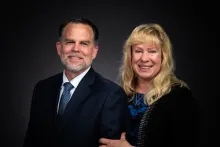
Paul serves as Pastor for the United Church of God congregations in Spokane, Kennewick and Kettle Falls, Washington, and Lewiston, Idaho.
Paul grew up in the Church of God from a young age. He attended Ambassador College in Big Sandy, Texas from 1991-93. He and his wife, Darla, were married in 1994 and have two children, all residing in Spokane.
After college, Paul started a landscape maintenance business, which he and Darla ran for 22 years. He served as the Assistant Pastor of his current congregations for six years before becoming the Pastor in January of 2018.
Paul’s hobbies include backpacking, camping and social events with his family and friends. He assists Darla in her business of raising and training Icelandic horses at their ranch. Mowing the field on his tractor is a favorite pastime.
Paul also serves as Senior Pastor for the English-speaking congregations in West Africa, making 3-4 trips a year to visit brethren in Nigeria and Ghana.

