
Paul Moody
This transcript was generated by AI and may contain errors. It is provided to assist those who may not be able to listen to the message.
Well, hello to you all. Wonderful to be back with you once again. A little bit of a different hall setup. Maybe those on the webcast wouldn't necessarily know, but we'll continue with a little bit of technical and a little bit of video today. So we're kind of set off to the side. So if you've ever thought of accusing me of being standoffish, this would be the day.
I'll bring you greetings back from your brethren in Nigeria and Ghana. It was a very nice opportunity through the Holy Days to go and see them, and they send to you their love and greetings. Just as I took yours everywhere I went, there were questions and most of them centered around, how are the brethren? How are the Mickelsons? How is your family? Please give everyone our love and say hello to them. So I bring those greetings back to you.
Some ways it seems like I was here just yesterday, and in some ways it seems like it's been a while. I guess that's what happens when a lot of things are kind of crammed up into a tight space. Time flies, and yet a lot of things happen, and it was good to go, but it's always good to come back. I was thinking this week of John Denver's song that says, hey, it's good, be back home again.
You love to go, but there's no place like home. So I came back on Monday and found that while I was gone, our septic system for our new building setup site has been put in, and power has been pulled out there, and water's been installed, and I didn't really even have to do a thing but leave. So it worked so well, I thought I would just go away again, and Darla could finish it up, and I could go move back in.
But I appreciate her, what she carried as well as I'm gone. Before I start into some pictures, because I will take you through a little bit of a travel log of where I went and who I saw, and the things that we did, I want to share with you a spiritual message, in part, that's been on my mind and was brought to my attention in various ways as I traveled on the trip, and I would suppose it would be on all of our minds as we come through now the Passover in the days of Unleavened Bread, and that is that as God's people, we must be continually growing.
You know, we came up to the Passover, we had this time of self-examination in which we looked at our lives and considered past year, maybe the past decade, considered maybe where we came from, from the point of our baptism until now, and we realized that this Christian life is about a spiritual growth process, and it doesn't just start and stop at the Passover or the days of Unleavened Bread, but rather those days symbolize for us what should be our constant frame of mind as we walk forward from there. So we came up to the days of Unleavened Bread, we put the leavening out of our homes, we partook of Unleavened Bread each day as we walked through that period of time, and those things represented spiritual things in our life.
They weren't just physical elements that we partook of, again, they represented something greater and spiritual, not just for that week, but for our spiritual life ongoing. So again, the point was we put out the leavening, we examine our life for sin, we consider maybe ways that we walk that aren't according to God's standard and what is lined out for us in Scripture, and we put those things aside to the best of our ability. And as we walk through also, we not only put things out, but we put something in its place. Because as we've probably most all heard the phrase, nature abhors a vacuum. The point is you put something out, you need to replace it with something, otherwise something else will come in and replace that vacancy.
So as we put the ways of the world, the deficiencies that we find in our life out, we need to replace it with something.
That's the Unleavened Bread of Sincerity and Truth. That's the true Unleavened Bread of Life, Jesus Christ, who comes and lives in us as we draw close to God, utilize His Spirit, and seek to walk in newness of life. So that's sort of the core message of coming through the Days of Unleavened Bread. It's sort of a reset every year to, again, get our focus back on the point of where we're going and what we're doing and why we do the things that we do along the way. It's an option for us to remember and be reminded as Christians we're to be continually growing. I want to start today in 2 Peter chapter 3. Just look at a couple of scriptures to begin with that set the tone for this.
I was a little surprised as I went to scripture. I just kind of took in good coordinates and I thought, how many scriptures talk about growing and spiritual growing? And if you just look up grow, there aren't necessarily a lot, but the principle of growing in terms of phrases like overcome, persevere, leaving things behind, reaching forward, it all comes together to support the concept that this Christian life is a period of growth. 2 Peter chapter 3 and verse 17, Peter says, You therefore, beloved, since you know this beforehand, beware, lest you also fall from your own steadfastness, being led away with the error of the wicked. And so I guess we would say to begin with, it takes perseverance and diligence to remain steadfast and continue as well to even increase from that. Verse 18, he says, But grow, grow in the grace and knowledge of our Lord and Savior Jesus Christ, to him be the glory both now and forever. Amen. And so here Peter is addressing not necessarily an unconverted, gentile world. His general pistol here goes out to the church.
These are people who are Christians who are called and converted and have gone through baptism and come under the sacrifice of Jesus Christ. And he says to grow in the grace and knowledge of our Lord and Savior Jesus Christ. You know, not just who he was, but the Word of God that he brought, the way he lived his life, all the words of Scripture that God has given us that were exemplified by Christ, were to study and understand those things and as he says, grow.
It's not like you were baptized, and that was the finish line. In many ways, that was the starting point to another level of growth, a level of growth that we couldn't expand on apart from God's Holy Spirit in the remission of sins. Again, Peter says that this growing is to be a deepening of an understanding that's a continual process, a growth process, all throughout our lives.
Notice Colossians chapter 1 and verse 9.
Colossians 1 and verse 9. Apostle Paul here writing, and he says, For this reason we also, since the day we heard of it, do not cease to pray for you, and to ask that you may be filled with the knowledge of his will in all wisdom and spiritual understanding. And so there's knowledge, and there's wisdom, and there's understanding.
And in many ways, our growth process starts with knowledge, as in book knowledge. We read through Scripture, and we see, okay, there's knowledge here. We have to keep the Sabbath. God wants us to keep his holy days. But really, brethren, it's not until we begin to actually keep those things and walk through those things that knowledge turns to understanding. You can read about putting leaven out of your home, eating unleavened bread every day, but until you actually walk through the process, year after year, your wisdom, your understanding of those things aren't going to increase to the degree that they should, unless you were keeping those. So as Paul's saying here, this is, it starts with knowledge, and we have understanding, we have wisdom. It's increasing exponentially as we live this way. Verse 10, that you may walk worthy of the Lord, fully pleasing him, being fruitful in every good work, and increasing in the knowledge of God.
Again, the growth, the understanding of God and who he is and what he's created us to be and what it is that he's introduced into our lives. Verse 11, strengthening with all might, according to his glorious power, for all patience and long suffering, with joy, giving thanks to the Father who has qualified us to be partakers of the inheritance of the saints in the light. Again, there's to be that increase, that knowledge, that understanding by which we live, to be fruitful works in our lives.
I was thinking today of trees. In fact, you can take a tree and cut it down or cut out a cross section, and you can look at the rings of that tree and count the rings and see how long that tree's been there. But it's not just the marker of maybe age, it's a marker of growth. And you can see certain seasons and years where that tree maybe had an abundant amount of rain and others years where there was drought, and you see the level of growth. But the point is, when that tree springs up until it's cut down, the growth is continual and it's ongoing. And there's verses in the Bible talking about God's people being as an aged tree, and it's a continual growing process all throughout our lives. Again, here Paul said we're to be growing, we're to be increasing in the knowledge of God. Peter said that we're to grow in the grace of knowledge of Jesus Christ. And so, as we come into relationship with them and that relationship deepens, our understanding deepens.
And the more that we know, I think the more that we know that we don't know, kind of as the process goes. The more that we learn, the more that we discover, the more that we have to learn. And it just, God, that's the way this works. God opens His truth up to us, and we live it and we experience it, and we say, wow, you know, it's not that I've arrived, it's that I have so much farther even yet to go. But the journey is a blessing, and God sees us through along the way. I want to go ahead, I make sure I've got this technically figured out. I'll... Do I point this a particular direction, Mike? Your way? Hey, there we go.
All right. I'll kind of take you on a little bit of a journey through some of the places I went and things that happened. I have to apologize to one degree, because when I first started going to Nigeria and Ghana, I took pictures of everyone and everything, and now it's sort of becoming a little bit routine, and I find myself forgetting to even take a picture until after something has passed. But I did have a few pictures I figured I can pull in today and just give you a little bit of an overview. This is actually a picture of departure gate at JFK Airport in New York.
First time I've actually ever routed through there, and in fact, I was surprised when I booked my ticket, because it's the first time I had received even that option. But it was a little quicker, and it was a little cheaper, and I booked through. As I'm heading there on the plane, the lady next to me asked where I'm routing through, and I said, JFK, and she said, I'm sorry.
I said, what? She said, oh, you know, I was there, and I had to scramble and run for a gate and catch a shuttle and all the way across, and I'll never book through there again. So I'm kind of bracing myself as I get off, because I've run through airports before, and it's an international trip.
You're just hoping your luggage is keeping up with you, and we'll make the next connection. But I stepped off the gate, I looked at the monitor for my connection, and it was literally right there.
I've never stepped off the gate, you know, come off the jetway and just walked right on, right across the aisle onto another plane. But literally it was right there, and it actually gave me a little time to stop and grab something to eat. But as you can see, there was a party going on at the gate, and there were people out front, actually, with drums, men in Nigerian wear, and drums, and jumping around, and drumming, and singing, and performing. And again, that was one of those things I didn't get my camera out until the very end. But they're serving cake, and there's balloons, there's the US flag, there's the Nigerian flag. Turns out this was the maiden voyage, maiden flight. Maiden voyage sounds like the Titanic. This was the maiden flight from JFK to Legos, Nigeria through Delta. So I was grateful to be able to jump in and actually participate in that.
Got a piece of cake and a nice Nigerian flag to be able to wave around. This is just a shot from the seatback monitor, but again, to give you a little point of reference of where Legos, Nigeria is. And I think this is a laser pointer. Okay, so here's Nigeria here. If you come over, basically two countries, you have Ghana here. So that was the region that I was in. Roughly about a 22-hour trip from Spokane to Legos. And I actually don't spend a lot of time looking at these seatback monitors other than to watch a movie, because when I pull this up, it makes me a little nervous to think it's four hours to land either direction.
And you just don't think about if you had a problem, but you look at the statistics. You're at 35,000 feet going 500 miles an hour, and the temperature is 60 degrees below zero Fahrenheit outside. So having a problem is not really an option. You just got to reach your destination. At the Legos airport, it was actually, I've explained before, it's sort of like running the gauntlet, but this time it was quiet, and each trip seems like it gets better and better. Go through customs, go through immigration, get your luggage. But as the doors of exit are in sight, there's always a line of security there, officials, airport officials, and they want to look through your luggage and find out what you have.
And as I approached, you had like three of them calling you over, you know, an American. So they're all going to call you over, and you just kind of pick one. And it was a lady, and I walk up and she says, what do you have for me today? I said, I brought you my warm and genuine smile. She says, what else? So, and I don't know if she's used to Americans, but she said, I like coffee.
And so she, I guess, could smell the Starbucks in my luggage that would not be surrendered. And again, she says, what did you bring for me? I said, you know, I'm a visitor to your country. I really think you ought to have something for me.
And she just kind of shooed me on my way and moved on to another victim. But again, it was a pretty easy transfer coming through this time, thankfully. This is the Akimbo family. Most of you know Dari and Tone Akimbo. They've been here for visits in the past. That's their son, Rotawah. He's in his second year of university. Their daughter, Tommy Waw, the older daughter, I want to say she's just turned 14.
And then Bobby, their youngest. Don't let Bobby's serious face fool you. She, I used to call her Bobby the Tornado. But Dari pastors the congregations there in Nigeria. So we have three. One in Lagos, one in Benin City, and one in O'Wary. Dari is also self-employed. As most of you know, he runs a computer tech business.
A lot of his work involves around designing computer apps and various things in that regard. And through his business, he employs a number of young people in the church, young adults, and he's able to help further the church and help further them by giving them a leg up into a skill that they can learn and take on from there as well. Dari is actually having a home constructed. I'll bring you a picture of that on my next trip.
But it's actually a three-level home. And the way it's designed is the first level will be the church hall. There's, for Lagos congregation, there's actually an open room that will be the church assembly hall and a couple of other rooms that will be Saba school parents' room. And then the second level will be his business office. And then the third level will be their residence. And what that does is take a lot of expense and put it under one roof because Dari and Tone rent a house, the church rents a church hall, and Dari rents a flat for his business office and employees.
So bringing that all under one roof will save in a bit of overhead and I think be a win-win all the way around.
We had two baptisms on this trip before the Passover in Lagos. This is Eunice Ungateo. And Eunice was baptized there at Dari's house at the pool outside. And when I say pool, it's what we would call a kiddie pool. We actually had these baptisms planned offside elsewhere at a public pool, but the president of Nigeria was coming through Lagos that day and the streets were all closed down and traffic was rerouted. And literally, you do that in a city of 22 million people and it's gridlock. So they said, don't go anywhere.
You don't have to. Unfortunately, it cleared enough by the evening so people could make their travels in for the Passover. But we had those two baptisms, which are very encouraging. The second baptism was Dari's brother-in-law. He did that a little later in the day. And he's actually a little bigger fellow. Again, it was a kiddie pool. And we couldn't get him completely under the water if he would hold his nose. His knuckles would stay on top, even with me, you know, banging his head against the ground. He couldn't seem to get under. So I actually held his nose as we put him under and back up. But all you need is to cover him. And this was happening during a thunder lightning storm we were getting rained on. So all of us were wet. And as I did the laying on of hands, I reminded him of the tongues of fire that came on him and on Pentecost. We were hoping for a different result. And we came through that lightning storm just fine. I will mention, too, Dari's new house. I hauled him a suitcase load of climbing wall handholds. Mark, a few years ago, bought a box of those from one of the colleges. And Dari is putting up a climbing wall in his house as well. So you could climb from the church hall up on one end of this house. Probably the only house in Legos that'll have a climbing wall. Now here's Passover. And Dari and I conducted the Passover in Legos. And we had 44 for the Passover that evening. And if you notice, we have an American visitor there in the background. That's Kurt Hoyer. And I knew the Hoyer family growing up.
They lived in Olympia when I was there. I came through there when I was about 10 years old. And so I knew his parents. I knew his brother and sister. But I'd never met Kurt. He had taken off for Ambassador College by that point. So lo and behold, I go to Nigeria. And the only white man I see outside the airport is somebody I know. But it was good to have Kurt. He's doing some contract work for the U.S. Embassy in Nigeria. He was up in Abuja and then now down to Legos for a period of time. And so he was able to come in and join us for the Passover for the night to be observed in the Holy Days. And it was actually a very, very encouraging thing for the congregation, because I was there in Legos for Passover and then I moved on. So for them to have him as a visitor as well during those days was encouraging. Passover, brethren, should have reminded us of our ongoing need, again, for spiritual growth and that transformation. That must continue all throughout the year. I was thinking, again, of those baptisms that we did on that day before Passover. And it's not like that's crossing the finish line and the growth is done. Again, with God's Spirit in us, living in us, it increases the opportunity for us to grow spiritually.
Because now we have His mind in us, His understanding, helping us to see the way and recognize who and what He is, recognize who and what we are, and the purpose for which we've been created. Let's look at Romans chapter 12, verse 1 and 2. Romans 12, verse 1 and 2. Again, words the Apostle Paul.
Paul says, I beseech you, therefore, brethren, by the mercies of God, that you present your bodies a living sacrifice, holy and acceptable to God, which is your reasonable service. And we've come through the Passover and we've acknowledged the sacrifice that was made on our behalf. And Paul says, you know what? Your reasonable service is to live your life as a living sacrifice. Jesus Christ laid down His life for you and as His brethren and those emulating His life, we should lay our lives down as well in service to one another. Verse 2, and do not be conformed to this world, but be transformed by the renewing of your mind, that you may prove what is that good and acceptable and perfect will of God. And so, the point is, this whole Christian life is a life of transformation. It's a renewing of our mind.
It's going from the carnal self, which was apart from God, to now we're growing toward something.
It's the stature of fullness of Jesus Christ, the example that was said. And we have God's Spirit in us that allows that transformation to take place. God does His part, but we must do our part as well.
And it's that transformation that needs to take place each and every day.
So this was the Passover. Next day, before it departed, this was in the Akimbo's kitchen.
And this is Deborah, one of the young adults in the congregation, and Tommy Waugh, and Tone, and Bobby. They're all preparing unleavened bread for the days of unleavened bread. And in fact, they fixed me up a whole bag and sent it on the way with me. It's kind of soft after it's cooked.
They sweeten it a little bit, and I actually had to restrain myself from eating it all in one day.
The point is to eat it throughout. But here they are working away. If they look warm, they are.
It's about 90 degrees, and you fire up a gas stove and start doing all these things indoors.
It was probably 100 degrees by my estimation in the kitchen, but they're happy to be working away, making preparations. As I said, don't let Bobby's serious face fool you. She loves to be right in the middle of all the activity. But again, the blessing to be together with God's people, to spend time with them, and to observe the holy days there. On the day after the Passover, I flew from Lagos to Benin City. Dari and I actually split up. He caught a flight to the O'Wary congregation.
I flew to Benin City, and my hotel was directly across the street from the airport. So you could just walk out of the airport and walk across to the hotel. Of course, they couldn't let me do that by myself. I had to be met by one of the young adults who came and walked me across the street and made sure I got checked in okay to the hotel. And I said, really, it's okay. They said, no, no, we need to be there. And I think my wife would appreciate their protective watch of me as I'm over there. But they have visitors, and they want them to return. Here's the night to be much observed. We were, or I was again, in Benin City, and we kept it here at the church hall. About half the congregation gathered together on that evening. About half the congregation met in homes as well. Very pleasant evening. Give you everything we sort of put out potluck style. I'll give you a glimpse of my meal there on the night to be much observed. Everything on that plate, except the banana, will light your mouth on fire. And I think the banana is to kind of cool the sizzle. But very, very enjoyable evening. We just spent time sitting and talking and eating. And there was actually much conversation, as there should be, about the night that God brought Israel out of Egypt. And we read through the scriptures and talked about what is contained there and speculated even on what is not. Thinking about what that night would have been like to, you know, as God's people being let out of of Egypt. And here the Egyptians are bearing their dead and their firstborn, and in the morning that's going on. And yet you're you're walking out with a high hand following God's lead. Try to make friends wherever I go.
This is the youngest child of blessing in Nosa. They're a couple, a young couple in the congregation there, and they have three children, all boys. And this is how it always starts. But the other two boys now come run up and give me this big hug when I come and say things like, did you bring any jerky? So, you know, as Darla's taught me, well, you know, you bribe the horses to get them to come and sometimes you just have to find your way to make friends with the children. But this fella, any glimpse he would get at me, he would just stare. Whenever I would talk, the pucker lip would come out and hopefully next time the big scary white man will be not as scary.
This is Nandy, one of the young adults in the congregation. They're leading songs on the first day of Unleavened Bread. Nandy's my friend. He's actually the one I got to chase out in the ocean.
I mentioned that maybe a year or so ago. But here he is leading songs, and then Nosa giving the opening message on that day. He's the father of the crying baby I was holding. But we're blessed with many young adults throughout our congregations in West Africa, and many of them take on leadership roles and responsibilities within the congregation and run much of the services that take place. Basically, I spoke everywhere I went for the sermon, and the sermon I shared there was the one I gave here before I left on remembering our covenant relationship with God and the sacrifice of Jesus Christ, that blood which seals the covenant. This is Ralph Nduka. Ralph's our deacon.
They're in Benin City. You might recall his name last year. We had prayer requests for his daughter, Yvonne, who died of breast cancer. Ralph's wife, Agnes, about six years ago died suddenly. So he's been through a number of trials, but he's our faithful leader there in the Benin City congregation, and we're very grateful to have him. Here he's introducing club for the day. Everybody came together for the holy day and it's effort to travel and come together. So we spent the whole day at the church hall, had the Sabbath service in the morning, and the meal together, and then in the evening basically a leadership spokesman's club type of that. So these are the young men who are part of the club members. I was asked to essentially guest direct the club, and then one of the members who was supposed to be there to give a sermon didn't arrive or a speech, and they asked me if I would give a speech in his place. So it was my impromptu icebreaker. I always seemed to end up back starting at number one. I've never never quite made it through the club cycle, and each time it reboots I'm at number one. But I gave my icebreaker and I've been traveling there for a number of years, but not actually necessarily officially introduce myself with some of my background in that way. Something they did for a club that I thought was very positive and a good practice was they have a portion called Defending the Faith, and I believe it's in our club manual here as well, but Defending the Faith. And the point of that is between the last club and this club, they're assigned a doctrine. They're assigned a topic from the Scripture, and they're to study that through, turn it inside out, study the Scriptures. If the church has a booklet on that topic, they're, you know, they study through that as well. And then when they come together, Defending the Faith portion of club is there are questions written out. Questions such as you would get asked by somebody around us in the world who doesn't understand maybe why we do what we do or has a question about our beliefs. And each member of the club draws a question and has to stand up and you take three to five minutes and answer the question. Defend the faith. Give a hope for the answer that's in you.
And some of the questions were pretty tough, and I thought they did quite well. Again, you study that topic and you come prepared. But I think, again, the point is reading God's word gives us knowledge. Living it gives us understanding, and it leads to wisdom. And we all ought to be at a point where we can defend the faith, give an answer, and at least at an elementary level, doesn't mean we'll be the greatest professor. But if we've been living this way of life for years and decades, we should be able to give an answer for the hope that's in us and defend the faith.
And I think part of the point is you can be a Christian. You could call yourself that, but not ever grow spiritually. Again, if we think baptism is sort of just getting across the line and now you're done growing, that's not the point. But you could spend years or decades in the church and say, I'm part of the church of God, but never really grow up spiritually.
Let's look at Hebrews chapter 5 in this regard. Hebrews 5 and verse 12.
Hebrews chapter 5 verse 12. The apostle Paul, possibly the author here, says, For though by this time you ought to be teachers, you need someone to teach you again the first principles of the oracles of God, and that you have come to need milk and not solid food. So, you know, the point is, he says, by this time you ought to be teachers.
You've studied this word, you've heard this way of life, you've lived it, you've sat in church for years or decades, and each and every one of us at some level ought to be able to teach and to pass on the concepts of what it is that we believe, according to God's word.
He says, by this time you ought to be teachers. Verse 13, For every one who partakes only of milk is unskilled in the word of righteousness, for he is a babe, but solid food belongs to those who are of full age, mature, that is, those whom by reason of use have their senses exercised to discern both good and evil. And so we need to be putting forward the effort to grow spiritually every day, not just think, well, you know, I have enough of what I need to get me by and I can just cruise through. We need to engage in prayer, Bible study, fasting, and meditation on God's word, thinking about how that applies in our life. Again, we ought to be able to give an answer.
And Paul says here, or the author says here, that it's by reason of use you're going to understand these things. It's living this way. It's applying it in your life, using God's way as your guide and the roadmap for your growth every day.
This is Air Peace. That's a newer startup airline in Nigeria. It replaced Air We Can Never Get Anywhere on Time airline. And at some point, one of the major airlines in Nigeria just went belly up because they were literally canceling so many flights. Last time, flying back from Benin City to Lagos with Mark and Dari, the flight was two hours late getting off the ground and we're still waiting, and then suddenly everybody behind the desk disappears, and the announcement comes over the loudspeaker that the flight's been canceled. And then there's nobody complained to because everybody got the heads up and went and hid. So Air Peace is the answer to that, hopefully. Hopefully, peace of mind, they say, is the solution. So Sunday, after first day of 11 bread, I flew back to Lagos via Air Peace, and Dari met me at the airport. And it was our last night together there in Nigeria before I was apart for Ghana. So Dari and I just kind of stayed up late and partied, did the last bit of paperwork that needed to be wrapped up, and tried to watch a movie in between the power outages. Next morning, about 4 a.m., I got up and Dari took me to the airport, and the flight from Lagos to Accra, Ghana, left at 7 a.m., and it arrived at 7 a.m.
And it was a fast flight, but the time difference, it was an hour flight, but time changes while you're in the air. I arrived Monday morning there in Accra, and met at the airport by Henry Aikens, who's our office manager, and he took me over to the airport, or from the airport to the hotel. Nice hotel with a... not that nice of a hotel. A hotel with a big sign that said wireless internet, but as maybe some of you, if you were following me on Facebook, I disappeared once I left Nigeria and had no internet connection as I traveled through Ghana. But that's sort of the case sometimes. You stay at a hotel that says we have internet, and what it means is they have a wireless router, but there's no data backing it up, so it's sort of the bridge to nowhere, which actually makes it kind of nice. There's no Facebook, there's no email, and when I stepped off the plane in the United States, my phone just starts going crazy, and buzzing and dinging, and gives me that backlog to catch up on. But Monday, basically, after getting into the hotel, I just I just went to bed, and it had been kind of a busy routine up to that point, and I used that day just to catch up on some rest. I did a little Bible study in preparation on some of my presentations, and then the next day, Henry Aikens came over as well as our pastor, David Maselebi, from the Accra congregation, and we spent the afternoon together just discussing church business and the congregations throughout Ghana, as well as Fisa Tabernacle's plans. On Wednesday, I think that was Wednesday, Wednesday, departed from Accra, and we drove out to Winnebuh, which is location of one of our village congregations, and Winnebuh literally means windy bay in the local language, and it's a very pleasant region because it's right by the ocean in the breeze, just a light breeze and a blowing through Winnebuh each and every day. It helps keep the mosquitoes blown away, a lot cooler than it is in the city, and this is the hotel that we stayed at, and $18 a night with air conditioning. $14 if you want to forego it. But I took that picture, I told Henry, I said, palm trees to people in the United States means tropical paradise, so I will take this picture home and advertise. We had the feast announcements today. Winnebuh is where we had our feast site last year, and looks like we'll likely have it there again this year, and this is the hotel that a lot of the brethren from across stayed at. If you travel over to a crop or to Ghana from the United States, this is likely where you would stay as well for the Feast of Tabernacles. So, tropical paradise. $18 a night with AC.
On Wednesday, I conducted a leadership workshop. These are the leaders of three congregations out in that region of Winnebuh, Kuan Yaco, and Agona. In the front here to the right, this is Benjamin Agia Pong, and he's the pastor. And the rest are individuals that speak in the congregation, sermonette sermons, other leaders. We couldn't necessarily facilitate all the leaders because not all the leaders speak English, but the ones that do speak English came and participated in this workshop. The basic concept that I covered was things pertaining to servant leadership versus authoritarian leadership.
Authoritarian leadership is essentially heavy, top-down, authoritative leadership.
We would maybe call it gentile rule and dominion. It's heavy-handed. It's taking advantage of the people. And in that form of leadership, position, title, and titles of authority are very important.
But that's not the biblical standard of leadership that Jesus Christ left for his disciples. Servant leadership is what Jesus Christ exemplified as he walked the earth and as he lived this life.
Let's look at Matthew, chapter 20. Matthew 20. We're going to look at verse 25 through 28.
Again, just see this basic principle of what it is that Jesus Christ exemplified and what I would say leaders all across the board, and especially in the Church of God, is this is a place where we can all take note and work and grow and increase in this growth. Matthew, chapter 20, verse 25.
Here it says, But Jesus called them to himself, and he said, You know that the rulers of the gentiles lorded over them, and those who are great exercise authority over them, yet it shall not be so among you. Whoever desires to become great among you, let him be your servant. And whoever desires to be first among you, let him be your slave, just as the son of man did not come to be served, but to serve, and to give his life a ransom for many. I believe for the most part, our leaders in West Africa do a good job to exemplify this standard of living, to serve the people. Again, Christ said he didn't come to be served, but to serve. At the Passover, he got down and washed his disciples feet and said, You ought to do this for one another. Again, a symbol of an attitude of service. So the topics that we covered during leadership workshop very much were related to that.
I also covered pride and humility in terms of service, and we covered shepherding the flock of God. Not everybody here is a pastor. We have one pastor, but the point is the biblical principles of shepherding God's people apply to leaders in the congregation as well, and even those that would work with one another, whether we are ordained or not. But what we do see is God does provide shepherds and leadership for the people for a purpose. We see that in Ephesians chapter 4.
Turn over there.
Ephesians chapter 4 and verse 11.
Here we have a description of positions of authority that Jesus Christ established in the church.
Verse 11 says, And he himself gave some to be apostles, some prophets, some evangelists, some pastors and teachers. And notice why, verse 12, it says, For the equipping of the saints, for the work of ministry. Ministry essentially means service.
You know, in many ways, we minister to one another. If you go to visit somebody who's sick or shut in, you're ministering unto their needs. And it's not that it's a ordained position of a pastor in that sense or an elder, but we minister to one another. And it says, Christ gave these positions of leadership to help equip the saints for works of ministry or service.
For the edifying of the body of Christ, for the building up, the strengthening, the growing of the body of Jesus Christ. To we all come to the unity of the faith and the knowledge of the Son of God, to a perfect man, to the measure of the stature of the fullness of Christ. And that's the goal.
That's the standard that's been set for us. The example, the measure of the stature of the fullness of Jesus Christ. And we're each to evaluate our life and say, all right, where have I come from?
Christ said, I know where I came from and I know where I'm going. We need to as well. And we evaluate and say, where did I come from? Which was called out of this world, called out from under sin.
But where am I going? And what's the standard by which I must live? That's Jesus Christ's example.
And ask ourselves, where am I along the way? And if we're honest with it, I think we would all agree that we have room to grow. And this is growth again that's added to growth from last year and the year before. And it's compounded year after year and we build on what we built on before.
But again, growth must be continual. Following the leadership workshop, we had some time, Henry and I, with Benjamin to discuss his congregations and some logistics for the Feast of Tabernacles planning this year, as well as the Casava mill operation that's taking place out at their site.
So it was good. The only time I got to meet with Benjamin on this trip, so it was kind of a condensed meeting, but I kind of see my goal when I go over there is not necessarily to see every member of every congregation. At some level, I can't do that. But I do see it as my responsibility to connect with the leaders, the pastors, the leaders, to try to build them up, strengthen them, give them the tools that they need to then go and serve the people. Many in Agona don't even speak English other than hello and goodbye. That's been the limit of my communication with them on a personal level. And so very much we rely on the leadership who we strengthen to then go and strengthen and encourage the brethren. This is the church hall in Winnebuh, on the Sabbath, or rather the last day of Unleavened Bread, the high Sabbath. We got together on that holy day and assembled in Winnebuh. Winnebuh is a village, but it's more of a town. But church hall here, as you can see, they took me around and they showed me some of the deficiencies that we have.
As I said, Winnebuh is Windy Bay, and the wind huffs and puffs and sometimes tries to blow things down. And maybe you can't see so well from the angle of this picture, but you know the roof up here actually kind of does this as it goes along. There's gaps and openings in between the boards, but they have four walls and a roof, but it does need at times a little help along the way. As I left Ghana, I actually gave Henry Aikens $300 to give to them to do a little bit of upgrade there to the building. They can do the work themselves, but that'll just give them some materials by which they can at least reinforce the structure. This is inside, stage decoration. As you can see, they do quite a bit with what they have. There's actually two lecterns here. One is for me, who speaks English, and the other is for the translator. Again, when I'm in these three congregations on this end, whatever I give is translated. So it takes my sermon notes and basically boils them down to what would be a split sermon length because I speak for two or three sentences and pause, and it's translated. And then when we come to the scriptures, I don't even read the scriptures.
I'll just say what the scripture is, and the translator will read it in order to save time.
Again, this was being together on that day.
This isn't the entirety of the congregation. Our average attendance there is 40 on the Sabbath, but this is early on. A number of the men showed up, and women and children sometimes maybe come along a little later as things are prepared and they're ready to come, and we have an afternoon as well there. But I took this picture early on for those who had come together, and again I just want to point out that we do have a mix of ages in there, but we have a lot of younger people in these congregations. And things that they're asking for are tools for growth, because this was really the first trip I had time to actually in certain areas sit down and just visit and have various conversations about needs and concerns of the church and what it is that they would like to assist them in teaching the brethren. And in a number of places where I go, there are young people, young adults, who would like, for example, to come to ABC.
But to get a visa out of West Africa is very, very difficult. Dari was turned down multiple times before he was ever able to come to the United States. So getting that visa is hard.
Funding the ability to even travel over and attend ABC would be difficult. So what they're asking for is ways that some of that can be brought to them. Education, more in, again, leadership workshops, maybe ABC-type sampler classes, various things like that. I encourage them to pull offline resources that the church has online. But part of the ongoing conversation, and it takes place at the GCE, at the international meetings, is how do we bring some of the educational opportunities that we have here, and maybe on a micro scale, but bring them over to these African regions and help to equip the young people there for service and for future leadership as well.
So this is Henry Aikens, again, office manager in Accra. He's the one that picks me up at the airport, runs me around the country. Henry and I spend a lot of time together while we're out there.
And this is Peter, who's the deacon of the Winnebuh congregation. He's holding in his hands copies of the club manuals. We had the club manual that had come over from Nigeria, and Winnebuh was wanting to start their spokesman leadership club there. And so Henry and I took that manual one day and ran off a number of copies, and now they're beginning to start that process there.
This is the Pontiac vibe, which is our trusty transport as we run across Ghana.
On the last day of 11 bread, I visited and spoke in both Winnebuh in the morning and then Kuan Yaco in the afternoon. This is the church hall for a Kuan Yaco. It's about 45 minutes down a pothole road, basically. You could probably get there in about 20, but you spend a bit of time slowing down and dodging potholes, and you get out into a somewhat remote village region. But this is the church hall there, and it's actually an area that we're soon to abandon.
As you can see, there are these power lines running over the top. And the structure was put up a number of years ago, and then later on, power lines were brought out to this region and went right over the top. And then now the church hall falls in the right-of-way, or what they want cleared out from under those power lines. Two years ago, just about in that time frame now, Mark supplied some finances to help them be able to purchase a small plot of land in that region. The hope is to now build a structure of some sort there that they can assemble for services. And we're actually running out of time. The government came along again about two months ago and essentially said, this is your last warning. You need to move on. So we're now kind of seeing what plans we can put in place to begin, at least putting up some level of a structure on the property whereby they can relocate from where they currently are over to the church property.
Again, here's a portion of the congregation. And as you see, it just looks like we meet in the middle of the jungle, kind of open-air facility. I asked them what happens when it rains, and they said, well, we all move to one side or the other, depending on which direction the wind is blowing.
But they are getting ready to enter into the rainy season. And in fact, we had a rainstorm that came through as I was speaking. And if you can just imagine that metal roof with no insulation and it can rain when it rains. And literally, there was a point where I was shouting just to get my message to the translator so he could shout and pass that along as well. But happy group of people. They're happy to assemble together.
After the holy day that evening, we dropped Peter back at Winaba, and Henry and I made our way back to Accra. This is the Sabbath now, and the eyeglasses came out. We had donations that were made here, and people collected eyeglasses, and I boxed them up, took about three boxes of eyeglasses over, and I split them between Nigeria and Ghana. And how it works in Nigeria is Dari's wife Tone works for an eye clinic, a government eye clinic, and she's trained and certified, and she has the instrumentation. She can determine whether the prescription on the glasses, because you don't necessarily know, and she can do the eye exam, and she can match the glasses to the people. Here in Ghana, the method is the try it on method and see what works. So here we are after church, and the ladies are in the back, and I think they go for style first, and then try them on and hope. Hope it's their prescription. They ask that I bring back thanks to everyone who donates in that way and helps to contribute. Here's our pastor in Accra, David Maselebi, and his wife Betty, and they're sporting their new pair of prescription eyeglasses, which came from the mix. I will ask you, if you would, to add to your prayers our pastor there, David Maselebi.
Malaria is a very common issue, and when I go over there, I take a daily malaria med, in case you get bit by a mosquito that has malaria that won't multiply in your system, in your bloodstream. Over there, they can't just live on malaria meds, so everybody has malaria practically, and it resurfaces at times, and then you treat it as it resurges in that way.
But if you've had it bad and long-term, essentially it now burrows into your liver and settles in and creates complications there as well. So David has a number of health problems that he struggles with. He struggles with being jaundice and other liver-related problems, and as well as malaria flare-ups are quite frequent for him. So I just ask if you would keep him in your prayers. He carries the load of pastoring our congregation there in Accra and helping to oversee many things that go on in the church there.
The final picture I have for you today, this is the Accra congregation.
Again, as you can see, it's a nice mix of a number of young adults, younger to older, and their congregation, I would say, is quite similar to our congregation here in the sense of they have college, they have university in Accra, and so they get young people who sometimes come from the village to go to school in Accra, and so they assemble with the Accra congregation.
Ultimately, what often happens is they finish up school and some of the best job opportunities would be in the city as opposed to going back to the village, and hence our congregation here tends to accumulate young adults from the region, and it's a big portion of our group. On the next day, Sunday before I left, I conducted a leadership workshop here as well in Accra, and we had some of the young adult men that came together, and we were able to walk through a number of the same principles. So, basically an overview of my travels, where I went, who I saw, and I just would like to share that with you because my support and ability to go and travel and visit God's people there depends on the ability of congregation here and leadership here that keeps things flowing smoothly in the time process as well. I cannot go there, you know, if I cannot leave here.
So I just wanted to thank everybody here, thank the leadership and all the members here for the fact that you all work together as a unit to keep things functioning smoothly, and when I leave here, people say, when are you coming back? When I leave there, people say, when are you coming back?
And I was recalling there used to be a day where you had two men who traveled to Nigeria alone.
It was Fred Keller's and Mark Mickelson, and they made three to four trips a year, each to Nigeria alone. And then you had Melvin Rhodes and Tom Clark at that time who traveled then to Ghana and covered that area. So you had four men just in those two areas, and then as events unfolded a number of years ago, then, as you recall, Mark picked up multiple countries in west and central Africa. And you had one man that was going around to Nigeria and Ghana and Togo and Benin and Ivory Coast and Cameroon and DR Congo. And if you could just imagine, sort of, that was survival mode.
And now I've taken on the English areas, Nigeria and Ghana, Tim Peberth has taken on the French speaking areas, and yet our ability to do maybe what was once done in terms of our attention there is still somewhat limited. And so I just pray for your, ask for your prayers and your concerns in that way, because the brethren over there are asking for help in certain ways. Again, building up leadership structure and education, and we'd like to be able to bring to them as much as possible, and yet when you go there, sometimes it's sort of a hidden area and move on. I do thank you, brethren, for your contribution here. I'd like to wrap up in 2 Peter chapter 1.
2 Peter 1. I want to focus this back in again on our topic of spiritual growth.
We've come through the Passover, we've come through the Holy Days, and Pentecost is ahead of us, and this is a period of counting. It says you count 50 days, and you know, it's the seventh Sabbath complete, 49 days, and the morrow after seventh Sabbath is that day of Pentecost. And so this is a time of counting, it's a time of reflection, it's a time in a season for growth, and I would just like to remind us of that. This week in your email, I sent out the chairman letter from Dr. Ward, and it reflects on the Passover, Days 11 bred behind, and Pentecost ahead, and if you have not had opportunity to read that, I strongly encourage you to do so.
It's important principles for us to remember. But again, I want to wrap up in 2 Peter chapter 1 and verse 5. Peter says, but also for this very reason, giving all diligence, you know, all effort, all determination here, add to your faith virtue, to virtue knowledge, to knowledge self-control, and to self-control perseverance, to perseverance godliness, to godliness brotherly kindness, and to brotherly kindness love. And so it's laying this foundation and adding to it, and adding upon the other, and adding upon the other. It's growth upon growth. Again, it's doing what God has given us to do in this Christian life. Verse 8 says, For if these things are yours and abound, you will be neither barren nor unfruitful in the knowledge of our Lord Jesus Christ. For he who lacks these things is short-sighted, even the blindness, and it's forgotten that he was cleansed from his old sins. I think if we somehow in our mind consider that I'm done growing or I don't need to grow, then we don't fully appreciate what it is that God has called us to and the offer that he's laid before us.
Growth in our lives today is a recognition of where we are going and what God is doing in our life.
So he says in verse 10, Therefore, brethren, be even more diligent to make your call on the election sure. For if you do these things, you will never stumble, for so an entrance will be supplied to you abundantly and to the everlasting kingdom of our Lord and Savior Jesus Christ.
And so I leave you, brethren, with the point and the principle that we picked up as we came to the Passover in the days of 11 bread. Again, we hit the reset button again for this year. Let's move forward once again in newness, remembering what God is doing, remembering his plan of salvation, and remembering that in our personal life as a member of the Church of God, our growth must be continual and ongoing.
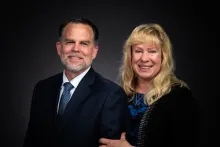
Paul serves as Pastor for the United Church of God congregations in Spokane, Kennewick and Kettle Falls, Washington, and Lewiston, Idaho.
Paul grew up in the Church of God from a young age. He attended Ambassador College in Big Sandy, Texas from 1991-93. He and his wife, Darla, were married in 1994 and have two children, all residing in Spokane.
After college, Paul started a landscape maintenance business, which he and Darla ran for 22 years. He served as the Assistant Pastor of his current congregations for six years before becoming the Pastor in January of 2018.
Paul’s hobbies include backpacking, camping and social events with his family and friends. He assists Darla in her business of raising and training Icelandic horses at their ranch. Mowing the field on his tractor is a favorite pastime.
Paul also serves as Senior Pastor for the English-speaking congregations in West Africa, making 3-4 trips a year to visit brethren in Nigeria and Ghana.
