
Mario Seiglie
This transcript was generated by AI and may contain errors. It is provided to assist those who may not be able to listen to the message.
Well, this is a special message in the sense that today we are celebrating our 10th anniversary of serving the Garden Grove congregation. The Bible talks about moments to honor the time that we have been here, and certainly we should be very thankful and appreciative of the congregation, everything that has been done. It's been a wonderful 10 years. We hope to be here much longer, and we could not have done it without the help of the congregation. So I'd like to turn to Colossians chapter 3. Look at this biblical principle. Colossians chapter 3 verse 15.
We also have a Bible class for the younger kids, so they'll be exiting now and be going to their class. Colossians 3 verse 15. Apostle Paul says, And let the peace of God rule in your hearts, to which also you were called in one body, and be thankful. Other translations say, Be ye thankful. It's something that God's Spirit produces in us. Continuing on, it says, Let the word of Christ dwell in you richly, in all wisdom, teaching and admonishing one another, in psalms and hymns and spiritual songs, as we have done today, singing with grace in your hearts to the Lord. And whatever you do in word or deed, do all in the name of the Lord Jesus, giving thanks to God the Father through him. So it's a time to reminisce a bit.
I'd like to just share some lessons we have learned during these 10 years, and also looking forward with goals in the future here in the congregation.
Ten years ago, we arrived after having come to a crossroad in our lives. My wife, Cottie, my four daughters, and myself. We had been serving the same congregation for 21 years in Santiago, Chile. I'm bilingual, bicultural, and binational in that sense. And after 21 years, we asked for a transfer back to the states. We had been serving Latin America for 23 years. At first, my supervisor was reluctant, tried to talk us out of it. But we felt we needed a change.
All four of my daughters are U.S. citizens. They wanted to come back to the states and seek higher education here. We already had two daughters living here at that time, and two still in Chile.
I wanted to also come to help here in the United States to help make a difference, to protect the church. And so we were given the choice of two different congregations, one here in California and the other one in Texas.
And we visited the one in California first. We visited the Garden Grove congregation.
And the pastor there, Robin Weber, was very supportive. He wanted us to be in Garden Grove.
We found a very warm and friendly congregation who loved God's Word.
And we fell in love with all of you and the area as well. So we didn't even go somewhere else. We just decided this was it. It was a well-organized church.
It was a caring church, very generous, up to the present time. And it had the love of the truth, which is mentioned in 2 Thessalonians 2.
2 Thessalonians. That's what I wanted to say. Chapter 2, verse 9. We're talking about the future, a ruler, this lawless one. He has not appeared in the world scene. It's interesting how from everything we read in the Bible, we are going to have this lawless one appear as part of that European Union one day. He is going to be a religious leader with great power and influence. He's going to help protect that union. It's not only going to be political and economic, but also a type of religious union. And of course, at that time, Satan will have rebelled for a second time. It mentions there in Revelation 12 that before Jesus Christ comes back, Satan is aware of things and he's going to try to intervene, because he's going to lose his rulership. Yes, he is one of those that have been now multiplied in humankind, which he says, I will not be removed from my position. He was the first one that voiced that. I will not be removed. I will rebel if necessary to retain my power.
And we've seen that in the angelic realm and we've seen it in the human realm.
And so before Jesus Christ comes to forcibly remove him, he's going to rebel, and then he's going to be cast down. And he'll be given a short period of time where he will have more influence and power than he presently does. And then this lawless one is going to rise up. So it's going to be by the work of Satan. This isn't some superhuman type, but he is going to be used. As you might know in world history, Adolf Hitler was by normal standards a real failure.
He was an Austrian who was a corporal in World War I. He was a very brave man. He received some medals, but afterwards he tried to make a living out of painting. Didn't go very far.
He was a very bitter and bitter person because of what had happened in Germany and ignominious surrender to the Allies. And so he started a movement and became eventually the chancellor of Germany and began World War II. But he didn't have any real credentials. He had been a corporal. He was a very dejected and very poor artist at that time. And so it isn't the person, but it's how he allows Satan to use him. And Satan was able to use him to try to destroy the Jewish people. And he did more of a job than anyone else in history. Through him, six million Jews were killed during World War II. That's the estimate. So now we come to another Hitler-type person. Now there's going to be a political leader and there's going to be a religious leader. Remember, there are two. It's a government that you have a political and military leader, sort of like a Hitler. And then you have a religious leader that's going to have miracle working powers. So they're going to be in tandem. And this is going to happen sometime in the future.
And so it says here in 2 Thessalonians 2, verse 9, it says, the coming of the lawless one. This is one that's going to go against God's laws, although he is going to represent a Christian religion. It goes along with what we have heard in the sermonette, that judgment has to do with discerning what is good from evil, using God's laws. Well, this man is going to use church tradition to determine things and to really turn God's laws upside down, changing the days that God says we should worship on, changing many things which now have become traditional in Christianity. He says the coming of the lawless one is according to the working of Satan. Here's where I get my authority to say what I have said. It is according to the working of Satan. Satan uses this person, lifts him up. He says with all power, signs and lying wonders, and with all unrighteous deception among those who perish, because they did not receive the love of the truth that they might be saved. Humans are going to be deceived. God is going to allow it during that period of time that we call the Great Tribulation Period, three and a half years before the coming of Jesus Christ. People are going to just follow along the religious current of the time. There's going to be power, signs, and people are going to be led away from keeping God's laws. And for this reason, it goes on to say, God will send them strong delusion that they should believe the lie. Now, God is overall in control, but he permits this. He permits Satan to do this. You can read there in Revelation 12 that Satan has a short period of time, that God is allowing him to do this, to cause a great deception, because people do not love the truth. It's not talking about truth in general. It's talking about the truth. God's Word is the truth. His laws are holy, just, and good. And of course, along with that is his mercy and love and grace. It all comes together.
They don't oppose themselves. They all work together, just like cogs in a watch, to be able to give the proper time.
And he says here, and for this reason, God will send them strong delusion that they should believe the lie, that they all may be condemned who did not believe the truth, but had pleasure in unrighteousness. See? People just go their way. They're not interested in learning the righteous way of God according to the truth. It isn't some religious truth you get from a person.
It's not something that has been man-made. The truth is here. You have to check it out for yourself. This is the truth, and there's going to be a great deception, as there has been for the past 2,000 years. Since Simon Magus, in the year 33, from everything we get in the historical record, he started the false Christian church. It just took two years after the first, the original church in 31 AD in Pentecost. That's when the true church began. And two years later, Simon Magus, who learns about Christianity and is even baptized, knew all the doctrines. But he did not receive the laying on of hands, which would have given him God's Spirit. And when Peter saw that this man was out to make a prophet out of this, Peter did not lay hands upon him and rebuked him.
Well, later history mentioned Simon Magus went to Rome, where he established a Christian church, which he said would be the greatest, and where he mixed grace to be able to undo God's law and change this about the Old Testament God being an evil God in the New Testament. Well, he's just gracious. And so he began with eventually what became the great rule.
And so the persecuted and small church has retained it faithfully that through teachings from 31 AD. We've never had anything to do with the 33 AD church, but it's been a rivalry, and we certainly are the minority. So this is what I found in the Garden Grove Church, a love of the truth. And I have striven to serve you and to teach you and strengthen you on that truth since we came here 10 years ago. So we left on November 11, 2001. That was two months after 9-11.
And so people were telling us in Chile, what are you doing going back to the U.S.?
Everything over there looks like it's going to pieces, and look at all these terrorist attacks.
We just said, that's where God has put his name, and that's the congregation we're going to come, and we're going to go through thick and thin, but we're not going to back down. We're not going to let some people intimidate us. And so we arrived the following day, and we set goals, personal goals, and congregational goals. The Garden Grove Church has been blessed with fine, upstanding veteran elders.
As you know, we have here Roy Tower, we have Dan Salcedo, Lou Ficuri, Joe Young, and Homer Moore. Those are the elders that we have that help serve the congregation.
We have numerous deacons and deaconesses that are also very dedicated. We have teachers, we have organizers, we have a local council that has been going on for 10 years, and we work in harmony. In 10 years, I have not had one point of conflict. Now, some people might say, well, how can that be? Well, we all just talk things through and work them out, and we've always been able to do things in harmony, and people have their own different opinions, and we listen to them, but we work as a team. That is the key. We have men upstairs, been blessed with the gifts of electronics. We have internet, that right now we have a camera that's filming all of this, and many people are online all around the earth watching services, thankfully because of this team that we have, because I could not do that. And I'm so thankful every week we have all these men, Dave Wallach, Mike Nakashima, Dave Markham, and we have some of the youngsters that are helping as well. Upstairs, of course, Bob Bates is the webmaster that we have, and several more that help out.
We have the stage crew that sets everything up. We have ushers that are there, early greeting, serving in that way. We even have chefs prepare barbecues, wonderful barbecues, Price Moveus and his group. That's just such a wonderful thing to look forward to Price's barbecues. He's got to have Levitical blood because he really prepares those, just like the Levites prepared all the sacrifices.
And of course, he's trained others through the years, so that has been very helpful.
So I'd like to share with you some of these lessons that we have learned.
The first principle, you set priorities. You can't do everything.
Not everything is as important. And so the priority we have in the Bible is in Matthew 6, verse 33, which we should never keep our eyes off. We should always focus on Matthew 6, verse 33. And it says, but seek first the kingdom of God and his righteousness, and all these things shall be added to you. That's the first principle setting up. Because if we don't make it to God's kingdom, this congregation lost its purpose. And you can become a social club. You can become all kinds of things. But if you don't make it into the kingdom, we have failed. We have failed in the most important goal, which is helping you make it to God's kingdom. So when Jesus Christ comes back, as it says there in 1 John chapter 2, you don't walk away ashamed because you did not get transformed. And you see all of your brethren being transformed and going up, and you're going to sit around in a human body, and you're going to know Jesus Christ judged me, and he found me wanting. And even with all the mercy he showed, I just didn't make the grade. That's the most embarrassing thing. Of course, as the minister, I want everyone to make it into God's kingdom and be transformed. It says there, that is our crown. That is our joy. That is what it's all about. That's what we work for. That you make it into God's kingdom. And so the first priority that I have set up, and I set it up basically when I came into the church as a very young man, was to set priorities in my life, which were, number one, God. God is number one.
I do not compromise with God's truths. I do not compromise with God's word.
Number two, family. After you do your part and put God first, then you put your family above everything else. As it tells us in 1 Timothy chapter 5, 1 Timothy chapter 5, verse 8, here we get this principle of the importance of family before God.
And it's quite surprising what it says here. In 1 Timothy chapter 5 and verse 8, it says, But if anyone does not provide for his own, and especially for those of his household, he has denied the faith and is worse than an unbeliever. So it says here, if we don't show and have our house in order, it says we have denied the faith. It doesn't matter what you preach and what you say to others. It's how you take care of your family life.
It's your little kingdom of God that God has given us to take care of. And if it's a mess, then how can we be a good example? And of course, providing for those of our family doesn't mean just providing food or shelter or clothing. Yes, those are the basics. And certainly some people don't even provide that to their shame. Because even if you have to have a job, sweeping streets, but to provide the essentials for the family, for them to have just food, clothing, shelter. But it goes further than that, because you have to provide also the emotional support. It's not just the physical needs. Then it comes to the emotional needs that you provide the warmth, the emotional aspects. That they are filled not only physically, but emotionally as human beings.
Which is why we have so much juvenile delinquency. Because frankly, kids many times are not emotionally filled. Now many times they do wrong things also. But sometimes we just did not provide the emotional sustenance they needed. And maybe they felt turned off in their family. They felt unloved. They felt they were second fiddle. Things were more important to their parents than themselves. There are many different things I'm not going to speculate, but here it says you provide. So you provide emotional support. If you can have children, you have an obligation to invest in their emotional development. If you don't have the time, you don't want to do it, don't have children. Because it comes with the territory. It means that you are going to sacrifice for that little baby to have an emotional stability. And then of course you have education that you should provide for them as well. Not just food and clothing or emotional support. You also have an education to support. So they can sustain themselves. So that they can stand on their own two feet in society.
Education doesn't mean just having a college education. They can have all kinds of different types of training, but it is for them to be able to stand on their two feet. They can sustain themselves. That's part of the responsibility of a parent. Not to just kick them out and hope everything goes well. It would be the same thing as taking a little bird and before he's prepared, knocking him off the nest. Well, if you can't fly too bad, you provide so that he will fly. And he will be a success as far as going out and earning a living and forming a good family. So all of these things are part of the priorities of what family is about. And then finally you provide spiritual sustenance as well. That's providing if your children do not feel that spiritual sustenance in the house, then we have fallen short. We have not done our part.
So once you've put God first and provided what God requires, which is obeying God and keeping his laws. And that includes the Sabbath, feast days, it includes tithing, because that is something that God says is part of our duties. It's not a request or a suggestion.
It is a command of God. You can read that in Lev. 27, places like Malachi as well. Chapter 3, where it talks about you rob God if you don't have tithes and offerings to him. So all of this is, you know, provide for God first, then provide for your family, and then of course comes the church. That is something that you should build a certain commitment to your church. That's the second, third priority. When a person is being ready to be baptized, I go over, you know, what can you expect of the church? And I said, what you expect from the church is that you can talk openly with the ministry. If you have any questions, if you have any doubts, go to your minister. Talk with him. You have a right to clear things up.
We want a church that is transparent. Now that does not mean that it's a church where the things that are confidential in people's lives, you go around telling others. No? I'm talking about what you have a right to do. We don't want these churches where everything is done behind closed doors and just people hang their brains in the back. You know, they come in like thinkless globs that can't do anything except just nod and kneel and go up and down. It's almost like a hypnotic trance they're in. No? God wants us to have a church that's open, that shares with the brethren, decisions that are made, why we believe what we believe. And then I ask them, now, what do you think the church expects of you? And that is for you to be loyal, that whatever problems we have, we deal with them in the church. It's not something that we should spread them to the four wins that the church expects. Loyalty. Just like you should expect loyalty to you from the church as well. And loyalty is something that is being lost nowadays. People do not commit long term to many things. They don't commit many times in marriages. You don't commit to even jobs or whatever it is.
Sometimes you have legitimate reasons that sometimes people nowadays they just, oh, they have a spat, that's it, I'm out of here. They forget about hanging in there. If you belong to a sports club or whatever, you have a team that depends on you. The church also depends on you. You know, loyalty is something that God looks highly on, a person that is going to go through thick and thin with you. And also, it reminds me of that story. It applies in human relations as it does in church relations. Human relations, they say, you know, this thing of not being loyal to your partner or running around before you have your married partner. It's like the old Scotch tape test, which is, you know, first you stick something, it sticks pretty strong.
But what happens if you take it off and you stick it the second time, and then a third time, you know, after a while it doesn't stick very much, because it's lost its power of adhesiveness.
And this can also happen in the church, where people just, okay, well, I'll go here, and then I'll go there, and then I'll go there, and you know, it's like the old Scotch tape. And after a while, there's no loyalty, because you really never have stuck through things. And so, I can see where, if the church goes off the track and is teaching against God's laws, God says, you have a right to refuse to let people cause you to sin. And sin is a transgression of the law, so you don't touch that holy law. But as long as they're teaching God's laws, and they're doing things in a decent manner, loyalty is something that God looks forward to. We don't want to have that Scotch tape, where you just always, well, I don't like this, I'll stick to this, and then I'll stick to the... After a while, you don't have that sense of loyalty, just like it's so wonderful when you have your wife or your husband of so many years, and you've stuck through it, through thick and thin. You ask these people that have had 40, 50, 60 years, and you think if you say, well, do you regret maybe back 30 years ago, you had some tough times, and maybe you thought about splitting, but you said, you know, I'm gonna hang in there, and now 20, 30 years, they look back and say, what a silly thing that would have been for me to do. Now, again, sometimes there are legitimate reasons, just like they are going against God's laws. Human beings also have something that, if the person has been unfaithful and repeatedly and so forth, God has in his own law, says, look, you can just put up with enough, and there's a divorce, and God accepts that, but that's not what he intended for people to do. He likes loyalty. I enjoy sticking through things, not changing teams or any type of situation just because the going gets tough for a while. And then after you have the third priority, after God, family, and church, then come your friends, your community, the rest of the world, which we can help as we have availability. Notice in Galatians 6, says in verse 9, And let us not grow weary while doing good. For in due season we shall reap if we do not lose heart. Therefore, as we have opportunity, let us do good to all, especially to those who are of the household of faith. So we have this priority. The church is before the rest of the community and friends that we have out there. So once you have these priorities, and we have tried to apply them for these past 10 years, we've put God first, put our family second, to have it well-constituted, and then we focus on the church. Do our part. Be loyal to it. Expect it to be loyal to you, to back you as well. Then friends and community. That takes me to the second point. Once we have the priorities, then I'm very dedicated to applying the shepherd model after Christ's example. In Matthew chapter 20, Jesus Christ said how the church should be governed. Matthew chapter 20 verse 25 says, So he gave that example. He says he's the good shepherd. He is willing to give his life and to serve. And so it's very important how the church is governed. And I like the shepherd's model. Let's turn to Psalm 23. This is what I want to be known as pastoring, and this is what I would like to be pastored. This is the way I would like to be pastored. This is the way God does it to me.
And this is the way I want to do it to others. Now Psalm 23, Psalms say, of course, this is the shepherd's description, but actually, again, it is the sheep's description of the shepherd. So it's from the point of view of a sheep toward its shepherd. And this is how the sheep is so happy and proud and thankful to have a shepherd like it has. And we are under shepherds in the sense that Jesus Christ is in charge of his church, but he employs these under shepherds under him, and they should follow his model. This is the way people should feel. Let's go to Psalms 23, verse 1.
This sheep looks and says, the Lord is my shepherd. I shall not want. He says, boy, my shepherd, he's going to take care of me. He's going to be there for me when I need him. If I need something, I'm not going to be found wanting because there is a genuine care for me. He makes me to lie down in green pastures. Yeah, he wants me to get the best food available. He wants me to be fed properly, don't have any poisonous weeds mixed in with the grass. And, of course, a shepherd has to keep its eye first. He has to look at the pasture because there are all kinds of weeds that can poison the sheep. And the sheep, sometimes because they're hungry, they'll eat almost anything. Same way, sometimes, with church members. They will eat almost anything because all of a sudden they get this curiosity or they start talking and pretty soon they're chewing on something that's going to give them spiritual indigestion. So he says, he makes me to lie down in green pastures.
Now, for sheep to be able to lie down, they have to feel secure because they're pretty defenseless.
They don't have any real offensive weapons. And so they've got little horns, but they don't very much. And so it says, he makes me to lie down. You know, I feel protected. I can lie down on this green pasture. He leads me beside the still waters. He sees where the waters are still because sheep, again, with that heavy coat of wool that they have, if they fall in, it's just like a sponge. They just absorb it and they just go to the bottom. So it's a place where the still waters, where they're not going to be caught up in some type of waves or agitation in the water, they can drink without worrying about falling in. He restores my soul, which means he makes sure that I feel fine, that my soul, which is the inner being of the person, the strength of the person, he restores me. He leads me in the path of righteousness for his name's sake. So he's leading me in the proper way, the way of righteousness, not unrighteousness. Yea, though I walk through the valley of the shadow of death, I will fear no evil.
And many of these sheep, when they were taken up to the mountains or coming down the mountains, it was pretty dangerous. They had these very narrow paths and they had to just walk very carefully. And so it says here that even if I walk down the valley of the shadow of death, I will fear no evil because he's there. He's going to watch me and make sure that I don't trip.
I will fear no evil for you are with me. Your rod and your staff, they comfort me. And this is an important point that a good shepherd knows how to use the rod and the staff. And one of the things that is misunderstood, the rod is supposed to be kind of like, well, with this, you punish and you chastise. And this is what you use on the sheep. Well, the shepherd didn't use the rod on the sheep.
He used it against the sheep's adversaries, the wolves, the bears, the lions. He had an iron rod and with that he protected the congregation. That's why the sheep doesn't say, oh, I fear the rod. He says, no, it comforts me because I know anybody's going to try to rustle me, steal me. That rod is going to protect me. And so as a shepherd, you have to know how to use the rod to protect the congregation and to not just let anybody come in and start devouring and others that are trying to rustle and steal sheep. No, that's the rod is to protect the flock. And then he says, and your staff, of course, talking about the shepherd's crook, which was made out of a tree root and it had a bent part to it. And the staff was what the shepherd used for the sheep, not the rod. The staff was a way to get them out of trouble. Sometimes the sheep would get all tangled up in some brier bushes. And so instead of the pastor having to go in there and just get himself all scratched up, he would use the staff and he'd just wrap it around the neck of the sheep and he would draw the sheep. And anytime there was a danger, he would use either the crook to get them out of danger or the other part, which had a little point to it. And he would use that to just kind of move and make sure and prod the sheep forward. So a good pastor knows how to use both the rod and the staff. But the important thing is that the sheep, being a church member here, they say, it comforts me because it is my protector and it is my guide. It is my helper.
Verse five, it says, you prepare a table before me in the presence of my enemies.
So when you brought the sheep all together, you knew out there in the woods there were wolves, there were lions, there were bears, they were looking for that stray sheep. But when they're all together, they're protected and that's where you feed them. And the shepherd's vigilant eyes are out there that no beast will come in and try to take it. It says, you anoint my head with oil, which was part of the tender care that the shepherd had for the sheep. Because many times there were all kinds of bugs and insects, and many times they'd go toward that humidity, especially the nose of the sheep, and go up the nostrils. And it's very irritating. And so what he would do is, he would swathe it with oil, which would protect it, and sometimes with certain ingredients that would act to repel any type of these insects. Also even, you know, the rear part and just protecting.
So the job of a shepherd is not the most enjoyable thing. Sometimes you have to do difficult things. That comes with a job, but the sheep have to be well taken care of.
And so then, at the end, that sheep concludes saying, surely goodness and mercy shall follow me all the days of my life. We mentioned in the sermonette about mercy and goodness, because that shepherd's there to love, to protect, and to serve, and to make sure that sheep is being well taken care of. All the days of my life, and I will dwell in the house of the Lord forever. One day they'll be in God's kingdom. And so they were well taken care of. They weren't beaten down. They weren't humiliated, but at the same time it wasn't just rolling over and just letting everything go. You have standards. You have principles that you go by. But at the same time, you do it with mercy, with love, with patience, and at the same time, when necessary, with firmness. Some have said, well, this shepherd's model and this servant leadership model, well, that means people take advantage of you. And so you have to sort of have a very strong type and very masculine and powerful presence. And that's what you need. Well, that's not what Jesus Christ did. He was meek, but he wasn't weak. And I refuse to accept that we have to use the world's way of dominance and pushing through the personality. Now, the message is more important than the messenger. And so I don't try to put myself in the forefront. I try to put the message in the forefront. I'm in the background. I'm secondary. It's not important what the person is as much as what you get out of the message, because that person's going to be with you just for a short while. But the lessons, what you learn, that can go on for a long time. Now, I'm not saying that the example of a person is not important, because it is. But even Peter, who was a very charismatic and kind of a dominant type person, he had to learn that lesson. You know, he was the one that would just, at a moment's time, a snap of the fingers. He was out there just, let's go, and let's go forward. And he had to learn to just wait and be patient. Notice in 1 Peter chapter 5, how Peter changed. If you'd have known him at the end of his life, you would not have recognized him.
Now, certainly he had passion. Certainly, you could tell he still was a man that had a lot of energy and pizazz. But it was all clothed in humility and meekness. 1 Peter chapter 5, he had become much more Christ-like, and he learned Christ-like service. 1 Peter 5 verse 1, says, The elders who are among you I exhort. I who am a fellow elder. Now, just pause for a moment.
Here he says, okay, we have elders in the congregation. Those elders who are among you, I exhort. 2 I who am a fellow elder.
Fellow elder? I thought he was a great, powerful head of the church.
What do you call himself? Fellow elder. 3 And fellow elder, he refused to rise above the rest, and a witness of the sufferings of Christ, and also a partaker of the glory that will be revealed. 4 Shepherds, the flock of God, which is among you, serving as overseers, not by compulsion, but willingly.
You can't do this job because you've just been forced into it. You'd be very sad for a minister to say, well, you know, I really would have liked to have been a baseball player, but guess what? I didn't turn out to be good, so well, I'm a minister. Yeah, this is my obligation. But I would have loved to have done something else. That's not what you want to listen to. You want a person who really feels privileged and honored and unworthy of it. As it says here, it says, serving as overseers, not by compulsion, but willingly, thankful to have that opportunity, not for dishonest gain, not because, okay, well, my salary is the most important thing.
No, that's not where it's at. Not for dishonest gain, but eagerly, because you do it as a commitment to God, whether you're a member or you have another position. I always consider myself first as a member of the church. The ministry is a privilege, but it is not a right. It is not something that you can assert as a right. It says, nor as being lords over those entrusted to you.
Well, he knew how to be a lord before, but he learned that was not the way Christ wanted the church to be governed. But being examples to the flock. So give the example. Let people follow as they can, but don't go around living their own lives for them and trying to impose your will and having a type of a dictatorship in the church. He says, and when the chief shepherd appears, you will receive the crown of glory that does not fade away. You will receive your reward if you did things as Jesus Christ wanted it to.
So that is the shepherd model that is applied here, of course, imperfectly. If you want perfection, then that's only on the godly plane. Perfection is not in the human plane, nor even the angelic plane, because it says that even angels do foolish things on occasions.
Only God has perfection. So of course, we want to apply it the best way possible, but we all fall short. And if we have done things that have offended you, I apologize for that. Please come forward in a private way and let me know if I've done something wrong, and I will certainly apologize. I will try to do better, because we're not in here trying to act out some type of perfection. This job is not easy. There are tough decisions. I compare it sometimes to a brain surgeon, because brain surgeons, if they make a mistake, they might be cutting the brain, and if that part is cut, if it's severed, that nerve, maybe the arm will just go this way.
You've just cut a nerve from the brain, and once it's cut, basically you can't repair it. So that person's going to have to go with a twisted arm the rest of his life. That's why brain surgery is so delicate. But this job, if you cut the wrong part in the spiritual, you might leave that person spiritually maimed. And that has to do with God's kingdom.
So that's even a greater responsibility, because the person is physical. They can still make it in God's kingdom with a bad arm. But maybe what we did caused something to sever that relationship with God. And of course, God did not put perfect men in charge, and we all have to be patient. Just like here in Colossians, I had read this before in Colossians 3, some verses above this, but I want to read this before in Colossians chapter 3, how we should be patient with each other.
It says in verse 12 of Colossians 3, Therefore, as the elect of God, holy and beloved, put on tender mercies, kindness, humility, meekness, long suffering. Notice how humility is separated from meekness. What is the difference between humility and meekness? Humility is primarily that submission to God. It has to do with the plane between man and God. Whereas meekness is that submission and that humility toward other people.
So meekness is more horizontal, and humility is more vertical toward God. Going on, it says, Long suffering, bearing with one another, and forgiving one another. If anyone has a complaint against another, even as Christ forgave you, so you also must do. So think how many times God has to forgive us all the time. And so if we forgive on occasions, how much more should we think we should be merciful?
But above all these things, put on love, which is the bond of perfection. So that's the attitude that we want. And certainly I've been very appreciative during these 10 years that Garden Grove has held firm in the faith during the winds of criticism, blowing everything loose. It kind of reminds me of these Santa Ana winds. If you don't have them bolted down, things are going to get blown just like they did in our home.
We had some of these canopies, and all of a sudden they all went to pieces. We had to fix them all up again because I hadn't bolted them down. And sometimes this is what happens. The winds of criticism come and they invade, and the person's not anchored down with God, and all of a sudden they get the spirit of criticism. Start looking at everything negative and attacking and just losing their balance.
And we know we have bigger trials ahead. God wants to know what we are made of inside.
And it shouldn't be respecter of persons. We should fear God more than man. And we're going to go through trials, and God's going to see what is in our heart, just like he did with the Israelites. And he will do that with the church. He will put us through tests, see if we put God first, his truths, and if we put men before him just because of favors or friendships or relationships. Are we going to put that above the love of the truth, that loyalty that we have been talking about? Now, Mr. Dennis Luca, as the president of the church, he is laying the groundwork as a model to work in the future. He is a man. He pastored the Garden Grove church here for close to nine years, and he has set up a model, a servant leadership model, that is so valuable. We just are so thankful for the man that we have guiding the physical aspects of the church. We know Christ is the true head, but Dennis Luca is establishing a model for the churches that is very important. Do not have any more of those claiming, I will not be removed, or else this will happen. We do not need that type of attitude, and God has sifted and will be sifting the church.
So, as I finish here, let's go to Hebrews chapter 6.
Hebrews chapter 6 and verse 1. Actually, I'm ending a little earlier, so let's begin the Bible study a little earlier as well. It started at five o'clock, so everybody can go home earlier. Let me leave this thought. I'll leave you with this thought in verse 1. It says, therefore, leaving the discussion of the elementary principles of Christ. And of course, these are what he's talking about, the basic building blocks that you begin learning in the church. He says, let us go on to perfection, which means spiritual maturity. That's what we should grow. That's what we should desire, more than anything else, spiritual maturity. It says, not laying again the foundation of repentance from dead works. See, that's where we begin. Our path is repentance from dead works. What does that mean? It's repentance from the way of life that we had that declared us dead, the works that we had done that declared us dead. That was explained in the sermonette that there in Romans 6, 23, it says, the wages of sin is death. And so, we just realized we deserve death before God for our sins. And we repented of that way of life that produces the works that lead to death. And we're repentant of it. And then it says, and of faith toward God, which is kind of like the second step. After you've repented of breaking God's laws, you know, we say that at baptism.
It's a very beautiful part of the ceremony where we say, what is your name? And then the person gives us their name and we said, have you repented of all your sins and have accepted Jesus Christ as your personal Savior? Those are the two things that the Bible tells us. Repentance and faith in Jesus Christ. And then the person says yes. And then we say, and as a result of having repented of, you know, breaking God's laws, that is, of breaking God's holy, just, and perfect law, and have accepted Jesus Christ as your personal Savior, as your teacher, as your master, as your soon-coming King. Then we baptize you not into any denomination or sect of this world, because this isn't something humanly made. This wasn't founded by a human being. This is established by Jesus Christ. It says, and we do this by the authority of Jesus Christ, and we say, we baptize you into the name of the Father, the Son, and the Holy Spirit, because the relationship of God the Father and Jesus Christ is through God's Holy Spirit being in us. It's kind of like a triangle, where you have God the Father, Jesus Christ, and the human being there. And God's Spirit, which is in both of them, is connected to us. That is what the relationship is about. And we say, we do this in the name of, and by the authority, He is the one that is authorizing that baptism for the redemption of all your sins, the forgiveness of sins. So that's what it's talking about here. You have repentance of dead works, that way of doing wrong things, breaking God's law, and then faith in, as it says here, faith toward God, which means the faith in Jesus Christ's sacrifice for the forgiveness of sin, of the doctrine of baptisms, because after that, you should be baptized. But notice it's in the plural. Why? Well, there are two baptisms in the Bible.
One is the one with water, and later then, well, the water baptism, which is the immersion, complete immersion, so that all your sins are underwater. That's your way of being entombed in water. You come out, all your sins have been forgiven. But that's just part of the ceremony, because once you have been forgiven, your body, which is like the temple, has to receive God's Spirit. And that's where the next doctrine is here, which it says, and of the laying on of hands. A lot of churches don't do the laying on of hands, so they only have half a ceremony.
Baptism is with forgiveness of sins. Laying on of hands is for the receiving of God's Spirit.
Now, I said there are two baptisms. One is water baptism, and the second one is baptism of fire, which is immersed in the lake of fire. That's the one you want to avoid, being immersed in the lake of fire after the judgment and everything else, where you will be baptized by fire. It's just called the second death. So going on, it says here, of the laying on of hands, of resurrection of the dead. You have to believe in the resurrection of the dead and of eternal judgment. That this is a judgment for eternal consequences, either eternal life or eternal death.
And so that's what we want to do. The next couple years, if we have the opportunity to live here, is to lead you to that spiritual maturity, to grow as a congregation, so it'll be pleasing before God. So thanks again. It's been a wonderful 10 years from Kati and my daughters, and we hope for many more years to come.
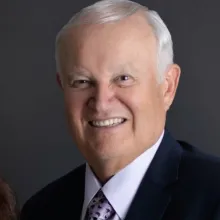
Mr. Seiglie was born in Havana, Cuba, and came to the United States when he was a child. He found out about the Church when he was 17 from a Church member in high school. He went to Ambassador College in Big Sandy, Texas, and in Pasadena, California, graduating with degrees in theology and Spanish. He serves as the pastor of the Garden Grove, CA UCG congregation and serves in the Spanish speaking areas of South America. He also writes for the Beyond Today magazine and currently serves on the UCG Council of Elders. He and his wife, Caty, have four grown daughters, and grandchildren.

