
Paul Moody
This transcript was generated by AI and may contain errors. It is provided to assist those who may not be able to listen to the message.
Sheep are curious animals. We see a lot of sheep in East Africa being herded, along with goats and some cows. Sheep were, or was, however you want to say it, on Mary's and my dinner plate last night. And I'll tell you, it was astounding. It was exciting. It was unbelievable to have a little sheep for dinner. However, I find the way that Mary cooks a little chop of sheep to be much more interesting than the animal itself. The animal itself is rather nondescript, rather plain in some ways. It doesn't really have a lot of intrigue in its life, something that draws you in. Oh, there's a sheep. Let's follow the sheep. Let's watch the sheep.
Let's see what the sheep is up to, because the sheep really isn't up to anything, and there's really not much to watch. In fact, sheep are generally herded along with other animals that will provide a little more intelligence, we might say, a little more decisiveness as to where to go and what to do, and the sheep will follow the goats. They will follow the cattle. They will follow quite a lot of things, actually.
But, up and by themselves, sheep kind of are a little bit boring. My wife and I were driving up in the mountains of Wyoming a few years ago. We were getting up into some real high country, and the last thing we ever expected to see up there in the mountainous wilderness that's rugged, and I was looking for a cougar and a bear. We hadn't seen any bears recently, and maybe a cougar would come out of that big old woods.
And there in the clearing were a bunch of sheep, and it was so odd, just odd to see sheep. And there with the sheep was a vehicle, some type of an RV, and a person who was shepherding those sheep. Because, up and by themselves, the sheep had no business in that country. And yet, it was summertime. It was quite hot down below and dry. And up there, it was cool, and there were some grazing lands that these people could take their sheep up to and graze them on.
Sheep are not capable of self-direction. Therefore, they need shepherds. In this country, we don't tend to see boys or men out with herds of sheep, and kind of a stick or a staff wandering along and telling them where to go. But that is a very, very common sight in other parts of the world. Very common sight. In John 10, verse 11, Jesus compares Himself to a shepherd, and He compares you and me to sheep. Now, that's not a put-down.
That's not a put-down at all. I just told you that sheep, up and by themselves, don't really have a lot going. They don't really think well for themselves. They're not self-directed. But in fact, that's exactly the thing that God wants His begotten children. He wants those who are being called as firstfruits to be now. Somewhat vulnerable, not self-led, a follower, and one that is growing and growing well. Here in John 10, verse 11, He says, I am the Good Shepherd.
There is a need for Christ within His Church. And He is capable and able to meet that need. He is a Good Shepherd. The Good Shepherd gives His life for the sheep. Now, that presents a problem, because Jesus Christ came as the Good Shepherd, and then He gave His life, which means He died and went to heaven to be with His Father. And therefore, there is a need for others, assistance as it were, to shepherd for Him, under Him, as His assistance going on.
But a hireling... Now, this is one... Who are you going to get to take care of these sheep, you see? Who are you going to get? One type of an individual would be a hireling. One who said, I'm not really into sheep. I don't really like to... You're like, meh, that's about it. But how much are you going to pay me an hour? Oh, well, for that amount of money, I'll take your sheep. I don't care about your sheep. See, I don't care about sheep. I don't care about anything about them. But if I'm going to get X number of dollars an hour or a day, I will take on the job.
That's a hireling. He who is not the shepherd, doesn't care to feed, direct, protect the sheep. He doesn't own the sheep. He has no vested interest in them. And he sees a wolf coming. There is concern here that asks, so what?
I'm not hired to kill wolves. I'm not going to put myself into danger because wolves usually don't come alone. They come in packs. And a pack of wolves is a very dangerous thing for man or beast. He sees the wolf coming and leaves. The sheep flees. The wolf catches the sheep and scatters them. The hireling flees because he's a hireling. And he does not care about the sheep. Jesus said to Peter three times, do you love me? Feed my sheep. So we see the transfer from the good shepherd to those whom he would call, those whom he would choose. Those who would become the ministers, the shepherds, the teachers of God's sheep. And he said, feed my sheep.
Let's go to 1 Peter 5 and verse 2 and see what this man says who was told by Christ to feed the sheep. 1 Peter 5 and verse 2. Here, years later, after he has been a shepherd himself, he talks to the elders in verse 1. The elders which are among you I exhort. I am a fellow elder. Verse 2. Shepherd the flock of God which is among you. This responsibility for taking care of the sheep of God's church has been transferred to human beings.
Such as myself and Mr. Dowd and Mr. Anderson and the other elders that God has called and chosen to be shepherds. And this directive is to them shepherding the flock of God which is among you, serving as overseers, not by compulsion because somebody makes you, but notice willingly. Jesus said that a hireling didn't care for the sheep.
But he says, do it willingly, not for dishonest gain, but eagerly, nor as being lords over those entrusted to you, but being examples to the flock. The sheep are not able to be self-directed. Now that's something that kind of rubs you and me probably the wrong way we might say.
You're saying I'm not smart enough to take this Bible. I'm not smart enough with God's Holy Spirit, with Jesus Christ and God the Father living in me, to take His word and to go off by myself and be fed and find the path and make it to salvation. Yes, I am. That's exactly what I'm saying. That's what the Bible says over and over. That's the way God set it up. A sheep without a shepherd is going to come to ruin. Sheep are not able to be self-directed, and they will not survive if they try to be.
Many sheep, you know, will try to be. They wander off. They get lost. I'm a smart sheep. I'm going to head over here in the woods. I hear something interesting over there. They'll see wolves in sheep clothing and think, Oh, that's a sheep. Are you my daddy? You know, and so it goes. It's the same with saints. You and I as individuals were not intended to be self-directed.
Not intended to be self-directed. And the proof of that has been in the church forever, as it were. Mr. Armstrong, for instance, found that he could go around and establish churches and raise up churches, and as he came back, those churches had disappeared. They had no shepherd. They saw the truth. They learned the truth. They knew the truth, and he left the church, and they went on. But they just disappeared.
And that is why Ambassador College was founded in the 1940s. Shepherds needed to be called, trained, and ordained. And there was a process there that began. And once the ministry was established and grew, so did the congregations in God's church. And we know today that if an individual is left to themselves, there's not going to be spiritual growth taking place. Sometimes they can be linked in. If a person is isolated, they can be linked in electronically, or literature, or whatever.
But even then, there will be a certain lack of direction, a lack of growth that happens when a person isolates themselves, is not part of a flock that's being led and trained by a shepherd. Now, I'll tell you right off the bat, I don't know any minister who ever wanted to be a shepherd, felt that he could be a shepherd, felt that he was any better than any of the other sheep. But nevertheless, God has seen fit to appoint some to be the shepherds, and He will work through them.
He will work through them, as we will see. He does it miraculously. He does it by inspiration. The shepherds are flawed, all make mistakes. But nevertheless, that is the way that Jesus Christ and God the Father work. We are not intended to be self-directed. Let's look at 2 Timothy 4, verses 2 and 3. 2 Timothy 4, verses 2 and 3.
This is what has happened always down through time, and will continue to happen when sheep try to be self-directed. 2 Timothy 4 and verse 2. And by the way, today I'm preaching to myself as well, because a shepherd himself can't be self-directed. We don't somehow get the star, the badge, and we can do anything. We can say anything, because we're the shepherd. No, it's a line of authority and inspiration that comes from the Father, through Christ, through certain elements of authority in the Church, through shepherds, etc.
And it's through that that God brings in the doctrines to His Church, and brings the food that we all need by which to grow. 2 Timothy 4, verses 2, says, preach the Word. He's talking to Timothy, the evangelist. You be ready and season out of season to convince, to rebuke. Oh, wait a minute. How can you rebuke if you're just one of the sheep? We all have ideas, because, again, God works through the shepherds, and they are the ones who will have not only the knowledge, but also the authority. They will have the clear doctrine.
Rebuke, exhort, with all long-suffering and teaching. That is where the teaching is going to come from. It's not going to come from within you or me as individuals. It's going to come down through God, through His ministry. For the time will come when they will not endure sound doctrine. But each according to their own desires, because they have itching ears, they will heap up for themselves, teachers. We'll decide what's good to eat. We'll decide which doctrines are good. I'll pick the food that seems good to me, like this wild poison root over here. You've been feeding me grass all these years, and I've just found out that wild poisonous root with that purple flower tastes great.
So I'm going to go over and eat some of that.
If the shepherd is not there with the crook to pull him back, the sheep can poison and kill himself. Well, here we see that they'll have their own desires, because they have itching ears, they will heap up for themselves, teachers. They'll turn their ears away from the truth and be turned aside to fables. Now, do they think they're fables? No. They think it's truth. Fables, from a sheep's perspective, sounds like better truths. Sounds like better truth than the stuff they've been getting. It's new and improved. It's advanced. It's everything plus.
We have to be careful in going beyond what God is teaching us.
The church is the bastion of doctrine and truth. It is the repository of truth. In the ministry, the calling that's given by Jesus Christ to shepherd His sheep is through the church. It's not through any private, some personal, some individual difference, some administrative hiccup where somebody might separate or decide to come up with something else. No, it is through the church. And there is one church. There's one faith. There's one Lord and there's one Christ. And anybody that would shatter or tear that or move to some little new fable or some personal aggrandizement for himself is wrong and sinning. It doesn't mean they're not in the church. It doesn't mean they don't have the Holy Spirit.
But it does mean that there can be a separation from the body. It does mean that there can be heresy, division, the things that God hates of speaking various things against each other, dividing the body, rather than the unity that he strives for, that Christ wants us to have, that he mentioned in John the 17th chapter, that perfect unity with him and the Father.
But all of us have different ideas at times. Some little thing will come along or we'll read something in the Bible, and it seems logical, like sheep grazing in the mountains. Various things you bump into seem logical. Let's go to Psalm 23 and look at a song written by a sheep.
This song was written by the sheep named David.
He said, The Lord is my shepherd.
This is the perspective of the 23rd Psalm. I'm a sheep. I'm a lonely little sheep.
But I shall not be in want.
Notice, I am not the wise sheep. David was the king of Israel, but he says, I am just a sheep.
And he makes me lie down in green. I don't know where the green pastures are. I don't know what's good for me, but he makes me to lie down in green pastures. He leads me beside the still waters. You think that would be obvious that a sheep would go looking for still water? No. A sheep just can't happen. It so happens a sheep cannot drink from a fast rushing stream. He has to have a pool.
And it's a shepherd's job to go out and find where the water is safe and shallow and pooled. It's where the sheep can drink. But a sheep oven by himself won't find that pool. It requires God to take us there. He restores my life, the life within me. He leads me in the paths of righteousness for his namesake.
Brethren, if I don't get anything else across you today, remember the 23rd Psalm. What we need in food, in spirit, spiritually speaking, what we need to get us to the kingdom of God is being led there by Jesus Christ and by His assistance. Oven of any other source and by any other source, we won't make it. We just won't. And it's folly to think that we will. Verse 6, Surely goodness and mercy shall follow me all the days of my life, and I will dwell in the house of the Lord forever. Now that's quite a responsibility that's entrusted in the church and in the ministry of the church to be responsible for the lives of all these sheep.
It really is. And the ministry must take that serious and make sure that the food that is being given is the real food.
It's important for the sheep, for us as brethren. I have both roles. I'm not only a pastor, but I'm also a member of the church like you are. It's important for us to know the truth, to be actively involved in living it, not just knowing it. Oh, I go to the church and it has the truth. Well, big deal.
Are you living it? Are you eating it? Are you ingesting the word of life, the bread of life, the doctrine, the teaching of God? Are you growing and producing fruit by it?
It's important to know what the truth is and to believe what you have been taught.
In 2 Timothy 1, verse 13, Paul tells Timothy something very important. And this would probably really go against the grain of the one who feels spiritually educated, spiritually wise, and maybe got an extra doctrinal twist or two. But here's what Paul tells Timothy.
Hold fast the pattern of sound words which you have heard from me. Notice where Timothy got that. Yes, he was taught in the Scriptures from a child by his mother, Lois, his grandmother, Eunice. But notice, he says, You hold fast the words which you have heard from me in faith and in love which are in Christ. That good thing that was committed to you, keep by the Holy Spirit which dwells in you. It was committed to him. In Titus, just a few pages over, we see the pastor Titus here showing who would... If you're considering ordaining somebody, he wants elders to be in every congregation because every congregation needs the shepherd. But when you're thinking of ordaining somebody, remember these, he says. Verse 5, I left you in Crete that you should set in order the things that are lacking and appoint elders in every city as I have commanded you. So then he begins to list now some of the criteria that that man must meet. Just because a man meets these doesn't mean he's called to be a pastor or an elder. But anyone called to be a pastor or an elder certainly should meet these basic criteria. Verse 8, hospitable, a lover of what is good, sober-minded, just, holy, self-controlled. Notice verse 9, holding fast the faithful word as he has been taught.
We begin to see a pattern here about the teachings, the doctrines of the church. They don't just spring off the pages into everyone's mind. They don't just suddenly appear in the minds of the elders. It's a process that Jesus Christ taught the teachings. The apostles then referred to those teachings and broke them down into what we call doctrine.
And through the apostles' teachings, to the ministry, these things are passed on from generation to generation, from minister to minister.
Holding fast the faithful word as he has been taught, that he may be able by sound doctrine to both exhort and convict those who contradict. Yes, there are going to be a lot of other contradictions by other people. Another boatload of doctrines and ideas. These things will come up from everywhere.
And so they are today, and so they will be in the future. Many of Jesus' warnings are about false teachers and false doctrines. And he begs us to pay attention and don't be deceived by those who will come and bring in false doctrine.
Well, today I want to take a look with you at the church's responsibility to be a repository of truth. And also the church members' responsibility to follow and to live that truth. It's a choice. I don't stand up here today and say, I'm going to make you. Oh, no, no, no. It's a choice. It's a choice you have to make. Christ said there are many tares along with the wheat. There are many goats along with the sheep. Which do you choose to be?
In doing so, we're going to see the importance of everyone's roles, including that of the church's head, Jesus Christ.
Your salvation is all about the title of this sermon, which is, Truth or Consequences? That's what it comes down to. Truth or Consequences?
And the result of our choices, the consequences of our choices, are great. Because we only have one opportunity, if we really have been called and chosen now, we have one opportunity to make the grade, to be chosen or not chosen.
The Bible says, your word is truth. The word is very important. Who and what is that word that is truth?
In John 1, we find in verse 1 the identification of truth.
John 1 and verse 1.
In the beginning was the word.
The Greek word there is the logos. In the beginning was the logos. And the logos was with God. This one who had become Jesus Christ was with the Father. And the word was God. He was part of Elohim, the uni-plural family name of the God family, for which currently there are only two members, the Father and the Son. But they're expecting many children. They've come so that many can be called as children into their family.
Verse 2, he was in the beginning with God. All things were made through Him, and without Him was nothing made that was made.
Notice, in Him was life.
Jesus Christ has been given the authority to determine who will live eternally, and to give them life.
And the life was the light of men. And the light shines in the darkness, and the darkness did not comprehend it.
So here you and I said, we have the light. Most of the world around us doesn't have the light.
I think you're something like one in 80,000 people.
You'd have to go through some 80,000 people to find another person who sees the light today.
You have the light.
God gave you something special that those in the dark cannot comprehend right now. Light and the promise of life, which is the Holy Spirit in you. Notice this all comes from God.
You didn't come up with it. You and I weren't bright enough to find the light.
It seems like we did. It seems like we discovered it. But we know that God turned on the lights, as it were.
But there's more to this. Let's go to Ephesians 4 and verse 4.
Ephesians 4 and verse 4. There is one body, one body of Christ. It's just called the church.
And one Spirit, just as you were called in one hope of your calling. Not only did you and I see the light, but now we have a calling to be one of the firstfruits, one of the saints, given an opportunity to have a shot at reigning with Christ in the first resurrection.
Verse 5. One Lord, one faith, one baptism, one God and Father of all, who is above all and through all and in you all. And when we look at these, we see a pattern, don't we? It's all done to you by God. It's nothing that's done by yourself. So far, it's all done by God.
One faith, one baptism. God gives us the calling, He gives us the light, the repentance, the baptism, the forgiveness. He gives us His Holy Spirit, He gives us the church and He leads us in the church. Do you notice the absence of anything there self-directed?
And then once He gives us those, does He kind of dump us? Well, from here on, you're on your own.
From here on, it's going to be a wonder if you can figure out how to go from there. No. The gifts are not ended and we're not abandoned to figure out the rest of the process of salvation for ourselves. Verse 11, And He Himself gave some to be apostles, some prophets, some evangelists, some pastors and teachers.
He ordained, He gave, He called, He directs, He inspires the feeding of the sheep. Notice verse 12, For the equipping of the saints for the work of service, for the edifying of the body of Christ.
Verse 13, These ministers are there till we all come to the unity of the faith and the knowledge of the Son of God, to a perfect man, to the measure of the stature of the fullness of Christ. We're growing up into the shepherd.
Notice verse 14, These ministers are given so that we should no longer be children tossed to and fro and carried about with every wind of doctrine. Because without them, we would be tossed to and fro and carried about with every wind of doctrine. That's the purpose of the church, the purpose of the ministry. Verse 15, But speaking the truth, remember what is truth? The logos, the word. Speaking the truth in love. We may all grow up into all things, into Him who is the Head, Jesus Christ.
So the logos, Christ, He continues to give us gifts all of our life.
He continues to direct us if we will be directed. He is the Head of the church. He is the Word. He is the truth.
He uses assistance. So what's the problem?
One of the big problems, brethren, is called submission.
We as humans, we as sheep, don't necessarily like to submit.
We've got a head of our own. We've got ideas of our own. We don't like to be told what to do.
We get jealous of others in authority. And we're very critical, and we can see real problems that exist in the lives of those who have authority. Real mistakes that they make.
So what's the problem?
Well, we find back in Genesis the third chapter, and I won't go there, or the second chapter, that God put two trees in the Garden of Eden, and one tree represented His Spirit, and relying on God and trusting Him for sustenance and for life. And the other was taking the knowledge of what is good and what is evil unto yourself, and you deciding. Imagine that! A sheep that decides what's good for him, where he's going to eat, where he's going to sleep, what he's going to drink, you know, etc., etc.
And we as humans have a tendency to opt for the second. And that's part of one of the big things that you and I have to fight in our lifetime, is will we be subject to Christ? Will we be subject to His teaching, to His governance, to the gifts that He gives us? Or will we at some point become self-directed and say, nope, I want to, I've decided I'm smarter than a sheep. I'm more like that goat over there.
What each of us does with our human nature is very important. Do we kill it off every day? Do we repent of it? We say, you're going to die. I'm going to bury you. I'm going to die to my old nature. Or do we fertilize it and say, grow! No! You know, come on! We can conquer the world! Bah!
It's really an issue of faith, isn't it? Because what we do is we put our life on the line. We say, I don't know. Do I trust God? Do I trust His shepherds? I mean, this is my eternal life. Or do I trust what sounds good to me? What I read on the Internet? What circulates around? You know, somebody stirs me up and gets the sheep rattled. Whoa! Maybe that's what I... I don't trust anybody. Maybe I better quit trusting God and His hundreds of shepherds and start taking matters into my own hand.
It's a faith issue, a character issue.
It's also an issue of integrity to believe and to continue to teach what you've been taught. Because, as you know, you and I are both teachers. I can teach here, but you teach at home. You teach your children. You teach your friends. You talk to other people. It's a matter of integrity as to whether or not you teach as you have been taught, or you change the message.
In Colossians 2, verse 6, it's a very important Scripture.
Colossians 2, verse 6, Paul says here to the church at Colossae, as you therefore have received Christ Jesus the Lord, so walk in Him.
Now, how did you receive Christ? Well, that question is answered in the next verse.
Colossians 2, verse 7, Rooted and built up in Him and established in the faith as you have been taught.
So doctrine leaves no room for independent appraisal, independent change or adjustment, interpretation, editing.
It either comes to us purely, and we're established in the faith and have received Jesus Christ as we've been taught, or we step aside from that. We cut our ties. We become a little autonomous. You know, messengers of old were the telephones of today. They didn't have telephones, so you put some guy on a pony, or you had him run with a message. Now, let's say the guy had a message, and he was going to run. I think Mr. Windling is here for a triathlon. He's going to be running and swimming and bicycling and just going, going, going. Let's say we give him a message to take to somebody, you know, at the mile 100 mark. And along the way, he looks at that message and says, hmm, good message. He delivers it. Let's say you get a message delivered, and you're riding along and running along and swimming along, and you look at the message and say, oh, I don't like that message.
Get my pen out here and eraser.
I'm going to adjust this message. I'm going to upgrade it a little bit. Okay? Then you deliver a different message.
Would that be a faithful messenger? That would be ridiculous, wouldn't it? It's kind of like you're talking to your loved one on the phone. You're saying, hi, how are you? And the operator at Ma Bell is listening in. She's kind of hearing what you're saying and then passing the word on down.
Hi, dear. I love you. Hi, dear.
You're not so great. What's next?
That wouldn't be very good, would it? Yet what do we do to our own friends and family sometime with the word which we have been taught?
It's the same with the ministry down through the ages. Some have corrupted the message. Some have brought it through faithfully. Some have tampered with it.
But to teach and to share doctrine contrary to what the message has been, what the message has been given, is to create division in the Church. If we look here in 2 Timothy 2 and verse 14, let's notice something about these messages that can come in among us, that sound exciting, and we like sheep will fall for them. 2 Timothy 2 and verse 14 Remind them of these things, charging them before the Lord.
Notice this. Go give them your opinion, Timothy.
Go give them your opinion and try to argue with them. 2 Timothy 2 and verse 14 He says, Charge them before the Lord, not to strive about words to no prophet, to the ruin of the hearers. See what comes among the sheep? This is not an incidental thing. This happens all the time and always has and always will. Be diligent to present yourself approved to God, a worker who does not need to be ashamed, rightly dividing the word of truth. Sheep can't do it. Sheep cannot rightly divide the word of truth the way a shepherd can, because God does not inspire the sheep the same way He does the shepherds. If He did, we wouldn't need shepherds.
That's important for us to realize. And I'm not tooting my horn today. I'm the least of the ministry who feels competent about taking on the word of God and feeling all self-secure. No, I have to go to the sources that I have. I learn from and check with them and they check back. And we methodically look back through time, through what the church has taught us, all the way back to Jesus Christ Himself.
These things have been taught systematically, clearly, and built on solid principles down through the centuries.
Verse 16, But shun profane and idle babblings, for they will increase to more ungodliness.
You know, it's a good thing when somebody brings you something that's different, something you've got to read, something they say, hey, here, read this and prove to me that this is wrong. Best thing you can do with that is throw it in the trash.
I don't touch them. I don't go on the Internet. I don't read anybody else's literature. I don't subscribe to other literature. I don't get involved in religious discussions with anybody. And many times people will bring to me things and they'll drop it in my lap and say, look, I've read all this stuff and I'm just torn up by it. And will you prove to me what's right? Will you go through here and sift through all this stuff and tell me where it's wrong? You know, I take and go, boom, in the trash. No, I won't. I'll tell you what's right.
But I've learned long ago that my mind could be receptive to a bunch of junk, too. I'm not going there. I'm not going to test whether I'll be in the kingdom of God by sifting through all the weird trash and ideas and arguing it out with people. I know what the truth is. I've been taught the truth. I can read the truth. God's Holy Spirit syncs up with the truth. It sounds right. It feels right. It is right. And more than anything, the results are right.
You know, he says in verse 16, you know what profane is? That's something that's not holy. That's not something that is God-ordained. That's something else. It's something that humans can argue about. But it's not going to lead towards righteousness, is it?
In verse 16 at the last, for they will increase to more ungodliness. It's going to take them away from loving. Just think about some of this stuff. You hear of people, they go off these doctrines pretty soon. They won't talk to you anymore. They don't love anybody. They cut people off and they say, these people are not to be discussed, talked with, talked about. They're going to hell. We're better.
You know what? There's something wrong with that. Because these things increase to ungodliness. And what is godliness? Loving God with all your heart, soul, and might, and loving every human as much as yourself.
That's what godliness is. Anything else, there's something wrong with it. Something dead wrong. And it needs to be repented up. It doesn't mean the people are just to be thrown out, and abandoned, and discarded, and they're no good. No.
No, it means we're all sinners. I'm a sinner too. But hopefully, God will move within all of us to humble ourselves and repent, and come back to acts of love and to the truth that was once delivered.
Verse 17, notice this, and their message will spread like cancer. You see, what's wrong with false doctrine? It's intriguing to sheep, and it goes blasting around the flock. It spreads like cancer. And is it good? No. It is not good.
The pastor is responsible for all that is taught in his congregations.
And I take that responsibility gladly, thankfully, aptly. I take it with concern, with love.
But I also take it with action.
And I'm not going to let anybody come in among the sheep and start just carelessly spreading a bunch of junk that spreads like cancer and distracts people in ungodliness. It's not going to happen. Not on my watch. In Acts 20 and 20, I like the apostle Paul's statement.
Here's the apostle Paul. He's going about in a world fraught with all types of doctrinal differences. You had the Jews. You had the Gnostics. You had the very pagan Greek, Roman, and other cultures that he worked with. Everybody was always throwing different doctrines at him or at the end of the church.
Notice what he says. He just cuts through it all in Acts 20 and 20. Here, towards the end of his life, he says, You know me, how I have kept back nothing that was helpful.
Notice what he didn't say. He didn't say, I have not kept back anything from you.
No, he said, I have kept back nothing that was helpful. You see where a shepherd has to sift? A shepherd has to work and to protect and to teach, and all the food is helpful, and the rest doesn't make it.
Sometimes, I'll tell you what, sometimes we in the ministry go through a lot of angst internally in dealing with false doctrine. It's not like I have to go looking for it. I told you a while ago, I don't go looking for it. Plenty of it ends up on my plate.
I'm also on the doctrinal advisory committee, and so all the papers that come into the church, from all the sources, end up. And it's interesting to have to peruse through those and to sift out the good and the error, and whether they need to be forwarded on to the doctrinal committee or not.
The Paul here proclaimed it to you and taught you publicly from house to house. He shepherded, he fed them what they needed to be fed, and nothing else. Not everything is helpful. Not everything that comes to your mind or my mind should be shared.
1 Corinthians 1 talks about speaking the same thing.
You know, there are times, though, that when we're reading in the Bible, I'm like you, I'm also sheep. I don't have a different kind of fur.
We're reading along in the Bible and saying, Oh, look at that!
Well, looky here.
It says, you know what? I think we all should be, I think we should all go commit suicide. It says so in the Bible. I just figured it out. It says that Judas hanged himself in one scripture, and you go over and get another scripture and it says, go therefore and do likewise. Look at that.
Imagine that. And nobody figured this out before me.
Now, you know, we can all read in the Bible and put, I use that kind of as a joke. We can all come to some conclusion because of what we read in the Bible.
If you feel that you've been revealed something new, and that's fine, I'm not putting down anybody coming up with something new. Though I must say that I've never yet read a paper that had something legitimately new in it, but I'm not saying that there won't be, and that's why we have the doctrinal committee and the doctrinal advisory committee.
But if you feel that way, submit it to the church. Don't write it up or tell it to everybody else.
Submit it to the church. If you won't do that, then keep it strictly to yourself. And if you won't do that, then attend somewhere else. Okay? You've got three choices with any kind of new truth. Number one, if you or somebody else has some new idea, fine. Write it up, give it to the ministry, send it to the church, whatever you want to do, and keep it to yourself. If you don't want to do that, at least don't mention it to anybody else.
But if you're not willing to keep it to yourself, then attend somewhere else. Don't come here.
Okay? Those are the three choices that we all have. I have the same choice as a pastor.
We have a doctrinal process that the papers are submitted, the pastor reviews them. If it has merit, it goes on to the regional pastor. If he feels it has merit, it goes to the doctrinal subcommittee. If it feels it has merit, it goes to the doctrinal committee. If that feels it has merit, it goes to the council of elders. If the council feels it has merit, it goes to all of the ministry in the church. I forget the number of ministers. Is it 450 or... I don't know. Do you know what it is?
Lots of them.
It takes 75% of all of the ministers of the United Church of God to approve some new doctrine, a new point in doctrine. Now that's good security. That's good security. And it will be obvious to all if it's coming from Christ.
But again, if you won't do that, keep it to yourself. And if you won't do that, well then attend somewhere else so that you avoid creating division.
I recently had to tell an individual, you're not welcome to attend the Phoenix East congregation. Okay? You may not attend here anymore until you have permission from myself or the assistant pastor here, Mr. Ed Dowd.
And there is a time for that. There is a time for that.
One of the common elements of false doctrine is there are special editions. It's not always a removal of something, but it's something specially added. Do something more. It makes a person feel new and improved, a little bit more intellectual, a little more special. And the Bible really warns against such notions. You know, John the loving Apostle wrote in 2 John chapter 1 and verse 9.
2 John...
It's only one chapter, 2 John, but we'll call it 2 John chapter 1 and verse 9.
Whoever transgresses... Now, this word transgresses in the Greek means to go ahead.
Whoever goes ahead and does not abide in the doctrine of Christ does not have God.
So you see, there's this edition. There's this special little edition, this special little insight, this special little extra.
The NIV, the New International Version, says anyone who runs ahead and does not abide in the doctrine of Christ. A New Revised Standard Version, anyone who goes beyond it. A New Living Translation says, if you wander beyond the teaching of Christ...
But you know, there's another human thing, that you have the teaching of Christ, but wouldn't it be nice to add a little something to it? And how many times did Christ take the Pharisees and the Sadducees to task for adding to the law?
Christ sets the doctrine. He is the Word. He is the pure Word.
Don't mess with it. That's very important to God.
Going on. He who abides in the doctrine of Christ has both the Father and the Son. Complete. That sheep has everything needed.
To be in the Kingdom of God. To attain salvation.
Some want to embellish. Some want to edit. How does God feel about that? Well, that person's better. He took the doctrines that were taught him and improved him. Hey, Jesus, take a look. We've got to write this in the next version of the Bible. Is that what they say? Let's go over to Revelation 22, verse 18. See what the Word says about His Word that He says is truth.
Revelation 22, verse 18. For I testify to everyone who hears the words of the prophecy or the teachings of this book. Anyone who hears these teachings, if anyone adds to these things, God will add to him the plagues that are written in this book.
Wow!
That's how God feels about going beyond what He's told us. What He's told us, how we're to live, how we're to overcome, to repent, and become more like Him. That is sufficient. In fact, that's more than sufficient. That is considered righteousness.
Verse 19. And if anyone takes away from the words of this book of the prophecy, God will take away His part from the book of life, from the holy city, from the things that are written in this book.
So we only have one choice, and that is to follow the shepherd and follow what we've been taught. And don't mess with the logos. Don't mess with His faith. Don't mess with His doctrines that are taught to you by His ministry or His shepherds.
You know, some of the divisive doctrines that have been espoused here to the Phoenix East congregation by visitors included Passover, the night to be much observed, or really on the same night.
And you people aren't smart enough to figure that out. Foot washing should come after taking the symbols, not before. It's wrong to pray during church services, because you're not supposed to pray in public.
The blessing of the little children's ceremony is wrong.
It shouldn't be done the way the church is determined to do it.
The calendar calculations are inaccurate.
The feasts, at least some of them, are kept on a wrong day, according to some, a wrong week, according to others, or in a wrong month, according to others.
You have the wrong form of governance.
Now, what do all these things have in common?
I point to you that they are presented by what I term as free rangers. Remember the sheep up on the mountainside that are in a flock, being shepherded?
Well, then you have that one that leaves the hundred and becomes a free ranger, to kind of break out from the herd. They're no longer under the direction, the tutelage, the instruction, or the authority.
We have people who are not part of any particular church group, not firmly fixed with any particular church group, and they range around. They get a little bit from here, a little off the internet, a little from a group that they attend over there, a little from themselves, don't really identify with anybody in particular, but they're free rangers.
Nobody has it quite like me.
What is that? That's the fruit off the tree of the knowledge of good and evil. Nobody sees it quite like me. Do you think I could come to that? Yeah. Be pretty easy. Could you come to that? Sure. It fits with our human nature. Self-appointed, a little bit better, a little more knowledgeable, and guess what?
Out from under authority.
Because there's no group that sees it quite like I do, therefore I don't really have to submit to any group, do I?
I can just be out there on my own.
The result is freedom from church authority, and that's very, very crucial to your understanding and mind. Human nature hates to be under authority. We'd like to break free and just have me and Jesus, me and the Lord, me and the Word, me and the Bible, just me.
And we'll go sample and we'll pick and we'll feed ourselves and we'll determine and we'll choose. But what does the Bible say about that?
In Jude, you could say Jude chapter 1, but there's only one chapter, so that would be a bit pointless.
Jude 3.
Notice this.
For those of us who want to know what God is telling us and wanting to be part of a faithful flock, beloved, while I was very diligent to write to you concerning our common salvation, I found it necessary to write to you, exhorting you to contend earnestly for the faith. What faith? What faith? Which was once for all delivered to the saints. Notice it wasn't developed by the saints. It wasn't discovered by the saints.
No. It was once and for all delivered to the saints.
And for those who come in with another form of doctrine, notice what it says in verse 8. Likewise, all these dreamers defile the flesh, reject authority.
That seems to be the bottom line of our human nature. Wanting to go out and become free rangers is to get out from authority.
And to speak evil of dignitaries, to discredit church leaders.
Find a free ranger, you'll find discredit of church leaders. Why? Because that's what it takes. You've got to somehow discredit leadership in order to divest yourself from being under it.
Find a flaw, find a problem, find something, and then speak evil of the dignitaries. And excuse yourself from being under that authority.
So there's always this endless search for the truth. 2 Timothy 3, verse 7, you don't have to turn there, but here's what Paul calls it. He says, always learning and never able to come to the knowledge of the truth. Why? Why are you always ever learning and never able to come to the knowledge of the truth? Because you don't want the truth! The truth would fix you firmly within the flock. It would fix you under the authority of Jesus Christ. It would put you in a position where you say, I need to go be fed. I need to be there in church. There's somebody younger than me, not as bright as me, shorter than me, whatever, less hair than me, less ability than me, less capability than me. Who's the shepherd? I don't want to be under that.
I mean, there are many reasons we have to look at those individually, but there's a rejection of authority and therefore a quest to go out and always learn. Always learn. I hear people, oh, I went to this side. Oh, and I learned a little point over there. Oh, it's so exciting. We don't have all this in the United. Well, I went over there and I learned a little point. We don't have that. Next thing you know, people are doing all kinds of things that are different.
Remember, Mr. Armstrong, Herbert W. Armstrong, was discredited over and over and over. Every time he got discredited, somebody would break away, and that person would start his own group.
Wasn't under anybody's authority. I remember one leading minister in the church writing me a letter, writing the ministry a letter in 1978, and proclaiming, I will never be under the authority of a man again, as he started his own church and had ministers under him.
If you really want to infuriate, exasperate, and frustrate a free ranger, the best way I found to do it is to prove their little theory wrong.
Then you've got a real frustrated, angry person, because you've just removed their reason to be out from under authority. And buddy, they've got to go find another one.
See, now you spoil their day.
Now they've got to go find another one. So maybe it's good to have two or three at any given time ready, just in case one gets discredited.
Godly Governance paper is a doctrinal paper put out by the United Church of God. I'd like to just go through a few points in that paper, just a few highlights about governance, which includes the authority of the Church and also the doctrine of the Church, because I think it's helpful. In the doctrinal paper, it says God instructs His followers to be submissive.
Who was God's number one follower who was the most submissive?
Jesus Christ.
First to God, then to one another, and also to those in God-ordained positions of authority and responsibility, and therein lies a problem.
Christ Himself set an example both as a child toward His parents, being subject to them, and as an adult towards His Heavenly Father. And we are to follow Him by submitting to one another in the fear of God.
Hebrews 13, 17 says, Obey those who rule over you and be submissive, for they watch out for your lives as those who must give account. That's shepherd and sheep and the responsibility. What's expected of us?
It goes on. Government and the Church on the human level has never been perfect.
And one thing that the paper states that really resounded with me is God did not promise the Church a perfect form of government that would solve all of its problems. Instead, God promised the Church a heart that would be repentant and humble so that it could deal with all the problems and still be unified.
The reality of imperfection on a human level should not disillusion or discourage anyone. It's simply a certainty of life. Even if one is trying with all his effort to govern in a godly manner, in his marriage, family, lead a godly nation, administer a godly congregation, run a godly workplace, we all find ourselves in some of these things. Teach a godly family, raise godly children. He or she will do so imperfectly.
The logic of godly submission dictates that all followers have a mindset of working patiently and in a godly manner with those who have responsibilities over them.
Even when one is hurt by a leader's mistakes, if he or she reacts in an ungodly manner, the ungodly reaction is no better than the ungodly mistake.
Ungodly reactions simply reveal a lack of God's government work in one's mind, not being ruled by the mind of Christ.
Unless everyone's heart is transformed to comprehend and live God's way, no structure of government can legislate what humans will do.
The organizational and administrative form and structure may modify from time to time, but Christ will always lead his church in the manner he sees fit.
And that's the bottom line. It's not going back into the archives of all the forms of governance that were used in the Bible and trying to extrapolate what Christ has to do now.
Christ can do whatever he wants, and he has down through time. He works through imperfect humans. He honors our obedience and lovingly corrects our errors. He will use each and every one of the members of his body in many different ways, and he will not only achieve his goal of bringing many sons to glory, but in the process he will train us for much higher responsibilities of rulership in his coming kingdom.
You know, God has a church. It's complete with doctrine. It's complete with authority. The question is, will I submit to it? Will I submit to God? To His laws, to His authorities, to His directives? Lucifer's mindset was, no, I won't.
Mr. Armstrong, in all my years of growing up in the church, pounded one thing. He came at how you qualify or disqualify from salvation from many different angles, and one of the angles was, it all boils down to submission to authority. Will you submit to authority?
Satan said, no, I won't submit to God's authority. He rebelled.
Will you submit to authority in the church? Me, to my bosses? My wife to me? Children to her? You know, whatever. Will we submit to authority? God needs to know, because guess what? He's not going to create spirit beings in the powerful God family who do not submit to His authority. It's one of the big lessons for us to learn as humans. It's one of the big reasons why we're humans. So He can kill us if we don't submit to authority, because He's not going to elevate that to eternal life and have a giant Satan problem on His hands. Again, it comes down to faith, comes down to humility, comes down to trust that Christ knows what He's doing. What's the purpose of truth, by the way? We can all strive about what's truth or be worried about what's truth, but what is the purpose of truth? You come up in the resurrection and say, well, I have the truth. What does Christ say? I never knew you. Why? Wait a minute. We had the truth. We preached the gospel. We did wonders in your name, etc., etc. I didn't know you. Why? Because you didn't live the truth. You practiced lawlessness, He said. Depart from Me you who practice lawlessness. What is the purpose of truth? The Bible says, right after the second book of Timothy, Titus 3 and verse 8, this is a faithful saying.
And these things I want you to affirm constantly, that those who have believed in God, there's the truth, should be careful to maintain good works.
These things are good and profitable to men. The focus is on living God's doctrines, not hiding them away in a cupboard and bringing them out and saying, we've got the doctrines. We've got the special knowledge. It's living them. Verse 9, but avoid foolish disputes. There's going to be other ideas. Disputes, genealogies, contentions, and strivings about the law. For they are unprofitable and useless. And what should the ministry do? Those who strive, dispute, cause contentions, and devise. Verse 10, reject a divisive man after the first and second admonition.
We don't just plead, you know, just ask. No, you reject that individual, knowing that such a person is warped and sinning, being self-condemned. Why? It's just new truth. New truth is so crucial. I've just got to bring it. I've got to teach it. I've got to show it. I've got to reveal it. You know what new truth is about? Promoting me. It's the only thing new truth does. Promotes me. Think about it. Think of any new truth, any doctrinal twist, anything that's upgraded. The only possible thing it can do is to make the person presenting it elevated. It promotes me.
Promoting me is ungodly. It's warped. It's sinning. That's why it's rejected here after the first and second admonition. It's self-condemned. It's promoting me.
It's the opposite of promoting you. Good works are about promoting you. If we maintain good works, what I'm saying is it's about you. See? The person speaking, the person, it's about you. It's about your better life, your better food, your better understanding, your salvation. The title minister merely means slave. It comes from the term slave to serve.
It's a person who has devoted himself to the betterment of others.
When it turns around and it's somehow a self-promotion, a self-exaltation, it ceases to be about you. It becomes about me, you see? And that's sin. And that's wrong.
The tendency is nothing new for that to happen. It's always been a problem in the church. As I said, Christ warns about it frequently. You know, these passages I've been reading, you know, as they all kind of fall at the end of the Bible, that's because at the end of the New Testament era, at the end of the first century, the church was falling apart because of false doctrine. The church was disintegrating big time because of heresy, because of winds of doctrine that blew through the church. We've read from Jude, we've read from Peter, we've read from Paul to Titus and Timothy. Let's look here at 2 Peter 2 and verse 1. But there were also false teachers among the people, even as there will be false teachers among you. This is a continual thing, brethren, who will secretly bring in destructive heresies. Usually these get whispered around before and after church, come in on emails, whispered over the internet, passed around. They don't come in, you know, through the pastor. They don't come in, oh hey pastor, you know, here's something I found out or whatever. Let's take it to you and see if it fits the bill, see if there's any merit to it. Now these come in secretly, bringing destructive heresies, even denying the Lord who bought them, and bringing on themselves swift destruction. Verse 2, and many will follow. So you and I basically are sheep.
We will follow. Those things will appeal to our human nature. Though, oh, that feels good to human nature, which is about me and not about authority and not about, you know, this is a fit right here. Many will follow their destructive ways because of whom the way of truth will be blasphemed. They'll blaspheme those who are teaching the truth. By covetousness, they will exploit you with deceptive words. See, that's the whole point, isn't it? It's about elevating the self. I want more for me. I want more sheep in my fold. I want more support for my ego. I want more people. I want more numbers. I want more money. I want more aggrandizement. I want more recognition that my little special thing is truth. And is the concern for the sheep? They will exploit you by covetousness with deceptive words. Let's go to Jude. Well, we already read that in Jude, verse 3, but let's go to Jude, verse 8. Jude, verse 8. We read how these dreamers defile the flesh, reject authority, and speak evil of dignitaries. Notice 11. What's the purpose? What's the driving force between one who has false information? For they have gone in the way of Cain, selfish, pursuing for himself. He would even kill his brother. They have run greedily in the air of Balaam for profit. What did he want? He wanted money for himself. And they have perished, notice, uh-oh, in the rebellion of Korah, the rebellion of Korah. Korah and the other leaders in Israel rejected authority. They said, why do you take so much upon yourselves? Aren't we also leaders?
These are spots in your love feast. While they feast with you without fear, serving only themselves. Serving only themselves.
The result is no spiritual growth. They're clouds without water, carried about by the winds. They look clouds. Oh, they look great. You know, look at the clouds, very promising.
Late autumn trees. Oh, wow, these these really gonna turn into something great. But there's no fruit. Twice dead, pulled up by the roots. Why? It's not about promoting good works. It's about doctrinal technicalities. We have the doctrinal technicalities. So we're the Philadelphia era.
We're the special ones. We're going to the place of safety. We have the doctrinal technicalities. Is that love? Is that the concern? Is that the love and the just really pouring yourself out for all humanity and everyone? The United Church of God has an attendance policy. It's posted on the Phoenix East website. And essentially it says all are welcome to come here as long as they come in peace. Peace and they don't come to sow discord. But if discord is shown, then that individual will be shown the door and needs to go somewhere else. Let's ask ourselves the question. When Christ comes, what will we be judged on? Technicalities? Oh, yes, you come on into the kingdom because you knew to keep new moons and you somehow knew how. And you somehow knew how. Oh, yeah, you had this thing right on the right day at the right time. Oh, yeah, you had this little technicality there. Is that what he says? Or does he say, over and over and over again, that we'll be judged on our fruit, on the fruit of good works, on the fruit of loving God with all our heart, soul and might, as we have been taught by that God and loving our neighbor as we as ourselves, as we have been taught by that God.
In conclusion, God called you. He put you in the body of Christ. He put you in a sheepfold. You didn't call yourself. You didn't find your way here. You didn't discover the doctrine. God put you in me here. We were placed here. And we're to grow up into Christ, we read in Ephesians the fourth chapter. The only question that remains is, will you do that and will I do that? And God is watching us to see, will we do that or will we seek something else?
Truth or consequences? It affects us all. Choices we all have to make. We grow in the truth that was revealed to us by the representatives of Jesus Christ, or we suffer the consequences. You have the truth. You must decide.
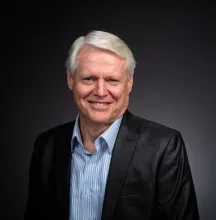
John Elliott serves in the role of President of the United Church of God, an International Association.