

Ken Martin
This transcript was generated by AI and may contain errors. It is provided to assist those who may not be able to listen to the message.
So now, at this time, we have the opportunity to hear from the local elder, Mr. Greg Thomas, for our sermon.
Good afternoon, brethren. Welcome to Sabbath Services. Before I begin the actual sermon today, again from the bottom of my heart, I want to thank each and every one of you for the kindnesses, the condolences, the sympathy that so many of you showed towards the death of my mom, the cards we received, the e-cards, the flowers, the phone calls, just so many ways that so many of you showed your love towards my family and I.
And we deeply appreciate that. If I had ruby red slippers on today, I'd click them together and say there's no place like home. I miss two Sabbath services, which I believe is the only time I've ever done that in 37 years. So I really missed God's people, and I missed being here, being with all of you.
So thanks for all the kind love and the sympathy and condolences that you gave towards my family at our time of need. Well, brethren, it is hard to believe if my calculations are correct. It's about seven weeks until we arrived to the Passover this year, and I wanted to give a message that I believe the Scriptures consider the meat of our calling.
There's an analogy used in the Scriptures of the milk of the Word and the meat of the Word. And of course, the milk of the Word are the basics that we learn when we're first called.
And that is learning and understanding the doctrines that God teaches us through His Word, and understanding that we need to repent, and we need to clean up our lives, that we need to conform our value systems, and the way that we live to God's law and God's values, and all of that is great. And that's essential, and that's what God has called us to do. But that is intended to be a platform to take us to another level of Christian growth.
And particularly for those of us who have been around 10, 20, 30 years or more, I wanted to address an issue today that I think is something that we need to be very cognizant of. If you'll turn to Ephesians 2 and verse 10, I'd like to begin the sermon today by reminding us of what this meat of the Word is. As I said, the milk of the Word is very important, and the very annual spring holy days and the Passover, of course, reminds us of the need to get sin out of our lives and reminds us of our need for repentance and the need for a Savior, an ultimate Passover Lamb.
But all of that is intended to be a platform to take us to another level in this life. Here's what Paul wrote to the Ephesian brethren in chapter 2 and verse 10. He said, for we are his workmanship created in Christ Jesus, here's why, we're here, this is it, for good works, which God prepared beforehand that we should walk in them. So the very purpose of our calling at this time, long before we were even born, from the foundation of the world, was that God would prepare a people who would do, follow the example of Jesus Christ, and do good works.
Their lives, their very lives, would be an example of good works. Living a Christian life is our calling, and obedience to God's law is an obligation. But brethren, we were called and created for good works, and this, it's through those good works, this is how we become more like Jesus Christ. If you think about Christ, he was not only righteous, which we strive to do with Christ in us, but he spent his entire life, his entire ministry, producing good works in an effort to help other people. God is working in us to have the same quality of love and the same quality of service that Jesus Christ had for mankind.
Turn with me, if you would, to an interesting Scripture in Acts chapter 10 and verse 36. The reason I find this interesting is Peter is talking to Cornelius. Cornelius was the first Gentile ever converted, and Cornelius heard a little bit about Jesus Christ. But obviously, he didn't know a lot about Jesus Christ.
He was a Gentile. He was called after Jesus Christ had died. This is years later, after Jesus Christ has died. Peter is being used by God to call the first Gentile. So the natural question from Cornelius is, what did this Jesus do? What was he all about? And so Peter is giving the definition here in Acts 10. He is defining who and what Jesus Christ was. And here's what he says beginning in verse 36.
The word which God sent to the children of Israel, preaching peace through Jesus Christ, He is Lord of all. Very important, particularly pertaining to Christ's righteousness, to salvation. It gives us peace. It gives us a relationship with God. All of that is great. And we certainly understand that and deeply appreciate it. Verse 37, that word you know, which was proclaimed throughout all Judea, and began from Galilee after the baptism which John preached.
Now, verse 38, how God anointed Jesus of Nazareth with the Holy Spirit and with power, who went about doing good and healing all who were oppressed by the devil, for God was with him. So here's how he defines this individual who had limited understanding of what Jesus Christ was about.
He says he went about doing good and healing all who were oppressed by the devil. That was his definition to someone who had limited knowledge of the role that Jesus Christ had played. Brethren, we know that we've been called to imitate Christ and to follow his example.
The example that Jesus Christ set for us is that he was a miracle worker. Every day Jesus Christ wanted to do something good for people who needed hope, who needed a miracle in their lives. Have you ever considered the possibility that God has called you to be someone else's miracle?
Turn with me, if you would, to Ephesians 11 and verse 1 and see a scripture that oftentimes people struggle to understand, but it begins to reveal a spiritual law that permeates the universe. And the spiritual law that permeates the universe, to put it in modern slang, is what goes around comes around. What you sow is what you shall reap. Ecclesiastes chapter 11 beginning in verse 1. Because I hope you will consider the possibility that God has called you to become someone else's miracle.
Ecclesiastes chapter 11 and verse 1, Solomon wrote here, he said, cast your bread upon the waters, for you will find it after many days. Now, that seems kind of an unusual scripture. Until you realize that when you cast your bread upon the waters, this was a metaphorical expression taken from a trading grain on a ship from a seaport town.
It was a little bit of a risky adventure, wasn't it? If you had enough grain and you reap that grain, you would put it on a ship. And it was a little risky of a business venture to have that ship sail away. But you know what? There was a good chance that soon, short term, long term, that ship will return. And in place of that grain might be fine clothes and fine wine and other things that were used that were traded for the grain on that ship. In other words, what he's trying to encourage the reader to do is to do good to others.
Take a little bit of a risk. Step outside to do something good. And it is a little risky because people may not appreciate it. If you try to do good for someone, you may never hear a thank you from them. They may never show any type of appreciation. You may even try to do good for someone, and they spurn you. They might even tell you to mind your own business. I mean, that's certainly been known to happen, but don't ever allow that to stop you from doing what God has called you to do.
Solomon is saying, give freely, even though it may seem to be thrown away and lost. Continue to give because, again, what goes around comes around. Let's take a look at a New Testament version of this concept, 2 Corinthians 9 and verse 6. This is another way, the New Testament way, of saying what goes around comes around. We often read this Scripture in context to offerings for the Holy Days, but it goes a lot deeper than that, and its context is a lot farther than just giving money. Paul wrote in 2 Corinthians 9 and verse 6, he said, But this I say, he who sows sparingly will also reap sparingly, and he who sows bountifully will also reap bountifully, so let each one give as he purposes in his heart, not grudgingly or of necessity, for God loves a cheerful giver.
Let me give you an analogy of something to think about. The milk of the Word, as I mentioned a few minutes ago, is understanding the need for repentance and responding to God's calling, asking for God's Spirit, receiving God's Spirit, going on a lifetime goal of rooting the sin and the weaknesses out of our lives, becoming more like God. And I'd like to give you an analogy of that being like preparing a 100-foot garden bed.
You take a garden bed that's going to be 100-foot long, and what do you do to prepare it for good things? Well, much like we do with the milk of God's Word. In a garden bed, we take that soil and we plow it under. And we take the big clods and we beat them down so that they're finer.
We put nutrients in the soil so that it's rich and it's prepared and it's all ready to go. It's ready to produce wonderful things and we meticulously take care of that 100-foot row, making sure that we've pulverized and beat everything down and added nutrients and gotten rid of the weeds and taken everything that we don't want into that soil out. Well, the next step is the milk of the Word. After all of that work and effort, what would happen if you went ahead and planted five seeds?
Well, you've sowed sparingly, haven't you? If you're lucky, you're going to get five healthy plants. And the reason I say if you're lucky is because there's probably going to be some natural attrition. Some insects are going to come along, maybe some of the seeds, one of the five didn't have good DNA and will be stunted or struggle or succumb to some type of fungus or whatever. If you plant five seeds after doing all of that work, if you're very fortunate, you're going to get five healthy plants.
But what after doing all of that work, after preparing that 100-foot roll and making it the way you know it needed to be, what if instead you just took a little bit more effort and instead of putting five seeds, you put a hundred seeds? How many times larger is a hundred than five?
Do you think that you'll get a greater crop that you'll reap abountably from the hundred seeds compared to only putting five seeds in that soil? This is an analogy to doing good works, an analogy to doing things with what we've been given, to change others, to help others, to change the world. Do you think, as the Scripture says that it's true, that he who sows sparingly will also reap sparingly, but he who sows bountifully will also reap bountifully?
I'd like to tell you a story. In the late 19th century, an English aristocrat and a member of Parliament was traveling to Scotland to give a speech. And on his way to traveling to Scotland, this aristocrat became stuck in the mud and he couldn't get out. And as he was stuck, he noticed that a young, dirty-faced, grubby-looking little Scottish farm boy came along and without being asked, he hitched up some horses, and he attached the horses to the carriage and he pulled the aristocrat out of the mud.
The nobleman was astonished. He was so grateful for what the young boy had done, but the young boy even refused any money for what he had done. And the aristocrat asked him his name, and he said, My name is Alexander Fleming, sir. The Englishman asked him, Well, Alexander, when you grow up, what do you want to be? And the young boy said, When I grow up, sir, I want to be a doctor. Well, the English nobleman never forgot that boy's kindness. And sure enough, when he grew up and became a teenager, through his influence, Alexander was given the opportunity to attend St.
Mary's Medical School in London because of the influence, the recommendation of the English statesmen. Now, 50 years went by from that story and we're now in the 1940s. The young man had grew up to become a very respected doctor, and his English benefactor had long since died. Alexander Fleming had decided to specialize in the study of bacteria, and by the 1940s, he had discovered a drug later named penicillin that was considered for its day a miracle drug. Before penicillin, many people died, particularly of respiratory diseases. And indeed, it was a miracle. He discovered that a certain type of mold had the ability to kill bacteria cells and could save many lives.
It just so happened that while they were purifying this drug so that human beings could use it, in 1943, Sir Winston Churchill, who was the wartime leader of Britain, and basically saved Britain because of his charisma, because of his bulldog determination, because of his inspirational speech, in spite of the fact that the English were outgunned militarily, he came back from a conference in Morocco in 1943 and was stricken with pneumonia and was literally on his deathbed. Well, they gave him a new miracle drug, the antibiotic drug that was discovered by Alexander Fleming called penicillin, and it had now been purified enough to save his life.
And indeed, he did. He lived to see the Western world defeat Nazi Germany. So here was this young, grubby-faced, little Scottish boy who had been given an opportunity. Someone had become his miracle, had been given an opportunity to go to medical school, and he grew up and discovered a drug that saved the wartime leader of Britain. Oh, and I forgot to tell you that the British statesman who helped Alexander get into medical school, it was Sir Winston Churchill's father, Lord Randolph Churchill.
You see, brethren, what goes around comes around. There's a hidden spiritual law of the universe, and that law is what you sow will come back to you eventually. What you sow is what you shall reap. And it may take 50 years for the results to become evident, but it is a law as sure as the physical law of gravity. What happened here is that Lord Randolph Churchill became someone's miracle. It didn't take a tremendous amount of his time. It didn't take a tremendous amount of his money. But he had the ability, through a random act of kindness, to change someone's life, to offer them an opportunity to have a miracle performed in their life.
And Alexander Fleming used his opportunity to discover a miracle drug that ultimately saved millions of lives, including that of Lord Randolph Churchill's son, 50 years after he had met him. Brethren, if you ever thought about it, if we allow ourselves, we too can become someone's miracle. You can become someone's miracle. When we go through the Scriptures and we think of miracles, don't we often think of things, first things that come to our mind, or things that God directly does? Locust, a plague of locusts, well, that's a miracle. We may think of lots of things that are done, but I don't believe that we often realize that God typically uses a person to become someone's miracle.
In Genesis 14, when Lot and his family were kidnapped by the four kings of Mesopotamia, you may remember this story, they went to war with the five kings of the plain, including Sodom and Gomorrah, where Lot and his family were residing. And the four kings won, and they captured Lot and all of his possessions with a great army, and were heading back to Mesopotamia.
They needed a miracle to be saved. Abraham became their miracle.
When the family of Jacob was starving, and after a number of trips to Egypt, there was virtually nothing left to offer for more food, they needed a miracle, or else the entire family of Jacob would die out.
Joseph became his family's miracle. When the slaves in Egypt cried after 400 years of bondage for deliverance, they needed a miracle. They needed someone who could confront Moses, someone who could pressure Moses to let God's people go. God raised up Moses as a deliverer, and he became a miracle.
When the Philistines were oppressing Israel, and Goliath was intimidating the entire army, mocking Israel, mocking Israel's God, they needed a miracle to break free from the Philistine oppression.
Young David became their miracle.
When the Jews were in captive in Persia, and Haman had conspired to have them all killed because he was insulted, and he was jealous of some of the Jews who were in influential positions, he had arranged for all the Jews to be able to be killed. They needed a miracle for the Jewish people to survive. Queen Esther became their miracle.
When people came to Christ to be healed, to be encouraged or forgiven, they needed a miracle, and Jesus became their miracle. Christ woke up every day determined to make a difference in people's lives.
Brethren, do we realize that we have been called to be someone else's miracle? Turn with me, if you would, to Galatians 6, verse 10.
Paul reminds us here, he says, But he says, whatever your situation, as we have opportunity, and it's certainly not all about money, the opportunity might be giving of our time, it might be giving of our encouragement.
As we have opportunity, let us do good to all, especially those who are of the household of faith.
The key is to do good things for others without expecting anything in return. It's human nature. You know, people in the world will do something good for someone if it's quid pro quo. I'll do something good for you if I get a reward back for it. I mean, that's common in the world. But what I'm talking about here is an understanding, is an attitude, that we should do good things for other people without expecting anything in return.
Now, I also have to tell you that that law of the universe guarantees that eventually what you sow is what you shall reap. It will come back tenfold, a hundredfold, a thousandfold, but that shouldn't be our motivation for doing it. The heart of a Christian is to do good for others who can't repay you back, who by all physical appearances have no way to repay you for a kindness that you perform for them, or a kind act that you do. This is the heart of compassion. People can't pay you back, but I'll tell you who can and who will pay you back because of this secret law of the universe who will pay you back is God. Turn with me to Proverbs chapter 19 and verse 17. Proverbs 19 and verse 17. And as I mentioned before, doing good work sometimes means being spurned for what we do. Sometimes it means that you go all out, and whether it's something with money or time or effort or love, sometimes people just don't show any appreciation or acknowledgment at all. But you know, that's not why we did it, or that shouldn't be why we did it in the first place. If we receive that, then that's wonderful, and that's great, and that's encouraging and motivates us to do more. But that certainly isn't why we should do good things. Proverbs chapter 19 and verse 17. It says, He who has pity on the poor lends to the Lord, and He, capital H, referring to God, He will pay back what He has given, what the person gave. I'll give you another translation. Being kind to the poor is like lending to the Lord. He will reward you for what you have done.
So if we do a kindness for someone who has no way of showing a kindness back, we've just invested in lending something to God. And I can guarantee you that when you lend something to God, He doesn't just give it back to you. He gives it back to you tenfold, a hundredfold, a thousandfold, because that's the character and personality of God.
Again, we see the same spiritual law in effect. When we do something good or kind for another person, God sees it, even if no one else does. God sees it, and in His right time, He will reward us for what we have done.
I believe that oftentimes what stops us from doing more good, what stops us from stepping out and doing even greater good for people in the church and outside of the church, is that we oftentimes result in too much judging in our part.
It's human nature, and we all have it. If someone doesn't look like us, if they don't act like us, if they don't meet our expectations of what's right and wrong or good or bad, we tend to withdraw from them. That's the way, frankly, that's just the way that we're wired and the way that we are.
But the question I'd like to bring out in asking you, if you've ever considered the fact that you've been called to be someone's miracle, is that the attitude, is that the approach that we should have? In other scriptures, 1 Corinthians chapter 1 and verse 27, let's see what Paul has to say about all of us, and I certainly include myself in this. 1 Corinthians chapter 1 verse 27. Paul not only wants to remind us of our roots and where we came from, he wants to use three adjectives, different adjectives, that drive the point home of where our roots are and where we come from. 1 Corinthians chapter 1 and verse 27. Paul wrote, But God has chosen the foolish things of the world to shame the wise. So that's one way he puts it, foolish. Well, thanks, Paul. Thanks a lot for that. But Paul's telling the truth.
Then he goes on and says, And God has chosen the weak things of the world to put the shame things that are mighty. Well, thanks, Paul. Not only am I foolish, but now I'm weak.
And then in verse 28, And the base things of the world and the things which are despised, God has chosen, and the things which are not, to bring nothing to the things that are.
So God has decided to take a group of nobodies and to use them to turn the world upside down and to put shame in all of those who think they're somebody, who think they're special.
I was thinking back in all of the years that I have been in the Church of God, and I have never known anyone who I met that was greatly influential.
No one who was influential, and I've known some people who owned their own businesses, but they were very small businesses.
Early on, I can remember when I first started attending Church in 1971 in Bria, there was actually a man in our congregation who had been a personal counselor to John F. Kennedy.
Now, that's pretty influential. He was an elderly man at that time, and he died within a year or so after I started attending Church, but he was influential because a President of the United States used him as a counselor.
But when I look back in the years of the tens and hundreds of thousands of people I've met in the feasts and different areas of where I lived and many areas that I fellowshiped with the brethren, there haven't been influential.
There haven't been powerful. Some people over a lifetime have acquired some wealth, and that's a good thing. That's a wonderful thing.
But not so much wealth that, you know, Bill Gates, they rivaled Bill Gates or Warren Buffett or any one of that nature.
You know, there's being wealthy, and then there's really being wealthy. Those are kind of two different definitions, if you know what I mean. I'd like to read 1 Corinthians 1, 27 from the translation, God's Word for Today.
The point I'm trying to bring across here is that God hasn't called Hollywood's beautiful people. He hasn't called many wealthy.
I haven't run into too many intellectuals in the Church of God, and I haven't run into too many people who were in powerful, influential positions of either politics or business or virtually any area.
Just have never met them. God didn't call those kinds of people. Instead, He called the weak of the world. He called us.
Sometimes we may not reach out to others because they're immature spiritually, and we acknowledge that.
Maybe their spiritual values are weak, or maybe they have some obvious problems, but God called these people in His Church just like He called us.
He calls people from all backgrounds and all walks of life.
I wanted to read to you a short article that my daughter, Kelly, discovered a couple of years ago.
I was asked to do a servant leadership seminar at the Villanova University to a group of educators, and my daughter, Kelly, came across this article.
The reason I'd like to read it is it reminds me of the experience that we have in God's Church. It's rather short, but I hope you'll get a lot out of it because I think it should tell us something about who God calls, and hopefully it'll tell us something about ourselves and our attitudes, and maybe how we can change them to become more positive.
The article is entitled, The Blueberry Story, The Teacher Gives the Businessman a Lesson. It was published in 2002 in Education Weekly.
If I ran my business the way you people operate your schools, I wouldn't be in business very long.
I stood before an auditorium filled with outraged teachers who were becoming angrier by the minute.
My speech had entirely consumed their precious 90 minutes of in-service. Their initial icy glares had turned to restless agitation.
You could cut the hostility with a knife.
I represented a group of business people dedicated to improving public schools.
I was an executive at an ice cream company that had become famous in the middle 1980s when People magazine chose our blueberry as the best ice cream in America.
I was convinced of two things. First, public schools needed to change. They were archaic, selecting and sorting mechanisms designed for the industrial age and out of step with the needs of our emerging knowledge society.
Second, educators were a major part of the problem. They resisted change, hunkered down in their feathered nests, protected by tenure and shielded by a bureaucratic monopoly.
They needed to look to business. We knew how to produce quality. Zero defects, TQM, continuous improvement.
In retrospect, my speech was perfectly balanced, equal parts ignorance and arrogance.
As soon as I finished, a woman's hand shot up. She appeared polite, pleasant.
She was, in fact, a razor-edged veteran high school English teacher who had been waiting to unload.
She began quietly.
We are told, sir, that you manage a company that makes good ice cream.
I smugly replied, Best ice cream in America, ma'am.
How nice, she said. Is it rich and smooth? 16% butter fat, I crowed.
Premium ingredients, she inquired. Super premium. Nothing but AAA. I was on a roll. I never saw the next line coming.
Mr. Vollmer, she said, leaning forward with a wicked eyebrow raised to the sky.
When you are standing on your receiving dock and you see an inferior shipment of blueberries arrive, what do you do?
In the silence of that room, I could hear the trap snap.
I was dead meat, but I wasn't going to lie.
I replied, I send them back.
That's right, she barked. And we can never send back our blueberries.
We take them big, small, rich, poor, gifted, exceptional, abused, frightened, confident, homeless, rude, and brilliant.
We take them with ADHD, junior rheumatoid arthritis, and English as a second language. We take them all, everyone. And that, Mr. Vollmer, is why it's not a business, it's school.
With an explosion, all 290 teachers, principals, bus drivers, aides, custodians, and secretaries jumped to their feet and yelled, Yay! Blueberries! Blueberries!
And so became, or began, my long transformation.
Since then, I have visited hundreds of schools. I have learned that a school is not a business.
Schools are unable to control the quality of their raw material.
They are dependent upon the vagaries of politics for a reliable revenue stream. They are constantly mauled by a howling horde of disparate, competing customer groups that would send the best CEO screaming into the night.
None of this negates the need for change. We must change what, when, and how we teach to give all children maximum opportunity to thrive in a post-industrial society.
But educators cannot do this alone. These changes can only occur with the understanding, trust, permission, and active support of the surrounding community.
For the most important thing I have learned is that schools reflect the attitudes, beliefs, and health of the communities they serve.
And therefore, to improve public education means more than changing our schools. It means changing America.
Well, brethren, the point I want to bring out in this article is that God hasn't called perfect blueberries into His church either. He called us the other fruits and nuts. So, if someone comes in our midst, who maybe doesn't quite conform to our cultural standards, maybe they act a little strange or odd, maybe they have some obvious personal problems, we have to realize that God has called all of us and not to allow that difference, to stop us from becoming someone else's miracle.
We all have our own cross, the barren. We all have different levels of spiritual growth and maturity.
And we should never stop ourselves from helping another person because they're struggling with a problem or they're odd or they're different.
I can only tell you that I thank God that He blessed me and brought miracles into my life in spite of my flaws and weaknesses.
Every day we should have the attitude that today I'm going to do good for someone else. I'm going to meet a need. I'm going to be kind to someone.
I'd like to consider asking you to include in your daily prayers, Father, please bring someone across my path that I can help today.
Bring my way someone who has a need or someone who has a problem that I can help with.
Daily, brethren, we should have a goal of doing something good for at least one other person.
Your kindness may be just what someone needs to keep them going.
I'm in front of you today speaking to you because at the age of 21, someone became my miracle.
I don't like to talk much about my life but tell you a little bit about myself.
I was thinking of this a lot as I was looking at my mother in her coffin, the daughter of a Sicilian immigrant who came to the United States.
He was 18 years old, spoke no English, and here was his daughter laying in this coffin, and looking back in my life and the miracles that have occurred in my life, I went to an inner-city high school.
And I was not fortunate enough to be in a school environment that I was encouraged or motivated to take grades seriously.
My grades were atrocious. I like to always say that I was in the half of my graduating class that made the upper half possible.
And when I went to high school, they were selecting and sorting mechanisms.
I was told early on that you're not smart enough to go to college, so therefore you can either go into one of the construction trades or auto shop.
Well, auto shop looked greasy to me, so I wasn't about to get into auto shop.
So I was directed towards the construction trades, had never prepared at all for college, took no college classes in high school, and my senior year, God began to call me. Well, I'm sorry, that's far too late.
I graduated with poor grades, and I graduated with not a single college preparatory class.
Well, there was a particular college that I wanted to get into with all of my heart and soul, and I applied for that college.
And the response of the registrar the first time, and this is serious, was that your quality is so poor, please don't even bother applying here again.
Why don't you look into another institution?
I applied a second time, a year later, and once again I was rejected.
A few years later, by the time I became 21, married my wonderful wife, was now married, someone became my miracle.
A pastor who took a liking in me for some reason, as I applied the third time, wrote a personal letter, a very positive and excellent letter of recommendation, and I was accepted to that institution.
You see, that individual took him a whole 30 minutes, I'm sure, to sit down and think of enough lies about me to put in that letter.
But that individual did invest a dime of money. That individual invested maybe 30 minutes to type a letter, to put it in an envelope, and mail it to that institution.
He became, at age 21, my miracle, one of my miracles. I had many miracles in my life.
And I probably wouldn't be up here today, and I certainly wouldn't be able to serve the Church of God to the degree or to the ability that I do today.
If someone hadn't cared enough to look down at a 21-year-old man who had just come into the Church of God with many problems, from a broken, a divorced family, which wasn't looked at very highly, I might add, in the Church in the early 70s.
If he hadn't looked beyond what he saw, and he saw whatever beyond the physical, and decided to become my miracle.
Well, brethren, you can be someone's miracle, too. And there are hundreds of ways that you can be someone's miracle.
Turn with me to 1 Thessalonians 5 and verse 14. 1 Thessalonians 5 and verse 14.
1 Paul wrote, and I think this is an important scripture because we have a tendency to read the first half of this verse and sometimes not focus enough on the latter half of the verse.
Because, again, God is not calling perfect blueberries into his Church.
And we certainly know that the people in the world whom God has chosen not to call yet, it's his choice, he's chosen not to call them, many of them certainly have very terrible problems.
Paul said, Now we exhort you, brethren, warn those who are unruly. And that's something that is certainly true. And when someone is out of line or someone says or does something that's hurting themselves or hurting others, the ministry will typically intervene and have a talk with them.
But let's not forget the rest of this verse. Comfort the faint-hearted. That's a weakness being faint-hearted, maybe lacking enough commitment or persistence or courage to see something through. That's a weakness. It doesn't say mock the weakness. It doesn't say ignore the weakness. It says comfort the faint-hearted. Talk to them, encourage them, give them strength to continue.
Uphold the weak. A weakness is a weakness, right? Being weak about something, either weak of the faith or not understanding a doctrine or struggling, that's being weak. And he says uphold them. What do you do when you uphold? You lift it and help it to be straight, help it to stand up, even if it can't on its own. This is what we've been called to do.
And be patient with all. Let me read this verse from the translation, God's word for today.
We encourage you, brothers and sisters, to instruct those who are not living right, cheer up those who are discouraged, help the weak, and be patient with everyone.
Paul states that if someone is out of control, they certainly need to be instructed in love and understand why what they're doing is harmful to themselves and harmful to others.
But let's not forget the other instructions that are just as important in this verse that we just read.
I want to encourage you to become part of a circle of giving. And the circle of giving is this. When someone shows you a kindness, certainly give them a compliment, show appreciation, and then do a kind act for someone else.
Continue that circle of giving.
I found that there's a unique Indian tribe in British Columbia called the Quaki-Hoodle tribe, and that's spelled K-W-A-K-I-U-T-L.
They're an interesting tribe because they have no word for thank you in their culture.
The first reaction is, well, the most I could expect from a group of pagans. No word for thank you? What kind of a selfish, self-absorbed culture would not have the word thank you?
And it's true, they do not have the word thank you. It doesn't exist in their culture.
But instead, from the time that their children are just so small they're barely able to walk, they are taught that when someone shows them an act of kindness, they must do a thank you and not say it.
They're taught from the youngest age that when someone does a kindness, they must immediately respond with a kindness of equal or greater value towards someone else, spontaneously, immediately.
That's part of their culture. That's why they don't have the word thank you, they have the do thank you, which I think is very, very impressive.
Now, you might be saying to yourself, Mr. Thomas, I appreciate what you're saying today, but you know, you talk about becoming someone else's miracle.
I could sure use a miracle in my life right now. I'm going through some certain situations, and I need a miracle in my life.
And I understand what you're saying, and I understand that many of our brethren are going through difficult trials and tribulations.
I can only say that until God chooses to intervene, I'd like to encourage you to first become someone else's miracle, and then the miracle that you need may follow.
So let's do what we need to do, no matter what situation and condition that we may find ourselves in life.
Let's use it as an opportunity to become someone else's miracle. I'd like to give you some examples. I could give you hundreds of examples, but I'd like to just give you a few for you to think about how you can become someone's miracle.
You can adopt a widower, a widower. To be a widower, a widower. To have no family that's left alive or living local enough to care for you can be a burden. It can be very lonely.
Well, if you begin to give them a call once a week, you begin to stop by and develop a relationship with them. You can become that person's miracle, because loneliness is a terrible thing.
If after services or at a social you see someone sitting alone in a corner, no one's come up to talk to them, no one's spent any time with them, you can go out of your way to go over and say hello and chat with them for a few minutes. You can become, for someone who's lonely or feels odd or feels left out, feels like nobody cares, you can become their miracle.
If you ever hear someone say that, yeah, they need a vitamin or there's a particular medicine that they should be taken, but they can't afford it and you can, you can buy that for them. You can become that person's miracle.
If you see a teenager looking frustrated or stressed out, you can be the one to go up and encourage them and show that you care.
And much like I was talking about blueberries being a teenager, I know that I'm old, but I certainly remember what it was like to be a teenager. And those are very difficult years. And the fact that if that teenager has an earring and his name is Mark, or she has a tattoo of a butterfly on her forehead, or maybe all of her toenails are painted a different color, maybe his hair is half pink and the other half is yellow, look beyond that and decide that you're going to be someone else.
Much like that British nobleman looked at that scruffy-faced little Scottish farm boy who had no future of his own, he, beyond the dirt, beyond the poverty, beyond what he was, he decided to become someone else's miracle.
So why can't we? Why can't we get beyond those barriers, those barriers that we put in our hearts, and give someone a break and spend time with them to encourage them and to show them that we care?
If you find out there's a family in the congregation who's having trouble getting enough money for their child to go to the UCG summer camp, you might be able to help them out so they can go to summer camp. You can be that child's miracle, that parent's miracle.
If someone's elderly and they can't shovel their driveway, and you can tell that they're kind of anxious about the fact that their driveway isn't being shoveled and it bothers them and they're feeling a sense of shame and guilt, you can shovel their driveway.
If they've been looking at the same paint on the kitchen for 25 years and what used to be white now looks like orange, maybe you can paint their kitchen for them.
Give them something fresh to look at. You can become their miracle. If you see someone wearing the same tattered clothes week after week, well, maybe you can go up to them and say, hey, you know what? I got a $50 gift certificate to target. How about if we go out to dinner and let me buy you some new clothes?
For someone who's struggling financially or economically, in that way, you can become someone's miracle.
If you see someone who has trouble getting the church because of transportation, you can offer them a ride. Certainly, they want to come and worship and fellowship among God's people.
That's a blessing to them. I'm sure they look forward to it every week. If you provide that transportation that they lacked, you can become someone's miracle.
If you have the talent that you like to tinker with radios or you like to rebuild PCs or maybe you're good at building little furniture hutches and so on, they're our brethren who have an obvious need. They're our brethren who can't afford to buy their teenager a computer so they can learn Microsoft Word, so they can learn Excel and learn some of the common business applications that their children will need to use to exist and survive in the business world today.
If you can cobble together enough pieces to provide a PC for a family that can't afford one for their child, you've become their miracle.
If you have the skill with wood and you can create a little hutch for a senior who lives in Spartan surroundings and doesn't have something next to their rocking chair to put their glasses on or a drink or whatever, then maybe you can build something for them and you can become their miracle.
If you have someone who has a serious health issue, you can pray and you can fast for them consistently. You may not know for 50 years until Jesus Christ comes back, but it just may be your persistent prayer or fast that said to God, okay, that does it.
Now, I'm going to intervene. I'm going to change someone's life. In that way, quietly, that doesn't cost much. As a matter of fact, by fasting, you'll save in your food budget, won't you?
It just costs you a little bit of self-discipline and determination to do it. You can become someone's miracle.
If you hear of someone who needs a job or maybe is underemployed and needs a better job, you can keep an eye out for them. You can know what's going on in the job boards. You can be a reference for them. You can encourage them. Maybe you can find opportunities for them to be able to improve their lives.
By doing that, you can become their miracle. If you see someone whose car is running on sheer faith and duct tape, you may know where they can get a better car.
You may have some contacts or know where they can locate a reliable car at a discount price. You yourself may have a car that you're able to give to them to help them out of a very difficult situation.
Again, you can be someone's miracle. If you hear of a person, an adult, or a child who would like to learn a musical instrument but can't afford one, maybe you can find a used one so that they can at least begin to learn and practice at home.
And that little goal, that little dream they have, has a chance to reach fulfillment. You can become that young person's or that individual's miracle.
Now, I gave a number of examples here, and I'm very proud to say that the majority of the examples I read I wrote down because I have heard the last 13 years that these literally are things that you have done for brethren within God's church or for your neighbors.
And we're to be commended for that. That's a wonderful thing.
But I hope as we prepare for the Passover this year that we realize the importance that the meat that God wants us to grow toward, weaning ourselves just off of the milk of the Word, which again is certainly important.
It's our foundation, and that's great. But even Paul emphasized the importance of moving forward, of growing to the meat of his Word. That's taking what we have learned and doing something with it.
Because Jesus was not only righteous, but every day he did good works. He became a miracle worker. He was dedicated as he woke up every day to helping as many people as he possibly could.
We all have the potential of being miracle workers. Many of us have miracles hanging in our closets, clothes that we haven't worn for years, that someone would appreciate.
Some of us have miracles hanging in our storage containers. We have so much, we've been blessed with so much stuff that we don't know what to do with.
Some of that stuff would be exactly what someone would like to have today, but can't afford it and doesn't have access to it.
In conclusion to the sermon today, I hope that this message that I've given will encourage you to pray, Thank you for all that you've given me. Help me to become someone's miracle. Bring someone my way today that I can help, that I can encourage, that I can support.
Someone in whom I can be a blessing to them. Because we should never forget what God told our ancient ancestor. If you'll turn with me to our final scripture in Genesis 12, verse 2.
God said something to Abraham that we should never forget, because we are the descendants of Abraham, either spiritually or physically.
Depending on our own lineage, some of us may be descendants, both spiritually and physically. Some of us may be just simply spiritual descendants of Abraham. But we are all descendants of Abraham.
And as we approach this year's Passover, I hope that we will realize that we can take it up a notch.
That we can take what we've learned and studied for the last 10, 20, 30 years in plowing that 100-foot row. And we've worked so hard to make it fertile and ready for produce. It's time to sow many seeds.
To reap abundantly. To sow and reap abundantly, not sparingly.
Genesis 12, verse 2. I'll read from the New Century version of the Bible.
God promised Abraham, He said, I will make you a great nation and I will bless you. I will make you famous and you will be a blessing to others.
Let me emphasize that you will be a blessing to others. I will bless those who bless you and I will place a curse on those who harm you.
All the people of the earth will be blessed through you.
So in the conclusion, brethren, God told Abraham that I am blessing you so that you can be a blessing to others.
The same is true for us today. It hasn't changed. God has blessed all of us in so many ways so that we can in turn become a blessing to others.
Whether we realize it or not, as the descendants of Abraham, we have been called to become somebody's miracle.
So take what you've learned through God's Word, take what you've learned through the Church of God for many years, and determine to become a miracle worker.
God has given you all the tools. He has given you all the training and education and everything you need.
So determine in your heart and mind today to become somebody's miracle.
Have a great Sabbath day. It's good to see all of you, brethren, and we'll speak to you next time.
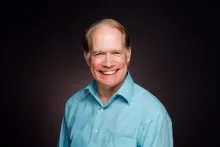
Greg Thomas is the former Pastor of the Cleveland, Ohio congregation. He retired as pastor in January 2025 and still attends there. Ordained in 1981, he has served in the ministry for 44-years. As a certified leadership consultant, Greg is the founder and president of weLEAD, Inc. Chartered in 2001, weLEAD is a 501(3)(c) non-profit organization and a major respected resource for free leadership development information reaching a worldwide audience. Greg also founded Leadership Excellence, Ltd in 2009 offering leadership training and coaching. He has an undergraduate degree from Ambassador College, and a master’s degree in leadership from Bellevue University. Greg has served on various Boards during his career. He is the author of two leadership development books, and is a certified life coach, and business coach.
Greg and his wife, B.J., live in Litchfield, Ohio. They first met in church as teenagers and were married in 1974. They enjoy spending time with family— especially their eight grandchildren.
