

Robin S Webber
This transcript was generated by AI and may contain errors. It is provided to assist those who may not be able to listen to the message.
So very nicely sung today. As I begin this message, I begin it with a question to all of you. And as I do, I know there might always be what we call a Negro Beaver out there, so I am not asking for a show of hands. And that is simply this. When is the last time that you honked at somebody? Now, I realize that confession is good for the soul. And maybe some of the kids are looking over at their parents. I'm looking around just for a moment. Don't want to get you young people in trouble with your parents either. Now that I've mentioned that and gotten your attention, it's simply this. That's not the kind of honking that I'm talking about. I'd like to share a story with you about a part of God's creation. Creatures. Birds. They're called Sandhill Cranes. Sandhill Cranes occupy and inhabit the northern part of North America, more up towards Alaska, northern Canada, and actually parts of eastern Siberia on a totally different continent in Asia. These Sandhill Cranes fly incredible great distances across two vast continents. And they have three remarkable qualities. One which we'll center on, but I will mention all three to begin with. First of all, they rotate leadership. Number two, no one bird stays out in front all the time. Then, they also choose leaders who can handle turbulence. But the one that I want to center on this afternoon is simply this. And third, all the time one bird is leading, the rest are honking their affirmation. Honking their affirmation. They are encouraging the bird to be more than the moment and to finish the job that they have been granted. These birds are encouraging for we that are in the lower part of North America, or perhaps from the Midwest, from the east, who will think of Canadian goose. And how they very much do the same thing in their very famous v formations. And how there's always one out ahead, and then you see that incredible v shape. And you can hear them, literally, I see some smiles because you know what I'm talking about. You can literally hear them from miles away. What are they doing? They are honking, and all of us that have ever seen them before say, I know what's coming. You're looking for when you hear the sound first, then you see that v formation, and here they come. And all those birds behind that group leader are honking affirmation and encouragement to continue what needs to be done. That's what I'd like to talk to you about this afternoon, friends, and that is simply this. I go around speaking to many congregations, visit different people in parts of the nation, receive phone calls from around the world. God's people need encouragement. God has given us an incredible opportunity and a wonderful privilege to be members of His spiritual body. And it is a high, and it is a precious calling. And yet all of us are still here on this earth. Remembering what our Savior said on that night before He was betrayed, Father, I do not ask that you take them, but that you keep them down here, that they might be a witness to you, and to understand my glory and your glory, and what they're called to. Even so, even so, as the months, the years, the decades go by, life can have its wear and its terror. It can have its surprises. It can have its challenges that come upon us that we never thought might be in our life or in our time, especially sometimes for we that perhaps grew up in the church. That if we did this and this and this, therefore this and this and this must indeed follow.
We just kind of got ahead of God's timing, recognizing that He is working His purpose and working His works in us. But I'm here today to tell all of you that you have a part in that work. And that's why today we're going to be talking about being God's instruments of encouragement. That's the title of my message. Being God's instrument of encouragement. You know, a question for all of us is simply this. If our feathered friends can do this, where does that find you and me today when it comes to being affirming and being encouraging and in that sense honking as it were to move people forward? I'd like to consider for a moment a couple questions. I'd like to kind of share them with you to bring you into this message and only you can answer it. You might want to jot. There's going to be five or six. This is multiple choice. You may be all of these. You may be none of these. And if not, we'll try to put that into the next time I perhaps give this message. I'd like you to fill in just one. I find encouraging others is natural, fairly easy, rather difficult, very difficult, someone else's business to do and job to do, and or simply not on my mind.
I just want you to think about it for a moment. Now I'd like to ask you another question. Write down if you do have the ability to take notes or if you have a pad. I don't want you to ruin your pants or skirts so don't write on them, please. But I'd like you to write down a definition of encouragement. What does encouragement mean to you? What does encouragement mean to you? We'll take a moment on this.
Need to be like on computer in one of those boxes, not over 300 words or it doesn't work. Okay, let's get some definitions out of the audience here. Who's got a definition they would like to share of what encouragement means to them? Lauren? I think encouragement means giving hope to someone who is suffering in some way. Giving hope to someone who might be suffering in some way. Does somebody else have a keyword, hope? Yes, Robert? Building up others so that they may take on the difficulties that they are facing. Okay, building up others, lifting them up so that they might be able to what? Handle the difficulties that they face. Handle the difficulties or that which is in front of them. Does somebody have something out here on the right? John Velasquez in the back.
Okay, and you as the encourager are doing what?
Okay, you've come up alongside of them, partnered with them, but trying to guide them beyond the moment. How about somebody here on the right? Anybody else have one? Yeah, Sharon, please. Your courage is in the word, and I always think that it's giving courage, bolstering the meaning, giving courage to move forward. Courage to move forward. I think all of those that raised their hands, they all got an A.
All got an A. Allow me to build upon what Sharon just said. She got an A+. You know, you ever have a teacher that was just looking for that one word? You know, all your words were good, but because you didn't use the word that they wanted, you got the C instead of the A. Anyway, I had a few like that. But let me build on all of these for a moment. When you think about it, what is encouragement? Encouragement is putting courage into another human being. Encouragement.
You have that privilege. You have that opportunity. You have that moment to put courage that may not be there naturally into another human being to face the task at hand. Simply put, encouragement is being God's person. It's being God's person at God's time to lift up God's children. God's person in God's time to lift up God's children. Now, some of us might be saying, well, I really need to be on the receiving end.
Mr. Weber, you're telling me to be an encourager today, but I'm the one that needs to be encouraged. And that may very, very well be true. But once you have received encouragement, we're going to come to see in the light of God's Word, we all have a responsibility to give it to others and to pass it on. And we're going to show you from Scripture that God-given responsibility. So that comes by, number one, seeing the need. Seeing the need to be an encourager once you see your calling.
And we're going to describe that in the minutes to come. Number two, to make ourselves available to be used of God. You have to be available to be an encourager. And number three, be willing to serve as an encourager in this manner. So we're going to focus on being an instrument of encouragement. Let's go to Isaiah 40 and verse 1. Isaiah 40 and verse 1, and note some words out of Scripture to build upon. Today we live in a world that is, well, what do I dare say?
Challenging. It's coming at us in every form, probably more than ever, because, well, of the 24-hour news cycle. My wife and I were talking this morning about if you had been in 14th century Europe and been in a valley in Germany or what became Germany or became Austria or became France, you kind of lived in your valley. You rose to the sun. You went down to sleep by the light of the moon.
You had your first, second, and third cousins around you. You had the village cobblestone. You had the little thatched roofs. Basically, your world was in that village. You didn't even know what was going on on the other side of the hill. You didn't know what was going on three villages over on the other side of the mountain range.
You didn't know if you lived in Normandy, what was happening across the channel in England. And the English didn't know and didn't really want to know what was happening in Scotland. That's just so crazy. But what I'm saying it was all local now because of media, because of technology. We're dealing with the whole world. We're dealing with the whole challenges. We were just in Boston. We were just in Waco.
We can in the moment's notice be down in West LA, but something happening down there or down in South LA or over in East LA or over here in the San Gabriel Valley. All of a sudden everything becomes communal and global. And we're all into everybody's business and it's all coming upon our one human psyche to be able to deal with, much less the challenges that we have in our own nuclear family, our own extended family, our own neighborhood, etc., etc., etc.
Folks, it's heavy and it weighs down on us. And then sometimes, as we heard today, as Mr. Opichka was leading us through the book of the epistle of 1 John, we have moved through generations now of looking forward to Christ's coming. He has not yet come. We have gone through generations of loved ones that were in our church community, that have lived their life and died, all hoping that we might see the glorious coming of Jesus Christ.
We remain. They are dead. They wait to meet the Redeemer. And we have all of these different things that weigh on us and challenge us and that we we carry around all day long, much less when we get up in the morning. We go out to the driveway. We're already late for work. We look at our automobile and what's happened? It's got a flap. And we say, give me a break. And we're not talking about the brakes on the car. Give me a break. We have all of this slowly eroding on our spirit. Our spirit, just like a sandstone cliff, has the water and has the sunshine and has the wind slowly, slowly, slowly molding it.
Today, brethren, I'm speaking to you about encouragement. I think God's people need to grapple with this, grab a hold of it, and recognize our responsibility to encourage one another. Isaiah 40 verse 1, comfort, yes, comfort my people, says your God. Speak comfort, we might say, encouragement to Jerusalem and cry out to her that her warfare has ended, that her iniquity is pardon, for she has received from the Lord's hand double, double for all her sins.
But centering on verses 1, just the aspect of that, and here was one Isaiah who spoke about where, in a sense, where Israel and Judah were going wrong, but now to speak of God's comfort and God's encouragement, that we worship a positive God, that we worship a loving God, that wants the very best, not only for this entire world, but for you and for your family. Notice verse 31.
No, let's pick it up here in verse 27. Isaiah 40, 27, why do you say, O Jacob, and speak of Israel, my way is hidden from the Lord, and my just claim is passed over by my God?
They're down in the face.
They're discouraged. They think there is, as we heard here from the audience, no hope. Notice verse 28, have you not known? Have you not heard the everlasting God, the Lord, the Creator of the ends of the earth? Neither faints nor is weary. His understanding is unsearchable, and He gives power to the weak, and to those who have no might He increases strength. Even the youth shall faint and be weary, and the young men shall utterly fall. But those who wait on the Lord shall renew their strength. They shall mount up with wings like eagles. They shall run and not be weary. They shall walk and not faint. I have a question for you. How does this happen?
Now, our God is a miraculous God and performs miracles. He opens the red seas, and He can open the earth, and He can bring light into darkness. And yes, indeed, but beyond that, when this is mentioned, what does God do up there? Does He kind of, in doing all of this, where people are weary and they get strength, is He kind of just kind of like pixie dust from heaven, and kind of comes down and, I'm up. I'm up. Here's another one. I'm up. Feeling good now. I mean, how does this happen? How does this occur?
Let's understand something. Jesus Christ is the head of the church. If He is the head of the church, and He is the head of the body, consider the concept of body out of the book of Ephesians. If He is the head of the body, then we that are members of the body of Christ, we are His arms, we are His legs, and we are His tongue to those to whom we come into contact with. This is not mystical. This is how it works. This is what the book of Ephesians tells us as the body of Christ, all working together, that God encourages people, yes, by His miracles and by His openings and by things we don't even realize that He's doing sometimes behind the scenes. And He makes things happen, and He opens doors. Are you with me? But let's not negate you being the legs of that body, the arms of that body, the hands of that body, and the tongues of that body, that when it says here in verse, notice verse 2031, But those who wait on the Lord shall renew their strength, they shall mount up with wings like eagles. It's almost like the the air comes up underneath their wings, and we see that, you know, about two or three o'clock in the afternoon when the, you know, when the eagle starts soaring because of the the warm winds coming up. God is speaking to you and me to be those winds, to be those that help others lift up. What an incredible, unbelievable privilege that you and I have to be such. We follow the Master, John 16 and verse 33. John 16 and verse 33. Notice what Jesus says here in John 16. On that night in which He was betrayed. Some of His last words were of, notice, encouragement, putting courage into others, in God's time to God's people. Now these things I have spoken to you that in me you may have peace. In the world you will have tribulation, but notice, be of good cheer. Be of good cheer. I have overcome the world. Jesus came to set us an example. The first thing that He always tells the disciple in the calling is, follow me.
The last thing that He tells the disciple, Allah the Apostle Peter, is follow me. Thus I submit to you by scriptural argument. As we look at this, if we are to follow Christ and to be His disciples and to emulate His example, we are to be an encourager. We are to lift others up. We are to help them. He says in this world there'll be much tribulation. Jesus was always brutally honest, brutally honest. He was not a flatterer. And we'll talk about that a little bit later when it comes to encouraging. He was not a flatterer. He said it like it is.
If you give encouragement that is fantasy land stuff and acting like reality is not really happening and that somebody isn't really going through something and, oh, you'll get over it. That's not encouragement. Encouragement is dealing with what is on the ground and in the heart of an individual and yet coming up alongside of them and being present, having the right words, pointing to God, reminding them of God's promises, and staying with them through that issue.
How important is encouragement? Encouragement is as essential as water, food, and air. People can exist for 40 days without food. They can exist without water for 10 days. They can exist without air for up to four to five minutes, except me and I'm gone in about two minutes underwater. But nobody can exist without hope. And this, the body of Christ, has a mission of salvation and hope. And sometimes we even have to remind our own of God's salvation for them and the hope that he has in store for them. When we think of the different stages of life, the encouragement that we have either received or not received, think of the different stages. We think of the encouragement of our first baby steps with Mama or Papa there with their arms wide open. Come on, come on, you can do it. We think of our first bike ride when, well, back in the 50s, you just got, you didn't have all the equipment back then that they do today. So you don't get hurt, you know, it was, you're at the top of the hill and got pushed. You will be a man! All of our fathers had come out of World War II. You will do this, my son! No helmet, no nothing, no knee pads, had not entered the human imagination at that point. Okay, but Mama was there at the end. That is if you made it to the end. We think of becoming teenagers. We think of our first encounters with the challenges of jobs or marriages and somebody being there with the wisdom, encouraging us to hang in there. Don't give up. Don't leave. Cleave. Be committed to the institution of marriage. Understand that God has a purpose down here below.
And then sometimes encouragement of others as we get older, as we get into those seasoned years of late autumn and winter, when our get up and go has got up and went. And we need the help and the encouragement of a younger generation. Christ Himself personified encouragement. I just read John 16, verse 33. There are seven other times in the recorded Gospels. You might want to jot this down and you can go looking for them. Seven other times when Jesus said, Be of good cheer. And none of them was at a Sunday afternoon barbecue. It was in the middle of incredible challenges. We'll be covering one of them shortly, but it was always when to lift up, to be like that eagle's wing to lift up His disciples or lift up a woman who needed healing. He said, Be of good cheer.
First Thessalonians 5 and verse 11. Notice what it states here.
Therefore comfort each other and edify one another just as you also are doing. Now, when I give a message like this about encouragement, I also want to parrot the apostle Paul's words. We are on the way. Many of you are encouragers and are doing a wonderful job. Well, couldn't myself as pastor over much of southern California be able to do, to even begin to do, what I do unless we had members, all of you, being encouragers, looking out after one another in your communities. But notice what it says here. Comfort each other and edify one another. In the Revised Standard version, it says it this way. Encourage one another and build one another up.
So we have a commission. It's not just understanding a doctrine. It's not only having knowledge about a certain biblical issue. It's not just going to bed with a book. It's living with other people and telling them to be of good cheer, to invest yourself, and to go out on the limb for people to walk alongside of them and lift up their sights to our Heavenly Father, to Jesus Christ, to their promises, and to the coming kingdom of God. Join me if you would in 1st Thessalonians, 2 Corinthians, 2 Corinthians. Join me there if you would, please. 2 Corinthians. And let's notice verse 1. We have a commission. Brethren, we have a job on our hands to lift up people. See, we're in practice even now for the wonderful world tomorrow. We're on the job training. We're training to be the priest of God, to deal with the holy, and to deal with the people where they're at, and to move them towards God. That's what a priest does. Notice what it says in 2 Corinthians 1 verse 2.
Blessed be the God and Father of the Lord Jesus Christ, the Father of mercies, and God of all comfort, who comforts us in all of our tribulation, that we may be able to comfort those who are in any trouble with the comfort with which we ourselves are comforted by God.
Turn around and or to pass it on. We say, well, how have I been comforted by God? You're here today. The book of Ephesians and the beginning of Ephesians tells us that God has given us all spiritual heavenly blessings. He has not held back anything in His purpose and His plan and His provisions, but it is up to us to pick them up and to understand them. But He's not withheld anything from us. He has comforted us with the knowledge that our sins are forgiven. That brings us back into the presence of God Almighty. We have an opportunity to experience His grace. We have an opportunity of redemption. We have this opportunity of total restoration to be placed into His family as His children. We have the understanding that man is not headed towards more despair but to a destiny that Jesus Christ is coming to this earth, that Jesus Christ already lives in us through the Spirit, and that one day that death will not have a hold on us, but that we will be resurrected and that we shall see Him as He is.
Wow! That's encouraging. We need to grab a hold of God who is already comforting us with these heavenly spiritual blessings that He has revealed to us. That's what we need to hold on to as this world becomes darker and darker. How then do we encourage? I'd like to give you some very practical steps on how to encourage people. I'm going to give you five or six steps. We'll hopefully go real quickly here, but I want to hit them because we have a job before us, brethren. I want to share something with you. May I? Can we talk? Times are not going to get easier. They're going to become more challenging. You just read the Word. You got to understand that. We need to be here for one another. That is so very, very important. Let me just give you some instruments of encouragement that you need to use. Number one, number one is the power of words, your words, and how they affect other people. A few words, one way or the other, can either build up an individual or bring them down. Tear them down, as it were. Consider this for a moment, some famous phrases of the past. Job's friends, or at least that's what they were called in the Bible. Job's friends, you're a sinner. Thank you very much.
And or Job's wife, curse God and die.
Would you say no?
Now, allow me to give you one of the greatest beautiful set of words of ever regarding encouragement. The words of Jesus Christ. To the woman who was caught in sin, go.
Just go. And sin no more.
How important are the words that we speak to others? It's often been said that the thoughtless are rarely wordless.
And that's proven every day. We say that sticks and stones won't hurt my bones, but well, we know the rest of that is a bunch of hooey. Words do affect us. Words do affect us. It's been said that three billion people go to bed hungry every night. But another four billion people go to bed starving for just one word of encouragement. To do so takes the wisdom from above. James 3, join me if you would there for a second in James. James 3 verse 7.
Because it really does. What I'm sharing with you about being an encourager does take training and it does take wisdom. James 3 and where we pick up this thought in verse actually verse 17, that's seven. But the wisdom that is from above is first pure, then peaceable, gentle, willing to yield, full of mercy, good fruits, and without partiality and without hypocrisy. What's very interesting when you look at this is that it is pure. We have to have pure motives. It'd be a Christ-like encourager. Sometimes you'll notice that there's people that want to encourage, but it's really maybe I'm the only one that runs into these people. I'm not sure. You always look at me like I'm the only one, but I'll venture out. It's like, well, I'll scratch your back if you scratch my back. I'll say something nice about you if you say something nice about me. This is not godly encouragement. Godly encouragement is outflowing, outgoing concern away from self, seeking nothing of its own other than to be godly and to be Christ-like, and to lift somebody up by eagles' wings that God has supplied you. Also, sometimes we have people that come into us and they want to encourage us, and it's like we're a project.
Okay, I've encouraged that person. I'm going to go over here and I'm going to encourage that person. I'm going to go over here, kind of like a busy bee. Instead of collecting pollen, they're just kind of distributing little encouraging bees, and they're not really thinking it through. Now, they may have a gift of encouragement, but they have to learn how to train it and to yield it, as it says here, to righteousness. That people are not, are you with me, are not simply projects. They're God's children, and we approach and we deal with them and handle them with care. Proverbs 25 verse 11. I'm not going to have time to turn to that, but to allude to it. It talks about words that are like apples of gold, served on silver platters of silver.
A part of the wisdom and encouragement, and in our words, is to comprehend the gift off to others, and this is under words, is to stop, look, and listen.
Giving an individual undivided attention is extremely encouraging. It promotes self-worth and dignity to the recipient.
Traveling, as I do at times in airports, or even last night when Susan and I were at a restaurant, and it's kind of fun that people watch sometimes, but what we notice today as I travel, as I go back and forth to Cincinnati and other sites and just step out, just don't, I don't see people connecting. They're connecting with the whole world through this little thing that they hold in their their hand. You know, it's kind of like a religious symbol. It's like this, you know, I look up, it's the power, it's kind of like this. Whatever it is, you have to do this, and then they start making the sign of the cross, you know, they're just going, you know. And one day, you know, if time goes on 6,000 years from now, an archaeologist is going to come by and they're going to say, this must have been a religious item because everybody has one.
But in this world of where we are more connected than ever, we are becoming disconnected by information overload and distraction and giving another individual the dignity of our presence and our undivided attention to seek, as Professor Covey said, to seek to understand before we seek to be understood. Words are incredible, words are important, and by stopping and looking and listening, we increase our ability to encourage by coming into their life and offering them dignity. Now, when it comes to words, allow me to share something else with you. May I? Sometimes less said, the better. Sometimes the only thing is to stand by or hug, for sometimes you just simply aren't any words that will do for for certain occasions.
It's not the time to explain, it's not the time to examine. But to be present, to give your undivided attention.
Just remind them that God loves you, you don't have to go that much further. Or, I love you, or I will not leave you alone on this journey. Perhaps somebody has just lost a lifetime mate. Perhaps somebody has lost a limb, just like what happened back in Boston, where in that incredible tragic scenario, so many people lost their lower appendages. What do you tell somebody when they've just lost a leg? Well, you'll walk again. You don't do that. They're just not words. Show up and be and hug.
It can be worth a thousand words. Point number two. Drop a line, drop a line to pick someone up.
Drop a line to pick someone up. Have you ever received a letter that changed your life, that just really picked you up? It gets the ball rolling, it gets something done. On your part, not the person that received it, but on your part, so often in life, are you with me? We say we would have, we could have, we should have. We would have, should have, could have.
We didn't. We gave it to God.
God says, you're in the body. You're my feet. You're my arms. You're my heart down on earth. You're my tongue.
Perhaps people are waiting on the Lord more because we have not done our job individually.
He said, well, I don't know if I can do that, Mr. Weber. I'm not talking about going out and encouraging the entire world. Jesus, are you with me? Basically dealt with those that were in His path. He didn't always know what was going on on the other side of the hill. We we can't be the Florence Nightingale of encouragement for the entire world all at once. But what we can do is we can deal with those people that are in our path, that are in our family, that are on the job that for your young people here, you're in this too, you know, that you can encourage your classmates that are having tough times in junior high or high school or or elementary school. What it could have should have. Or tomorrow, like Scarlett O'Hara. There is not always a tomorrow when it comes to encouragement. Understand the importance. We're all just talking about it. I'm learning from this even as I address you and speak to you. We're all in this together as members of the Body of Christ.
When you do drop that line, it might be an email line, it might be a quick phone call, it might be a letter. It shows love and forethought that you've offered your time, your thought, your energy, and even your expense. A note will be remembered and reviewed, perhaps, often.
Have you ever considered that most of the Apostle Paul's letters were letters of what? Encouragement. Of encouragement. Of putting courage into people. He was God's man. Put courage into God's people at that time for God's purposes. Letters and email notes travel where perhaps you cannot be. But it gives love and encouragement and extension cord. And you can plug in. I'd like to speak, number three, about the importance of touch. The importance of touch. Skin is a critical link to our emotional well-being. It is the difference between our humanity and being a machine. The Gospels continually show, graphically, how Christ reached out and handled and touched people and allowed people to touch Him. Today, Mr. Opichka was taking us through 1 John 1, 1 through 3, where John spoke of having handled. It's very touchy feel. He had handled. It's very graphic that he had touched and handled the word of life. Important. Consider babies. And we've all heard of these studies that have been taken of babies. Babies that are left in an incubator alone and babies that are picked up and held and cuddled. Include two. There's a response. Babies aren't the only ones who need reconfirming, needing a touch. People at every stage need to be touched and or need to be allowed to touch you till the day that they die. Now, in all of this, what I'm talking about is responsible touching. I think that goes without being said with men and with women. But there is a way that you can extend your hand. There's a way that you can hug an individual.
You also come to recognize that not everybody is a hugger, but you recognize that they will take your hand or they'll take a pat on the back.
And sometimes we have to encourage people to allow them to touch us. Let me share you a story.
My father, increasingly, you know, my father became a widower back in August. As soon as I go over, we see him twice a week and I take him out.
And he'll always be what I call the big guy to me, even though I'm about five inches, maybe now six inches taller than he is. He's shrinking almost 92. But my dad and I go out. You got to understand my dad's from a generation where they don't talk a lot and they don't hug a lot and they didn't squeeze a lot when you're growing up. But I've noticed increasingly, especially over the last several months, that when I'm driving and I've got my hand down on the gear shift, my dad just puts his hand on my hand. It's not me reaching for my dad, but I'm allowing myself to be touched by my father in this season of his lonely life.
It's very special and it was a little unusual for me at first, because I'm a guy, but I recognize that I was serving him. I was serving him by just allowing him to cradle my hand, to put it in my hand, and in these days of insecurity as you grow older, it's lifting him up.
Eagle wings to meet through another day. Never, never underestimate the power of touch. Let's go to point number four. Prayer. Prayer. Encouraging people will be praying people and pray together to encourage one another. Praying together as Christians makes God our focus and not one another. Praying together with people that we know. I'm not talking about every individual out here becoming a universal priesthood of believers and having a prayer ministry. Please understand what I'm saying. What I'm saying, though, to those that are family members, to those that you're close to, to those that you're bonded with, perhaps you're in a discussion and perhaps you've come to a dead end or there's just a block wall and you keep on talking about the problems, the problems, the problems, the problems, rather than the solution is up there and appealing to our Father above and coming into His presence and acknowledging that the encouragement down here is going all right, but we need your encouragement, Father. We need to get beyond our human predicament. We need to look at your provisions. We need to look at your promises. We see the condition on the ground, but now we position ourselves before your throne.
That's encouraging. It directs us in God's path and not our own footsteps.
And it brings God into the equation. My wife has a friend, and I'd like to just read a brief note to her, and this individual gave me her permission to write, because we're all going through this world that at times can be discouraging, that's just whacking us, pushing us down, stomping on us, and to show where a Spirit-led mind, a Christ-like mind of encouragement, that in this one situation, my wife writes to this lady, and this lady writes to my wife. And sometimes they actually put down their prayers on paper to one another. I want to ask you just to listen for a moment, and what would you think that if you heard these words given to you in the dark of the night, when it's been a long day, or when you wake up in the morning and you're ready to face the day? Dear Susan, I thought since we're so connected with each other and our first priority is our wonderful Father and Lord Jesus, that maybe we could share a prayer. I woke early this morning and thought, Susan must be praying for me, because I'm up early and I have time for this. I wanted to share it with you. So here it goes. Our dear, dear Abba, which means Father in Hebrew, and wonderful, kind and generous Lord, how I love you and appreciate all that you do, how merciful you are and how much you bless us and bring us friendships and sweet pets and wonderful sunsets and sunrises and families that love us and jobs and best of all, hope. Hope that this world and its cocoon stage will transform from the ugly worm into an amazing butterfly. You have brought us music to inspire and to motivate us. You have given us the hope of your word. Right here in our laps, we can read you, we can experience you, and we can be filled with you. And we thank you.
We thank you so deeply, Lord. And even that thanks isn't enough to express all that you are and all that you hold for us and all the future you promise and the love you have. Abba, help us.
Susan and I know how deeply you adore us. Help us to experience this in a deep way.
And give us the words and inspiration to share it with your people, our brethren, and also to our neighbors. Help those that meet us to have even a small experience of Jesus Christ in us. Let them see the light in us. So many times I know we fail, Lord, in this. But you are so forgiving, and we thank you. How I treasure the friendship you have provided for Susan and I.
It fills me in such a deep way. I do not want to put any person above you, Lord, but know that we cannot accomplish your task alone. I'm so appreciative of Susan's support and encouragement and how you brought us together. Father, I beg you to foster love between our brethren in this deep way. I beg you to lift your people, to adore every discussion, to be filled with your hope and way, and not in the way of the self-righteous, but the way of love.
Father, continue to teach us. Let every day be a day filled with the joy of knowing you more deeply.
I have a question. How would you like to receive a letter like that and know that you're the recipient of that encourager? Now, not all of us might be able to put all those words together. There might be times when we need to encourage somebody, and just simply cite by Scripture Psalms 46 and verse 10, Be still and know that I am God. It's almost the common denominator of all that has just been written here. But you and I, in our own unique and personal style, each and every one of us have an opportunity to lift up the body of Christ. And as the book of Hebrews says, even the more so as we see the day coming. You and I, I see David Lewis here. I see Everett Leisure. I see Lauren. I see Robert over here. I see Nick. I see Andrew. They're all in church today. You know that now. But that what brings us together is God the Father and Jesus Christ. That's our conversation.
That's the mantle piece. That's the cornerstone of our relationship. If we're not talking about them in our conversations, not only here at church, but on the phone, or at and there's a time to have fun like we did last week with Ice Cream Social and having the kids service. But if they're not the cornerstone of our conversation and this world remains the cornerstone and or our problems remain the cornerstone or as we say today, issues that are upon us and we don't bring God into it, we might as well be atheist. And there's nothing lonelier than a Christian without his God.
Are you with me? Do we understand?
We can pray with one another and encourage one another.
God's Word, Scripture. Point number five. There's just one more and it'll be short. Scripture, John 6 63. Join me there for a moment.
This is how we can encourage one another. John 6 63. Notice what it says here. It is a Spirit who gives life. The flesh profits nothing. The Word that I speak to you are Spirit and they are life. God's Word, Spirit and life. This is what we are to devour.
If we're over as many of you are because you love one another and you're caring for one another here in Los Angeles and you're sitting with somebody and you're going through things and might be a financial matter, it might be a marriage matter, it might be a teenage child-wearing matter.
I'm just saying that's finally we've got our two teenage granddaughters here with us. It might be a teenage matter. And you're talking, you're talking, you're talking, you're talking, you're talking.
And you're needing solutions. You're needing to have those eagle's wings lift you up, right? Like it says in Isaiah 40 verse 31. Open the Word as Christians. Open the Word. Seek a solution.
You're either going to hold on to a problem or you're going to seek a solution. Seek the solution.
Seek the solution. God's words are life. Let me go quickly to point number six and we'll conclude.
You say, well, I couldn't write a prayer letter like that individual did.
Or I might not quite know where this is or that is in the Bible. Well, you'll have time and the Word will grow on you. But number six is something that we can all do. Ready for this? It's real simple. Show up. Show up. Presence. Presence. Just being there for somebody speaks volumes in order to follow the example of Jesus Christ to be an encourager.
Presence.
In Matthew 14, I'll let you read it. Take it home with you in Matthew 14. It's a dark night. The apostles are out there. The disciples, excuse me, are out there on the water. It's choppy. It's not looking good. And all of a sudden they see a figure coming towards them. Who is that figure that's coming towards them on that lake? Who is that that is out there in the dark? And what are the first things that he says? Be of good cheer. Christ simply showed up. He was present. And that encouragement of be of good cheer, one of those eight times that he says it in the gospels, got Peter to leap out of the boat and to walk on water. Now, kids out here, don't use that by the ocean and think that your friends are going to walk on water. You know, all analogies break down. Here's the analogy that I want to share with you. When we can be Christ-like and show up in people's dark moments and remind them that there's a God, that they're not alone, and that we can tell them to be a good cheer. That doesn't mean happy, happy, happy. That means be a good cheer that we worship God. God is present. And if we are in God's hands, we are in His destiny, and we don't have to wither in despair. The lesson is this. Peter went further than he ever thought he would walking on water. And when we show up in the dark moments of people's lives and just are present, showing up, rather than would have, could have, should have, show up, we can enable that individual to go the distance and much further than he could alone.
We become like a son of comfort, like Barnabas, a son of the Holy Spirit. That word, paracletus, which simply means walking alongside of, coming alongside of, showing up and being present.
Very important.
I want to take you to one of my favorite stories in the Bible as we conclude.
Oh no, I want to share one more thing with you before I go.
You say, well, I'm just a member. I'm just a member.
I'll throw out that last verse. I'll share in this story.
Okay. You know, I can't write a letter like that. That individual did. And I can't, perhaps, quote scripture like Mr. Garnet can. Nobody can. I can't do this. I can't do that. I can't do it. You ever got around people? I can't. I can't. I can't. I can't.
Here's one thing that we can all do. Talking about this last point, which is so neat.
The Apostle Paul on that journey to Rome, Acts 27, when he threw the die and said, to Caesar, I will appear. And he went. He went. He was serving a purpose. And in that voyage in Acts 27, God showed up through an angel to let Paul know that he was not alone. Presence.
The angel appeared. It didn't change the course of the ship. It didn't change the course of Paul's job. He was still going to go to Rome. But the presence of God was so encouraging. He said, Paul, I've given you, I've given over to you the entire ship. The ship is going to go down, but there's not going to be one person lost. Try to think that one out sometime. But I'm here in presence.
When Paul landed in Italy, he had to go up a road. And it says in Acts 28, it says, and the brethren appeared. The brethren showed up at the three ends and at Appy Forum. Do you know how far the three ends and Appy Forum is from Rome? 35 to 40 miles. And there were no Toyotas, Hondas, or whatever in those days. They walked to show up, to be on that roadside. When Paul was perhaps wondering, has this all been worth it? What have I done? I could have stayed in Caesarea. I could have stayed in Jerusalem. Maybe this is not serving God's purposes. The brethren were there. The widows, the teenagers, the men, the women, the older men, the younger men. They were on that road. It says, and the brethren met me at three ends. How encouraging was that? Didn't say a word, but was on the road, going alongside of, just like it says of the Holy Spirit, one who walks alongside of. Encouragement is so important that Jesus, our Lord and Savior, needed encouragement when He was on the cross. And on those last moments of His life when people were sneering at Him and making fun of Him and and snarling at Him and oozing the life out of Him. One of the last people that He talked to was a guy on his right. His name was by tradition, we call him the good thief.
And it was that one thief, probably one of the last conversations that Jesus ever heard, when that thief chewed into the other thief and said, would you please shut up?
I know the words are not translated that way, that's Weber paraphrase.
Just shut up. This man has done nothing, nothing! You and I rightfully are condemned, but this man has done nothing wrong. I have a question for you. How do you think that made Jesus feel?
Do you think He was encouraged? Do you think that helped Him a little bit, those last few gasps and minutes of His life, that at least one person on that mount called Golgotha got it, who was present, who used just the right words, and was encouraging? Imagine encouraging God in the flesh. Well, that's not left alone on Golgotha.
If you will apply this sermon, you can be like that good thief. You can be, as members of the body of Christ, God's hands, arms, legs, and tongue to encourage others. Before we go, I'm an old teacher, as you know. I have an assignment for you. Classes and over. If you have a pencil and a paper, and I've gone a little bit long today, but I was telling you about the conference, I'm not going to see you for a while, and I feel this is important for all of us.
Here's what I'd like you to do. If you have a pencil and paper, please take it out.
And I'd like you to think of one person, just one person, not ten people, one person, that you've been doing the woulda, coulda, shoulda on. You know what I'm talking about? The woulda, coulda, shoulda. I want you to please write down one name of just simply one individual, that you are going to commit yourself in these coming hours, days, and this week, that you are going to be God's servant, that you are going to be God's instrument of encouragement, that you are going to be one that fulfills Isaiah and come along and lift somebody up on eagle's wings. Got that name? Let's conclude by simply saying, let us be about our Father's business.
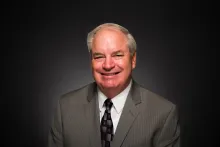
Robin Webber was born in Chicago, Illinois, in 1951, but has lived most of his life in California. He has been a part of the Church of God community since 1963. He attended Ambassador College in Pasadena from 1969-1973. He majored in theology and history.
Mr. Webber's interest remains in the study of history, socio-economics and literature. Over the years, he has offered his services to museums as a docent to share his enthusiasm and passions regarding these areas of expertise.
When time permits, he loves to go mountain biking on nearby ranch land and meet his wife as she hikes toward him.
