

Robin S Webber
This transcript was generated by AI and may contain errors. It is provided to assist those who may not be able to listen to the message.
You're here all night? Pat, can we begin our class? Yes, sir. Okay. Okay, everybody come on in.
Bring your coffee if you want to. If you start nodding out there, I'll presume you're not falling a stake, you're just nodding in agreement. Okay, we've got a little bit more to cover here. We'll try to wrap this up as quickly as possible. This section is, again, why are we doing all of this today? It's that we want to, in this fourth presentation, remember that we are here to be like the Bereans who were complimented in the New Testament in the book of Acts.
In Acts 17 and verse 10, you don't necessarily need to turn there, but it mentions when they arrived in Berea, they went into the synagogue of the Jews, and they were more fair-minded. And I know that Mr. Kowal mentioned that this morning. They were more fair-minded than those in Thessalonica, and that they received the Word with all readiness and searched the Scriptures daily to find out whether those things were so. And what we're trying to do today, or the session in particular, is to give you a fair-minded procedure so that we can avoid the mistake of proof texting. And so we've covered the principle of literal interpretation.
We've covered the principle of, as my eyes fall upon it here, the principle of... where are we?
It's coming. Somebody took my notes.
Come back in a second. My notes, my notes. What?
Narrow to wide. Thank you. Somebody's listening out there.
Right. Keep on going, Diane.
And the principle of the whole. The principle of the whole, and we're going to be dealing with that more in a moment. I'd like to read from a quote from Dr. John Stott. I really enjoy his writings.
Theologian tends to be, shall we say, fairly deep, fairly thorough. Good read. Dr. Stott was very helpful to many people in the Church of God community back in the 90s in his book on the Sermon on the Mount and his defining of Matthew 5, 17-19, as far as the aspect of the law. I'd like to share a quote from him. Our Bible study must be comprehensive. Sporadic and haphazard dipping into the Scriptures is not enough. Nor must we limit ourselves to our favorite passages or concentrate on the microscopic examination of a few key texts. Such selective knowledge and use of Scripture plays into the devil's hands. Every heresy is due to an overemphasis upon some truth without allowing other truths to qualify and balance it. That's profound.
Let me read that again. Such selective knowledge and use of Scripture plays into the devil's hands. Every heresy is due to an overemphasis upon some truth without allowing other truths to qualify and or balance it. A little bit like the law of non-constradiction.
Biblical induction is the only safe way to begin theology, but it presupposes a thorough knowledge of the diverse particularities of the Scriptures. That's what we're going to go into in the second section. One thing I want to mention with everything that we're talking about this afternoon, which is a little nude maybe to some of you, maybe not to others, why are we discussing this?
Because the Bible is God's gift to us. Sometimes people look at the Bible and they don't know what to do with it. Sometimes we think, boy, you know, I read this Hebrew, I read this Greek, I read all of this.
If you're reading in the King James English, what's this all mean? The one thing that we want to remember is simply this. The Bible is not there to trick us. It is not there to scare us. It is not there to overwhelm us. It is not there to confuse us. It is there as God's testament of His great love for us. It is a love story.
Make no mistake of what I talked about this morning. It is the story of God's love and how He wants us to experience it. And if we simply look at the Bible as Hebrew and Greek and frankly even all of these rules that we're talking about here, then we're wide of the mark as well. The Bible is better than knowledge. The Bible is more than facts. The Bible is the story of God's love and when we use it properly, we do have that peace that does pass all understanding.
That's why we're dealing with this. Let's now go to the sixth principle. Thank you, Diane, which is the principle of grammar and language. The principle of grammar and language. To properly understand verses, we must look at the sentence structure, the subject, the nouns, the prepositions, and the phrases very, very carefully. We must analyze the words in the original language. We must be able to speak the language of the Bible or at least be able to interpret it.
God gave us a book called the Bible, and it is inspired, but it is the language and the words of men, as Mr. Coel brought out today, that over 40 authors from so many occupations, from so many countries, in three different languages, etc. To ignore the implications of that is to lose the flavor of the Bible. Let me use an example for a moment, and something that happens with people. Many of you will be familiar with this example. We recognize that primarily that the Old Testament is written in Hebrew, the New Testament is written in Greek.
Let's just use one word. Well, we're going to bring hell into this service. Sorry. But, you know, when you look at the word hell, we just have one word for it in our English pun. But when you look at the languages of the Bible in the Old Testament, it is sheil. And that didn't mean a place with hot flames that were looking at your feet.
That meant simply the grave. That's the grave. Now, in the New Testament, that word sheil, because now they were speaking Greek as the language of Franklow that day, would be Hades. Which again means the grave. But then it has a different terminology when you think of the word tardiru. I may be spelling this wrong, pardon me, don't be offended.
Tardiru, which again is a completely different word, which when used in post, in non-biblical language, always is about restraint. It's about restraint. It's not about fire. It's not about a pit underneath the earth. The term there is used as a matter of restraint. And then you have the term gehenna, which is another term. And to recognize that the gehenna there is really talking about the consequences of judgment. But even when you read that, you will come up with different terminology.
So it's interesting that you can look at one word in the Bible that we have in the English that's come down to us, but it can have three different meanings in two different languages. So it's important to understand that.
I'd like to show you some books, and maybe some of you are familiar with them. I just thought I'd offer this to you. And again, I don't want to share something with you. When you look at this, studying the Bible does not need to be complicated. The Bible is a book about salvation. It's a book about God's love, but we can draw from it. These are tools. These are tools of my trade, because I'm a pastor and a communicator and a Christian educator. But at one time or another, if you would be interested in the words in the Bible, you can pick up something like a Young's analytical concordance of the Bible, which if you go to it, you can look through it, and you look up the word great, and you look in the Old Testament. It'll give you the Hebrew words. You can look it up in the Greek words, and this would be a very good help. Actually, a better help, if you want a little bit further, would be the expository vines. Expository on the Greek. You say it like Homer, it's all Greek to me. No. Beware the Greek-sparing guests. But this will actually give you... the Greek language is a very, very rich, colorful, descriptive... it's kind of an out-of-this-world language. It's just has all sorts of juicy meanings to it. And, and, uh, vines, expository dictionary of New Testament words would be very, very good. And to be able to draw out, to be able to understand what was being spoken, what those words meant to those people at that time. Another book that maybe I showed you earlier, when we read the Bible as a whole, would be... and of course, I think this is my wife's Harmony of the Gospels that I have. Sorry, Susan. I better bring it home tonight. So yeah, that's your writing. Well, this is from college class, and it says, I love Robin. Oh, that's pretty good. No, no, just teach. Oh, no, okay. Yeah, she's a good student. That was the bad one.
Anyway, a Harmony of the Gospels, which puts... she did say it. No, just teach. Is that, uh, and it lines up all the different accounts at different times. Now, you've got to recognize that it's not always going to be one, two, three, four, because sometimes certain of the gospel authors do not make a comment on a certain section. Others add to it, and then you get to understand the whole. I'll just use one example. It's like the sign that is over the cross at Jesus' crucifixion. When you go through the different accounts, each account gives a little bit different.
So you say, but wow, you see right there, the Bible does contradict itself. No, it doesn't contradict itself, because remember, you've got to go with the basic thought of the law of non-contradiction. So you have to fit it together, and when you put all of those together, like in the Harmony of the Gospel, you find out, you've got to remember that it was written in different languages. This is written in Latin, and help me, it was written in Latin, Aramaic, and Greek, if I'm not mistaken.
And so people are looking that differently, because like right now, I see Melhelmoth, and now I don't. He doesn't see me, because we've got to pull between us. But we're looking at different facets of the situation. And so there might have been one witness that's looking at this way, or one, you know, how different things hit us another way. So when you put it all together, you find out that it was Pilate that put the sign up there, and that it was Jesus of Nazareth, the King of the Jews. And he put all of that together, and then you get the wholeness of what was going on. And this would be a very nice study. If you've never seen this before, it's called the Harmony of the Gospels, and allows the Gospels to become a lot more complete to you.
Let's go to point number seven. The principle of context and literary style. One of my favorite points of bringing out. And I cannot bring this home enough. To understand a scripture in the Bible, we must look to the verses proceeding and following. Proceeding and following. I want to share a thought with you. When I first came into the church in God's name, I first came into the church of God community, and I was just a kettled at the time. And I remember this big word came out. I came to church, and they said, context. Read everything in context.
I thought, wow! I never heard of that word before where I've been. Of course, most people didn't take a Bible to the church with them in those days, and they didn't reach for the Bible that was in the pew. Now, some of that has changed in certain evangelical churches where they do bring a Bible, but I'm talking about mainline Christianity in the early 60s. People didn't take a Bible to church, and there's that old Bible in front of you that, you know, you didn't want to touch. But then I came to this church, and it was really amazing. The first thing that I always remember about, and it was here in San Diego, first thing I remember is they had big Bibles.
And number two, the next thing, and it just shocked the willies. Okay, good. The pajeebies.
I'm sitting down, I'm looking this raw, and the seats were not this nice. They were metal seats.
It seems there's a lot of metal seats in Church of God. The church is hard. And all of a sudden, I see people writing in their Bible, and they are circling words.
I had never seen that in the Baptist church. I had not seen that in the Lutheran church. I had not seen that in the Congregational church. I thought, what are they doing? Don't they realize that this is the Holy Bible? They are writing in God's Word! And then I got me thought, no, they're taking this Word seriously. They want to learn from it. They're using it as a living tool and instrument to improve their lives. It's amazing what an 11-year-old boy finds out as he sits in an aisle looking down left to right. We need to know what the context is. The most important thing is, when you are studying, and remember, the best way to study is to read from the Bible, not into the Bible. Move into a story. Bottom line is, know where the story begins. I'm going to use a classic case. Join me if you would in Acts 4. We have the Simon Legri of the New Testament, otherwise known as Ananias and Sapphira. But a certain man named Ananias with Sapphira, his wife, sold a possession, kept back part of the proceeds, his wife also being aware of it, and brought a certain part and laid it at the Apostle's feet. But basically what happened was, he said, what are you doing, Ananias? Satan's filled your heart. You've kept back a part of the price. We know the rest of the story basically. Ananias and Sapphira were judged.
What they were saying was, oh look, we're giving everything, and they really weren't. And so what happened is, bottom line, they both went out, toes up. If I can use that phraseology, one at a time.
That's what happened. Now you read that story, but the story doesn't begin in Acts 5 and verse 1.
Remember, that's man-made. It's helpful and it's unhelpful. The story begins up here, actually, in verse 35, where it talks about how the people in Jerusalem were all part of one big family. Notice verse 3, and they laid them at the Apostle's feet, and they distributed each as anyone had need. And Joseph, who was also named Barnabas by the Apostles, which is translated Son of Encouragement, a Levite of the country of Cyprus, having land, sold it, and brought the money, and laid it at the Apostle's feet. What we have here, which is so often used in the Bible, is contrast.
But if you just start at chapter 5 and verse 1, you are not into context.
The contrast is preceded in Acts 4. There is the good example and there is the bad example.
Ask God when you're studying His Word to help you find the beginning of the story so that you can read in context and gain the fullness of what God wants you to receive from a particular story. Very, very important. A serious student will find the beginning and the end of the story, and they will see that need and take the time. Now, another thing I want to bring out here is very important. I'm going to have to erase the board here.
Remember what I said this morning, quoting out of Timothy, is that all Scripture is God-breathed. And absolutely it is.
I've written a couple languages, different men. One thing that we want to be very, very careful of here, and the point that I want to bring out here is simply this, is that when we're reading the Bible as a whole, which is one of the principles, we want to be familiar with the similarities. You can jot that down, but we also want to make sure of the distinctives. There are distinctive reasons why the Bible is written, and I'd like to kind of make this thought here.
Okay. Let's think of different parts. Help me with the different sections of the Bible. Maybe you can help me. Okay, Skip, can you give me a general section of the Bible? Throw it out there.
The Law. Okay. Who can give me another one? Pardon? The Prophets.
Okay, anybody have another one? Let's stay in the Old Testament for a moment.
There's really a better term for it, but I like testimony. The Writings.
Okay, what else do we have? We're moving into the New Testament now. Go ahead. There's still one more that could give the Old Testament, and that's the History. The History? Yeah. The books, the history, the Chronicles. Yeah. Aren't those under the Writings? Don't think. They can be some scholars put them under Writings, and some something. Okay, let's just keep it. Very good point, but let's just stay with... because I want four.
It's like the kid that has a better answer than the one that you wanted on the test, you know?
You didn't give it the way I wanted it? No, just teasing. Okay.
Here. Okay, let's go to the New Testament. The Gospels. Okay. Gospels. Okay, what else?
Pistles. Pistles. Okay, what else do we have?
Okay, we'll put Gospels and Acts together. I'm thinking of...
we have... let's put it this way. Let's put the Pauline epistles, okay? Which means if there's the Pauline epistles, then there's the what else?
The General epistles. We're almost done. The General epistles. What else do we have? There's one more thing at the end of the book. Otherwise known as the apocalypse revelation. Now, what we need to understand here, very, very basic. Okay, this is not going to be hard.
Okay. These were all written over how many thousands of years? If you were all listening, here comes the test. He said 1,600. But who knows? Give or take. Give or take 100.
Okay. One thing we want to recognize is that we want to look at the Bible as a whole.
But we also want to recognize that all of these were written for specific reasons, at specific times, initially, initially. We draw principles, we draw inspiration, and they can be dualistic in the future. Are we all in agreement with that? That's what you're supposed to be nodding. Okay, yeah. But we look at their initial reading and their initial purpose.
Now, remember the law of non-contradiction. There is no contradiction, but we must, here's the term I want to use, we must respect when they were written for who they were written, and recognize that we can't break and enter from room to room without recognizing where we're going. Does that make it simple? Allow me to use an example. Make it simple.
Watching my wife's eyes, I have to make it simpler. Okay, let me use the example.
Think of this as a house. Think of this as a house.
Most houses, hopefully yours, has a kitchen, has a living room, has a dining room, has a bathroom, has a closet to lock the kid, not just teasing, has a, has a closet, no, has, whatever it might be. It's all under one roof. It's all a part of one house, but each of those rooms, while they connect, all serve different purposes. You use the bedroom in a different way than you use the kitchen. You use the kitchen differently than you use the dining room. And basically what happens as you go from room to room, unless you just have one big room, kind of an open person and transparent, you go through doors. What I'm suggesting to all of you is that appreciate the wholeness of the Bible, but recognize that there are different compartments in different rooms, written at different times for different purposes, also in different languages, and recognize that as you go from maybe the law to the writings, to respect that while you're still in the same house and all scripture is given by inspiration of God, to recognize that there may be a difference here of what is being written, of why it's being written. Allow me to use an example. May I? God says in Exodus 20, he'll say, he'll say, you shall have no other gods before me.
You shall not make under you any graven images. Those are moral imperatives, I would suggest.
Right? But then you can go into the Proverbs and they can say other things that you've got to use as principles, you know, where it says, you know, don't answer a fool to his folly, or this or that, and you have to look at what we might call the equivalency rate of based upon those things that are commandments versus those things that are principles or why they're written. What I'm suggesting is simply this. As you're doing a study, now this may be a different study than shall we say just reading out of the Scripture, reading from a chapter. Maybe you're doing what we would call more of where you're studying a point, a given subject, the Holy Spirit, the Sabbath, the covenants, major topics, and you're moving from the law to the writings to the general epistles, to the Pauline epistles, to the Gospels, to the prophets. What I'm just suggesting is this.
Respect your entrances and exits in different parts of the Bible. They are written in different languages. They are written for different purposes. They are sometimes written especially when you come to Revelation. What do we call Revelation as far as literature? It's apocalyptic. And apocalyptic literature is almost, if you want to call it, spiritually psychedelic because it's done in imagery, unlike other parts of the Bible. There's two great apocalyptic books. That would be Daniel, and that would be Revelation. That's why they're tied in together so tightly. And you must understand that you're dealing with imagery. When you're going to the book of Revelation, apocalyptic literature is literature that is written in imagery to people that are dispossessed to give them hope towards the future. And it's written in imagery. That's why when you go to Daniel, you have the image of the beast, and or you go to the book of Revelation, then you've got all the different imagery that is there. That's why it's very important, as it says in the book of Revelation. You know, a lot of people think of the book of Revelation as a book of prophecy, but it is also wisdom literature, because it says, he that wants to know this or that, use wisdom. So to unlock that apocalyptic literature, you have to use wisdom. A part of the wisdom that I want to share with you today is just respect the different... think of this way. The Bible as one house for the Word of God has different rooms with different functions. Respect those different rooms. Don't be afraid of them. Do not be afraid of going from the law to the writings or from the writings way over here to Paul's epistles. It's okay.
Just respect your entrances and exits. Recognize you're now in a different room. Not a bad room, not a lesser room, but the time that it's written, the language that it's written in, the initial purpose that it's written in. Respect it. Thus, once you move from the law and you move maybe into the writings, now what you're going to do is you're going to have that narrow to wide focus, and you're going to crawl into the skin of those people that are in the writings and come to understand them. That's very important. Does anybody have a question on that? Everybody understand that? Have you ever had that thought before? That's a good thought to have. When you do that, you respect Scripture. You are rightfully dividing the word of truth. Let's go to the last point. We'll conclude. The principle of observation regarding the letter of the law and the spirit of the law is a very important key to understanding the Bible. Let's always appreciate that in our studies of Scripture that Christ plainly taught that the law has a wider application than its letter. Now, when we use these thoughts of the letter of the law or the spirit of law, sometimes you're just running the people who say, well, how are you doing? I'm under the spirit of the law. Oh, okay, thank you. And that's just kind of where they begin and kind of where they end. It's like they have rocket blasted away from the letter of the law. But let's understand what's saying here. Christ plainly taught that the law has a wider application than just simply the letter, but he did not set the spirit over against the letter or substitute the spirit for the letter. He adds the spirit to the letter. Very important. It's not either or. It's not the tyranny of and, either or. Excuse me, it's not the tyranny of either or. It is the and equation. And we need to take note of that. Let me use a couple examples of that for a moment. Let's go to Matthew 5. Let's go to Matthew 5, 27. Again, a classic case of the letter of the law and the spirit. You have heard that it was said to those of old, you shall not commit adultery. But I say to you that whoever looks at a woman to lust for her has already committed adultery with her in his heart. Here we have a direct verse 27 speaking of the letter of the law, verse 28, the spirit of the law. In other words, again, we want to recognize the very basic principle that Christ did not set the spirit of the law against the letter. He added the spirit to the letter. Join me in Matthew 23, 23, another classic scripture in this regard.
Woe to you, scribes and Pharisees, hypocrites, for you pay tithe of mint and anise and cummin, and have neglected the weightier matters of the law, justice and mercy and faith. These you ought to have done without leaving the others undone.
Classic case. He did not pit the spirit of the law against the letter of the law. He added the spirit of the law to the letter of the law. He says this you should have done without leaving the other undone.
Now there's all sorts of things that I would have liked to have covered, but I think we've really covered enough today. I was going to go into some things that I'm actually going to give you just on the handout. There's going to be a handout, but what we're going to do just for a moment now is we're just going to kind of do a review here for a moment. I want to ask you maybe to share, if you've received anything out of these two presentations this afternoon, basic principles that you will go home with that are loud and clear. What is something that you have picked up that is going to change how you study the Bible? Don't start all at once.
Okay, Roland? I of course know that it all fits together. I have no issue with that. I like the analogy of the house and expecting one section relative to another transition. Okay. You like my house? Do you want to buy it? No. It's a fire sale right now. It's a foreclosure.
Okay. Did this help everybody? I want to share something with you on this.
When we think about it, when we respect Scripture, we're doing more than respecting Scripture. Who are we actually respecting? We're respecting God and the wisdom that He set forth in the way that He chooses to define His purpose, His plan, His provisions, and His promises. And I'm glad that you like that. I enjoyed doing it. To me, these are points that I try to apply when I'm the own study, much less preparing for others. Watch your entrances and exits. What about another major, any other major principles that you're going to go away with and look at the Bible differently today? Yes, please. I like the way you talk about relationships in respect to the rules. It's not about the rules. I knew that. It's so good to be reminded of that and to have that emphasized.
I like it. I like being reminded of that. Well, Mr. Cobell started it. I just added to his thunder.
And you know, that's really important. I had a woman come up to me last week in Redlands, and I think she's going to be coming back again. She says, because of some of her own situations in her life of not being accepted, that came across. You never know in the course of a day what people are going to say. And it was a matter of relationships. God is calling us to relationships. Now, you know, and I know that there are some people that are just rule-oriented, you know, dot the i cross the t. Now, when we say that, let's understand something. Rules are for our good. As my wife often says, what part of God's law don't you like? All of God's law is good for all of us. In fact, it's very interesting today that what Jim brought out, all the rules that a king of Israel had to go through, right?
But it was all towards what? A relationship that he might treat his brethren fairly. If we just look at the rules without the relationship, remember what I said earlier?
Rules without a relationship is like a postcard without a stamp. It's not going to go anywhere. You will take it to the grave. In fact, that is the essence of the Pauline epistles. You can keep all of the rules, and the rules will not save you unless you have that relationship with God that comes through faith. So I'm glad that you came. Relationships. Roland liked the house. Here's one other key point. How about loud and quiet? Didn't anybody like that?
Or should I throw that out of this lecture? Doug, tell me how that affected you, please.
I can tell your affect that they're on the front row. I'm joking.
Right.
Right.
Mr. Herbert Armstrong, many, many years ago, he used to always talk about the trunk of the tree.
You stay with the trunk of the tree. You don't get out on the limbs and the branches and stay there. Now they can be intriguing. Those are the fun things that are in the Bible. That's kind of what excites some minds. It excites my minds. And I like studying those things, but I keep them as implicit, and I keep them as quiet. And the quiet does not define the loud. The loud defines the quiet. And if you can do that, also when you are studying with others, some of you are in Bible study groups, or when you're with Mr. Colwell and others who have you in different Bible study groups, use these principles. They work. They are living laws in action when it comes to how to study the Bible. What about the aspect of... there's got to be more that you learn today than there were two hours. What's another big word? How about this? Pardon? The narrow to the broad. Always start...
A little bit risque. Okay, okay.
You didn't hear that. That was not under the spirit of the law. Okay, anyway, the...
in other words, live within the scripture. Start with what it meant to the audience. Now, let me use the example. How many of you have ever seen these Renaissance pictures from the 1500s or 1600s, and they're pictures of Jesus or pictures of the apostles? And you know what? They're all running around in Renaissance clothes. Have you ever noticed that? Or am I the only one?
Okay, they all look like little Italians from Verona. And they're trying to depict the times of Jesus. In other words, they are not empathetically living and crawling in the skin of the times that are being discussed. In other words, we need to make sure... and I'll just use this as an example. As a congregation, we want to make sure that we are filtered through the Gospels and through the Book of Acts, not vice versa. We go with the canon. We are filtered through the Bible.
We don't filter the Bible through us. So you always start from the narrow to the broad.
What about the aspect of the beginning of the story? How important is that?
The beginning of the story. Very important. Actually, Mr. Chollel started out with that this morning. The beginning of the story is you go back to... if you want to really deal with context, always go back to the beginning. That's why Genesis is called the beginning. What is God doing? Well, listen, you've been a great class... oh, Lance... oh, good, another point. Go ahead. Please, Lance.
Well, in that, if I'm not mistaken, I think God's making a common at that at this point. What does it bind up the... right. And seal it. Right.
I'd have to look at that off of class. I'll get back to you on that one. Yeah, Julie.
I think that's important. That it sounds like what we're looking at. And that's why Mr. Chollel, myself, and as our other elders do in the course of the year, we want to focus on the relationship. Remember, when you are in study and you're getting lost or you're getting tired or you're a little drift, remember the true north principle. Look for the relationship. It will bring the rest of what you're studying home. And that relationship is either a scripture or two scriptures away. Always look for it. That's really important. Listen, you have been a great class. We should close while we're ahead. Let's just all bow our heads. Certainly important to thank our father for what he's given us. And Victor, would you please ask a closing prayer?
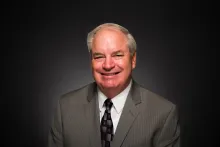
Robin Webber was born in Chicago, Illinois, in 1951, but has lived most of his life in California. He has been a part of the Church of God community since 1963. He attended Ambassador College in Pasadena from 1969-1973. He majored in theology and history.
Mr. Webber's interest remains in the study of history, socio-economics and literature. Over the years, he has offered his services to museums as a docent to share his enthusiasm and passions regarding these areas of expertise.
When time permits, he loves to go mountain biking on nearby ranch land and meet his wife as she hikes toward him.
