
Robin S Webber
This transcript was generated by AI and may contain errors. It is provided to assist those who may not be able to listen to the message.
This is the Hallmark Scripture that we're using as an anchor for this weekend. Be diligent to present yourself approved to God, a worker who does not need to be ashamed, rightfully dividing the Word of Truth. The book of Timothy is one of the pastoral epistles.
It is Paul's instruction as a mentor to the younger evangelist named Timothy. There's also his counterpart Titus in the book of Titus. It's very interesting the things that are mentioned here. In early Christianity, there were a lot of people that were roaming around at that time. There were teachers and people that considered themselves evangelists. It was a new movement. There was no crusader like a new crusader.
People were all out there sharing what they thought that they had heard. Paul is really striving to bring Timothy down to, we've got to be, in a sense, accurate in what we are presenting to the brethren. Thereby, what we work with is really the holy words of God. There are two words that leap out here, out of this verse.
One word that leaps out is, be diligent. Let's talk about that for a moment, to be diligent. When you look at the Greek word spudazo, it sounds like an Italian ice cream, but spudazo, what that means is that you have to have persistence zeal. You've got to stay with it. If you're going to rightfully divide the word of truth, it is not just an event, it is an existence. It is not just simply an event, it is an ongoing activity that you're going to have to be diligent with. You can't be sloppy.
You can't let down. Now, there are many, many people that are sincere about being believers of the word. They don't mean to do it wittingly, but unwittingly, we can be sloppy with God's word, even when we're seeking answers, and we don't want to go down that path. Another key word that comes out of this is to divide the word of truth. When you go to the Greek, the word divide actually literally means to cut. To cut through as if you want to use this phraseology, as you're cutting through a true path. Now, that's very important in cutting up. I'm sure all of us at one time or another have taken our wife's pie, or mom's pie, or grandmother's pie, and gotten out that old pie cutter and tried to do it accurately to where it doesn't crumble all around you and you don't get the cherries on you.
So, cutting can be a little difficult. What this is really telling us, though, about the cutting is simply this. I want to give you a core truth here in the aspect of the Bible study, and that is this, that you must have a correct analysis of the truth, a correct analysis, not just your analysis, but a correct analysis, and that the parts cannot be greater than the whole.
The parts cannot be greater than the whole. Scripture cannot say what Scripture does not say. Very important. Just think of it in geometric terms, that the parts cannot be greater than the whole. Now, what does Mr. Weber mean by this? All of us at one time or another have worked at a jigsaw puzzle, or after a while we think the jigsaw puzzle is working on us. And you know how you have this piece, and it really looks good.
It really looks like a fit. And then you know how the cardboard... Am I the only one that does this? The cardboard gets a little afraid as you're trying to squish it down like a square peg in a round hole. This is what people do. You have done, if you want to be honest, and honesty is good for the soul, is that we have all at times tried to force the Scriptures and have them say things that they do not necessarily say.
Sometimes because of cultural imprints, sometimes because of tradition, sometimes because of where we think that God's Spirit is leading us. It's very interesting that in Romans 10 and verse 2, speaking of one religious community, Paul said that the Jews, they have a zeal towards God, but not according to knowledge. And you can be the most zealous Bible student and want to lap up the information out of the living waters of the Word.
But there has to be a certain knowledge of also how to be able to do it. I'd like to talk a moment about things that we've done sometimes in our Bible study, which at times might be random. We say, God, I really need a message from you today. I need to hear you, Lord. And so you kind of put up your Buster, your Flash Gordon secret decoder ring. For those of you that remember Flash Gordon, people like Bob Gardinhire and Roland Clark, played by Buster Crabbe, I know that.
And you know, I get a message, and we do that. And Lord, where do you want me to turn? And so then you take your Bible and you open it. Oh, there's the message from the Lord today. It's right here in Psalms 2.16. And so we can kind of do it in a haphazard style. Well, let's talk about that. You might want to jot this down.
That is called lucky dipping. That's called lucky dipping. That's something you don't want to do. Let's just take lucky dipping to its furthest extent. I wonder if you open up the Bible and you turn to Matthew 27 in verse 5. And this is supposed to be your message from the Lord that day. And it says, So, oh, Lord, I really don't like that. That secret decoder ring goes back up. Give me another message, Lord.
You open up the Bible and then you turn to Luke 10, verse 37. It says, You go, oh, this is really bad. Bad stuff. And then finally you say, you know, three is a biblical number towards finality. So you go, one more time, the secret decoder ring goes up and you turn to John 13, verse 27. What you do, do quickly.
But that's how we can laugh about that a little bit, but that's sometimes how we approach the Bible in a very haphazard manner. We don't want to do that. That's why we're having this class today. You're here because you love God, you love Jesus Christ, you love the Word of God. You are really devoted, or you'd be out somewhere else this afternoon after church rather than being here. You want a better grasp on the Scriptures.
That's what we want to do for you this afternoon. Let's go right into this thought here, and I want to share something with you. Why do people make mistakes with the Bible? I want to share with you the biggest mistake that people make when it comes to Bible study. The greatest mistake that students of the Bible make, even earnest Christians, is simply this. They read into the Bible rather than read out of the Bible. That's it.
Let's go home. That's it. If you get that, you're going to go places. What people do is they tend to read into the Bible rather than to read from the Bible. That is, oh, so important. Why do people read into the Bible? Because normally, and we're all looking around this crowd, we're all pretty normal. Normally, what we do is we start with a personal premise.
Remember what I said this morning about how we need to prepare our hearts and kind of leave that, which the cultural imprints, the parent imprints, maybe the denominational imprints, whatever imprints, etc., etc., personality imprints. So we take that into the Scripture with us. In other words, we read into the Bible rather than allowing the Bible to read us. And they give it everything that it needs to give us. What we do then is we start with that personal premise rather than, here's the key word, a fair-minded procedure.
That's what I'm going to share with you today. So that we can, rightfully, divide the word of truth. What we're going to do today is to give you some of the tools to be able to cut through some of the fog of the Bible so that you can begin to understand God's Word.
Sometimes, what do you mean by people start with a personal premise? Well, what they'll do is they'll, you know, sincerely, what they'll do is they'll say, well, I'm going to study up on some subject today. Then they get the concordance, and they pick out all of the verses that they want on any given subject and they think that they have it done. Now, can you do that?
It's all right. But that's not necessarily the best way to do it. The best way to really gain the max from Scripture is to read out of it. This class is called, What saith the Scriptures? Because, again, out of Romans 4 and verse 3, this was Paul's play. What do the Scriptures say? Not what does man say? Not what do you think that they say? But what can we draw out of them when we have a fair-minded procedure rather than the next word I'd like to share with you as students? I'd like to throw this out to you. Many people do what we call proof texting.
I'd like to share that. That's very important. And I'm going to be very honest with you. Honesty is good for the soul. Everybody, to a degree, proof text. That is in human nature to proof text. You do it. I've done it. All organizations do it, including our organization. Not wittingly. Unwittingly. And we try the best not to proof text, but it is a magnetism within human nature to want to proof text and have things all agree with what we think it ought to be.
Now, some organizations, some people do it more than others. We want to avoid proof texting. That is the practice of selecting a scripture to match your ideas. The standard fare of proof texting is once a premise is developed, a scripture is found, you cement its credibility to a given idea, and that's what you do. And that's all right. But one thing about proof texting, where you've established your idea of how things ought to be, then you go find the scriptures to make it work.
You leave other scriptures alone that do not hold up to your point. I'll tell you what proof texting is. It is abusive to God's Word. Proof texting is abusive to God's Word. There are people that will even at times take just portions of scriptures. That is abusive to God's Word. That is against 2 Timothy 2 and verse 15. All scripture is given by inspiration.
I've been tempted to do that. We're all tempted. This is a magnetism in human nature to get across our point of what we want to get. But that's not good for you as a Christian, and that's not good for the audience. And that's why it's always best to read from the scriptures rather than into the scriptures.
Now, I may shock you when I said everybody does it. We've done it. I've done it. It is, like I said before, it is a part of human nature that we need to put out of us so that we can completely understand what God wants us to do. Another thing that happens with Bible study, sometimes people, they get an idea. They get a scripture. They claim it. It's their scripture, and they run with it.
They tuck it in underneath their armpit just like a halfback with a football. Those halfbacks are a hardy breed. They get knocked all over the place on the football field, but that ball's right there. You're not going to get that ball out from underneath their arm. It's hard. Those defensive linemen come in, bam! That ball's still there. They try to grab it, do anything to put that ball out. I've run into people like that before that have proof texted. They have an idea. They have a thought that if they have not put to the full scan of scripture, but it's their baby. That's their football, and they are carrying it. Another way of putting that is to people that have what I call pet doctrines. Have you ever run into anybody that's got a pet doctrine? Have you run into their pet? I hope you haven't stepped on it. Because what happens is it's like those leashes that you see with the invisible dog. You ever seen one of those leashes? No, like down on the beach? Somebody has a leash, and there's nothing at the end, though. But that's kind of what people do sometimes with the Bible because they're proof texting. They've gotten all excited about this matter that they have figured out. And when you see them, you know you're not going to hear about Aunt Tilly or Uncle Horace or how the beach was this weekend. Before they ask you how you are doing and why you have a broken leg, they are going to tell you about their pet doctrine.
That's why they need to come to Mr. Weber's class this afternoon. Okay, let's talk about some things here. I'd like to throw some words out here at you. You are going to get notes. By the way, this morning we do have handouts for everybody on both presentations. So I hope you'll pick those up. They'll be at the table. There'll be more handouts this afternoon. I want to share a word with you. It's called hermeneutics. You say who? Hermeneutics.
You say, but that's named after a pagan Greek god. Okay, that's true. It's named after Hermes, but sorry, that's just how it is. It's called hermeneutics. I'd like to share that thought with you. That is the methodical study of Scripture. And there is a method to studying Scripture that is going to be beneficial. And it is based upon biblical principles that remain consistent and applicable to all of your study. Isn't that interesting? Consistent and applicable to all of your study. But I thought you said this morning that this is all about revelation. Don't throw that point away. It is about revelation. But there are principles that will allow you to remain consistent in your study. What we're looking at is a very basic premise. I'd like you to jot this down. It's called the law of non-contradiction. Non-contradiction. I hope I have enough room here. Non-contradiction. We believe that the Bible is infallible. We do not believe that the Bible contradicts itself. We believe that all Scripture complements itself. That complementation does not just come necessarily, though, in a minute or an hour. You have to do the work. But if you will use this rule, the law of non-contradiction, that means that to apply that rule, you've got to get below the surface. You can't just simply settle for a survey. You have to do an excavation and understand some of the tools that we are going to be bringing to you. Another word that I'd like to share with you is exegesis. I write the word exegesis down here. What does this tend to mean? What does that mean out of the Greek? What does that sound like? This is a hint. There's a book in the Bible. Pardon? Out. What's the book in the Bible? Exodus. To come out. Exegesis means to draw out and or to read from, to draw out of the Scriptures. And that's what the word exegesis means. This is objective reading and is the most effective style of gaining the fullness of the Scriptures. I'll make no apology for that. When you read from the Scriptures, drawing out of a story like today, when Mr. Koel was going through the story of the kings and how they were studied, that was a lesson in exegesis. Other than his other points, which is another point I'll bring out, but when he was staying in there, that's exegesis. He brought out what? The five points that are there. They came one after another and built to a conclusion that the king was to have a humble relationship with his brethren. It all led to that point.
Exegesis is important to understand when studying the Bible. Initially, that is how the Bible was read. Allow me to use an example. May I? Revelation 2, Revelation 3, the seven churches. Now, I know sometimes people will roll right into Revelation 2 and Revelation 3 and pick the church of their choice, the one that they want to be a part of, the one that they think they act like or would like to act like.
And so they'll go right to that verse. That is being isegetical, not exegetical. That is reading into and going right into rather than reading the whole course, starting with Revelation 1 forward and getting a point of what is being written and why.
You're always going to do better when you read the entire story. This is how the Jews studied the Bible. A scroll would be opened. They would read it. They would come to point. Allow me to use an example. Jesus, in his first sermon in Nazareth, his hometown crowd, went to Scripture, went to what? Isaiah 61.
And it speaks of that acceptable Lord, doesn't it? Proclaims Jubilee. He reads through the Scripture and then comes to point. He says, this day it has been fulfilled. Exegetical. He reads from. The Scripture is there. And he comes to point. Allow me to use another example when you read through. It would be the example of Luke 15. Luke 15. I've given this message here before. It's the story of where the Sadducees are and the scribes are around Jesus. And they look at the people that they don't think should be in church and they say, Sir, what are they doing here?
They don't belong. And then that begins to build into three stories to point. The story of the one in the 99th dealing with the sheep. The one coin that's missing out of the 10. It builds into a relationship story of what? The prodigal son with the father. But it starts with that point.
But so often what we do, we go right into Scripture. Sometimes we'll read the story of the coins or read the story of the prodigal son without starting where the story begins. We're going to be discussing this again, but let's jot this down. If you want Bible study really to become more effective, always find the story where it begins. Fundamental. Find the story and the story doesn't always begin in chapter one, but we'll get to that later.
There's another term I want to use here. Isogesus. Fancy Greek word. It simply means to read in to. To read in to. Scripture. Now, this is not objective. This is subjective. This is not objective. This is subjective. Even as I say that, it is doable. It is not wrong, but we need to know some of the rules and some of the pitfalls of that. Most preaching in the Church of God community, most preaching, not all, is isogetical preaching.
You come to a point. Today we're going to discuss the subject of meekness. And then you might take a scripture out of the Gospels. You might take a scripture out of Paul's writings. You might take a scripture out of Deuteronomy about Moses being the meekest man on earth. That is what we call reading in to and picking different verses.
Now, please understand what I said. Whether it be speaking or whether it be your own study, that is not wrong to do. It is just simply more challenging, more complicated. And when you do, you have to rightfully divide the word of truth. But we're going to get into that more in the second presentation later on in the day.
I'd like to now then... Oh, and when I say that, let me make a comment here. You can do that. When you look at some of the great messages in the Bible, sometimes you'll go to Acts 2. And Peter is speaking. And he'll reach for a scripture. He'll reach for the book of Joel, saying that these things have been fulfilled.
So he's reaching outside of himself, and he's diving into scripture, and he's pulling it his way. Or you take the story of Stephen in Acts 6 and Acts 7, where he pulls the story about Solomon and the dedication of the temple, and saying that God does not dwell in temples, that he's greater than that. They did it. Peter did it. Stephen did it. You can do it. It's okay. All I'm saying is you have to exercise care when you're moving around the Bible and bringing it together to rightfully divide the Word of Truth.
Let's move right into the keys, then. Here we go. The first key I want to give you is simply the principle of literal interpretation. These are the rules of hermeneutics, the principle of literal interpretation.
Biblical literature has both literal and symbolic language, and we must know the difference. Pray that we can come to understand the difference. The Bible has both literal and symbolic language. Here's the rule now. The literal interpretation of a verse should be attempted first before looking for figurative or symbolic language. The literal interpretation. Let's use the most effective style that we're drawing from the Scripture. We're staying what we call staying in the Word, staying in the Scripture. For some people, because of their mindset or their heart set, they want to look at everything as an allegory or allegorical. They want to look at everything kind of in an ethereal or overly arched spiritual manner. Always, though, start with the literal interpretation first. Don't force the Scripture beyond where it belongs.
We know when we talk about different forms of symbolic literature. John 1.29. The Baptist is down in the River Jordan. He sees his cousin coming. He says, Behold the Lamb of God. I have a question for you. Is that figurative? Is that literal? What is John saying there? Please help me. I'm sorry, Joanne? He's speaking of Christ. But did Jesus come down looking like ba-ba black sheep or what? Was he in the form of a lamb? No. So he's using that figuratively. He's using that symbolically. We have to understand that. What about the example in 1 Corinthians 10 and verse 4? It says that they were all baptized unto Moses. It says, And they followed that rock, and that rock is Jesus Christ. I have a question for you. I'm going to go to the right side. Do you want to pick on the left side? Suzanne, I'm going to pick on you. When it said that, And they followed the rock, and the rock was Jesus Christ, does that mean that Jesus Christ looks like a rock? What's it telling us? That's figurative. It's his attribute. He is a rock. He is the foundation. Absolutely. When we deal with the subject in 1 Peter 5 and verse 8, where it says, And Satan goes around roaring like a lion. Is that literal or is that symbolic? Lance? It's symbolic. But also, there's literal language. Let's look at another thing that's kind of interesting, where people can make a mistake sometimes. Let's go to Exodus 19 verse 4. Let's pick up a thought here. Exodus 19 verse 4. You have seen what I did to the Egyptians, and how I bore you on eagle's wings and brought you to myself. Symbolic or literal? Pardon? It is symbolic, isn't it? Because we do know that they trudged out of Egypt following Moses. But what it's talking about there, when it uses eagle's wings, is the matter of flight. Not so much how you fly, but the matter of flight or withdrawal from Egypt. Now, let's go to another verse, Revelation 12 and verse 14. But the woman, now that's speaking of the church, because woman is symbolic of a church, was given two wings of a great eagle that she might fly in the wilderness to her place where she is nourished for a time and a half a time from the presence of the serpent. Now, what does that mean? When you look at ancient Israel, it says that they came out on eagle's wings, but we know that they walked. Now, if you're using the Bible as a safeguard, and using that as an example, you've got to look at this and be very careful when you look at this verse about whether what God has done in the past with the church and what he might choose to do with the church in the future is this talking about withdrawal from society as it was with Egypt. Is it talking about that somehow there's going to be a fleet of 747s to help the church escape something?
We have to be careful how we use these verses. One thing that I want to share with you that's very important is this. Let the Bible mean what it says. Cardinal Rule, let the Bible mean what it says. A noun is a noun. A verb is a verb seeking a direct object or predicate nominative. While the Bible is infallible due to its divine inspiration, it does follow these basic literary patterns. Always allow the Bible to mean what it says. Never force the Scriptures. We're going to break that down a little bit later. Let's go to point number two. The principle of narrow to wide. The principle of narrow to wide.
A passage must first be understood by its immediate surroundings. By inductive study. That means drawing out again. By inductive study. Moving towards the point rather than starting with our own premise. Before it is studied in the light of a broader application to the whole Bible. In other words, in your study, always start with the smallest unit and move to the largest. Let me use examples of this. Sometimes we want to do, humanly, is we want to draw everything through the filter of our experience. Where we are today. Rather than just stay with the experience that was occurring when the Bible was being written. We always want to start with that smallest immediate unit first.
Again, another word that I would use on this is that when we look at the aspect of starting from narrow to wide. Always deal with the specific time set first. I'll use some examples. When Paul talks about women in the book of Corinthians. What was happening then? Why are women asked to do certain things? Why are they not asked to do other things? Why do issues come up? Why does Paul say it would be better that you remain single rather than be married? You always want to start in the time-specific message of that time. Start there. That doesn't mean it ends there. I want to share a thought with you. Because a lot of this thing can be used as principle and come down to our times. But always start with the original audience. What did it mean to the original audience? Very important. Within that scope, when we start from narrow to wide, identify principle topics and a central thread of thought. Let me use an example when we're studying the Bible. A nice way would be, let's go to 1 Corinthians 13. 1 Corinthians 13. What do we know from 1 Corinthians 13? It's got a nickname, doesn't it? 1 Corinthians 13 is known as what? The Love Chapter. Absolutely. We look at that. We know that there is a theme of love that permeates it. We could also mention Romans 6. When we think of Romans 6, we would think, call that the baptism chapter.
We could go to Hebrews 11, and we could call that the faith chapter. If we're reading through 1 Corinthians 13, at least, we recognize that if you start going down, we know that the basic theme and the basic topic is love. That's the central thread of thought. Another thing that we want to do when we go from narrow to wide, and we stay at the very tightest spot first, is when we're into a set of Scripture, ask who, what, where, when, why, and how. All of us learned that when we were young in 8th grade, when they were trying to teach us to be reporters in journalism class. Always ask the very basic questions of who, what, where, why, and how. Make sure that you identify the chronological period in the cultural setting. Why is certain literature written at any given time? Why does Ezra, for instance, or Nehemiah, say some of the things that they do? They're writing at a time after the 70 years exile back in Babylon. They're now coming back. And they're going to be saying things in their literature that others might not in their messages. Identify. Here's another thing that we can do in Bible study. Identify recurring words and themes. When I think of...let's go to Matthew 5 for a second. Matthew 5, going from narrow to wide. And we go to Matthew 5 and verse 1. What is the great theme of the Beatitudes? Give me one word. Bless it. That is a major theme. That is identifiable. So you mark down, blessed, blessed, blessed. Then you ask yourselves, well, how are we blessed? How does that come about? And then you move forward on that. I'll show you another way of picking up themes. Go to Revelation 18.
Here's the theme. As you're going through studies, if you're just doing a study on the book of Revelation. Revelation 18 and verse 10, notice, talking about Babylon, that mighty city, for in one hour your judgment has come. Let's drop down to verse 19. For in one hour such great riches have come to nothing. Let's drop down to verse 19. For in one hour she is made desolate. In other words, we have a theme that is occurring there. The basic thing that I want to talk about going from narrow to wide is, when studying the Bible, always start with living with the people that it was written to. That's called being emphatic. Having empathy, living with, existentially exist and live within the Scripture to get a feeling of what was happening. In other words, crawl into the skin of the characters you are reading about. Try again to explain why Paul wrote to men about the role of women there in the book of Corinthians. Men's hair. And all the different things that were going on. What is the issue of tongues that is being mentioned in the book of Corinthians or in the book of Romans? The third point I want to give, the principle of historical, cultural, and geographic settings. This kind of ties in with the last point. But history, culture, and geography must be taken into consideration when studying the Bible. In other words, again, what did the audience at the time understand? I'll use an example of this. What did the audience? Oftentimes, people will turn to the book of Acts. Let's go to Acts 10. And people will look at Acts 10, and it's not only a rejoicing as far as the Gentile community come in, but they also draw other things out of this. Acts 10. Let's pick up verses 11 through 14. Peter is speaking.
Now, people will take this and use this whole scenario of saying that it is at this point that not only the Gentiles were now coming to the church, but God is basically saying that the biblical food laws were no longer extant or no longer in existence. How would Peter, as a good Jewish Christian, have understood this vision coming down? Well, one thing I've got to recognize is that, and just a small point, but this is not a literal, but this is a vision. He is in a trance when this is occurring. You would have understood that as a Jewish Christian of that time, that he would not eat anything that is unclean or common. Common being that which is sacrificed to animals and sold later on for meat. What we do come to understand is, let's look at verse 28. Then he said to them, You know how unlawful it is for a Jewish man to keep company with or go to another nation. But God has shown me that I should not call any man common or unclean. This has nothing to do with food. This has everything to do with salvation to the Gentiles. That's why you have to stay in the Scripture. You have to understand that when this came to Peter, how he was existing in it, how that made him feel. That food would have come down and what his reaction would have been to it. And then to recognize the law of non-contradiction, which is made clear here in verse 28, that it's not talking about food. It's talking about men.
Let's go to point number four. The principle of simplicity. The principle of simplicity.
And this is probably my favorite one to share with everybody, because people like simple things. Important truths are not hidden from those that have God's Holy Spirit. Important truths are not hidden from those that have God's Holy Spirit. I know at times we have heard comments that the Bible is a jigsaw puzzle, or it's coded.
But the reality is that God does not hide things from those whom he is calling and working with. Amos 3, verse 6 says, For surely I will do nothing, but that I don't reveal it to my servants the prophets. Another, I think, more important verse is found in John's 16th, not important, but an added verse, John 16, 13.
However, when he the Spirit of truth has come, he will guide you into all truth.
The Spirit guides us into truth. Today, after the initial Pentecost, God has broadened that base with Christians, given us the Spirit. What am I saying, then? The principle of simplicity. The implicit should be interpreted by that which is explicit. You can jot that down. The implicit should be defined by that or determined by that which is explicit. Let me use another term. Implicit means that which is what? Implied.
Implied.
Would implied wind up as hard evidence in a court of law? Something that is implied? No. Explicit.
The way I like to put it is something that's very loud.
As we say, loud and clear.
It's very important to understand. Clear teachings should illuminate unclear and obscure passages. That's very important. Now, why am I telling you this? For many, many years as a pastor, 35 years now, I've had people come up and they'll bring up some Scripture which is implicit. And actually, they've got their little dog on the leash of the pet doctrine. They've come to me with something that is, shall we say, quiet in the Bible. There are things that are loud and there are things that are quiet. The loud should always define the quiet. The quiet should not define the loud. Now, I'm looking at your eyeballs here for a moment as the instructor. Have you ever run into somebody that's tried to define something from a quiet Scripture rather than a loud Scripture?
Let me use an example of this. When I go out on these prophecy tours, I always tell people, at first they're taken back a little bit, but that's alright. That's good. I say that the Church of God for 2,000 years has had one doctrine regarding prophecy.
I can see their eyeballs out there and they can think, well, there's at least 10 or 12 on my mind. Now, I say there's one loud, clear doctrine.
And that is that Jesus Christ is coming back to this earth as King of kings and Lord of lords and is going to reign for 1,000 years.
When you go through the Scriptures, that is blaring. That blares. Just go to Revelation 20 for starters. But it just blares. It's like having a boom box in Scripture. It just blares real loud. That's the trunk of the tree of prophecy.
And then I say, and everything else is an understanding all of a sudden.
But I thought it was all loud. Pretty loud. Somewhat loud. But not as loud as the big doctrine. Not as loud of the explicit.
God really put that down there in the Bible to make sure that we could be encouraged that what we're doing, that we are going to see Him at His appearing.
That is loud. That means then that loudness defines all the other understandings. The understandings do not define the loudness. It's the way that you look at it.
The doctrine, which means it's just a fancy word for teaching. The teaching of the church is what I just mentioned. All the rest are understandings that will define themselves down through the times.
Allow me to use an example. We could, and you know, actually, if you go to WMP online, you can see a lot of these classes, like under two witnesses, or 144,000, or place of safety talk, all of these different things. These are understandings. They will come, they will go, they will change over the course of time as we develop.
Again, in a sense, if you look at the abomination of desolations, classic case, the understanding of that has changed over 2,500 years. If you look from the time of Daniel to what we look in the future, there have been a series of desolations to the holy place. But they change as the times change.
Let me use another example. When we talk about, And this gospel of the kingdom shall be preached unto all the world, to all, you know, Matthew 24, 14. If you had, in the original first century, if you had read that verse, would you think that might have been fulfilled? You might have. As those scrolls went out from John and Patmos and were circulating throughout all the world, do you think it's being fulfilled? When I was a young boy growing up in the sixties and hearing different broadcasts going out in power, on television, on radio. Radio. I would have thought, oh, it has been fulfilled. And then this little funny word came together, you know, motosyllabic, inter-net, that permeates the entire world now. Our understanding of scriptures, our understanding of impact changes with time. We have to be flexible. In other words, again, coming back, the loud must always define that which is quiet. The quiet will complement the loud, but the quiet should not define the loud. And when we do that and we stick with the loud, we're going to be doing a lot better.
Another thing that we want to look at, just a simple thought, we need to be careful not to assume an idea is correct. Just simply because nothing is stated to the contrary. Another important point is this. A scripture should never be interpreted in isolation from its context. Never.
I'm going to write that down. Never.
A scripture should never be interpreted away from its context. That's a no-no for effective Bible study.
We're going to go to point five, and then we're going to take a break. Point five is the principle of the whole. This is very important. The principle of the whole. And this is important to understand. God did not choose to tell us everything at once. Therefore, the Bible must be viewed as a whole. Now, this is standard in the Church of God community because we truly do look at the Bible as one book.
But it must always be looked as a whole. The New Testament complements and helps explain the Old Testament. The four Gospels are best understood in an overall harmony, and the Epistles of Paul are best understood in the light of the four Gospels and the general Epistles. Very, very important, and this has been the mistake of many, many sincere Bible students, is that they isolate certain parts of the Bible, and then what happens is they break the rule of non-contradiction. Allow me to use an example. It has happened for 2,000 years because of the thought of general dispensationalism. That God had a plan here, but then he's moved to here, and changes.
I'll use this as an example in the whole, and why it's important to put it all together. There's a gentleman named Marcian in the second century AD, and he came up with a thought, and that was basically that Paul was the last word. Paul was the last word, and that basically that Christ, the early apostles, did not have the entire full message that was given to Paul. And so basically this began to move Christianity in a different vein than it had been for the first hundred years. And there's a reason. Marcian.
And what happened was he basically decided that Paul was the word, and isolated Paul's writings away from the Gospels, and therefore had Paul and his writings defining the Gospels, rather than building on the Gospels, having that background, and then being able to understand Paul. In fact, that's why later on in about 150 AD, that's why the book of Acts came back into circulation in the Church of God community. You say, why is that? I'll tell you. Because basically Luke is the author of both Luke and Acts. They were one book. They were one compilation at the beginning.
Luke was recognized first as the word of God. Acts kind of spun off in satellite form. But what happened, because of the Marcian theory that Paul had all the goods more than Jesus Christ and the early apostles, finally the book of Acts was brought back into play. Why? Where does the book of Acts start? Who are the main characters in the beginning of the book of Acts?
Jesus, Peter, John, and the apostles. And of course, then we have later on in the book of Acts, we have Paul. In other words, we developed a harmony. And that's why the book of Acts ultimately was put into holy canon to bring together Christ, the apostles, and Paul, as one family all working for God rather than going in two different directions.
That's why it's important. Now, I'll show you something that's interesting. Join me if you would in 2 Peter 3.
And let's take a look at verse 15. And consider that the long suffering of our Lord is salvation, as also our beloved brother Paul, according to the wisdom given to him, has written to you. As also in all his epistles speaking in them of these things, in which are some things hard to understand.
Have you ever had that difficulty with Paul? Peter was wrestling with Paul, and they were contemporaries. What in the B.B. blue blazes is Paul talking about here? Frustrated Peter. Hard to understand, which are untaught and unstable people twist.
They're not rightfully dividing the word of truth, as they also do the rest of the Scriptures. That's why it's always important to recognize something basic thought. Share. The Bible is a continuous revelation. That does not mean that there are differences that lie within, because obviously there is an old covenant that begins to move into the new covenant.
But it's not two different books. It's man alone that's made the Testaments. That's not God-designed. That's man-defined. Old Testament, New Testament. The best way of looking at Scripture simply is the good Bishop Ryle once said, The Old Testament is the Gospel in Bud. The Old Testament is the Gospel in Bud. And the New Testament is the Gospel in full bloom. When you understand that, you're going to have a better look at the book than sometimes when you go to churches and you give credence to those that became before them. We will now read the Hebrew Scriptures, which kind of gives you a feeling of what they feel about the Hebrew people. But anyway, the Hebrew Scriptures. The Bible is one book. The Bible is the Gospel. Isn't it interesting? Is it not? In the book of Galatians it says that the Gospel was preached to Abraham. You ever seen that one before? The Gospel was preached to Abraham. That's why it is very important to read the Bible in its fullness. Make sure that you have the Gospels. As we were taught when I was in Ambassador College, you start with the Gospels. The teachings, the words of the Master Himself. And then after that you read the General Pistles. They're called General because they're kind of the trunk of the tree foundations of what the Gospel is about. Once you get the undergirdings of the words of Jesus Christ, the words of those apostles that were initially with Him, the undergirdings of the big doctrines, now you're ready for Paul. Now you can move into Paul. And then you'll find that as you do that, you will not be in opposition to the law of non-contradiction. Paul does not contradict Christ. He does not contradict Peter.
The Bible does not contradict itself. Whenever we look at any scripture, we must understand all the scriptures on any given subject. Let's stop right there for now. We're going to take a break. Let's take a 20-minute break. We have some more points that I want to give you. And we'll see you back here in 20 minutes.
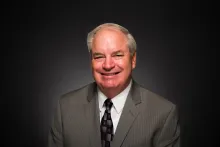
Robin Webber was born in Chicago, Illinois, in 1951, but has lived most of his life in California. He has been a part of the Church of God community since 1963. He attended Ambassador College in Pasadena from 1969-1973. He majored in theology and history.
Mr. Webber's interest remains in the study of history, socio-economics and literature. Over the years, he has offered his services to museums as a docent to share his enthusiasm and passions regarding these areas of expertise.
When time permits, he loves to go mountain biking on nearby ranch land and meet his wife as she hikes toward him.
