
Roy Holladay
This transcript was generated by AI and may contain errors. It is provided to assist those who may not be able to listen to the message.
Well, good morning to everyone. It's really a privilege for Narla and me to be here today.
I've heard a lot about the Fort Wayne congregation over the years. So, being back in Cincinnati, this gives us an opportunity to occasionally be able to go out to various church areas. And since Mr. Swigertie has been having some of the health difficulties that he has, he asks that we send some of the speakers from the home office. So, since the note came to me, I jumped right on it. And we're very glad to be here. We thank Bruce and Anne. We stayed with them last night and it was delightful to be able to get to know them and have the opportunity to fellowship and they're very gracious hosts, very loving people. I didn't realize when we came here that we had so many connections.
I can't believe that I wore those clothes. I can just imagine that. I can imagine that coat, but the green and yellow shirt and tie, that's something else. But we all have to live something down. I appreciate the special music that we had today. And I might mention that Victor Kubik is returning from Africa this coming Wednesday. I don't know how many of you have been keeping up with him on his blog, but he's been in some places in Africa where you cannot get internet and the only way we could reach him is via texting. So I don't really text occasionally. I write back yes, no, but I had to send him a couple of notes, so I appreciate it to be able to get a hold of him. The General Conference of Elders begins next weekend. Right now we have around 250-plus who have registered for the General Conference. I would assume, because of the 2 o'clock starting time, that you will be linked up. Most churches will be. Starting time is 2 in the afternoon.
And it's one of those occasions where all of the churches in the U.S. for all practical purposes, are able to meet and be able to hear the sermons. This year we've tried to do something a little different. In the past we've always had one of the administration our council members speak. But we began to think about, because we're focusing on replicating pastors, beginning to develop more leadership in the church. We've talked about this situation ever since United started. That the ministry is getting old, or older, we'll put it that way. And that we need to be able to have younger men coming along. And I've sat in on numerous council meetings where we've discussed this, discussed it. Nobody ever did anything. Well, when I was president, somewhere around 2004, we put together a retirement program. And it's sat on the shelf, and it's been there. It's been updated, and we have now begun to work. And one of the main responsibilities I have in ministerial services is that we're beginning to look at our ministers. We've got 20 plus who are 70 and over. And we realize five to ten years from now, they're going to have to be replaced. Who's going to replace them? And then we've got another group following right behind. So in the next 15 years, two thirds of our ministers, pastors I'm talking about, are going to have to be replaced. So we're focusing on leadership development, and that is, we're looking at all of the congregations.
We're going to be asking church pastors to recommend to us, men, that they consider leaders and the local elder, our local areas. And we're going to begin to work on mentoring and developing new pastors, elders, and leaders within the local congregation. And then hopefully some of these will be able to bubble to the top. We've got a whole group of individuals out there. Over the last 12 years, we've had the Labor Day weekend, where we've invited upwards to 30, 35 couples, generally somewhere between 25 and 30, to attend three or four days that we cover a number of topics. These are men that local pastors believe are going to be have potential. And out of that number, when you multiply that times 10 years, we've had over 300 in attendance. A couple of hundred of those still attend United. And we're looking at this group for developing leadership. In the last, oh, all 17, 16, 17 years, we've had around 500 attend ABC. Many of them have begun to grow up and mature. As you know, a number of those are younger people in their early 20s. Give 10 years, they're in their 30s now. Many of them are serving, and some have been ordained. And so this is another group. We also have a group out there of former Ambassador graduates. And we have a group who have graduated. And we haven't exhausted that group, although it's getting smaller. And they're in their 40s now. And so many of them have six-figure jobs. They've worked, they've produced, they've proven themselves. And so we've got that group. Plus, we just simply have individuals who come along, been in the church for years, and show outstanding leadership. So we're wanting to put all of those together and begin to work with men, so that as we go along, we don't want to get to the point where we are today where we had to scramble to replace church pastors. There was a point a few years ago where we had to replace 30-something church pastors. And one of my jobs for about three months was finding speakers for congregations. We had about 20 congregations. We had to roll out a new speaker each week, have somebody come and visit with them. And we were able to do that. And then finally, we were able to replace the men. So we want to be in a position where we really have a large number of leaders that we can begin to draw on. So we'd appreciate your prayers on that. That's something over the next year that we're going to really be focusing on and one of our major duties and responsibilities. So I really appreciate any prayers, and I've already heard a name or two thrown out here locally. So that's good. So we're really appreciative of that. Appreciate Scott and his family. Mitch is at the home office, and he's always someone who is very sharp, very articulate, and someone who is very, very, very, very smart. I'm sure he's a chip off the old block, but we appreciate him. In fact, he called me on the way up here and said, did you know that you're supposed to write an article? And I said, no. Nobody ever told me. He said, it's due Monday or Tuesday. So I thanked him.
And so we'll see about getting that done. Well, I'd better get to the sermon here.
You know, we live in an age, in a society that we have to function in, and a culture that we've grown up in that really has had a profound effect upon each one of us. This world, this system around us influences us, and it influences us in many times in ways that we don't even begin to understand. We live in an age that is totally different than any other age that mankind has lived in. Daniel 12.4 tells us that at the end time, man would run to and fro. And the Bible says knowledge would be increased. And so we see that knowledge would be increased. In fact, the other day I went on my computer and just typed in, how often does knowledge double? And then I went to different websites, and they give you different answers. But basically they're saying that if it was 20 years, then next time it's 10 years, then it's 5 years, and it's 2.5, and it just seems like knowledge is just exploding. There's no way that you can keep up with it. And the increase in technology permits knowledge to be shared around the world in a unique way that in the past it was not. In the past, knowledge was shared, to begin with, by word of mouth. I talk to you, you talk to me, and then you go talk to somebody else. You know, word of mouth. Then by foot, couriers were sent out, or runners, and they would bring messages. Then by horse, and we've all heard about the Pony Express, where you get on a horse and you take off, and knowledge was able to be spread faster. By lights, by drums, by smoke, anything that could be seen or heard over long distances, knowledge was conveyed that way. Then we had ships, and ships would cross great bodies of water and carry information from one continent to another continent. We had the Morris Code, and then the telegraph was developed, and all at once, dot, dot, dot, you know, dash, dash, dash, and you could begin to convey messages across the country. Then you had the printed word. One of the greatest blessings that has ever happened is actually the printing press. At one time, all books were written by hand, written by hand. Then you have the printing press, and you could begin to replicate a book, and the Bible was reproduced in that way.
Then we had the telephone. How many of you remember the old party lines, the old telephones?
I see you've been on a party line. I grew up in the hills of East Tennessee. I grew up in the hills of East Tennessee, and we had a party line, ten, twelve people on it. You listened for your ring. Maybe it would be, ring, ring, two shorts, or maybe three longs. Ring, ring, ring, and you'd pick it up, and so would half a dozen other people.
We had a girl in our neighborhood that we knew would sit on the porch. You could drive her. She had the phone in her lap, and when it would ring, she would be on it. She claimed she didn't, but one day my mother asked her to get off. She said, I'm not on the phone, and slammed it, and hung up. You had the development of the radio, and then television, computers, worldwide web, internet, satellites, spying. We found out in that place that we were able to find. We found out that the government can, if they wanted to, know everything in the world about you. All your conversations, everything you do on a computer, they can follow you down the road, know where your car goes. They've got cameras that they can follow you. You can't use a credit card without them knowing where you're located. And so, it's amazing what we have today. We're just saturated with information today. We're exposed to good and bad. Remember in the Garden of Eden, two trees, one was the knowledge of good and evil, and today, humanity sits under the tree of the knowledge of good and evil.
It's not all depraved, but it's good and evil. It's a mixture. Evil tends to dominate in many cases today. Now, why do I mention this? Because what you see, what you hear, what you learn, what you allow in your minds has a tremendous impact upon your spiritual growth, your spiritual development, upon who you are, how you think. And we need to understand the influence this world can have on us. Imagine growing up in a world without cell phones.
How many have a cell phone? Not everybody does, but the vast majority of you do. Now, there are some our younger generation have never known anything, never known a world without cell phones, without computers. But what if you lived in the world without television?
Well, I can remember that. What about a world without radio or movies or printed words?
Your world would be a small world, and your base of knowledge and information would shrink drastically. It would be just what you would know generally right around you. Now, in 1 Corinthians 2, verse 12, 1 Corinthians 2, 12, we read what Paul wrote there. He talks about the spirit of this world that influences the world around us. There is a spirit. We know that Satan the devil broadcasts via his spirit to the world, and he influences the world. Revelation 12, 9 says he has deceived the whole world. He has misled man in the wrong way, and this influence comes from him and his henchmen. He is the great deceiver. You know, you look up the word deceive in the Loniada Greek lexicon, and you'll find that the word means figuratively to cause the wonder off the path. Here's the path. Here's the right way. There is a way that we should be walking, and people walk off that path. They go in a different direction. It means to cause someone to hold a wrong view.
So you have a wrong view. To be mistaken, it can be expressed in some languages as an idiom to twist people's thoughts. Deception is taking people's thoughts and twisting them in the wrong way. Put a twist on it, and how often do you find politicians, people talking?
People talking, and you can see they put a twist on what they're talking about, so that it conforms to what they want it to say. It means to cause what is false to seem like it's true to make a lie appear right. That's what deception is. The ways of this world refers to its standards, its values, its outlook, its way of looking at things. It refers to how we view things, what we think, our motives, and our intentions. Let's go back to Romans 12. In Romans 12, we will turn to this scripture. Beginning in verse 1, Romans 12, verse 1. Let's read verses 1 and 2.
I beseech you therefore, brethren, by the mercies of God, that you present your bodies a living sacrifice, holy and acceptable to God, which is your reasonable service. Do not be conformed to this world, but be transformed by the renewing of your mind, that you may prove what is that good and acceptable and perfect will of God.
Romans 12.1 explains how we can be a living sacrifice. Then verse 2.
Verse 2 shows us how we can know what the perfect will of God is for us in our lives.
Let's pick up the story here in verse 2. We are told that we are not to conform to this world, but we are to be transformed. Now, we are to be transformed. Where does transform in a Christian take place? It takes place in the mind, right? Because it talks about the renewing of the mind. We are not to shape our minds after the world, its standards, its philosophy, its approach, but we are to shape our behavior and accordance with right standards, with God's law, with His way of life, as God's Spirit leads us. It is the godly standard, not the worldly standard, that should shape our thinking. The world and its influence, though, is sort of like a spiritual tsunami. Remember the tsunami here? Here recently, the struck Japan. If you've seen any of those videos of the water coming in, people just sort of looking at it and watching it, they didn't realize what was going to happen. And as they're watching it, the water gets higher and higher. It begins to move everything in front of it away, tearing buildings, floating houses, cars, destroying everything in its path. That's sort of the way the world is spiritually. Satan's way is sort of like a spiritual tsunami. When you look at music, art, literature, education, religion, any philosophy you want to look at, Satan the devil is just like he sort of overwhelms the world with his approach. So you and I are constantly having to fight that, to make sure that we are not overwhelmed by this world. The first step, Romans 12 tells us, is not to conform to the world. So that's part of the process. This world is called the present evil age. We're not to conform to this present evil age, the age of deception.
The word conform means to be fashioned like. To be fashioned like. We are not to be fashioned like the world. When God calls us, and remember what the Days of Unleavened Bread pictured, once they observed the Passover, what did they do? They came out of Egypt. Egypt is a type of this world, Pharaoh, a type of Satan the devil. We come out of this world, we come out of Egypt. The Israelites were in Egypt, and God had to bring them out to worship Him.
And they had all of the influence of Egypt and the pagan gods around them. So, the first step is to change the essential form and nature of something. Again, I'm quoting from the low Nida Greek lexicon. To change the essential form or nature of something. To be transformed, to become a God. To be transformed, to become a God. To be transformed, to be a God. To be transformed, to become a God. To be transformed, to become a God. To be transformed, to become something completely different. And the word that is used a lot of times in the Greek is the word that we get metamorphosis from. You know what a butterfly? Butterfly didn't start out as a butterfly, did it? It started out as a worm. And it goes through various stages. And the last stage, it becomes a butterfly. Any semblance over here, where it started and how it turns out as a butterfly, how does all of that process take place?
You and I have been called to be totally transformed. Completely transformed. We are going from the humankind to the God-kind. God is taking bags of dust, human beings, you and I, and He is shaping us. He's forming us. He's creating His character, His way of life within us.
This is what the conversion process is all about. We are being converted from the humankind to the God-kind to think as God thinks, to reason as God reasons, to have His attitude, His approach, His love, His nature, and to be changed and to become like Him. Now notice how all of this takes place. It says, by the renewing of your mind. So our minds have to be renewed. The word renewed means to cause something to become new and different. New and different to make something new and different. So you and I are to become a new creature.
We are to become a new person, and we are not to conform to the values and the standards of this world. We have to eradicate the toxic thinking and experience a deep change that begins in the heart, begins in the mind, begins inside of us where we begin to change. And it's a deep change. You and I have to apply effort. When we're converted, when you're repented of your sins, you were baptized, you had hands laid on you, you received the Spirit of God. Now, once you received the Spirit of God, was it a matter that all you had to do was sit back and, okay, God's going to change me? I'll just sit back here and wait for the change to take place. No! You have to get up in the morning, get dressed, and come to Sabbath services. You have to put forth effort. We have to cooperate with God. God's Holy Spirit can only work with our will, our choice, our resolve, our self-control.
We have a part in the process. We have to yield to God, yes. We also have to cooperate with God. We have to do what He says. We have to apply effort to effect. We have to apply effort to change. There's a process that goes on. Obviously, God will supply what we lack. The one thing that you realize when it comes to conversion, you can't do it on your own. How many times have you, just like something butting its head against a wall, you can't do it. But with God's help, you can, but God expects you to put forth the effort. Again, Paul reminded Galatians and Galatians 1.4 that this present age is called the present evil age. It cannot serve as our model for Christian living. Its values and its goals are the antithesis to what God wants us to do, and that is to grow in holiness.
We are called to be the lights of the world. We are supposed to be the salt of the world.
If you've ever gone into a cave, if you've ever been in a cave and you like to do this, get you into an inner cavern and turn all lights off. It takes three or four minutes before it gets pitch dark, but when you see nothing for three or four minutes and it's totally dark, you are in total darkness. Now that's the way the world is. It's in total darkness. But guess what? All you need to do is to have a little light, one match in a cave. And boy, you can see a lot. You and I are to be lights in this world. And we are to be examples to those around us. We are to enlighten those in our neighborhood. People should know that there's a difference. If you get up every Saturday, get dressed and go to church, and on Sunday you're out cutting your yard or raking or doing something else, they know that you're doing something different than they are. We are the salt of the world.
We are the purifying agent and preservative. We don't want the world to squeeze into our minds the mold does. We don't want to be overcome by Satan's tsunami, his influence, as it goes out. That's constantly trying to engulf us. There is a radical reorientation that begins deep within the human heart. And again, we call that conversion. A renewed mind is concerned with those issues of life that are above. Let's notice Colossians chapter 3. Colossians the third chapter, beginning in verse 1. If then you were raised with Christ, seek those things which are above where Christ is sitting at the right hand of God. Seek the spiritual things. Have our minds orientated in that way. Set your mind on things above and not on the things of the earth. Now that doesn't mean that when you go to work, you just think about God. If you're running a power cell, you better think about the power cell. You better watch what you're doing. But it means that whatever we do when we work, when we relate to our wife, to our children, to our neighbors, that we do it from the perspective that God gives us, from Godly perspective, on heavenly things, spiritual principles, and not just the ways of this world. It says, For you died, we have spiritually, in a sense, died, the old man has died, Romans 6, and your life is hidden with Christ in God. And when Christ who is our life, he lives in us, Galatians 2.20, I'm crucified with Christ, nevertheless I live, yet not I, but Christ lives in me. So when Christ who is our life appears, then you also will appear with Him in glory. Therefore, as a result of all of this, when you see a therefore in the Bible, what preceded it explains, therefore, put to death your members which are on the earth, fornication, uncleanness, passion, able desires, covetousness which is idolatry. And because of these things, the wrath of God is coming upon the sons of disobedience, in which you, yourselves, once walked when you lived in them. So this describes our past, pre-conversion days, when we lived in them. But now you yourselves are to put off all these anger, wrath, malice, blasphemy, filthy language out of your mouth.
Do not lie to one another, since you have put off the old man with his deeds, and put on the new man who, notice, is renewed in knowledge. We are to be renewed in knowledge.
There is a renewal in our mind, and part of that renewal is spiritual knowledge, setting our minds on things that are above, putting to death the wrong things. So, we are to be renewed in knowledge, according to the image of him who created him. So that new knowledge is according to the image of Jesus Christ, according to His character, His way of life.
Now, we have an example in the Bible of how the influence of the devil, and the idea is that a society can completely overpower society, overpower the world, what I would call a spiritual tsunami taking place, of deception in wrong ways. Let's notice it in Genesis 6 and verse 5. Genesis 6, 5. Notice what the Bible says here. Genesis 6 and verse 5. Genesis 6 and verse 5. Then the Lord saw that the wickedness of man was great in the earth, and that every intent of the thought of his heart was only evil continually. Genesis 6 and verse 5. Do you know that you cannot state anything any stronger? How do you get a verse any stronger than this? Wickedness was great. It wasn't partial witness. It was great. And that every intent, every intent of the thoughts of the heart was only evil continually. That's the way the world had come before the flood. Now, Matthew 24 says, As it was in the days of Noah, so shall it be in the days of the Son of Man. When Jesus Christ comes back to this earth, we will be a replication of what we read here, going on in the world and the society around this. I want you to focus on the word intent here in Genesis 6.5. The word intent, it means purpose, imagination, device, or intellectual framework. That's taken from the Strong's Enhanced Lexicon from the Logos Bible Software Program. It talks about the intellectual framework, the intellectual framework a thought, the content of thinking and reasoning, the motivation, the desires, what one wishes for. What is our intellectual framework? What motivates us? What is your motivation? What's behind your thinking, your thoughts, why you do what you do? What is God's intellectual framework? What motivates God? Ever stopped to ask yourself that? What motivates Him? Well, the Bible tells us, 1 John 4, you can read from verses 7 through 11, but I think it's verse 8. God is love, right? God is love. That's what God is. It's not that you're just God loves. You can look at a human being and say, well, that's a very loving person, or He's a very kind person. He's a very giving person. He's a very intellectual person. You can see somebody, you can see characteristics that describe them. God is love. That's what He is. God's grace flows out of His love. Everything that God does is motivated by His love. Now, stop and think. At one time in eternity, there were two beings. That's all that we know that existed. I'm sure they didn't just float around. They had some place to exist, but they existed. They decided that they wanted to share their existence. They wanted to share their way of life with others. Now, how do you do this? How do you share and have beings who can share the same way of life? Well, God had to sit down, think out, devise the plan of salvation. Then He had to bring it about. How do you create matter?
How do you create a human being, an eye, an ear, an nose, a body, a torso? How do you create all of this? Think of the intellect, the mind, the wisdom, the knowledge it took to be able to put all of this together in perfect harmony so that it would function. And then God brought it to being. And we are the result of that. And God is offering to us salvation. He's offering to us to live for eternity on His level, sharing His existence, His happiness, His joy, His love, everything that He has that we are to grow in. Everything He does is motivated by love. Now, we have to ask ourselves, is everything we do motivated by love. We've got a long way to go, don't we? It may be to a certain extent, but we haven't reached that perfection yet. We still have areas to grow in. Let's notice Hebrews 4.12 that ties in with this. Hebrews 4. And we will read in verse 12. Hebrews 4.12. We have a long way to go. We have a long way to go. We have a long way to go. For the Word of God is living. So God's Word, even though it's printed words on this page, they're living words. They're living principles. So the Word of God is living and it's powerful and it's sharper than any two-edged sword, piercing even to the division of soul and spirit and of joints and marrow. And is a discerner—notice—the Scriptures, the Word of God is a discerner of the thoughts and the intents of the heart.
When you read the Bible, you know there are people who have 200 IQs, read Greek, Hebrew, Hebrew, Sanskrit, Aramaic, any language you can think of who are brilliant, who write commentaries, Bible dictionaries, anything you can think of. They could proudly quote you this book but are totally ignorant of God's plan of salvation. Why? Well, God hasn't called them yet. He hasn't opened their minds to see the truth. And there could be a ten-year-old sitting here, a young person, who has more basic knowledge about the plan of God than they would. God has to reveal it to you. So when God gives us His Spirit, that Spirit guides us into all truth. Now, as we study the Word of God, God's Spirit works with our minds. A person who doesn't have God's Spirit can read the Scriptures, they can understand it on a certain level. But when it comes to fully understanding God's plan, purpose, calling, and what God wants us to do, it takes the Spirit of God working in our minds. And so as you and I open up the Bible and the Scriptures and we begin to read them, God's Spirit begins to reveal to us the intents of our heart. If you ever studied a Scripture and as you're reading it, you go, oh, that's me. I did that. I thought that. That was my motivation. I didn't realize that was vanity. I didn't realize that was pride. I didn't realize that was ego. But there I am. The Bible exposes us for what we are. It gets into the innermost reaches of our minds and begins to shine a light there. We begin to see. We begin to understand. And God gives us understanding in many ways. There have been times that I wanted to speak on a topic. And I come up. I'm trying to put it together and nothing happens. I go pray. I come back and I sit down and nothing's going on the paper. I'm thinking that I'm sitting there praying silently. I go back and I pray again. I've done that on many occasions and prayed two or three times. And then all at once, it's as if an outline is given to me. It's not a word-for-word outline, but four or five major concepts flood into my mind. And I say, Forgive me, Lord, I've got to get a paper and pencil. I have now, when I go pray, many times I take a paper and pencil with me because I get some of my best ideas while I'm praying. And that God will work with us and work with our minds and help us to understand. So the word of God is a discerner of our thoughts and our intents. Now, what are our deepest personal intents and motives? What are our thoughts and motivations and intentions behind what we do? What are our thoughts and motivations behind what we do? How we treat others? There is to be a renewal in this mind, in our minds.
A lot of times there are people in the world who will give money, they'll do this or they'll do that for different organizations, and they have an ulterior motive. Maybe it's fame, maybe they want to be recognized, whatever it might be. Well, we're in the process of being transformed into the image of God. It must begin in the mind and must begin inside out. Remember why Jesus Christ said about the Pharisees, Matthew 23, beginning in verse 25? He called them white-washing sepulchers. He said, first of all, clean the inside. He said, you're like a tomb that's been whitewashed outside, looks beautiful, but inside is full of dead men's bones. You're like a cup. The outside is clean. You look inside and they have washed the inside of this cup in months. Well, God is telling us it's not the form that He's so interested in. That's what the Pharisees were interested in. He's interested in the inside. The cleansing process starts inside, does it not? When you were baptized, you repented. You asked God to forgive you of your sins, your wrong thoughts, your wrong motivations. So God gives us His Spirit. So the transformation takes place inside. True conversion starts inside, works out, and it will be reflected outwardly. Yes, it will be reflected in the look on our face, the attitude we have, the approach we have. Let's notice 2 Corinthians 3.18, 2 Corinthians 3, verse 18. But we all with unveiled faces, at one time we had a veil over our faces. We were blindfolded, so to speak. We didn't understand. We now have unveiled faces. We can understand. Beholding as in a mirror the glory of the Lord are being transformed into the same image. We're being transformed into the image of God from glory to glory, to ever increasing glory, just as by the Spirit of the Lord. So it's God's Spirit that is doing this that brings about this transformation within us. So we are developing the spiritual image of God today. In Genesis, man was made in God's image. That means he was made in his shape and his form, with a mind and conscience. We had a limited amount that we were made like God. We had the Spirit in man, but not in his character and composition. In this life, what we call conversion, we can develop his character. That's what all of us are doing right now. We're in the process of developing the spiritual character of God. In the resurrection, we will have the composition of God. We will be given a spirit body. But God cannot give us a spirit body until we develop the spiritual character. So there's a process taking place. As it says here, we're being transformed into the same image from glory to glory. We grow a little more, don't we? Should, every year.
What if, as you grow spiritually, you would develop a spiritual body? So that I'd look out over the audience, and there'd just be a few heads sitting there. They're so spiritual, the rest of the body is disappeared. Maybe you look at somebody, and the bottom of the torso is gone, or the right arm is not there. Boy, they're getting pretty spiritual. But what if you come back the next week, and all at once, all the way down to the knees, you can see the physical body? Well, they had a rough week. I wonder what went on this week. It doesn't happen that way. You don't see outwardly, in the sense of a spiritual manifestation like that, that we're changing. But we do change in the mind. We change in the heart. We change inside. We change who we are. We're becoming more and more like God. As 2 Corinthians turn over to chapter 10 here, verse 5 tells us, 2 Corinthians 10, 5, that we are to cast down arguments in every high thing that exalts itself against the knowledge of God, bringing every thought into captivity to the obedience of Christ. We're not there yet, are we? We don't have every thought constantly in obedience to Christ. But that's what we're striving for. That's the goal. And in the resurrection, we will obtain it. But we should be growing.
See a wrong thought of itself is not a sin. Christ was tempted in all points as we are, yet without sin. It's if you dwell on it, you think about it, you cogitate, you can go off in that direction. Now, it's interesting. Again, the L'Onita Greek lexicon says about this, it may be difficult in some languages to speak of taking every thought captive, but one can often say to control every thought or to make oneself think as one should. That we are to think as we should. How should we think? Well, spiritually minded. David meditated on God's law day and night. He thought about God, His law, His principles. He applied them. He talked about them. What does it talk about if we have smaller children? That as you're walking along the way, you talk about God. As you sit down, you talk about God. As they go to bed, you talk about God's way. That doesn't mean you're always just saying the word God, but you talk about principles. You talk about wisdom and principles based upon the Scripture. See, understanding the truth of God is an important first step to change, but understanding doesn't mean that we've actually changed. Sometimes we can say, boy, I learned a lot and we have understanding, but that doesn't mean we've changed. We must act on what we learn. We must act on what we know is the way, the truth, and the life.
God's Spirit can work with us and with our conscience. In order to do this, we need help.
We're coming up to the day of Pentecost. We're in the period of time between Days of Unleavened Bread and Pentecost. Pentecost pictures the time when God sent His Spirit and started His Church. It also shows that we need help. We need help. Israel needed help in coming out of Egypt. We need help in coming out of this world. We need God's Spirit in His word and His word. Again, we have a part in the process. It takes our part to evaluate our thoughts, our motives, and our intentions. God will do that as we study His word, we pray, and stay close to Him. Have you ever stopped to think about, and if you want an interesting Bible study, think of the periods of passages in the Bible that clearly show that somebody did something, and they said, well, this is the reason why I did it. But when you look at what the Bible says, here's the real reason why they did it. Their intention and their motive. I'll just give you an example, a couple of examples of what we're talking about here. Numbers 16. Verse 16, beginning in verse 1. You might remember there was a Levite by the name of Korah. He got together with Gatham, Abiram, Elab, and they were the sons of Elab, I should say, and on. They rose up against Moses, verse 2, with some of the children of Israel, 250 leaders of the congregation, representatives of the congregation, men of renown. If we ever had men of renown rise up and say, I want to be in charge. Well, nothing really changes too much over the years, but that's what they did. They gathered together against Moses, verse 3, and Aaron, and said to them, You take too much upon yourself, for all the congregation is holy, and every one of them, and the Lord is among them. Why then do you exalt yourself? Now, did Moses exalt himself? Oh, God called Moses. He said, I want you to deliver the people. Moses made every excuse in the book. I can't talk. I stutter. Why don't you take somebody else? No, God said, I want you. And he got his brother Aaron, and God placed them in those positions. But let's notice in verse 7 that, well, verse 7 says, Put fire in them, put incense in them before the Lord tomorrow, and it shall be that the man whom the Lord chooses is the Holy One. You take, now this is Moses talking, you take too much upon yourselves, you sons of Levi. Now, you're trying to take too much.
Verse 10, what was their problem? Notice the last sentence in verse 10. And you are seeking the priesthood also. See, they weren't satisfied with just being a Levite. They wanted to be in the priesthood. And so, God hadn't given every Levite the priesthood. That was to Aaron and his descendants. And notice, it is a small thing, verse 13, that you have brought us up out of the land flowing with milk and honey to kill us in the wilderness. That you should keep acting like a prince over us. So, they kept accusing Moses. And what did God finally do? Well, he destroyed them. Everything that they owned. Earth opened up, fell into it, Earth closed and swallowed them. And God put an end to that. What was their motive? What was their real intention for doing this? Well, they wanted to be in charge. They wanted to be the priesthood. They were not satisfied with their position or their responsibility. They said one thing to the people. Moses, he's taking too much to himself. The people, yeah, you're right. Why shouldn't we be in there also? Why is he the only one? And so, they began to work the people up. They had other intentions. What I'm saying is simply yes. There are many examples in the Bible and Scripture that you can look at that evaluate our motives and our intentions and why we do what we do. Remember in Matthew 27, 18, Pharisees brought Jesus Christ the pilot. They accused him. They sought false witnesses against him. What does verse 18 say in Matthew 27? Pilot knew that they did it out of envy.
Out of envy. They were envious of him. They were jealous of him. He was getting a bigger following. They were afraid of losing those who were following them. Do we ever do anything out of jealousy, envy, pride, vanity, vindictiveness, greed, spite, wanting recognition, power, hating somebody else, despising them, wanting to get back at them? Well, as you study the Bible, study the Scriptures, the Bible is like a neon sign that starts blinking and tells us our faults, our weaknesses, but not only just faults, but why we should be able to do what we do. It gets into the heart. It gets into the motive. It gets into our minds so that we can begin to evaluate things. Remember, the Pharisees did things to be seen of men. When they would give something to the poor, they'd have somebody come around.
They'd hire a trumpet player, and he would go, Rudy, chit-chit, and he'd play, and people would look up, boop! They'd drop coin in. Or they were going to pray, and they'd make long prayers, pretense to influence people. People would say, Oh, aren't they righteous? Look how good they are. Don't they give great prayers? And they would try to impress people.
Well, let's notice in 1 Chronicles 28.9. 1 Chronicles 28.9, why don't you go and read what David said to his son Solomon? And these words apply to us as well as they did to Solomon. As for you, my son Solomon, know the God of your Father. Serve him with a loyal heart and with a willing mind. For the Lord searches all hearts. God searches all hearts. He searches our hearts and understands all of the intents of the thoughts.
If you seek him, he'll be found by you, but if you forsake him, he will cast you all forever. So God understands all of the intents of the hearts. So God already knows it. What he's doing is we progress through our spiritual development as he begins to reveal it to us. It's like a beautiful painting. You have a dull dim light shining on it. You can see a little bit of it. But as you turn that light, maybe it's got a dimmer switch on it.
As the light gets brighter, you can see the light shining on it. And you can see the light shining on it. But as you turn that light, maybe it's got a dimmer switch on it. As the light gets brighter, you see more and more. When it gets real bright, you see the whole picture. Now God doesn't start us off by showing us the whole picture of how bad we are. He shows us enough that we can get down on our knees and say, I didn't realize I was this bad.
Forgive me. And we repent. As we go along, God reveals more. He reveals more. The light gets brighter. We see more. As we draw closer to God, our relationship with God is the important thing here. As we're closer to God, He reveals more to us. He shows us more. The light shines more. We begin to understand more. We begin to see more and more. Psalm 19 and verse 11. Psalm 19 and verse 11 here. Let's notice again David. Well, let's back up to verse 9.
It says, The fear of the Lord is clean and endures forever. The judgments of the Lord are true and righteous altogether. More to be desired are they than goal. And then verse 11, By them your servant is warned. Let's drop down to verse 14. He says, Let the words of my mouth, the meditations of my heart, be acceptable in your sight. O Lord, my strength and my Redeemer. So the words of our mouth, what we say, the meditations of our heart, what we meditate on, think on, that they would be acceptable in God's sight.
That's something we should pray all the time. Now in chapter 119 of the book of Psalms, chapter 119, and beginning here in verse 9, it says, How can a young man cleanse his way? How can we cleanse our way? How can an old man cleanse his way? How can a young girl cleanse her way? How can a senior citizen lady cleanse her way? How can a young man cleanse his way?
By taking heed according to your word. Take heed to the Word of God. With my whole heart I have sought you. O let me not wonder from your commandments. Your word I have hidden in my heart that I might not sin against you. See, we're to take God's Word, and there to be hidden in our hearts. So when we're confronted with a temptation, a problem, maybe you're about to steal something. You want that so badly, you're willing to compromise and to steal. And all at once, the Ten Commandments begin to flood through your mind. Or you remember an example of stealing in the Bible, and you begin to think of what the penalty of that is in God's kingdom.
Is this worth it? And you let God's Word guide and direct you. You hide them in your heart. You think about them. They become a part of you. You know, if every Bible in the world were destroyed in every computer, iPhone, and so on, where you might have a Bible, it didn't have the Word of God. Would you know how to obey God? Would you know what God requires of you? Is God's Word written in our hearts, in our minds? Isn't that what the New Covenant is all about?
God said that through His Spirit, He will give us His Spirit, and He will write His law in our hearts and our minds. It becomes a part of us, who we are. I would know which day is the Sabbath. I would know I should not murder, worship an idol, do those type of things, because it's written in our hearts. So you and I are to follow God and not be motivated by the wrong motivations. Jeremiah 17.10 is a very interesting scripture. Jeremiah 17.9, we all know, the heart is deceitful above all things, and desperately wicked, or as it can be, sick.
But let's notice verse 10. Jeremiah 17.10, I, the Lord, search the heart. I test the mind, even to give every man according to his ways, according to the fruit of his doing. So God searches the heart, he tests the minds, and he will give us according to what we do, our ways.
Ask God to search us. Ask God to reveal our true motives and intentions. Ask God to help us to be clean before him. Let me read this out of the Living Bible, paraphrased, verse 10. Only the Lord knows he searches all hearts and examines deepest motives, so that he can give to each person the right reward according to his deeds how he has lived.
Our reward is according to our works, is it not, according to how we live. Now, the message translates this verse, but I, God, search the heart and examine the mind. I get to the heart of the human. I get to the root of things. I treat them as they really are, not as they pretend to be. So, we can pretend, but God gets down to the root of things. The motivation of God's heart, of his thoughts, of his actions, is love.
Everything that God does is always for our good. It's out of love, out of his grace. We, as we've seen so far in a complete renewal process of changing our hearts, our thoughts, our thinking, and our motivation to be like God. God gives us the power. He gives us the strength through his Holy Spirit.
The kind of change we're talking about isn't automatic. There has to be a resolve. There has to be a determination, a consciousness, a vigilance, self-discipline on our part. It's a lifelong process that we're going through. Do we have a prototype or a template that we can follow? Is there a prototype or a template that we can follow?
Yes, we do have. We have one who's already gone before, who's made it into the kingdom of God. He's known as the Son of God, Jesus Christ. His instructions are contained throughout the Scriptures, the Bibles, the Word of God. He inspired His servants to record it. And His life, Immanuel, God among us, when he lived on this earth, is outlined in the four Gospels. We have four books in the Bible that act as a template to show us that if God lived in the flesh, how would He live? What would He do? How would He think?
Well, we have four books that tell us that. He left a model to base our actions, our thoughts, our lives on. The template, His life. If God is love, then our lives ought to be based upon that also.
Let's go back and take a look at the template. We'll finish with this, plus one other Scripture. 1 Corinthians 13. Let's go over to 1 Corinthians 13, what is commonly referred to as the love chapter. We'll pick up the story in verse 4. 1 Corinthians 13.4, Love suffers long and is kind.
Love does not envy. Love does not parade itself. Love is not puffed up. It does not behave itself rudely. It does not seek its own. It does not provoke. It thinks no evil. It does not rejoice in the iniquity, but rejoices in the truth. It bears all things, believes all things, hopes all things, endures all things. Love never fails. Now I got to reading over that and thinking about it, and I thought, well, I'll make a parallel Bible. I've got a computer that probably has 20-25 translations on it. You could look each one of them up and put down what each one of them says.
Compare word for word for word for word. After a while, that gets to be a little tedious. Many times, they just repeat. I did three of them. Let me just go through these again because I think sometimes another word, how it's expressed, adds clarity. Ask yourself, is this the way I think? Is this how I react? Are these my motivations? Is this how I motivate it? Love suffers long. I'm quoting from 2nd and 3rd here. I've got three, U.K. Jane's version, the N.I.T.
and the Good Word Translation, G.W.T. It says, Love suffers long, love is patient, love is kind. All three of them say kind. Love does not envy or love is not jealous. Love is not jealous. Love does not parade itself.
Love does not boast, does not sing its own praises. Oh, how great I am! It doesn't do that. It doesn't go around patting itself on the back. Bible says, Let other men praise you. You don't have to praise yourself. It is not puffed up, not proud, not arrogant. It does not behave rudely, does not dishonor others. It pays respect and honor to others. It does not seek its own, does not self-seeking, does not think about itself.
It is not provoked, not easily angered, not irritated. Do we ever get irritated all the time over things that just bother us? It thinks no evil, keeps no record of wrong. Now that's one to think about. Keeps no record of wrong. Does not rejoice in iniquity. Does not delight in evil. Isn't happy when injustice is done. But rejoices in the truth or the truth is happy with the truth. Bears all things.
It always protects, never stops being patient. Believes all things, always trusts, never stops believing. Hopes all things, always hopes, never stops hoping. Endures all things, always perseveres, never gives up. Love never fails.
Love never comes to an end. God says that He will never fail us. I will never leave you nor forsake you, He says. That's because God is motivated by love and once He started the plan of salvation, He has set His will to carry it through. God's will. You read the word God's will, you'll find, I think, their Bible dictionary says that God's will is more than just His purpose.
It has to do with His heart's desire. So when you read about what God's will is for us, it's His heart's desire and what is God's heart motivated by? It's motivated by love.
So let's one final scripture here in Philippians 4 verse 8. Philippians 4, 8. Finally, brethren, whatever things are true, whatever things are noble, whatever things are just, whatever things are pure, whatever things are lovely, whatever things are of good report, if there's any virtue, if there's anything praiseworthy, meditate on these things.
So God tells us to meditate on the right things. So you and I need to make sure that we meditate on God's law. Brethren, we have been called to be a different person. And it begins in the heart, it begins in the mind, it begins inside. God has given us His Spirit. It's His link to Him.
It's the conduit through which He gives us knowledge, understanding.
He conveys the fruits of His Spirit. So let's ask God to help us over this coming year, to look at ourselves, to use His Spirit, and to truly come to know ourselves, to know our hearts, our intents, and our motives.
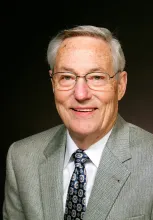
At the time of his retirement in 2016, Roy Holladay was serving the Operation Manager for Ministerial and Member Services of the United Church of God. Mr. and Mrs. Holladay have served in Pittsburgh, Akron, Toledo, Wheeling, Charleston, Uniontown, San Antonio, Austin, Corpus Christi, Uvalde, the Rio Grand Valley, Richmond, Norfolk, Arlington, Hinsdale, Chicago North, St. Petersburg, New Port Richey, Fort Myers, Miami, West Palm Beach, Big Sandy, Texarkana, Chattanooga and Rome congregations.
Roy Holladay was instrumental in the founding of the United Church of God, serving on the transitional board and later on the Council of Elders for nine years (acting as chairman for four-plus years). Mr. Holladay was the United Church of God president for three years (May 2002-July 2005). Over the years he was an instructor at Ambassador Bible College and was a festival coordinator for nine years.
