
Roy Holladay
This transcript was generated by AI and may contain errors. It is provided to assist those who may not be able to listen to the message.
The age we live in, the society we function in, the culture that we grow up in, has a profound effect upon who we are. We live in an age that is totally different from any other age of mankind. Daniel 12, verse 4, tells us that at the end time, the man would run to and fro, and that knowledge would be increased. Certainly, knowledge has been increased. I got on my iPhone the other day and said, how fast has knowledge increased? I asked the question. I don't know who she is, but whoever is in the phone said, well, I found these sources. Then it started talking about how it was 150 years, then it was 75, and that it got down to 20, 10, 5, and you're going in that direction. The increase in technology permits knowledge to be shared around the world. That's what's so different about our age. At one time, knowledge in the past was shared in various methods, but certainly was not shared the way we do today. To begin with, it was shared by word of mouth, one person talking to another person. Then it was shared by foot, a courier, somebody who might be a runner. Then somebody got the bright idea of using a horse, and so you have something like the Pony Express. Then information was shared by lights, by drums, and by smoke, anything that could be seen from a great distance. By ships, ships began to transverse across great bodies of water, and as they did, they would carry news from other parts of the world. We had the Morris Code, telegraph. Then we had the printed word, and developed the printing press. You have telephones. Now, there may be a few of you here who can remember the old phone on the wall, and maybe you had one, where you would pick it up, somebody called, and you would pick it up, and you would talk. When you shut up, somebody else would talk. I remember growing up with a party line, 10 or 12 people, and depending on the ring, if we went ring, ring, or if we went ring, ring, ring, ring, ring, there were different rings for everybody. So, according to the ring, there was always somebody listening in, just as there is today. You come up with radios, TVs, computers, the worldwide web, the internet, satellites, surveillance, you know, who knows how information and knowledge is being gathered today. We're saturated with information today. I mean, who had ever thought you could pick a phone up and say, give me information about something, and all at once it searches the web and block, right there it is on your phone. That's just amazing. So, we're saturated with information today, but not all of it is usable knowledge. We're exposed to good and bad. The evil seemingly tends to dominate in many cases. Now, why do I mention this? Well, because what we see, what we hear, what we learn, what we allow into our minds has a tremendous influence on us, because we are thinking creatures. We have a conscience. We have a mind. Imagine growing up in the world without a cell phone. How many of you here lived when there was no cell phone? All you young people look around.
No cell phones. Well, of course, cell phones haven't been around that long. I remember back when somebody would have a phone in the car, and it was a phone in the car. And this big box, and they'd pick it up, and you'd have to dial, and all of that. What about a world without television, radios, or movies? What about a world without a printed word? That all books had to be copied by hand. It's not that long ago that that was true. You'd be limited to a small world. Your world would be very limited. You would not have access to vast libraries. You can go on the internet now and have access to whole libraries of books that you can go in and research and study. It's amazing what can be accomplished. In 1 Corinthians 12, verse 2, though, it talks about the spirit of this world that influences the world around us. This is the influence of the devil and the evil spirits that are cohorts of his. He is referred to in the Bible in Revelation 12.9 as a great deceiver. He's deceived the whole world. It's interesting when you look up the word deceive in Loniata Greek lexicon that you find this. It means to wander off of the path. To wander off the path. Here's the way to go. This is the way walk you in it. Instead of walking in that path, begin to walk in a different path. It means to cause someone to hold a wrong view. And that's what Satan the devil does. To be mistaken, to mislead people in their proper view, which they should have, may often be expressed as an idiom, for example, to twist people's thoughts.
You know, that's exactly what Satan the devil does. He comes around and he twists, he puts a twist on the truth. He twists people's thoughts and people become twisted in their thinking and their outlook on life to cause what is false to seem like it's true.
The ways of the world, the ways of society around us refer to the standards and the values and the outlook, the ways things are looked at, the way things are done. It refers to how we view things, what we think, our motives and our intentions. Let's go over to the book of Romans, and we will read here, Romans 12, beginning in verse 1. And I want you to notice in verse 1, he starts this section out by explaining how to be a living sacrifice, how to know the perfect will of God in our life, how to overcome the spirit of this world.
Let's notice here in chapter 12, beginning in verse 1, I beseech you therefore, brethren, by the mercies of God, that you present your bodies a living sacrifice. So how do we do that? How do you present your body as a living sacrifice? Holy, acceptable to God, which is your reasonable service. Well, you begin to find out as we go on into verse 2 actually how to do this. And do not be conformed to this world. That's the first step. Don't conform yourself to the world, to its standards, to its values, to its way of thinking. But be transformed. So there is a transformation that takes place by what? How does all of this take place? We're transformed. Where does the transformation take place? Well, it says, in the renewing of your mind, that our mind is renewed, that you may prove what is good and acceptable and the perfect will of God. We're not to shape our lives around the standards of this world. We're to form. We're to mold one's behavior in accordance with the pattern God gives us, that God sets for us. So what pattern will that be? It is a godly standard, not the worldly standard that we want to look at. I don't know if you have ever stopped to think of it this way. You remember a few years ago when the tsunami hit Japan? You know, there have been a number of tsunamis over the years that have hit, but I don't know if we've ever had one that had so many videos of it. And you could see this tsunami wave coming in. You could see it going across buildings, cars, grabbing people, tumbling them, and so on. We need to realize this world and its influence is like a spiritual tsunami that is constantly trying to offer every one of us. It's always coming after us. It's like you're always trying to stay ahead of it, and Satan is trying to overwhelm us by the ways of the world, by his ways.
So the first step, as we find, is not to conform to the world, to this present evil age, the age of deception. Galatians 1.4 says this world is the present evil age, and it is an age that's dominated by the God of this world, which is Satan the devil and by his influence. And so we're told here, do not be conformed to the world. The word conformed means to be fashioned alike.
To be fashioned alike, to conform to the same pattern outwardly, means in your outward actions, what you do, how you live, that you conform to this world. Or as we read here, and I'm reading again from, well, this is from Baker's exegetical commentary. It says, stop being molded by the external and fleeting fashions of this age, but undergo a deep inner change. A deep inner change. That we are to conform our inner nature, not only to, you know, to God's way, and not to the ways of this world.
Now, most of us might stop and think, well, I'm not living the way the world lives. You know, the world does, you know, they keep Christmas, they keep Easter, you know, they do all of these perverted, twisted things out here. I'm not living that way. And I will say, hopefully none of us are. You know, and that would certainly be true. You know where we have our difficulties? Between the years. I better get the years right. Yeah. Between the temples, between the years, up here in the mine. This is where our struggle is. This is where the influence of the world dominates in our minds, if we're not careful.
That we're not to conform to this world, but we are to be transformed. Now, the word transformed simply means to change. To change. When you transform something, you change it. And the Lomida, again, Greek lexicon says, to change the essential form or nature of something, to become the change, to become completely different. You and I are to become completely different in our minds. When we were converted, when we received God's Holy Spirit, when God came to live within us, when we have a different nature, we are to be completely different.
Now, we have an example in the Bible, and I think it's an outstanding example, of a man who hated the church, tried to destroy the church, went about everywhere he could throwing people in prison. That was Saul. And God knocked him down, and within just a few minutes, hours, this man was converted totally changed. You could say he saw the light, and his mind was open, and he changed.
We have been called to be completely different, to go from the human level, the humankind, to the God-kind. We've been called to go from this level to this level, and to change, and to be a different person. How does all that take place? How does God accomplish that in you, in me?
How is it going to accomplish it in every human being, or at least give them that chance? By what means does God do this? Well, notice again, verse 2. We are transformed in a certain way by the renewing of the mind. By the renewing of the mind. A renovation takes place in our mind. There is a renewal. The word renewal means to cause something to become new and different. To become new and different. Are we the new, improved product? I always get amused at these commercials.
You don't see them so often now, but at one time it seemed like every product on the market would come out. This is the new and improved tide, or new and improved Clorox, or new and improved, you know, whatever it was, goulash. And, you know, they would always talk about being new and improved. Well, you and I are to be new and different. We become a new creature, a new person, a converted person, and we are to become different. It goes on to say here, with the implication of becoming superior.
Not that we're better than anybody else, but that we have been called to think in a superior way, to think as God thinks. Remember God, in talking about the world, says, my thoughts are not your thoughts, and your ways are not my ways, and that God's ways, God's thoughts, are higher in the heavens above than our ways. So we've been called to get linked with God, to tune in with God, and begin to receive the signal from Him, to have Him influence our minds. His Spirit teaches. His Spirit guides us and to direct us.
So transformation comes about by the renewing of the mind, and this involves the present, the penetration of the coming age into this present evil age. This is Satan's age, our time, the age of deception. And yet, in the midst of all of this deception and of Satan's world, God has interjected the world tomorrow in the lives of all of us. You and I are to be living today as the whole world will live tomorrow. We are the forerunners. We are the firstfruits of God's way of life. The standards and the value of the world tomorrow must be our standards and values today. Now, you begin to think about the downward pull and the spiral of thinking as the Bible describes it. I won't go back and read it, but in the book of Romans, back here in chapter 1, beginning about verse 18 through 32, it talks about how the world has rejected God, and how God has allowed them to go follow their own directions, their own ways, and they don't follow Him. Well, what God is doing is reversing what you find described in Romans 1 beginning in verse 18. And He's changing us instead of mercy. God requires of us mercy instead of wrath, sacrificing our bodies instead of refusing to glorify God in our bodies, offering our bodies to God instead of dishonoring the bodies through sin, reasonably worshiping God instead of worshiping idols. We have a renewed mind as opposed to a reprobate mind, and we follow what God approves, the will of God, instead of rejecting the ordinances of God. It's amazing you go and you read the way society has gone. In Romans chapter 1, it could be a template that you lay over our society today. It is an exact template of what's going on in the world and society around us. As I mentioned earlier, Paul reminded the Galatians in Galatians 1 and 4 that this age that they lived in is the present evil world. It hasn't gotten better, it's only gotten worse. It cannot and must not serve as a model for Christian living. And yet you would be absolutely shocked when you begin to look at it, and I'm not going to try to look at everything that society is doing to us. I think that's your job, and I appreciate what Ted said in the sermonette that we're here to examine ourselves during this period of time, to look at ourselves. You find the world's values and goals are totally against holiness. The culture that we grow up in, the everything that you can think of, you begin to look at the movies, the music, the books, the art, everything that you can think of that culturally make up society, that all of this is totally going in a wrong direction. You and I are supposed to be the light of the world. A light shines. A light is something that glows, and it's different from the around. It sheds light on everything else around it. The Bible describes the world as a line in total darkness. If you were to take a bright light into a totally dark cave and turn it on, you could begin to see in the darkness. That's the way that we are supposed to be. We are the salt of the earth. We are those who are supposed to be pure.
We don't want the world to squeeze us into its mold, to shape us in its shape, in its form. We don't want to be overcome by Satan's tsunami, the ways of this world, but we want to make sure that we're not constantly engulfed by the world or overwhelmed by it. We need to have a renewed mind, and a renewed mind is concerned about those issues of life that are of lasting importance, the true values of life. Let's notice Colossians chapter 3. Colossians 3, beginning in verse 1, summarizes in essence what I'm talking about here. Colossians chapter 3, beginning in verse 1, We read, If then you were raised with Christ, seek the things which are above, where Christ is sitting on the right hand of God. Seek the spiritual things. Set your mind on things above, and not on the things on the earth. For you died, and your life is hidden with Christ and God. While Christ, who is our life, appears that you will appear with Him in glory. Therefore, put to death your members, which are on the earth. Fornication, uncleanness, passion, evil desires, all of those are basically sexual sins. Covetousness, which is idolatry. And because of these things, the wrath of God is coming upon the sons of disobedience, in which you yourself once walked when you lived in them. This is the way we walked or lived. But now you yourself are to do what? Put off all these. So God says, get rid of these things. Put them off. Anger, wrath, malice, blaspheme, filthy language out of our mouths. Do not lie to one another, since you have put off the old man with his deeds. And to put on the new man. See, the old man should be put off. We are a new creature. We've been renewed. We are new. Who is renewed in knowledge. So where does this renewal process begin? It begins in the mind, in the heart, and we are renewed in knowledge. We have a different knowledge base and understanding that comes to us. All you have to do is write down 1 Corinthians 1 and 2 here. Go back and read those, and you'll find that the world doesn't have the wisdom of God, but God has revealed it to us. So we put on the new man who is renewed in knowledge according to the image of him who created him. The knowledge of God helps us to be like God. Where there is neither Greek, nor Jew, circumcised, nor uncircumcised, barbarian, Scythian, slave, or free, but Christ in all and in all.
So rather than we put on the new man who is renewed in knowledge.
We have an example in the Bible of how the influence of the devil and the ideas of society completely are capable of overpowering the world. Can you guess what that refers to? Or what time period it refers to? It's all recorded in the Bible. Let's go back to Genesis 6. Genesis 6, what is called in the Bible, the Old World. Genesis 6, 5. And notice what happened. From the time of creation to the flood was around 1656 years. About 120 years prior to that, God called a man called Noah. And you'll notice in verse 8, first of all, Noah found grace in the eyes of the Lord.
And so God spared him. God spared him.
You, brethren, those that God calls today have found grace in the eyes of the Lord. We're sitting here because of God's grace, because of His mercy that He's extended to us. But notice what the world was like in verse 5. God looked down and then it says, the Lord saw that the wickedness of man was great in the earth. So great wickedness. And that every intention of the thoughts of His heart was only evil continually. You can't write anything any stronger than that.
And then in verse 6, a sad commentary, and the Lord was sorry that He had made man on the earth.
Now, it doesn't mean that God was sorry that He started the plan of salvation and all of that, but when He looked at how degenerate mankind had become, He was sorry because He saw what man was doing to himself, to the planet.
Now, in Matthew 24, the Bible clearly tells us, As it was in the days of Noah, so shall it be in the days of the Son of Man. So what we see described here is being replicated in society today. That our society is like it was before the Flood. It's taking a nose dive in degenerate wickedness, and that every intent of the thought of the heart was only evil continually. You notice how when somebody has certain values, right values, and stands up for those values, how they're ridiculed. Sometimes they're drummed out of office. They're drummed out of corporations, and those who have degenerate values are applauded, tolerated, padded on the back, and so on.
I'd like for you to notice the word intent here, and the Hebrew. It means intent or purpose, imagination, device, intellectual framework. A thought, inclination, the content of thinking and reasoning, and motivation and desire.
What is our intellectual framework? What is our intellectual framework? What is God's intellectual framework? What motivates God? What's God's intention? Well, 1 John 4, verse 8, shows that God is love. God is love. What motivates God? He's always motivated by love. What are his intentions and motives and desires, you know, and dealing with mankind, dealing with you, dealing with me? It's always love. Any time a person comes to think that God's against them, or that he's going to hurt them, or that he's not for them, that thought's not of God, because God is love, and everything he does comes from that motivation. And so you and I need to focus during the days of Unleavened Bread, and we're going to focus in the sermon on what are the motivations behind our thoughts. What are our intentions? Why do we do what we do? We can say certain things. I've had people say things to me, but I know that they're lying. I know that they don't mean a word of what they're saying. They're saying it for public distribution to look good, look nice. But I know that in their heart they don't really feel that way. Let's notice in Hebrews 4 and verse 12. Hebrews chapter 4 and verse 12. We find parallel to what we've read here in the New Testament, but it also focuses on the renewal process that we need to go through. Hebrews 4.12. For the word of God is living, and it's powerful, and it's sharper than any two-edged sword, piercing even to the division of the soul and the spirit and of joints and marrow, and is a discerner of the thoughts. So the word of God is a discerner of our thoughts and the intents of the heart.
What we intend, what is our motivation behind what we do? The word intense here, again from Loniada, is that which is intended or purpose as a result of thinking. What you intend is a result of thinking. It judges the thoughts and the purposes of the heart. Now, what are our deepest desires? What are our deepest personal, social, spiritual desires? Are they in line with the Bible, scriptures, what God says? What is the motivation behind what we do? Are our actions, does our outward actions reflect inward conversion? We're in the process of being transformed into the image of God. It must begin in the mind. It must be from the inside out, not the outside in. Remember what Jesus Christ said about the Pharisees? I referred to this the other night, Matthew 23. Let's just go over there and read that quickly. Matthew 23, verse 25. Matthew 23, verse 25.
Woe do you scribes and Pharisees, you hypocrites! You cleanse the outside of the cup and the dish, but inside they're full of extortions and self-indulgence. Blind Pharisees first cleanse the inside of the cup and the dish, but the outside may be clean also. Woe do you scribes and Pharisees, hypocrites! For you are like whole or whitewashing tombs, which indeed appear beautiful outwardly, but they're full of dead men's bones and uncleanness. So God tells us, clean up first inside. True conversion starts in the heart, in the mind, in our thought patterns, and what we're thinking, what we look at. Let's notice 2 Corinthians chapter 3 and verse 18. 2 Corinthians chapter 3 and we'll read verse 18 here.
Verse 18, But we all with unveiled faces, in other words, the blinders have been removed from our eyes. We see, we understand. Behold, as in a mirror, the glory of the Lord. And we are being transformed into the same image, into God's image, from glory to glory, just as by the Spirit of the Lord. It is the Spirit of God that causes this transformation to take place. We are developing the spiritual image of God in ourselves. In Genesis 1 and 2, God made man in his own image. It says in his own likeness, we have his shape, his form, with a mind and conscience, but not his character or composition. When God calls us and we're converted, we receive the Holy Spirit in this life, we can develop his character. That's his spiritual image. That's why we're here today. We're in the process of developing that image.
In the resurrection, we will have his composition. We will then have a spirit body. And so there's a progression that takes place.
So we are being transformed into the very image of God, a little at a time, day by day, week by week, month by month, year by year, until finally there will come a point where we cease to exist in the flesh. And we will await the resurrection. And it's at that time that God will finally change us, but only if we're developing that image in our lives today. Now let's notice in 2 Corinthians chapter 10. Turn over here just a few pages. Verse 5.
2 Corinthians 10.5.
And notice here it talks about casting down arguments in every high thing that exalts itself against the knowledge of God, and bringing every thought into captivity to the obedience of Christ.
Now remember what we read in Genesis 6.5, that every intent of the heart or the thought was only evil continuously? Well, here we find that we are to bring every thought into captivity. We're to lock it up. We're to rule over it. We're to be in charge of it. Now, how do you do that? Now that's difficult, isn't it? Because we all struggle with our own thoughts, and we will address that. The Loniada has this to say, it may be difficult in some languages to speak of taking every thought captive, but one can often say to control every thought or to make oneself think as one should. But we make ourselves think as we should. Not as the world thinks, not as society thinks, but as we should. In order to do this, God has to give us help. We're totally helpless on our own, and that's the Holy Spirit. That's His Word. We have a part in the process. God gives us His Word to show us what to think. He gives us His Spirit to help us to do it. But you know, you and I have part in the process also. It takes effort on our part to evaluate the thoughts, to evaluate our motives, to evaluate our intentions, and say, that's right, that's wrong, I won't do this, I should think this way. No, that's a wrong way to think. And to begin to think in the right way and to consciously decide, this is the way I will think in it. This is the way I will go this way and to think in the right way. Now, you'll find, and this is an interesting study. If you want a good study during the days of Unleavened Bread, think of every example you can in the Bible, of where people did certain things, and yet their motive was totally different in what it appeared. Let me give you an example. Numbers 16. Numbers 16. We have some Levites here. They're called Korah, Dotham, Abiram, and An, the son of Pilaf, the sons of Reuben. And they took men, and they came to Moses, and they rose up before Moses, and some of the children of Israel, 250 leaders of the congregation, representatives of the congregation, men of renown. Now, these were leaders in the church, and they came to Moses. And in verse 3, they gathered together against Moses and Aaron, and said to them, You take too much on yourselves. For all the congregation is holy. We're just as holy as you are, who set you up as the big muckety mucks. We're just as good as you are.
And they go on to say, You take too much upon yourself. Every one of them, the whole congregation is holy, every one of them, and the Lord is among them. Why do you exalt yourselves above the assembly of the Lord? Why do you set yourself up here? Now, it says the same thing here in the last part of verse 7. You take too much upon yourselves, you son of Levi's. Now, this is Moses responding. He said, I'm not the one taking too much on myself. You are. And the last part of verse 9 here, well, verse 9, it's a small thing to you that the God of Israel has separated you from the congregation of Israel to bring you near to him. In other words, they were Levites to do the work of the tabernacle, O Lord, and to stand before the congregation to serve him. And notice the last part of verse 10. And are you seeking the priesthood also?
Okay, what was their motivation? They came accusing Moses and Aaron of taking too much upon themselves. God set Moses where he was. God set Aaron where he was. God called the Levites to do a certain job, and they weren't satisfied. They wanted the priesthood. So they got up. They told the people, Moses, look at him. Look at what he's doing. He thinks he's somebody. And they began to undermine Moses. Speak against Moses. What was their real intention? They wanted to be in charge. They wanted to be the big muckety mucks. They wanted to be the ones who would do things. They were not satisfied with their position or responsibility as a Levite. They said one thing to the people, but they had another intention in their hearts. Brethren, you and I must always evaluate our motives, our intentions, and why we do what we do. Why do we do what we do? Remember the Pharisees?
The Pharisees were constantly accusing Jesus Christ of doing something wrong. And they would say, you know, he's doing this. He's breaking the Sabbath. And then they'd go out and plot how they could kill him. They had murderous thoughts. In Matthew 27, I'll just refer to this, verse 18, Matthew 27, 18, the Pharisees brought Jesus Christ to Pilate. They accused him, brought up false charges. They tried to pay people to falsely accuse Christ. And yet the Bible says Pilate knew they did it for what reason? They did it out of envy. What was their real motive? Envy. They looked upon him as a competitor. Do we ever look at ourselves and ask ourselves, you know, is this envious? Am I jealous?
Am I doing this because of vanity? Pride? Am I trying to show off? Greed? You know, spite? Do I want recognition? Do I want power? Do I hate somebody? Do we serve? Do we try to help to receive recognition, to advance the self, to be ordained, to be well thought of?
I think I've mentioned to you before the story of two men who came into the church at the same time.
They both got married about the same time. They both had the same number of children. They were ordained deacons at the same time. And then the church pastor decided to ordain one of them as an elder. And the other man said, you can't do this. You can't ordain him as an elder without ordaining me as an elder. We got married at the same time. Ordained as a deacon at the same time. We've got the same families. You can't ordain him without me. And he left the church over that. He became bitter. He had a wrong spirit, a wrong attitude. His motive was not wrong. Why had he been serving all those years? To be recognized? Or trying to climb the ladder? It used to be even in the ministry that if you were in the ministry, you were a local elder. And there were local elders, and there were local church elders. And then you would be a preaching elder, then a pastor, then an evangelist, and then an apostle. Well, we had one apostle. We had several evangelists. A number of us were pastors. Quite a few were preaching elders, and then there were a bunch of local elders. And so the idea was that if you were going to progress in the church, you had to go up the ladder. So first local elder, then preaching elder, then pastor. And you would move up in that way. And that's how you would be recognized that you were quote-unquote growing. Well, what it did, it led to a lot of competition. It led to a lot of wrong reasoning in a person's mind as to why they might want to do something. There was one gentleman who graduated from Ambassador College who said, by this year, I will be an evangelist. And he was. But he set the date. He was going to be that. Well, that's not what God is looking for. Notice in Matthew 6 and verse 1 what the Pharisees did and what we need to be careful that we do not do. Matthew chapter 6 and verse 1, Take heed that you do not do your charitable deeds before men to be seen of them. Otherwise, you have no reward from your Father in heaven. Therefore, when you do a charitable deed, a good deed, do not sound the trumpet before you as the hypocrites do in the synagogue, and in the streets that they may have glory from men, assuredly I say to you, they have their reward. That's it. That's all they're going to get. When you do a charitable deed, do not let your left hand know what your right hand is doing. That your charitable deed may be in secret in your Father, which sees in secret. He himself will reward you openly. When you pray, the same thing, don't be a hypocrite. When you fast, don't fast where others will say, Oh, he's fasting. Isn't that great? I mean, you could cite all kinds of examples. Simon the magician in Acts 8, why did he want the Holy Spirit? So whoever he laid hands on, they would receive this power. He had performed tricks, signs, and wonders. So he was wanting to do the same thing.
He knew that Philip had come down and he was doing it, not by trickery. He was actually doing it. So he wanted that same power. Let's go back to 1 Chronicles 28-9. 1 Chronicles 28-9. Notice here, 1 As for you, my son Solomon, 2 Know the God of your fathers and serve him with a loyal heart and with a willing mind.
3 For the Lord searches all hearts, he searches our hearts, and understands all the intents of the thoughts. God understands the intent of our thought, the motivation of our mind. If you seek him, he will be found of you. If you forsake him, he will cast you off forever.
Remember in Psalm 19 and verse 14, let's turn over there Psalm 19 and verse 14.
1 David said, Let the words of my mouth and the meditations of my heart be acceptable in your sight, O Lord, my strength and my redeemer, so that his words would be acceptable. And what he meditated, what he thought on, what he reflected on in his mind would be acceptable to God. Psalm 119 and verse 9. Psalm 119 and verse 9.
We read this, How can a young man cleanse his way?
I might paraphrase this, How can a young lady cleanse her way? How can an old man cleanse his way? How can an elderly lady cleanse her way? By taking heed to your word, With my whole heart I have sought you, O let me not wonder from your commandments. Your words have I hidden in my heart, I've hidden these things in my heart, That I might not sin against you. Rather than we need to hide, put God's words in our heart. That implies you've got to study the Word of God. You've got to think about the Word of God. Meditate on it. How to cleanse our ways. We hide God's Word in our heart. We meditate and think on them. We don't think on pride and conceit and in gratitude and unconcern, but we think about God in His way. In Jeremiah 17 and verse 10, I've allured searched the heart. I test the mind, even to give every man according to his way, according to the fruits of his doing. We need to ask God to search our hearts and our minds so that we will know what we're doing. Notice verse 10 here. This is the Living Bible, paraphrase. Only the Lord knows he searches all hearts and examines the deepest motives so that he can give to each person his right reward, according to his deeds, and how he has lived. So God examines our deepest motives. Notice the messenger translation. But I, God, search the heart. I examine the mind. I get to the heart of the human. I get to the root of things. I treat them as they really are, not as they pretend to be.
I thought that sort of summarizes it very well, not like we pretend to be. We all pretend to be a certain way for other people. We want them to think well of us. But God says he gets to the root of things. He's able to see into our very innermost being.
I ask you the question to start with, what motivates God?
I answered it with 1 John 4, that God is love. That's what his thoughts, his motives, his actions all flow from that. You and I are in a complete renewal process, just like a total change of our heart, our thoughts, our thinking, and our motivation, so that we can become like God. Do you and I have a prototype, a template that we can follow to be like God? Yes, we do. We have the example of God in the flesh, Emmanuel, God with us. Jesus Christ came to the earth and lived 33 and a half years in the flesh.
We have his instructions that are contained throughout the whole scriptures, but we also have the life of Emmanuel outlined in the four Gospels. We need to concentrate on those, on what Jesus Christ said, how he thought, how he responded, especially, I think, the book of John, where he relates to his Father. However, he did leave us a model, a template, a prototype, as a basis of our actions and our thoughts. I want to end the sermon today by turning to that prototype so that you and I know what we ought to be thinking. It is the outline. 1 Corinthians 13 beginning in verse 4. 1 Corinthians 13 verse 4. Actually, I've taken 3 translations. I could have taken 20 and compared them side by side because some of them translate each expression a little differently. But let's notice here beginning in verse 4. I'll read this first of all. 1 Love suffers long and is kind. 2 Love does not envy. 3 Love does not parade itself. 4 Love is not puffed up. 4 Does not behave rudely. 5 Does not seek its own. 6 Does not provoke. 7 Fanks no evil. 1 Does not rejoice in the iniquity, but rejoices in the truth. 2 Bears all things. 3 Believes all things. 4 Hopes all things. 5 Endures all things. 6 Love never fails.
So love never fails. God is love. And He is describing here that as a human being, this is how love will be in action.
I would like to say it's also how we ought to be thinking.
Notice, let's take each one of these very quickly. Love suffers long. And I will be quoting some of these other expressions from the NIT translation and from the GWT translation. Love suffers long. Our love is patient. And both of them say love is patient. They all three say love is kind. Are we kind in our thoughts? Are we patient with others? Are we intolerant with others? Love does not envy. Or love isn't jealous is another way it's translated. We're not jealous of others and what they have and the blessings that God has given them. We're not envious of them.
Love does not parade itself.
Love does not boast. Love does not sing its own praises. Oh, look at me! You sing its own praises and you talk about the self all the time.
So love does not behave rudely. Does not dishonor others. When you behave rudely, you're dishonoring. You're not respecting other people. It is not puffed up. It is not proud. It is not arrogant. It does not behave rudely and does not dishonor others.
It does not seek its own.
It's not self-seeking and doesn't think about itself.
You know the biggest struggle I have and the biggest struggle you have? I'm always thinking about myself. I think that's true of all of us. Now, if it's not true of you, hallelujah. That's great. But I find that I'm always having to say, wait a minute, I ought to be thinking about other people, about this, this principle, meditate, and so on.
It is not provoked. Or not easily angered. It isn't irritable. It thinks no evil or it keeps no record of wrongs.
It keeps no record of wrongs. It does not rejoice in iniquity. It does not delight in evil. It isn't happy when injustice is done.
But rejoices in the truth is happy with the truth. We're happy with what is right and wrong. What is right and what is truthful.
Bears all things.
It always protects. It never stops being patient. Believes all things. Always trusts. Never stops being patient. Or never stops believing, I should say. Always trusts. Never stops believing. Hopes all things. Always hopes. Never stops hoping. Endures all things. Always perseveres. Never gives up.
Is this the way we are? Does this describe not only a pretend outwardly, but a cleansing inside in our hearts and our minds? You know, this is how love is expressed. You know, and how it's expressed outwardly, but should be also the way it is in our minds. Philippians 4 and verse 8, let me just read this. Philippians 4, 8 summarizes this. Finally, my brethren, whatever things are true, whatever things are noble, whatever things are just, whatever things are pure, whatever things are lovely, whatever things are of good report, if there's any virtue, if there's anything praiseworthy, meditate on these things.
Sir, brethren, God has called us out of this world. We are not to conform to this world, but we are to be transformed by the renewing of our mind. So the Days of Unleavened Bread is a period of time that God has given us, whereby we can really focus, begin to narrow our focus, and begin to think about renewing our mind and having the mind of God and the love of God so that we can be transformed into His image.
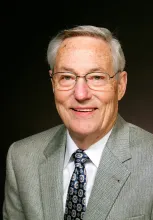
At the time of his retirement in 2016, Roy Holladay was serving the Operation Manager for Ministerial and Member Services of the United Church of God. Mr. and Mrs. Holladay have served in Pittsburgh, Akron, Toledo, Wheeling, Charleston, Uniontown, San Antonio, Austin, Corpus Christi, Uvalde, the Rio Grand Valley, Richmond, Norfolk, Arlington, Hinsdale, Chicago North, St. Petersburg, New Port Richey, Fort Myers, Miami, West Palm Beach, Big Sandy, Texarkana, Chattanooga and Rome congregations.
Roy Holladay was instrumental in the founding of the United Church of God, serving on the transitional board and later on the Council of Elders for nine years (acting as chairman for four-plus years). Mr. Holladay was the United Church of God president for three years (May 2002-July 2005). Over the years he was an instructor at Ambassador Bible College and was a festival coordinator for nine years.
