
Robin S Webber
This transcript was generated by AI and may contain errors. It is provided to assist those who may not be able to listen to the message.
Following the biblical instruction and personal examples put forth in Scripture, we recently observed the Days of Unleavened Bread, in which we refrained from eating leavened food products. God, in His wisdom, put forth this physical object lesson that demanded in us examination and personal resolve so that there might be an important spiritual introspection by us before God. And He used food to do it. You and I, we did this for seven days, refraining from leavened products. Now it's over. Now we move forward. But the question I want to ask all of you today is simply this. Do we have other choices to make in the same determined manner throughout the year when it comes to God utilizing food as an object lesson towards spiritual outcomes? Then that's a big question. And it's very important to answer. And I want to share some thoughts and some direction for all of us today. Many mainstream Christian denominations practice abstaining from various items during the Lenten season as they come up to Easter. They practice abstinence. They give something up for a portion of time. I remember growing up as a Lutheran, and so I kind of remember that a little bit. You might give up chocolate. You might give up marshmallows. You might give up this. You might give up that. There's this abstinence that occurs coming up to Easter. And some sincerely do that by notion. Some do it by tradition. Some are trying to also just simply keep up with the Smiths and the Jones. And then back into the rat race of life. And perhaps they've forgotten what that chocolate or marshmallows or popsicles or something else meant to them.
Here's one thing that we want to understand with the way of life that we are in. And that's one thing I really want to hone in as a word, that we simply don't come to church. We are the church. The people, the ecclesia, are the church. We just don't show up on a day. And we just don't simply are not event-oriented. Some people kind of live from event to event to event. You think of Americans as a whole with the different holidays. And of course, then you have all the commercialism that goes from Christmas to Presidents Day, from Christmas to Presidents Day to Valentine's Day to Easter to 4th of July and on and on and on. And people just kind of live for events. And brethren, that is not what God has called us to be. It's just simply to be event-oriented and or somehow create a focus merely for seven days and then to move on and to life as it always is. Sometimes, and we have people even in the Church of God culture that have grown up in the Church of God culture, and they may not always attend, but they will sure attend when it comes to two major events. And that would be Passover and perhaps the Feast of Tabernacles. And like other churches, other peoples, they kind of come to those events, and you don't see them the rest of the year. Now, we need to understand something I want to share with you. And this is the word that I like to use, the phrase, as we move into this message. God has not called us simply to show up for events or to be focused on Him and ourselves simply for a few days before Passover or one week that we call the Days of Unleavened Bread. This is not the way of life that God desires and is designed for us, and God has designed a life for us. The Days of Unleavened Bread are a focused period of time to explore and to internalize the life of Christ in us. And it's an annual event that uses food, interestingly, as a teaching tool, but then we're not supposed to go out and just make our own choices. God's purpose for us is revealed throughout the year surrounding, and I want to share this thought with you, the sensually drawing object of food. And food is sensual. It plays to our senses. There is a draw, and God asks us to focus on that, identify it, and deal with it. So we're going to talk about that today. Here's the title of my message to let you know where we're going. It's simply called Biblical Food for Thought. Biblical Food for Thought.
I gave a message somewhat like this in a different direction about nine years ago. And I'm not today going to be going down that line of all of that message. There's a specific focus that I want to share for you. The purpose of this message, again entitled Biblical Food for Thought, its purpose is to make you consider whether obeying God is simply an event and or an existence. Is it transitional or is it transformational?
And if an existence, then why do we do what we do when it comes to the Biblical food laws? And there's a purpose behind it, and some of you are newer to this way of life. Some of you have grown up in a certain tradition or a certain understanding, and we want to broaden that to recognize that the Biblical food laws are those, or is there for those that are New Covenant Christians. Let's go back about food for just a second and why God has us do what we do. I'm going to kind of simplify it, bring it into a thought, a reality that many of us have seen that our parents and our grandparents, at one time or another, we've been amused, perhaps even horrified, and maybe even entertained by a small baby down on the kitchen floor.
And they're grabbing and groping or gulping something that he or she should not eat. Whether it be sand from the litter box, whether it be cat food, dog food, or a bottle of ketchup, and they are delighted, but there's more ketchup all over them than has gone into their mouth. Most of it didn't meet their mouth. So what do we do as loving parents? We gradually teach our infant children the difference between impulsive actions and intelligent decisions.
Stay with me on that. The difference between impulsive actions and intelligent decisions. That not everything that we touch, taste, see, or feel is good for us. And that it doesn't enter our body or remain in our existence. What is this all about then and what occurs? Here's the key factor. As a parent lovingly lays down the rules and gives guidelines, here's what occurs to the baby. Identity is established. Identity is established. We need to understand that. Ultimately, as our children grow older, they appreciate that.
Those early guidelines and those rules and the relationship of love and trust that develop. Likewise, Scripture reveals that long ago God took an infant people and offered them an opportunity to move from impulse to identity based on knowledge that He alone revealed. Join me if you would in Exodus 19. In Exodus 19. This is just shortly before Mount Sinai. They're coming up against the mountain. And God here establishes something very, very important that we have to understand when we go back into the Old Testament. In Exodus 19 and verse 5, notice what it says, Notice, Notice, Normally, when we move into Exodus 19 or Exodus 20, most of us do know that we find and discover the Ten Commandments in Exodus 20, right at the beginning.
But one thing that we want to put ahead of that which is in Exodus 20 is simply this. God desired to create a relationship, a relationship, and offer that to a people who had not been a people, a relationship, which is so very important. And He was going to offer them identity as they served this great God and as eventually they would go into covenant with them.
That there would be two things. There would be a relationship and there would be rules. They do go hand in hand. And so we notice that. And to enable this union to flourish, God gave rules of engagement found in Exodus 20. They're known as the Ten Commandments. And these fundamental spiritual pillars would create boundaries to assure a right relationship with God, their fellow man, and hear me please, and any environment that they found themselves in. Now, let's understand this. Why did He do this?
They were going to cross river eventually and they were going to go into the land of Canaan. And the land of Canaan was just a little Egypt. And He didn't want them to swallow the wrong things that they were going to be surrounded with in Canaan. And I'm not talking about sand. I'm not talking about ketchup out of a bottle. But that they would not swallow the paganism and the world that was around them. They would not swallow the questions that would come to them. Well, does God exist? Did He really bring you out of Egypt? Does He really have a plan?
And somehow for them to forget that they had been rescued and that they're special to God. And so He gave them the Ten Commandments. I want to just go through the first three. Stay with me a second, okay? We're all in this together. We're going to kind of move forward to understand where I'm going. He gave the first three commandments. Look at Exodus 20, verse 1. And the Lord spoke all these words, I am the Lord your God who brought you out of the land of Egypt, out of the house of bondage. So He is not just any God. He is the intervening God. He is the sovereign God. He is the rescuer God. He identifies that not simply am I the Lord your God, but I am the one who brought you out of Egypt. And you shall have no other gods before me. Number one, first commandment, simply put, God sets a priority. We are to worship Him and to worship Him alone. Second commandment is you shall make no carved images or any graven statues. Why did God give us the second commandment? To reveal that the one that brought them out of Egypt has no limitations. Regarding His ability to reach into our lives, to intervene, to rescue, to sustain, and to fulfill His purpose. The third commandment, then, in verse 7, You shall not take the name of the Lord your God in vain, for the Lord will not hold Him guiltless, who takes His name in vain. This is not just simply about using God's name as a filler, which is so unfortunate, especially over the last 20 or 30 years. Where people are basically blaspheme the name of God by using it carelessly, just like an, ugh! You hear it in the stores, you know, just, I won't go into it, but you know what I'm talking about. God this, God that, God this, God that. And they don't recognize that they're taking the very name of the great God, the Creator, and the intervener, and the sustainer of human history. The same God that has a purpose for them, even though that they don't know it. But beyond that, the third commandment is this. It's not just simply about swearing, it's about covenant distinction. Covenant distinction, distinction, coupled with responsibility. To remind us we bear God's name as His people. When you notice blessings that are in the Bible, you will bless them like this, with spoken to the sons of Aaron. And when you bless them, bless them like this, and put my name on them.
And so we're mindful then, as we look at the third commandment, that we're bearing God's name. And that means all that He is, all the names of God, and what they personify. And that He is all in all of His ways. Now, with that stated, that's where Israel began as they went out of Egypt. But now we're going to join Him 40 years later. Join me if you wouldn't do it in Deuteronomy 5. God does not change His mind. In Deuteronomy 5, I'm bringing this to you in a systematic manner to bring a point to you.
In Deuteronomy 5, let's pick this up. We discover what is a real statement of the Decalogue. As they prepare to cross over the river and become a settled nation, they're no longer going to be just simply a wandering pilgrim people. They're going to settle. They're going to be surrounded by the nations of the earth. And Moses said in verse 1, He called all of Israel and said to them, Hear, O Israel, the statutes and the judgments which I speak in your hearing today, that you may learn them and be careful, be careful to observe them.
The Lord our God made a covenant with us in Orib. The Lord did not make this covenant with our fathers, but with us, those who are here today, all of us who are alive. And the Lord talked with you face to face on the mountain from the midst of the fire, speaking of Sinai. And I stood between the Lord and you all the time to declare to you the word of the Lord, for you were afraid to come up against the fire and you did not go up into the mountain. And then there is a reinstatement of the Ten Commandments there. Israel had been wandering through the wilderness for 40 years.
They were about to cross over. And God had to state some very important things about the covenant relationship that he had with them. And it was a covenant. It was a partnership. The people were asked to do something, and what the people could not do, what the people could not provide, God could provide. He would be their rescuer. He would be their intervener. He would be their salvation, and He would put a stamp upon them. It's very interesting as you look at this, you recognize that. Some of the commentaries say that the next 25 chapters basically expand on Deuteronomy 5, speaking about God.
When you think of Deuteronomy 6.4, The Lord your God is one, and you shall love Him first and foremost. Speaking of the first commandment, that kind of goes on. Deuteronomy 14, you have more explanation about the Sabbath than you have the feast days. But then we come to Deuteronomy 14. Join me if you would there.
And what I'm doing, brethren, for you to understand how you can explain it and how you can live it, is to recognize what we're going to be talking about here, really falls under the third commandment. About appreciating and understanding God and not taking the new life, the blessed life that we have in vain. But that we have identity, that we understand the distinction that God has called us to as the covenant people. Deuteronomy 14, you are the children of the Lord your God, you shall not cut yourselves nor shave the front of your head for the dead.
Any of you that have crew cuts out there, I presume that's not why you're doing that today. Okay? For notice then, notice verse 2, now that mirth is set aside, very importantly, for you are a holy people to the Lord your God. You are special. You were wanted. You were desired. You were delivered. You were rescued. You're a special holy people, and the Lord has chosen you to be a people for himself, a special treasure above all the peoples who are on the face of the earth.
And so we have an echo coming out of the book of Exodus chapter 19 about being the special treasure. And then notice what it says in verse 3, you shall not eat any detestable thing. And then God here presents an index of what he considers detestable, and that should not be eaten. The purpose of this message right now is not to go into everything that is clean or unclean, or we might be here till dinner time, and then you can make your own choices.
You can read it. We also have a booklet on clean and unclean foods. I'm really wanting to stamp something I think very important in our minds. Yes, this index is provided. And God in his love, he gave basically an index, or we might call it rules of thumb, that God gave in his wisdom to a people who couldn't know all the provisions before microscopes and medical analysis. And God knew as the Creator what he had designed and what worked best for human consumption. But sometimes we do, I dare say, may we talk openly, sometimes we confine our understanding of the biblical food laws just simply to health. And that if we do this and this and this and this, then we'll get this and this and this and that.
And there is, obviously, when you think that God is the Creator, and he designed this special model made in his image, man and woman, and he knows best how to design it. You know, it's like a car. If you have a car, you want to look into the little box area so often, pull out what makes the car work. This is what's going to make the car work best. This is the oil that you want to put into it. This is how often you want to take it to the dealership, take it to the service department. God is a Creator, and in his love, he gave us these guidelines. But you know what? You could follow these guidelines all day long. And at the end of the day, as it says in the book of Psalms, if by every man has three score and ten, and if by reason of strength of heart, you make it to eighty. So eating this alone does not preserve life alone. There's something else that God is telling us about. It's very interesting that the Jewish community down through the ages has always, first and foremost, looked at the food laws as identity. As identity. That God has reached into their lives. That God has touched them. God has called them. And given them, in part, a culture that will keep them steady and sure, no matter what environment that they are in. And he gave these physical standards to remind a physical people that they worship a spiritual God.
This blueprint of a covenant relationship is ours. The big picture, join me if you would in Leviticus 11. Leviticus 11, just kind of want to hammer home this point. Hammer home, Leviticus 11. Verse 43. Notice what he says. For I am the Lord your God. You shall therefore consecrate, that is, set yourselves apart. Notice. And you shall be holy, for I am holy. And neither shall you defy yourselves with any creeping thing that creeps on the earth. I am holy, therefore you are holy.
Brethren, this is one of the great, loud, blaring things that comes down to us today in 2017. Down from the Sinai, across the Jordan, and even in Peter's writings in 1 Peter 1, 17, he says, Be you holy as I am holy.
I know sometimes you can read the Bible and people get excited about a verse. They take the verse out of context. They're not really looking at the entire...and they run with it like a quarterback. You know, they tuck it right...not a quarterback, a half-pack. Put it in there like a half-pack and they're going to run it, and nobody's going to let go of it. And they've taken something that is implied and they make it louder than loud. Until they find out that three verses down, it didn't mean what they thought it meant. This is loud, brethren. This is why you were called. This is why I was called. This is what I preach about. To stir the people of God and to recognize that we just have not had a tap on the shoulder of religion. That a person of God, a holy individual, is not just simply event-oriented. Not a little dabble, do you, like the old real cream ad the Baby Boomers can remember here. A little dabble, do you? Christianity is not about an episode here, an episode there, here and up, there and up, everywhere, an episode. It's not just about an event. It is not lint. It is not putting in time just during the days of the love and bread. It is a way of life. It is an existence that we live before God. And it's interesting that He gives us this tool. This object lesson surrounding food to bring about spiritual results. This is the law of the animals and the birds and every living creature that moves in the waters and of every creature that creeps on the earth. Why? Hear me. To distinguish between the clean and the unclean and between the animal that may be eaten and the animal that may not be eaten. But there's a much wider and profound lesson for we that are under the New Covenant that we're going to be addressing here for a moment. Here's two things you want to take out of Leviticus 11. Number one, we are to be holy. Are you with me? Holy. Four-letter word. Holy. Number two, God gives us the food laws to use our minds and ultimately today as the Israel of God, His Spirit, to distinguish. And not only to distinguish what is in our cupboards and or in our pantry or even on our plate as we eat it, but to distinguish beyond that what we allow to come into our lives. And so He gives us food for thought. Now, why does He do this? Join me if you would in Exodus 34.
In Exodus 34, let's pick up the thought if we could. In verse 14.
It's interesting sometimes when you think about God above, you think of wonderful names, Abba, Father, Heavenly Father, God Almighty. Wonderful names that mean a lot to us. But have you ever noticed this name in Exodus 34. 14? For you shall worship no other gods for the Lord whose name notice is Jealous. Is a jealous God. Did you realize that one of God's names is jealous? And He has good reason too.
This is mentioned actually in the Old Testament before our Father above even gave His Son. And when you've put literally skin into the game and the skin of your own begotten Son, you can say, you want to have this relationship in Todo.
I have given this, you are to give that, you are to remember what I've done for you. I'm your deliverer, I'm your rescuer, and I am your sustainer. I am your ongoing force in life. And so God is jealous. So He's saying don't conform to former lust. Don't swallow based upon impulse, but base everything on God-given identity.
And that's what the food laws primarily are about. In all conduct, not simply concepts, be holy, not only in philosophy, but in practice. Understanding what you and I do while you come here today in Los Angeles. And Susan and I, because we travel so broadly these days, we see you every two or three weeks. You're all here in church, and that is wonderful. And we're all tied into a certain belief system, aren't we? Can we all agree on that? Amen. Okay. But we've got to agree on more than just simply philosophy and on precept. This is practice. This is hard work that we need God's help in doing. And at the heart of the food laws that you and I imbibe in, all pun, intended, and underlined, that we imbibe in is based on two things. Allow me to put them down. Number one, if you want to jot it down. Number one, belief in God as a personal force. To tie those food laws into that God, number one, is a personal force in our lives. Number two, in that, ultimately is the ultimate judge of all nations and also of our personal actions. Now, why is this so important to God? And that's a very good question. We have to go back to the very beginning. It's always a good place to start in a movie or a book. Germany, if you would, in Genesis 2. And let's see how God utilized the situation of food towards a spiritual result. In Genesis 2, right at the beginning, Genesis 2, verse 8, let's notice the Lord God planted a garden eastward in Eden, and there He put the man whom He had formed. And out of the ground the Lord God made every tree that is pleasant to the sight and good for food. The tree of life was also in the midst of the garden. And notice, and the tree of the knowledge of good and evil.
So we've got to go back to the beginning to gain context. Genesis, hear me please, is written to share history, to offer a context of God's relationship and purpose for Israel. Not just merely rules. Rules stem from the relationship and then point back to the relationship. You've got to remember, Israel had been a bunch of slaves, and they probably had lost a lot of their history to a degree two or three hundred years in Egypt. Now Moses is giving the family scrapbook. He's laying it out as he writes it. Here's where it all began. Here's the story of the God that delivered you. Here is the one that rescued us.
And so we notice that. What is interesting, if I can make a comment, just an aside comment, it's very interesting that in a synagogue, and we've all seen the cupboard and where they keep the scroll, okay? And they bring it out, the ruler of the synagogue brings it out, and they carry it up and down the aisles. But it's very interesting about what's noteworthy about that law that they have.
It's all in one scroll. I want you to think about this for a moment. I'm going to expand upon it. It's all in one scroll to confer that one God, one way, one law, one people, all together, are not apart, but in continuity.
Sometimes what we do with our Bible today, and I'm very thankful the way the Bible is, please understand, but it's all kind of chopped up Old Testament, New Testament, this book, that book, this book. Originally, it was just all one. There was a conformity that led to unity, and the unity led to conformity amongst the people. It's interesting. Let's go a little bit further than Genesis 2, verse 16. And the Lord God commanded the man, saying, Of every tree of the garden you may eat freely, but of the tree of the knowledge of good and evil you shall not eat, for in the day that you eat of it you shall surely die.
So we notice this, and we look at it, that there was something that God was giving to our parents, object lesson, as to whether or not that they would believe in God that He was sufficient, that they would believe that God was sufficient, and that they were not being left out, that they hear two things out of Eden, out of this lesson, or two things, that they would have faith, and that they would have obedience towards God, that what He says to reach for you can reach for, and what you're not supposed to reach for you do not reach for.
That's really what it comes down to. How many years ago was it across the royal, where we would have this pounded again and again and again in us, the lesson of Genesis 2 and Genesis 3? I, as a younger man, always was hoping that there'd be like a third tree, maybe a new extension of the story. Then every Friday night at Bible study, or Sabbath, it'd be, well, back to the two trees, but that's where it's at.
And brethren, that's one of the reasons why we observe the biblical food laws. I'm going to get ahead of myself and come back. We observe the biblical food laws in faith and in obedience to God, that He will sustain us, that He will look after us. And even when we don't have something in our hands, that He will supply in His way, in His time, and never be late. Well, we know what happens here in chapter 3, where the Adam is away, the serpent comes in, talks to the woman, and the woman said to the serpent, we may eat of the fruit of the tree of the garden, but of the fruit of the tree which is in the midst of the garden, God has said, you shall not eat, nor shall you touch it lest you die.
Then the serpent said to the woman, you will not surely die, for God knows that in the day that you eat it your eyes will be opened, and you will be like God, knowing good and evil. It could also be rendered that you will be like God, and that you yourself will determine what is good and what is evil.
So when the woman saw that the tree was good for food, and that it was pleasant to the eyes, and a tree desirable to make one wise, she took of it and ate, and she also gave it to her husband, and he bit into it too. Bottom line is simply this, brethren. Think it through. Impulse over identity. They did not understand or they did not distinguish that everything that glitters is not gold in the plate of life.
And we know what happened afterwards. They were removed from the garden. God was using trees, fruit, and food as an object lesson. As to whether or not, number one, we would faith in God, and number two, whether or not we would obey. I'm not going to go through all the examples for time's sake, but whether the example of Abel, Noah, Abraham, or ancient Israel, we find that all were faithful in the use of biblically denoted clean food before Sinai.
You will not find one individual that is used of God, one godly individual that is used of God, that violates the indexes that we find in the book of the law. Nowhere. None of them broke God's code. But I do want to share something with you out of Daniel. Daniel, interesting story. A lot of commentaries are read on Daniel 1, but here's what I want to share with you from my perspective. How's that?
In Daniel.
Famous story of the king's vittles.
He and Hananiah, Michell and Azariah, Meshach, Chadrek and Abednego are young Jewish men. They're taken to Babylon. They come into the king's court.
They're being geared. They're being trained. They're being raised to be wise men in that court. And, you know, what's so interesting is that if you're going to indoctrinate somebody, maybe even brainwash somebody to a degree, if I use that phrase, you change everything in their life. You change their name. You change their clothing. You change their speech. But there is one thing that they couldn't change about Daniel. The king's steward came in, gave them all sort of food. And I don't know what was on that dish, neither do you, frankly. That's why commentaries and our books are written it. But we do know that it had to somehow pertain to something that God had said, that His chosen people that were called to be holy as He was holy were not to partake of. That's all I know. That's what comes out loud to me in the Scripture. Notice what it says here, but Daniel purposed in his heart. It started in his heart, not his tummy, but it started in his heart that he would not defile himself with the portion of the king's delicacies, nor with the wine which he drank. And therefore he requested of the chief of the eunuchs that he might not defile himself. You see, the food laws, and whatever food law was being covered here, yes, it does surround the tummy to a degree. But from the beginning, God had said, You be holy as I am holy, and you will do this. You will be a part of the culture of God. And being a part of the culture of God, wherever I allow you to be placed, whether it be in the kingdom of Egypt, whether it be in the kingdom of Babylon, or in the kingdom of Los Angeles, you will be different. You will have faith in me. You will be obedient. You will not take my name in vain. And you will abide by the details that I have given to you to partake of. That you might be holy, and that you might distinguish that not everything that is out there in your life, in Montebello, or in Cudahé, or in South Central, or over here in Pomona, or over there in Silmar, that as life comes to you, as life comes to you, Christians are to be moving beyond simply impulse, but distinguishing that which is clean and unclean, not only physically on your plate, but spiritually in your lives. Daniel's choice was not a matter of abdication. It was a declaration that he belonged to God. Now, I know you may think I'm getting a little excited about this, and you're right, I am excited about it. When I observe the biblical food laws, it is not just simply a matter of abstinence. It's a declaration that I belong to God, that I'm a covenant person, that He is training me in one form, and there are many forms that He trains all of us, but one object lesson with food is to distinguish not only what I bring onto the table of our life at the dining room, but what I place in the shelves of my heart and store, and by which I am nourished by. Very interesting. Fantastic story. Here's one thing I want to share with all of you, and some of you young people, they're going to have these challenges. You're going to be impulses out there, and you've got to recognize that your identity, by God the Father, whose name is above all names, and being a Christian, means that your life is based upon identity in them and not the impulses that are going to come your way. We need to understand that. We need to know that. I want to share a story with here. My eyes can fall on it. Yeah, let's go to Mark 7. Mark 7, for time's sake. Mark 7.
This is sometimes used in the sense that Jesus Christ, basically, to use a quick word, scrapped the food laws. And that's exactly not what he did at all. He was building upon it for a very important lesson. In Mark 7, 17, join me if you would there, when he had entered a house away from the crowd, his disciples asked him concerning the parable. Mark 7, one second.
Yeah, Mark 7. Pardon me. When he had entered a house away from the crowd, his disciples asked him concerning the parable. So he said to them, Are you thus, without understanding also, do you not perceive that whatever enters a man from outside cannot defile him? Because it does not enter his heart but his stomach, and is eliminated, thus purifying all foods. And he said, What comes out of a man, that defiles a man. For from within, out of the heart of men, proceed evil thoughts, adulteries, fornication, murderers, thefts, covetousness, wickedness, deceit, lewdness, and an evil eye, blasphemy, pride, and foolishness. All these evil things come from within and defile a man. Now, people look at that and say, Well, the elimination, thus purifying all foods. What you need to understand if you're ever asking, there are many, many verses both in the Gospels and also in the Epistles of Paul regarding the food laws. But what we need to understand here is you have to go back to verse 5. He answered and said to them, Well did Isaiah prophesy of you hypocrites? Oh, let's go up to verse 5. Then the Pharisees and the scribes asked him, Why do your disciples not walk according to the tradition of the elders, but eat bread with unwashed hands? And he answered and said to them, Well, did Isaiah prophesy of you hypocrites as it is written? This people honors me with their lips, but their heart is far from me, and in vain they worship me, teaching as doctrines the commandments of men. The issue that is listed here before us is not even a commandment that God gives in Leviticus. There is no command in the Old Testament about washing your hands before eating. That is a tradition. And what Jesus is saying here, that which comes out and purifying all foods, is that there are miniscule pieces of dirt, or this, or that, that by the way that God Himself has created or designed the body, are going to be eliminated from the body. You've gone a step beyond what God does, but if you're so concerned about this, the covenant people, you're concerned about this and that, these little tiddly things, what about the big things that stem out of your heart? Don't you remember that when I spoke to you as the Word, when I dealt with your forefathers Israel, I said that you were to distinguish, the clean and the unclean, and they'd gotten down into this. It doesn't mean, in that sense, brethren, hear me, please. Especially when it comes to the biblical food laws that we keep, they are beautiful, they are wonderful, and they are there to give us identity, to help us maintain our health, to move away from impulse. But so often, we can get focused on simply the ingredients that are on a can of tomato soup and not be concerned about what is on our label and what is imprinted on our heart as Jesus brought out here so very clearly and carefully. He's making a bigger point here in Mark 7. You are my people. This, you need to be better than this. It's a matter of the heart. And we need to understand that. Join me if you will in Romans 12. Romans 12.
Verse 1, I beseech you therefore, brethren, by the mercies of God, that you present your bodies a living sacrifice, holy, acceptable to God, which is your reasonable service. And do not be conformed to this world, but be transformed by the renewing of your mind, that you may prove what is that good and acceptable and perfect will of God.
The head of the church, Jesus Christ, God's divine sacrifice for us is not the only sacrifice. Nothing can replace this sacrifice, but once we understand it, we, too, are to sacrifice ourselves as a holy people, to follow His example. We need to understand that. We need to go there. You and I, brethren, are in training. Dream if you would in Ezekiel 44. In Ezekiel 44, let's notice verse 23. In Ezekiel, speaking of the future, but also now, us. And they shall teach, speaking of the priest, they shall teach my people the difference between the holy and the unholy, and cause them to discern between the unclean and the clean.
What is the lesson here for you and I? I remember back in the 1980s, that Mr. Armstrong at that time spoke to the church as a whole, about three very, very basic principles. He called them mandates. Those have not changed because they're biblically based. I allowed me to share them with you, and some of you that were not here or born at that time. Number one, we are to come out of the world. We are to come out of the world. And wherever we go in the world, the culture of God is to predominate over the culture of where we are located, be it Babylon, be it L.A., be it in the mountains, be it at the beach, be it in the valleys, wherever we are.
Identity. An identity that keeps us in touch with God, and by His Spirit, and by the example of Jesus Christ, protects us from our own impulses because we're still in this flesh. Number two, we are to simplify our lives. Stand still. Be still. Simplify, simplify, simplify. In a world that does not stop, we need to stop and understand that a great God has given us a way of life, given us these object lessons with food, not only for a week out of the year, and rightfully so with that week, with the lesson that we do not eat leavened products.
Absolutely. And the leavened bread is a way of living. The bread in the Old Testament was basically designed to remind us that the people of God had to follow His call and follow His lead so rapidly and so quickly and make haste that the bread was not able to rise. That was the lesson out of the Old Testament. When God gives us a calling, when He gives us identity, when He says to move away from our own natural impulses and learn the object lessons of the food that He gives us, to obey Him in faith and to recognize that that good God has a future for us and He's not left us out of the loop of opportunity.
That we will obey Him. Third one. Come out of the world. Number two, simplify your life. Here's the third one. Learn now to be teachers. Priests are teachers. We are being called to be a holy people, to separate the holy from the unclean and to distinguish what comes into our lives. We are in a target-rich environment of impulse, brethren, today with everything that is coming to us in the culture, in education, through the media, through even the example of our political leaders. They just kind of come into us, come into us, and more than ever, the people of God have got to create a distinguishment between this world and the world of God that rests in us.
I do that, brethren, when I have a plate of food in it. When you ladies go to the market and you're looking at the ingredients, I want you to recognize that the reason you do that is not to try to stay alive forever, because it's given once to all men to die. That's not the end of what that commandment is about, of the biblical food laws. If you're trying to eat to save yourself from dying, can I give you a hint?
Just give up now. If you're eating properly the way that God has done it as a Creator and He knows what's best for us, and you want to be here for your children and grandchildren, and to serve effectively, wonderful! And that's good. But the reason, first and foremost, why I, as an individual Christian, am looking at the Bible as a whole, from Genesis to Revelation, partake of the food laws, is because God told me to. God revealed it to us. It is our identity. It is His stamp on us.
And it is a teaching tool to learn as to not only what is on your plate, but to separate the clean from the unclean of what comes our way, what rests in our heart, as a man is, as a man thinks, so he is. Here are the ingredients that God wants us to have. Join me, if you would, in Philippians 4. In Philippians 4.
Finally, brethren, whatever things are true, whatever things are noble, whatever things are just, whatever things are pure, whatever things are, notice, lovely, whatever things are of a good report, if there is any virtue and if there is anything praiseworthy, meditate on these things. Pack them into your mental refrigerator. Put them in the pantry of your mind. Put them on the shelf of your life to be able to reach for it when you need them.
If we are only looking at the ingredients on a metal can and somehow think that we're pleasing God, but then over here in our interior, we are existing with all the impulses and the ingredients that God says are contrary to Him and His holy people, why do this? You see, God uses the biblical food laws as an object that then moves into us to create identity, to create a distinguishment, to remove us simply from impulse, but to give our lives to God in faithful obedience. Let's conclude by going to Revelation 3. We're going to go from Genesis to Revelation here. And that's what it says in verse 19. As many as I love, I rebuke and chasten. Therefore be zealous and repent. Behold, I stand at the door and knock. If anyone hears my voice and opens the door, notice what it says, I will come into him and notice, and dine with him and he with me. If the Lord of your life, if the head of the church knocked on your door right now and said, I want to come in, what are you eating? I don't think he'd be talking about poor cott dogs or lobster, pig, that we should do without leaving the other undone. He'd want to know that if on our table we really understand that we're a holy people, that we are distinguishing what's coming into the window of our heart, that we are a people that recognize that it's not about us, but the grace of God spread upon us, not because of who we are, but because of who he is. And thus we are a loving people, a merciful people, a kind people, a people that every day wake up trying to emulate the example of Jesus Christ, that God gave us to understand how to pattern ourselves after our Heavenly Father. Simply abiding by the object lessons of physical food, and that's on the outside, is commanded and is important. But if we don't use this, brethren, to maintain our identity in the same God that delivered ancient Israel and now leads and guides the spiritual Israel of God, then we are simply worshiping God by the letter and not by the Spirit. And the letter and the Spirit are harmonious, aren't they? They are to come together. Do I dare say, on a sermon like food, like soup and sandwich? But that's what it's about. For some of you young people that are here, and I'm so glad to be able to share this understanding with you, as you lead forward and zealously observe the biblical food laws of God, recognize always first and foremost, it's about your identity and your willingness and your desire to observe the Third Commandment. And what is that Third Commandment? You shall not take the name of the Lord your God in vain.
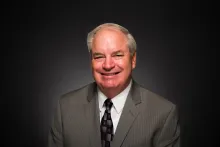
Robin Webber was born in Chicago, Illinois, in 1951, but has lived most of his life in California. He has been a part of the Church of God community since 1963. He attended Ambassador College in Pasadena from 1969-1973. He majored in theology and history.
Mr. Webber's interest remains in the study of history, socio-economics and literature. Over the years, he has offered his services to museums as a docent to share his enthusiasm and passions regarding these areas of expertise.
When time permits, he loves to go mountain biking on nearby ranch land and meet his wife as she hikes toward him.
