
Robin S Webber
This transcript was generated by AI and may contain errors. It is provided to assist those who may not be able to listen to the message.
Well, we certainly want to say thank you very much to the Hymn Choir that's a very, very beautiful hymn. I also want to say thank you very much for all of those that throughout this Sabbath afternoon make church so special for all of us. Think of all those that set up behind the scenes. Think of all of our very wonderful and loving teachers that are working with our young people, our musicians.
Think of the people that are actually making the sound happen right now and all that you do. It's certainly a very big and team and family effort and thank you. And we do have a number of people that are gone this week. I do believe that there's a large pan Church of God activity up in the Lake Tahoe area. A lot of our young people are getting together, certainly support that. I think that's incredible that young people are meeting from different fellowships and different organizations coming together and remembering what bonds and holds us together.
And that spirit and that basic truth and that basic understanding and that they're building bridges of communication. I certainly applaud that and salute that and I hope they're having a good time up there. We're going to be moving forward. Actually back, are you with me? We're going to go back because we're going to pick up on that series that we've been dealing with in the course of time and we had to stop it as we came up to the Spring Holy Days and that is the series on New Covenant Realities and Christian Responsibilities.
So we're going to get back to that for a message or two. And to introduce this portion of the series, I'd like you to reflect on something that I think all of us at one time or another have witnessed either with a smile and or, may I say, do I dare say, perhaps to our horror for a moment. I think all of us at one time or another have been amused or horrified, maybe even entertained by a very small baby grabbing and reaching for something and bringing it to its mouth, something that it has spotted and wants to put inside of him or her and put right into the tummy.
And it's probably something that they should not be eating. I think we all think of that proverbial year-old or year and a half year old or two-year-old and they're they're crawling maybe on all fours and all of a sudden they go over to the pet bowl and there's the dog food or there's the cat food and or maybe they're having fun in the sandbox and begin to eat what they are sitting on and playing with and or maybe while mama or papa are gone they reach for the ketchup bottle, all of it.
Now, fortunately or may I say blessedly, most of it doesn't reach their mouth or get inside of them. But basically the idea and the thought is that what they see they bring towards them and there is no thought there is no consciousness of what they are getting into. Like I said, the blessing is most of what they grab does not meet their mouth. Now, what we do as loving parents, we gradually teach our infant child the difference between impulse and intelligent decisions.
That not everything that comes into our life, that comes into our reach, that we might touch, that we might taste, that we might smell, is good for us and should not be inside of us. Now, we do this because we love our children. We teach them. We move them through these objects that are before them and ultimately identity is established. Now, ultimately our children appreciate what we teach them. They remember the early guidelines that not everything that you can taste, touch, smell, or feel should go inside of you.
And they grow up and they appreciate us. And a relationship is developed while still honoring the rules. Well, this is where I want to begin with a discussion of the next tool of grace that I want to bring to your attention in this series entitled, New Covenant Realities and Christian Responsibilities.
Because today what we're going to cover is the biblical food laws that are in the Bible and why they are there. This is an important discussion for us to understand as people that keep the commandments of God. But we need to understand why God gave us these commandments, why He gave us these guidelines, why He gave us these rules.
Because if we only leave it at information, like a rolodex of what not to eat or what to eat, it's not going to do us any good. It just simply is not. Because understanding the biblical food laws is not just about information. It's about your personal spiritual transformation as a member of the New Covenant. Allow me to begin by going back and thinking upon history past when God took a nation and He took an infant nation, just like the infants that I was just talking about.
People that perhaps did not know any better, had not had rules, had not had a relationship. And having been in slavery, they were used to just getting by or doing whatever it took to be alive.
And this wonderful God took a people who were not a people, and He gave them an identity.
He granted a rescue. He offered a relationship. And in His commandments, He moved them from simply living life by impulse. Am I talking to anybody out there that's like this?
That lives life by impulse and gave them an identity. Exodus 19 and verse 5. Join me, if you would, there to begin this discussion with you. In Exodus 19, let's understand what God granted them as far as a relationship and an identity. These are words that fall right before the giving of the Ten Commandments. In Exodus 19, and let's pick up the thought if we can in verse 5.
Now therefore, if you will indeed obey my voice and keep my covenant, then you shall be a special treasure to me above all people, for all the earth is mine. And you shall be to me a kingdom of priests. And you're going to, by the way, you're going to be a holy nation. These are the words which will speak to the children of Israel. And so God offered them a relationship. He gave them an identity. And we find further that as we move from Exodus 19 into Exodus 20, to develop that relationship, He gave them rules of engagement. We call them the Ten Commandments. Some folks call it the Decalogue. We find it in Exodus 20. And these commandments would, in that sense, establish a right relationship with God Almighty, with neighbors that are around, and with the world, the earth that man had been given dominion over. All of this came in together into play with the Ten Commandments. Why did He give ancient Israel the Ten Commandments? Because He was putting them into a neighborhood of antiquity in which they could become quickly distracted.
They put them into a neighborhood between Egypt and Mesopotamia, where if they weren't careful, and if they were not thinking, they would swallow anything that came their way just to be like the nations around them. And so God gave them the Ten Commandments. And it's interesting when you go through the Ten Commandments. Let's understand what He was doing here. He gave them the Ten Commandments again so that they just wouldn't swallow the first thing to come along and poison the rescue plan that He had offered them. Notice how it begins in Exodus 20 and verse 1. And God spoke all these words, saying, I am the Lord your God who brought you out of the land of Egypt, out of the house of bondage, you shall have no other gods before Me. The first commandment establishes the relationship. It brings forth the priority. There are no other gods before Me.
And that is very important. The second commandment then, you shall not make for yourself a carved image, any likeness of anything that is in heaven above the earth beneath or the water that is below. And you're not going to bow down to them. Now what God does here, He not only establishes His role in their life as a priority, as the sovereign, but He says, don't limit Me. Don't push Me into a corner. Don't even think that you understand what I am really like. I will reveal myself to you as I can. But now notice the third commandment here. Important. And you shall not take the name of the Lord your God in vain, for the Lord will not hold Him guiltless who takes His name in vain. Now when you look at the third commandment, this is not simply about coupling God with a swear word. It's not just about swearing. It is all about the covenant relationship. God is saying, I am planting my name and my purpose and my fullness into your life that was empty. You were a slave in Egypt, and now I am granting you a future. I brought you through the Red Sea. I saved you out of slavery. And now you say you will be mine and I will be yours and I am putting my name on you. All that I am, all that I am about, understand that. And as you do, honor Me. Remember Me. Live as if this really occurred.
And thus we have the third commandment. Now what is interesting when you think about this is this is where I believe, in a sense, that the biblical food laws come into play. And that is to remember our relationship with God Almighty. To remember the relationship, to remember the rescue, and remember our identity before God. And so what we want to do in this part of the series entitled New Covenant Realities and Christian Responsibilities is to simply give you some food for thought. If you want to stay in the message, you might want to just jot those three words down.
Food for thought. What kind of thought? To remember who we are. To remember who God is.
To remember the relationship and the rescue and our responsibility down here below under the New Covenant. To not only hold on to information, but give up our hearts for transformation before God Almighty and Jesus Christ the Son. Join me if you would in Deuteronomy 5. Let's go again to the fifth book of the law and understand something here. Deuteronomy is the second giving of the law. It was given again just before Israel was to go over into Jordan. They were to be reminded about who and what they were and the great God, the wonderful God, that they were serving. And in Deuteronomy 5, verse 1, the relationship is rehearsed. And Moses called all of Israel and said to them, Hear, O Israel, the statutes and judgments, which I speak in your hearing this day, that you may learn them and be careful to observe them. The Lord our God made a covenant with us in Orib. The Lord did not make this covenant with our fathers, but with us. Those are here today who are alive. The Lord talked with you face to face on the mountain from the midst of the fire. And I stood between the Lord and you at that time to declare to you the word of the Lord, for you were afraid because of the fire, and you did not go up to the mountain. And he said, I am the Lord your God.
And so 40 years later, the relationship is rehearsed, that they are in a covenant that is to be seamless, that is to be tight. Now, it is very interesting that what some people consider is that basically the remainder of the book of Deuteronomy moves off of chapter 5. That the next 25 chapters basically give detailed explanation of these various commandments. You think of Deuteronomy 6. Hear, O Israel, the Lord your God, the Lord your God is one. Therefore, you have more of a definition of, again, the first commandment. You go into Deuteronomy 14 and you have the explanation of the feast days, which in a sense can be an extension and a movement dealing with the the fourth commandment, the day that is holy, thus the days that are holy. Allow me to bring you to Deuteronomy 14 for a moment. Deuteronomy 14, I'd like you to pick up something that is very important.
Deuteronomy 14 in verse 1.
Because sometimes covenant people, whether under the Old Covenant and or we that are under the terms of the New Covenant, may I make a comment? Please, friends, we need to be reminded that we're in relationship with God Almighty.
Sometimes we have to just pinch ourselves. Ouch!
We have to remind ourselves and be brought into consideration. Whoa, wait a minute. Notice how this goes.
You are the children of the Lord. Not Pharaoh, not some sheikh over in Arabi, not some despot over in Mesopotamia. You are the children of the Lord, your God.
Relationship, identity. And you shall not cut yourself nor shave the front of your head for the dead. There's some form of religious Middle East practice that was being forbidden here.
Because of the relationship, because of God's name, Third Commandment, because of God's name, you will not do this. If you don't understand what God is doing, why? God is a good God. He doesn't just say no, but he tells us why. For you are a holy people to the Lord your God.
And the Lord has chosen you to be a people for himself, a special treasure above all the people who are on the face of the earth. Now, are you with me here? Let's understand something. Let's just look at Deuteronomy 14 and see what God is planting. He's not just planting a bunch of rules, but rules are of no value unless they're planted to the relationship of what God is doing inside of us. Not only on the outside, but on the inside. And why? Therefore, with this relationship of the divine visited upon us, you shall not eat any detestable thing. And then it goes on to share what those detestable things are. These are animals which you may eat. It talks about the ox, the sheep, and the goat. It goes on to others. But further on down the line, it tells you those things that you cannot eat. Now, why is this important? Let's understand this. Let's make it simple.
God is saying, I am holy. I have chosen you. You are to be holy. I am holy. Therefore, you are holy.
And I'm going to give you some food for thought to always bring you back to the relationship.
And because I am sovereign, and because in covenant you have given me over to be, we have given ourselves over to God to be His subjects, thus we will do this. It is interesting that this very thought is rehearsed to another generation of a different covenant people, those that are under the terms of the new covenant. Join me if you would in 1 Peter 3. In 1 Peter 3, we find the Apostle Peter all the way over on the other side of this book that we call the Bible, 1 Peter 3.18. And those are what it says. Excuse me, not 1 Peter 3. 1 Peter 1. Pardon me. And verse 13. Notice what it says.
Therefore, gird up the loins of your mind and be sober, and rest your hope fully upon the grace that is to be brought to you at the revelation of Jesus Christ, that second and that greater Moses.
As obedient children, not conforming yourself to the former lust, as in your ignorance, but as he who called you is holy, you also be holy in all of your conduct, because it is written, Be holy, for I am holy.
It says to not be conformed to that which we were called out of, but to live a different way.
In Latin, this is called the imitatio dei. Simply be holy. And God gives us commandments, and he gives us rules, and he gives us guidelines, because he loves us, and he wants us to ground us in this relationship. And God says you are no longer going to be a part of the culture that I've called you out of, but now you're going to be a part of the culture that I'm going to call you into. And I'm going to be the one that draws the lines. And I'm going to give you some things to do to remind you. That is why it's so important when we've been going through this series to recognize that worship of God cuts across the greatest avenues of life.
God asks us to worship him by time. He asks us to worship him by treasure. And he asks us to worship him. Are you ready? With our tummies. What is more important when you think about it than time, finances, and what we eat. And what I'm going to show you, and I want to plant into your mind, is to recognize as we observe the biblical food laws every minute, and every day, and every hour, we are worshiping God. We are identifying with that relationship that he has given us.
We are surrendering himself to the culture that he establishes in us of what goes and what stays.
What we eat and what we don't eat. And that's very important to understand.
Let's understand what happens here. Let's go right back to the beginning, Genesis 2.
Let's go back to Genesis and let's understand something. That right from the very beginning, that God established the aspect of food to determine whether or not we would obey him.
Remember the story of Adam and Eve? And Adam and Eve were showing the whole garden.
And God said, you can have the whole thing. It's all yours. But of this tree, of good and evil, you will not partake of it. You will not take the fruit thereof.
And by doing so, and by obeying me, by remembering what I have opened up, my sufficiency of everything that you need to have a relationship with me, you may have. But I will draw the lines around what is not good for you. And you're going to have to trust me. But just like those children in a sandbox, or just like that child in the kitchen that grabs for the cat food, or you put something else into that, Adam and Eve all of a sudden reached for that which they could taste and touch and smell, and which looked so good to the eyes. And just like that little two-year-old, they reached, because of what? Impulse. Because at the same time, they didn't really believe what God was saying, that He was going to grant them a relationship that was sufficient. That the Lord truly is our shepherd in whom we shall not want. And Adam and Eve from the very beginning disobeyed God over a what subject? Food. Fruit. Distinction. God said some things are good, some things are not good.
And that the fruit was not an end of and by itself, but established that we had faith in God, that He is our sovereign. He is our loving God that wants the very best for us, and that we are to think what we put into ourselves before we chomp. It's very interesting when you go to Genesis 4 and verse 1 as we move forward, in Genesis 4 and verse 1, we notice we go to the next generation, and here we have the story of Abel. And it's very interesting what is mentioned that Abel is offering. Now Adam knew his wife, and she conceived and bore Cain, and said, I have acquired a man from the Lord. Abel came along. And notice what it says in Genesis 4 and verse 2. Now Abel was a keeper of pigs.
Is that what it says? No, very interesting. It says that Abel was a keeper of sheep.
Now there's a reason, and there's a purpose behind that. Of course, part of it moves towards the aspect of sacrifice. But notice what kind of animal of living being is being sacrificed.
You see, what you want to understand is that a nation had been pulled out of Egypt.
Many of them perhaps knew the stories orally of what had come down to them. Perhaps some of them had the richness of what had come down to them. Prenoation, perhaps others didn't. And then God goes to Sinai, and he plants them below the Mount, and he gives them these commandments, and he gives them an identity. But then the book of Genesis is written to tell everything that had gone before. He gives them the family scrapbook. That's all the book of Genesis is. It's a family scrapbook of going back and showing how God dealt with the different generations of their family, and to help them recognize that there was a continuity that here, Abel was a man that sacrificed sheep. Join me if you would in Genesis 7. Again, in Genesis 7, it's the story of Noah.
Verse 1, Then the LORD said to Noah, Come into the ark, you and all your household, because I have seen that you are righteous before me in this generation. And ye shall take with you seven each of every clean animal, a male and his female, two each of animals that are unclean, a male and his female. What we see here is that these laws of God, of establishing identity and of having in that sense, God's favor towards us were established long before Mount Sinai. And here they were going to be on that boat for a while. So they took seven of that, which is clean, and they only took two of that, which is unclean. We begin to understand that the family would need this revealed food source to move through those days on the water. Genesis 9 and verse 3, again, very interesting, because as Noah is in now the mountains of Ararat, the flood is now over, God is developing that covenant with him. He is, in a sense, the new Adam, the new man. And God is going to give him dominion over the earth just as he had with Adam. And notice what it says here, verse 1, so God bless Noah and his sons, be fruitful and multiply and fill the earth. Sounds like Genesis 2, doesn't it? And the fear of you and the dread of you shall be on every beast of the earth, on every bird of the air, and all that move on the earth, and on all the fish of the sea. They're given into your hand. You're going to have dominion over them. Every moving thing that lives shall be food for you. I have given you all things, even as the green herbs. Now, let's understand something here. There has been a tremendous rescue through the flood, and God is now establishing identity and relationship further with the family of Noah. And he says, notice, says, I have given you all things. Well, boy, that just sounds like anything at Vons must be good for us. So we can just go up and down the isles and shop to our hearts content until we drop. Shop till you drop. I can eat everything that is in there. No, no, no, no. That's not what it says. Let's take a careful look here.
It says this, every moving thing that lives shall be food for you. I have given you all things, even as the green herbs. Now, I have a question for you. May I? Does that mean that everything that's out in the forest, everything that's out in the garden should be on your salad plate tonight? No. Not at all. Have any of you gone out recently and munched on oleander leaves?
You know what happens if you munch on an oleander leaf?
There will be oleanders growing over you very shortly. So next time you go up 99, don't pull the leaves as you're going up the car. They are poisonous, fatally so. And every so often you read about that. Now, what happens is, with the living world of green and plants, you can find out very, very, very quickly whether it's poisonous or whether it's good.
You cannot do the same with animals and with that food stock. And that is why God gave us a revelation of in the animal world and those pickings of what is good and what is ill, what is good for the body, and what can hurt and what can harm it. Let's understand something. Animal food is a revelation of God to people that bear His name and have identity with Him. And understand that they have been rescued. And understand that there is that relationship there. Genesis 18 and verse 6. Genesis 18 and verse 6. Let's notice what it says here. This is where the three strangers come on the plains of Mamre. So Abraham heard in the tent of Sarah and said quickly, make ready three measures of fine meal, knead it and make cakes. And Abraham ran to the herd, took a tender and good calf, gave it to a young man, and he hastened to prepare it.
And so he took butter and milk and the calf, which he had prepared, and set it before them, and he stood by them under the tree as they arm. Here is the father of the faithful, and he prepares a calf. He's not offering lobster tonight. No clams, no mussels, no shrimp, no pork chops. He's preparing a calf. Here we see a pattern of not only rules, but again those men come to Abraham. Relationship, identity, visitation into his life, and it's associated with food. One thing I want to challenge you with as we go through this, do you hear me please? And I set this challenge before you. You will never read of one person of God, either under the Old Covenant and or under the New Covenant, in the entirety of the Bible, used of God, eating anything other than what is prescribed in the biblical guidelines.
When you are challenged, perhaps, because of what you do in honoring God, because of the identity that is granted us, because of the relationship that is ours with him through Jesus Christ, and that you have turned over your time, your treasure, and your tummy in an act of worship throughout the week, and somebody comes to you and you ask, why do you do what you do? You say, I go to the book, all of the book, from Genesis to Revelation, and I eat as the righteous people of God have eaten for 4,000 years. Leviticus 11. Verse 1. Now the Lord spoke to Moses and Aaron, saying, Speak to the children of the people, saying, These are the animals which you may eat among all the animals that are on the earth.
Among the animals whatever divides, the hoof, having cloven hoofs, ensuring the cud that you may eat. And it starts going down all of these definitions and all of these different actions and movements of the different animals that we might be able to eat. And what God does in Leviticus 11, it's fascinating, he gives an index of what his covenant people can eat.
It's interesting in the Spousator's Bible Commentary, it offers up this conclusion. These were rule of thumb laws, measuring as it were, rule of thumb. Because remember, this was long before there were laboratories and clinics and microscopes and all of the things to where they can see all the microbes now that are in different pieces of that which we eat. These were rule of thumb laws that God gave in his wisdom to a people that could not possibly have known it of and by themselves. It was a blueprint of a covenant relationship from a loving God.
It was also, when you look at Leviticus 11, an operation manual from the Creator to the creation.
God made us, right? God made us, all of us in this room know that we are not the product of evolution of an accident. God made us, he's our Creator. And if you want to know how the creation works, just like your car at home, when you get the new vehicle, or maybe some of us get the used vehicle, you go and do what? You open up the glove compartment and you get out the operator's manual.
How does the vehicle operate efficiently? What is the best stuff to put into it? How many of you ever put sand down your, your, you know, sand instead of oil into the tank? Anybody done that recently? Want to join me out in the parking lot? Why don't you put sand down into your oil tank?
You're going to bring it to a halt! It's not good! It's like the cat food in Johnny or Janie's mouth at age two. Not good! No, no, no! God made us! And He gave us this Rule of Thumb Index in the book to show us how we might most effectively function. But is it just simply to save ourselves, to live a day longer, to live a month longer, to live a decade long? Oh, yeah, perhaps we will do better in that sense. But again, notice verse 44. It is not just simply living day by day, but towards a greater goal. For I am, verse 44, the Lord your God, and you shall therefore concentrate yourself, and you shall be holy, for I am holy, and neither shall you defile yourself with any creeping thing that creeps on the earth. Why? Why? For I am the Lord who brings you up out of the land of Egypt to be your God, and you shall therefore be holy, for I am holy. You see, friends, the point I'm trying to make to you today, and we haven't even gotten to the New Testament yet, so often we can limit ourselves to simply think that the book alone is simply a health manual. And yes, it does guide us to rules of health and what is best for us. But the primary purpose, the overarching purpose of the biblical food laws, is to separate us, to consecrate us, to remove us from this world.
And when we partake of those morsels that are correct and right, we come into relationship, we come into identity with that which is beyond time and space and a plate and what is on a spoon.
For you and I, in that sense, as much as we apply the biblical food laws, which are right, which are commandments, which are good for our bodies, our bodies will come and they will go.
So then what did that do to help us? You know, and I know, that over 50, 70 years of Church of God experience, we have had people that we have loved and that we cherish, that honored and kept the commandments of God, observed the biblical food laws. And perhaps they never even had a piece of brown sugar coated ham in their tummy. Perhaps they never smoked. Perhaps they never chomped on shrimp with shrimp sauce. And yet, and yet what? They still died. Food laws, food laws are for our good and they are the commandments of God. But there is a greater and overarching purpose. And it is not just simply to save ourselves and to save our skins and to avoid sickness. If that's why we're doing it, we're only halfway there, folks. We observe the biblical food laws because we are in covenant with God. He says, I am holy, therefore you be holy. Honor the identity. You have taken my name upon you. You have now come into my kingdom experience. And these are the lines that I draw around life just as much as I did with Adam and Eve. And you will observe this knowing my sufficiency, understanding my grace, knowing that you come to me in faith and that I wouldn't ask you to do anything that is not good for you. And I will supply your needs. The relationship.
Daniel 1. Come with me, please. Daniel 1, verse 8.
Something I want to say, maybe you've never centered upon. Maybe you have, and if you have, you can tell me later after the message, okay? Daniel 1 and verse 8. This is the famous story of what I call Daniel and the vittles. I didn't say Daniel on the fiddles. That's another story, but Daniel on the vittles. And we know that what had happened was that he was in the court of the beast. He was there in the court of Nebuchadnezzar, and they were trying to reshape and they were trying to retool him. And they were trying to break these fine young Jewish men that they had brought in. What you do by beginning to break people down from that which they came out of, you change their clothing, you change their name, you change their food patterns, you change their schedules. You begin to break them. And just a little break, just a little fissure, begins to cause the break the rest of the way. And we know that for one reason or another there was something that was coming before Daniel that he would not partake of. Notice what it says in Daniel 1 verse 8, but Daniel purposed in his heart that he would not defile himself with a portion of the king's delicacies. I don't know what was in those delicacies, neither do you. But there was something in there that provoked the spirit that led Daniel. But by doing that, that it would mean him turning his back on God, the relationship, the identity, the covenant. And notice what it says here, he purposed in his heart. It doesn't say he purposed. Are you with me? It doesn't say that he purposed in his tummy. Understanding the biblical food laws does not start with our tummy.
It starts with our heart. It starts with understanding we are in covenant relationship with the Almighty. He is holy, therefore we are holy. What am I supposed to do to be holy? God says you will observe these commandments and these laws. Thus, you might understand how you can not only separate the clean and the unclean from your plate, but separate the clean and the unclean of all the rest that comes into your life, be it in your ears, be it in your eyes, be it in your reach. See, when you deal with the biblical food laws, you've got to tie the heart with the tummy. If you're just focusing on your tummy and if you're just focusing on your flesh, you will come and you will go and maybe you will live longer by filling up the tank properly, but nonetheless you will go. But all of this is a far grander scheme of what God has and purpose for us, because He doesn't want us just simply to live 70 or 80 years. He wants us to experience eternity, and we will experience eternity as we come to Him in faith, recognizing, because we do, that we respond to His law that He's put in there and say, yes, sir, because He says to do it.
Now, I want to move real quickly. Come with me to Acts 10. We're going to go into gear here for a moment. Acts 10. You might say Acts 10 is about the New Testament Daniel, and that's the Apostle Peter. In Acts 10 and verse 9, famous story about the vision that comes to Peter. He's on the rooftop in Jaffa. The next day as they went on their journey and drew near the city, Peter went up on the housetop to pray about the sixth hour, and then he became very hungry and wanted to eat, but when they made ready, he fell into a trance and saw heaven opened and an object like a great sheet bound at the four corners, descending to Him and let down to the earth. In it were all kinds of four-footed animals of the earth, wild beasts, creeping things, and birds of the air. And a voice came to him and said, Peter, get up, it's all yours! Kill and eat! But Peter said, not so, Lord! There's that same determination like Daniel back in the Old Testament, not so, for I have neither eaten anything common or unclean.
Lord, You told us what is clean and unclean in the Bible, and beyond that, I'm not going to eat anything that has been perhaps sacrificed to idols or somehow ceremoniously is not correct.
And a voice spoke to him again the second time, What God has cleansed, you must not call common.
And this was done three times, and the object was given up, taken up to heaven again. Now, some people will read this and say, oh, all of that stuff that was given back in the sands of the Sinai was washed away by what God performed through the Apostle Peter. But let's understand something very importantly, and how it works here. That is not what happened. When you go to verse 19, notice what it says, While Peter thought about the vision, the Spirit said to him, Behold, three men are seeking you. These were men that were Gentiles, that the Jews considered unclean. Then join me in verse 28. Then he said to them, You know how unlawful it is for a Jewish man to keep company with or to go with another nation. But God has shown me that I should not call any man common or unclean. Now, what we understand by this is number one, it was a trance and it was a vision. Peter didn't literally have a plate in front of him. Number two, it was for a purpose. It was not in that sense transformed biology of all that which God had said was unclean before, but it was a transformed outlook as to the relationship and the rescue and the identity that God was now going to work upon the Gentiles as well as the house of Israel.
Three times the vision comes down, three men come at the door. Peter says, I have come to understand through this, not to throw out Leviticus 11, not to throw out Deuteronomy 14, but to understand, I should not call any man unclean. Join me if you would for a moment, 1 Timothy 4.
1 Timothy 4 and verse 1. Again, sometimes people not understanding how good God is to us, to give us these tools of grace to understand the rescue and the relationship and the identity. Sometimes they'll go to 1 Timothy 4 and say, well, see right there, Paul actually understood things that Peter didn't understand. 1 Timothy 4, notice what it says.
Now the Spirit expressly says, in the latter times some will depart from the faith, giving heed to deceiving spirits and doctrines of demons, speaking lies and hypocrisy, having their own conscience seared with a hot iron. Whoa, you see, yikes!
doctrines of demons. And that's when your eyes get lit up and are as big as saucers.
Well, what are those? And then you notice what it says, forbidding to marry, okay, and commanding to abstain from foods which God created to be received with thanksgiving by those who believe and know the truth. Well, we don't want to do that. See, some people can link that as somehow being... if we tell people to abstain from food or certain foods and see that headline on the marking doctrine of demons, I don't think we want to go there. What does this mean?
Notice verse 4, for every creature of God is good. Oh, there we go. We can hit all the isles in Vons and Ralphs again. It's all good, right? For every creature of God is good and nothing to be refused if it is received with thanksgiving. So all we have to do now is pray over Babe the pig.
Because the Bible is basically telling us that there has now been transformed biology occurring through the New Covenant.
I'm watching your faces. You're watching me. Like Paul Harvey, you know the rest of the story. Notice what it says. For every creature of God is good and nothing to be refused if it is received with thanksgiving. For it is set apart by the Word of God. What Word? The Word of God, the Bible.
The Bible does not contradict itself. God does not work against himself. It is incredible. It is amazing. It is beautiful. It is seamless. What God does both through the Old Covenant and the New Covenant and expands upon it. That he is holy, therefore we are holy. And he gives us Christian responsibilities to understand the New Covenant reality. That he is working a work in us.
That we are not to be like Egypt around us. We're not simply to be quite like everybody else.
And as Word explains that. Let's go to one last thought here. Let's go to the book of Mark, Mark 7, because this will nail it. Mark 7. Mark 7, verse 17.
Now, when he had entered a house away from the crowd, his disciples asked him concerning the parable. And so he said to them, Are you thus without understanding also? Do you not perceive that whatever enters a man from outside cannot defile him? Because it does not enter his heart, but his stomach and is eliminated. Now notice what it says in verse 19. Thus purifying all foods. People look at this, and they look at Christ in a sense removing his father's law. That somehow, again, we are dealing with transformed biology through the cross. And that what God of the Old Testament gave a covenant people no longer is incumbent upon those that are under the terms of the new covenant. That is not what he is saying. Let's understand that the discussion here is not about even clean and unclean foods. Did you realize that? Did you understand that?
That's when you're supposed to shake your head or not, okay? Verse 1. Then the Pharisees and some of the scribes came together to him, having come from Jerusalem. Now when they saw some of his disciples eat bread with defiled, that is, with unwashed hands they found fault. The issue in Mark 7 is not even about biblical food laws. They had, are you with me? They were having a hissy fit over the tradition and the rules and the guidelines imposed by man regarding washing your hands before a meal. You will not find anywhere in the Old Testament a commandment or a rule for the populace about washing your hands. You will find about the priests cleansing themselves before they go and make atonement for the people. But you don't have a commandment from God about washing your hands. Perhaps that'll come another time and perhaps needs to be, but that's another discussion, just teasing. What they did here is that they had regulated humanity so much that you couldn't move. And Jesus is basically saying, look, if they have not washed their hands, the body itself will purge what is ever on that food and it will come out. But notice this what he says then. So he said to them, are you thus without understanding also, do you not perceive that whatever enters a man from outside cannot defile him because it does not enter his heart but his stomach and is eliminated thus purifying all foods? And he said, what comes out of a man, that is what defiles a man for from within out of the heart of men, proceed evil thoughts, adulterous fornications, murders, thefts, covenants, wickedness, deceit, lewdness, evil eye, blasphemy, pride, foolishness, all of these evil things come from within and defile a man.
Now, let's understand something. We're going to wrap this up. I'm not going to see you for a couple of weeks. I'm going to go about five minutes. So put on your seatbelts and your airbags and don't leave. What is Jesus telling us as the mediator of the new covenant?
I want you to hear me, please, and I say this out of love and as God's servant to you here in Los Angeles. That so often our mindset can be that we are so entrenched in reading the ingredients on a can or on a package.
And we study it. We look at all those Latin words and all those Greek words and all those chemicals that go, I better pray over this tonight. I don't know what it's going to do to me.
And we can go line by line, just like eating a ear of corn, back and forth reading those ingredients.
God gave the biblical food laws as an observation of His love for us. And yes, thus we keep His commandments. But it was not to be a fatal obsession.
The ingredients that we read on the packages, the food that we put on our plates, is to be in direct correlation with the ingredients of our heart.
If we are avoiding eating lobster and shrimp and pork chops and you throw in the rest of it, and we think that we are honoring God, while at the same time what fills our heart is malice and deceit and lies and lust and villainy and hurtful thoughts, evil thoughts towards others, hurtful words that can damage reputations that have been built up over a lifetime before God and for God and for His people. Be at minister or be at member.
And you think that somehow you're doing God a favor because you read the ingredients on a piece of plastic with cellophane? You see, the biblical food laws are designed by a loving God to we that are under the new covenant and yet still in this physical tent called the body as a tool of grace to remind us of His visitation in our life. That oven by ourselves we were not worth anything. We were in a life of slavery, in a life of sin, and because of God's love and God's goodness, He visited us, perhaps the darkest moments of our life. And He said, I will be your God and you will be my person. You will be my people. I am holy and therefore you be holy. And because I have visited you and because you said you will honor me by understanding my sovereignty and coming to me in faith and obeying my commandments, that you will do this. But just as Jesus chideth the people of His day, the church folk of His day, the Pharisees of His day, who tried to catch Him as to whether He would tithe on mint or anise or cumin, He said this you should have done, but not to have left the other undone, the other side of the cone of mercy, of judgment, of justice. Thus I put before you a plate of understanding on this day, food for thought, that as we yield ourselves and obey God as members of the new covenant and yet with these Christian responsibilities, that when we take that plate tonight, tomorrow morning, tomorrow afternoon, and the remainder of our life, that while we look at what is on our plate and that we are careful with that plate, that we are as careful with the plate of our heart as to what we lay on it and what we eat and partake of in this world that is all around us. To simply do one without the other, oh yes, God is the creator. He knows what's good for us. And if we avoid this or if we avoid that or if we avoid this or if we avoid that, yeah, we may live a week longer, we may live a year longer, we may live a decade longer, but we will not be pleasing to God until that which is of the spirit matches the letter. And that is a great thrust of what the biblical food laws are about.
They are whole, they are seamless, they work from the inside out. Remember what Daniel said, it was purposed in his heart, not his tummy. But where your heart is, your tummy, your tummy, your time, and your treasure will follow as each and every one of us honor God.
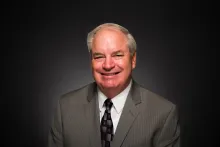
Robin Webber was born in Chicago, Illinois, in 1951, but has lived most of his life in California. He has been a part of the Church of God community since 1963. He attended Ambassador College in Pasadena from 1969-1973. He majored in theology and history.
Mr. Webber's interest remains in the study of history, socio-economics and literature. Over the years, he has offered his services to museums as a docent to share his enthusiasm and passions regarding these areas of expertise.
When time permits, he loves to go mountain biking on nearby ranch land and meet his wife as she hikes toward him.
