
Don Ward
This transcript was generated by AI and may contain errors. It is provided to assist those who may not be able to listen to the message.
Brethren, we are celebrating, as you know, the Feast of Trumpets, which has such symbolic significance. For me, it's been 51 years since the first time I kept the Feast of Trumpets. And I brought this shofar with me, which is a symbol of this feast. It's actually a feast of trumpets. It should be more like the Feast of the Shofars, because this was the primary instrument they used. God did create or have made two silver trumpets that were for the tabernacle area. So people would come in and gather there, especially when the children of Israel were out in the wilderness. But, of course, with maybe millions of people, they would use shofars farther out. And as the people of Israel spread out, this was the primary instrument. They didn't have silver trumpets everywhere. They just had them in the tabernacle area. They also had them at the time of Christ's Day in the Temple period in Jerusalem. During that time, they also had the silver trumpets. And it's interesting that if you ever visit Rome, they have the Arch of Titus. And that's a monument to the defeat of the Jewish people back in 70 AD. And on that arch above that period, they have a wall relief, which is an etching of the Roman soldiers carrying the different things from the Temple. And they're carrying the big seven-lighted lamp that they used at that time, the candelabra. They also had the table of showbread. You can actually see it. I've shown it here before, where we had some slides of it. And it showed the two silver trumpets that they took from the Temple period. But, like I said, the shofar is one that is much more used than the silver trumpets. As we can read in Psalm 81 verse 3, it says, Blow the trumpet at the time of the new moon, at the full moon, on our solemn feast day. Now, it's interesting that they have a Bible translation called the Tree of Life version, which brings out a little more of the Hebrew involved. And it says this, Blow the shofar at the new moon, at the full moon, for the day of our festival. And the title of this sermon is, Blow the trumpet on my feast day. Because God says that we should blow the trumpet on his feast days. Now, when it says, Blow the shofar at the new moon, it's referring to what Roy Tower brought up. That's the Feast of Trumpets, the first day of the seventh month, which is the time of the new moon. That's when you can't see it, because it's just beginning. But then it says, to blow that shofar at the full moon, as well. And what are the two feasts that start in the full moon? Passover and the Feast of Tabernacles. They're both on the fifteenth of the month, which is from the new moon. Then it goes into the full moon. And then, of course, it starts diminishing to again begin the new moon cycle, over and over. So, I have a question for you. When do we begin to see the significance of the trumpets in the Bible? When would you say we begin to understand the significance of trumpets in the Bible? Many would say in the book of Exodus, where God reveals his feasts, or Leviticus, we've read, Leviticus 23, where it talks about the Feast of Trumpets. That's one of the feasts of God. But actually, the beginning of the understanding of the Feast of Trumpets starts in Genesis 1, in verse 14. Genesis 1, verse 14. Let's read it. It says, Then God said, Let there be lights in the firmament of the heavens, to divide the day from the night, and let them be for signs, and for seasons, and for days and years. The term seasons here comes from maudim in the Hebrew, which has to do with religious festivals. That's why in this Tree of Life version, it says the following.
Let me go to the Good News Bible version. I'm going to read the Tree of Life in a moment, but this is Genesis 1.14. The Good News Bible version is the clearest. It says, Then God commanded, Let lights appear in the sky to separate day from night, and to show the time when days, years, and religious festivals, in other words, maudim in Hebrew, begin. So if God already had in mind these special feast days that he was going to establish, and by the way, on this fourth day was when God ordered the solar system to be able to count the days and the months of the year. He set them up. Of course, he created the earth already because there at the beginning it says God created the heavens and the earth. But then he reordered during this fourth day and put things all in their place. You couldn't have day one, two, and three where you already had vegetation and everything with no sun or moon. It had to be created previous, but this was ordered and arranged properly. Notice what Adam Clark's commentary says about Genesis 1.14. It says, This is for the determination of the times on which the sacred festivals should be held. In the sense this word frequently occurs about that Moadim, and it was right that at the very opening of his revelation, in other words, Genesis 1, when he starts revealing things to people, he says God should inform man that there were certain festivals which should be annually celebrated to his glory. Isn't that incredible? That some Bible commentator, he says, this is what God set up, and these are the feast days that should be celebrated for God's glory. And guess what? When in one ear and out the other. But that is a startling and remarkable admission. Not only did Adam Clark, and by the way, that's an old commentary. Anybody can download that if they want and check it out on Genesis 1.14, but also the Kyle and Delish commentary, which is more scholarly. These are Hebrew experts. On Leviticus 23, verse 2, notice what they say. They comment, where God says, these are my feasts, those are sanctified, which means set apart for holy use, to me. God says, these feasts are sanctified to me. So I thought that's an interesting, that when we keep the feasts, we actually are setting it apart to give glory to God. In other words, sanctifying it to God, making it something pure. Now we can make it something impure. We can step on it, as it talks about the Sabbath day, that you can go ahead and just step on it and dirty it up. But this is a way to honor God, to sanctify this holy day. He says, the festal seasons, which means the festival seasons and days were called feasts of the Eternal. He used the term Yahweh. We would change it to the feasts of the Eternal, times appointed and fixed by God. And then, you know what he uses? Genesis 1.14. That's what the commentary says. If you want to see how they were appointed and fixed by God, see Genesis 1.14. So they made the connection between Genesis 1.14 and these feasts that are fixed and they're sanctified. And we can sanctify them by the way we keep them. Then, if we start going forward in time, the first time God mentions outright, his feasts are in Exodus 12. Or, I should say, is in Exodus 12.
Exodus 12, verse 1 and 2. Roy Tower alluded to this about the feast during Abib, the first month of the religious calendar of God. Verse 1, it says, Several reasons why God did that. First of all, they were in the middle of Egypt. They'd been there for hundreds of years. The Egyptians had their own calendar. That didn't start at that time. And God is saying, you're going to break with that habit of the Egyptian calendar and this is God's calendar. He's starting it. So, he says here, Doesn't say, after the 14th day. Or that you're supposed to sacrifice it after the 14th day. No, you're supposed to keep it until, as it begins.
Then the whole assembly of the congregation of Israel shall kill it at twilight, at the beginning. That's how long you keep it. You don't keep it to the 15th. But here, at the beginning of the 14th, it is sacrificed.
And so, this is the first of God's feasts that he reveals. Now, he had it in mind even before Adam and Eve were created. In Genesis 1.14, it mentions that he had this. But now, the sequence begins with the Passover and its significance in the Old Testament about this feast. Going on in Exodus 19. Exodus 19 in verse 5. They're here in front of Mount Sinai. They've journeyed for almost three months. The Jewish people, the tradition is that they were given the law of God at Pentecost, the day of Pentecost. That is not said explicitly in the Bible, so we can't just be dogmatic about it. But it certainly does chronologically make sense, but the Bible never reveals it fully. In Exodus 19 verses 5 and 6, God says to the children of Israel, Now therefore, if you will indeed obey my voice and keep my covenant, then you shall be a special treasure to me above all people, for all the earth is mine. There's one little word there that's so important. It's if. If you obey, if you keep the covenant, then you will do so. It was conditional on obedience, on following God. And then he goes on to say, and you shall be to me a kingdom of priests and a holy nation. These are the words which you shall speak to the children of Israel. So give them a chance to be a light in the world, to in that way be an example, so that other nations are going to want to keep God's feasts, God's laws. Priests are intermediaries. And so here you have a whole nation which should be a model and a light to the nations, because they were all in darkness. They are following demons instead of the true God. So they had a chance to come. And this is why it's important. Some people say, as Roy Tower brought up, that, well, this is just for the children of Israel. But wait a minute. That was conditional, that the children of Israel were the ones that were originally given this, but it wasn't exclusive. People had opportunities. If they would have given a good example, if they would have followed God, other nations were going to want to follow them. God is not a respecter of persons. These feasts were not for the children of Israel. They were given to the children of Israel so they could be priests and intermediaries so others would come. Just like the church, as such, now, is also an example. And we should be a light so that other people can come along just as we did. Because we saw someone, almost 50% of the people that come, come through the example of someone else. Not because they immediately got a hold of some magazine or saw a program. Almost 50% come in from our personal example. Notice in Isaiah 56, and then we're going to come back to Exodus 19. Isaiah 56, it's a good scripture to show people that these laws were not made exclusively for the people of Israel. Isaiah 56, verses 1 through 7.
Verse 3, he says, So somebody comes from another nation and he starts keeping it, but he says, you know what? I'm never going to be an Israelite. I'm always going to be a second-class citizen. No. God says, if you keep my commandments and my ways, he says here, nor let the eunuch say, here I am a dry tree. This eunuch, in those days they castrated people for certain jobs, like working in a place where the king had his women, and so they castrated him and he couldn't have children. And so it says here that the eunuch would say, well, here I am. I'm never going to be good enough for God, like the rest of the people of Israel. God answers, Better than that of sons and daughters, I will give them an everlasting name that shall not be cut off. Also the sons of the foreigner, who join themselves to the Lord to serve him and to love the name of the Lord to be his servants, everyone who keeps from defiling the Sabbath and holds fast my covenant, even them I will bring to my holy mountain and make them joyful in my house of prayer. Their burnt offerings and their sacrifices will be accepted on my altar, for my house shall be called a house of prayer for all nations. So God is saying this is open. God is not a respecter of persons. Unfortunately, Israel left such a bad example that other nations didn't feel drawn to them. But the principle was there. In going back to Exodus 19, we go on to verse 16. It says, And when the blast of the trumpet, the shofar, sounded long and became louder and louder, Moses spoke, and God answered him by voice. And this is when the Ten Commandments would be given to God. But again, you see the shofar announcing the presence of God and a great event is about to happen, which is the giving of God's law to all of humankind, not just to one people. From there, we can go to the great events where the blowing of the shofar takes place. Mike, can you play for a minute?
Thank you. So, anybody that understood God's word in the Old Testament would notice that God uses the same pattern of the sound of trumpets to announce important events that take place. For instance, what happened when the children of Israel were about to enter the Promised Land? How did they enter it? They entered it with the blowing of a shofar. Notice in Joshua 6, Joshua 6, here, let's start in verse 3 of Joshua 6. It says, It says, It shall come to pass when they make a long blast with a ramp's horn, and when you hear the sound of the trumpet, that all the people shall shout with a great shout, then the wall of the city will fall down first, and the people shall go up every man straight before him. Again, looking at it in the Tree of Life version, Joshua 6.4, it says, Koanim, that's the name of priests. Priest is Cohen, and im at the end is plural. Koanim, seven konim, will carry seven shofarot, which is plural for shofar, of ramp's horns before the ark. Then on the seventh day, you are to circle the city seven times while the konim, the priest, blow the shofarot, which announce God's judgment upon Jericho. And you know that after that was done, it wasn't the power of the Israelites, it was the power of those trumpets announcing God's miraculous destruction of those walls around Jericho. There's a second example we have, the destruction of the Midianites in Judges 17 with Gideon, Judges 17.
Let's see if I got it right. I think I...
Maybe I think I... instead of 17, it was here, chapter 7, verse 9. Judges 7. It says in verse 9, But if you're afraid to go down, go down the camp with your servant. And then it says here, later on, verse 16, Then he divided the three hundred men into three companies, and he put a trumpet shofar into every man's hand with empty pitchers and torches inside the pitchers. And he said to them, Look at me and do likewise. Watch, when I come to the edge of the camp, you shall do as I do. When I blow the trumpet, the shofar, and I and all who are with me, then you also blow the trumpet, shofarot, on every side of the whole camp, and say, The sword of the Lord and Gideon. In verse 22, When the three hundred blew the trumpets, the shofarot, the Lord set every man's sword against his companion throughout the whole camp, and the army fled, and they were all defeated. Again, God intervening miraculously with the blowing of the trumpets. Another example we have of the blowing of the shofar had to do when a king of Israel was coronated. When he rose to the throne, the same thing happened. Notice in 1 Kings 1, 1 Kings 1, verse 34, this is the ascension of Solomon to the throne of Israel.
It says, Then let Zadok, the priest, and Nathan, the prophet, anoint him king over Israel, and blow the horn, the term is shofar, and say, Long live King Solomon. And then in verse 39, it says, Then Zadok, the priest, took a horn of oil from the tabernacle, and anointed Solomon, and they blew the horn, the shofar, and all the people said, Long live King Solomon.
So we see the importance of the blowing of the shofar announcing either the coming of a king or a great event in which God is going to intervene in world affairs. So this is what this day symbolizes. One day, God is going to shake the world up, and it's the sound of those trumpets by those angels that are going to cause, and it's going to be too late for people to want to wake up. It's going to be a time when God's people are going to be awake. They're going to be keeping these feasts in anticipation of what is coming.
And believe me, the way things are going downhill so quickly, who knows how much more God is going to put up with this when people are flaunting their lifestyles, and they just are basically trumping their noses at God. Saying, you can't do anything about it. We're going to go our wicked ways. Very dangerous to do that before God. In Isaiah 58, again, the sound of a shofar is a way to announce the work of the watchman.
What God's church is doing at this present time. In Isaiah 58, in verse 1, it says, Cry aloud, spare not, lift up your voice like a trumpet. The term is shofar here. Tell my people their sins, their transgressions, and the house of Jacob their sins. Like it says in the Tree of Life version, cry aloud, do not hold back. Raise your voice like a shofar. Tell my people their transgression and the house of Jacob their sins. That's part of getting the gospel out. Yes, it's a gospel of hope, but it's also of a warning to the world. What is coming?
And we have all of this literature to show people, to wake them up, how they are transgressing and breaking God's holy laws. And the consequences that are going to come upon them, that we don't want that to happen. But the world is not paying attention. Now let's go to the New Testament.
In Luke chapter 2, in verse 13, we have the announcement of the first coming of Jesus Christ. Luke chapter 2, in verse 13. It says here, in Luke chapter 2 verse 13, it says, And suddenly there were, when He had called the shepherds, it says, There was with the angel a multitude of the heavenly host, praising God and saying, Glory to God in the highest, and on earth peace, good will toward men.
So it was when the angels had gone away from them into heaven, that the shepherds said to one another, Let us now go to Bethlehem, and see this thing that has come to pass, which the Lord has made known to us. And they came with haste, and found Mary and Joseph, and the babe lying in the manger.
Notice who God used? He didn't use the chief priests. He didn't use the chief leaders. He went to the shepherds, some of the most humble people around, and that's who the angels reveal, the first coming of Jesus Christ. So this coming was not of a king to rule over the earth, but it was that servant of God who was going to give his life for the sins of mankind.
And so the first coming was very low key. It wasn't announced with trumpets, and everybody was going to be aware of it. It was done very silently, just very few witnesses, because of the condition that Jesus Christ came at that time, not to rule over the nations, but to die for the nations. And then we go to Matthew 24, verse 31. Christ describing his coming with the shofar sounding, the trumpets. Matthew 24, verse 31.
He says, When the Son of Man comes in his glory, and all the holy angels with him, then he will sit on the throne of his glory. Did I get that right? Sorry, chapter 24. I got chapter 25. Verse 31. It's amazing how it still coincides with something, but here, verse 31, he says, And he will send his angels with a great sound of a trumpet, and they will gather together his elect from the four winds, from one end of heaven to the other.
It means all the earth. That's the first resurrection that takes place, and it is with the sound of a shofar. The word in Greek is saupinx. S-a-l-p-i-n-x. And it's the equivalent to the Hebrew shofar. Notice how the Tree of Life version has it. It says, He will send out his angels with a great shofar, and they will gather together his chosen from the four winds, from one end of heaven to the other. Mike, can we have that sound again?
Thank you. Now, one day, that's going to be the sound where all our beloved who are dead in Christ, they will awaken. We're going to be able to see them again in their glorious spirit bodies.
In 1 Corinthians 15, verse 52, 1 Corinthians 15, verse 52, 1 Corinthians 15, verse 52, And let's start in verse 51. It says, Behold, I tell you a mystery. We shall not all sleep, because not everybody's going to die before Christ returns. But we shall all be changed in a moment, in the twinkling of an eye, at the last trumpet. For the trumpet will sound, and the dead will be raised incorruptible. And we shall be changed. So again, Paul, knowing what Jesus Christ mentioned, now he repeats this about Christ coming.
The sounding of the trumpet, notice how it has it in the Tree of Life version. It says, verse 52, In a moment, in the twinkling of an eye, at the last shofar. For the shofar will sound, and the dead will be raised incorruptible. Now, it's interesting that it talks about the last shofar. It just doesn't say one shofar. So there are a series of shofars, and the last one is the one that announces the coming of Christ. And certainly, that is in more detail found in Revelation 8, where the seven angels are given seven shofars, seven of these trumpets, and it's with the seventh that it announces the descent of Jesus Christ upon this earth.
Now, how much did Paul have revealed? We don't know. But it's very interesting that somehow he understood there were going to be previous trumpets that were going to sound, and it was the last trumpet, which is the one that is going to awaken the dead, and the resurrection is going to take place. In 1 Thessalonians 4, verse 16, I hope I'm not belaboring this point that the Tree of Life version uses the term in the New Testament, the equivalent of the Greek into shofar.
It says in 1 Thessalonians 4, verse 16, It says, The Tree of Life version has it or the Messiah as it has here. So again, everything is very exact. Everything is in order. God does not do anything out of place. And that takes us to Revelation, chapter 8, starting to wind down the message. Revelation, chapter 8, and verse 6, It says here, In the complete Jewish Bible version, it says, And then you have the different trumpets that have already been discussed. I'm not going to go into it.
Homer Moore went into it this morning, and Roy, too. In chapter 9, in verse 1, it says, And the fifth angel sounded, And I saw a star fallen from heaven to the earth, And to him was given the key to the bottomless pit. And he opened the bottomless pit, And smoke arose out of the pit like the smoke. This is one of the invasions that will take place, one of the armies that will come out, being led by Satan.
And in verse 21, after all of these six trumpets sound, it says, And they did not repent of their murders, or their sauceries, dealing with demons, or their sexual immorality, or their thefts. That's what we're seeing. A rampant rise in all of these types of crimes. There was a period of time when the crime scene sort of went down.
There was better vigilance. There was more electronic means. But guess what? The permissiveness of the government now letting criminals out. Now they're even talking about hiring... Amazon's going to hire people that use marijuana. They just say, we don't care. We're not going to look into your records. But what it's doing is it's promoting all of this type. And some of these terms, sauceries also have to do with drugs.
And getting high is very sad what we see today. In chapter 11, verse 15, we come to the seventh and final trumpet. It says, Then the seventh angel sounded, And there were loud voices in heaven, saying, The kingdoms of this world have become the kingdoms of our Lord and of His Christ. And He shall reign forever and ever. Notice, it's not just the kingdoms of Jesus Christ. It's God the Father first. And Jesus Christ, who is under Him, that they're going to rule over the earth.
In the complete Jewish Bible, it says, The seventh angel sounded His shofar, And there were loud voices in heaven, saying, The kingdom of the world has become the kingdom of our Lord and His Messiah, and He will rule forever and ever. So, to finish here in chapter 19, in verse 6, this is when Jesus Christ finally returns, and it says in verse 6, And I heard, as it were, the voice of a great multitude, as the sound of many waters, and as the sound of mighty thundering, saying, Hallelujah, for the Lord God omnipotent reigns. Let us be glad and rejoice, and give Him glory, for the marriage of the Lamb has come, and His wife has made herself ready. So, that's what we are doing now, because that trumpet is not only sounding a warning to the world, it's a trumpet that's sounding for us, too, to be that bride of Christ, to prepare ourselves spiritually. And part of that is keeping this Holy Day. We're sanctifying it to God. We are keeping it holy to God, and the way we are respecting it, we are not defiling this day. That's very important to understand. And then it says in verse 11, Now I saw heaven opened, and behold a white horse, and he who sat on it was called Faithful and True, and in righteousness he judges and makes war. His eyes were like a flame of fire, and on his head were many crowns. He has a name written that no one knew except himself. He was clothed with a robe dipped in blood, and his name is called the Word of God. That's Jesus Christ. And the armies in heaven, clothed in fine linen, white and clean, followed him on white horses. Now out of his mouth goes a sharp sword, that with it he should strike the nations, and he himself will rule them with a rod of iron. He himself treads the winepress of the fierceness and wrath of Almighty God, and he has on his robe and on his thigh a name written, King of kings and Lord of lords. So that's the establishment. That's what we are looking forward. And of course, the next step is in Revelation 20, when Satan is going to be removed, that has to do with the Day of Atonement. And then that wonderful establishment of the kingdom of God, symbolized by the Feast of Tabernacles, and then the last great day, that period of time after that. So brethren, we have a lot to be thankful about. This day, this wonderful Feast of Trumpets, it gives us so much hope. And remember, the trumpets, those shofars, are there to warn the world, but also to encourage all of us. One last time.
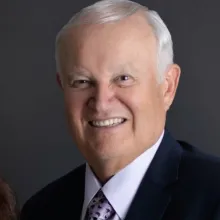
Mr. Seiglie was born in Havana, Cuba, and came to the United States when he was a child. He found out about the Church when he was 17 from a Church member in high school. He went to Ambassador College in Big Sandy, Texas, and in Pasadena, California, graduating with degrees in theology and Spanish. He serves as the pastor of the Garden Grove, CA UCG congregation and serves in the Spanish speaking areas of South America. He also writes for the Beyond Today magazine and currently serves on the UCG Council of Elders. He and his wife, Caty, have four grown daughters, and grandchildren.
