
Mario Seiglie
This transcript was generated by AI and may contain errors. It is provided to assist those who may not be able to listen to the message.
How many here enjoy a good science fiction movie? Can I see just about everybody? Now, I said a good one because, of course, there are all kinds, but I loved science fiction. I grew up in that age when you had all of these comic books and novels and H.G. Wells and Jules Verne, and I couldn't get enough of that type of excitement and adventures, 12,000 Leagues Under the Sea. But there was one movie that did fascinate me. It was actually in 1960 that it came out for the first time, and years later I was able to watch it, and it was called The Time Machine. Afterwards, you've had a couple of modern versions of it, and then you had another movie Back to the Future, where you're actually traveling in this de la reine, and you're able to fly back in time or forward, and everybody enjoys that type. There's something fascinating in the human being about time travel. Now, this is also for the young kids that are listening in and the youths, because they're excited. How would you like to be able to travel back in time or forward? I think we all look forward to something like that.
It was the famous scientist Albert Einstein who said, imagination is more important than knowledge, because knowledge has to do with facts, but it's a human mind that can put all of these together in such a creative and imaginative way.
For me, I remember when I came into the church, I was only 17 at the time. I didn't come with my parents. I came on my own. I actually had to sort of take off without my parents' permission on this special day. I remember I did tell them I was going to go out and be with my friend, but we didn't tell them where they were. I was going to go to this church that they had no idea about. It was about an hour and a half drive, but it was the Feast of Trumpets. It was back in the Chattanooga area by a lake. They had this beautiful setting. I remember going there for the first time and listening to the message of one of God's feast days. To me, I was transported at that time. I learned that the Bible is a type of a time machine. It can take you back in time to the present and even to the future. It has God's stamp of approval. It is His promises that nobody can obstruct or eliminate. At that time, of course, I became hooked on this way of learning about the Bible. Just like I had that first trip, what kind of time machine am I talking about? It's not one created by man. It's not made out of metal. It's actually made by God. It has to do with a special time in which He blesses a space of time. He opens our minds that seven times in the year, we're able to enter a sort of a time machine and be able to be transported through the Bible into these wonderful events that we should never forget. Because God is relaying these great truths about this plan of salvation and the steps that He's taken through history to carry out His will. So while the rest of the world is ignorant of this special time, this space that He has blessed, and He tells His people, you're going to enter this space of time and I'm going to transport you into the meaning of these special days. And now we are on this third trip during this year that we have entered this holy time. Now, most people are not aware of it, but God revealed this great secret about the importance of His feast days back not with the Israelites, but back before man was created in Genesis 1. In verse 14, there are hidden truths there. Unfortunately, the translations that we used in New King James really doesn't bring it out. What it is, the original language in Hebrew, what it's telling us. So I would like to read in different translations Genesis 1, verse 14. Now, some of you that are pretty savvy and you've got your computers and you can go and see different versions. If you look at the easy reading version of Genesis 1.14, and of course, these are basically evangelicals or Protestants. That are translating this. They have, as they say, no dogs in the hunt. They don't have anything that's going to benefit them, but they see what it says in the original Hebrew. And so in this version, it says, then God said, let there be lights in the sky.
These lights will separate the day from the night. They will be used for signs to show when special meetings begin and to show the days and years. So here we have not just the rearranging of the solar system and putting things in its proper order, but it's actually talking about God is creating special times. As the earth rotates, you come to a special time. Now, how many people know that? Very few. But even before the creation of mankind, God already had set up that there would be special times. Notice what it says in the Good News Bible version of Genesis 1.14.
Then God commanded, let lights appear in the sky to separate day from night and to show the time when days, years, and religious festivals begin. So some people say, how can you keep these feast days? How are you sure that you're in the proper day? I had a gentleman that's been attending church. I don't know if Edward is here somewhere, but he's a new person. And we explained to him, it's very simple. We see in Leviticus 23, it says, this is the first month, and in the 14th day of the month, you will keep the Passover.
The word month actually has to do with the moon. In that first month, when you have this lunar cycle that lasts approximately 29.5 days, that on the 14th, all you have to do is keep observing and registering the moon, the lunar cycle that goes around the earth, and you're going to have basically a month. And so, this has been established thousands of years ago, and God actually established it even before the creation of man. He already had set up this astronomical clock for human beings to determine when the festivals begin. And we know from one evening to the next evening, that's Pentecost. That's what we're keeping today. Notice what the amplified Bible says of verse 14. Let them be useful for signs or tokens, which has to do with something God gives, a gift. These are tokens of God's provident care and for them to mark the seasons. So, we've got two words here, signs, auth, and in the plural it would be autot, which has to do with signs as markers, that He sets these markers, and then you have the term, religious festivals, mo'adim, in the Hebrew. That's what it is in the Hebrew. It's not talking about just regular seasons. He's talking about religious days that He has established. Notice the Lexham English Bible. It says, let them be as signs and for appointed times. Now, when you have an important meeting, they say you have an appointment. You might have an appointment with a doctor or with a lawyer. Whatever it is, it's an important moment. You set up. You prepare for it. It's an appointment. You're supposed to keep it. And so, here we have appointed times. God established them, not man. Now, whether you show up or not, that's up to you. But we have an appointment to keep with God. Continuing on in the contemporary English version, it says, to show the time for special days. Again, the word special. This is something set apart. It's something that isn't ordinary, that is normal. It's a special day.
The version that was used here this morning, the contemporary English Bible, says they will mark sacred seasons. So, it brings out that these Moadim, these religious festivals, are sacred. They are holy. God set them as holy spaces. We only have these feasts once a year, where they are special spaces. God wants us to worship Him at that time. And, of course, then we have the Sabbath, which is every seven days. Then we have this special time as well. So, as we come to the knowledge of the truth, we cherish, because it's not man-made. It's God-made. So, there's no argument here that God set this all apart for us to worship Him.
The new international reader's version says, let the lights set the times for holy celebrations. This is Genesis 1.14. This is before the creation of Adam and Eve. And we have these holy celebrations. Today is one of them. Notice these are the true religious festivals. There are no other that exist on this earth. You can keep Mohammed's festivals, you can keep Catholic festivals, Protestant festivals. Those are all man-made.
Those are not established before the creation of mankind. And we also have, not only in Genesis 1.14, this truth, but God repeats it one more time, just to make sure we get the point. When God repeats something in the Bible, it's because it's very important. Notice in Psalm 104, Psalm 104, verse 19, it says here, I'll just read it from the New Kingdom, James version, which doesn't really say much. It says, He appointed the moon for seasons. The sun knows it's going down. But the term is, again, Moadin, which has the principal meaning of religious festivals.
And so we do have, for instance, the easy reading version of the Bible, which says, Lord, you made the moon to show us when the festivals begin. And the sun always knows when to set. So we have these two great lights, which God said, just like in a watch, which is very carefully timed. We have the solar year, which is very important for crops and everything else. But we also have the lunar year, in which the moon goes around 12 times.
And then a fraction, which you have to, every three years, add another month to it to keep it going. But the important thing is, it says it is with the moons that God establishes to show us when these festivals begin. And so we have this month that God tells us during this day. It's a day of Pentecost. It's holy time. And guess what? We're not talking about some partisan religious thing. This has nothing to do with what religion a person can be. This is talking about God and what He has established. And of course, people are going to try to explain it away. But to me, it's so important to realize, yes, God respects.
This time, He expects us to observe it in its season. So God had in mind these religious festivals and their meanings even before the creation of mankind. And He has revealed to His people those times and those meanings, which are so important for us to rehearse, to remember during this holy space of time. Now, as you know, only God can make something holy. And so instead of making a machine like a time machine, no, He made a space. He said, my people are going to remember the meaning that God has in His plan of salvation.
And this is the one regarding Pentecost. So each year, so to speak, we get into this time machine seven times. And we're able to look back, we're able to look to the present, and we're able to look to the future of what this day is all about. And never forget it, because it's true. Whether we want to believe it or not, that's only humans thinking.
This is the way God thinks. This is what He has committed Himself to carrying out. And nobody can frustrate the plans of God. So the purpose of this message is to take you on seven trips in this time machine, through His Word, and appreciate, in particular, this day of Pentecost and its full meaning. So these are seven trips during the year that we take. And Leviticus 23, verses 1 through 2, and 4 through 5, it tells us about these seven feasts.
Let's go to Leviticus 23, because again, these are the holy times that deal with His feasts, and these are all very well ordered. Leviticus 23 is where you have the fullest description of these feasts. Notice what it says, starting in verse 1, And the Lord spoke to Moses, saying, Speak to the children of Israel, and say to them, The feasts of the Lord, not of human beings, which you shall proclaim to be holy convocations, these are my feasts.
So what He had done originally, setting it all up, this holy time, now it was time to reveal it to His people, so that as a people, they could start observing it. He goes on to say, in verse 4, These are the feasts of the Lord, holy convocations, which shall be proclaimed at their appointed times.
God sets up these appointments. He did it astronomically. So it just takes calculation, and that's why we have that calendar that has five, six years, with all the feast days, because they have all been calculated according to God's appointed times.
On the 14th day of the first month, again, it means the first moon, because the moon begins from the first little sliver that you see, and it takes 29 and a half days to go through the entire cycle. That's why at the middle of the month, you have a full moon, and then you have the waxing, the three-fourth crescent, and then finally it disappears, and then you begin with a new moon again. It doesn't change. It's always so accurate. So this is to be kept.
On the 14th day of the first month at twilight, is the Lord's Passover. There's no other time to keep the Passover than at that moment. Notice what it says in the contemporary English version of these verses 1 and 2. The Lord told Moses to say to the community of Israel, I have chosen certain times for you to come together and worship me.
See, it's God. Do we accept His invitation or not? But there's an appointment, and He's opened our minds to it. That's why to me it was so exciting, even in my very immature mind, being called and all of a sudden, wow, I'm starting to keep these feasts with God's people. I can understand this Bible now.
I can understand these wonderful truths. I can understand what is God's will for me throughout my life. And it's been a wonderful life. If I had 50 lives to live, this would be the best of them all. Not because of anything that I'm worthy of, but because of what God has done to His glory and honor. But that's the way I feel. Notice the New Living Translation. It says, give the following instructions to the people of Israel. These are the Lord's appointed festivals, which you are to proclaim as official days for holy assembly. These are official. This is something very important to God.
So these are God's appointments for us to enter into this time machine. The seven feasts each year were able to do it to review the events and the meaning. And it's time to do so with the Day of Pentecost.
Are you ready to enter God's time machine as it deals with the meaning of Pentecost and the Holy Spirit?
We're going to use the Bible with our imagination to travel on seven trips to these seven time periods, which have to do with Pentecost.
First, just as in the movie, the time machine had a lever. If you went forward, you went forward in time, but you could go back in time. So we're going to take that lever and we're going to go back in time, back, back, back to the beginning of the creation of mankind.
In the Garden of Eden, we already... Okay, we're going to go there. Okay, just imagine right now, you're in the Garden of Eden.
Everything is beautiful. Something that no Versailles in France could ever emulate or imitate. Nothing on earth would be as beautiful as this pristine environment. And guess what? All the animals are tame. They look at you with that playful look. There's no harm. They're all vegetarians, so you don't have to worry about that. They're there for you to play, like little puppies, to do so.
And of course, they all have their personalities and abilities and parrots can parrot your words and you can get next to a lion and enjoy the warm fur there. But the important thing is, in the midst of this beautiful garden, you see two trees. And God told us, now there's one tree you should never take its fruit of. This is the fruit of choosing to reject my way of life and going the wrong way of independence, of trying to decide on your own what is true and what is false. But there's another tree, and that's God's tree, the tree of life.
And if you choose it, then you reject the other tree and you choose my way of life.
And of picking of that fruit, you will receive God's Spirit and eventually eternal life.
Well, the humans had to decide that and God permitted Satan to be there to give his side of the story. And guess what? Human beings chose the wrong tree, the tree of the science of good and evil. And we've been there eating of that tree ever since then.
But that tree of life symbolizes receiving God's Spirit and of this day of Pentecost, which has to do with receiving God's Spirit. Because sometime in the future, God opened it up for humans to choose his way of life, to receive that Holy Spirit and eventually receive eternal life.
It's just a matter of time. You don't get it all immediate, but that's the end result of it.
And so it's back in that Garden of Eden where that tree of life symbolizes what this day of Pentecost, of the Holy Spirit, it was offered to two human beings at the time. And God saw, no, they're not ready. They're going to have to learn to appreciate and to realize what Satan's way of life, that's the wrong way of life. And I want them, just like this type of aversion therapy, they use sometimes for alcoholics, they just let them drink until the time they vomit it all out. So they say, are you through? Are you happy? Are you ready to give it up forever or not? It's the same type of thing that human beings, they have to realize a sin is not going to produce good fruits. It's not the way to live properly.
And so mankind would not have more access to that tree of life except for a select few that God would use to transmit his truths. And about Pentecost and everything else, he would have to choose certain individuals, but never a group as such. These would be the selected few prophets and men of God, Abraham, Moses, David, the prophets, that they would have God's Spirit, but it was very limited because they really didn't have a church to go to. They didn't have anybody else converted around them. In most cases. Let's go to 1 Peter chapter 1 to see what it says here about these select few. 1 Peter chapter 1 verse 10. It says, So yes, there were these people that had God's Spirit in them. But there were, again, a select few just to be able to write God's Word and basically be used to carry out God's will on this earth like many other prophets did. Another scripture that goes along with this one is Hebrews chapter 11 verse 39. Go back a little bit. Hebrews 11 verse 39, talking about all these men and women of faith in the Old Testament. And notice they had God's Spirit. It says here in verse 39, So they're still waiting for that first resurrection to be glorified with all of the church brethren. So they're still waiting for that, but they did qualify to be part of God's kingdom. And so from that first trip in the Garden of Eden, we learned a lesson that, yes, that tree symbolizes what Pentecost is all about. And of course, God's Spirit would not be given through thousands of years until we come to the second trip. Now we move forward with this time machine, and now we are in Egypt. Around the year 1446 B.C., we are there with the Israelites as they kept the first feast pass over.
And then they left with a powerful hand after all the plagues. God liberated them, and they were able to keep the second feast, the Days of Unleavened Bread, described in Exodus 12 and 13.
And then they took that journey, approximately 50 days, to get to Mount Sinai.
From the Sabbath during the Days of Unleavened Bread, counting 50 days, to that fateful day at Mount Sinai.
Now, practicing Jews celebrate this day of Pentecost as the giving of the law.
It's not directly mentioned in Scripture, but it certainly is very probable that it coincides with this day.
It's the next great event after Passover, the passing of the Death Angel, and then the passing through the Red Sea.
The next event is the third one on Mount Sinai.
And there, in the midst, we can see, as we're there with Israelites, the thunder, the lightning, the trembling of the ground, the smoke on top of that mountain, and then God giving His laws.
But not just the Ten Commandments, like you see many times, it seems like, well, that's what He did. He just gave the Ten Commandments.
But actually, that's only chapter 20 of Exodus, because you have chapters 21, 22, and 23 that are full of more laws that were given at that time.
So it's basically giving the basic framework of God's laws, which include this day of Pentecost.
That was given up there on Mount Sinai, and it was directly done at that time.
Notice in Exodus 23, verse 16, this is the same day on Mount Sinai, verse 16.
It says, And the feast of harvest, which are the feast of Pentecost, the first fruits of your labors, which you have sown in the field, and the feast of in-gathering at the end of the year, when you have gathered in the fruit of your labors from the field. This says, This is talking about this holy time, this space that the Israelites were able to keep at that time. And from that time, approximately in 1446 B.C., up to this present time, the Jewish people have been keeping these feast days.
On and off sometimes, but basically they have been pretty faithful to it.
And now we are ready to move forward.
We move the lever forward some 1,470 years later, and now we're in the New Testament times.
Yes, in Acts 2, verse 1, we've come to this moment when God's people... Remember, all of this happens with people that God reveals these truths to. Here we are at the beginning of the New Testament times, starting in chapter 2, verse 1.
It says, When the day of Pentecost had fully come, they were all with one accord in one place. So they knew what day was the day of Pentecost. They were expecting something important to happen at that time. These were God's people. They were keeping God's feasts. God, the space of time, which is special time.
And suddenly there came a sound from heaven as a rushing, mighty wind, and it filled the whole house where they were sitting. Then there appeared to them divided tongues as of fire, and one sat upon each of them. They were all filled with the Holy Spirit and began to speak with other languages. They were given the gift of speaking other languages as the Spirit gave them utterance. And so if we were there with a brethren, this was the first time a group of people are all converted. They receive God's Spirit. This is a new era of Pentecost, the beginning of the church as we know it. And it happened basically almost 2,000 years. We're only nine years away from A.D. 31. So we're almost ready to complete that. And it looks like these are times when God is starting to wind things up. And we just have to wait patiently to see what His will is going to be. But we are, just like these people, we're waiting for God to move. We are God's people, just like in the 21st century, just like they were in that first century, receiving God's Spirit. And now, around the earth, God's people are keeping the day of Pentecost. Well, no one else thinks very important. See, they don't relate to the trip to the Garden of Eden, to the Tree of Life. They don't relate to that first giving of the law where God revealed His feast days. And then, to that first day of Pentecost in 31 AD, when the Spirit came down upon them. That was the beginning of the New Testament Church, of which we are part of in the 21st century. In a way, that Holy Spirit has been transmitted from generation to generation, as hands are laid upon the person that is baptized. And all of a sudden, they are part of that New Testament Church as well. And of course, we're kind of holding on to that faith once delivered, because it's tough. In the midst of this degenerate society and becoming more secularized, what do they care about these spaces of holy time? But if they did, God would reveal to them His purpose through these feasts. And from there, now we move the lever forward close to 2,000 years. Where are we now? Well, we're in this hotel room. Yes, the day of Pentecost. At this time, 9 years, from 2,000 years, when they received it for this time. We're keeping the same feast. We're going over the same meaning, because our roots go all the way back to that Garden of Eden and that Tree of Life. God was able to give us of that fruit. When we receive God's Spirit, it's like receiving a fruit from that Tree of Life. And of course, if we are faithful, we will receive eternal life, just like it was promised to Adam and Eve at that time. This is why we must keep God's Holy Spirit in us.
And with that spirit of Pentecost, of that same joy that was mentioned in that first message today, of loving. Because we've got to keep these truths. We've got to pass them on to our children and to our grandchildren about this special time that God has said He has set apart for His people.
So that we are not deceived by this world with all the false messages that they have. All of these other religious holidays, none of them have biblical meanings. They're all man-made, based on pagan concepts that have been Christianized or sanitized. But guess what? It's like they say, take a cow, you paint it like a horse, you call it a horse. Guess what? It's still a cow! You can't change the nature of the thing. It's man-made. It's pagan. The origin comes from the devil.
And so we are part of those who have received the first fruits of God's Spirit. Just like in Israel, it would talk about the first fruits, the first part of the crop. That was a special that was offered to God. Out of all of the billions of mankind, God has taken some to be a first fruit, to be waved and be accepted by Him. Notice in Romans chapter 8, verse 23, Romans chapter 8, verse 23, Paul says here, Not only that, but we also, who have the first fruits of the Spirit, even we ourselves groan within ourselves, eagerly waiting for the adoption, the redemption of our body. For we were saved in this hope, but hope that is seen is not hope. For why does one still hope for what he sees?
But if we hope for what we do not see, we eagerly wait for it with perseverance. So we're waiting for that eventual transformation into a Spirit being. And all the people with all the different difficulties that they have, they're waiting for that redemption of their bodies, that promise of God. But you have to have God's Spirit for that transformation to take place.
And so we're going on our fifth trip now.
We're going to go forward and move it into the time when Christ returns.
God's people have been resurrected, so now Christ is there. And he establishes his rule for a thousand years with Jerusalem as its capital. And he has all the people from the first, these first fruits from Abel, the righteous, all the way to the last person that receives God's Spirit before Christ returns, the first fruits.
And they're all gathered together. They've been transformed. They have no more human nature. They have no desire to sin anymore. They have perfect character, just like all of these Old Testament characters. They're there. Now they are perfected along with all the rest.
And the nations are going to learn the truths of God. And guess what? They're going to learn to keep Pentecost. They're going to learn about holy time, like we have done in this life. Notice in Zechariah chapter 14, verse 16.
Christ has returned. So again, we're in this time machine. Satan and his demons have been thrown into that pit where they can't come out for a thousand years.
Christ establishes his kingdom. And what is it going to do with the nations? Notice verse 16. It says, And it shall come to pass that everyone who is left of all the nations which came against Jerusalem shall go up from year to year to worship the king, the Lord of hosts, and to keep the Feast of Tabernacles. The Feast of Tabernacles lasts eight days. It's the greatest meeting. That's what we do. We're keeping Pentecost, but basically that's one day. But the Feast of Tabernacles, that's eight days. And so the Feast that is being emphasized is the one that's going to last eight days. They're going to go before Christ himself for this Feast. And it says, To worship the king, the Lord of hosts, and to keep the Feast of Tabernacles. And it shall be that whichever of the families of the earth do not come up to Jerusalem to worship the king, the Lord of hosts, on them there will be no rain. There will be an absolute drought. There won't be one bit of dew falling there. Guess what? All the crops die. Pretty soon people have hunger. They have thirst. Then they start saying, you know what? I think it's good for us to go to Jerusalem. He's going to break their will at that time. So at this time, it's going to be a rule where God is not going to tolerate rebellion and disobedience.
And what are they going to keep? Special times. From Genesis 1.14, these are the spaces that God created for man. And they will have their eyes opened, that binders that Satan has kept them in. It's going to be, they're going to fall, and they're going to be able to see God's truths, just like we got to see in our lives.
He continues and says, if the family of Egypt, of course today they're Muslims before they were pagans, will not come up and enter in, they shall have no reign. They shall receive the plague with which the Lord strikes the nations who do not come up to keep the Feast of Tabernacles. This shall be the punishment of Egypt and the punishment of all the nations that do not come up to keep the Feast of Tabernacles. So guess what? There's holy time. When Christ comes, He's going to impose this holy time. People are going to keep Sabbaths, they're going to keep Passover, they're going to keep Days of Unleavened Bread, they're going to keep Pentecost, the Feast of Trumpets, Day of Atonement, and then the Feast of Tabernacles with the last great day, the eighth day. They're going to learn to do things God's way, just like we have learned to do it. A lot of people have traveled, they've sacrificed to be here, because they know this is holy time, this is special time before God. And then it says there in Jerusalem, in that day holiness to the Lord shall be engraved on the bells of the horses. Everything around will be their sacred time. It's good fellowshipping. There's not going to be working on that day of the Feast of Tabernacles.
They're all going to be learning about these wonderful truths.
And the pots in the Lord's house shall be like bowls before the altar. People are going to want to honor God, bring their offerings, and realize what Christ did for them, and these symbols of Christ's sacrifice. Yes, every pot in Jerusalem in Judah shall be holiness to the Lord of Hosts.
Everyone who sacrifices shall come and take them and cook in them. In that day there shall be no longer a Canaanite, which means basically a pagan person, an unconverted person in the house of the Lord of Hosts. And so, yes, today we're a minority. It's a little firstfruits of this huge human harvest, but there will be one time when the Day of Pentecost will be kept by the entire world.
And they will also be able to enter into God's time machine. And they will learn all of these steps of salvation that God has provided for us. But the story is not finished yet. We need to get into our time machine two more times.
The next we move the lever again forward, and after the thousand years, we come to the beginning of the second resurrection.
And boy, don't we just anticipate that, because basically the first resurrection and that period of a thousand years, those are the people that were alive.
Just a small percentage of mankind. But now everything has been prepared for a thousand years. It's like a big house that has this great big invitation for everybody. It's taken a thousand years to prepare the earth to receive billions of people who have died in their ignorance.
And we will see, dear people, people that we loved, never understood God's ways, and they will be resurrected at that time.
And what will they learn? Well, in this millennial setting during the second resurrection, Satan's not going to be around. They will also be able to keep God's feasts. They will learn to enter that time machine and know the truth about the genuine history of the world, how God has been working his plan of salvation in this way.
And of course, everybody has people that have been dear to them, that never knew the truth, but throughout the generations, we will be able to see them. I know in particular my father, who died some almost 30 years ago, and I'm going to be able to see him alive again and be able to show him what Pentecost is all about, because Satan will no longer deceive anyone at that time.
Notice in Revelation 20, verses 11 and 12.
Revelation 20.
Verse 11 and 12, it talks about that second resurrection.
It says, This is when Christ is the one who becomes the judge of mankind.
And of course, it has to do with a second resurrection, because those that are part of the first, they've already received their reward. They don't need any type of judgment, but these people do.
And it says, And I saw the dead, small and great, standing before God. So there is a resurrection, because a dead person can't stand, can it? It has to be resurrected. But this is to physical life. Of course, with no diseases, no afflictions.
It says, The term here, Biblia, which is where we get our word Bible, these are the books that people are going to be judged about, just like we are today.
And another book was opened, which is the Book of Life.
Yes, this is the book where a person can have their names engraved when they receive God's Spirit.
And that has happened here.
Those who went through the process of baptism, laying on of hands, and of course, to have truly been converted in their hearts.
Because in every one of the churches of God, we've got people that are converted, and we have people that are unconverted. So don't ever think that we're just something special, and everybody's converted in this church. They aren't. Just like in no other place. But we know we are part of that body of Christ, and with that Holy Spirit.
And so they will learn about repentance, about baptism, about the laying on of hands, and about the symbol of Pentecost.
Because from that time of Acts, chapter 2, this extends past the millennium, all to the second resurrection.
There are still people coming to receive God's Spirit.
And they will have their opportunity to show the obedience, and following God's ways, and eventually receiving eternal life.
And that takes us to the last trip, the seventh trip. That's the one where the New Jerusalem comes down.
Revelation 22. Revelation 22, verses 1 and 2. It says, once the New Jerusalem comes down to the earth, it says, And He showed me a pure river of water, of life, clear as crystal, proceeding from the throne of God and of the Lamb. Notice how Christ is still symbolized by what feast? Anybody want to tell me?
The Passover. He's still saying this is a symbol. This was special time. When you keep the Passover, you're remembering Christ as the Lamb that died for us.
And He's not ashamed to show that symbol of a slain Lamb that has been resurrected.
But He's still thinking in terms of the feasts in the middle of its street and on either side of the river was the Tree of Life, which bore twelve fruits, each tree yielding its fruit every month.
And so we begin in Genesis chapter 2 with the Tree of Life that God offered. And at the end of the Bible, we have that as a symbol of how the converted people that went through the process of repentance, of cleaning their lives, of choosing the Tree of Life as a way of living their lives, receiving God's Spirit, persevering and overcoming into faith, and dying unless Christ returns.
But they were faithful to the end, and they will be perfected along with all of those Old Testament saints, and all of the ones that have, through the centuries, persevered. They will all be resurrected when Christ returns.
And so it's the symbol of the Tree of Life of what Pentecost signifies, the receiving of God's Spirit in mankind.
And it's a whole process. So in a sense, God's feast days do not only symbolize certain events like Acts 2, because that's just the beginning. All of these are ultimately fulfilled in the New Jerusalem.
You see the Lamb, the Passover. He's glorious. He is so overjoyed that what He did brought all of these people to become sons and daughters of God. And all of these feasts, the days of Unleavened Bread, which means purification from sin.
In the New Jerusalem, there will be no more sin. It talks about there won't be liars, there won't be cheaters, there won't be murderers, there won't be any of these.
No, it will be purity in its perfection. And Pentecost. Everybody has the full dose of God's Spirit.
They are Spirit beings. They're part of God's family. They can fly through the air. They have no necessary need for food or for sleep.
We can have super minds, super hearts, and all shaped according to Jesus Christ made into His image.
And then we have, of course, the other feasts. Christ's coming is just part of the Feast of Trumpets because it actually symbolizes the coming of the New Jerusalem.
It's the ultimate fulfillment. When God the Father joins the team, and then you have Satan being put away in the New Jerusalem, Satan is just a bad memory. He won't be around.
And then the Millennium is just an extension of the Kingdom of God in that New Jerusalem. And finally, the last great day where all of mankind will have had the opportunity to do so.
So those are seven trips that we take every year if we're faithful. We're on the third trip. We've got the fourth one in a few months, which is reminding us of the Feast of Trumpets.
That it is coming in the future. That holy time. God wants us to always remember He is coming. Are we going to prepare our lives for Him when He comes?
Or will we have to go, like it says there in 1 John chapter 2, that when He comes, we won't be transformed, and then we have to shamefully go out and realize all of these others got resurrected and not me. What did I do wrong? A little bit too late at that time. But we should look at these days as reminders of that holy time and of this time machine in the Bible, which takes us through all of these trips.
And the ultimate fulfillment, which we're all looking forward to, is that coming Kingdom of God.
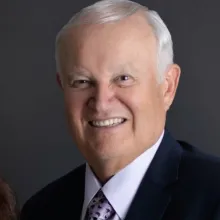
Mr. Seiglie was born in Havana, Cuba, and came to the United States when he was a child. He found out about the Church when he was 17 from a Church member in high school. He went to Ambassador College in Big Sandy, Texas, and in Pasadena, California, graduating with degrees in theology and Spanish. He serves as the pastor of the Garden Grove, CA UCG congregation and serves in the Spanish speaking areas of South America. He also writes for the Beyond Today magazine and currently serves on the UCG Council of Elders. He and his wife, Caty, have four grown daughters, and grandchildren.
