

Don Ward
We continue with our study of the Book of Daniel, we continue in chapter 9.
This transcript was generated by AI and may contain errors. It is provided to assist those who may not be able to listen to the message.
Okay, greetings again, everybody. We are in Daniel chapter 9. Daniel chapter 9. And so, if you would turn to Daniel chapter 9, we will go there. In Daniel chapter 9 and verse 1, Daniel's prayer for his people. This is one of the most solemn kinds of prayers you will ever hear. There are many lessons that can be learned and taken from this prayer that Daniel prayed regarding his people, seeking God with all his heart through prayer and fasting. So we begin in verse 1. In the first year of Darius, who had other names, it was not unusual for kings and leaders in that day and age to be called by different names, but I think this was perhaps the most common one. He was between Astatius and Cyrus over the media and the empire. Remember that they had conquered the Babylonians. In the first year of Darius, the son of Aashe, Aasherius, another name from him, was Astatius of the seed of the Medes, which was made king over the realm of the Chaldeans. So he was made king over what was the Babylonian empire. In the first year of his reign, I, Daniel, understood by books the number of the years. Now, he understood by the books the number of years. Some have taken this to say there was somewhat of a canon in the scripture when it says by the books, but there's no evidence really beyond just a few people with certain opinions about this. There were fragments of books, and of course even the the Pentateuch was inside the Ark of the Covenant, and the Ark of the Covenant was gone when the Babylonians destroyed the temple in 587 or 586 BC. Those two dates are most often given dates for the Babylonian destruction of the temple by the Medes and the Persians.
So in the first year of the reign, I, Daniel, understood by books. And it wouldn't be unusual for Daniel to have a copy of the Pentateuch or other books of the Bible and books by the other prophets. The number of years where the word of the Lord came unto Jeremiah. Now we want to look at the word of the Lord that came to Jeremiah, and Jeremiah... The words of Jeremiah are recorded here in Jeremiah 29.1 and Jeremiah 29.10. In Jeremiah 29.1, now these are the words of the letter that Jeremiah the prophet sent from Jerusalem unto the residue of elders which were carried away, captives and the priests, and to the prophets, and to all the people whom Nebuchadnezzar carried away, captive from Jerusalem. And Jeremiah goes on to say that it was to be 70 years.
Jeremiah 29.10, For thou saith the Lord that after 70 years be accomplished at Babylon, I will visit you and perform my good word toward you, and causing you to return to this place. So Daniel had read that in the book of Jeremiah, and he was seeking to understand more about it, and also asking for mercy for the return of... really it was more Judah at this time than any other part of Israel, because the bow of the Assyrians had taken the Northern Kingdom captive in 721 to 718 BC. So it was mainly to Judah. So verse 3 of Daniel 9, verse 3 back to Daniel 9. So well, let's finish here where it says, The Word of the Lord came to Jeremiah the property that he would accomplish in the 70 years in the desolations of Jerusalem. So we read that from Jeremiah 29 verse 10. Now verse 3, And I set my face unto the Lord God to seek by prayer and supplications with fasting and sackcloth and ashes. So when the prophets of old and when the people of today really want to know God and seek His will and answer to their prayers, they do it in this way, prayer and fasting and sackcloth and ashes. Sackcloth and ashes has to do with dressing up and trying to put on a front and many other things. So sackcloth is the exact opposite of that and to sit in ashes was a symbol of great humility.
And I prayed unto the Lord my God and made my confession and said, so you notice here that the first thing that Daniel does is confess his only sins before he mentions anybody else. Oh Lord, the great and dreadful God. Now the word dreadful here is an interesting word that is Y-U-R-E, yahreh. And yahreh means to fear, but it also means in the moral sense to revere and to reverence. So really, Daniel is more in the sense of all in awe of God and reverence toward God, keeping the covenant and mercy to them that love him and to them to keep his commandments. And of course, that's the quote from other places, because several places it says that God is going to deliver those, especially Psalm 103, that God is going to deliver those who keep his commandments. So then he confesses after he confesses his own sins, we have sinned and committed iniquity. Notice the we. Daniel doesn't exclude himself in any of the things that he says about repentance and about faith toward God, and about forgiveness of sin, and have done wickedly and have rebelled, even departing from the precepts and from your judgments.
Neither have we hearkened or listened to the servants of prophets which spoke in your name to our kings, our princes, and our fathers, in all the people of the land. So back, remember now that Daniel is in Babylon, and back in the land where Jeremiah is, and where the people are, most of the people, because there were several waves of people taken captive from Judah and taken to Babylon, and among the first to be taken were Daniel Shadrach and Meshach and Ben-Dago, and they were among the first, but back in the land there were false prophets who were saying, oh, they're not going to destroy us. The temple is here, the temple is here, and statements like that. And of course, Jeremiah says, go back and look at Shiloh and see what happened there to the Tabernacle, to the place where God had placed his name in Shiloh. And Shiloh was in Ephraim. Now, Ephraim was the leading tribe in the early days of the history of Israel after they got into the Promised Land, and the Tabernacle was pitched in Shiloh and Shiloh, which is in Ephraim. And of course, God took him captive through the Assyrians. He raised up the Assyrians, did not have mercy on them because they had sinned so awfully grossly before God that they went into captivity. The countries where you have driven them because of their trespasses, that they have trespassed against you. Oh, Lord, to us belongs confusion of face to our kings, to our princes, and to our fathers, because we have sinned against you. So in order for sins to be forgiven, it says that God doesn't really hear the prayers of sinners in the Bible. It says it very clearly. And Daniel says, we've sinned against you, so you can pass your sins.
You seek forgiveness in order that your prayers might be answered. To the Lord our God, be long mercies and forgiveness, though we have rebelled against him, neither have we obeyed his voice of the Lord our God to walk in the laws which he set before us by the servants of the prophets. Of course, you read in Matthew 23 how God sent them prophets, and they stoned them, killed them, wouldn't listen to them, went their own way. And because of that, failure to exercise judgment, mercy, and faith, and to keep the weight of your matters of the law, and being continually reconciled before God and the brethren, they were driven into captivity. Verse 11, Yea, all Israel have transgressed your law, even by departing, that they may not obey your voice. Therefore the curse is poured upon us and the oath that is written in the law of Moses, the servant of God, because we have sinned against him. So the most compelling prophecies, I guess you would say, in the Bible are found in the last three chapters of Deuteronomy, where Moses prophesied of what is going to befall Israel, not only in the days after Moses in the short term, but in the long term, in the end of days as well. And he has confirmed the words which he spoke against us and against our judges, that judge us by bringing upon us a great evil, for under the whole heaven hath not been done, as has been done upon Jerusalem.
So there was utter destruction. You think of what you have seen of the fires in Los Angeles at the present time, especially in the Palisades area. It's unbelievable. That kind of destruction is going to come, and it is sure to come, and judgment is sure to come. Just as judgment came upon the people of those days, it's coming upon the people of our days who are not keeping God's law and worshiping Him and humbling themselves, being reconciled to God Christ, each member of the body of Christ. Verse 14, Therefore, hath the Lord watched upon this evil, and brought it upon us, for the Lord our God is righteous in all his works, which he does, for we obey not his voice. So Daniel doesn't leave any stone unturned with regard to confessing all of their sins of how they had gone astray. Israel was already in captivity. Judah was in captivity because of their sins. They had continued about 120 years after the northern kingdom went into captivity. Verse 16, O Lord, according to all your righteousness, I beseech you, let your anger and your fury be turned away from the city Jerusalem, your holy mountain. Time after time, Jerusalem is the holy mountain or the holy city, because for our sins and for the iniquities of the fathers, Jerusalem, and your people, are become a reproach to all that are about us. And of course, that is happening once again to the Jews. As we understand it, as you know, the great news of the day is a ceasefire between Hamas and Israel and a continuing negotiation to reach a permanent peace settlement, which may be a prelude to a greater settlement and a greater covenant that will be enforced, which we will get to a little later in this chapter. So let's read 7 and 18 again. Now therefore, O our God, hear the prayer of your servant and his supplications and cause your place to shine upon your sanctuary that is desolate for the Lord's sake. You know why Jerusalem is called the holy city, don't you?
Jerusalem is at about 3,000 feet elevation. It is on a low mountain or low, it's more than a hill. You wouldn't recognize that just walking about it necessarily, because there right in the old city, you look across the valley there and you see the Mount of Olives, which is higher than the Temple Mount. The reason is called the holy city, which I've said many times. For anything to be holy, it has to have God's active presence in it. So when Solomon's temple was dedicated, the glory of God filled the holy of holies and God was present with them.
Now the second temple did not have the presence of God in it, but it pointed toward a greater reality, the temple of God, which is the church. Oh Lord, well, that's the 18th. Oh my God, incline and hear, open your eyes and behold our desolations and the city which is called by your name, for we do not present your supplications before you for our righteousness. So it's not anything that man has done. When it says that God's name is in Jerusalem, the last part of Jerusalem is Salom, which literally means peace. And Jesus Christ is the King of peace. And he is the one who is going to bring peace, permanent peace to Jerusalem, to Israel, to Judah, to the United Kingdom, and the whole world.
Now, after Daniel had gone through the prayer, the fasting, confessing his sins, and pleading with God to forgive them, to restore them, an angel comes and brings an answer. Now, this prophecy that is going to be given is often called Daniel's 70-week prophecy. But actually, it is a prophecy directly from God through Gabriel. Daniel listened to the prophecy just as we read and listen to the prophecy. We'll see that in just a moment. And while I was speaking and praying and confessing my sin and the sin of my people, Israel, so he doesn't leave out the Northern Kingdom. And when Israel was taken captive, you can read of this in Chronicles and other places, how there were a residue of people from each tribe left in the land. And as time passed, all of Judah and all of Israel was called Jew or Jewish.
And there are people who claim to be Jews, read in Revelation chapter to those who say they are Jews and are not. There are people today who claim to be Jews and are not Jews at all. It says, this is Revelation 2, I think it's verse 9, I will cause them to bow before you, they'll worship you, those who say they're Israel and are not, Jews and are not. Israel, in presenting my supplication before the eternal Yahweh, my God for the holy mountain of my people. Once again, notice holy. Yes, while I was speaking in prayer and even the man, but it was an angel, of course, it says the man Gabriel, the messenger angel, whom I had seen in the vision at the beginning. Now, it doesn't mention Gabriel as the beginning of the vision, but it says it here. Because the fly swiftly touched me about the time of the evening oblation, or the evening sacrifice, and everything that goes with the evening sacrifice. And he informed me and talked with me and said, Oh Daniel, I've now come forward to give skill and understanding, to give you skill and understanding. God had great respect for Daniel. And Daniel, along with Job and Noah, listed Noah's says in Ezekiel, even though Daniel, Noah, and Job were in what is going to, the judgment is going to come, they would not be spared if they had sinned by the in the similitude as what they had sinned against God. Daniel 924, 70 weeks are determined. And see this, I, you go back to verse 23. It says, I am come forth, or I came forth, and I am come to show you for you are greatly beloved, therefore understand the matter and consider the vision. Daniel greatly beloved God and he showed him what would happen in the latter days.
This prophecy covers a long span of history and carries us up to the second coming of Jesus Christ. Now verse 24, 70 weeks are determined upon your people and upon the holy city.
Now this has six aspects to it.
What is to be accomplished to finish the transgression, to make an end for sin, to make reconciliation for sin, to bring everlasting righteousness, to seal up the vision, in other words, to fulfill it, close it up, and to anoint the most holy, which is the most holy is not spoken of any human being. Now I guess we could by operation, operation means to give it a name to Christ, but throughout the Bible, the most holy is generally used for the holy of holies. So it's to finish the transgression, to make an end for sin, to make reconciliation for sin. Now sin continues, but reconciliation for sin has been made.
To bring in everlasting righteousness, we do not have everlasting righteousness, but those who come into the church are viewed as righteous. When they repent, when they exercise faith in the sacrifice of Christ, when they are baptized, receive the laying on of hands, receive the Holy Spirit, they are now under the watchful eye of God, and they are under judgment for the great day, looking forward to the resurrection, to bring in everlasting righteousness, to seal up the vision and prophecy. We know that's not been done. And to anoint the most holy, the holy of holies. So to reveal to Daniel that 70 weeks are the turn upon his people in the holy city Jerusalem. Now continuing in Daniel 9, I want you to, at this time, if you have paper and pen, and you should have paper and pen, and you should have paper and pen. 70 weeks, you write 70, and you write times seven.
There are seven days in a week and seven years, and you have the principle of a day for a year. Now in this prophecy, it talks about years altogether. Either way you do it, that is, if you count 70 years, literal years, or 70 weeks, seven times 70, you come out with the same thing.
I don't want to confuse you. So 70 weeks, seven days in a week, and seven times 70, is 490. Now that 490 is divided into three divisions. A 49-week division, so right down 42, I mean 49 weeks, not 49 weeks, I'm sorry. I get ahead of myself. So you got 490, that's the total prophecy. It's divided into three divisions.
Seven weeks, or 49 years, seven times seven is 49, and we'll see that as we go along. And then you write down what is remaining It says there's 482 years, Messiah will be cut off. So you add the 49 to the 482, add 49 to the 482, and that brings you to 483. Then you have the one week to go, and seven times one is seven, and you get 490.
So the 70-weeks prophecy has three divisions. Seven weeks, 62 weeks, that 62 weeks is from the 49 weeks, and you add them together, and you get the you get the 69, and then you add the one to the 69, and you get 70. Seven times 70 is 490 is the whole thing. So keep that in mind. You've got it written down before you, as we go along. 70 weeks, 490 years are determined upon your people and upon your holy city to finish the transgression and make an end of sins and to make reconciliation for iniquity. So Jesus Christ came and paid the penalty for sin. We've already mentioned that through repentance, faith, baptism, laying out of hands, entering into judgment, looking forward to the resurrection, that we are now within that covenant, and to bring in everlasting righteousness and to seal up the vision and prophecy and to anoint the Most Holy. So we read out the six things, transgressions, sins, iniquity, righteousness, seal it up, and anoint. Know therefore and understand that from the going forth of the commandment to restore and build Jerusalem, unto the Messiah the Prince shall be seven weeks. So that's 49 years. That's the first division. 49 years.
And build Jerusalem unto the Messiah the Prince shall be seven weeks and three score and two weeks. So you add the seven weeks to the 62 weeks, three score and two is 62, and you get the 69 weeks. Seven and 62 is 69. The streets shall be built again in the wall, even in troubled times. Now there was a fulfillment of rebuilding of Jerusalem and the streets and all of that in that day and age.
But a greater fulfillment is coming, as we shall see. And after three score and two weeks, shall Messiah be cut off. Now cut off means death. We can go to various scriptures and it tells you of course that that is to be cut off, death. In Deuteronomy 20 and verse 20, I'm going to read Deuteronomy 20 verse 20, only the trees which you know that they be not trees for food, you shall destroy and cut them down and you shall build bulwarks against the city that makes war with you until it be subdued. So you cut down the tree as ten amount equal to death.
So cut off means to die.
So going back to the beginning of 25, know therefore and understand that from the going forth of the commandment to restore and to build Jerusalem under the Messiah the Prince, notice the all-cannity caps for Prince there. Messiah the Prince shall be seven weeks and three score and two weeks, 62 and seven and 69. The streets shall be built and again and the wall even in treble of times.
Now verse 26. And after three score and two weeks, we just read verse 25, you have to add the seven weeks with it to make it 69. And after three score and two weeks, so at the end of sixty nine weeks, Messiah shall be cut off. That leaves one week to go, but not for himself and the people and the people of the Prince, notice the lower case, and the people of the Prince that shall come shall destroy the city.
The Prince that shall come, Vespasian, was the king of the Roman Empire, the ruler of the Roman Empire. And he sent Titian, not Titian, but Titus, Titus to destroy the city. The Roman general, Titus, was in command in destroying Jerusalem the second time, the second temple.
And the sanctuary and in there shall be with a flood. A flood is symbolic of an army. Jesus Christ never directed an army. He never commanded an army. And unto the end of the war, desolations are determined. So the desolations of the temple are determined from the time that he is cut off to the time that he comes back. And the indeterminate time is given. It's not stated exactly when the 70th week will be. Now we come to 27.
In 27, there's a verse that is in dispute among, I have found nearly every commentator.
I've only found the Seventh-day Adventist in the churches of God, some of the churches of God, who say that Jesus Christ fulfilled through three and a half year ministry.
Well, we read from verse 26 earlier and 25 that at the end of 69, at the end of 69 weeks, he would be cut off. 69 means the seven and the 62 added together.
And he shall confirm the covenant. The covenant that was the covenant, perhaps we see we're seeing the beginning of a covenant. Now it would be a long ways and a long stretch for what is happening now. If through the negotiations after this ceasefire and the hostage are released, that if they're able to extend this covenant to other Middle Eastern countries, to Jordan, to Arabia, to Egypt, and so many countries, that we will see the covenant that allows the Jews to build a temple. It is the Islamic world that would prevent building of a second temple at the present time. I have told you and what I tell you about history, you need to follow up on and you need to make sure that you know and you understand what I'm talking about. When I say that in the 67 war, Israel conquered the forces that came against them.
But after they conquered the forces that came against them, they gave the temple mount over to Arab control to the Hashemite Kingdom to Jordan to administer the temple mount.
And the Islamic law forbids anyone from a different religion doing anything religiously on the temple mount.
He shall cause the sacrifice. Notice what this one does. The prince of the people that should come.
Now, the argument that a lot of people use with regard to this verse is, what is the antecedent of the he?
So that's what we're going to look at right now, is what is the antecedent of the he?
We see in verse 26 once again, and after three score and two weeks, and you had the seven weeks, so six to nine, shall Messiah be cut off, but not for himself and the people of the prince that shall come shall destroy the city.
While the Jews didn't destroy the city for sure, the Romans did. So you have the Messiah as one personality, and you have the prince that shall come, the second personality. The city and the sanctuary and in thereof shall be where they flood, in other words, with an army, until the end of the war, desolations are determined. So Jerusalem is going to lie in waste until Jesus comes again and cleanses the second not the second temple, but the restoration temple, the third temple, which we read about and we read about it in Daniel 11 and in 2 Thessalonians 2, 3, and 4, that one sits in the temple of God saying that he is God. And at the present time, that cannot happen because the Arabs, under the control of the WAF, W-A-Q-F, the WAF is in control, that is, Jordan is in control of the temple mount. And he shall confirm the covenant with many for one week. And in the middle of the week, he shall cause the sacrifice and the oblation to cease. Now did Jesus cause the sacrifice and oblation to cease? Let's go to Acts 21.
Acts 21.
In Acts 21, and we'll begin in verse 18. Acts 21 and verse 18.
And when we were come to Jerusalem, the brethren received us gladly. So Paul is visiting James and Jerusalem. So he says, this is Paul speaking, when we were come to Jerusalem, the brethren received us gladly. And the following day, Paul went in with us unto James and all the elders were present. So there's a big powwow of Paul and James and the elders. And when he had saluted them, this is different from Acts 15. This is, he noticed this, and we had saluted them, he declared particularly what things God had wrought among the Gentiles by his ministry. And when they heard it, they glorified the Lord and said unto him, You see your brother, how many thousands of Jews that are which we leave, and they are all zealous of the law.
And they are informed of you that you teach all the Jews which are among the Gentiles to forsake Moses, saying that they ought not be circumcised, and their children neither to walk after the customs. And what is it therefore, the multitude must needs come together for they will hear that you're come. So the elders meet, Paul tells them, Oh, this is what God has done. And all these people have come and confessed and repent and confess Jesus and had to exercise faith in Christ.
But they said, we got to call the multitudes, we can't just take it upon ourselves. Let them take and purify yourself with them and be a charge with them that they may shave their heads. And all may know those things which they were informed concerning you are nothing but that you yourself also walk orderly and keep the law.
So Paul was teaching by faith alone, are we justified? And of course, how we're justified by faith is a subject of itself. And you don't have faith if you don't repent of your sins.
As touching the Gentiles, As touching the Gentiles which believe, we have written concerning that they believe no such thing save only that they keep themselves from things offered to idols and from blood and from strangle and from fornication. So remember after the Acts 15 conference, James said, my sentence says that we tell the Gentiles that they stay away from idols and blood and from meat that strangle and from fornication. Then Paul took them in and the next day, purified himself with him, entered into the temple to signify the accomplishment of the days of purification until that an offering should be offered for every one of them.
And when the seven days were almost ended, the Jews which were of Asia, the Jews, when they saw him in the temple, stirred up all the people and lay hands on him and crying out, men of Israel, help! This is the man that teaches all men everywhere against against the people and the law in this place and further brought Greeks also into the temple. Greeks would be barbarians, those not converted, and hath polluted this holy place where they have seen before with them in that city, Trophimus and Ephesians, whom they suppose that Paul had brought into the temple.
And all the city was moved and all the people ran together and they took Paul and drew him out of the temple. And forthwith the doors were shut and all they about and they were about to kill him. Tynings came under the chief captain of a certain band that all Jerusalem was in and of war. And when immediately, who immediately took soldiers and centurions and ran unto them. And when they saw the chief captain and the soldiers they left, they left off beating Paul. And then the chief came near and took him and commanded him to be bound with two chains and commanded who he was and what he had done. And it goes on and on.
Mrs. Paul's troubles never ends after this event. And he winds up in Rome living in a house and able to preach the gospel to the people of Caesar's household. So did Paul stop the sacrifices? No, Paul did not stop the sacrifices. When the temple was destroyed by Titus, by the Roman army that came, then the sacrifices were stopped.
And so that is yet to happen. But before that happens, there has to be a temple built and one to sit in the temple saying he is God and for the Jews to restore sacrifice. Then he suddenly stops the sacrifice and this breaks out. We see what happened back in the days of Paul. He wasn't confirming any covenant, but he showed there were people who were converted who still kept the Jewish ceremonial laws.
But those Jewish ceremonial laws were not necessary. And when the temple was destroyed in 70 AD by the Roman soldiers, then of course they had no place to offer sacrifices because they were commanded to offer the sacrifices at Jerusalem in the temple. So to this day, they are still looking forward to the restoration of a temple. So in the news, there's a lot of talk about a red heifer.
I started giving sermons in the early 90s about a red heifer, about a farmer in Canton, Mississippi who had raised a red heifer. How Kaim Richman had come to the U.S. and he and a lot. Clyde Lott was the farmer or the rancher in Canton, Mississippi. They toured the U.S. raising money. And supposedly in the early 90s, they had a red heifer. Now you read they have a red heifer. Again, the red heifer is big in the news.
Once again, if you go to Jewish news circles. And of course, the red heifer has to be a certain age and has to be unblemished. It can't have a single white hair on it. The priests have to inspect it and make sure it doesn't. And supposedly the sons of Zadok, the true priesthood, have been identified through DNA testing.
And they have a lot of the materials ready to build a third temple. And so here we are today. We're looking for that time when these prophecies can be fulfilled. Now some of the commentators, a villager for one, talks about perhaps the 2300 days will be fulfilled at the end of these prophecies.
Well, as you know, now we want to turn to Daniel chapter 11 and verse 31. Daniel 11 and verse 31. Daniel 11 verse 31. And the one who causes the day to sacrifice to cease is the little horn of Daniel 8 that we talked about last time, who fights against the prince of princes. And we read Revelation 17 verse 14. So we see that this little horn comes in peacefully, and he is the one who who relies on the devil for his power. So I'm reading Daniel 11 and verse 31.
Of course, Revelation 13 verse 1 says that he is empowered by the devil. Revelation 13.1 and 2. So in Daniel 11.31, the arm shall stand on his part.
Remember, he worships the God of munitions. They shall pollute the sanctuary of strength, and shall take away the daily sacrifice, and they shall place the abomination and makes desolate. Now we tie in Matthew 21 and verse 15. I mean Matthew 24. I always think we are ahead. Matthew 24 and verse 15. Matthew 24. When you therefore shall see the abomination of desolation spoken of by Daniel the prophet, stand in the holy place, whosoever reads, let him understand. This is very important because this tells you when the tribulation begins. It is the last three and a half years of that one week that remains.
Whether you believe Jesus Christ came and fulfilled three and a half years and confirmed the covenant for three and a half years or not, we have the clear words here that says verse 21, for then when the abomination is placed, for then shall be great tribulation such as not since beginning of the world to this time known or ever shall be. Now we quickly go back to Daniel chapter 12. Daniel chapter 12. And we start in verse 1. And at that time shall Michael stand up, the great prince, which and there shall be a time of trouble, churches never was before since there was a nation, even to the same time, and at that time your people shall be delivered everyone that should be found written in the book of life. And many of them sleep as they sleep in the dust shall awake some everlasting life some do shame and everlasting contempt. And they that be wise shall shine like the blessed life of brightness and permanent and they that turn and they that turn to righteousness of that day forever and ever. But you, Daniel, shut up the words which seal the book, even to the time of the end, many shall run to and fro, and knowledge shall be increased. Then we come to verse verses 10 and 11. Many should be purified. So there be during the Great Tribulation, some are going to turn to God in the midst of all of the trouble. And then in Revelation 7, you see a great multitude stand before the throne of God. Many shall be purified and made wide and tried. But the wicked shall do wickedly and none of the wicked shall understand what the wise shall understand. And from the time that the daily sacrifice is taken away, we read Daniel 11.31. We read Matthew 12 and 15. We read Revelation, how we read Matthew 24 and 15. We read Matthew 24 and 21.
And from the time that the daily sacrifice shall be taken away, and the abomination that makes the desolate set up, there shall be 290 days. Blessed is he that comes to the 1,335 days or 1,335 days. But go your way till the end, or you shall rest and stand in your lot at the end of your days. And the end literally means the end. So we come to the end of the Bible study tonight.
So surely you have some questions, clarifications, whatever. So any questions or comments?
Dr. Ward, you mentioned that for a place to be called holy, that had to have God's presence, is that not why God's people are called holy? Because we have the spirit within us, of God, and therefore we would be called holy because of that, not because of our own selves. Yes. Yes.
Okay. In 1 Peter chapter 1, I think verse 15 says, Be you holy, for I am holy. And God places his holy spirit within us. We are now the temple of God.
I've just heard resistance by some brethren saying, oh, we shouldn't call ourselves holy. He even says, well, that's not what God says.
Yeah, people don't like to be called holy. Well, he's a holy Joe. We know what people mean when they say that, but the people of God are commanded. It says, I think it's 1 Peter 1.15.
Thank you, right.
It says, Be you holy, for I am holy.
And God's active presence is within us. Now, God's presence did not fulfill, did not fill the holy of holies when the second temple was dedicated. It's called the Shekinah Glory. Shekinah Glory did not fulfill it. You go to Haggai.
Haggai chapter 2. Haggai chapter 2.
Haggai chapter 2. In verse 2, I got chapter 2. In verse 6, For thus saith the Lord of hosts, Yet once in a little while, I will shake the heavens and the earth and the sea and the dry land. There's going to be a great shaking when the day of the Lord comes, introduced by the heavenly signs, Revelation 6.12.
Then it says in verse 7, And I will shake all the nations, And the desire of all nations shall come.
And I will fill this house with glory, that is the temple, saith the Lord of hosts. There's going to be a temple built, and you can read about that in the last chapter of Ezekiel 48. You read, actually off and on through the last eight chapters of Ezekiel. Maybe it's the last inclusive reckoning. Maybe it's the last nine chapters of Ezekiel. It talks about the temple that is going to be built in the millennium. I would encourage you to read those chapters. So the temple that Haggai and Zechariah were sent as prophets to encourage the people to build the temple and to encourage the rebel bell and Joshua, the rebel bell, the governor, and Joshua the high priest at that time. And they built the temple and dedicated it in 515 BC. And the glory of God did not fulfill the holy of holies when that temple was dedicated. But the temple that is to come. Now, the main temple that is to come is the temple of our bodies. And Hebrews 8 takes that up. And also, 1 Corinthians chapter 3, you are at the temple of God. And God's Spirit dwells in you.
Thank you. Any other question or comment?
I think it's interesting, Dr. Ward, always to look at these prophecies that span a large amount of time, thousands of years. And from our perspective today, to recognize what has occurred, but also see what is yet to occur, and realize we live in a time and place where we may see some of these things come to pass before our very eyes. You know, I think some of your youngsters might see that you are a youngster. Now, I don't think I will, but maybe I will. Some of it, I think, the beginning roots of it are definitely there. And it's pretty well, I mean, the internet is now filled, and so is YouTube, and the various streaming platforms are filled with end-time prophecies. Everybody, every church that are talking about the end times are upon us, and we can see all these things happening right now, and now is the time to get ready. So we see all of that.
I see my button there. It looks like a...
First, I thought I had on a necklace, but I don't.
Okay, anybody else have a question or comment? It's amazing, you know, like you're talking about thousands of years. You think about, uh, Circle 538 or 35, and somewhere in the 500s, Daniel made these prophecies, and here we are 25 years, 2,500 years down the road, and these prophecies, some of them are yet to be fulfilled.
What an amazing time we live in. So we got 10, 11, and 12 yet to go.
So next time we'll be taking up 10.
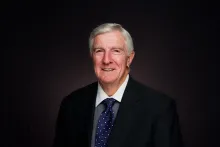
Before his retirement in 2021, Dr. Donald Ward pastored churches in Texas and Louisiana, and taught at Ambassador Bible College in Cincinnati, Ohio. He has also served as chairman of the Council of Elders of the United Church of God. He holds a BS degree; a BA in theology; a MS degree; a doctor’s degree in education from East Texas State University; and has completed 18 hours of graduate theology from SMU.
