

Rick Shabi
This transcript was generated by AI and may contain errors. It is provided to assist those who may not be able to listen to the message.
We will begin shortly in Isaiah 21.
A few words about Isaiah every time before we begin. We usually have a few words about Isaiah. Isaiah is really an anthology. It's an anthology of Isaiah's writings and sermons. It's not written in chronological order. We see all three facets of prophecy, that which is historical, that which is present, that's been fulfilled, and we see that which is futuristic, that in the future.
There are basically three elements to prophecy, that which is historical. It's historical information, and what happened, the fulfillment of various things that have happened. For example, the Isaiah 9.6, it prophesies the coming of the Messiah. The Messiah has come, and there are other prophecies in Isaiah that prophesied the coming of the Messiah, and the futuristic fulfillment, especially events surrounding the day of the Lord in the millennium.
So you don't expect Isaiah to be a consistent thread. It jumps from one thing to the other to the other, and that makes it, in some cases, more difficult to follow. But what we have been seeing here the past session was the fall of Egypt, and here we see the fall of Babylon and Isaiah 21, verse 1. We'll begin, the burden of the desert of the sea. Now that sounds like a contradiction. The commentators and everybody thinks that this has to do with the area surrounding Babylon. The Tigers Euphrates River, when it overflowed, looked like a sea. There are areas the mouth of the Nile. When it overflows, looks like a sea. And at times, various ones, one commentary said that Cimaramis, a dammed up part of the Tigers Euphrates, and it looked like a sea. The other times the dams were broken. You remember that the way, and this is part of that prophecy here this evening, whereby the meads were able to get into Babylon, was to go under the the dikes there and tunnel their way in.
So the burden of the desert. Now desert seems out of place, but that area, when it's not dammed up, is a vast sort of wasteland kind of thing, sort of like a wilderness. If you've been down to the Gulf Coast, or especially the Gulf Coast, you see the marshlands, the wetlands, and it's like a wilderness, somewhat like a desert. It is not the Hebrew word here, it's not nagab, it is not the usual word for desert. So the burden of the sea, we would firmly believe that is that of the Tigers Euphrates, as whirlwinds in the south pass through. So it comes from the desert from a terrible land. A grievous vision is declared unto me the treacherous dealer deals treacherously, and the spoiler spoils go up, O Elam. Now Elam was one of the sons of Shem. So remember that Elam was a Shemite. Elam was eventually taken over by the Medes, or merged with the Medes. And when Babylon fell to Media, to the Medes, they had merged, of course, with him. So go up, O Elam, that was the ancient name, Besijo Media, all that's sighing thereof, have I made to cease.
Therefore my loins fill with pain. And some translations, some commentaries will point out that the loins are where the bowels are located, and sometimes the people are so pained that they hurt. You've heard of the expression of my heart jumped into my throat. I was so afraid, and so fearful was the sight and the vision that had been given as they were concerning about what was to take place. He says it's taken hold upon me as the pains of a woman that travails. And oftentimes childbirth is given as a metaphor for a time of great trouble and great travail and pain. I was bowed down at the hearing of it. I was dismayed at the seeing of it. My heart panted. Have you ever heard, have you ever heard, had your heart to beat in your throat? I've had that happen a couple of times. It seemed my heart panted and fearlessness have frightened me. And fearfulness, not fearlessness, fearfulness have frightened me. The night of my pleasure has he turned into fear unto me. Prepare the table, watch in the watch tower. Now very often the watch tower or the watchman is mentioned in Scripture.
And we used to make a great deal about the church serving as a watchman back in the days in which Mr. Armstrong was on the radio. He preached consistently about being a watchman to the house of Israel. And we notice in the Scriptures in Ezekiel 33, if you want to turn there, in Ezekiel 33 there is this that is set upon those who know the truth, who understand the truth. And one of the main things that we seek to get from these studies is how to discern what is true and what is not true and be able to to tread the waters and try to separate that which is historical, that which has been fulfilled, and that which is yet to occur in the future.
So in Ezekiel 33 in verse 7, "'O thou, O Son of Man, I have set you as a watchman upon the house of Israel. Therefore you shall hear the word at my mouth and warn them from me.'" Now I'm not going to read all of those Scriptures there that are in Ezekiel 33. You can read them. Ezekiel 33 is basically Ezekiel 33 is basically given over to that of the watchman. At the end of it, there is a stern warning about hearing the word of the watchman and not doing anything about it.
And that is a very frightful thing if you hear the word and you don't do anything about it, if you don't really prepare, then that is terrible. That begins in verse 31. Let's read that Ezekiel 33-31. This is good material for a sermon or a sermonette with regard to the watchman and the response of the people. I start in verse 30. Ezekiel 34 verse 30, Also, you, son of man, the children of my people still are talking against you, and it's really not the proper translation therefore against is they're talking about you. They're not necessarily talking against you. They're talking about you by the walls and the doors of the houses, and speak one to another, every one to his brother, saying, Come, I pray you and hear what is the word that comes from the Lord. So you can bring this down to today. Let's go to church. Let's hear what they have to say today. Can I apply this to my life? Is this really for me? There are so many facets to listening to the watchman. Verse 31, And they come unto you as before you, as my people, and they hear your words, but they will not do them.
For with their mouth they show much love, but their heart goes after their covetousness. And of course, God looks on the heart. He knows the heart of each one of us, and we cannot fool God. We cannot get around God. So there's no need to put on a pretense. It's what comes from the heart. That's what God is looking for, and that's what he's going to make his judgment and discernment about, is what's in the heart. At the low you are unto them, a very lovely song of one that has a pleasant voice and can play well on an instrument, for they hear your words, but they will not do them. And so we obviously don't want to be into that category. We want to hear the words of the prophet. We want to hear the words of the minister. We want to do the things that God has put before us to do so we don't fall into the trap that is mentioned here in Ezekiel 33, verse 33 of 33, and when this comes to pass, though it will come, then shall they know that a prophet has been among them. Brother, we're living in very serious times, and it is time to hear, and it's time to heed. It's time to hear, and it's time to heed. You cannot just sit there and let it fall off like the proverbial water off a duck's back. Now we go back to Isaiah 21 in verse 7, and he saw a chariot. Now the commentators really have a difficulty with this. He saw a chariot, and most all of the commentators agree because it says immediately, and then we'll look at the next verse, which seems to confirm this, with a couple of horsemen. Of course, you could have a chariot with one horse or two horses or even more, but generally when people were going to war or going to battle, they would march in twos in a column, and so these are probably cavalrymen marching in a column, and then also a chariot of asses or donkeys and a chariot of camels. So you have three different animals, horses, donkeys, and camels, and he harkened diligently with much heed.
And so he gave a great deal of the watchman, gave a great deal of heed to what he saw, and he likened it metaphorically in verse 21 to a lion, and he cried, a lion! A lion! And you know, when you see a lion, a lion is symbolic of fierceness, of aggression, of attack, of danger, and he cried, a lion, my lord! I stand continually upon the watchtower in the daytime, and am set in my ward all night, and behold, here comes a chariot of men with a couple of horsemen. And he answered and said, Babylon is fallen, is fallen. Now there are three places in Scripture that give where Babylon is fallen, and we want to look at those three places in Scripture. Of course, one is here, that just literally says that Babylon is fallen. So we look at Jeremiah 51 and verse 8, Jeremiah 51 and verse 8, and we'll see from Jeremiah 51 verse 8, Jeremiah's prophecy here in 51, which we mentioned this when we covered Isaiah, I believe, I mean Jeremiah in the last meeting we had about Jeremiah. Jeremiah 51, I'm finally there, Jeremiah 51 and verse 8. Babylon is suddenly fallen and destroyed. How for her? Take balm for her? If so be, that she may be healed. And then another place. See, in Scripture, Babylon fell under the hands of the Medes historically in circa 538, 537, that period of time, and once they fell, the Jews began to return to Babylon under the decree of Cyrus in 538 BC. Now we go to Revelation 18. Revelation 18 speaks of Babylon the system. Babylon the system is a worldwide system that we need to do a lot more study about coming to really understand all the facets of that.
And as in Revelation 18 verse 1, and after these things, I saw another angel come down from heaven, having great power, and the earth was lighted with its glory, and cried mightily with its strong voice, saying, Babylon the great is fallen, is fallen, and has become the habitation of devils and the whole of every foul spirits, and a cage of every unclean and hateful bird. See, now that happens before the warning that comes next. It talks about all nations have partaken of that, so come out of her, my people, before that plague happens in verse 4. Now the destruction of Babylon, which oftentimes we don't really go to, and we don't perhaps understand fully about this, so we go back to Revelation 16 and verse 17.
So once again, let's recap. Babylon fell once upon a time way back under the hands of the Medo-Persian Empire, and the Jews were allowed to return to Israel, to the Holy Land, and to start building the Second Temple. Now here we see the final fall of Babylon, and we'll start in verse 17. Revelation 16 and verse 17.
So when people start talking about the fall of Babylon, Babylon doesn't fall finally until the seventh angel of the seven vials of wrath sounds. Did you hear that? Babylon has the great system, the great city that is reigning over the kings of the earth, in a sense, under the beast power, doesn't fall until the seventh angel sounds, the angel with the seven, one of the angels with the seven vials of wrath. So verse 17. The seventh angel poured out his vial into the air, and there came a great voice out of the temple of heaven from the throne, saying, and there were voices and thunders and lightnings, and there was a great earthquake, such as was not since men were upon the earth. So here is a very frightful thing taking place. We'll see very soon, either Isaiah 23 or 24, the destruction of the earth that God brings about.
So a great earthquake, the lack of which was not since men were upon the earth, so mighty an earthquake, and so great in the great city, and this is Babylon, the great city was divided into three parts. Three parts. And reading from the first part of this chapter, it seems that the great city is a coastal city with waterways, and the cities of the nations fell, the cities of the nations fell, and great Babylon came in remembrance before God under her the cup of the wine and of the fiercest of his wrath, and every island fled away in the mountains were not found. So tremendous geological work. The earth is going to reel to and fro like a ship tossed to and fro in a mighty hurricane. And there fell upon men a great hail out of heaven.
Now this has happened before. There fell upon men a great hail out of heaven every stone about the weight of italic, and man blasphemed God because of the plague of the hail for the plague thereof was exceeding great. Now when God destroyed Sodom and Gomorrah, you go back to Genesis 19-17, we won't rehearse the whole story of Lot and Abraham. Lot and his wife and two daughters and their husbands fled from Sodom and Gomorrah. The wife looked back turned to a pillar of salt. It doesn't say what it be. The two husbands stayed. They didn't go along with Lot and his wife and the two daughters. They stayed in Babylon and of course were killed by a god raining fire brimstone down on Sodom. So the two angels come. The men of Sodom tried to get to them so they might know them. An angel protected them. They were made safe inside the home of Lot. The next day Lot and his wife and two daughters fled Sodom. The wife looked back, turned her a pillar of salt, and they went on. I want to make a long story short. I want to come to verse 37. Well, I want to pick up a verse before then.
We start in verse 28. This is Genesis 19.28. And he looked toward Sodom and Gomorrah and toward all the land of the plain, and beheld in lo the smoke of the country went up as the smoke of a furnace.
And it came to pass that the cities of the plain, that God remembered Abraham and sent Lot out of the midst of the overthrow, and when he overthrew the cities in the land in which Lot dwelt. And the two daughters went with them, of course, and they got their father drunk and one laid with the father and became pregnant. Then the next night the other did. That's verses 37-38. And so the firstborn is Moab, and he is the father of Moabites.
There are three nations that God, and three peoples that God absolutely abhors. They are Edom, Edom as Esau. They are Edom, Moab, and Ammon. And we believe that modern-day Jordan is Moab, and the younger she also bear a son and call his name Ben Ammoni. The same is the father of the children of Ammon unto this day, or Ammon. And the capital of Jordan is Ammon. So it seems that they were together and that Jordan fulfills this of being the Moabites and the Ammonites. Now it's very interesting to note that at the end of the age when the beast power sets his tabernacle in the Holy Land, in the Holy Mountain, we go now to Daniel.
We want to go to Daniel chapter 11, again in about verse 40. Daniel chapter 11. Daniel chapter 11.
We'll start in 41. He shall enter talking about the willful king. He shall enter into the glorious land. What is the glorious land? Glorious land is the land of the Holy Land. And many countries shall be overthrown, but these shall escape out of his hand. See, the three peoples that God has most against, and you can read Zephaniah and other prophecies about how God is going to... when Christ comes again, it seems that he is going to destroy all three of these.
But these shall escape out of his hand, Edom, Moab, and the chief of the children of Ammon.
He shall stretch forth his hand also upon the countries, and the land of Egypt shall not escape. So God rained down of fire and brimstone. Now brimstone is the Hebrew word or the... is not necessarily the Hebrew word, but brimstone really is sulfur. If you've ever encountered sulfur burning, it is an awful smell, and it's an awful heat. So as it was in the days of Noah, so shall it be in the days when the Son of Man comes again.
And God destroyed Simon Gomorrah with fire and brimstone, and he destroys Babylon with great hailstones, which are probably sulfur, because they sink into the sea never to rise. Babylon sinks in the sea never to rise again. My script, my eye doesn't fall on the scripture I'm looking for in Genesis 19 of the God raining down fire and brimstone on Sodom and Gomorrah. Let's see...
I'm not going to take up time there. Verse 24. Verse 24. Then the Lord rained upon Sodom and upon Gomorrah brimstone. As I said, the word there is really sulfur and fire from the Lord out of heaven.
Genesis 19.
And verse 25.
So we go back now to Isaiah 21 and verse 9. Babylon, Babylon has fallen. So this is, in all probabilities, speaking about the first overthrow of Babylon by the Medes and the Persians at the hands of Darius. Babylon, Babylon has fallen and all the graven images of her gods he has broken unto the ground. Oh, my threshing, oh, my threshing in the corn of my floor. So threshing, whether a wheat or corn, corn is really green. You would trample on it on the floor and separate the grain from the husk. And so oftentimes, metaphorically, God-threshing nations is used metaphorically with threshing of grain on the floor. That which I've heard of the Lord of hosts, the God of Israel, have I declared unto you. So Isaiah says, I've declared what God has told me about Babylon. It has fallen. Now, the prophecy shifts to Duma. Duma is another name for Edom. Edom has at least three names. Probably has more. Duma, Petra.
Oftentimes, it's called Seir. So Mount Seir is another name for Mount Sinai. The great irony here is where God gave the Ten Commandments to Israel as it were, the constitution of the Old Covenant, is Mount Seir, which is Sinai. The burden of Duma, so Duma, as I said, is another name for Petra, for Duma, for that area, is Edomia.
In the New Testament, generally Petra is referred to as Edomia. Remember, Herod was an Edomian. There were Herodians within the Jewish sect of people who had influence in Judea during the days of Christ. So this prophecy beginning here relates to Edomia, to Pecia, which is also called Duma. The burden of Duma, he calls to me out of Mount Seir. This is a vast wilderness area. It's very tough. Almost no rainfall. Mountains, desert, rocks, no water. Watchmen, one of the night. Watchmen, one of the night. Like the watchmen has been watching all night. The watchmen said, the morning comes and also the night, and you will inquire, inquire, yeah, you return, inquire, inquire, you return, come. So they are urged to return to God, but they do not return. The burden upon Arabia in the forest, in Arabia shall you lodge, oh, you traveling companies of Dedanum. Now, Dedanum, I didn't mention that, did I mention that Elam was one of the sons of Shim? And of course, I did mention, if I didn't, I meant to that Elam was one of the sons of Shim, and the Shimites eventually merged with the Medes. And of course, the Medes and the Persians today, anciently Iran was called Persia. And the Iranians are not, you know, they are dark-skinned people, but they are not, they are the the Brown race, as it were.
They mixed with the Semites with Elam.
Now Dedan says, the burden upon Arabia in the forest, in Arabia shall you lodge, oh, you traveling companies of Dedanum. Now Dedanum was one of the sons of, he was the son of Jokshan, the son of Abraham by Keturah. Now, after Sarah died, Abraham married Keturah, and he had sons by Keturah, and they fathered nations.
It is said here, I'll read what the commentary says about Dedanum.
There are two men by the name of Dedanum in Scripture. One is the son of Ramah, the son of Kush, mentioned in Genesis 10.7, and the son of Jokshan, the son of Abraham by Keturah, mentioned in Genesis 25.3. The descendants of the latter, that is the descendants of Keturah, Abraham's second wife after Sarah died, settled in Arabia, Petra area, and the descendants of the former near the Persian Gulf. It is not easy to determine, which is here intended, though most probably those who go out near the Persian Gulf because they were mentioned as merchants. They dealt in Ivory, Ebony, and traded much with Tyre, and doubtless also with Egypt. So in some cases, it's difficult to ferret out exactly, even with the scholars looking at this, who these people really were. Well, you can trace back their lineage to they were the son of so and so, but to say exactly where their territory was, and sometimes very difficult. The inhabitants of the land of Timah brought water to him that was thirsty, and they proceeded. Now this, in Hebrew, this word that is translated, proceeded, and I don't know why the King James, they did this in other places. This word that's translated, prevented, really means to to anticipate, to proceed, to hasten, to meet.
So they proceeded, or they met with their bread, they met them with their bread, him that fled. The people of Timah were known for their great hospitality. Timah was, according to Jerome, and according to Eusebius, who was a famous church historian, circa 300 BC, that Timah was 15 miles from Petra, and was occupied as a Roman garrison. And so different historians have spoken of Timah, and they were noted for their great hospitality. They brought bread and they brought water.
For they fled from the swords, from their drawn swords, and from the bent bow, and from the grievousness of war. For thus hast the Lord said unto me, within a year, according to the years of enhiring, and all the glory of Kedar shall fall. Or Kedar, whichever way you want to pronounce it. Now, Kedar was a son of Ishmael, and Ishmael married one of the daughters of Esau, which greatly upset his mother, Sarah, or really, her step-mother, because Ishmael was gave birth by Hagar, Sarah's handmaiden. So Kedar was the father of the Katerianians, and they're also mentioned by historians, and their area was in the desert. So it's interesting here to note that with these prophecies, the fall of these people in this area, Petra, that they are also the people that God has the most against, because they were, Jacob and Esau were brothers. Of course, Jacob got the birthright, and Esau hated Jacob, and that hatred still continues to this day.
And the residue, the number of the archers, the mighty men of the children of Kedar, or Kedar, shall be diminished, for the Lord God of Israel has spoken him.
So the people that settled in that area were the subject of God's wrath, and one of the main reasons why Esau was the subject of God's wrath was because they mocked when Israel was taken into captivity. They mocked. Let's go to Amos chapter 1, and we might see that there in Amos. Hosea Joel Amos, in Amos chapter 1, Amos chapter 1, Amos chapter 1 was started in verse 2, and he said, The Lord will roar from Zion, of course Zion is the city of David within by the buyers of Jerusalem, and utter his voice from Jerusalem, and then have in us the shepherds shall mourn, and the top of Carmel shall wither. Thus says the Lord for three transgressions of Damascus, remembered Damascus an ancient city, the capital of Syria, and before will I not turn away punishment thereof, because they have thresh Gilead with threshing instruments of iron. And so Israelites that dealt to Gilead were treated harshly by the Syrians. I will send a fire into the house of Azale, which shall devour the palace as Benedad. I will break also the bar of Damascus and cut off the inhabitant from the plain of Avon, and him that holds the scepter from the house of Eden, and the people of Syria will go into captivity under cure, says the Lord. Thus says the Lord for three transgressions of Gaza. Now Gaza has been a thorn in the side of Israel from ancient times, the times that way back here in the days of Amos to the present time, as you know, Gaza is a stronghold of Iranian fighters, and Iran basically bankrolls Gaza at the present time, and oftentimes Gaza is firing missiles into Israel.
Thus says the Lord for three transgressions of Gaza and for four, and I will not turn away the punishment thereof, because they carried away captive, the whole captivity to deliver them up to Eden.
But I will send a fire on the wall of Gaza, which shall devour the palaces thereof. And I will cut off the inhabitants from Ashdod, and him that holds the scepter from Ashkelon. Ashkelon was on the seacoast, and I will turn my hand against Ekron, and the remnant of the Philistines shall perish, says the Lord God. Of course, when Israel came into Egypt, the Philistines were in that area of Gaza, and Gaza, as I said, has remained a thorn in the side of Israel to this day.
Thus says the Lord for three transgressions of Tyre, and for four, I will not turn away, and we'll have a lot more to say about Tyre later, I will not turn away the punishment thereof, because they delivered up the whole captivity to Edom, and remembered not the brotherly covenant.
See, the brotherly covenant was Jacob and Esau, which is Edom, or brothers, but Edom delivered the captivity, that is, Israel, they betrayed them in verse 10, and I will set a fire on the wall of Tyreus, which shall devour the palaces thereof. And notice this, for thus says the Lord for three transgressions of Edom, and for four, I will not turn away the punishment thereof, because he did pursue his brother with the sword.
So Jacob, of course, Esau pursued Jacob, and still pursues him to this day, and did eat, and did cast off all pity, and his anger did tear perpetually, and he kept his wrath forever. And I will send a fire upon Timon, which shall devour the palaces of Basra. Now, Basra was one of the capital cities of, one of the capital cities of Petra at one time. Thus says the Lord for three transgressions of the children of Ammon, and for four, I will not turn away the punishment thereof, because they have ripped up the women with child of Gilead. In other words, they cut the fetuses out of the stomach of the women in Gilead.
They have ripped up the women with child of Gilead, that they might enlarge their border. And so we see that those nations that God is so against, but who escape the beast power, those nations once again are Edom, Moab, and Ammon. Now, let's note Isaiah 22. Isaiah 22, I covered in the sermon a week and a half ago, in essence of it, but we need to cover it here, because many did not hear that sermon.
And we didn't spend much time with other verses anyhow. And the burden of the valley of vision. Now this, where it says the valley of vision has bothered commentators through the years of what is the valley of vision. Doubtlessly, it is Jerusalem. Now Jerusalem is 2,500 feet, depends on what source you look at, some will say 2,450, some 2,500 above sea level.
But Jerusalem, to a large part, there are hills in Jerusalem. My wife and I have been there, but it is to a large degree flat. You stand on the temple mount and you look eastward. You stand on the temple mount, you're facing toward the east, you see the Mount of Olives.
The Mount of Olives seems to be tower above the temple mount, but the Mount of Olives is only 200 or 300 feet higher than the temple mount. And the temple mount, as you look at it, it slopes up to a point. And you see those white tombstones on the temple mount, and I asked the Arab guide, what are those white tombstones? And they said those are the graves of Jews who want to be married on the Mount of Olives because Zachariah 14 says that in that day, his feet shall stand on the Mount of Olives.
They want to be buried on the Mount of Olives. I don't know what I said. I said they want to be married instead of buried. They want to be buried, that is, put in the grave by the Mount of Olives. The burden of the Valley of Vision, and that is Jerusalem, what ails you now that you are wholly gone up to the housetops. So you go up to the housetops when there is a time of trouble where the watchmen, where you discern that trouble is going, the houses in Jerusalem in that area, even to this day, you do not see houses with pitch roofs.
There might be a few, but basically you see flat tops of all buildings, large or small.
So you go up to the housetop. Some even slept on the housetop. Some even had a kitchen on the housetop, and they would go up there to cool off, especially at night, as the winds would eventually blow and give some cooling effect. Jerusalem can be quite hot, and it can snow in Jerusalem, as it has done in recent years. What ails you now that you are wholly gone up to the housetop, you that are full of stairs, a tumultuous city, a joyous city, your slain men are not slain with the sword, nor dead in battle.
So what killed them? It must have been a fright or a god-kill them. All your rulers are fled together. They are bound by the archers. All that are found in you are bound together, which have fled from far. Therefore, said I, I will weep bitterly in labor not to comfort me because of the spoiling of the daughter of my people. So Jerusalem, the capital city which was responsible for the keeping of the land, just like hopefully Washington, D.C., would be responsible, for keeping of the nation if you are obeying the Constitution. Jerusalem had that responsibility to keep the land, to keep the land safe.
Therefore, said I, look away from me, I will weep bitterly in labor not to comfort because of the spoiling of the daughter of my people. So we see the leadership of the land today spoiling the daughter of my people. We saw it, I think, I think so many people were surprised, even the Democrats and especially the Republicans, with the election results last evening because to me that election showed where the heart of the people of America really is. The heart of the people of America are really with the decadent morality of the nation. I know that they are concerned about inflation, but they're also concerned about not having the ability to have an abortion when they want to, or not having the ability to do a lot of things. As we have mentioned, there are some cities that have a no-bail law. You can commit a felony, be back on the street within hours, and there are many other kind of crimes in which people are able to be back on the street within hours.
So the nation at that time was spoiled by the people in Jerusalem who were supposed to be the leaders of the land. Of course, God sent them prophets. As you read about in Matthew 23, over and over, He said, I sent you prophets, but you killed the prophets, and you stoned those that I sent unto you. You recall the stoning of Stephen, even after the day of Pentecost.
So it is a time of great perplexity. It was a time, and this time is coming, of course, the time came for Jerusalem back in 580, well, 604 to 587, when the Babylonians destroyed Jerusalem. It came again in the 70 AD, when the Romans destroyed Jerusalem and the Second Temple. The Babylonians destroyed the First Temple. Nebuchadnezzar and his soldiers burned it to the ground. The Second Temple was destroyed by the Romans, and no temple has been built. They're talking about building a third temple, and all the accoutrements apparently are in place. In Isaiah 22, section, Elam bear the quiver. Now, once again, Elam is a son of Shem.
Elam bear the quiver with chariots. Men and horsemen and cure uncovered the shield.
Of course, the shield was that which you use when you go into battle, so they're ready to go into battle. And it shall come to pass that your choices valleys shall be full of chariots, and the horsemen shall set themselves in array, and in array at the gate. And he discovered the covering of Judah, and you did look in that day to the armor of the house of the forest. In other words, instead of looking to God for protection in that day, you look to human beings, you look to other nations, you look to physical things to save you. Verse 9, you have seen also the breaches of the city of David, that there are that there are many. In other words, there are many places where the enemy can break through, that they are many, and you gather together the waters of the lower pool.
Now Hezekiah and others at times tried to wall off that part of the city, and they tried to set up defense mechanisms to save themselves when they saw the enemy coming.
And that day, they did those things, physical things. And this day, we're doing things that are similar with the bombs and other instruments of war. And you have numbered the houses of Jerusalem, and the houses have broken down to fortify the wall. You made also a ditch. In other words, they took away some of the houses down in that area, and used the timber to build the wall. You made also a ditch between the two walls for the water of the old pool, but you have not. Here's a key verse. But you have not looked unto the Maker. You have not looked unto the Maker, thereof neither had respect unto Him that fact should get long ago. So instead of looking to God, you look to physical things. And in that day, the Lord God of hosts called to weeping, and the mourning, and the baldness, and the girding with sackcloth.
And behold joy and gladness, slaying auction, and killing of sheep, eating of flesh, and drinking of wine. Let us eat, drink, for tomorrow we shall die. And it was revealed in mine ears by the Lord, Surely this iniquity shall not be purged from you till you die, says the Lord God of hosts. Okay, we will break off there. We have gone for an hour. So we will begin in Isaiah 22, 15 next time.
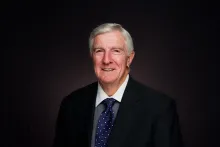
Before his retirement in 2021, Dr. Donald Ward pastored churches in Texas and Louisiana, and taught at Ambassador Bible College in Cincinnati, Ohio. He has also served as chairman of the Council of Elders of the United Church of God. He holds a BS degree; a BA in theology; a MS degree; a doctor’s degree in education from East Texas State University; and has completed 18 hours of graduate theology from SMU.
