
Don Ward
This transcript was generated by AI and may contain errors. It is provided to assist those who may not be able to listen to the message.
Well, good evening again, everybody! We are in Isaiah 38, chapter 38. In the first verse there, let's look at that first verse in Isaiah 38.
Isaiah 38 and verse 1, In those days was Hezekiah sick unto death. In just a moment, we're going to talk more about Hezekiah. Hezekiah means Yahweh, my strength, or Yahweh who strengthens me. It could be translated either way. And Isaiah the prophet, the son of Amos, came unto him and said unto him, Thus says the Lord, Set your house in order, for you shall die and not live. Hezekiah was 39 years old when this was uttered to him because we know that he died at age 54, and you subtract the 15 years that were added to his life after he prayed his earnest prayer that we'll read in a moment, that 15 years were added. So that means that he was 39 years old when this had been happened. In addition to that, just consider what Hezekiah had gone through with the Assyrians. The Assyrians knocking on the door and seemingly going to take Judah and Jerusalem, and the fact that God intervened after Hezekiah prayed his great prayer there, and the armies of Sennacherib were destroyed, and 185,000 Assyrian troops met their death that night.
Amazing as it may sound, that's what the Bible says and records. So I'm sure that Hezekiah was looking forward to the years that were before him after all the traumatic events that he had been through up to this point. He began to reign in 716 BC. I remember you're counting down in BC, and he reigned until he was 54 years old, and he died in 756. Any time we give these dates, they are circa, maybe a year one way or the other, but it's quite close to the actual time frame. So he was even when he died, was a relatively young man, especially in today's world, and many Bible figures, of course, lived to be hundreds of years old, and some lived to be well over 100. So getting this message from Isaiah to set your house in order that you're going to die was quite a shock to Hezekiah no doubt. Upon hearing this, verse 2, Hezekiah turned his face toward the wall and prayed unto the Eternal. When you pray against the wall, there's no light coming in, and it's a place where you just pour out your heart, your being, to God for deliverance. And in that prayer, he said, Remember now, O Lord, I beseech you.
Beseech is one of the strongest words in the whole Bible, and we'll notice various ones using that from time to time that they beseech God. The Apostle Paul would write in his epistles, to the brethren I beseech you brethren, so the strongest urging how I have walked before you in truth and with perfect heart, and have done good in your sight, and Hezekiah wept sore. And apparently at this point in his life, Hezekiah did not have an heir to his throne. Eventually, he had a son, the wicked Manasseh, who reigned after Hezekiah died. Hezekiah was the son of Ahaz, and his mother was Abijah, A-B-I-J-A-H. She was the daughter of the high priest, Zachariah. But of course, the priesthood had gone to an idolatry and pagan worship at this time.
Hezekiah was married to Hepzibah. Hepzibah is the name of another person, maybe more than two in the Bible. And as we have mentioned, he died when he was 54, and he reigned for 29 years and was succeeded by his son, Hezekiah, by his son Manasseh. Hezekiah restored temple worship of a one true God. He destroyed the idols and the groves throughout the land.
And on the other hand, his son who succeeded him was noted for being the most wicked king that ruled Judah. Let's turn to 2 Kings 18 and read what Hezekiah had done. Here we are in verse 3. As you're turning there, I'll read once again Isaiah 38 verse 3.
Hezekiah said, Remember now, O Lord, I beseech you, how I have walked before you in truth, and with a perfect heart, and have done that which is good in your sight, and Hezekiah well sore. In 2 Kings 18, we'll read the first seven verses here that describe some of the things that Hezekiah had done. Now it came to pass in the third year of Hoshiah, son of Elah, king of Israel, that Hezekiah, the son of Ahaz, king of Judah, began to reign. So, Serkos 7 16 BC, Hezekiah begins to reign. 20 and 5 years old was he when he began to reign, and he reigned 29 years in Jerusalem. His mother's name also was Abiah, the daughter of Zechariah, and we've already mentioned that. He did that which was right in the sight of the Lord, according to all that David his father did. He removed the high places, he broke the images, cut down the groves, broke in pieces the brazen serpent that Moses had made. For unto those days the children of Israel still burned incense to it and called it the Houston. So that serpent that Moses had raised up in the wilderness, Judah had preserved that from the days of Moses to the present time. So that would date back over 700 years, and they had continued to burn incense to that. Really, it was no more than an idol, but it was an image. Of course, it could typify Jesus Christ being lifted up. And it says, when you see the Son of Man lifted up from the face of the earth, one of the great signs that he was the Messiah. He trusted in the God of Israel so that after him was none like him among all kings of Judah. That would include Josiah, who also restored temple worship. Nor any that were before him. For he claved to the turtle and departed not from following him, but kept his commandments, which the Lord commanded Moses, and the Lord was with him. Now the commentators say, and I haven't checked every last word of this, the commentators say that this is the only person since David that God said this about, that the Lord was with him. The Lord was with him, and he prospered wherever he went forth, and he rebelled against the king of Syria and served him not. So you can imagine what kind of shock, as we've already mentioned, that this was when Isaiah came with the word that you're going to die, you better set your house in order. So in turn, as we have noted in verse 3, we're back in Isaiah 38 again now, that it must have been quite a shock. So after his prayer, then came the word of the Lord to Isaiah saying, so you notice here that God has a minister between the king and God in this case.
Go and say to Hezekiah, Thus says the Lord, the God of David, your father, I have heard your prayer, I have seen your tears, and behold, I will add unto you your days 15 years. So you can get a discrepancy there says he's 25 when he began to reign. And the added 15 years, I would mean, but he died when he was 54, some say 55. So and I will deliver you and this city out of the hand of the king of Assyria that had already happened. And it was an extra retrospect. He's looking back at that and I will defend this city. And this shall be a sign unto you from the eternal that the eternal will do this thing that he has spoken. Behold, I will bring the shadow of the degrees which has gone down in the sun. In the sundial of a has 10 degrees backwards. So the sun returned 10 degrees by which degrees it was going down. According to history, the Babylonians had invented the sundial. And the Babylonians, especially the Chaldeans, were noted for their study of astronomy and the stars and the heavens and worship the various stars and heavenly bodies that they assigned to be deities. So the sundial returned 10 degrees by which degrees it was going down.
And that is one of the great miracles that happened during Hezekiah's reign. Of course, the miracle of the 185,000 Assyrians being killed that night before they were going to invade Jerusalem was a great, great miracle. And now this miracle of the sundial. And the commentators and the scholars and some scientists have a great time with this. And there are various things that are offered with it. We'll talk briefly about some of those. The earth rotates once every 23 hours, 56 minutes, and 4 seconds.
This is called the side real period. And its circumference is roughly 40,000 kilometers. So two-thirds of 40 would be what it would be in miles. Thus, the surface of the earth at the equator moves at a speed of 460 meters per second, or roughly a thousand miles per hour.
The spinning of the earth depends on the latitude of the earth. At the equator, the earth spins at a speed of about a thousand miles per hour. But as the location approaches the poles, as you go southward or northward, the speed reduces as the distance required to spin is also reduced. So if the earth were to stop spinning, it would be analogous to you out on the freeway driving a car at 70 miles an hour. And suddenly you hit a concrete abutment, and the car comes to a dead halt. But you don't.
You're riding in the car. You're not aware in one sense that you're going 70 miles an hour if you didn't have the speed speedometer. And also you can look out and see how quickly the various items were flashing before your eyes. So the car would stop, but you wouldn't. And you would either be restrained by seat belts or you would go through the windshield and be hurled out of the vehicle. Because the same thing would happen if the earth were to stop spinning. So there would be a very catastrophic event for that to happen. So what probably happened was that the sun regressed, it retrogressed that amount. And this is what I read this from Scientific America. Atmospheric patterns on the earth are tied to the planet's rotation. If the planet stopped spinning, it would greatly change the way air currents would move once the thousand miles per hour winds had died down. So the commentators say there's no need for supposing any revolution of the relative position of the sun and earth, but merely in effect produced on the shadow of the sundial. And Jameson Fawcett in Brown says this was designed for the satisfaction of Hezekiah, but I'm not sure about that. The best example of this probably is that which was written by another commentator in which he says that probably it was the retrogression of the sun that caused the shadow to shorten as it did. If the earth stopped spinning and just kind of came to a halt and reversed its position, of course that would be catastrophic in so many different ways. So two great miracles were performed during the days of Hezekiah. I'm sure there must have been other miracles as well.
So I'll read verse 8 again of chapter 38. Behold, I will bring again the shadow of the degrees which has gone down in the sundial of A has 10 degrees backward. So the sun returned 10 degrees. So you see it says the sun returned 10 degrees by which degrees it was gone down. It was not that the earth stopped spinning or rotating and suddenly if that were to happen you would fly off into space. The writing of Hezekiah king of Judah when he was sick and was removed of his sickness. I said in the cutting of my days I shall go to the gates of the grave. I am deprived of the residue of my years. And so once again Hezekiah was very shocked by the fact that God had said you're going to die. And then after he prayed he agreed to add 15 years to his life.
He said I said I shall not see the Lord even the Lord in the land of the living.
I shall be I shall behold man no more with inhabitants of the world. So the familiar faces that you might see from day to day you see them no more and he was lamenting what it would be like to be a dead person. Mine age has departed and has removed from me as a shepherd's tent.
I will cut off like a weaver's my life. He will cut me off with pin pining sickness from day even tonight will you make an end of me. I reckon till morning that as a lion so will he break all my bones. And using the analogy of what a lion might do when it catches its praise with his powerful jaws and tusks, crushes the bone of the prey from day even tonight will you make an end of me. Like a crane or a swallows so did I chatter. I did mourn as a dove and mine eyes fail with looking outward. Oh, Lord, I'm oppressed. Undertake for me. We have doves around here in the morning time. You can hear their mourning, their cooing, cooing, cooing. It's quite a mournful sound in some ways somewhat comforting, but it is a on the other hand, a mournful sound. What shall I say he has both spoken in me and himself have done himself have done it I shall go softly all my years and the bitterness of my soul.
Oh, eternal by these men, by these things, men live and all these things is the life of my spirit. So you will recover me and make me to live. And he was looking, of course, if he did die, it seems that he was looking forward to the resurrection.
And he was hoping, of course, to have years added to his life. And he did have 15 years added to his life. Behold for peace. Behold for peace. I had great bitterness. But you have in love to my soul delivered it from the pit of corruption, for you cast all my sins behind your back. So has a guy had the assurance that he had been faithful, and would die in the faith and all his sins would be cast behind him.
And we have that same assurance today that all of our sins from the past have been cast behind us. And it is a matter of faith. And there is a tendency, of course, from all of us to look back and to lament things that we have done and wish we had not have done.
But, you know, it's sometimes when I think in those channels I think about I think about different biblical figures how the life of David, that his count of Israel resulted in 70,000 or so people being put to death and other sins that he committed.
And the other sins that others have committed. The apostle Paul was beating and apparently crucifying Christians when he was struck down on the road to Damascus. And all these sins were put behind them to be remembered no more. And Hezekiah says the same thing, Behold for peace, I had great bitterness, but you have in love to my being, my existence, delivered it from the pit of corruption. For you have cast all my sins behind your back.
For the grave cannot praise you, death cannot celebrate you, they that go down into the pit cannot hope for your truth. The living, the living, he shall praise you as I do this day. The father of the children shall make known your truth. And of course, that was one of the commandments God gave to Israel when He was bringing them out of the land of Egypt and on their way to the Promised Land.
And one of the things that Moses tried to teach the children of Israel and how vital it is that children be taught the way of God. And the current scenes that you see today of the mass shootings, and almost one every day now in the US averaging that is unbelievable. It is because of the attack on the family, the destruction of the family, the role of father and mother, and the children are not being reared properly. And they are able to go their own way and do their own thing, resulting in the careless death of other people, not even laying it, not even giving it a second thought as to the misery, the agony, the pain that is being created in the lives of people.
The eternal was ready to save me. Therefore, we will sing my songs to the string instruments all the days of our life in the house of the Lord. And of course, David had restored the singers and all the things that go with it in the temple worship. And singing was a very vital part of temple worship. And if you watch an Orthodox Jewish service today, it's still quite a vital part of the worship service, though I'm not advocating Judaism or Messianic Judaism in any way.
I think it's one of the most insidious attacks upon the church that has ever occurred or occurring at the present time because it is far more dangerous than it seems. And most people don't understand that they don't understand the begettle and birth process and what we shall be in the kingdom of God as glorious radiant spirit beings, not only begotten by the Father as children today, but resurrected the glorious radiant spirit beings in the kingdom of God that live, rule, and reign with God Christ and the saints forever and ever, world without end, and there is no end to eternity. We live in eternity, never dying.
Where Isaiah had said, let them take a lump of figs and lay it for plaster upon the boil, and he shall recover. So we read all the way down the air to see what the affliction actually was. You remember Job's affliction that he had boils from his head to his feet. Hezekiah also had said, What is the sign that I shall go up to the house of the Lord?
So after Hezekiah prayed the prayer, 15 years were added to his life, and yet that meant he was going to die quite a young man at 54 years or 55 years of age. Now we go to chapter 39.
At that time, Maryadoc Baladon, the son of Baladon, king of Babylon, sent letters and a present to Hezekiah, for he had heard that he had been sick and was recovered.
The I'm looking here at this paper of Baladon means, Bell is his Lord. So nearly all of the gentile kings would choose some deity to put in front of their name. Like, for example, in the last days of the Babylonian kingdom, the bell to Shazur. So bell was one of the gods. Baladon means, Bell is his Lord. So at that time, Maryadoc Baladon, the son of Baladon, king of Babylon, sent letters and a present to Hezekiah, for he had heard that he had been sick and was recovered. And this Maryadoc is also an idol, the same as the god of war and the planet Mars.
And this name is given in Jeremiah 50 in verse 2. It's amazing that you hear today a lot of news about Elon Musk is going to attempt to colonize Mars. And last week or so, he tried to get this, the biggest rocket ship that has ever been launched. He tried to launch it and there were, I think, six seconds left on the countdown when they stopped the countdown and the launch. Because of some problem, they had to stern.
So this Baladon, king of Babylon, had sent these letters by his son, Maryadoc Baladon, and his son visited Hezekiah.
The Chronicle of Eusebius contains a fragment of Barosus stating that, Assisis, an Assyrian viceroy usurped the supreme command at Babylon.
Then Maryadoc Baladon murdered him and succeeded to the throne. So the Babylonians eventually defeated the Assyrians and became the number one power in the Middle East. Baradoc Baladon would naturally want to court the alliance of Hezekiah, who, like himself, had been under the yoke of the Assyrian king and who would be equally glad of the Babylonian alliance against Assyrian. So a great attention was given to this Baladon by Hezekiah. Now one of the things that we need to understand of what's happening here that might pass right by us is if we go back to chapter 38 and Hezekiah was sick of the death, that as we noted that surely he was looking forward to good times are here again and here's this boil that's going to take his life and unless he does what he needs to do, then he's going to die. And through prayer and through following instructions of what he had to do 15 years for added to his life. But it was a great trial. It was a great test. And oftentimes after a great victory in which we seem to think that we haven't made, then another big test comes. As long as we are in the flesh, we shall be tested and tried. We read from 2 Kings 18 all the great things that Hezekiah had done. I'm sure we didn't read all of the great things, but some of the great things that he had done recorded there in the first few verses of 2 Kings chapter 18. And now, after he had withered that storm, so to speak, and 15 years were added to his life, here comes this balladon from Babylon with the letters, well, it's Meridot balladon, the son of balladon. He comes with letters from balladon, his father, to Hezekiah.
And Hezekiah was ready, willing to welcome him with open arms. And maybe you couldn't blame Hezekiah for welcoming him in such an open way, because how was he to know? But this was another test upon Hezekiah, because Hezekiah went too far in his welcoming of Meridot balladon.
And so in verse 2, Hezekiah was glad of them, he was glad to see them, and showed them the house of his precious things, the silver, the gold, the spices, the precious ointment, all the houses of his armor, and all that was found in his treasures.
See, this was like a boastful kind of thing. It was an act of pride. And God was not very well pleased with this at all. We shall see the why. We go to 2 Chronicles 32, and we'll see why God did not take kindly to this welcoming of this son of the king of Babylon. So we want to go to 2 Chronicles 32, and 2 Chronicles 32, and we will go to verse 31. 2 Chronicles 32 and verse 31. 1. How be it in the business of the ambassadors of the princes of Babylon, so Meridok Baladon, son of Baladon, along with his entourage, who sent unto him to inquire the wonders that was done in the land, God left him to try him that he might know all that was in his heart. So this was a great trial upon Hezekiah once again, the same as the Assyrian army approaching the gates of Jerusalem, the same as the prophet Isaiah says, Set your house in order, you're going to die. So here was these ambassadors from Babylon knocking on his door. Hezekiah was glad to see him, but he took it too far. He showed them everything, and apparently was it a wrong spirit and attitude, which was probably not discernible even to Hezekiah. There's a warning in the well, a prayer in the Bible, one of the most important prayers in the whole Bible we find in Psalm 19. We're not going to read all the songs, but all of this song. But here we see in Psalm 19, David praying. It says in Psalm 19 verse 12, Who can understand his errors? Cleanse you me from secret faults. Keep back your sherbet also from presumptuous sins. Let them not have dominion over me. Then shall I be upright, and I shall be innocent from the great transgressions. When we presume things in the place of God, God is the ultimate deliverer. We may have done our part, but God is the one who delivers us. And if we ever act in an arrogant haughty way or a prideful way, there is a trial coming with that, as in the case of Hezekiah.
So it says plainly here in 2 Chronicles 32 in verse 31 that it was a trial. God sent it to try to see what was in Hezekiah's heart. Then came Isaiah the prophet unto the king, Hezekiah said unto him, What said these men? And from where did they come? Where did they come unto you? And Hezekiah said, They are come from afar country unto me, even from Babylon. Then said he, What have they seen in your house? What did you show them? And Hezekiah answered, Essentially, I showed them everything. Scripture says, All that is in my house have they seen. There is nothing among my treasures that I have not showed them. And once again, it was a trial upon Hezekiah. And apparently, he did it with a wrong heart, somewhat in a boastful way. But he'd already been told that he was only going to live for 15 more years after that being sick unto death when he was the age of 39. Then said Isaiah to Hezekiah, where back Isaiah 39 verse 5.
Then said Isaiah to Hezekiah, Hear the word of the Lord of post. Behold, the days come that all that is in your house and that which your fathers have laid up in store until this day shall be carried to Babylon. Nothing shall be left, says the Lord.
So the Babylonians came about 120 years later, and they took everything away. They rashed Jerusalem. They burned it to the ground. And the temple also, they took all the precious things. And they were eating and drinking out of the precious things. The knife that belled to Shazr saw the handwriting on the wall that Babylon was going to fall.
So 120 years later, everything that was in the temple and the environs thereof, Jerusalem, that was of any worth, was taken away. And then verse 7, And your sons that shall issue from you. Of course, he only had one immediate son, and that was Manasseh. But the sons that came later, Jehoa has Jehoa-chin, Jehoachin, Jehoachin, and Zedekiah, the last four kings of Judah, were eventually destroyed by the king of Babylon. And Zedekiah, the last king, was taken to Babylon, and his eyes put out, and all kind of terrible things happened to him.
So once again, verse 7, And your sons that shall issue from you. This was way down the line, many years later, Which you shall be yet, shall they take away, and they shall be eunuchs in the palace of the king of Babylon. Of course, the eunuchs were, had been made asexual, they cannot perform sex, they were the ones that waited on the harem of the various gentile kings. Then said Hezekiah to Isaiah, Good is the word of the Lord, which you have spoken.
So Hezekiah apparently took it in stride. He said, Moreover, for there shall be peace and truth in my days. So he took it very well and did not protest at all. Apparently, I don't know if he understood the lesson or not. Apparently, he did. But of course, the sentence had already been passed that he was going to die after the 15 years were added to his life. So Hezekiah, one of the more interesting, faithful persons in all of the Bible. There's a lot to be read. Read 2 Kings 18-19, 2 Chronicles 30-32, of all the things that Hezekiah did. Now we go to Isaiah 40 and verse 1.
From Isaiah 40, Handel and his great work, his composition, the Messiah, took several of these verses and set it to music in the Messiah. Also, the last verse of Isaiah 40 has been set to music. They shall mount up on eagle's wings.
Too great, I guess you'd call it, aureas taken from Isaiah 40 and Handel's Messiah. Comfort ye, comfort ye, my people, saith your God. If you've not listened to that lately, go to YouTube and just put comfort ye, my people, my Handel, and you'll be able to listen to that. And it also includes that every valley shall be exalted. And then later in the chapter, it also he will feed his sheep like a shepherd. So those things are taken from Isaiah 40 and Handel's Messiah. So we now go to verse 2. Speak you comfortably to Jerusalem and cry unto her that her warfare is accomplished, that her iniquity is pardoned, for she has received of the Lord's hand double for all her sins.
This is dual in a sense in that it speaks of what happened with regard to Judah being delivered, and also of Christ coming on the scene, making it possible for sins to be forgiven and the ultimate restoration of Israel and Judah and the people of God, the Israel of God, in the millennium. Now, Jerusalem, as you know from Galatians 4 and verse 26, is spoken of as the Jerusalem above the mother of us all. So Jerusalem is also figuratively known as called the Church.
Speak you comfortably to Jerusalem and cry unto her that her warfare is accomplished, that her iniquity is pardoned, for she has received of the Lord's hand double for all her sins. Of course, that has not happened to Jerusalem in modern times. In fact, in modern times, at the end of, well, somewhat in Revelation chapter 11, that Jerusalem is identified as Sodom and Komorrah in the spiritual sense at the end of the age. But the time is coming in which her iniquity is going to be pardoned, and she is going to be punished tremendously for all that she has done, she being Israel. Of course, some of the Israel of God will pay a price for standing for the face. Now verse 3, the voice of him that cries in the wilderness, prepare ye the way of the Lord, make straight in the desert a highway for our God.
So the Gospel writer Mark begins his Gospel. You turn to Mark chapter 1. Mark is thought to be the oldest Gospel, and Matthew is, to a large degree, repeats much of what Mark says. The first three Gospels, Matthew, Mark, and Luther, Mark and Luther call the Synoptic Gospels.
Sin means, S-Y-N, means from the same, and Optic means I, or seeing through the same I. The writers basically recount the story of Jesus' ministry on earth, and then John is a different Gospel. But we're in Mark chapter 1. 1. The beginning of the Gospel of Jesus Christ, the Son of God, as is written in the prophets.
Behold, I send my messenger before your face. Now that's from Malachi 3, verses 1 and 2.
Malachi is a book of messengers. There's Malachi, who was a messenger. The priests were messengers. John the Baptist was a messenger. Jesus Christ was a messenger.
Of course, the Elijah to come was a messenger. Along with John the Baptist, he was. Christ said that he was the Elijah that prepared the way, as we shall read here in just a moment. 2. As it is written in the prophets, I send my messenger before your face, which shall prepare your way before you. John the Baptist came on the scene. The voice of one crying in the wilderness, prepare you the way of the Lord, make his path straight.
John did baptize in the wilderness and preached the baptism of repentance for the remission of sins.
And of course, we know that the baptism of John the Baptist was for the remission of sins, and some of them later even Apollos in Acts, when Paul ran across Apollos or Apollos, had met Paul, that some of them even said that they had not heard of the Holy Spirit, and Paul explained it to them, and they had hands laid on them and received the Holy Spirit.
So, John the Baptist prepared the way for Jesus Christ, and the messenger did come to the temple, even Jesus Christ. He came preaching the kingdom of God, as you notice in Mark chapter 15.
Well, let's read verse 14, Mark 1.14. Now, after that John was put in prison, Jesus came into Galilee preaching the gospel of the kingdom of God. What should we be preaching? The gospel of the kingdom of God. And saying the time is fulfilled, the kingdom of God is at hand, repent you, and believe the gospel. Of course, the gospel has many elements into it, which includes repentance from sin and faith in the sacrifice of Christ for their mission of sin, baptism, and laying on of hands.
So, Isaiah now would go back to Isaiah 40 in verse 1.
Every valley shall be exalted. And in this, it handles Messiah. This is part of one of the songs that is sung. I call it a song. It's probably a better, more proper name. In Isaiah 40 in verse 4, every valley shall be exalted, and every mountain and hill shall be made low, and the crooked shall be made straight, and the rough places plain. Of course, that can happen in the physical sense, but it can also happen in the spiritual sense as well.
And the glory of the Lord shall be revealed, and all flesh shall see it together, for the mouth of the Lord has spoken in. Now, in Luke 3 in verse 16, maybe we're in Mark. Well, we turn back to Isaiah. In Luke 3 in verse 16, you see that every eye shall see the salvation of God. It must be Luke 1.16, because now we're going to move on. Okay, we're going to move on. There is a controversy with regard to every eye shall see him among commentators, and everybody is going to have the opportunity for salvation, eventually, of course, in the plan of God. Now, we'll go to Revelation chapter 1. We see something similar to what we see here in Isaiah, that his glory shall be revealed, and all flesh shall see him. In Revelation chapter 1, we'll start in verse 6, and have made us kings and priests unto God, and his Father, to him be glory and dominion for ever and ever. Revelation 1.7, Behold, he comes with clouds, and every eye shall see him, and they also which pierced him, and all kindreds of the earth shall wail because of him.
Back in Zechariah 12, it talks about, I believe it's verse 10, pretty sure it is, that it talks about that they that pierced him shall look upon him and mourn. So, every eye shall see him. Is that possible in a globe, around globe? I don't know how it would work. It can mean that every eye shall see the salvation of God, but it's difficult to get around what it says in Isaiah 40 in verse 5, and the glory of the Lord shall be revealed, and all flesh shall see together. Now, if you notice, it is in italics, it's not in the original, and all flesh shall see together, for the mouth of the Lord has spoken, that when that time comes, when God comes again, when Christ and the saints come, that everybody is going to come together, whether they like it or not. Some will not like it, and some will have to be dealt with, and eventually some will rebel at the end of the thousand years. But everybody is going to have the chance, obviously, as we know, in the plan of God. The voice said, cry, and he said, what shall I cry? And then it talks about how inept the flesh is, how weak the flesh is. Then it goes into how weak the nations are. So we're going to end there this evening. It is now time to end. In the meantime, I want you to listen to the Messiah, at least those compositions there from Isaiah 40. I believe it will mean a lot to you.
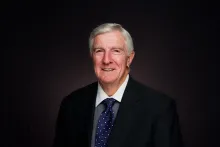
Before his retirement in 2021, Dr. Donald Ward pastored churches in Texas and Louisiana, and taught at Ambassador Bible College in Cincinnati, Ohio. He has also served as chairman of the Council of Elders of the United Church of God. He holds a BS degree; a BA in theology; a MS degree; a doctor’s degree in education from East Texas State University; and has completed 18 hours of graduate theology from SMU.
