
Don Ward
This transcript was generated by AI and may contain errors. It is provided to assist those who may not be able to listen to the message.
Greetings, everyone! Welcome to the study this evening. I'm very excited about this study. I have spent more time for this class, and others. A lot of it, of course, was review. Some of it has to do with the nature of God and Christ and the nature of man. I've been studying this topic of the nature of God for over 30 years. I've written papers on it, and we go now to Isaiah 5 and verse 1. There, to begin with, and perhaps a lot of people have never noticed this, now will I sing to my beloved? Well, who is the I? Well, undoubtedly, the I is God the Father. He will sing to my beloved. Who is his beloved? Well, his beloved is the one who became Jesus Christ. You know, in the New Testament, after Jesus Christ was baptized, there was a voice from heaven saying, This is my beloved Son, in whom I am well pleased. At the Mount of Transfiguration in Matthew 17 and verse 5, there was a voice from heaven that said, This is my beloved Son. Hear him, listen to him, take heed to what he has to say.
Sorting out which God is being referred to in the Old Testament is more easily understood. One understands the God-ordained plan of salvation. That is, God is bringing sons and daughters to glory in his family, and that Jesus Christ, who is the self-existent, also he is the self-existent Yahweh, is a pivotal figure in the process. Now, listen to this. The professing world of Christianity does not believe in the Begettle and birth process of God having a family of sons and daughters who will be on the same plane of existence as the Father and the Son in resurrection. In the nominal world of Christianity, there are two things that are taken for granted to begin with, and their theology proceeds from these assumptions. One assumption is that God is a Trinity, that there is only one God, but this God manifests himself in three different persons—Father, Son, and Holy Spirit. And yes, they say that the Holy Spirit is a person.
And then the next thing is, they assume that man has an immortal soul, and upon death you either go to heaven or hell. And even in the Oriental religions, they also believe in a type of immortality, and there are several different versions of the immortality that is taught of merging into the spirit world or a process of reincarnation, reincarnation, in which you go through various life cycles in various animal kingdoms to come to a state of perfection.
Both God the Father and the Son are referred to as Yahweh in the scripture. The one who became the Messiah is the spokesman. He is the one who interfaced with Israel and at times spoke in third person for the Father. And I think that's one of the things that confuses people with regard to identifying who is speaking in the Old Testament. Let's go to Psalm 2 right now. Let's show places that show distinctly some of the most prominent places, and we'll go to some that are not so prominent. So what is our take off from this? It is the first sentence here in Isaiah 5.1. Now will I sing God the Father to my beloved, the one who became Jesus Christ, the song of my beloved, touching his vineyard. Of course, we'll see that the vineyard is identified as in Israel. My well beloved, the one who became Jesus Christ, has a vineyard in a very fruitful hill. Now we're at Psalm 2. Verse 1, Why did the nation's rage and the people imagine a vain thing? The kings of the air set themselves and the rulers take counsel together against the eternal and against his anointed. Who do they take it against his anointed? The word anointed is the one from which we get Messiah. The kings of the air set themselves and the rulers take counsel against the Yave and his anointed, showing two beings right there. And it talks about how God is going to have the nations in the region. In verse 6, yet have I set my king upon my holy hill of Zion. Of course, God's government is going to go out from Zion and Jerusalem, as in Isaiah chapter 2 verses 1 through 4. Verse 5, Then shall he speak unto them in his wrath, and vex them in his sore displeasure. Yet have I set my king upon my holy hill of Zion. I will declare the decree, The Lord has set unto me, You art my son.
Okay, the Yave has set unto me, that is God the Father has set unto the Son, the one who became Jesus Christ. This day have I begotten you. Now, this Hebrew word that is translated begotten is the Hebrew word yalad. Yalad corresponds to the Greek word ganao in the New Testament. Yalad in the Old Testament, ganao in the New Testament is used of the Father when it means to beget. It is used of the mother when it means to bring forth. Now, let's notice in Acts 13, where the Apostle Paul in Acts 13 equates, in essence, the resurrection of Jesus Christ from the dead with being born into the family of God. So we will break in on Paul's inspired sermon here. Of course, there's the inspired sermon of Peter gave in chapter 2 of Acts on the day of Pentecost. But here's Paul giving an inspired sermon in Acts chapter 13, and we'll begin in verse 29.
And when they had fulfilled all that was written of him, they took him down from the tree, speaking of Jesus, who was crucified and laid him in a sepulchre in the grave. But God raised him from the dead. And he was seen many days of them which came up with him from Galilee to Jerusalem, who are his witnesses, unto the people. And we declare unto you glad tidings how that the promise which was made unto the fathers, God has fulfilled the same unto us their children, in that he has raised up Jesus again, as it is also written in the second psalm, which we just read Psalm 2 verse 7. You are my son, this day have I, Ganal, you begotten you. In the Hebrew it is Yalad, as we mentioned earlier, and it's concerning that he raised him up from the dead. Now no more to return to corruption. He said on this wise, I will give you the sure mercies of David's. So here we see very clearly that you have the two beings, God the Father and Jesus Christ in Psalm 2 and then Paul's sermon in Acts 13. Now we go to Psalm 110. In Psalm 110 verses 1 through 4 we'll see once again that the two beings, and Jesus Christ himself, referred to this in one of his conversations that he had with the leaders, religious leaders of his day. Psalm 110 verse 1. The Yahweh said unto my Lord Adonai, David's son, sit you at my right hand until I make your enemies your footstool. Of course, Jesus Christ is now sitting at the right hand of God the Father and ever living to make intercession for us as his role as a high priest. The Lord shall send the rod of your strength out of Zion. Remember the headquarters, the rulership, and the millennium. Zion and Jerusalem rule you in the midst of your enemies. Of course, the Battle of the Great Day of God Almighty, which the world calls the Battle of Armageddon, will be fought and it will take some time for God and Christ and the saints to subdue the nations. Your people shall be willing in the day of your power and the beauties of holiness from the womb of the morning. You have the dew of your youth. The Lord is sworn and will not repent. So here's Yahweh. Once again, you are the priest forever after the order of Melchizedek. Now, in Hebrews 7, we see the eternity of Jesus Christ. If we'll turn now to Hebrews 7, we'll see the eternity of Jesus Christ. He is Melchizedek. He's the High Priest.
Today, the New Covenant ministers are after the order of Melchizedek. In Hebrews 7, verse 1, for this Melchizedek, king of Salem, priest of the Most High God, who met Abraham, returning from the slaughter of the kings and blessed him, to whom also Abraham gave a tenth part of all, first being by interpretation the king of righteousness, and after that also the king of Salem, which is king of peace, without father, without mother, without descent, having neither beginning of days nor end of life, but made like unto the Son of God, abides a priest continually. Now, let's comment briefly on this. In most cases, what can be said of the father can be said of the son, or what can be said of the son can be said of the father. I said in most cases, the son did not claim to have perfect knowledge when he was here on the earth. He said the time of the coming of Jesus Christ and the setting up of the kingdom was in the father's hand. No man knows the day or the hour, but the father. We can safely conclude that God the father and the son are co-eternal. That is, they have always existed. They have existed in eternity. They are co-essential. Now, that is a theological term. Co-essential means they are of the same essence. It says in 1 Corinthians 12 verse 13 that we're all baptized into one spirit. It says in Ephesians chapter 4 that there is one spirit. There is one spirit essence. The same spirit that is in the father, is in the son, is in us. With the events in the Old Testament, we might compare it to, by analogy, as a great composer. A great composer decomposes the orchestral composition, and then comes the conductor, director, and leads the orchestra in performing the composition. God the father is the one who is in control of all things, and he and the son are in continual communion and communication. But the source of revelation, the source of the Holy Spirit is the Father. As it says, the Holy Spirit proceeds from the Father in John 15-17. God the Father and Jesus Christ are in continual communication, and the Son is carrying out the will of the Father. Notice John 5 in verse 20. John 5 in verse 20. These things are important with regard to, now we are plunging some of the depths of theology, which we understand, and I would say most of the world does not understand, with regard to the nature of God and Christ. In John 5 in verse 20.
For the Father loves the Son and shows him all things that himself does, and he will show him greater works than these that you may marvel. Now verse 30. I can of my own self do nothing, as I hear I judge, and my judgment is just because I seek not mine own, but the will of the Father which has sent me. There are several verses in the book of Isaiah and other places that show very clearly the relationship of the Father and the Son. And sometimes you may be reading and people get confused. Well, some places it says that God is the Redeemer, some that the one became Jesus Christ as a Redeemer. In the New Testament, it says in places, God our Savior, in other places it talks about Jesus Christ being our Savior. So they both are intimately involved in bringing sons and daughters to glory in the family of God. Let's notice Isaiah 44 and verse 6. Isaiah 44 and verse 6. We'll see once again some of the delineation of Father and Son. 44 verse 6 says, the Lord the King of Israel and his Redeemer. Well, his Redeemer is the one who became Christ, the Lord of Hosts. The Son is referred to as the Lord of Hosts. Now, what does that mean, be the Lord of Hosts? There is a host of angels. There are ten thousands, time ten thousands, spirit beings. And so he is the Lord of Hosts. I am the first, I am the last, and besides me there is no God. There is no other Alawim. There is no other God family other than the one God the Father and Jesus Christ. Now let's notice a little further here. We go to Isaiah 49 and verse 7. Remember that Isaiah is oftentimes called the second gospel. There is so much in Isaiah about the relationship of God the Father and Jesus Christ and the roles that each one is fulfilling. In Isaiah 49 and verse 7, thus says the Lord the Redeemer, thus says the Yahweh the Redeemer of Israel and his Holy One. So here the the Father's referred to as Redeemer. His Holy One is Jesus Christ to him whom man despises. He came to his own. His own received him not. They treated him horribly. They eventually crucified him to a servant of rulers. Kings shall see and rise. Princes also shall worship because of the Lord that is faithful and the Holy One of Israel and he shall choose you. You see, what does it say here in the first? Thus says the Eternal, the Yahweh the Redeemer of Israel and his Holy One, the One who became Jesus Christ, the One that the world despises. Now we look at Isaiah, look at Jeremiah 23 verse 6. There are many other places for all of this, and I have many scriptures with regard to this, and I sent you that handout on the angel of God's presence. So in Jeremiah 23, 6, I'm reading, in his days Judah shall be saved and Israel shall dwell safely. And this is his name. Who is he speaking of? Well, he's talking about the righteous branch in verse 5. Behold, the days come, says the Lord, that I will raise up unto David a righteous branch described in Isaiah 11 verses 1 through 4 as Jesus the One who became Jesus Christ. Behold, the days come, says the Lord, that I will raise up unto David a righteous branch, and a king shall reign and prosper, and shall execute judgment and justice in the earth, very similar to Isaiah chapter 11. In his days Judah shall be saved and Israel shall dwell safely, and this is his name whereby he shall be called the Lord our righteousness.
So there can be no doubt in my mind and according to what we can clean here from the Scripture with regard to my beloved. So we go back now to Isaiah 5 and verse 1. First, I could speak basically all evening on what we were pursuing right here. It is so wonderful, so important to understand how all of the Bible fits so wonderfully together. If you understand what God is doing, if you understand the nature of God, God the Father, he has a family, and Jesus Christ is the firstborn among many brethren. There are many others, brothers and sisters, to come along. Many have died and are in the grave awaiting the resurrection, and many are now alive, being begotten of the Spirit of God. They too will either die or be caught up in the air and be changed in a moment in the twinkling of an eye as glorious radiant spirit beings. So Isaiah 5, verse 1.
Now will I sing to my beloved a song of my beloved touching his vineyard. His vineyard is Israel. My well beloved hath a vineyard in a very fruitful hill. This term, my beloved, is used quite frequently in the Song of Solomon, and a lot of exegetes believe that the Song of Solomon is speaking of the love affair that Christ has with the church, the church and God the Father and Jesus Christ. Verse 2, and he fenced it, that is, Israel was fenced off. You see, God is the one that sets the bounds of the nations. In Deuteronomy 32 and verse 8, it says very clearly that God is the one that sets the bounds and habitations of the nations. We're hearing very often now with regard to the open border that is taking place down on the borders of Texas, New Mexico and Arizona with regard to the illegal aliens pouring into the country, that a nation must have boundaries, it must have borders, there must be law and order in order for it to be a nation. God set the boundaries of the nations. Of course, this happened when he divided the nations in Genesis 10 and verse 11 after the attempt to build the Tower of Babel, and mankind has been trying to get back to the Tower of Babel ever since. And now with instant communication and with jet travel and with satellites and with the ability to transcribe languages into any other language, almost instantaneously, especially English, basically all of the things that prohibited humankind from uniting as a one world have now been overcome.
So nothing shall be restrained from them in which they imagine to do. And as it says in Matthew 24 that unless God intervenes, there should be no flesh saved alive. So God fenced off Israel and gathered out the stones thereof and planted it with the choices by. So like if you're going to have a vineyard, if you're going to have a garden, you're going to get rid of the stones and the stumps and everything that hinders the planting and growth of whatever you plant and grow and built a tower in the midst of it and also made a wine press therein. And it looked that it should bring forth grapes and it brought forth wild grapes. Instead of producing the fruits of the spirit, instead of producing godly fruits, it brought forth wild fruits, the fruits of Satan the devil, of envy, jealousy, lust, and greed.
In verse 3, And now, inhabitants of Jerusalem and men of Judah, judge, I pray you, between me and my garden. Which one are you going to choose? Are you going to choose the garden that Israel and Judah have become, or are you going to choose the way of God? And, of course, that choice is ever before humankind. It has never been before humankind any more clear than it is today, but yet most people don't even recognize what is happening to them.
They're just floating along, not really even those many of them who even go to church don't really recognize what has happened. What could have been done more to my vineyard? God has said, What else could I have done that I have not done in it? Wherefore, when I looked, that it would bring forth grapes, and it brought forth wild grapes, the fruits of the wicked.
And now go to, I will tell you what I will do to my vineyard. I will take away the head, the hedge is built around Israel. He built a wall around Israel. He kept the evil spirits out of the nation of Israel. Even if you look at the United States, for a long time, basically, the United States did not have the kind of demonic activity that it has today. But with World War II, the Korean War, and then with the advent of the drugs and Eastern mysticism, and the whole milieu that came upon the nation in the 50s and the 60s and up to the present time, our nation has been left to fend for itself.
And God has basically removed the boundaries and the wall. Therefore it shall be eaten up and break down the wall thereof, and it shall be trodden down. And I will lay it waste, it shall not be pruned nor dig, but there shall come up briars and thorns, and also command the clouds that they rain, no rain upon it. So what we're seeing today, of course, is rain in a lot of places, drought in other places. Some places have gone for so long without rain that it's unbelievable.
The reservoirs in California, in some areas in the West, California, Colorado, Nevada, are so very low, lower than they have been in our time. Of course, most of these reservoirs were built in our time. But now in the past week, I saw where there would be up to six feet of snow in some of the mountain ranges in the West. They desperately need snow, they desperately need moisture, they need rain.
Verse 7, For the vineyards of the Lord of Hosts is the house of Israel. So once again, the garden, the vineyard, is the house of Israel and the man of Judah, his pleasant plant, and he looked for judgment. But behold oppression, for righteousness, but behold a cry, people crying out. I mean, what is happening to people in the major cities? We are protected from that in the areas in which we live, for the most part here in Texas and some of the other states, but many of the other states and in the large cities, it's not like it is here.
I mean, all you have to do is watch the news and listen to what is happening to so many people. And people are moving, moving from California, from New York. They had a special this evening on Fox News with regard to people who are leaving California, 360-something thousand people left this past year. And it continues. Verse 8, Woe unto them that join house to house.
Now, commentators will talk about, well, those who buy up all the land. Well, the land has been bought up to a large degree by certain individuals. Back a few decades ago, we were really concerned about the Japanese buying up everything. Now we're concerned about the Chinese buying up everything. But regardless as to who is buying up everything, we have millions of people that are joined house to house in the tenement buildings, in the government housing, in the apartments, and even in the some of the luxury apartments, condos, and so on.
They are joined house to house. They lay field to field. To there be no place that they may be placed alone in the midst of the earth.
And so, in a lot of these cities, imminent domain comes in, and more and more places are taken up so they can build more buildings. Of course, now COVID has come along, and it is a lot of the office buildings are now vacant because so many people are working at home. But the apartment buildings and places for people to live are still needed. And we have a continuing problem, especially in the major cities, with the homeless. And more and more people flood into areas where the government takes care of the homeless and doesn't care what they do. And of course, there's a limit to anything that is not of God. God is the Master. He is the creator of order and decorum and lawfulness. Verse 9, in mine ears says the Lord of hosts of the truth many houses shall be desolate even great and fair without inhabitant. Now notice that the Lord of hosts, and we saw earlier where the Lord of hosts, the YHVH of hosts, can refer to the one who became Jesus Christ, that there is a host, and over this host of the angelic realm there's even a great army of the angelic hosts spoken of where the Lord of hosts and this army when the walls of Jericho fell. You can read Jeremiah chapter 5 and read about it. And so the Lord of hosts, verse 10, yes, 10 acres of vineyard shall yield one bath a very small amount and the seed of an homer shall yield an ephah, a very small abound. One of them that rise up early in the morning that they may follow strong drink. They continue until night till wine and flame them. It is said in some of the countries in the Middle East and in the East that people would in ancient times get drunk early in the morning and stay drunk into the night. And of course, we have people now who alcoholism, if you could stop alcoholism in the nation, if you could stop alcoholism, if you could stop illegitimate births, then the economy of the nation would blossom as you can't believe. In verse 12, and the harp and the vial, the tabaret and pipe and wine, are in their feasts. Yes, they have a display. We can put forth the form of worship. We can put forth the form of holiness, but is it really there? But they regard not the work of the Lord, neither consider the operation of his hands. Therefore, in view of that, because they have turned from God, my people are gone into captivity. And so we know that God allowed the Assyrians to take the Northern Kingdom into captivity from 721 to 718 BC, because they have no knowledge in their honorable men, their leadership are famished, and their multitude dried up with thirst.
Therefore, hell, and that word hell there is the Hebrew word sheil, meaning the grave. Therefore, the grave has enlarged herself and opened her mouth without measure, and their glory and their multitude and their pomp, and he that rejoices shall descend into it. The pomp and circumstances that they enjoyed at their drunken brawls, a description of that is given in Daniel chapter 5, where Bill Schazer was giving this great feast, and they even brought out the vessels from the temple that was taken by Nebuchadnezzar when he razzed Jerusalem to the ground, when he took the vessels out of the temple and took them away to Jerusalem. So those feasts of that kind where God has totally forgotten and that kind of rejoicing will come to naught. And the mean man, the mean man here means the men of means, the men who are in leadership positions, shall be brought down, and the mighty man shall be humble, and the eyes of the lofty shall be humble. The daughters of Zion want to go mincing as they walk, with their haughty heads and their eyes of seduction at that time. But the Lord of hosts shall be exalted in judgment, and God that is holy shall be sanctified in righteousness, set apart. Once again, you notice the Lord of hosts. Then shall the lambs feed after their manner, and the waste places of the fat ones shall strangers eat. One of them that draw iniquity, lawlessness with cords of vanity, and sin as it were with a cart rope. If you've ever had a little trailer, I've got a little trailer in which I pile brush onto, and you pile it, and you pile it on, and then it begins to fall off. But if you have a rope you can put around it, if you ever go to a place like Sri Lanka, you go to Sri Lanka, and you see carts in the streets, along with Mercedes automobiles, and ropes tied around the cart to keep the brush or whatever they're hauling junk and might be from falling off. Well, the analogy is that they lay sin upon sin just like someone would lay brush or garbage on a cart. Verse 19, they say, let him make speed and hasten his work that we may see and let the counsel of the Holy One of Israel draw an eye. And so, once again, this term, the Holy One of Israel, of course, God the Father is holy, and Jesus Christ is holy. Holy things have God's active presence in them. So God is totally holy, and the Son is totally holy. We're commanded in 1 Peter 1.15 to be holy. It says, be you holy, for I am holy. And it refers to, the Father refers to Jesus Christ as my Holy One, and let the counsel of the Holy One of Israel draw an eye and come that we may know it. Woe unto them they call evil good and good evil. There has never been a time in which that was not so relevant and prevalent as it is today. Relevant in the sense that it is everywhere, and so many people are embracing it, and existentialism reigns supreme. Existentialism teaches that each man is the arbiter of good and evil, just as Satan told Eve that she was the arbiter of good and evil, that she could choose for herself, and so she did choose to disobey God, and Adam followed suit. Woe unto them they call evil good and good evil that put darkness for light, and light for darkness that put bitter for sweet, and sweet for bitter. And we see that rampant in our world today. The world has been turned upside down, and yes, those who would live righteously are counted as a prey, as it says in Isaiah 59. Those who seek righteousness are counted as a prey. They jump on them and try to destroy them. Make no mistake about it, that Christians and Christianity, even nominal Christians and Christianity, are under attack.
How much more will you be in that day, if you're alive when that day comes? Woe unto them that are wise in their own eyes, and of course those people like, occasionally we see the view of the four women or so that sit around and talk about the issues of the day before Jeopardy comes on in Channel 7 and out of Tyler, and others who think they are so morally superior to the rest of humanity, that they cannot believe what happens. As we witnessed recently with Bette Midler, when the senator from West Virginia said he would not vote for the build back better bill, that she said, can't the people of West Virginia who are backward uneducated and so on, she did in criticizing them, can't they do better than to have a senator who holds the views that he holds? Wore unto them that are wise in their own eyes, the Bette Midlers of the world and of course there are millions of others and prudent in their own sight. Wore unto them that are mighty to drink wine and men of strength to mingle strong drink, which justify the wicked and for reward and take away the righteousness of the righteous from him. In the book of Proverbs, I think it's Proverbs 17-15. This is off the top of my head. I'm going to turn to Proverbs 17-15. There is a scripture that is very similar to this scripture and it is one that everyone should take heed to. Yes, Proverbs 17-15, he that justifies the wicked and he that condemns the just, even they both are an abomination to the Lord. And that's what we have today. We have those who are justifying the wicked and condemning the righteous. And God says that is an abomination to him. This verse here in Isaiah 5.22 is very similar to Proverbs 17-15, which justifies the wicked for a reward and take away the righteous for the righteousness of the righteousness from him. Therefore, as the fire debires the stubble and the flame consumes the chaff, so their root shall be as rottenness and their blossoms shall go up as dust because they cast away the law of the eternal of host. Time after time, you see that eternal yahweh of host and despises the word of the holy one and you see that quite often, the holy one of Israel. And the holy one of Israel, as we said earlier, God is holy, but God calls the one who became Jesus Christ his holy one.
Therefore, is the anger of the Lord kindled against his people and against his people. And he has stretched forth his hand against them and has smitten them and the hills did tremble and their carcasses were torn in the midst of the streets. For all this, his anger is not turned away, but his hand is stretched out still. This shows the long suffering and mercy of God that, in spite of all the things that Israel and Judah have done, that his hand is still stretched out and he urges them to repent. The same thing is true, of course, today. And one would think of the parable of the prodigal son, how that he went out and spent his inheritance, wound up swapping the hogs, and he came to his senses and came back and the father rejoiced. Isaiah 5.26, and he will lift up an end sign to the nations. The end sign to the nations is Jesus Christ. The end sign to the nations is Christ.
And will hiss unto them, and from the end of the earth and behold, they shall come with speed swiftly. And once again, we're reminded of the last verse in Zephaniah, not Zephaniah, but Zechariah chapter 8, the last verse. I think it's 25 or 6, but it's the last verse of chapter 8 of Zechariah, that they'll grab hold of a Jew and say, let's go with you. We heard that God is with you, and they shall come with speed swiftly. Neither shall none shall be wearyed, nor stumble among them. None shall slumber nor sleep. Of course, that's one of the evil spirits of the day, is the slumber of sleep, the spirit of slumber. The spirit of slumber gripped so many who profess to be Christians, even in the Church of God, because now is the time to be on fire as never before. But of course, we have the warning in the message to the seven churches of the Laodicean who is neither hot nor cold, who slumbers and sleeps, the unwise virgins. They were all asleep when the bridegroom knocked on the door, but the wise did have oil in their lamps. They did have of the Holy Spirit, and the others, the Holy Spirit was going out Neither shall the girdle of their loins be loosed, nor the latches of their shoes be broken. In other words, they're going to be so anxious to get relief from that oppression that they have experienced. And actually, Satan the Devil is the ultimate oppressor, and humankind joins in. Of course, he drew a third of the angels who became demons. They joined in with him.
But in that time, when they go through what they go through during the time of the Great Tribulation in the Day of the Lord, they will be anxious to get relief and turn to God. Verse 28, whose arrows are sharp and all their bows bent, their horses who shall be chatted like flint and their wheels like a whirlwind, their roaring shall be like a lion, they shall roar like young lion, yes, they shall roar and lay hold of the prey, and shall carry it away safe, and none shall deliver it. That's what will happen to the wicked in that day. They shall roar against them like the roaring of the sea, and if one look unto the land, behold darkness and sorrow, and the light is darkened in the heavens thereof. That's the way it's going to be the Great Tribulation when God pleads with all flesh. Now we go to chapter 6. In chapter 6, we talked about this Psalm in our first class because this is, in essence, the calling of Isaiah to his mission. You remember that Isaiah was to walk for three years scantily clad, even called naked, but of course he had something on his loins at that time.
In the year that King Uzziah died, now we don't need to get into the controversy, was it when he died in the spiritual sense, when he became a leper in the temple all of a sudden because he wanted to offer offerings on the altar which was reserved for the priest, in the year that King Uzziah died, whether it was the death of Uzziah in the spiritual sense at that time or the literal physical death that he experienced later when he became a leper, in a sense that's immaterial, though some of the commentators want to talk about that. I saw also the Adonai. See in the Hebrew here, this is Adonai. Adonai can refer to the father or the son, usually it refers to the son, setting upon a throne high and lifted up and his train filled the temple. Now let's just up front here, we need to note with regard to this John 12 and I believe it's verse 30 because the identity of this one that Isaiah saw here, what it says in the scripture that I'm looking for, that it confirms that the son was the one that Isaiah saw, the one who became Jesus Christ. Now we continue in Isaiah 6 and verse 2. Above it stood the seraphim. Each one had six wings and with twain two he covered his face and with twain two he covered his feet and with twain he did fly. One cried unto another and said, Holy, holy, holy is the Lord of hosts.
The whole earth is full of his glory. Remember about the Lord of hosts. Generally refers to the one who became Jesus Christ.
And the post of the door moved at the voice of him that cried and the house was filled with smoke. Then said, I woe as me for I am undone because I am a man of unclean lips and I dwell in the midst of a people of unclean lips for mine eyes have seen the King, the Lord of hosts. Once again, I point to that scripture in John that confirms that this was the one who became Jesus Christ. Then flew one of the seraphims unto me having a live coal in his hand which he had taken with the tongue from off the altar. And he laid it upon my mouth and said, Lo, this has touched my lips and your iniquity is taken away and your sin purged. And I heard the voice of the Lord saying, Whom shall I sin and whom will I go and who will go for us? Then said, Hear am I, sin me. And there has been a popular song in recent times of hymn. In fact, it was number one in Britain for quite a while, may still be. Hear am I, sin me. We have had it sung once. Hear, I know it was sung once. Hear am I, sin me.
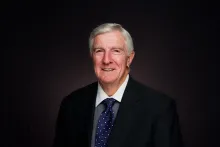
Before his retirement in 2021, Dr. Donald Ward pastored churches in Texas and Louisiana, and taught at Ambassador Bible College in Cincinnati, Ohio. He has also served as chairman of the Council of Elders of the United Church of God. He holds a BS degree; a BA in theology; a MS degree; a doctor’s degree in education from East Texas State University; and has completed 18 hours of graduate theology from SMU.
