

Don Ward
This transcript was generated by AI and may contain errors. It is provided to assist those who may not be able to listen to the message.
We are covering the book of James. We're to James 5. So if you will turn to James 5 and verse 1. James 5 and verse 1. The first several verses here in James 5 I have referred to several times in recent sermons, also in covering the current events and news of the world. James 5 and verse 1. Go to now, you rich men, weep and howl for your miseries that shall come upon you. Of course, at the present time, that is not the way that it is. The rich men have basically garnered the wealth of the world, and the wealth of the world is controlled by about 5% or less of the people, and 25% of the corporations, along with the wealthy, virtually control all of the world's wealth. And so that leaves so many people who are left wanting in this world. Millions upon millions go to bed hungry, and millions upon millions are wondering where they're going to get their next meal. If you notice the news during this recent government shutdown and budget showdown that recently took place, they hammered out a deal at the 11th hour on Wednesday night so that the debt ceiling was raised, and in addition to that, the government employees went back to work. Only about 17% of them weren't working anyhow. But in this time of need, during this government shutdown, about 17% or so, they didn't know how they were going to pay their bills in America. Or, supposedly, we are blessed with great prosperity. People live from paycheck to paycheck, for the most part, in the country. Your riches are corrupted, and your garments are moth-eaten. This is what's going to happen. Your gold and silver is cankered. The rest of them shall be a witness against you, and shall eat your flesh as it were fire. You have heaped treasure together for the last days. Oh, invest in gold, invest in silver, invest in platinum, invest in diamonds, invest in precious metals and gems and diamonds, and all of that. Make a hedge up for the last days. Of course, if you read the book of Revelation chapter 6, you will note that they're going to be throwing their gold and silver into the streets. They're going to ask for the mountains and the rocks to fall on them, for the great day of God is at hand. And they'll be saying, Hide us from the face of him that sits on the throne, and from the Lamb.
Behold the hire of the laborers, the working man, the hire of the laborers, who have reaped down your fields, which is of you kept back by fraud, cries, and the cries of them which have reaped are entered into the ears of the Eternal of Sibboleth. One of the things that turns things around, it seems, like if you read Revelation chapter 8, just before the trumpet plagues are poured out, the prayers of the saints, as it were, are poured out before God, and the sweet odor wafts up before his face. And all of those prayers, it seems, have been captured. The cries of the working man, the cries of the people, the cries of those who have been beaten down through the centuries and the ages, comes up before God. Yes, God does hear prayers. He doesn't always answer right at the moment, maybe, that we want him to, but he hears our prayers. And be not deceived. God is not mocked for whatsoever man, so with that shall he also reap. The day of reckoning will come. You have lived in pleasure on the earth, have been wanton. You have nourished your hearts as in a day of slaughter. You have condemned and killed the just, and he does not resist you.
Be patient, therefore, brethren, unto the coming of the Lord. Behold, the husbandman waits for the precious fruit of the earth, and hath long patience for it until he received the early and latter rain. On July the Sabbath surrounding July the 4th, I gave a sermon titled, Independence, Dependence, and Interdependence. Through the ages, of course, Satan's insatiable quest has been to have the peoples of the world worship him, to break prophecy, and for people to turn and worship him. And he's going to be able to, through the beast and false prophet, through that system, to deceive the whole world, everyone whose name is not written in the Lamb's Book of Life. And through the ages, there have been wars and rumors of war and all of that.
And yet, the world has not been welded together as it has been in the past two decades, the past 20 years or so. We continually hear the term globalization, the global community, the global economy, and so it has arrived. You see, when you are able to garner all the treasure and everything together that you control it. You can inflict upon the people almost anything that you want to, because one of the greatest needs, obviously, is you've got to put food on the table. You've got to meet those basic needs. You have to have shelter, clothing, food. And so, they have been able to put they being the elite, the banking system, the politicians, to put together a global system in which you can talk about an independent nation. But really, there is no independent nation at this time. The world has been brought together largely through economics. It's a forced kind of thing, but doing it without firing a bullet? Oh yeah, there are a lot of wars going on and a lot of people dying. Some 50-something people were blown up in a rock yesterday. The Sunnis blowing up Shiites. Next time it'll be Shiites blowing up Sunnis. And so, it continues to go on back in two, back in two. And there are a lot of shooting wars going on. The situation in Syria is really no better, even though they say, well, we're going to gather all the chemical weapons and destroy them. And at the same time, our president has hammered out a deal with the president of Russia and with the Iranians and the Syrians. And this past week on Monday, they met in Geneva what's called the five and plus one. The five being the five permanent members of the UN Security Council consisting of the United States, Britain, France, China, Russia, and Germany. That's the plus one, Germany. The six most powerful nations and most powerful economies on the face of the earth.
And so they say, well, now we have brought Iran to the negotiating table, and they're not going to develop a nuclear bomb. And we'll have it's sort of like what was referred to in the sermon here by Mr. Kubik, the Chamberlain, who went and visited Hitler in Germany just before Hitler invaded Poland. World War II. Peace in our times, but there is no peace. But see, the time is coming, as it talks about in Revelation 13, in which no man can buy or sell unless he have Mark the Beast. And so that time is coming, and the world has been set for that time to come.
And they have the technology to enforce it.
Not that technology is the mark of the beast per se, but a part of the enforcement. Verse 8, Be you also patient, establish your hearts, for the coming of the Lord draws nigh.
Grudge not one against another. And in the margin, and some of the translation, it's not grudge in the same way that we think of a grudge, though grudge could be included. It means to groan, to moan, to complain against each other. Grudge might be, I guess, an acceptable, generic kind of word, but it's not in just in the sense of holding a grudge.
So grudge not one against another, brethren, lest you be condemned, or you be judged yourself.
Behold, the judge stands at the door, and every knee is going to bow, and every tongue is going to confess. And judgment is now upon the house of God.
Take my brethren the prophets who have spoken in the name of the Lord. Of course, those prophets, to a large degree, are chronicled in Hebrews chapter 11. Faithful men and women who died in the faith not having received the promise. Jesus Christ talks about how He sent the nation of Israel prophets and righteous men, and they killed them. The prophets who have spoken in the name of the Lord. For an example of suffering, affliction, and impatience. I know that we all want the kingdom to come. We talk about that, and we want this current evil age to come to a close, and Jesus Christ to return and set up peace on this earth. But it's going to be a very difficult time.
A very difficult time. There will be a lot of suffering and affliction and persecution.
But He says, take the example of the prophets. They went through much of that. Behold, we count them happy, which endure. You have heard of the patience of Job, and have seen the telos. It's T-L-O-S in the Greek. It means the result or outcome.
You have seen the result or outcome of the Lord, that the Lord is very pitiful. He is patient. He is long-suffering and of tender mercy. Long-suffering, merciful, not willing that any should perish. You know, there are many times I pray, and I would imagine you do the same thing. And it's difficult to understand, to some degree, when you look at this world of all the misery and the suffering that's going on, and you wonder, and I just have to ask, well, Father in heaven, what is being accomplished by this continuing? And of course, God's answer always is, He knows what He's doing. He knows what He's doing. And basically, the answer that is given there in the last few verses of Romans 11. This is a question that would come up all the time in our classes, Bible classes at Ambassador.
Why did God have to blind Israel for the Gentiles to be grafted in? Why this or why that?
And one of the answers, basically the answer that Paul gives, that He might have mercy on all.
God is not a respecter of persons, not willing that any should perish, but that all should come to repentance.
And so you pray that prayer, you wonder, well, what's being accomplished? Well, He knows what He's doing, and if He doesn't know what He's doing, we have no hope anyhow. So we are in the hands of God. Verse 12 sort of takes a turn, but above all things my brethren, swear not.
And this swearing here is not the the principal focus of using this word, swear, here is not what we might think of swearing in the sense of using four-letter words, so that could be included.
Or just, you know, you are called as a witness at court, or to do jury duty, or to give testimony to raise your hand to use solemnly, swear, blah, blah, blah.
And we say, we affirm. That's fine. But it also ties in with the last couple of verses of James 4. And you notice back there, if you turn there and look at James 4, starting in verse 13, Go to now you that say, today or tomorrow, we will go into such a city and continue there a year, and buy and sell, and get gain. As if all things continue as from the beginning.
Of course, you have to, in a sense, prepare for things continuing. Who knows how long, how long, O Lord? Who knows? We don't know. We think it looks like when God in His wisdom knows what He's doing and what His plan is, and when it comes to fruition, verses 14. Let's read 13 again. Go to now you that say today or tomorrow, we will go into such a city and continue there a year and buy and sell and get gain, whereas you ought not, whereas you know not what shall be on the morrow.
For what is your life? It is even a vapor and appears for a little time, and then That vanishes away. We're given some 70 to 100 years in the flesh at this particular epic in human history, and then it's gone. For that you ought to say, if the Lord will, you shall live and do this or that. So don't swear, don't say, I'm going to do such and such and not take into account that it is, if it is, God's will.
But now you rejoice in your boastings. All such rejoicing is evil. Therefore to him that knows to do good and does it not, and to him it is a sin. That is the sin of omission, which probably we are more guilty of that after conversion than we are in the sin of commission. Now back to verse 12 in chapter 5, but above all things, my brethren, swear not at all. Don't say, I'm going to do such and such. Now, it also can include not to swear and oath, but rather say affirm, if God wills, God willing, I'm going to do such and such.
And of course, when you swear in the sense, in some of these movies today, they can't say a word without saying the name of God in vain, of cursing God. And you break the commandments. You shall have no other God before you. You shall not make yourself any graven image, and you shall not take the name of the Lord your God in vain.
Remember the Sabbath day to keep it holy. The first four teaching us how to love God. But above all things, brethren, swear not, neither by heaven, neither by the earth, neither by any other oath, but let your yes be yes and your no, no, lest you fall into judgment. Now these last verses here, I sent a handout by email, hoping that you would print those off and look at them, study them, with regard to the Greek words that are used here, because this question of healing has been such an issue in the church through the years.
Do you go to a doctor, or do you not go to a doctor, and all the things about healing? Well, if we had enough faith, if we had enough this, if we had enough that, and so on and so on it goes. I am quite sure I don't have a record per se, but I am pretty sure that I perform far more, I should not say performed, officiated at more funerals in the past almost forty years in this area than anybody has, I'm talking about Church of God community.
From dying in my arms, to violent automobile accidents, to suicide, to murder suicides, to people in their 90s, to people, to those who were still born, and on and on it goes. And for years I did so much study in the area with regard to healing.
I make a few introductory remarks here leading up to some of this. I probably need more time for this, but we'll basically quit on time. After giving a sermon on healing in one Church area, and when I tried to explain what faith is all about, and living God's way, and if you're not healed, it doesn't necessarily mean that you lack faith, though faith is a component of healing.
Anyhow, one lady came up and said, I am so thankful and relieved after hearing this sermon. She went on to say that basically she'd lived her life in fear that even though she had striven and struggled to obey God all of her life, she might have to face a terrible sickness somewhere along the line, and then not have the faith to be healed, and in a state of weakness she would go to a doctor. The implication being, of course, that she would miss out on God's kingdom if in a moment of weakness she would go to a doctor.
One of the most moving experiences of my life occurred when, and parenthetically this is one of the dear ladies that I officiated at her funeral, I looked down in her pleading face of this dear little old lady with cancer after she had had surgery, and she looked up at me and said, Dr. Ward, is God going to send me to the lake of a fire because I let them doctors cut on me? That's an exact quote. I said the answer is no.
The God I know is a God of love and mercy, so the answer is no. Is that the way God is dealing with us? Or we go into miss God's kingdom if you go to a doctor? And is it always a lack of faith if you do so? And is it always a lack of faith when we're not healed after we are anointed and do everything that it says to do?
You know, the Apostle Paul said he had a thorn in the flesh, a messenger from Satan to buffet him, and he besought the Lord thrice that this thing be removed from him. But it wasn't. God did not remove it. And Paul said, now I glory in my infirmities, because in my infirmities, I am strong, because I learned more and more that I cannot make it without God. And he's the only way I'm going to be able to make it in the face of this affliction. In the past, some in the church have obviously believed that the answer to the questions that I've just asked was, yes. Are we going to miss out on God's kingdom when we go to the doctor? Yes, some would say.
Is it always a lack of faith when we're not healed? Some would say, well, yes, if you had enough faith, you'd be healed.
One of the earliest trials that we had when we first came to Big Sandy, of course, we'd been here about two years, I guess, and our oldest daughter came down with, first of all, with strep throat. She was very sick, and at that time there was a doctor practicing here in Big Sandy, and Wanda took her down there and said, this child has strep throat. She desperately needs antibiotics. She doesn't get antibiotics. She could die because the path of strep throat is this. Strep throat becomes scarlet fever, and scarlet fever becomes rheumatic fever. Rheumatic fever damages the heart, and you could die. Of course, you could die before you go through all of those steps as well.
And so, he wanted to give a course of shot antibiotics on the spot, and Wanda said no. We'd already talked it over before she went. He said, I don't know what all he said, was in essence making a terrible mistake. She really needs this. Seemed to get a little bit better, and I was doing residency up at Commerce on the doctoral program, so we rented an apartment, went up there, and shortly after going up there, she did come down with scarlet fever.
So, we came back here, and I basically continued to commute, and we held that apartment, so when somehow worked out through it. And we went to Dr. Parrish there on campus. He listened to the heart. He said she has a murmur. She has rheumatic fever.
At about that time, I was considering what I was going to do on my dissertation from the doctoral program, and initially I was going to do a dissertation on vitamin E, the effects of vitamin E on human endurance. There was quite a bit of literature out at that time. This was early 70s, 71, 72.
And I read across this article by Dr. Evan Schute out of Toronto in Canada, who had done a lot of work on this. And he had a prescribed dosage of vitamin E that you could give while monitoring the heart. And basically he did that by the heart rate.
And so we cut the capsules or whatever needed to be done. And even Dr. Parrish said, advised against it.
And we did that, and within a few months, and of course not discounting prayer and all of that, but within a few months there was no sign of anything.
But the great lesson, one of the greatest lessons that I learned out of that was this, that I will never place my child's life in jeopardy based on, quote, my faith.
Now, if I had enough faith, quote, unquote, she'd be healed, and probably you face maybe not that dramatic, but something similar. I had another experience with that daughter. When we were students at Delta State University, I was on a football scholarship, and Wanda was working at night. So after practice, we'd have a babysitter during practice. I'd go and pick her up after practice and bring her home. And she was in a baby bed, and she's 18 months old. Baby bed comes up to about here, and I had this little game I'd pass by, and I'd sort of put out my hands like that. She'd sort of make a motion toward me, and one night about 10 o'clock, I passed by, and I did that, and she came over the top. The first thing it hit was the point of her head. And I picked her up, and we talked, and it seemed to be all right. She sort of had a nod up here, and Wanda came home about 12, and I told her what happened. We went in there to check her. I checked her some, but when we went back there this time, she had vomited, and we rushed her to the emergency room. The doctor came. He said, this child has one chance in a million of living.
He said, you need to get her to either Memphis or Jackson immediately to a neurosurgeon, and one chance in a million. So Wanda and Sherry get in the ambulance to go to Jackson. I go back to the apartment to get clothes for the funeral, and I drive 150 miles trailing the ambulance, which I never caught, but thinking I'd probably be going to the funeral, and all the way praying, praying, you know, just let her live. You know, I mean, if she's whatever, I'll take care of her. I'll devote the rest of my life and all the things you say. And so by this time, it was about daylight, and I drove up, and as soon as I walked into the hospital there, a nurse met me, said, are you the father of the little girl they brought in here? She said, she's fine. She's up playing around the room. So I've had, and that's just two stories in my own family, and there's some others, too, which I won't go into, along with the various experiences in the church with regard to this.
Verse 13, is any among you afflicted? Now that if you have your word studied there, take apathyia to suffer evil. Is anyone suffering evil? Now, one of the things that you're going to see from these verses is that these verses and what is covered here is much broader than you might think. Take apathyia to suffer evil. Is any among you suffering evil? Let him pray.
Pray prosukumae to pour out one's being. I mean, it's not just any old prayer, it's pour out one's being. Most of us have been there many times where we poured out our being to the point of tears. Sometimes God answered and sometimes he didn't. In the case in which Sherry pitched out of the baby bed under her head, he answered. Other cases were not answered, though the prayer might have been just as energetic, hot, effectual, and fervent.
Is any among you afflicted? Let him pray. Is any merry? Let him sing songs.
Is any sick?
Now, in this word sick is asthineo, to be infirm, to be weak, to be without strength.
It has a broader connotation than you might think at first glance, asthineo, to be infirm, to be weak, to be without strength. Is any sick among you? Let him call for the elders. This word call is prosca pomai. Prosca pomai means to summon, to invite. It has the connotation of a legal invitation. Is any sick, weak, sick, and firm among you? Let him give us summons for the elders of the church. Now, this part here is so very interesting in the fact that by calling for the elders of the church, the person who is sick is recognizing a lot of things inherent in this that God does have a ministry in elders that he has vested authority in, but it's not so much authority, per se. It has to do with the fact that God is the ultimate one who heals and the oil that the elder uses is symbolic of the very spirit of the living God. So, is any sick, weak, sick, or firm, let him call for the elders of the church? And we have a right to call on the elder, and the elder has a responsibility to answer, to respond.
Let him pray over him, this pour-out-ones being, once again, anointing him with oil in the name of the Lord, because God is the ultimate healer. The minister is just an instrument that God uses, but it does show a connection between God, the minister, and the person. And some of the closest relationships you will ever develop has to do when you are ministering to someone who has, quote, a terminal illness.
There's nothing like that.
It says that let him pray over him. Let them pray over him. The word over there is epi. It means to go over or above.
And it has the connotation with downward pressure. And, of course, you lay hands on the person when you're anointing them on the head. Let them anoint him with oil. Oil is symbolic of God's Spirit. And, of course, that shows that God is the one who does the work.
It is not the minister, per se.
And the prayer of faith shall save the sick. Now, notice that it says here, save the sick.
The word for prayer here is not the same as the one above. It is not proskamahi. It is yuche, votive obligation, a petition to God. And when I anoint people, I generally say that you have promised we're here before you to claim the promises. You have promised that we come before you such and such.
Of course, you always have in mind that God's will. Now, the word save here is sozo, S-O-Z-O.
And it means to make safe to protect.
It does not say heal. It says save. The word save means to make safe to protect.
The prayer of faith shall save the sick, protect him, make him sick, and make him safe.
And the Lord shall raise him up.
And this raise him up has the connotation of resurrection in a sense.
And if he have committed sins, they shall be forgiven him.
And of course, that gets into if he have committed sins.
Now, some have basically just looked at the cause of sickness as strictly sin.
But there are different causes for sickness.
I'm going to look here, and because of limited time, I'll have to do some shuffling with regard to the notes. I could always go from memory, but sometimes you might leave something out.
What are the causes of sickness?
Well, one cause is sin.
One cause is sin. If sins have been committed, another cause is the sins of the fathers.
It says in the Old Testament that the sins of the fathers are passed on to the third and fourth generation.
You inherit the DNA genes and chromosomes from your parents.
Inherent in those genes and chromosomes are susceptibilities to various diseases. One of the things they were talking about just yesterday is that they have now seen that mothers who have high cholesterol pass that on to their children the susceptibility for them to have high cholesterol.
And there's just a whole litany of things that you can pass on.
And of course, in recent years, for the past several decades, you've had this whole drug culture and abuse of alcohol and all of that, smoking, alcohol, drugs of various sorts.
And of course, that could impair the health of a person that you maybe had nothing to do with.
You had nothing to do with the sins of the fathers.
You had nothing to do with your mother smoking, drinking, taking drugs, or whatever, while she was carrying you.
Another thing is time and chance. The book of Ecclesiastes says that time and chance happens to everyone. You're in the wrong place at the wrong time.
God does not place around us an invincible cage.
He does not put armor around us, and so we're susceptible to time and chance. Now, on the other hand, at times, God does protect us with his angels.
But he doesn't always, and some of you have probably been involved in some pretty serious accidents.
Motor vehicle or otherwise. Another reason is that the works of God might be made manifest. This is John 8, where this young man who was blind from his youth was healed by Jesus Christ. And the people asked Jesus Christ, well, who sinned here? See, once again, this notion that sin is the ultimate cause and basically the only cause for sickness. And when Jesus Christ has asked the question, who sinned here, he said, neither this man nor his parents sinned, but that the works of God might be made manifest.
You talk about what is the term.
Looking out for our best interest years in advance of knowing what was going to happen.
It's called the providence of God.
God allows Satan to afflict us and chase in us, as in the case of Job.
Job chapter 1, very clearly, Job comes before God.
God says, if you considered my servant Job, Satan says, yeah, but you put a hedgerow against him. Let me at him. He'll curse you to your face. And God let him at him. And you know the story.
God himself chastens. He chastens every son that he loves. In this case, if you want to hold your place there in James, we will go to 1 Corinthians 11, where it talks about the Passover.
That we should judge ourselves, that we should not be judged.
When you come to take the Passover, you want to make sure that you are reconciled to God and to your neighbor. The Corinthians were taking the Passover irreverently, and for that cause, many were weak and sickly, as we shall read here. 1 Corinthians 11, verse 28, let a man examine himself, and so let him eat of that bread and drink of that cup. For he that eats and drinks unworthily, the Greek word is anaxios, A-N-A-X, I-O-U-S, it means irreverently, eats and drinks judgment to himself, not discerning the Lord's body. Now, the Lord's body was given for our sins, and if we take the Passover in our sins, we're not discerning the Lord's body and counting it as of non-effect and as of nothing.
In addition to that, the Church, and each member of the Church, is a part of the body of Christ.
And so, if we don't make reconciliation with our brother in Corinth, they were having basically a drunken orgy before Passover. For this cause, many are weak and sickly among you, and some are even dead. Some are sleeping in their graves. They're dead. For if we would judge ourselves, we should not be judged. But when we are judged, we are chasten of the Lord that we should not be judged with the world. My saying is that God would rather see us dead than for us to miss out on His kingdom, and whatever it takes within His power to chasten us to bring us back, as it says in Hebrews 12, verses 6-7, that God chastens every son that He loves. And God is the Master Potter, and He knows what it takes to mold us, to shape us, so that we will be in His kingdom.
So there are so many factors to consider here. As we continue here, the next part is quite interesting, and I know that Bullinger brings us out. I don't know if any other commentary does or not. But we take it, probably, it's all right the way we generally take this, in one sense, but there's more to it. We'll get to that in a moment. So we're reading 15 again.
Physically, we're asking you, Father in Heaven, to intervene, to heal them, to raise them up, to restore them. And if they have committed sin, they shall be forgiven him. And one of the things I usually add here in anointing is that if there's anything else we need to learn from this, that you would reveal it to us. Because we do have secret sins. Sometimes we don't even, by secret I mean sometimes we don't even realize it ourselves. And then we come to ourselves and say, oh yeah, that is right. I need to be aware of that. I need to repent of that or whatever. And if he have committed sins, they shall be forgiven him. Now verse 16, confess your faults one to another. Verse 16, the word faults in the Greek is paratoma. It means error or willful transgression.
There's nothing wrong with asking for prayer.
And we have prayer requests all over the place all of the time. And God is here in answer prayer. But connected with this has to do with, says, confess your faults one to another. Does it just mean to say, oh I've got a stomachache, I want you to pray for me? Or I'm about to have surgery, very serious, I'm asking for prayers from the church. Well, that's one aspect of it. And pray one for another that you may be healed. Now in this case, the word for healed is eomai.
And it's spelled I-A-M-O-I. E-I-OM-A-E. And it means to make whole, that you may be made whole. The effectual fervent prayer of a righteous man avails much. The effectual is energeo, the word from which we get energy. You pour energy into it.
And the word fervent is the Greek word zelos, which means hot or with zeal.
And the word prayer here is dias, it means request to pray, to make supplication.
One of the main things that's included in this verse is confessing your faults one to another is just what I've read from and implied here in 1 Corinthians 11, that you are to be reconciled with your brother. If you hold your place there and you go to Matthew chapter 5, Matthew chapter 5, in Matthew chapter 5, Jesus Christ is explaining the weightier matters of the law and the spiritual application.
Sorry.
In verse 23, Matthew 5.23, well, we really need to read. We'll start in 21.
5.21. Up there it is four something.
5.21.
I'm sorry that I did seriously misread the clock, but okay.
In 5.21, you have heard that it was said by them of old time, you shall not kill, and whosoever shall kill shall be in danger of the judgment. But I say unto you that whosoever is angry with his brother without a cause shall be in danger of the judgment.
And whosoever shall say to his brother Rechah shall be in danger of the counsel.
But whosoever shall say you fool shall be in danger of hellfire.
Therefore, if you bring your gift to the altar and remember that your brother has ought against you, leave therefore your gift before the altar and go your way and be reconciled to your brother, then come offer your gift. In other words, confess your faults, go be reconciled, and then the prayers can be answered.
Now back in James 5, I'll bring this close, and I do once again apologize. I did misread the clock. I made a mistake. But anyhow, I hope we all survive it.
Verse 17, Elijah was a man subject like passions as we are, and he prayed earnestly that it might not reign. And it reigned not on the earth by the space of three years and six months. And he prayed again, and the heaven gave reign, and the earth brought forth her fruit.
Brethren, if any of you do err from the truth, and one convert him, Epistrapho, turn him about.
Let him know that he which turns about, the center from the air of his way shall save a soul from death and shall hide a multitude of sins. Once again, you are your brother's keeper and to exercise judgment, mercy, and faith. What I think I'm going to do, I want to give this complete sermon here that I have on faith and healing, and I will plan to do that next Sabbath.
And some of it will be repetitive because I'll repeat some of the things. One of the things I got sidetracked on telling, which I didn't have in my notes, but telling a story and so on. But anyhow, I hope that we have come. I think we have matured a great deal with regard to this and have made tremendous progress. But the tendency of people is to flip from one ditch to the other. And so, you don't flip from one ditch to the other. You maintain that which is balanced, that which is temperate, that which God expects. God is still our ultimate healer. I've had and I still have things in my life with regard to my health. There's no doctor can help me certain things, and you may have some of the same things. The only thing that can help will be that God heals you. So we will next Sabbath, I'll start from the beginning once again and go through this whole sermon on healing. And maybe also you can steady this word, steady some more as well.
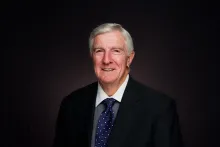
Before his retirement in 2021, Dr. Donald Ward pastored churches in Texas and Louisiana, and taught at Ambassador Bible College in Cincinnati, Ohio. He has also served as chairman of the Council of Elders of the United Church of God. He holds a BS degree; a BA in theology; a MS degree; a doctor’s degree in education from East Texas State University; and has completed 18 hours of graduate theology from SMU.
