
Don Ward
This transcript was generated by AI and may contain errors. It is provided to assist those who may not be able to listen to the message.
Houston is called the energy capital of the world. I would say that Houston is also the medical center of the world. People from all over the world travel here to receive medical treatment, and there are doctors, nurses, and medical technicians from all over the world that work here. Every few miles on most any major roadway in this area, there's a gigantic medical facility. Houston, the medical center of the world. So it would be logical to conclude that it would probably have more sick people than any industrialized city on the face of the earth. Of course, Houston, by some standards, is not all that large. New York City and Los Angeles are about twice as large. They say in the environs of Mexico City, you have between 25 and 30 million people. Of course, most of them are moving up here, so they're going to be shrinking. So, all these medical facilities and all these sick people, what if you had the gift of healing? Would you immediately go into the hospitals and begin laying hands on the sick and healing them?
You know, sometimes I think about, boy, I wish that I could just go in there and lay hands on people or say, be you healed, and they would be healed. They would come out of their beds, put on their clothes, and go home happy and be with their families. So sometimes when I hear about the sickness, the disease that plagues the sons of men all over the face of the earth, you say, wouldn't it be wonderful if we would be able to heal all of these people? And sometimes you might wonder why God allows all the sickness and sorrow that we see and hear about every day. Well, a short answer to that is because God is working out a great plan and purpose here on earth, and because he is a God of love and mercy, he is willing to share his eternal being with humankind, who he is and what he is. And he has ordained a great transcendental purpose for humankind, that they can be in his family. But on the other hand, as we read in Romans chapter 1, humankind did not like to retain God in their knowledge, so God gave them over to a reprobate mind to do those things that are not fitting or seemly. And so man has made wrong choices. And the reason why humankind is where it is is because they have rejected God. They have made the wrong choices from the Garden of Eden to the present time. On the one hand, humankind wants to deny God, and yet on the other hand, blame God for the situation that they find themselves in. But as we look at the prayer requests in the United Church of God, we read the prayer requests of brethren around the world, and you say, I wish I could heal them. But then I ask myself, am I more merciful than God? Are you more merciful than God? Today I want to lay a biblical foundation for what faith really is as it relates to healing. The principal thrust will be on what faith really is and what the outcome or result or product of faith is. We have a tendency to tune out what is said about faith oftentimes and concentrate on some little point, maybe a passing comment, that perhaps the minister said that strikes some kind of emotional chord with us and sort of dwell on that or remember that. But we need to put the whole package together. After giving a version of this sermon a few years ago, a lady in a church area came up and said, I am so thankful and relieved after hearing this sermon. She went on to say that basically she had lived her life in fear that even though she had striven and struggled to obey God to the best of her ability and knowledge, that she might have to face some terrible sickness at the end of her life and then not have, quote, the faith to be healed or weakened. And go to the doctor. The implication, of course, being that she would miss out on the kingdom of God. So is that the way that God is dealing with us? And are you going to miss the kingdom of God if you go to the doctor? And is it always a lack of faith when you're not healed? Of course, we hope to answer that as well. It's obvious that some of believe, and more in the past and perhaps the present, of course, we tend to swing to either ditch. At one point, no doctors, and now it's like everything. We run to the doctor and sometimes maybe anointing is just to go through the motions. Remember, two weeks ago today, I gave a sermon on the sin of unbelief. And God is our healer. When all is said and done, our life essence is in the hands of God.
And some of the teaching that is going on in the past has led some to make sincere and honest misjudgments. Some have refused to go to the doctor and get medical attention. Perhaps their child had an ear infection. I know of one case in which a young man, well, he was a boy, had some kind of infection, I think, behind his eye. They never did anything. He died. Well, are you going to blame them? I don't. God is judging all of those kind of situations.
And I'll tell about a personal experience we had a little bit later. So I don't believe that they should feel guilty. And I surely don't believe that God holds them responsible when we in good conscience do the best we can with the knowledge that we have. So who are we? We are the ones we have. So who are we to judge them? On the other hand, it has caused some that is, well, I don't go to the doctor and doctors and hospitals. They are instruments of the devil.
And of course, I'm sure the medical profession has misused a lot of things. I think it's more the pharmacia, the ones who develop and deal in the drugs, the so-called legal drugs.
On the other hand, it has also caused many to dabble in various healing modalities.
Many persons believing that if they didn't seek professional help, it was all right to seek out other help, usually in the realm of, quote, the natural. And there surely are bona fide natural remedies and qualified professional chiropractors, nature of paths, homeopaths. But seeking their help, as we will see today, is no more spiritual or no more a show of faith than going to a medical doctor. What's the difference? Well, you say, well, it's natural. So what is natural? We have had and have had and still do have brethren who have read a few books or talked with various people who come to believe that they are experts in health. You got a right. If you got a disease or sickness, they got the care. They got the remedy. They read or they heard or they've tried.
Some of these people have prayed on P-R-E-Y-E-D, on the fears of others. As a result, they lose sight of God and faith in their religion becomes their health or somebody else's help.
If we're violating physical principles of health, we need to get in harmony with the physical principles of health. God did not give us impurity or impunity from breaking the physical principles of health. As I brought out, I think, last week, He does not, He's not placed us in a bubble. The body is physical. Now, there is a spiritual essence in the sense of the spirit in man and the animating spirit. We're created in the image of God with certain faculties of mind that are akin to God. But basically, the body conforms to the laws of biology and physics, biomechanics, and chemistry. The body is to a large degree electrical. Pagans made the body into a great mystery. It housed the immortal soul, that mystical part that supposedly is eternal and immortal. If we want to get in harmony with certain laws of physics that govern the universe, we would go to a physicist or mathematician, not a shade tree mechanic. I doubt there are many shade tree mechanics that would ever get us to the moon.
If you were to be launched on a journey to the moon, who would you want to be in control of the spaceship? NASA or a shade tree mechanic? We can send men and women into outer space and return them to Earth. And when it comes to the human body, some consult with people who offer mystical remedies and magic potions, rather than consulting the people who understand the laws that govern the human body. So is it a lack of faith to do physical things when we're sick? Or if we do physical things, they can't have the prefix there or suffix at the end of their name, M-D, John Doe, M-D. It could be John Doe, a chiropractor, John Doe, a homeopathic, John Doe, nature of path, John Doe, in natural remedies, John Doe, you fill in the blank.
But you're doing something physical to try to take care of something physical.
So is that a lack of faith? You know, some people will do incredible physical things as long as it's in the so-called natural realm. They will submit to drinking incredible potions, eating raw liver, taking coffee enemas, along with any number of things.
In either case, you are doing something physical to help your condition. Now, two of the names of God, and there are many names. The three basic primary names of God are El, Yave, and Adonai. But El, Yave, and Adonai are used in compound with several other words. For example, Yave Ravika, or Rafa, God is our healer. Yave Jarai, God is our provider.
You know, when Abraham was asked to go sacrifice Isaac, and they started off on the journey, Isaac said, where's the sacrifice? And God said, or Abraham said, Yave Jarai, God will provide. Right at the last moment, he saw the ram caught in the thicket, and God provided the sacrifice. So, one of the names of God is Yave Jarai. So, should we not work and do physical things to put food on the table? In fact, the Bible says, if a man won't work, neither should he eat.
God is our provider and protector. So, what about locking the doors?
God has even placed angels round about us to watch over us. So, should we exercise common sense, do anything to help? Is it a lack of faith for me to water my garden and pray for rain?
I would imagine many of you have sprinklers on your lawn.
My life and yours are in the hands of God in the ultimate sense, even if we do physical things. God will permit us to take our lives if we so will, and there will be a lot of people who commit suicide today. If you want to take your life, you can take your life. And that shows that it's not supernatural, per se, that you can take your life. But God wants us to make the most of our lives, and our most precious gift is life. But, you know, events can happen at any time that will suddenly change our lives. For example, a bullet may pierce my kidney, invade my body, and there it's lodged.
The bullet is physical. Now, we would have no problem with removing the bullet. Oh, go dig it out, as we did see on the westerns where they drink a bottle of booze and somebody goes and digs the bullet out. Or now it's a little more humane.
So what if the kidney becomes blocked with a kidney stone or some kind of infection?
I almost died with a bladder infection back in 1986. Will you say, you either heal me, God, or I die? To me, it's sort of like the devil bringing Christ up onto the pinnacle of the temple and saying, well, it's written. He'll bear you up. The angel will take charge of you, not allow your foot to be dashed against the stone. So jump off the temple.
Jump off the pinnacle of the temple. I guess just see if God will say what He says, you say.
And the answer that Christ gave was, you shall not tempt the Lord your God. Now, today, it's usually a very simple physical procedure to unblock kidneys.
There are different ways, ultrasound to break up a stone, and usually you pass them, or oftentimes you can pass them in other ways. Or, antibiotics for an infection, bacteria are physical organisms. Antibiotics kill bacteria. Appendicitis is usually caused by an invasion of bacteria.
And a lot of people have died with appendicitis, some not even knowing they had it until it was too late. One of the most moving experiences in my life, I looked down into the pleading face of a dear little old lady.
This was up when I was pastoring big sand in the late 70s.
I looked down in the pleading face of a dear old lady with cancer who had had surgery, and she said, Dr. Ward, is God going to send me to hell because I let them doctors cut on me?
And I looked into her fearful, weary face and said, The God I know is a God of love and mercy, and the answer is no.
She had blocked bowels, and she had cancer of the colon. She didn't last very long.
When our oldest daughter was, I guess she was somewhere around 13 or 14, maybe a little younger.
We had moved up to East Texas State University, where I was doing my residency for my doctorate, and there was a swimming pool at the apartment where we were staying.
And one day, we hadn't been up there very long, my oldest daughter came in with short throat. So we went home, Wanda took her to, there was a doctor there in Big Sandy at that time, so in certain days of the week, so she took Sherry to this doctor.
The doctor said she has strep throat. She desperately needs antibiotics, and we refused. We refused, not giving her antibiotics. So we went home, and the next thing was scarlet fever.
So strep throat is a precursor of scarlet fever, and then the next thing was rheumatic fever.
At that time, I was trying to decide what I was going to do my dissertation on, and I thought I was going to do it on vitamin E, the effect that vitamin E would have on runners.
I would have a control group that did apple juice, and another group that did apple juice with vitamin E, but it was difficult to get the subject, so I never did that. But in the course of that, I did a lot of reading on vitamin E, and I came across the work of Dr. Evan Schute out of Toronto. He had done a lot of work at that time with vitamin E, and he had a little section there on how you can treat rheumatic fever with vitamin E, starting with 50 milligrams, carefully monitor the pulse, carefully monitor other factors, and we started doing that exactly. And within, oh, I don't know, it might have been two to four weeks, rheumatic fever was gone.
See, we were also monitoring her. We had a physician, Dr. Parrish, at the campus. He was a campus physician, and we also monitored the sed rate to determine if the bacteria count was going down. But anyhow, within a few weeks, there was no sign of rheumatic fever. She was able to return to school and has no murmur or anything today. Of course, there was a lot of prayer. I remember driving back in two to Commerce, Texas, a drive of 75 miles with my stomach burning and usually not having eaten anything and, you know, just praying that things would be all right.
It was at that time, after that experience, that I decided that I would never place again the life of my child for it to depend upon my faith, you know, my faith. Of course, she wouldn't understand a child of 12 or 13, whatever, would have some faith, probably believe God and that kind of thing. But I made the decision. She didn't make the decision that we would not administer antibiotics.
So, what if you decide to do nothing and trust God completely? Well, that's your decision. Of course, in today's world, the way things are, and there have been cases with Jehovah Witnesses and others that the parents wind up in jail. And as I said, it's a matter of your conscience and your being. Now, Hezekiah was told that he was going to die. He prayed, and God added 15 years to his life. Look at Isaiah 38, 21, please. Isaiah 38 and verse 21. In the late 1960s and early 1970s, I spent a tremendous amount of time studying healing, because in that one period of time there, from about 70 to 72, something like, no, this was later. This was around 79 to 82, but it was a shorter time frame, probably 81-82. I did about 20 funerals in a short period of time. Those funerals range from a 16-year-old model while you young men who committed suicide, to older men and women who died of cancer, to younger young men who died in my arms of cancer. And so I studied, and I studied, and I studied, and of course have taught the classes and Bible studies through the years, and focus on this many, many times. In Isaiah 38 and verse 21, Isaiah was told to go do something physical after he was told that he would be healed. In Isaiah 38-21, for Isaiah had said, let them take a lump of figs, lay it for a plaster upon the boil, and he shall recover. Hezekiah also had said, what is the sign that I shall go up to the house of the Lord? Now, I'm not going to spend any time with it, but chapter 39 is quite an amazing chapter that shortly after this, the Babylonians came to visit, at least the royalty came to visit Hezekiah, and he showed him all the sacred objects in the temple, and all the treasures there, and then God gives a prophecy that these will be taken to Babylon, and you'll be going into captivity, at least your people will. Hezekiah said, well, fine, just so it doesn't... Look at verse 8. Then said Hezekiah, Isaiah, good is the word of the Lord, which he has spoken, he said, moreover, for there shall be peace and truth in my days, peace and truth in my days. Well, you know, they're going to captivity later, but I got peace.
Sounds like some people today. I mean, it's unbelievable. You know, however, a plaster of figs or oil or wine are not necessarily the only modalities ordained of God. Oftentimes, we have to go into best knowledge available. So now let's examine the relationship of faith to healing, and some of this, of course, would be well-trodden, well-known, but let's notice the application and see what we can learn today. In Hebrews 11, in verse 1, the Bible definition of faith. So let's examine the relationship of faith to healing with those stories and backdrop in mind. In Hebrews 11, 1, 1, now faith is a substance of things hoped for, the evidence of things not seen.
The word substance here is that word that was used when a certain one was trying to explain the nature of God by saying that there are three ways of being God or three hypostasis. Hypostasis really means ground of being, and so it can be translated substance.
It is a fundamental basic essence of being. So faith is the substance of things hoped for, the evidence of things not seen. So what is the main thing that you're hoping for in your life? What is one of the greatest things that you should be hoping and praying for, and one of the greatest things that God can do for each one of us? Faith is a substance of things hoped for, the evidence of things not seen.
That evidence of things not seen, of course, would be God's Spirit, His supernatural miracle working power working within us. He who has started a good work in us will finish it until the day of the Lord, what Paul wrote. Now remember the weight of your matters of the law are judgment, mercy, and faith. So each one of those judgment stems from faith. You make a judgment, I'm sorry, judgment stems from the law. You make a judgment because the law defines what sin is, and you judge yourself through God's spiritual mirror, the law of God. Mercy, a weightier matter of the law, that after you judge yourself and you're convicted, you can cry out to God for His mercy, and upon repentance, He's faithful and just to forgive us of all unrighteousness.
And then faith, the requirement after that is to go live by faith, to go walk in faith. Faith is a gift of the Spirit and a fruit of the Spirit. God commands us not to have any God before Him, not to take or to make any graven image, not to take His name in vain, to trust Him for everything. And God has given us the power through His Spirit to overcome the world, and He will create holy righteous character within us. Is that the thing that you hope for most of all?
Faith, the evidence, the substance of things, hope for, and the evidence of things not seen. God has given us a formula, a process, that we must go through and submit to in order for God to create that holy righteous character in us. We must actually live by faith. I sort of squirm a little bit and so on when people say, I've got to develop character. Really what they're saying is, I've got to learn self-discipline. If character that God seeks is holy righteous character, that character is a spiritual creation.
Now it takes self-discipline. It takes obedience, and it takes many things on our part, as we shall see. Let's notice now in 1 Corinthians 13, verse 13, the three abiding things. 1 Corinthians 13 and verse 13. 1 Corinthians 13, 13, and inset chapter. Paul deals with spiritual gifts, one of which is faith and one is healing in chapter 12. Then in the last verse of chapter 12, he says, I want to show you a more excellent way, a way that far surpasses all other ways.
Then he talks about becoming as God is in the first three verses. Then in the next several verses, he describes the characteristics of love. And then in verse 13, the three things that abide. Now abides faith, hope, charity. These three, but the greatest of these is charity. So faith is the basis of hope. We have hope because we know through faith that God will deliver.
Why do I have hope? Because God is faithful who is promised. And I have faith and I have hope. But love is the greatest, but faith and hope are the precursors. You have faith, you have hope. And because of that, your ultimate result is charity or love to become as God is. And I want to pursue how that works.
Faith through the word and the Spirit are the enablers. Faith comes by hearing and hearing by the word of God. That's Romans 10, 17. If you're not reading the Bible and being renewed, don't expect to have much faith.
Faith comes by hearing and hearing by the word of God.
You get in this situation, there are several factors that are inextricably linked together. You could go to Acts 5, 32. God gives His Spirit to those who obey Him. So, having the Holy Spirit renewed within us is linked to obedience.
Then we see that faith comes by hearing and hearing by the word of God. Until they work in tandem, God convicts us through His word and His Spirit. Then, as we begin to obey, He gives us His Spirit and we begin to bear the fruits of the Spirit.
We cannot bear the fruits of the Spirit if we're not willing to obey Him.
So, the Spirit convicts us, it draws us, it enables us to understand. And Christ said in John 6, 63, The flesh profits nothing. It is the Spirit that makes alive the words I speak, their Spirit and their life.
Now, love is the greatest, as we just read here. The greatest of these is love, charity, agape.
Now, notice 1 Timothy 1, 5. Don't get lost in the details because what we're talking about here, I'm going to say this again, there's a formula, there's a process that we go through and submit to in order for God to create His holy righteous character in us. We must actually live by faith and it does relate to healing. And one of the reasons why we experience the trials, the difficulties, sometimes sickness and other things that we do in this life.
In 1 Timothy 1, 5. Now, the end of the commandment.
The Greek word for end is talos. Yes, Greek does matter what the word means. That word is talos and it means the result or outcome.
The result of the commandment is love out of a pure heart. In other words, if you faithfully live, as God has said, that you should live, that the result or outcome of that will be charity, love out of a pure heart and of a good conscience and of faith, unfeigned. And you do it in faith. The outcome, the end of the commandment, living by faith. Now, let's notice how the Bible definition of faith that we read. I want you please now to turn to Romans 4 verse 16.
And we're going to show here how the Bible definition of faith and this process that we're talking about is applied in the case of Abraham, who is called the father of the faithful. Romans 4 will begin in verse 16.
So once again, faith is the substance of things hoped for, the evidence of things not seen. What is the main thing you're hoping for? What is the evidence of things not seen? Here we see the example of Abraham, who's called the father of the faithful, and how this applied to him. In Romans 4, 16, therefore it is of faith that it might be by grace, to the end of the promise, might be sure to all the seed. Now there's a better translation of that in the NIV, which I did not bring up here with me. The NIV is not good for much, but sometimes a better translation. Not to that only which is of the law, but to that also which is of the faith of Abraham, who is the father of us all. What God is doing today, by grace there is a plan of salvation. Did you hear that? By grace there is a plan of salvation. Because of God's love, care, concern, because of his divine favor, there is a plan of salvation whereby he has made it possible for us to receive the very essence of his divine nature. Grace is not an active force, per se, but it is God's divine favor. And if God favors you, he is on your side. And if God be for you, who can be against you? So it is through grace that we have this opportunity. Now faith and law do play a role in the process. Not that only which is of the law, but that also which is of faith of Abraham, who is the father of us all.
As it is written, I have made you a father of many nations, before him whom he believed even God, who quickens the dead, and call those things which be not as though they were. When Abraham was told to sacrifice Isaac, in Abraham's mind Isaac was as good as dead, in the physical sense, but as good as alive in resurrection. So that's what that says, what that means there when he says, who believed God, who quickens the dead, and call those things which be not as though they were.
Who against hope believed in hope.
Now what is this about? It's about the promise of the son of promise, Isaac, that Abraham's seed would be continued, and through Abraham's seed, the nations of the earth would be blessed. Which seed is blank?
Christ. Galatians 3, 1516.
Who against hope believed in hope, against the hope of this world, the hope of this world would say Abraham and Sarah couldn't have a child, believed in hope, the hope that God had given, and what was that hope predicated on? Faith. That he might become the father of many nations, according to that which was spoken, so shall your seed be.
Of course, one of the great difficulties in the world today has to do with who are the people of Abraham? Who are the people of God? Did you say that they have the right, the God-given right, for all of Palestine, because they are of Abraham, Isaac, and Jacob? The Bible does say, in your seed, that is, in the seed of Abraham, Isaac, and Jacob, shall you be called or blessed.
But when it comes to the spiritual application, it is through Christ. The last two verses of Galatians 3, if you are in Christ, then you are Abraham's seed, and heirs according to the promise.
We have a lot of well-meaning nominal Christians who are beating the bandwagon, in essence, for war, for Israel to go attack Iran, which would be disastrous in the long run, and the world be drawn into a war that you think the war on terror is awful.
A way to let happens if it should. I don't think it will. I mean, World War III is going to come, but I don't think Israel is necessarily going to attack Iran. We'll wait and see. And being not weak in faith, see, faith, remember that faith is a springboard to all things spiritual. Hebrews 11, 6, that I've covered about 50 times, that he who would come to God must, first of all, believe that he is, and that he is a rewarder of those who diligently seek him.
Without faith, it is impossible to please God. And being not weak in faith, he considered not his own body now dead. When he was about 100 years old, neither yet the deadness of Sarah's womb, he staggered not at the promise of God through unbelief, but was strong in faith, giving glory to God, and being fully persuaded that what he had promised he was able also to perform. And so what happened? Abraham and Sarah came together.
Sarah was able to conceive. The son of promise was born. The substance of things hoped for. Here's a concrete example. Substance of things hoped for. The birth of Isaac, the son of promise.
As we shall see, then Paul gives it the spiritual application.
In verse 22, therefore it was imputed or reckoned to his account for righteousness.
Now it was not written for his sake alone that it was imputed to him, but for us also to whom it shall be reckoned to our account if we believe on him that raised up Jesus our Lord from the dead, who was delivered for our offenses, was raised again for our justification. Therefore, being justified by faith should be no chapter break. Being justified by faith. Remember that another aspect about faith. Faith has a dimension that has to do with, you might call it the abstract, that which is in the mind and in the heart of what you really believe. And it has the dimension of obedience of doing something.
The wages of sin is death, and the only way that that sin can be paid for is death. And Jesus Christ went in our stead. He is our perpetuation. He went in our stead. And we have faith in the sacrifice of Christ, and we repent of our sins, and we're justified.
Therefore, being justified by faith, we have peace with God through our Lord Jesus Christ, by whom we also have access by faith into this grace wherein we stand and rejoice in the hope of the glory of God. And not only so, but we glory. And now here is the little formula of process. Most people read right over it. So how is God going to shed His love abroad in our hearts?
How is He going to create His perfect, holy, righteous character within us?
You know, I would like to go to the hospital room today, and the first person I see there lay hands on and say, Be you healed, and they would be healed.
But God, in His infinite wisdom, He knows what is best for each one of us. He may be working out something in that person's life that I don't know about.
People point, and they misapply. I think I have this later in the sermon, but it comes up now. They misapply oftentimes. God, the same yesterday, today, and forever.
God and Christ are not healing people in the same way that they were when Christ was here on the earth. At that time, God was showing through whom He was working. Those people did not enter into a covenant of sacrifice with God and Christ. But today, many of us have.
And God knows what is best. Is He the Master Potter? Are we the clay in His hands that He can mold us, make us, shape us in His way?
It is through much tribulation that you shall enter into the kingdom of God.
When we enter into the kingdom of God, God is going to know and know that He knows that we place no greater affection for anything than we do for Him in His way. And you remember that what the minister went over before you were baptized in Luke 14. If any man come to me and says that he wants to be my disciple and loves not less by comparison his parents and loves not his life until the death, he's not worthy to be called my disciple.
So notice this carefully. Verse 3, not only so, but we glory in tribulation.
We glory in tribulation also knowing that tribulation works patience. Patience. And this word for patience here, a better translation would be experience. That we go through the experience. We know what it's like.
We went through quite an experience and I related about our oldest daughter who had strep throat, garlic fever, and rheumatic fever. Now I could go back to when she was 18 months old.
And I was in college. I was on a football scholarship and Wanda was working at night at a laboratory. And so after we had a babysitter till I got home from practice.
And so we were in one of the college apartments. Sherry was standing up in the baby bed. And we had a little game that we'd play. I'd walk by and I'd sort of do like that. And she would sort of laugh and sort of lunge too. Well, I came by and I did my little thing. She lunged and she came over the top and down and pitched her head, the point of her head right here on hardwood floor. This one-inch tongue-and-groove hardwood oak floor.
She cried a bit and I consoled her and put her to bed as usual. She went to sleep. When Wanda came home, I told her about it. And we'd better go check her. I went in there and she had vomited. And I mean, she was hot as fire and her heart was racing. And we, quick as we could, we got her to the emergency room. He did a little quick check. Said, you know, I can't do anything. The only hope is a neurosurgeon. She has a blood clot on the brain and that has to be relieved or she's going to die. So they piled her and Wanda got into an ambulance with them and took off to Jackson, Mississippi from Cleveland, a distance of 144 miles. So I said, well, our home is in Southeast Mississippi. We'll be going to a funeral. So I went back to the house and got clothes that we could wear to the funeral. Then I got in our mighty Ford Falcon and tried to catch them.
I was not successful. I never even saw a blinking light or flashing light. I finally got there and by now it was daylight and I rushed into the hospital room and the first person I met, and it's a big hospital, the first person I met, a nurse said, are you the father of that little girl? They brought in here last night. I said, yes. I said, relax, she's fine. She's up there playing around the room. So what had happened on the way, you know, I prayed every prayer you can think of. If she's in the invalid, I'll take care of her. If she's brain dead, I'll take care of her. No, just let her live and all that. And she was fine. And what a relief that was. You know, there are so many different trials and tests, and at that particular time, I had not yet come in contact with the truth. The truth. Of course, I was grew up reading the Bible and teaching at Delt Sandhu School and all that when I was like 20 or 21 years old. But I didn't know the truth at that time. So after they had gotten down the road about 50 miles, I mean, this thing went away. This blood clot or whatever it was. And she was perfectly fine. I think God intervened. In my mind, I believe He did. Once again, this verse here, knowing the tribulation works patience and patience, experience, and experience hope. Now, the Greek word here for experience is dokime, and it means approved test trial. So as you are enduring this tribulation patiently, and I don't know how many of us can glory in tribulation as it says here, and James says, my brethren count it all joy when you fall into different trials.
Patience works experience or proof and testing and experience hope. Because as you go through this, and you have hope, you have hope that God is going to see you through, and that He will see you through. Hope makes us not ashamed. Some people can look at us and say, why would those people do what they do? Why do they think that they have some corner on the market on truth? Why do they actually believe the Bible?
That man does not have an immortal soul, that you're not going to heaven or hell when you die. The only way to immortality is through having God's Spirit in you and being resurrected. Hope makes us not ashamed because the love of God is shed abroad in our hearts that agape, that very substance that we're hoping for, is shed abroad in our hearts by self-discipline. No. By the Holy Spirit which is given unto us.
So here we see the outcome or the result of living by faith, that going through tribulations, bearing it patiently, that eventually God creates within us His holy righteous character. The love of God is shed abroad in our hearts through the Holy Spirit. So here we see faith in action, the outcome, the result. And when it says that you bear it patiently, it doesn't mean that you do nothing. Of course, in the case that I faced when our daughter fell out of the baby bed, the only thing I could do is pray. Basically, the ambulance people, the health care providers there, they couldn't do anything. They basically couldn't do a thing.
But maybe prayer is all you can do. If you don't have a job, you pound the pavement. You try to find a job. If you bear a grudge against your brother, you go to your brother. If you're sick, you can call for the elders of the church, but you don't doubt God or become bitter if you're not healed. So here we see faith in action, the outcome or result. God wants us to develop godly character, the primary substance, the love of God shed abroad in our hearts. How's it done? The evidence of things not seen. The Holy Spirit sheds abroad the love of God in our hearts.
And we become, as it says in 1 Corinthians 13, that if you have not charity, then you are nothing. And though you have the gift of tongues, and though you can, you have faith that you could move mountains, you understand all prophecies. And if you are not becoming as God is, it profits you nothing.
Some of the misunderstanding of the past stems from a misapplication of Matthew 929. I've already touched on this. Let's go there. Matthew 9 and verse 29.
In Matthew 9 verse 29, Then touched he their eyes, saying, According to your faith, be it unto you. And their eyes were open. And Jesus straightly charged them, saying, That no man know it.
See, even Jesus himself, after the healings, didn't want it to spread a broad kind of thing. Of course, he would be so plagued that eventually there were people who thronged together, pushing in and so on, like the woman who wanted to just touch the hymn of his garment so that she could be healed. But they, when they were departed, spread abroad his fame in all the country. As they went out, behold, they brought to him a dumb man, possessed with the devil. And when the devil was cast out, the dumb spoke, the multitude marvel, saying, It was never so seen in Israel. But the Pharisees said he cast out devils through the prince of the devils. And Jesus went about all the cities and villages, teaching in their synagogues, preaching the gospel of the kingdom, healing every sickness and every disease among the people. I got sidetracked a moment ago when I was talking about that scripture of Jesus Christ the same yesterday, today, and forever.
Do you think that God is dealing with us in the same way that he did the pre-flood world? Is God dealing with us the same way as he did Abraham, Isaac, and Jacob? Is God dealing with us the same way as he did Israel under the Old Covenant? In some ways, the answer is yes. But they had not entered into the covenant of sacrifice, whereby they said, and we said, at baptism, we're willing to lay down our lives and love not our lives unto the death. So God doesn't always work in the same way, but God yesterday, or Jesus Christ, the same yesterday, today, and forever. His character, his being, who he is, what he is, his plan and his purpose does not change.
Look at Malachi chapter 3. God is long suffering. He is merciful, not willing that any should perish.
In Malachi chapter 3, we generally just quote the first part of verse 6, For I am the Eternal, I change not. Then the rest of it says, Therefore, you sons of Jacob are not consumed, because God is a God of love, mercy, and grace, and because he has ordained his plan, if we were to get justice because of wages of sin as death, we would all die. But thanks be unto God, through his love, mercy, and grace, we can have forgiveness.
For those who have entered into the covenant of sacrifice with God, the master potter and refiner, he may say, It is not time for your deliverance. He did not heal Paul. Paul besought the Lord three times for a thorn in his flesh. Many of the men and women in Hebrews 11 were not delivered. They died in faith. He may be teaching you lessons and developing facets of your being that are essential for the job he's called you to. Do we really believe that God has our best interest at heart? Or is he just sitting back and saying, I really wish that they had the faith to be healed, and if they had the faith to be healed, then what?
You know, even Jesus said these people wanted to send somebody back from the dead. And Jesus said, if you won't believe me, then what if you sent somebody back from the dead? Would that really change your mind and hearts? Look at Romans chapter 8. Another experience I had during this time, this is the young man who died in my arms with cancer. He was about 20-21 years old.
One day his daddy came and said, you know, God just has to heal him because he's obeyed his parents. He's been a really good son, sort of a model citizen. And it says in the Bible that, obey your mother and father, if you do, long shall be your days on the earth.
And I said at that time, I said, no, that's not really the way it works. And he was very disappointed when I told him that. That's not really the way it works.
Because after you enter into the covenant of sacrifice, you submit to God and say, your will be done. Now, look at Romans 8.26.28 and something to think about here.
Romans 8.26. Likewise, the Spirit also helps our infirmities.
For we know not what we should pray for as we ought, but the Spirit itself makes intercession for us with groanings which cannot be uttered. So it's not just us praying. Jesus Christ, who is the parakletos, the comforter, he prays for us. Verse 27, And he that searches the heart knows what is the mind of the Spirit, because he, Jesus Christ, parakletos, 1 John 2.1.3, makes intercession for the saints according to the will of God. So, someone else is praying there. Jesus Christ is our mediator. He is our intercessor.
And it's not you or I alone.
God always has our best interests at heart. With our children, we do what we can for their best interests. Sometime it's tough love. Are we more merciful and righteous than God?
Does God allow his children to be dangled over death's door, and all the while he's saying, I sure would like to heal him, but he just doesn't have the faith to be healed?
Of course, the reasons why God chases and allows us to go through this are many. I shall list some now. I don't have time to turn to the scriptures.
One reason is to cease from sin. You might be interested in writing this down and go look at it, but I'm not going there. 1 Peter 4.1, He who hath suffered in the flesh, this is what it said. 1 Peter 4.1, He who hath suffered in the flesh, hath ceased from sin.
Obedience. Hebrews 5.8, we talk about this last Sabbath. Even though he were a son, he learned obedience through the things which he suffered. Obedient all the way to death.
He could have cried out, could have cursed God, but he didn't. Then we might learn to trust God. Psalm 27. The providence of God.
The story of Joseph and his brothers when he came to visit, and the brothers were fearful because they had sold him into slavery. And Joseph said, Don't be afraid, my brothers. You didn't send me here. It was God. You're not that big, my brothers. God allowed it. The providence of God means that God is looking out for your best interests years in advance. Then we might develop patience. See, when patience is all said and done, it means complete reliance on God. James 1.4 says, Let patience have its perfect work, that you may be whole, entire, wanting nothing. Why is that so? Because you know and you know that you know that God is going to ultimately deliver you whether in this life or the life to come. Another reason, so we may be refined, come to maturity, be purified. Another reason is to grow in grace, that is, God's divine favor. As he sees us grow and obey him, he gives us more favor. And another reason, separate the wheat from the chaff. And believe me, we're standing before the judgment seat of Christ on a daily basis. So there are so many factors in what the faith healers of the world and some even in the Church have fallen into the trapezius. Well, it's just a one-time thing, this or nothing. No, it is a total package, a total way of life. Christ died that we might have eternal life as spirit beings. He didn't die so we could have eternal life in the flesh.
We have faith that Christ forgives us of our sins. We're preparing for the Passover. And we go to God and confess our sins. We examine ourselves. And we have faith that God will forgive us our sins. We get up off our knees, no problem. He's healed us spiritually.
But then we're sick and we get up off our knees and we're not healed right then. And we wonder, what in our have faith to be healed? What takes more faith?
To be spiritually healed, to have your sins forgiven, and to be made whole spiritually, or to be healed physically? Which takes more faith? Which took the greater sacrifice? Yes, God is a merciful God. And God always has our best interests at heart. So, brethren, as we come to the Passover and the days that lie ahead of us, let's come to understand what life is all about. Life is all about putting the whole picture together, the big picture. God does have our best interests at heart. And let us struggle and earnestly contend, just as soldiers earnestly contend, as Paul brought out, to be good soldiers, to fight to the very end, to fight in faith to the death if necessary. And if we do, to die in faith awaiting the resurrection. So, brethren, let's really go forward and live by faith.
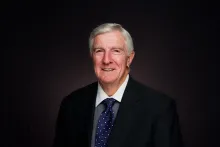
Before his retirement in 2021, Dr. Donald Ward pastored churches in Texas and Louisiana, and taught at Ambassador Bible College in Cincinnati, Ohio. He has also served as chairman of the Council of Elders of the United Church of God. He holds a BS degree; a BA in theology; a MS degree; a doctor’s degree in education from East Texas State University; and has completed 18 hours of graduate theology from SMU.
