
Don Ward
This transcript was generated by AI and may contain errors. It is provided to assist those who may not be able to listen to the message.
Greetings, everyone! Welcome to the Bible study this evening. I was able to send out a handout today of prophecies of Jeremiah. I spent many, many hours on trying to glean the prophecies from Jeremiah. I don't know if I got every last one. The prophecies that have to do with future events, prophecies that in some cases have not yet been fulfilled. Of course, the basic messianic prophecy of Jesus coming to the earth has been fulfilled. For all of the handouts, I sent out a link to the chronological order of the prophecies of Jeremiah. Jeremiah's written like a patch quilt work in which the various messages and prophecies are patched together in no certain chronological order. Prophecy in the first part of Jeremiah might have been during the reign of a king that came on later. Also, I wanted to remind you, I hope that you have memorized the last four or five kings there of Judah, beginning with Josiah, because Jeremiah began his prophecy during the reign of Josiah. After Josiah was killed in the battle with Egypt, his sons reigned in his stead.
I did a little mnemonic device that I used to remember these kings.
You have Josiah, then it is, and Jehoa has, Jehoa Kim, and Jehoa Kim.
I'll start over again. Jehoa has, Jehoa Kim, and Jehoa Chin, and then Zedekiah. What I did is, I said, Jo has Kim, Chin, Zed, so Josiah, and then has, Jehoa has, Kim, Jehoa Kim, Chin, Jehoa Chin, and then Zedekiah.
Those prophecies were given, the prophecies of Jeremiah, given during the reign of those five kings. Jeremiah 19 might have been given during the third year of the reign of Jehoa Kim, where we are going to begin tonight, which the link that I showed you shows that that's probably when it was given, and so it is not in any chronological order per se. If you would like, I have sent several handouts, and if you would like a handout, you'll have to send me an email requesting it, and the best way is for us to put you on our church email list. Otherwise, I have to send you an email individually for you to get the handouts. So with that, we'll begin our study this evening with Jeremiah chapter 20. Now, Pashur, the son of Emuur, the priest, who was also chief governor in the house of the Lord, heard that Jeremiah prophesied these things. Now, the chief governor, he was like the one who oversaw the whole temple area, and he had a lot of pull in addition to that, he was the son of the high priest. And in verse 2, then Pashur smote Jeremiah the prophet, put him in the stocks that were in the high gate of Benjamin, which was by the house of the Lord. In other words, it was the gate by the temple. Versus Pashur once again had tremendous power with regard to what he could do. In verse 3, he came to pass on the morrow that Pashur brought forth Jeremiah out of stocks, then said, Jeremiah unto him, the Lord hath not called your name Pashur, but Magor Misabib. Magor Misabib. Magor Misabib means terror round about, and you'll see that in the parallelism in the next verse.
Terror round about. The name Pashur, God gave him a different name, Magor Misabib. And then in verse 4, we see, for thus says the eternal be, Behold, I will make you a terror to yourself. So Magor Misabib means terror round about. I'll make you a terror to yourself and to all your friends, and they shall fall by the sword, and they shall fall by the sword of their enemies, and your eyes shall behold it. And I will give all Judah into the hand of the king of Babylon, and as you carry them captive into Babylon, and shall slay them with the sword.
Through the first 24 chapters, and we're approaching that time now, to a large degree, we have over and over again these, the commentators have called them sermons that Jeremiah delivered to the kings and delivered in various venues all over the land of Judah. And after that, more it is more about the prophecies of the future and also what God is going to do to the nations after they have done what they have done to Israel and Judah. Now in verse 5, Moerai will deliver all the strength of this city, Jerusalem, and all the labors thereof, and all the precious things thereof, and all the treasures of the kings of Judah, and I will give them into the hand of their enemies.
Remember that when the handwriting was on the wall and they were drinking out of the precious vessels that were taken from the temple in Jerusalem, and eventually Daniel was called to interpret the handwriting on the wall. So God tells him that he will give these precious vessels into the hands of their enemies, which Nebuchadnezzar's armies took, which shall spoil them, take them, and carry them to Babylon. And you, Pashur, and all the dwell in your house, shall go into captivity, and you shall come to Babylon.
There you shall die, and shall be buried there, you and all your friends, to whom you have prophesied lies. Oh Lord, you have deceived me. Now this word deceived me here doesn't mean deceived in the sense that we think about it. It means that God has led him in a way that he was willing to do what he asked him to do. So the best translation of this instead of, you have deceived me is, oh Lord, you have persuaded me. And you'll see that in the parallelism.
Oh Lord, you have persuaded me, and I was persuaded. So remember that Jeremiah was called while he was yet in his mother's womb, and he was commissioned to be a prophet to the nations to build up and to take down the nations. You are stronger than I. Of course, Jeremiah is speaking about God. You are stronger than I, and I prevail. I am in derision daily, and everyone mocks me.
So Jeremiah, time after time, was, as we might say down in the mouth, because he was a pariah. He was an outcast among the people. For since I spoke, I cried out. I cried violence and spoil because the Word of the Eternal was made a reproach unto me and a derision daily. So the more he spoke the Word of God, the worse it became for him and his image in and among the people that he had to interact with.
Then I said, I will not make mention of him nor speak any more in his name, but his word was in mine heart, and as a burning fire shut up in my bones, and I was weary with forbearing, and I could not stay. So Jeremiah said, I was ready to stop this job that you have given me, but your words were so hot in my heart and in my mind as a burning fire that I could not contain myself.
So I continued, and that's what we want our lives to be. Remember that in the Apostle Paul's letter to Timothy in 2 Timothy chapter 1, he says, to stir up the Spirit that was given to you by the laying on of my hands to stir it up. And that word stirrer has to do with life, with friction to stir, to strike, like you strike a match, to make it hot. And so the words of God burning in my bones, and I was weary with forbearing, and I could not stay, for I heard the defaming of many.
So more and more he heard them criticizing him, accusing him of being a traitor. For I heard the defaming of many, fear on every side. Reports say they, and we will report it. All my familiars watch for my halting, saying, so they were lying in wait, wanting Jeremiah to slip up, waiting for Jeremiah to say something whereby they could accuse him, bring him before the king, possibly have him put away for good. And it's amazing how Jeremiah was in stocks. He was thrown into the miry pit. He was in prison, and he faced so many trials, troubles, and difficulties, but yet at the same time, God brought him through all of them.
Perventure, he will be enticed, and we shall prevail against him, and we shall take our revenge on him. But the Lord is with me as a mighty, terrible one. You might put there Hebrews 13.5 because God says, He will never leave you nor forsake you. Also, in the commission to the church, God says in Matthew 28 verses 19 and 20, that I will never leave you or forsake you.
But the Lord is with me as a mighty, terrible one. Therefore, my persecutors shall stumble, and they shall not prevail. They shall be greatly ashamed, for they shall not prosper. Their everlasting confusions shall never be forgotten. But, O Lord of hosts, that tries the righteous and sees the rains and the hearts, let me see your vengeance on them. For unto you have I opened my cause. And, of course, many times we might say the same thing that we would like to see those who have wrought us wrong to have them punished in our lifetime so that we can see it.
But that is not the the way that God wants us to be. And Jeremiah, of course, was delivered from Pashur as we read, because Pashur was made as a terror roundabout and a terror unto himself and his friends, was taken a captive to Babylon and died there. Now verse 13, 13. Sing unto the Lord.
One of the greatest things that we can do is offer the sacrifice of praise, as in Hebrews 13, 15. God loves the sacrifice of praise. Sing unto the Lord, praise you the Lord, for he has delivered the soul of the poor, the life essence of the poor, from the hand of evildoers. Then we have the verse 14, which seems to be, and the commentators talk a lot about this verse, because in the next few verses here Jeremiah goes back into a lament concerning how he feels and how his human nature is getting to him with regard to the criticism that he's receiving from the people daily.
And some try to say, well, this is in contrast to his thanksgiving and being delivered to show where he, what he was thinking before his deliverance, but that is supposition. So we'll start here, continue with verse 14. Cursed be the day wherein I was born. Now, some great people of old have also said that. Job said something similar, that cursed be the day he was born, maybe not any of those exact words.
Elijah said the same thing when he was fleeing from Jezebel after God had performed the great miracle that he had performed on Mount Carmel and burning up the sacrifice, drying up the water, and slaying of the priests of Baal.
Then Jeremiah fleeing for his life and then saying, wish he'd never been born. So Jeremiah says, I wish I was never born. Let not the day wherein my mother bear me be blessed. Cursed be the man who brought tidings to my father, saying a man-child is born. Now, that part of the world, and it is still to that that way to a large degree in much of the Middle East today, especially among some of the communities there and among the tribes of, and you know the story about how women have been treated in various countries throughout the Middle East. And when a male child was born, there was great rejoicing, not so much when a female child was born. So a man-child is born unto you, making him very glad. Verse 16, and let that man be as the cities which the Lord overthrew and repented not, and let him hear the cry in the morning and the shouting at noontime.
So not only at nighttime did his troubles beset him. Oftentimes, when we close our eyes and try to go to sleep, that's when the outside world and other things flood in and we go over our problems time after time to the point that that becomes our problem. As God talks about in Psalm 77, where this person was praying and praying for deliverance and God was listening, and he went over his problems several times, finally came to himself and said, this is my problem, my problem is my problem, and so I need to get my focus on God and not on myself.
In Jeremiah 2017, now, because he slew me not from the womb, or that my mother might have been my grave, that's not a very pleasant thought, and her womb be always great with me. Wherefore came I forth out of the womb to see labor and sorrow, that my days should be consumed with shame. So here we see the humanity of Jeremiah very much, and of course, there are many lessons that we can learn and some we have brought forth here in reading these verses here this evening, that, and another amazing thing that we see over and over in the book of Jeremiah, that even when God's servants are doing the work of God, they oftentimes suffer tremendously. Jeremiah suffered tremendously. The Apostle Paul suffered tremendously. All of the apostles save one, some say, and some say he was. They were martyred, Jesus Christ himself, who knew no sin, was continually bombarded with accusations and terrible words against him. Now we're in chapter 21 and verse 1. The word which came unto Jeremiah from the Lord when King Zedekiah said unto him, Pashur, the son of Melchiah and Zephaniah, the son of Maseiah, the priest saying, Enquire, I pray you of the Lord for us, for Nebuchadnezzar, king of Babylon, makes war against us.
Nebuchadnezzar, in some cases, you see here a different spelling for Nebuchadnezzar, sort of unique to Jeremiah at this point. I don't think anybody knows exactly why that spelling is different here. The R-E-Z-Z-A-R instead of the usual N-E-Z-Z-E-R.
Nebuchadnezzar, Nebu, and one of the false gods was Nebu. Where Nebuchadnezzar, king of Babylon, makes war against us, it so be that the Lord will deal with us according to all his wondrous works that he may go up from us. And so here the king is asking them to go to Jeremiah, and for Jeremiah, the inquirer of God, and say, can't you have mercy on us? Can't you spare us? Can't you deal with us according to all the wondrous works that you have dealt with others through the years? Then said Jeremiah 3, "'Bless shall you say to Zedekiah.'" Now here we are in chapter 21, and Zedekiah was the last king of Judah. So you see how these prophecies, these sermons, are patched together in no certain order in the book of Jeremiah. Then said Jeremiah, "'Then thus shall you say to Zedekiah, thus says the Lord God of Israel, Behold, I will turn back the weapons of war that are in your hands, wherewith you fight against the king of Babylon.'" Of course, the instructions that God had given Jeremiah concerning what was to come upon them was not to fight against the Babylonians, to give themselves over to the Babylonians, not fight against them, and in so doing, they would be taken captive, they would be punished, but yet, as we have seen in the prophecies of Jeremiah, restoration and return is promised. But Zedekiah, he rebelled against the king of Zadakiah, he rebelled against Nebuchadnezzar, and he got his army ready to fight. "'So wherewith you fight against the king of Babylon and against the Chaldeans, which beseech you without the walls, and I will assemble them into the city in the midst of this city.' So at this point, beseeching them before they came inside the city, but Jeremiah says to Zedekiah, God is not about to deliver you, that you think you're having trouble outside of the city walls. You're really going to have trouble when the Babylonian army comes inside the city walls, and I myself will fight against you with an outstretched hand and with a strong arm, even in anger and in fury and in great wrath." And here we see the emotions of God. He said, "'I myself will fight against you with an outstretched hand with a strong arm, even in anger and in fury and in great wrath.'" God says he is angry with the wicked every day.
"'And I will smite inhabitants of this city, both man and beast, they shall die of a great pestilence.' And after which says the Lord, I will deliver Zedekiah, king of Judah, and his servants, and the people, and such as are left in this city from the pestilence, from the sword, and from the famine, and the king of Nebuchadnezzar." In other words, if the pestilence, the sword, the famine doesn't get you, you're going into captivity. "'At the hand of Nebuchadnezzar, king of Babylon, into the hand of their enemies, and to the hand of those that seek their life, and he shall smite them with the edge of the sword, he shall not spare them, neither have pity nor have mercy.'" So you're asking me to go to God and deliver you, whereas you are in rebellion against what God has prophesied through me that you should do, that you should not rebel against Nebuchadnezzar, that you should surrender yourself to him and give over to them. Trust me for your deliverance. Verse 8, "'And to this people you shall say, thus says the Lord, behold, I set before you the way of life and the way of death.'" And we are familiar with this verse and quoted many times in sermons from Deuteronomy 30 verse 19, "'Behold, I said before you life and death are good and evil, choose life.'" So verse 8, "'And to this people you shall say, thus says the Lord, behold, I set before you the way of life and the way of death. He that abides in the city shall die by the sword and by the famine and by the pestilence.'" You can hardly imagine how difficult it is to die by famine. In the last Bible study, we talked about how they did eat their offspring, and we read the verses last time. "'But he that goes out and falls to the Chaldeans that beseech you, he shall live.'" In other words, if you go do what I said to do and give yourself over to the Chaldean, surrender, "'and his life shall be unto him for a prey.'" He still may suffer, but he won't be killed right on the spot, and he takes his chances going into captivity, and there are promises that some will return, which after 70 years they did. Now verse 10, Jeremiah 21.10, "'For I've set my face against this city for evil and not for good,' says the turtle. "'It shall be given unto the hand of the king of Babylon, and he shall burn it with fire.'" I mean, the city inside those walls was razzed to the ground. Both the temple area and the houses were burned, and touching the house of the king of Judah say, "'Hear you the word of the Lord, O house of David.'" House of David, of course, is for the kings of Judah, the successors of David.
"'O house of David thus says the Lord, execute judgment.'" We'll see once again in chapter 22 about executing judgment. This theme of executing judgment, mercy, and faith, is throughout the Bible. It is one of the greatest themes of the Bible. It is one of the main reasons why Israel and Judah went into captivity because they refused to exercise judgment, mercy, and faith.
"'O house of David thus says the Lord, execute judgment in the morning.'" And, of course, we're reminded in today's world, which has been in several of our sermons in recent times, about how things are going in the world today, how judgment has fallen into the streets, and those who would pillage and burn in riot are called those who are demonstrating, those who are showing their displeasure with what is going on in the land. Well, demonstrating and doing what you might do in that way, in a peaceful way, is one thing. And we are given in the Constitution of the U.S. the opportunity, the right to do that, but not to pillage and burn.
"'O house of David thus says the Lord, execute judgment in the morning and deliver him that is spoiled out of the hand of the oppressor, lest my fury go out like fire, and burn that none can quench it because of the evil of your doings." Yes, peaceful protest is one thing, but burning and pillaging is something else.
And the refusal to execute judgment, mercy, and faith through the ages has been the downfall of virtually every civilization and people on the face of the earth, both in the collective national sense down to the individual. Verse 13, "'Behold, I am against you, inhabitant of the valley and rock of the plain, inhabited of the valley of the rock and the plain.' Here Jerusalem is personified, situated for the most part on hills, with valleys at the bottom of them, as the valley of Hinnom, of course, was to the south of them, which the inhabitants fancied themselves beyond the reach of enemies. But since God is against them, there's no place to hide. So, behold, I am against the inhabitant of the valley and the rock of the plain. Metaphorically, Jerusalem says the Eternal, which say, Who shall come down against us, or who shall enter into our habitations? All the temple is here. We have the priesthood here. God is not going to do anything to us. And, of course, as we've said several times, after a people sheds innocent blood, God has no choice but to do something eventually to stop it. So, behold, I'm against you, inhabitant of the valley and rock of the plain, says the Lord, which say, Who shall come down against us, or who shall enter into our habitations? But I will punish you according to the fruit of your doings, says the Eternal, and I will kindle a fire in the forest thereof, and it shall devour all things around about it. Now to chapter 22. Thus says the Lord, Go down to the house of the king of Judah, and speak there this word. So, time after time Jeremiah was to say, Thus saith the Lord, I hear you the word of the Lord, whatever the phrase was, that introduced the word of the Lord. So, go to the house of the king, verse 2, and say, Hear the word of the Lord, O king of Judah, that sits upon the throne of David, you and your servants and your people, and enter in by these gates. So, here you are. You are sitting on the throne of David. The government is in your hand. Both the religious and the civil government is in your hands, and you have great power, and people come and go, and they seek judgment from you. But notice what we've already noticed from the previous chapter about executing judgment, mercy, and faith. Look at this, verse 3. Thus saith the Lord. What does the Lord say? Thus saith the Lord.
Execute your judgment and righteousness, and all your commandments of righteousness. You cannot attain unto righteousness apart from repenting and obeying God. Now, you can keep the commandments perfectly, and put that in and of itself would not pay the price for sins in the past. Execute your judgment and righteousness. So, I think we are well versed in that and understand Romans 3.25 that through the sacrifice of Christ, we can be justified, and the sins of the past can be wiped away, removed as far as the east is from the west. Execute your judgment and righteousness, and deliver the spoiled out of the hand of the oppressor. So, the spoiled, the people, is really what he's talking about. The common folk, the poor, the ones who don't have the means that you have. Well, deliver them, take care of them, and do no wrong and do no violence to the stranger, the fatherless, the orphans, nor the widows, nor the widow. Neither shed innocent blood in this place. Of course, they were shedding innocent blood. We talked about last time. Do you remember what we talked about last time with regard to the shedding of innocent blood? We talked about the valley of the son of Hinnom, which in the New Testament is called Gihinah, which means hell fire in the New Testament. But in the valley of Hinnom was a place called Tafet, where the children of Judah sacrificed their children in the fire to the false pagan gods at that time.
For if you do this thing indeed, then shall you enter in by the gates of the house. I'm sorry, for if you do this thing indeed, then shall you enter in by the gates of this house, king sitting upon the throne of David, riding in chariots and on horses, he and his servants and his people. So if you would execute judgment, mercy, and faith, and take care of the people, then you will ride on chariots and on horses, and you'll be taking care of the people. Verse 5, but if you will not hear these words, I swear by myself, says the Eternal, that this house shall become a desolation. That is the king's house, and of course the temple as well would become a desolation. For thus, says the Lord and the kings of the house of Judah, you are Gilead undimene. Now, Gilead is defined as a high place in the head of Lebanon.
In other words, you are the highest place in the land in the head of Lebanon. Now, here we have, and what is being done here is, Lebanon is used as a metaphor in this case for Jerusalem. So the king's house of Judah, you are Gilead, or the high place. You're the highest place in the land and the head of Jerusalem, yet surely I will make you a wilderness and cities which are not inhabited. Now, some people may have difficulty with Lebanon being a metaphor here for Jerusalem, but that is, I'm certain that that is the case here. You are Gilead. Gilead means high, and of course the throne and the government was set there as the highest in the land and the head of Jerusalem. And the parallelism shows that that's what it's talking about. The head of Lebanon, yet surely I will make you a wilderness and cities which are not inhabited. And as we've already talked about, Jerusalem was roused and burned to the ground.
And I will prepare destroyers against you, everyone with his weapons, and they shall cut down your choice cedars and cast them into the fire. One of the things that royalty liked to boast of, and one of the things that the temple was rich with, you remember that David was, I guess you would call it, friends with the king of Tyre Hyrum, and he gathered the cedars of Lebanon, and the cedars of Lebanon were used in building the temple.
The royalty and the nobles, the nobility, especially those of the upper social standing in Judah and Israel, loved to boast of houses sealed with cedar. And that's one of the things that you might see coming back. Well, it's been coming back for 30, 40, maybe longer years now, sealing houses with cedar. Of course, it's very expensive to do. And I will prepare this verse seven, I will prepare destroyers against you, everyone with his weapons, and they shall cut down your choice cedars and cast them into the fire. And many nations shall pass by this city, and they shall say every man to his neighbor, wherefore hath the Lord done thus unto this great city? Once again, talking about Jerusalem. How could this possibly happen? Remember that after Solomon's temple was built, that the queen of Sheba came up to see if it was true what all she had heard about Solomon's temple and Solomon's court and all of the things of Solomon. And after she had seen it, she said only the half has been told how magnificent, how wonderful it was.
Then they shall answer, because they have forsaken the covenant of the Eternal their God.
And time after time, the covenant is mentioned. The promises to Israel and to Judah, and of course before the kingdoms were divided, you just say the promises to Israel were what is called covenantal. Covenantal promises means that the promises were based on the people keeping the covenant. When Israel entered into what we call the Old Covenant in Exodus 24, after Moses read the words of the covenant to them of what they were agreeing to, they said, we will do. But of course they kept Egypt with them, and the golden calf was one of the great symbols, and they never got rid of in the metaphoric sense the golden calf. They have forsaken the covenant of the Eternal their God, and worship other gods, and serve them. Weep you not for the dead, neither bemoan him, but weep sore for him that goes away, for he shall return no more, nor see his native country.
For thus says the Lord, touching Shalom. Now, Shalom was a name given to the son of Josiah, king of Judah, which reigned. Instead of Josiah, he only reigned for a short time. Jehoi has. So touching Shalom, the son of Josiah, the king of Judah, which reigned instead of Josiah's father, which went forth out of this place, he shall not return there anymore. But he shall die in the place where they have led him captive, and shall see this land no more. Woe unto him that builds his house by unrighteousness. And once again, it turns to the common people, and the care of them, and dealing fairly with them, and how important that is in the sight of God. Woe unto him that builds his house by unrighteousness. And what does he mean by unrighteousness? And his chambers by wrong, that uses his neighbor's service without wages, and gives him not for his work. Of course, it's a wonderful thing, and I've had it happen to me that I remember years ago, when we were putting an addition onto a house, that some people came and laid sheetrock and out of the blue, as it were, I did not ask them to do it, and they would not accept pay for their work. Of course, you have that to happen occasionally, but a laborer is worthy of his hire, and of course, just because a person is in the church doesn't mean that he should do your work or my work for nothing. Then verse 14, that says, I will build me a white house and large shammers and cut him out windows, and it is sealed with cedar and painted with red. Vermegan is a shade of red, very bright red. I don't know if you would want to paint your house red, but the message here, of course, is don't take advantage of your neighbor's work and make sure that you pay him for his work. Of course, sometimes people just want to give, and they don't want anything in return, and they make that clear. No, I don't want anything in return. It is my gift to you, and so we have to be willing to receive and also to give. I know the verse in Acts that says it is more blessed to give than to receive, but at the same time, if you deny a person an opportunity to give to you, then you are denying him the blessing of giving. It's more blessed to give than to receive. If there were no receivers, it seems like there would be no blessings. So we need to keep those things in mind. Shall you reign because you closeted yourself in cedar? I mean, is that the criterion? Did not your fathers eat and drink and do judgment and justice? And then it was well with him. Now, the father that did that with regard to the kings would be David, and very few for Judah. Of course, in the time period we're talking about, we're probably talking about Josiah. Josiah, of course, restored temple worship, and he oversaw a great revival and doing away with many of the pagan emblems in Judah. We've talked a good bit about that already. Verse 16, he judged the cause of the poor and needy. Then it was well with him, was not this to know me, says the eternal, but your eyes and your heart and not but for your covetousness, and for to shed innocent blood and for oppression and for violence to do.
Therefore, thus says the Lord, concerning Jehoiakim, as Kim Chin said. Therefore, thus says the Lord, concerning Jehoiakim, the son of Josiah, the king of Judah, they shall not lament for him saying, Ah, my brother, or I, my sister. They shall not lament for him saying, Ah, Lord, or I, his glory. He shall be buried with the burial of Adonkey, drawn in cast forth beyond the gates of Jerusalem, not even buried in the city, much less where the kings were buried, buried outside where they buried the animals. I would imagine it might have been in the valley of the son of Hinnom. Verse 20.
Go up to Lebanon and cry. Once again, Lebanon used metaphorically for Jerusalem. You didn't go to the country of Lebanon. Go up to Jerusalem and cry and lift up your voice and bashan and cry from the passages where all your lovers are destroyed. I spoke unto you in your prosperity, but you said, I will not hear you. This has been your manner from your youth that you will believe not my voice. The wind shall eat up all your pastors and your lovers shall go into captivity. And surely then shall you be ashamed and confounded for all your wickedness. O inhabitant of Lebanon that make your nest in the cedars, how gracious shall you be when pains come upon you, the pain as a woman in travail. Time after time, this expression here, this speech about a woman in travail and the great pain that is there. Verse 24. As I live says the eternal Voh Kaniath, the son of Jehoiakim, the king of Judah, where the signet upon my right hand yet would I pluck you hence or thence. Shri verse 24 again. As I live says the Lord Voh Kaniath, the son of Jehoiakim, king of Judah, where the signet upon my right hand yet would I pluck you from there or hence or thence. And I will give you into the hand of them that seek your life and into the hand of them whose face you fear even into the hand of Nebuchadnezzar, king of Babylon, and into the hand of the Chaldeans. And I will cast you out and your mother that bear you into another country where you were not born and there shall you die.
But lo the land whereunto they desire to return, there shall they not return. Is this man Kaniath a despised broken idol? Is he a vessel wherein is no pleasure wherein are they cast out? He and his seed are cast into a land which they know not. O earth, earth, earth, hear the word of the Eternal. Thus says the Lord, write you this man childless, a man that shall not prosper in his days, for no man of his siege shall prosper, sitting upon the throne of David and ruling any more in Judah. And after the Babylonian captivity, what happened?
There was no more king in Judah. No more king in Judah. You remember that when the decree was given by Cyrus for the Jews to return to Judah to the Holy Land to rebuild the temple, that they were led by Zerubbabel, who was of royal descent, and the high priest Joshua, and no longer was there a king in Judah.
And of course, the king of Judah, as it says in Luke, that I will give him, that is, Christ, the throne of David. So there's no longer, after Zedekiah, there was no longer a king to succeed in the land of Judah.
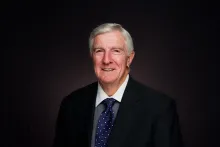
Before his retirement in 2021, Dr. Donald Ward pastored churches in Texas and Louisiana, and taught at Ambassador Bible College in Cincinnati, Ohio. He has also served as chairman of the Council of Elders of the United Church of God. He holds a BS degree; a BA in theology; a MS degree; a doctor’s degree in education from East Texas State University; and has completed 18 hours of graduate theology from SMU.
