
Don Ward
This transcript was generated by AI and may contain errors. It is provided to assist those who may not be able to listen to the message.
Good evening, everyone! We are at Jeremiah 18 and verse 1. If you would turn there, if you're not already turned to Jeremiah 18 and verse 1. We'll begin there. The word which came to Jeremiah from the eternal saying, and once again we remind you of what it says in 2 Peter chapter 1, that the Bible was inspired, that holy men were inspired by God in time of old, and they wrote down under inspiration the words that God had given to them. And Jeremiah is instructed in verse 2, arise and go down to the potter's house, and there I will cause you to hear my words.
A potter's house, of course, is where they made pottery, and at the potter's house, the main feature there would be the potter himself and the potter's wheel. The potter's wheel consisted of two wheels. The bottom wheel is which he worked with his feet, and it, through the belt, caused the top wheel to spin as he was holding whatever piece of pottery in his hand. To shape it and mold it, and as the wheel went around, he was able to shape the clay into whatever he was trying to make. So Jeremiah obeys in verse 3, then I went down to the potter's house, and behold, he wrought a work on wheels, which we have already described, and then verse 4, and the vessel he made of clay was marred in the hand of the potter.
Now God uses the word vessel and clay in a metaphoric sense in many places in the Bible, and we want to be vessels of honor, as it says in 2 Timothy 2 and verse 19. I would like for us to read 2 Timothy 2 and verse 19.
Please, when I'm turning to scriptures, I do turn to most all of the scriptures, but I know I have an advantage because I have things set up in such a way that I can turn quickly, but if you'll write it down, so what we're saying here is that God often uses the work of the potter and vessels in a metaphoric sense in describing his people or a nation.
In 2 Timothy 2, 19, nevertheless the foundation of God stands sure having this seal, the Lord knows them that are his, and hopefully God knows each one of us, and we are his, and we can say, I am a child of God. And be able to say that I am a child of God is an awesome thing and carries with it great gravity in its meaning. The Lord knows them that are his, and let everyone that names the name of Christ depart from iniquity.
But in a great house, there are not only vessels of gold and silver, but also of wood and of earth, and some to honor, and some of dishonor. And of course, our goal is to be a vessel of honor in the potter's hand. Verse 20, but in a great house there are not only vessels of gold and silver, but also of wood of earth, and some of honor, and some of dishonor. If a man therefore purge himself from these, he shall be a vessel unto honor, sanctified and fitting for the Master's use, and prepared for every good work.
And the admonition in Scripture is for us to surrender to the potter's hand, and Jesus Christ, God through Jesus Christ, is the Master Potter. Let's notice now in Isaiah chapter 63, we have these two verses that God is our Father, and He is the one that is molding us and shaping us, and we are clay in the potter's hand. In Isaiah chapter 63 and verse 16. Isaiah 63 and verse 16, Doubt lest you art our Father, though Abraham be ignorant of us, and Israel acknowledge us not.
You, O Lord, art our Father, our Redeemer. Your name is from everlasting. Now quickly turn the page to Isaiah 64 and verse 8. But now, Lord, you art our Father, we are the clay, and you are Potter, and we're all the work of your hands. So that's, we want to be malleable clay in the hands of the potter as we are on the potter's wheel.
So we are Jeremiah 18.4. Now we're back there in Jeremiah 18.4. Vessels of honor, vessels of dishonor in a great house. We want to be a vessel of honor, and we want to surrender to God so that we can be molded and shaped into the vessel that is fitting for service here and in the kingdom of God. So verse 4, Jeremiah 18. And the vessel that he made of clay was marred in the hand of the potter, so he made it again another vessel as seemed good to the potter to make it. One of the things that if the whatever piece of pottery that the potter was working on, if it was marred, it didn't come out the way that he wanted it to, he would not discard it. He would use his hands and knead it and put it back on the potter's wheel and make it into whatever he was trying to make it into in the first place.
But Israel, of course, and Judah did not heed the words of the master potter, and they hardened their heart and became stiff-necked and went astray and would not be malleable clay in the hands of the master potter. In Jeremiah 18.5, then the word of the Eternal came to me saying, O house of Israel, and it's interesting here that he says, O house of Israel, house of Israel includes both the Northern Kingdom and the Southern Kingdom of Judah and Benjamin. O house of Israel, cannot I do with you as the potter? You know, why can't I mold you, make you, shape you like the potter's able to do with a clay?
Behold, as the clay is in the potter's hand, so are you in my hand, O house of Israel. Then God is saying, Look, if you would surrender, submit to me, then I can make you into a vessel of honor. But so far, you refuse to surrender and submit to me so that you can become a vessel of honor in my hand and in my house. In verse 7, At what instant I shall speak concerning a nation and concerning a kingdom to pluck up and to pull down and to destroy it. You know, and I guess you do know, that God is the author of nations, that God is the author of kingdoms, and God is the author of languages. And let's notice this quickly in Genesis 11, verse 6. God is the author of nations and languages, and it occurred at the Tower of Babel when they were of all of one language, and they began to build under the direction of Nimrod a tower, the Tower of Babel, and God had to intervene because they were of all one language. God had separated the nations according to the bounds and habitations of the children of Israel and given them their various inheritances and wanted them to go forth from that area and settle and colonize the whole earth, as it were, and to serve as a model nation wherever they went in to bring all nations into relationship with Him. So you look at Genesis 11, verse 1, and the whole earth was of one language and one speech. And then we come down to verse 6. And the Lord said, Behold, the people is one, and they have all one language, and this they begin to do, and nothing will be restrained from them which they have imagined to do. And of course, today we have a return to Babylon in that the world has in essence become one nation.
English is the language of business throughout the world, and English is the principle language spoken on the face of the earth today. Of course, many nations still have their own language, but English is the language of diplomacy, and God is the one who authored the languages at the Tower of Babel. So we continue here. It says nothing to be restrained from them which they have they've imagined to do. And now, not only do we have one world, as it were, and people can be brought together quickly and understand one another, even their computer tools now that allow you to hear in your language what someone else is speaking in another language. Now go down, and let us now go down in their confounder language that they may not understand one another speech. So the Lord scattered them on the face of all the earth, and they left off to build the city. And this is the name of it. It is called Babel because the Lord did there confound the languages of all the earth, and from there did the Lord scattered them abroad upon the face of all the earth. Now I have heard people say in sermonettes or whatever in the feast that God is going to return the world and all the peoples of the world into one language, but I do not believe that is correct. We can read that verse. It's in Zephaniah 13 verse 8. God is going to once again do what He intended to do with the nations that they bring forth the talents and abilities that God has especially given them. Zephaniah is just before Haggai. And so in Zephaniah 3 and verse 8, let us read there. Therefore, wait you upon me, says the Lord, until the day that I rise up to the prey.
For my determination is to gather the nations that I may assemble the kingdoms to pour upon them mine indignation and even my fear, for all the earth shall be defied with the fire of my jealousy. So God is going to intervene. He's going to bring the nations into tow. He's going to judge them for then will I turn the people a pure language. Now that word pure language means ceremonially clean. It's going to clean up the language of whatever people it is that they may all call upon the name of the Lord to serve him with one consent. Now you turn forward to Zechariah chapter 8 and to show you that languages will still exist in the millennium. We go to Zechariah chapter 8. Zechariah is one of the great uh one of the great restoration chapters of the Bible that shows what the restoration is going to be during the millennium. So we go to Zechariah chapter 8 and we begin in verse 21. In the inhabitants of one city shall go to another saying, let us go speedily to pray before the Eternal and to seek the Lord of Hosts. I will go also. Yes, many people and strong nations see nations. The nations are not destroyed. They have their names. They have their identity. Shall come to seek the Lord of Hosts in Jerusalem and to pray before the Lord. Thus says the Lord of Hosts, in those days it shall come to pass that ten men shall take hold of all languages of the nations, even shall take hold of the skirt of him that is a Jew saying, we will go with you, for we have heard that God is with you. So God is the author of nations. He is the author of languages. He did not intend that the peoples come together in a tired, abable kind of situation like the world is becoming today. Remember the scriptures in the Old Testament about the millennium where each man is under his own vine and under his own fig tree.
So now we're back at Jeremiah 18 in verse 7.
At what instant I shall speak concerning a nation and concerning a kingdom to pluck up, to pull down, and to destroy. If that nation, against whom I have pronounced, turn from their evil, I repent of the evil. And this word here for repent that is in here, it is a it's the Hebrew word is nakom, n-a-c-h-a-m, and it means to be sorry, to pity, to console. So God, in essence, will change his mind.
And we'll talk more about God's mind a little bit later. I will speak of, I will repent, change my mind of the evil that I thought to do upon them. Of course, God does not have to repent of any wrongdoing because God is perfect in all his ways and all of his doings.
And now in verse 9. And at what instant I shall speak concerning a nation and concerning a kingdom to build and to plant. So here it is, verse 10. If it do evil, that is a nation in my sight, that the nation obey not my voice, then I will change my mind of the good wherewith I said I would benefit them. So time after time in the Bible, what you see is the promises of God are, for the most part, conditional. Now, I have spoken in the past about grace. There is grace that is unmerited. The fact that God planned the plan of salvation and sent forth a redeemer to buy us back from sin and death is unmerited grace. But in order for us to be partakers of that grace, we have to repent of our sins and exercise faith in the sacrifice of Christ, who paid the price for our sins. Now verse 11. Now therefore go to speak to the men of Judah and to the inhabitants of Jerusalem, saying, Thus says the Lord, behold, I frame evil against you.
And this word frame has to do with God setting forth a pattern.
Because of their disobedience, I frame evil against you and devise a device against you. Return you now, everyone, from his evil way and make your ways and your doings good.
And of course, we always want that. We're in the days of unleavened bread and we want God's blessing. We want good from God. And as we said to a large degree, blessings are conditional. And God does at times see out for our best interests, and we're not even aware of it. And he extends his grace that many times that we're not aware of it. But when it comes to ultimate forgiveness, we must confess our sins, repent of our sins, and exercise faith. And they said there is no hope. So what they're saying is, look, look at all these prophecies against us. There's no hope. So what are we going to do? We're going to just continue doing what we've always done. But we will walk after our own devices, and we will everyone do the imagination of his evil heart. It's difficult to imagine that anyone would actually say this. Even evil people, to a large degree, put on a pretense of being good. Therefore, thus says the Lord, ask you now among the nations, who has heard such things. And what God is saying here is, look, you can look at the nations, and even though they worship pagan gods, they haven't forsaken their gods. They still pay obeisance to their gods and offer sacrifices to them. And look how I've blessed you, and you won't obey me. You forsake me. Who has heard of such a thing? The virgin of Israel. And when God cleaned them up, as we once in our studies turned to Ezekiel 16 and showed how God had cleaned up Israel when he chose them to be his own, the virgin of Israel had done a very horrible thing. And so to leave God and to count his blessings as something profane, and the way you count your blessings as something profane is to just totally ignore and not acknowledge and not thank God for what you have. Verse 14, will a man leave the snow of Lebanon which comes from the rock of the field? So will Lebanon, at one time, was like the of the most pleasant place in all of the Middle East. It was like a haven, a lot of the way back in the early 1900s and up until World War II, it was a place where a lot of people would go and enjoy the beach and the beauty of Lebanon. You've heard about the cedars of Lebanon and all that. So here, once again, is an analogy of will a man leave the snow of Lebanon which comes from the rock of the field? Or shall the cold flowing waters that come from another place be forsaken? And of course, the analogy of cold flowing waters also has to do with the fact that water is likened into the Holy Spirit. In John 7.37-38 it says that out of my belly shall flow rivers of living waters. So will a person leave an environment that is so beautiful, so comfortable, and go somewhere else? And so the analogy is, would you leave the source of blessings and deny that and go somewhere else? Verse 15, because my people has forgotten me, they have burned incense to vanity, and they have caused them to stumble in their ways from the ancient paths. And of course, the ancient paths had to do with the fact that they had entered into a covenant with God at Sinai when they were coming out of Egypt that they would be that model nation that they would obey. So they have forsaken what the ancients agreed to. Of course, we know that even the ancients that agreed to that, those that are over 20 years of old age, died in the wilderness.
And for some reason, Israel has always been stubborn, hard-headed, hard-hearted, stiff-necked, and gone their own way. And they have caused him to stumble in their ways the ancient paths, a walk in paths, and a way not cast up, not the way of God, to make their land desolate and a perpetual hissing. Everyone that passes thereby shall be astonished and wag his head. It's like you've seen people say, well, I just can't believe that. I can't believe that they did that. And so that is what the message is being conveyed here, that they will just shake their heads and say, what in the world happened to them? Why would they do this? Verse 17, I will scatter them as with an east wind, the strong east wind. Before the enemy, I will show them the back and not the face in the day of their calamity. So God says, look, I'll turn my back on you. I will not hear your prayer. I will not intervene. I will show them the back, not the face in the day of their calamity. Then said they, come, let us devise devices against Jeremiah. Oh yeah, this is one of the favorite poise of those who don't want to hear the truth in the Word of God. And like when Jesus was on the scene and he was preaching and teaching and doing all the miracles, but when he would encounter the leaders of the land, they accused him of being illegitimate and all kinds of things. And they attacked the messenger instead of the message. And so here it is the same thing with Jeremiah. They are attacking the messenger. Get rid of the messenger and we'll get rid of the message. Well, that's not the way that God works. And even though Israel destroyed the prophets that were sent to them, and Judah did likewise, as we read from Matthew chapter 23. Then said they, come, let us devise devices against Jeremiah. For the law shall not perish from the priest. Okay, what they're saying here is, look, we have the Levitical priesthood. We have the law of God. We know the law of God is eternal, immutable, and we have the priesthood. So it's sort of like the reasoning about the temple. We have the temple here. That's where God had placed his presence at one time.
Of course, he didn't place his presence in the restoration temple, but Solomon's temple was still standing during the prophecy of Jeremiah. Oh, we got the temple here. We have the priesthood. We have the law. And so God's not going to destroy that. He's not going to take that away. That's what they're saying. Nor counsel from the wise nor the word from the prophet. Come and let us smite him with the tongue. In other words, let us cook up some kind of false accusation against him, and similar to what was brought against Christ and his trial, in which some of the so-called witnesses say, we have heard him say that he is a king. But we say that we have only one king, and that is Caesar. And so what they did, and this message was probably during the time of Jehovah Kim. Remember, you can remember all of the kings, the last four kings of Israel, with the has-kim-chin-zed. So you got Jehovah has, Jehovah-kin, Jehovah-kim, and Zedekiah.
So let us smite him with the tongue. Let us not give heed to any of his words. We get rid of him. We'll be fine. Give heed to me, O Lord, and hearken to the voice of them that contend with me.
Of course, Jeremiah knew what they were saying and what they were trying to do, so he then petitions God, cries out to God, and asks God to hear him, to listen to his voice in verse 20. Shall evil be recompense for good? For they have digged a pit for my soul, for my nayfish, for my air-breathing existence. Remember that I stood before you to speak good for them and to turn away your wrath from them.
Therefore, deliver up their children to the famine. And of course, he did.
And as we shall see, they wound up eating their children leading up to this invasion. The same thing happened with Judah leading up to the invasion of the Romans.
When some of them had escaped to Masada, they wound up eating their own flesh, their children.
Verse 21, Therefore, deliver up their children to the famine, and pour out their blood by the force of the sword, and let their wives be bereaved of their children, and be widows.
And let their men be put to death, and let their young men be slain by the sword in battle.
Let a cry from the houses, let a cry be heard from the houses, when you shall bring a troop suddenly upon them, for they have digged a pit to take me and hide snares for my feet. And of course, eventually, they did literally throw Jeremiah into a pit. Yet, Lord, you know all their counsel against me to slay me. Forgive not their iniquity, neither blot out their sin from your sight, but let them be overthrown before you. Deal thus with them in the time of your anger. So that is quite a prayer that Jeremiah offered up when they began to threaten him with death, and saying the things, trying to build a case against him. Of course, they did build a case against him, and they wound up throwing him in a pit. Okay, let us go to chapter 19.
In chapter 19, verse 1, Thus says the Lord, Go and get a potter's earthen bottle. Now, there's a bottle this time, and you know how fragile so many bottles are, and take of the ancients of the people, and of the ancients of the priests, and go forth into the valley of the son of Hinnom.
Now, let's spend a little time about Hinnom and coming to understand Hinnom, because Hinnom is referred to so often in the Bible, and in the New Testament, it is called the Great Derivation of Hinnom is the Greek word gihinna. And so the word gihinna, the Greek contraction of Hinnom, was used in the time of Christ to denote the place of future punishment. It was what some would call hellfire.
So what was Hinnom? My wife and I have stood on the Temple Mount and looked out to the south toward the valley of Hinnom, and there's a distinct area of valley that runs through there between the Mount of Olives and the Temple Mount.
So it's a deep narrow ravine separating Mount Zion from the so-called hill of evil council.
It took his name from some ancient hero, the son of Hinnom. Now, some of the commentaries think that you remember that David took Zion, he took Jerusalem from the Jebusites, and so some speculate that this son of Hinnom might have been one of the Jebusites. It has been the place where the idolatrous Jews burned their children alive to Moloch and Baal.
Now, here's another interesting part, and we'll also talk about that when we get to it. A particular part of the valley was called Tophat, T-O-P-H-E-T, which we'll see in just a moment. Or it literally means a fire stove where the children were burned.
After the exile, in order to show their abhorrence of their locality, the Jews made this valley the receptacle of the city. In other words, it became the garbage dump. The fire was kept constantly burning there, and that's why some of the references in the New Testament talk about where the fire is not quenched.
The Jews associated this valley, this valley of Hinnom, with two ideas. One, that of suffering of the victims that had been sacrificed their children to Moloch and Baal, and that of filth and corruption, because it became the symbol of the abode of the wicked. It came to signify the place of the wicked. The place of the wicked.
And as I said earlier, Gihinnah is a contraction of Hinnom. It is the Greek version of Hinnom. If you were to pick one scripture from the New Testament to illustrate Hinnom, I would pick Matthew 1028, which says, Fear not him who is able to kill the body only, but fear him who is able to kill both body and soul in Gihinnah fire. The fire that burns up, the fire that is not quenched until everything is burned up. So in verse 2 of Jeremiah 19, go forth unto the valley of the son of Hinnom, which is by the entry of the east gate. Of course, to the east of the Temple Mount is, as I've already mentioned, the Mount of Olives. And between the Temple Mount and the Mount of Olives is this valley. And proclaim there the words that I shall tell you.
So he's going from the high to the low, to the low place, and say, Hear you the word of the Lord, O kings of Judah, and say, Hear you the word of the Lord, O kings of Judah, and inhabitants of Jerusalem. Thus says the Lord of hosts, the God of Israel, Behold, I will bring evil upon this place, the which whosoever hears his ears shall tingle. It will be so horrific that you won't believe your ears, as they say, because they have forsaken me. Why? Because they have forsaken me, and have estranged this place, and have burned incense in it unto other gods, even sacrificed their children, whom neither they nor their fathers have known, nor the kings of Judah, and have filled this place with the blood of innocence. And as we've said so often, God does not stay still when the blood of innocence are shed. They have built also the high places of Baal, to burn their sons with fire for burnt offerings unto Baal, which I commanded not, nor spoke it, neither came it into my mind. And this is a very interesting verse here where God says, well, this never even came into my mind to do something like this. And it shows that God has thought that He thinks about things. And as we've already noted, the word He repents of the evil, He changes His mind. He has pity when people cry out to Him, and instead of bringing forth evil, He offers mercy and forgiveness. But the very idea of sacrificing your children, God says, never came into my mind. Verse 6, Therefore, behold, the days come, says the eternal, that this place shall no more be called Tophat, nor the valley of the son of Hinnom, but the valley of slaughter. Now, great slaughter is going to take place in that valley at the time of the battle of the great day of God Almighty. This time, let's talk about the valley of Tophat.
Tophat comes from the Hebrew, T-O-P-H-S. It means a drum, because of cries of the children here sacrificed by the priests of Moloch were drowned by the noise of such an instrument, or from a taph or toth, meaning to burn, and hence a place of burning.
It means a drum, and or a place of burning. And apparently, they would beat on the drum, so they wouldn't hear the screams of the children as they were burned.
Fire, as being the most destructive of all elements, is chosen by Jeremiah to symbolize the agency by which God punishes or destroys the wicked. Not only Jeremiah, but virtually every writer in the Bible, old in New Testament, when talking about the ultimate destruction is by fire. This commentator here says, we're not to assume from pro-fetical figures that material fire is the precise agent to be used. I would say that probably it is in one caveat to that is in Jeremiah, not Jeremiah, but Revelation chapter 19, where it talks about the flesh just falling off the bones, and God, through Christ, Christ goes forth with his sword, which is the word of God, and he fights the battle.
So whether literal fire or falling on flesh falling off the bones is a technical point.
The commentator continues here, toff it properly begins where the veil of enom bends around the east, having the cliffs of Zion on the north and the hills of the evil council on the south, or the valley of Enom, it terminates at Beer, where it joins the valley of Jehoshaphat. And it's in the valley of Jehoshaphat that those armies that are gathered that Armageddon come down and are slaughtered, and it becomes the valley of slaughter. It continues here. It says, here the dead carcasses of beast and every abomination were cast and left to be either devoured by that worm that never died or consumed by that fire that was never quench. So toff it, of course, represents a place of punishment, and as it says here, it becomes the valley of slaughter at the battle of the great day of God Almighty.
Now verse seven, and I will make void the counsel of Judah and Jerusalem in this place, and I will cause him to fall by the sword before their enemies by the hands of them that seek their lives, and their carcasses will I give to be meat for the fowls of the heaven, similar to Revelation 19, and for the beast of the earth. And I will make this city desolate and adhesin in everyone that passes thereby shall be astonished and hissed because of all the plagues thereof. As we already noted that God says other nations haven't forsaken their gods. Why have you forsaken me? And when people say what's happened to you, the other nations, they would just say what in the world happened to them. Why did they do that?
Now verse nine, which is a very disturbing verse I've mentioned already, and I will cause him to eat the flesh of their sons and the flesh of their daughters, and they shall eat every one the flesh of his friend in the sledge and straightness, wherewith their enemies and they that seek their lives shall straighten them.
Of course, they're going to find them and they're going to eventually slaughter them, but in the famine and the siege I will cause them to eat the flesh of their sons and the flesh of their daughters. Verse 10, then shall you break the bottle, remember he was to take a bottle, in the sight of the men that go with you, and shall say unto them, Thus says the Lord of hosts, even so will I break this people and this city as one breaks a potter's vessel that cannot be made whole again, and they shall bury them in tuffet till there be no place to bury. So as long as the clay is on the potter's wheel, the clay can be molded and shaped into whatever the potter is seeking to make. But when it's made into a bottle and when that bottle is shattered, it cannot return to the potter's wheel. And so the nation will be shattered, just like a bottle is shattered, and you cannot put it back together on the potter's wheel.
And the result is death, and they fill up tuffet till there be no place to bury. And in verse 12, Thus will I do unto this place, saith the Lord, and to the inhabitants thereof, and even make this city as tuffet. In other words, Jerusalem itself will become like a garbage dump, a place of destruction, a place of carnage, a place of slaughter. And the houses of Jerusalem and the houses of kings of Judah shall be defiled as the place of tuffet. Because of all the houses upon whose roofs they have burned incense unto all the host of heaven. See, it's not just the pillars or the towers or the groves. They went to the high places on tops of the roofs. And so God says, I'm going to destroy those houses, where they worshiped other gods, and have poured out drink offerings unto other gods.
Then came Jeremiah from tuffet, where the Lord had sent him to prophesy. And he stood in the court of the Lord's house and said to all the people, Thus says the Lord of hosts, the God of Israel, Behold, I will bring upon this city and upon all her towns all the evil that I have pronounced against it, because they have hardened their necks that they might not hear my words. And so now we go to Hebrews chapter 3, in which we see the reason that Israel was so hard-hearted and their necks so stiff because they didn't believe what God said. And we have to believe what God says and know for sure that the Word of God is sure. God, who cannot lie, has promise. Also, in those promises, there are precious promises of eternal life that we mention in opening prayers, but at the same time, there are promises that if you don't do such and such, then will God step in and he will judge.
In Hebrews chapter 3 and verse 7, we're of, as the Holy Spirit says today, if you will hear his voice, harden not your hearts, as in the day of provocation and the day of temptation in the wilderness. And also, it was the same in the day of Jeremiah as he prophesied to the people of Judah, as we have just read. When our fathers tempted me, tested me, and saw my works forty years.
Wherefore, I was grieved with that generation and said, They do always err in their hearts, and they have not known my ways, so I swear in my wrath they shall not enter into my rest. So then the warning for us out of all of this evening, Take heed, brethren, lest there be in any of you an evil heart of unbelief, and departing from the living God. In the sermon this past Sabbath, I emphasized the fact that the living God is among us. The living God is in fact in us, and we have the very essence of God, His Holy Spirit dwelling within us that has begotten us to a living hope, a lively hope, a living hope, and has permitted us to have a new knowing within, a new conscience.
And so the admonition to us is don't harden your heart, don't stiffen your neck, and look to God who has promised He is faithful, that He will always deliver us. And we want to be one of those vessels of honor that is spoken of in 2 Timothy 2, verse 20. God knows those who are His, they're vessels of honor, vessels of dishonor, and we want to be that one that on the potter's wheel, that clay that is soft and malleable in the hands of the master potter.
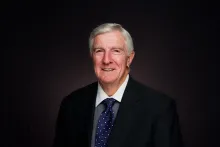
Before his retirement in 2021, Dr. Donald Ward pastored churches in Texas and Louisiana, and taught at Ambassador Bible College in Cincinnati, Ohio. He has also served as chairman of the Council of Elders of the United Church of God. He holds a BS degree; a BA in theology; a MS degree; a doctor’s degree in education from East Texas State University; and has completed 18 hours of graduate theology from SMU.
