
John LaBissoniere
This transcript was generated by AI and may contain errors. It is provided to assist those who may not be able to listen to the message.
Well, here we are again. Good evening, everyone. Seven o'clock. Sun is shining bright here in good old East Texas. We've had two brilliant, beautiful days. Yesterday was somewhat of a, I don't know what you would call it, late spring day with highs in the low 80s and the low in the 60s and many parts.
Enjoy that much. Today's been a lot hotter. So I hope the weather's good wherever you are. We said in our invitation to join the Bible study that we would begin in Jeremiah 26. Once again, I want to tell you about the structure of Jeremiah, especially the first 29 chapters. We're now in chapter 26, and chapters 26, 27, 28, and 29, to a large degree, are repetitive from things that have been said in the past. But there are points that we want to highlight in these chapters, but we will not spend as much time as we have in the past in reading every verse in every case.
I would also like for you to keep in mind that Jeremiah continued to prophesy, even though Nebuchadnezzar had already taken some of Judah and Benjamin away as captives, and also had taken a large part of the intelligentsia and the artisans, as we talked about recently. So keep those things in mind. Chapter 26 is very similar to chapter 7.
If we turn to Jeremiah chapter 7, first of all, we'll point out what I'm talking about there, how close these two chapters are together. In fact, they treat the same subject. The discourse in chapter 26 is more of an outline and a summary of a much longer message.
Who knows how long Jeremiah would speak in the times in which the prophetic utterance would say, in the Word of the Lord came to Jeremiah saying? So in chapter 7 verse 1, the Word that came to Jeremiah from the Lord saying, Stand in the gate of the Lord's house, the temple, and proclaim there the Word, and say, Hear the Word of the Lord, all you Judah that enter in at these gates to worship the Lord.
Now we go to chapter 26, and we'll see in chapter 26 how similar the words are to what we've just read here in chapter 7. Once again, the prophecies and structure of the book is not in chronological order, and there is quite a bit of repetition, as we have noticed. Now we go to Jeremiah 26. In the beginning of the reign of Jehoiakim, the son of Josiah, king of Judah, came this word from the Lord saying, Thus, the Lord, stand in the court of the Lord's house. So very similar to Jeremiah chapter 7, where it says, Stand in the gate, and speak unto all the cities of Judah, which come to worship in the Lord's house.
All the words that I command you to speak unto them diminish not a word. And as I noted earlier, and stated that who knows how long Jeremiah would speak in each of these situations. Now we read verse 3. If so be, they will hearken and turn every man from his evil way.
And this is repeated time after time after time in Jeremiah. But there are a couple of things here we need to be aware of and point out that I may repent me of the evil. Now this word, repent, in the Hebrew, is nakam. It's spelled n-a-c-h-a-m. The c has a k sound pronounced in English, nakam. That I may nakam. That is to be sorry for, to change my mind with regard to this. And the word repent here, repent is nakam. Repent of the evil. And the word evil here is ra or raa.
It means calamity, upset. God does not have to repent of evil. He is perfect and always has been. Some people get confused and think that God creates evil, but God creates calamity, upset, trials, and that kind of thing to reveal the hearts of men, whether or not they're going to obey, whether or not they're going to rebel. If you look at Isaiah 45 and verse 7, I've heard even ministers, long-time ministers in the church of God misuse this verse. This verse 7, 45, 7.
I form the light and create darkness. I make peace and create evil. God does not create evil. Once again, raa, calamity, upset, trial, difficulty, those kind of things. God does bring that about. He chases every son that he loves, and he punishes eventually those who have done wrong. And one of the great mistakes that just about everybody makes is in connection with Ecclesiastes 11 and verse 7. No, I think it's 10 and verse 7. In Ecclesiastes, it's 10 and verse 11. Somebody might want to correct me on that. I'm quoting there from memory. Yeah, it's 8 and 11. Because, sentence against an evil work is not executed speedily. Therefore, the hearts of the sons of men is fully set in them to do evil. So that's one of the things, obviously, even to date, that everything just seems to continue. Those who are doing evil, in some cases, we might look at them and say, they're being blessed more than we are. But that's not the case in the ultimate sense, because God is going to bring to judgment every evil work. We might look in conjunction with this as well in Psalm 50, where God says that people make a big mistake because many begin to think that God is just like they are. God is not like us by any means. You know, it says in Isaiah that His ways are higher than our ways, and His words are higher than our words. In Psalm 50, if you want to turn there, in Psalm 50, and we'll begin in verse 16. In Psalm 50 and verse 16.
But under the wicked God said, What have you do to declare my statues our covenant in your mouth, seeing that you hate instruction and cast my words behind you? One of the things that God really prizes very heavily and mightily is a teachable heart.
God has very little time for a person who already knows it all. In Isaiah 66, it says, To this man will I look he that fears and trembles at my word, seeing you hate instruction and cast my words behind you. Never take the word of God lightly. He says what he means, and he means what he says. Seeing you hate instruction and cast my words behind you. When you saw a thief, then you consented with him, and have been partakers with adulterers. You gave your mouth to evil and your tongue frame deceit. You sit and speak against your brother. You slander your own mother's son. These things have you done, and I kept silence. You thought that I was altogether such a one as yourself, but I will reprove you and set them in order before your eyes. So we should never get the idea that God is not aware. He is aware of what we are doing, but he is not the author of evil. He does not create evil. He does not have to repent of evil. So in this verse 3, once again back in Jeremiah 26 and Jeremiah 26 and verse 3, let's read the whole verse again. If so be, they will hearken and turn every man from his evil way. Now, in that case, the word evil is a different word. It's R-O-A instead of R-A. It's R-O-A, and it means bad, that which is bad or evil, just like the figs that he saw in the basket. One place he called them naughty figs. Another place he called them bad figs.
He will turn each man from his evil way, R-O-A, that I may repent me, that I may nakam, and I may be sorry for, I may be changed, I may relent of the evil, the calamity, upset, distress, which I propose to do unto them because of the evil of their doings.
Now continuing in verse 11. We're not going to read every verse in every case this evening because a lot of it is repetitive, and we've already covered chapter seven in some detail as well. In verse 11, Ben spoke the priests and the prophets and the princes and all the people saying, this man is worthy to die. So Jeremiah in the preceding verses said, once again, delivered the word of the Lord, telling them what was going to happen to them if they did not repent. So the evil prophets, the false prophets, in some cases they were even priests, then spoke the priest and the prophets and the princes, and all the people saying, this man, speaking of Jeremiah, is worthy to die. They wanted to put him to death because of what he had prophesied. Of course, Jeremiah had such a tough job. He got what he said from God, for he has prophesied against this city Jerusalem, as you have heard with your ears. Ben spoke Jeremiah to all the princes and to all the people, saying, the Lord sent me to prophesy against this house and against this city, all the words that you have heard. So Jeremiah, time after time, he makes it clear, look, these are not my words. Remember in a sermon recently, it wasn't this week, it was the week before, where I read what was it, 2 Thessalonians chapter 2, I believe, verse 13. Paul says, when you heard the word that I spoke to you, you didn't receive it as just my word, but you received it as the word of God. So we either believe the Bible is the word of God, and we are to take heed to it, or we don't. We cannot play a game with God or fool God in any sense of the word. Therefore now, men your ways and your doings, and obey the voice of the Lord your God, and the Lord will change his mind of the evil that he has pronounced against you. The calamity upset asked for me, asked for me, behold, I am in your hand. Hey, look, you can kill me.
Do with me as seems good and fitting unto you, but know you for certain, that if you put me to death, you shall surely bring innocent blood upon yourselves. And we have talked several times about innocent blood, especially in conjunction of abortion. God does not view kindly the shedding of innocent blood. He does not view the treatment, the ill treatment of anyone who is innocent and falsely dealt with. So you will bring innocent blood upon yourselves and upon the city, and upon the inhabitants thereof, for of a truth the Lord has sent me unto you to speak all these things, these words, in your ears. Then said the princes and all the people, the false ones, under the...
I'm sorry, then said the princes and all the people, under the priests and to the prophets. So here are people in a rare situation standing up from one of God's prophets. Very seldom has that ever happened.
Then said the princes and all the people, under the priests and the prophets. This man is not worthy to die, for he has spoken to us in the name of the Lord our God. Then rose up certain of the elders of the land, and spoke to all the assembly of the people, saying, Micah the Morashite prophesied in the days of Hezekiah, king of Judah, and spoke to all the people of Judah, saying, Thus says the Lord of hosts, Zion shall be plowed like a field, and Jerusalem shall become heaps, and the mountain of the house as the high places of the forest. So what they're doing here is giving an example of where evil was spoken by someone that God had sent to them, and the people responded. They didn't put him to death. So verse 19, did Hezekiah king of Judah, at all Judah put him at all to death? Did He not fear the Lord, and besought the Lord? And the Lord repented him, once again, Nacom, of the evil, Ra, calamity upset, which he had pronounced against them. Thus might we procure great evil against ourselves. So what you would be doing, in essence, another way of saying, you would be shedding evil, you would be shedding innocent blood, and God will not take that lightly. God is going to avenge innocent blood. And so that's a warning to all of us, regardless of the situation, circumstance, whomever, whatever we're dealing with, when you shed innocent blood, nothing may happen, like the Ecclesiastes 8, 11. Because evil, because sense is not executed speedily against an evil work, therefore the sons of men are continually doing evil, or their minds are set to do evil. Or, like in Psalm 50, never think that God is altogether such a one as you are, even though everybody else is doing it. If it is contrary to the word of God, it will be brought into judgment. That's one of the great lessons to be learned from Jeremiah. Continuing here, Repent him of the evil which he had pronounced against them. Thus we might procure a great evil against our souls. And there was one also, a man that prophesied in the name of the Lord, Eurydia. Now listen to what happened to Eurydia.
Listen to what happened to him. One of the things it says in Revelation 12 and verse 11, there are three things given, three ways to escape Satan. That is, the word of their testimony. They love not their lives to death. In other words, they were willing to give up their life. And they had the testimony of Jesus Christ. The testimony of Jesus Christ, they were willing to give up their lives. Three things.
There was also this man that prophesied there, and I said, let's look what happened to him. Also a man that prophesied in the name of the Lord, Eurydia, the son of Shima'ala of Korath-Jarem, prophesied against this city, against this land, according to all the words of Jeremiah. So in essence, it was saying the same thing that Jeremiah was saying. And when Jeholacim, the king, with all his mighty men and all the princes heard his words, the king sought to put him to death. And when Eurydia heard, he was afraid and fled and went into Egypt. And Jeholacim, the king, sent men into Egypt, namely El-Nathan, the son of Akbor, and certain men with him into Egypt. And they brought forth Eurydia out of Egypt, brought him unto Jeholacim, the king, who killed him, who slew him with the sword, just butchered him, and cast his dead body into the graves of the common people. You talk about evil. Nevertheless, the hand of Ahaiacham, the son of Shafin, was with Jeremiah, that they should not give him into the hand of the people to put him to death. So here we see an example of men standing up for one of God's prophets, and one actually gave his life. And you see, this just shows how wicked Jeholacim really was. Unbelievable.
Now, chapter 27. In the beginning of the reign of Jeholacim, the son of Josiah, the king of Judah came this word unto Jeremiah from the Lord saying.
So let's go now to verse 4. What we're going to find in this chapter is a challenge to the false prophets, a challenge to the false prophets. You say you're a prophet, well, God sets up a task for them. See if you can pull it off, then we'll know you're really a prophet. In Jeremiah 27 in verse 4, and command them to say unto their masters, Thus says the Lord God of hosts, the God of Israel, thus shall you say unto your masters.
Once again here, God very often does this. This is amazing. It's like the start in Genesis. In the beginning, God created the heavens and the earth. In the beginning of John, in the beginning was the Word, the Word was with God, the Word was God, and about the creation. God declares that he is the Creator. You know, what God did in creating matter, the universe, and humankind, he spoke it into existence. He spoke it into existence. Yes, there were various, apparently various chemo-electrical processes going on for life to come forth, but he spoke it into existence. It did not evolve, and it says in Hebrews 11 that he made the things that appear from things that did not appear. So, matter did not exist until God created it. And see, that's one of the things that with the Big Bang theory and other theories of evolution is that they began with certain laws of nature and with matter. Not to mention the fact that there was no life and how did life come to be, and today they can't create life.
So here God says, verse 5, I have made the earth, the man and the beast, that are upon the ground, by my great power and by my outstretched arm, and have given it unto whom it seems fitting unto me. I've made it. I can give it to whoever I want to. I mean, people just don't understand that. And now have I given all these lands in the hands of Nebuchadnezzar, the king of Babel, and my servant. See, God is using this Gentile king to punish his people, and here he calls him his servant. And the beast of the field have I given him also to serve him.
Now we pick it up again in verse 12.
These verses that we skip over here are largely talking about the destruction that is going to come if you don't repent. In verse 12, I spoke also to Zedekiah the king of Judah, according to all these words, saying, bring your necks under the yoke of the king of Babylon, and serve him and his people and live. God said, time after time, from the beginning of Jeremiah started, he said, if you will surrender yourself to Jeremiah, to Nebuchadnezzar, if you will surrender yourself to Jeremiah, if you will surrender yourself to Nebuchadnezzar, and if you will go there, build houses, and live a normal life, I'll bring you back to this land. But there were those who rebelled.
You know, it says in the case where Saul did what he did and did in sacrificing the animals instead of killing all the animals. And when God sent Samuel to him, Samuel said that rebellion is worse than the sin of witchcraft. So to rebel against what God directly says, one will have to pay the price if they do that.
Verse 27, I mean, verse 13, chapter 27, why will you die? You and your people by the sword, by the famine, by the pestilence, as the Lord has spoken against the nation that will not serve the King of Babylon. And therefore hearken not unto the words of the prophets, that is the false prophets, but speak unto you, saying, You shall not serve the King of Babylon, for they prophesy a lie unto you. For I have not sent them, says the Lord. You know, Ed, it's a fearful thing to begin to say that you are speaking in the name of the Lord, or that the Lord spoke to you if he hasn't spoke to you, because God does not view that kindly, because in doing so you are representing what God himself and you better know that it is the truth. I have not sent them, says the Lord, yet they prophesy a lie in my name that I might drive you out, and that you might perish. Yes, and the prophets that prophesy unto you. Also, I spoke to the priests and to all these people, saying, Thus says the Lord, hearken not to the words of your prophets that prophesy unto you, saying, Behold, the vessels of the Lord. Now, remember the vessels of the Lord, those things that were used in the temple worship. Nebuchadnezzar had already taken some of those to Babylon.
So what God puts before the false prophets is that concerns these very vessels. We'll pick it up again in 14. Therefore, listen, hearken.
Our cursors are. Therefore, listen and hearken, not in the words of the prophets, and speak unto you, saying, You shall not serve the king of Babylon, for they prophesy a lie unto you. For I have not sent them, says the Lord, yet they prophesy. I might drive you out, and that you might perish. Yes, and the prophets that prophesy unto you. Also, I spoke to the priests and to all these people, saying, Thus says the Lord, hearken not to the words of your prophets, and prophesy unto you, saying, Behold, the vessels of the Lord's house shall now slowly be brought against, again from Babylon, for they prophesy a lie unto you. Hearken not unto them, serve the king of Babylon, and live. Wherefore should this city be laid waste? But if they be prophets, here's the test. And if the word of the Lord be with them, let them now make intercession to the Lord of hosts, and the vessels which are left in the house of the Lord. Maybe you can answer it, some of them, but not all of them. And in the house of the king of Judah, and at Jerusalem, go not to Babylon. For thus says the Lord of hosts, concerning the pillars, and concerning the sea, and concerning the bases, and concerning the residue of the vessels that remain in this city.
Which Nebuchadnezzar king of Babylon took not, when he carried away captive, Jack and I are the son of Jehoiakim, the king of Judah from Jerusalem to Babylon, and all the nobles of Judah and Jerusalem.
Yea, thus says the Lord of hosts, the God of Israel, concerning the vessels that remain in the house of the Lord, and in the house of the king of Judah and of Jerusalem.
They shall be carried to Babylon, and there shall they be, until the day that I visit them, says the Lord. Then will I bring them up and restore them to this place. So the test put before the false prophets was, you say you're a prophet? Well, Nebuchadnezzar didn't take all of the vessels of temple worship to Babylon, so if you're really a prophet, you pray to God that he will not allow those vessels to be taken to Babylon. And if that is the case, then you're a true prophet. But of course that was not the case.
Eventually Nebuchadnezzar took those vessels, too. But as you recall, the night that Bel's of Shazar saw a handwriting on the wall, they were having a party and using those very vessels from the temple when the handwriting on the wall appeared to Bel de Shazar. Most of those vessels were returned when the Jews came back and built the second temple, the Restoration Temple, under the leadership of Joshua the High Priest and Zerubbabel the governor. So now we come to chapter 28. God takes the life of the false prophet Hennai. Chapter 28 and verse 1. And it came to pass the same year in the beginning of the reign of Zadakiah king of Judah in the fourth year and in the fifth month that Hennai the son of Zuhar, the prophet which was of Gibeon. Evidently Gibeon was a place where the school of the prophets headquartered at least one of the schools. It seems at times there might have been more than one school of the prophets, which was of Gibeon, spoke unto me in the house of the Lord, in the presence of the priest, and all the people saying, Thus speaks the Lord of hosts. So here's this Hennai saying, look, what I'm going to say is right from God Himself. And let's see if it is.
Thus speaks the Lord of hosts, the God of Israel, saying, I have broken the yoke of the king of Babylon. Within two full years I will bring again unto you this place all the vessels of the Lord's house that Nebuchadnezzar the king of Babylon took away from this place and carried them to Babylon. As you recall, Jeremiah had prophesied in two places in Jeremiah 25, 11, and 12. He said 70 years are determined on the people before they'll be able to return. And that's also repeated once again in Jeremiah that it was to be 70 years. And remember last time we covered the Daniel 9 where Daniel sought to understand the 70 years and the 70 years became what Daniel had revealed to him was a 70 weeks prophecy, which turned out to be a messianic prophecy when the Messiah would be cut off at the end of 69 weeks. Okay, let's continue here. So this false prophet Hananiah said, look, in two years you're all going to return to Judah and we're going to bring the vessels with us. In verses 10, we're going to pick it up again in verse 10. Verses 4, 5, 6, 7, 8, 9.
Once again, talk about what is going to come upon them. So in 10, let's read 9. The prophet which prophesied of peace, when the word of the prophet shall come to pass, then shall the prophet be known that the Lord had truly sent him. When a prophet speaks and when it comes to pass, then you know it was from God. There have been a lot of people who've said a lot of things in the Church of God that did not come to pass. And some people would admit that they were wrong and others tried to make it appear that it was a misunderstanding. But God means what he says about taking his word into your mouth and saying that it is the word of God. We had people who came and gave Bible studies and visited in the Big Sandy area during troublesome times. It said things like, if Mr. Armstrong doesn't live to the end of the age, the Bible is not true.
Well, you know that that was not a true prophecy, because Mr. Armstrong and that man are now dead. It's just a warning. Be careful how you use the word of God. Be careful what you say that God has said. So in verse 10, then Hananiah the prophet took the yoke fromoth the prophet Jeremiah's neck and broke it. And Hananiah spoke in the presence of all the people saying, Thus says the Lord. So here he is claiming that he got this from God. Thus says the Lord, even so will I break the yoke of Nebuchadnezzar king of Babylon from the neck of all the nations within the space of two full years. Remember, the prophet Jeremiah had prophesied it would be 70 years and the prophet Jeremiah, of course he heard it, went his way. Then the word of the Lord came unto Jeremiah the prophet, after that Hananiah the prophet had broken the yoke from off the neck of the prophet Jeremiah, saying, Go and tell Hananiah, saying, Thus says the Lord, You have broken the yokes of wood. But you shall make for them yokes of iron. For thus says the Lord of hosts the God of Israel. I have put a yoke of iron upon the neck of all these nations, that they may serve Nebuchadnezzar, king of Babylon, and they shall serve him. And I have given him the beast of the field also. Then said the prophet Jeremiah unto Hananiah the prophet, false prophet, Here now, Hananiah, the eternal hath not sent you, but you make this people to trust in a lie.
Therefore, thus says the Lord, Behold, I will cast you from off the face of the earth. This year you shall die, because you have taught rebellion against the Lord. And as I already mentioned, as you recall, God said in dealing with, he said it through Samuel when he went to confront Saul after he had not killed all the animals that God had directed, that rebellion is worse than witchcraft. So Hananiah the prophet died the same year in the seventh month. Now Jeremiah 29. In Jeremiah 29, we're going to see that Jeremiah sent a letter to the captives in Babylon, and this letter promised restitution.
So this is sort of a summary chapter. We've had basically, there have been some prophecies which we have turned all over the scripture and explained, but mostly the first 29 chapters have dealt with the Babylonians, Chaldeans are coming. There's no way that you can stop them. There's no way to escape. The best thing you can do is to surrender to them. You can go there and live normal lives, and if you do what you ought to do, then I'll bring you back to the land and restore you in the land. And so they did come back to the land, but many of them stayed in Judah and Benjamin, and they died with a sword with pestilence and famine, and some escaped down into Egypt, trying to get away, but it didn't go well for them in Egypt either. So we come to 29, which as I said deals somewhat with everything that has been said. Well, not everything, but a lot of the elements that have been said so far are dealt with in chapter 29. So in Jeremiah 29 and verse 1, now these are the words of the letter that Jeremiah the prophet sent from Jerusalem unto the residue of the elders which were carried away captives, and to the priests, and to the prophets, and to all the peoples whom Nebuchadnezzar had carried away captive from Jerusalem to Babylon.
It's amazing they were able to send letters back into, like this, the post as a means of communication as a long-standing history, as we note there in other places as well.
So this letter was sent, and now we skip down to verse 8, and what this letter consisted of to a large degree was the promise of restoration. It was a letter of encouragement for them to hold fast because those that had gone to Babylon and had obeyed had fared quite well by comparison to those who rebelled and stayed back in Judah or tried to escape through other countries. So Jeremiah 29.8, for thus says the Lord of hosts, the God of Israel, let not your prophets and your diviners deceive you, neither listen to them, don't hearken to them, to your dreams which you caused to be dreamed. Where they prophesy falsely unto you in my name, I have not sent them, says the Lord. Once again, as we have read in earlier places, God had not sent them, and when you speak in the name of the Lord, it better be right and it better be from him, and he is the one that has sent you. We'll read 9. For they prophesy falsely unto you in my name, I have not sent them, says the Lord. For thus saith the Lord, that after seventy years, the third time it appears in Jeremiah 25, 11, Jeremiah 25, 12, seventy years are determined, seventy years be accomplished at Babylon, I will visit you and perform my good word toward you and causing you to return to this place, just like the promise said.
Of course, the people who were ruling, they didn't want to give up their place, and they didn't want to believe Jeremiah, so they took to themselves the prerogative of prophesying in the name of God. On the other hand, there were those who believed and went to Babylon and had fared well, and they're going to be restored back into the land. Now, continuing 11. For I know the thoughts that I think toward you, says the Lord.
In the Psalms, it says that his thoughts are ever toward us. It says, Matthew 28, Sparrow doesn't fall to the ground unless he's aware of it. It says that the hairs on her head are numbered. His thoughts are ever toward us. And here he says, I know the thoughts that I think toward you, thoughts of peace and not of evil, to give you an expected end. You expect that I'm going to follow through, and I am. Then shall you call upon me, and you shall go and pray unto me, and I will listen. I will hearken. I will not just... The word hearken has the connotation of, I will listen and do something about it. And I will hearken unto you. And you shall seek me and find me when you shall search for me with all your heart.
Now the Jews, they liken the heart to the mind. You're seeking with all your heart, you're seeking with all your mind, you're seeking with everything that is within you, that has capability of conscious thought. And I will be found of you, says the Lord. I will turn away your captivity. I will gather you from all the nations and from all the places where I have driven you, says the Lord, and I will bring you again into this place. Now this prophecy not only speaks of the restoration back into Babylon of the Jews of that day, but this prophecy then springs forward to the time of the restoration of the millennium. And I will bring you again into this place where I cause you to be carried away captive, because you have said the Lord has raised us of prophets in Babylon. I know that, thus says the Lord of the King that sits upon the throne of David, and of all the people that dwell in this city, and of your brethren that are not gone forth with you into captivity.
What's going to happen to those who stayed behind and stayed in Jerusalem?
I lost my place again.
Thank you. Verse 17, thus says the Lord of hosts, Behold, I will send upon them the sword and the famine those who stayed behind, and the pestilence, and I will make them like vile figs that cannot be eaten. They are so evil, and I will persecute them with the sword, with the famine, with the pestilence, and will deliver them to be removed to all the kingdoms of the earth, to be a curse and an astonishment, and an hissing and a reproach among all the nations where I have driven them, because they have not hearkened unto me. They didn't listen, and they didn't do. To my word says the eternal, which I sent unto them by my servants the prophets, rising up early and sending them, but you would not hear says the eternal.
There's more and more. We're going to see that people's ears will grow more and more dull, and eventually they will turn completely away, and then at the same time the word of the Lord is going to become scarce. It's going to become precious, because there's becoming a famine of the word to be able to sit the way that we sit tonight in the comfort of our homes, and to read the word of God, and hear comments about it, and admonishments and exhortations that will not always be.
So as the old saying goes, you better make hay while the sun shines.
Thus says the Lord of hosts, the God of Israel, of Ahab, the son of Kalaiah, Kolaiah, and of the Zedekiah of the senate, Ma'aseiah, which prophesied I lie unto you in my name. Behold, I will deliver them into the hand of Nebuchadnezzar, the king of Babylon, and he shall kill them before your eyes. And of them shall be taken up a curse by all the captivity of Judah, which are in Babylon, saying, The Lord make you like Zedekiah, for Zedekiah had his eyes put out, and like Ahab, whom the king of Babylon roasted in the fire, because they have committed villainy, just as evil as you can get.
Villainy in Israel have committed adultery with their neighbor's wives, and have spoken lying words in my name, which I have not commanded them. Even I know and am witness, says the Lord. Of course, God knows what we're saying, even knows what we're thinking, obviously. Thou shalt you speak to Shemaiah and the Nehethlamite saying, and by the way, I mispronounce that. You can look at the pronunciation of this word that starts with an H here.
I'm not going to fool with that right now. Best speaks to the Lord of Hosts, the God of Israel, saying, Because you have sent letters in my name unto all the people that are Jerusalem, and to Zephaniah, the son of Masala, the priest, and to all the priests, saying, The Lord has made you priests instead of Jehoedah. You've got to be very bold to do that.
You send a letter and say, Hey, guess what? They made me priests. Guess what I have to say?
But they're saying, The Lord has made you priests instead of Jehoedah, the priest, and you should be officers in the house of the Lord, for every man that is mad and makes himself a prophet, that you should put him in prison and in the stocks. Of course, Jeremiah did wind up one time in the stocks. Now therefore, why have you not reproved Jeremiah of Antitoth, which makes himself a prophet to you? For therefore, he said unto us in Babylon, saying, This captivity is long, build you houses, dwell in them, and plant gardens and eat the fruit of them. Why would you promise to Jeremiah? He's saying the opposite of what you're saying. Why don't you punish him?
And Zephaniah the priest read these letters in the ears of Jeremiah the prophet. Then came the word of the Lord unto Jeremiah, saying, Send to all of them of the captivity, saying, Thus says the Lord concerning Shammaiah, the Nehethlamai, because that Shammai hath prophesied unto you, and I sent him not. And he caused you to trust in a lie. Therefore, thus says the Lord, Behold, I will punish Shammaiah the Nehethlamai and his seed. He shall not have a man to dwell among this people. So once again, we see that God says what he means. He means what he says. When you stand up and say, God has spoken through me, and he has not, you take to yourself great responsibility. And if indeed God has not spoken through you, he will bring you into account just as he did here. You cannot make God over in your own image. You cannot speak for God. You must speak the words of God. Preach the word. Was Paul's admonition to Timothy. Preach the word. Be instant in season, out of season. Exhort, rebuke, reprove with all long-suffering and doctrine. Therefore, thus says the Lord, behold, I will punish Shemaiah, the Nehethlamai, and his seed. He shall not have a man to dwell among this people. Neither shall he behold the good that I will do for my people, says the Lord, because he has taught rebellion against the Lord.
So we are now to chapter 30. And chapter 30 takes on a different kind of flavor, because we're going to see judgment coming upon all the world. We're going to see the New Covenant, which we've already talked about as well, and some other prophecies. So those first 29 chapters, Jeremiah, what did you learn? You learned that God keeps his words, that when God speaks, you better listen. Not only had we better listen, we had better do. We had better hearken. We learned that there were people who always want to hang on to their position. They would not give it up. And we learned that you will always have those who are persecuting those who stand in the gap for God. You also learned that God is true to his word. There are so many lessons that we have covered here, and so many other aspects of this as well. God is holy. God is righteous. He is the one that sets up, and he's the one that tears down.
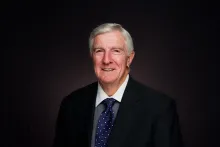
Before his retirement in 2021, Dr. Donald Ward pastored churches in Texas and Louisiana, and taught at Ambassador Bible College in Cincinnati, Ohio. He has also served as chairman of the Council of Elders of the United Church of God. He holds a BS degree; a BA in theology; a MS degree; a doctor’s degree in education from East Texas State University; and has completed 18 hours of graduate theology from SMU.
