
Don Ward
This transcript was generated by AI and may contain errors. It is provided to assist those who may not be able to listen to the message.
We are going to start in Jeremiah 14. Before we start, I have some introductory comments to make.
Jeremiah 14 and 15 are written to some degree in a dialogue format that is God doing the speaking at times and Jeremiah doing the speaking. Jeremiah really shows his humanity in these two chapters. He's shown it before, and we talked about it last time.
I think sometimes we place people in Scripture on such a pedestal, and we don't realize that they are humans just as we are. I'd like for us to turn, first of all, and to keep this in mind, that I gave a sermon this past week in which I talked about that we are spirit-begotten children of God, and ask everyone to say, just say, I am a child of God, and to realize that God has a special interest in each one of us, that He has called us, He has granted us repentance. We've exercised faith in the sacrifice of Christ. We've been baptized. We've received the laying on of hands and the Holy Spirit. And Father, we know that you, Father, can be reached. You can be reached with our infirmities and with our troubles and our difficulties, and that the people in the Bible struggle very much with the same things we struggle with. So I want to read here James 5, verse 16, Confess your faults one to another. This is more talking about your sicknesses and what makes you sick, and pray for one another, that you may be healed the effectual fervor prayer of a righteous man avails much. Now, the verse I really want to focus on here now is 17.
Elijah was a man subject to like passions as we are. You remember that after Elijah had the great showdown with the priest of Baal on Mount Carmel, and the great miracle that happened there where a fire from God came down and consumed the offering and the water around the altar and the altar of the offering and water and all of that. And then Jezebel, Ahab told Jezebel, and Jezebel, as it were, set out a hit on Elijah, and Elijah fled for his life. So it says here that Elijah was a man subject to like passions as we are, and he prayed earnestly that it might not rain. So after that event on Carmel, he remembered that it hadn't rained for three years or so. And after he prayed, it rained and rained. It rained not on the earth by the space of three years and six months.
Then he prayed again after that event on Carmel, and the heavens gave rain, and the earth brought forth her fruit. So just remember that we're all human beings, but God has a special interest in each one of us, and He loves us, and He takes care of us. Approach the Bible studies as to how this applies to me. To some degree, try to put yourself in the shoes of Jeremiah. Remember, Jeremiah was called before he was born, and he was given the Holy Spirit upon birth. And so he was special in that way, but he was still very subject to human nature and the pulls of the flesh. Another thing that these two chapters show, not so much directly, but indirectly, and I've mentioned this before, we need to keep this in mind, how leaders suffer while doing the work of God. And Jeremiah suffered greatly. Christ suffered greatly during His earthly ministry. The Apostle suffered greatly, especially the Apostle Paul. He said that all of the Apostles, maybe except one, died in martyrdom.
So it shows how leaders suffer while doing the work of God. And also it shows these two chapters, and so much in Jeremiah and the whole Bible shows, the importance of leadership and how people generally go in the direction of their moral and spiritual leadership, and we know what that pretends for the nation at this present time. Then another thing it shows is the long suffering of God. God had put out with Israel for quite a long time and with Judah before he intervened and took them into captivity. So with that being said, let's go now to Jeremiah 14 and verse 1. Jeremiah 14. The word of the Lord that came to Jeremiah concerning the dearth. Now this word dearth really means drought. It means the literal meaning of the word dearth is withholdings, and what was being withheld was the rain. There was a great drought. This word should be used especially for withholding of rain because rain is in those regions one of the chief things that is needed in a dry arid land. You remember Jerusalem is quite a bit two or three thousand feet above sea level. In Jeremiah 14 too, Judah mourns and the gates thereof languish. Metaphorically the gates. The gates were where the elders, the learned ones, would come and sit and philosophize and talk. So in a symbolic sense, the gates representing the people, language also has to do with being dismayed, being discouraged, being downcast.
They are black unto the ground and the cry of Jerusalem is gone up. And their nobles have sent their little ones to the waters. Now in this case, the little ones here does not mean children. In this case, the little ones here means the domestic servants, the common people, the lesser people that would do the work of the wealthy. So the nobles sent their little ones to the waters. So they went to draw water. They came to the pits and they found no water.
They returned with their vessels empty. They were ashamed and confounded and covered their heads.
Now covering their heads in the ancient world was symbolic of being in mourning, being downcast in mourning, in some cases, crying out to God.
Because the ground is chapped. Now the word chapped here, it really means, the word chapped means prostrate to break down by violence, to abolish, to frighten, to make afraid.
Because the ground is chapped once again, symbolic, metaphorically, for there was no rain in the earth. So the ground was dried. It was hardened. It begins to crack.
Some of those regions, like down around Houston, you can have a drought. And when it's getting adequate moisture, it will bring forth great and bountiful crops. But when it's dry, the earth will crack at sometimes several inches. The ground is chapped, for there was no rain in the earth. The plowmen were ashamed. They covered their heads. So once again, a sign of discouragement, mourning, distress. Yea, the hind. The hind is a female dearer, deer. The hind also cabbed in the field. So the doe, the deer, had little ones in the field and forsook it because there was no grass. So the the deer cabbed in the field and because it was so dry, they just left just left the calf there to die because there was no way to feed it. The wild donkeys did stand in high places. And this metaphorically here is talking about the fact that the wild donkeys had tremendous eyesight and they could see for a long time, long ways, and could usually pick out areas that might be filled with water or a source of water.
The wild donkeys did stand in the high places. They snuffed up the wind like dragons.
Their eyes did fail because there was no grass. Now this metaphor here about dragons, some of the commentaries say that in the in the Middle East, of course, we don't tend to think of that now because the Middle East is very developed and heavily densely populated. But you remember in the days of David, how David killed a lion with his bare hands. And there were wild animals and snakes and that kind of thing.
And some of the commentaries talk about the pythons and various snakes that would be able to stand up, as they were, some and survey the surroundings. Their eyes did fail because there was no grass. Oh Lord, though our iniquities testify, our lawlessness testifies against us, do you for your name's sake, for our backsliding, or many, we have sinned against you. So in the first six verses there, God is speaking and showing metaphorically what has happened to the country. And then Jeremiah here attempts to intercede, and he says, Oh Lord, though our iniquities, our lawlessness, testify against us, do you for your name's sake. And of course, a lot could be said about the name's sake. Remember when Moses interceded for the children of Israel after the spies came back from spying out Canaan and brought an evil report, Moses interceded and interceded for the people. And he said to God, if you destroy this people, the surrounding nations will say that you are not able to deliver these people as you said you could. And of course, Moses intercessory prayer resulted in Israel being forgiven for that period of time, but none of those over 20 years of age were able to go into the Promised Land except Joshua and Caleb. So pleading to the name's sake, when you plead to God's name's sake, it is pleading to everything that God represents.
For example, in prayer, we say we pray this in the name of our Lord and Savior, Jesus Christ, His power, His authority, what He represents. For your name's sake, for our backsliding's are many, we have sinned against you. So Jeremiah here is responding, talking, in a sense, trying to intercede for the people at that time. In verse 8, all the hope of Israel, the Savior, thereof in time of trouble. Why should you be as a stranger in the land, and as a wayfaring man, that turns aside to tarry for a night? So the metaphor there is that, why would God be like a tourist, one who was just traveling through the land, and not stopping to really do anything about the trouble, the hope of Israel, the Savior. It also is an appeal to the covenant, because, of course, God had promised to save them, to deliver them, but that promise was conditional. The promise was conditional, and they did not keep the conditions of the covenant. That is, they did not obey God. But Jeremiah is saying, well, why would you do this? Why would you just be passing through like a tourist, and not doing anything about what is happening? In verse 9, similar, why should you be as a man, a stoned, as a mighty man that cannot save? Yet you, O Lord, are in the midst of us, and we are called by your name. Leave us not. Now, when the tabernacle was reared up in the wilderness, as you read in the last chapter of Exodus, chapter 40, that God filled that tabernacle with his presence. And also, when Solomon's temple was dedicated, God filled that temple, Solomon's temple, with his presence. You remember, in the temple there, there was a holy of holies, and in that temple was the ark of the covenant that contained the two tables of stone, the errands rod that budded, and the pot of manna. And above the ark of the covenant was the mercy seat, and on the mercy seat, that was where the shekinah glory, the presence of God, appeared, the two carabums facing in toward the mercy seat.
So Jeremiah appeals to the fact that God had made his, God had dwelt in their presence. He had dwelt in the holy of holies. Of course, no one could go into the very presence of God and live, and only the high priest went into the holy of holies, as you recall, one day a year on the day of atonement. But Jeremiah is trying to appeal to God to intervene. Then notice, then said, what was God's response to Jeremiah? Then said the eternal unto me, Pray not for this people for their good. Pray not this people for their good. And God is about to recount his long suffering with the nation of Israel that had already gone into captivity under the hands of the Syrians. And now he was going to take Judah captive under the hands of the Babylonians. Verse 12, When they fast, I will not hear their cry. When they fast, I will not hear their cry. So God will go so long with the people, as we shall see. But eventually, enough is enough.
And as I've said in times past, if God didn't eventually do something about the sins of the people, then he wouldn't be God. And of course, judgment is going to come upon those who do evil. Be not deceived, God is not mocked, for whatsoever man soeth. That shall he also reap, just like Paul writes in Galatians chapter 6.
When they fast, I will not hear their cry. And when they offer burnt offerings, and remember that the offering of the wicked is an abomination to God, as it says in Proverbs 15.
The offering of the wicked is an abomination to God. Even though they offer burnt offerings and an oblation, I will not accept them, but I will consume them by the sword, by the famine, and by the pestilence. And of course, you wouldn't want to die by either one of these methods. By the sword, it would be generally much quicker. Imagine starving to death. It's difficult to imagine starving to death. But so many people, of course, millions, I would imagine approaching billions, have starved to death over the course of human history. And by the pestilence, what we are experiencing now, the COVID virus could be called a pestilence that is ravaging the whole world. And I know statistics are not completely reliable, and a political football has been made out of the COVID virus and the whole pandemic. Not wanting to go into that now, but it can be viewed, and should be viewed, as a form of judgment that God is saying, look, I want you to repent. Then Jeremiah says, then said, I, O Lord God, behold, the prophets say unto them, you shall not see the sword.
God said, I'm going to bring the sword. I'm going to bring famine. I'm going to bring pestilence. But the false prophets are saying, and Jeremiah is talking now, saying what the false prophets say, then said, I, O Lord God, behold, the prophets say unto them, you shall not see the sword.
Neither shall you have famine, but I will give you assured peace in this place.
And of course, they were lying. God had not sent them. They were not speaking for God.
They were speaking for political gain. They were speaking to gain favor themselves with the people, and God had not sent them. Verse 14, then the Lord said unto me, see, as I said, that this chapter 14 especially is written in a dialogue form with God saying apart, and then Jeremiah saying apart, then the eternal sent unto me the prophets prophesy lies in my name. I sent them not. Neither have I commanded them, neither spoke I unto them. They prophesied to you a false vision and divination. Divination has to do with signs. It is, of course, a part of the occult, part of witchcraft, that certain signs like a common example would be 13 is an unlucky number, and other signs that might be. When I was growing up, there were, I heard many signs.
Well, you don't cross under a ladder. That's bad luck. You don't do this, and you don't do that. It's bad luck. Signs of divination and a thing of nothingness and the deceit of their heart. They know what they're doing is wrong. I wonder at the present time. You have to wonder, and especially when you look at some of the very top leaders of the land, when it's so easy to go back and to play soundbites from one year ago or 10 years ago as to what they were saying at that time, and how now they have changed their coat of many colors, and they have become political chameleons, changing with the times just as the wind changes direction. Therefore, thus says the Lord concerning the prophets that prophesy in my name, and I sent them not. Yet they say, sword and fan, shall not be in this land. By sword and famine shall those prophets be consumed. That is the very thing that is going to consume them and the people to whom they prophesy shall be cast out in the streets of Jerusalem because of the famine and the sword. Can you even imagine, even during this cold snap that we had lasted about a week, and really the lockdown was more like three or four days, that in no time many of the grocery shelves were bare. There was no water. There were other staples that could not be found, and how vulnerable the big cities of the world are at the present time. The people living in Los Angeles, Chicago, Philadelphia, and other great population centers of the world are so dependent upon the big trucks rolling in the rails and the railroads running in order to bring them food. So much is dependent on so many factors, and you interfere with one cog in the machine. For example, energy. It all comes to a grinding halt, as we saw here in Texas during the last cold snap where four and a half million at times were without power and the impending result of it. And the people to whom they prophesy shall be cast out in the streets of Jerusalem because of the famine, and they shall have none to bury them, their wives, nor their sons, nor their daughters, for I will pour their wickedness upon them. The very things that they said were not going to happen are the means by whereby they are going to die themselves by sword, by famine, by pestilence. Therefore, you shall say this word unto them.
Let mine eyes run down with tears night and day, and let them not cease, for the virgin daughter of my people is broken. The virgin daughter here is speaking of Israel. When God, when he is when God intervened with Israel, when he found them, I want us to return to turn now to Ezekiel 16. In Ezekiel 16, we want to rehearse very briefly here how God found Israel and why he could call them. At one time, he could call them the virgin daughter. Ezekiel 16. Again, the word of the Lord came unto me, saying, Son of man, cause Jerusalem to know her abominations, and say thus as the Lord God unto Jerusalem, your birth, your nativity is of the land of Canaan, your father was an Amorite, your mother a Hittite, and as for your nativity in the day that you were born, your navel was not cut, neither were you washed in water to supple you. You were not salted at all nor swaddled at all. None I pitted you to do to do any of these things unto you, to have compassion upon you, but you were cast out in the open field and the loathing of your person in that day that you were born. And I passed by you and saw you polluted in your own blood, and I said unto you, I said unto you, when you were in your own blood, live, yes, I said unto you, when you were in your blood, live. And it goes on to talk about how God cleaned them up. Put a jewel in their forehead, earrings on their ears, verse 12. Deck them with gold and silver, verse 13.
Their renown went forth over the nations, verse 14. Verse 15. But you did trust in your own beauty, as what Satan did, because of your beauty. But you did trust in your own beauty and played the harlot because of your renown, and poured out your fornications and everyone that passed by. His it was. And so from the virgin daughter, they have now become a harlot, a spiritual harlot. And of course, you can think about the parallel of the times in which we live. That spiritual harlotry is rampant. I will pour out their wickedness upon them. Let me read that whole verse once again.
Verse 18. I want verse 17. Verse 17 again. Therefore you shall say this word unto them, Let mine eyes run down with tears night and day, and let them not cease for the virgin daughter, Israel, that my people has broken with a great breach with a very grievous blow.
They have broken, of course, the terms of the covenant.
And we read about that in the Old Testament. We read about it, especially in the New Testament, in Hebrews, chapters 8 and 10, how that they broke the covenant. And Jesus Christ introduced a new covenant and the symbols of the new covenant, the Passover, of the wine, the bread representing his body and the wine, his blood, his sacrifice that was given for the sins of the world.
Verse 18. If I go forth unto the field, then behold the slain with a sword.
If I enter into the city, then behold them that are sick with famine.
Remember what I talked about? If the food supply is cut off from those in the city, what's going to happen to them? They're going to starve to death, and it won't take very long before the pangs of hunger begin to growl and bring people to their knees.
Yea, both the prophet and the priest go about it into a land that they know not. Have you utterly rejected Judah?
Now Jeremiah, have you your soul loathed Zion? Why? Have you smitten us? There is no healing for us.
And so, it seems ironic that Jeremiah would even ask this question, but it's like he won't give up on Judah in that maybe they will repent. And at times, he it's like he loses sight of what his mission really is, and he tries to reason with God. He reminds God of the covenant, he reminds God of some of the promises, but at the same time, we're all reminded that our relationship with God is dependent upon our faithfulness and our obedience to him. Draw an eye to me, I will draw an eye to you. That's what it says in the book of James. Have you utterly rejected Judah? Have you your soul loathed Zion? That's a parallelism. Of course, Zion, the city of David, was called Zion. Why have you smitten us? And there is no healing for us. We look for peace, and there is no good. And for the time of healing, behold, trouble. We acknowledge, oh Lord, our wickedness. Remember earlier in the prayer that we read, verses 7 and 8, where Jeremiah acknowledged the sin of the people. We acknowledge, oh Lord, our wickedness and the iniquity, the lawlessness of our fathers, for we have sinned against you. Do not abhor us for your name's sake. Once again, appealing to God's name. Do not disgrace the throne of your glory. Remember that in a way, the mercy seat above the the Ark of the Covenant was symbolic of God's throne, where he placed his presence, the Shekinah glory, above the mercy seat in the tabernacle in the wilderness, and also in Solomon's temple, but not in the Restoration Temple, because that pictured that which was to come, that is the Church of God, you and I, those who have God's Spirit in them. We are the temple of God. We are God's dwelling place. Of course, God is still on his throne in the heavens as well. Do not disgrace the throne of your glory. Remember, break not your covenant with us. So once again, he even uses the word covenant, and God had promised them, too, that he would be with him, he would deliver them, he would not forsake them. But once again, the covenant, the covenantal promises are conditional. I could say that over and over and over again, the covenantal promises were conditional. Now, there were some promises that were made that were not conditional. For example, the promise of a Messiah, the promise of the Messiah was not conditional. The Messiah was going to come.
Look at Isaiah chapter 7. Isaiah 7 and 14, therefore the Lord himself shall give you a sign, behold, a virgin shall conceive, and bear a sign, and shall call his name Emmanuel. Emmanuel means God with you. Buttern, honey, shall he eat, that he may know to refuse evil, choose the good.
For before the child shall know to refuse evil, and shall choose the good, the land that you abhor shall be forsaken of both her kings. Then, I want to come down to the latter promises here that he promises, the Lord shall bring you upon you and upon this people and upon your father's house, days that have not come from the day that Ephraim departed from Judah, even the king of Assyria.
And, of course, Assyria came and took the nation of Israel captive at that time. Now continuing about the promise of the Messiah in Isaiah chapter 9 verse 6, For unto us a child is born, unto us the son is given. The government shall be upon his shoulder, and his name shall be called Wonderful, Counselor, the mighty God, the everlasting Father, the Prince of Peace.
Of the increase of his government and peace there shall be no end. Upon the throne of David, upon his kingdom, to order it, to establish it with judgment and justice from henceforth, even forever, the zeal of the Lord of hosts will perform this. So there were some promises given in the Bible that are not conditional, but the covenantal promises were basically conditional. Now one of the great things about God, even though Israel broke the Abrahamic covenant, on the ultimate restoration of Israel, they're going to be restored back into the land and inherit the land.
Now verse 22 of Jeremiah 14 verse 22 of Jeremiah 14. Are there any among the vanities? The vanities have to do with the idols. With those things that are temporary, those things that don't really save, those things that don't really amount to anything, those things that are like dust and the wind. Are there any among the vanities, the idols of the Gentiles that can cause rain? Or can the heavens give showers? Are not you, he, O Lord our God? Therefore we will wait upon you, for you have made all these things.
So in the last verse here of chapter 14, Jeremiah comes back to his senses, and he recognizes God, and he says, of course, that the idols, the gods, of the Gentiles can do nothing.
Then in 15 verse 1, then said the Lord unto me, though Moses and Samuel, just think about this, and of course this places Moses and Samuel very high on God's respect list, I guess you would say. Then said the eternal unto me, so continuing with this dialogue between God and Jeremiah, then said the eternal unto me, though Moses and Samuel stood before me, yet my mind cannot be toward this people.
Cast them out of my sight and let them go forth. So no matter who would stand of humankind from the most righteous Moses and Samuel, none of them would cause God to change his mind of what he was going to bring to pass. Verse 2, it shall come to pass, if they say unto you, where shall we go forth? Then you shall tell them, best says the Lord, such as for death to death.
Those that are appointed to die are going to die, and such as for the sword to the sword, and such as for famine to the famine. Of course, the sword and famine can bring death, and such as for captivity to the captivity. Once again, which one would you choose? If you were, would you choose the sword? Would you choose famine? Would you choose captivity? I guess you would say, well, I would choose captivity because I am alive, at least.
And it seems like that the Jews developed quite a community in Babylon, and some of them did not even return to Jerusalem with the Zerubbabel and Joshua when they came back to build the temple. In verse 3, and I will point over them four kinds, says the eternal, the sword to slay, and the dogs to tear, and the fowls of the heaven and the beast of the earth to devour and to destroy.
So the sword would kill them, the dogs would shred the bodies, then the fowls would pick the meat off the bones, along with the dogs, and the beast of the earth to devour and to destroy. And I will cause him to be removed into all kingdoms of the earth because of Manasseh, the son of Hezekiah, king of Judah, for that which he did in Jerusalem. Now this verse, the commentaries don't make much over this verse. I would make a lot over this verse. So what is this verse telling us?
Let's look at it again. And I will cause them to be removed into all kingdoms of the earth, talking about the people, because of Manasseh, the son of Hezekiah, king of Judah, for that which he, that is Manasseh, did in Jerusalem. See, God was long-suffering.
And we'll talk some about Manasseh. First of all, Manasseh was Hezekiah's son.
It is said that Hezekiah's grandmother was related to Isaiah. So Hezekiah and Manasseh were from well-known, stable families, apparently. Hezekiah became king, and then Manasseh's son became king. So let's look at 2 Chronicles. We can also look at this at Kings. Kings is from a governmental, more political, military point of view, whereas Chronicles is more from a kingly, priestly point of view. And for sake of time, let's look at 2 Chronicles and chapter 33.
Chapter 33 is pretty much devoted to Manasseh. In 2 Chronicles 33, Manasseh was 12 years old when he began to reign in Urine 55 years in Jerusalem.
Now, a lot of the commentaries will say that Manasseh was co-regent with his father Hezekiah.
You remember that Hezekiah had a visit from the leadership of Babylon, and he showed the leadership of Babylon all the precious golden cups and instruments of temple worship when they came to visit. Those very instruments of temple worship were carried away to Babylon, and what Belt of Shazr was using the night that the Medes and the Persians took over and defeated Babylon.
But, you know, after this, Hezekiah was told he was going to die, and Hezekiah then turned his face to the wall, repented, cried out to God, and 15 years were added to his life. And so many speculate that there was a co-regency, and I think some of the ancient records indicate this, that Manasseh, being 12 years old, obviously had to have somebody with him, and he perhaps was co-regent with his father Hezekiah. Now, a further irony of this is the fact that Hezekiah restored temple worship, the true temple worship, in his day, and he tore down many of the idols and many of the groves and many of the things that they had built in worshiping the false gods.
Verse 2, 2 Chronicles 33, verse 2, But did that, that is a Manasseh which was evil in the sight of the Lord, like unto the abominations, the heathen, whom the Lord had cast out before the children of Israel. For he built again the high places which Hezekiah, his father, had broken down.
He reared up altars for Balaam, and made groves and worshiped all the hosts of heaven, and served them. He built altars in the house of the Lord thereof. Whereof the Lord had said, In Jerusalem shall my name be forever. He built altars for all the hosts of heaven in the two courts of the house of the Lord, even polluted the temple by doing that.
And you can read so much of what he did. We're going to come down to verse 10. And the Lord spoke to Manasseh and to his people, but they would not hearken. Wherefore, the Lord brought upon them the captains, the hosts of the king of Assyria, which took Manasseh among the thorns, and bound him with fetters, and carried him to Babylon.
Oftentimes, when people would get in trouble, they would try to hide in the thickets. And when Manasseh heard that the king of Assyria was after him, he hid in the thickets, but he was found, and he was bound in fetters. He was taken to Babylon. And when he was in affliction, he besought the Lord his God, humbled himself greatly before the God of his fathers, and prayed unto him. And he was entreated of him, and heard his supplication, and brought him again to Jerusalem, into his kingdom. Then Manasseh knew that the Eternal, he was God. Now, what do you get out of this? One, it shows that here is the most wicked king that ever lived, that ever reigned over Judah. I think we could safely say that. When in great affliction and in captivity, he repented, and God restored him to the throne. Yet, we read from the verse we just read in Jeremiah 15, that because of Manasseh, he was going to bring these great evils upon Judah.
That God is long suffering, not willing that any should perish, but once again, we quote from Galatians 6, be not deceived, God is not mocked for whatsoever man sows, that shall he also reap.
And oftentimes, the people have to pay for it. The people, the common people, pay for the sins of the leadership if they are not right with God. And sometimes, even if they are right with God, they will pay the price. Yet, the faithful will never waver within that, because they know and they know they know they're God, and they know in whom they have trusted, in whom they have believed. So, you see from this that the vilest of sinners can be forgiven and restored, yet the vilest of sinners, his sins resulted in the nation continuing in their hoardums, really. His son, Ammon, or among Ammon succeeded him. He only reigned two years, and the members, actually the house servants killed him, and then the people, the leadership killed the house servants for killing, because you're not supposed to lift your hand against God's anointed. You may correct him, may take him captive or whatever, and bind him in chains when not killing. And so, Manasseh was able to return. Look at verse 14, 2 Chronicles 33 and verse 14. Now, after this, he built a wall without the city of David on the west side of Gihon in the valley, even to the entering in at the fish gate, encompassed about Ophail, raised it up a very great height, put captains of war in all the fifth cities of Judah, took away the strange God and the idol out of the house of the Lord, and all the altars that he had built in the mount of the house of the Lord, and in Jerusalem and cast them out of the city. And on and on it goes about Manasseh. Then we look at the last verse.
Well, we'll look at verse 23. And humble not himself, well, we need to back up one verse. Verse 21. Ammon, or Hammon, was 22 years old when he began to reign, and he reigned two years in Jerusalem. He did that which was evil in the sight of the Lord, as did Manasseh, his father, for Ammon sacrificed unto all the carved images which Manasseh, his father, had made and served them. Humble not himself before the Lord as Manasseh, his father, had humbled himself, but Ammon trespassed more and more. His servants conspired and killed him, and then the people of the land slew all them that had conspired against him. And then Josiah, who was a great restoration king, came to power. So there are many, many lessons that are inherent within Jeremiah 15.4. I would encourage you to just use your online Bible or whatever Bible aid and concordance, whatever you use, and just look at Manasseh's life and Ammon's life, and Hezekiah and Josiah, who were the kings at that time. So let's read Jeremiah 15.4 again.
And I will cause them to be removed into all the kingdoms of the earth because of Manasseh, the son of Hezekiah, king of Judah, for that which he did in Jerusalem. So God is long suffering. He is merciful. And sometimes He delays His judgment because He is long suffering. But eventually, whatsoever man sows will have to be reaped. Verse 5, for those who shall have pity upon you, O Jerusalem, or who shall bemoan you, or who shall go aside to ask how you do. I mean, the nations will be astonished when they see Judah go into captivity. But because of their sins, it's going to happen. They're going to pass by and shake their heads. Jeremiah 15.6, You have forsaken me, says the Lord. You're gone backward. Therefore, will I stretch out my hand against you and destroy you. I am weary with repenting. Now, this word repenting in the Old Testament, when it talks about God, repent it of this or that, or repenting, doesn't mean what we think of. When we think of repenting, it has to do with being sorry for changing one's mind, delaying action.
It doesn't mean repenting of sin. So God says, I am weary. I would translate this with long suffering. I am weary with putting up with this. That's what God is saying. I didn't really take the action during the days of Manasseh, even though the sins were just as great then.
And you've gone back to those sins, and I can't take it anymore. Verse 7, And I will fan them with a fan in the gates. I will fan them with a fan in the gates of the land. I will bereat them of children. I will destroy my people since they return, not from their ways.
And so fan them with a fan in the gates. Of course, you can fan a fire and it will increase. You can fan and you can separate the chaff from the wheat. God is going to deal with them, and the dross is going to be symbolically burned up. Verse 8, Their widows are increased to me above the sand of the seas. I have brought upon them against the mother of the young men a spoiler at noonday. I have caused him to fall upon it suddenly and terrace upon the city. Mother here is collective for the widows. He mentions the bereavement of sons brought on the mothers by what's happening to them, but everybody is affected by this. The widows, the mothers, everyone is affected, and the bereavement is universal among all age groups, and suddenly this comes upon them and there's none to help them. In verse 9, So that hath born seven languages she has given up the the spirit that word there is ruach. King James translators like to use, in fact, I I'm surprised here because I just looked at this word. She has given up, I don't know why in the world they translated this ghost, or I don't know what some of the newer translations might have there, but the actual word here is nafesh, which means air-breathing creature, and that's because nafesh can be used as air-breathing creature.
That is why they use the word ghost. It better would have been breath of life.
Giving up the breath of life. Her son has gone down. While it was yet day, she has been ashamed and confounded, and the residue of them will I deliver to the sword before their enemies, says the eternal. Verse 10, Woe is me, my mother, that you have borne me a man of strife and a man of contention to the whole earth. I have neither lent on usury nor men have lent to me on usury, yet every one of them discurs me. So Jeremiah comes back on the scene and laments his situation because he is very unpopular for his message. So he says, let's read that 10 again, Woe is me, my mother, my mother, that you have borne me a man of strife and a man of contention to the whole earth. In other words, I'm sorry for my mother, sorry that I ever even lived.
I have neither lent usury nor men have lent me usury, yet every one of them discurs me. So he was a byword and a curse, a pariah among the people, and yet he was doing the work of God. And it was really getting on next to him, getting on his nerves, as we say.
Then God responds, the Lord said, barely it shall be well with your remnant, barely I will cause the enemy to entreat you well in the time of evil and in the time of affliction.
So Jeremiah's life was spared, and of course, according to what we have had in our booklets, that Jeremiah and the daughters of the king were able to escape and make their way across the sea. Verse 12, shall iron break the northern iron and the steel?
A bit abstract, obscure here, and what this deals with, the northern part, the northern country, speaking of the Chalbeez or the Chaldeans, had been able to make a hardened iron with copper.
It was harder than the iron that they knew, and so that's what that verse is about. Shall iron break the northern iron and the steel? Your substance and your treasures will I give to the spoil without price and all your sins, even all your borders. In other words, I'm going to give you over. I'm not going to charge anything for giving you over. In the ancient world, oftentimes, people were sold into slavery and given over to the enemy for a price so that they could work, could be slaves.
But in this case, God is saying, I'm not going to charge the army that is coming against you anything. The army can do with you whatever they want to do, free of charge. Of course, it costs them whatever it costs the wage of war like that. Verse 20, now I will make you unto this people a fence, brazen wall, and they shall fight against you, but they shall not prevail against you, for I am with you to save you and deliver you, says the Lord. So then, God promises, once again Jeremiah, that he will protect him. I will make you unto this people a fence, brazen wall, they shall fight against you, they shall not prevail against you, for I am with you to save you and to deliver you, says the Lord. So God is saying to Jeremiah, to gird up your loins, be faithful, I'm with you, I've been with you all the while, I called you before you were born, I gave you my spirit at birth, I have sent you on a mission, I will not fail you, so even though you are a pariah and outcast, and everything that that entails, I am with you, I will deliver you. Verse 21, and I will deliver you out of the hand of the wicked, and I will redeem you out of the hand of the terrible. And so the same promises that God has made to Jeremiah, he makes to us. I will deliver you out of the hand of the wicked, I will redeem you of the hand of the terrible. And our deliverance, once again, our deliverance also is predicated on faith. In the sermon this past week, this past Sabbath, remember I read Ephesians 6 verse 16, where it says, above all, taking the shield of faith, above all, of all of the armor of God, above all, take the shield of faith, whereby you'll be able to quench all the fiery darts of Satan. So how could God say that? How could God inspire Jeremiah to write that? It is because God, who is promised is faithful, God who cannot lie, has promised that he will deliver if we remain faithful. So in the darkest of times, we have not experienced anything like Jeremiah experienced. We think we're living in dark days, and so we are.
The days are dark, and the time that lies before us seems very dark. But yet, at the same time, the Apostle Paul writes, when you see these things begin to happen, lift up your head, because your redemption draweth nigh. So God is continually reminding us to turn to him, to trust him in all our ways. And so Jeremiah, at times, he shows his humanity, how that he would cry out to God. It's amazing this conversation, I'm sure it is with the one, the Word, the one who became Jesus Christ, who is also God, Emmanuel, God with us, and that they had this back and forth conversation. And at the end, he says, Look, Jeremiah, you remain faithful. I'm going to deliver you. That's very difficult at times to remember, because the four enemies of faith so often flood in. Anxious care, what is going to happen? Fear, doubt, and human reasoning, and they all feed off of each other. Anxious care leads to fear and doubt and human reasoning. But God, who is faithful, has promised. And as it talks about in some of the scripture that even if you die, so we take the example of the father of the faithful Abraham in Hebrews chapter 11, where he was Paul here and writing Hebrews 11 calls to mind Abraham's faith when he was asked to sacrifice Isaac. And just before the knife came down on Isaac, God stayed the hand of Abraham. But what does it say about Abraham?
Abraham was willing to do it and go ahead with it. He trusted God to the point because he had in a figure already received Isaac from the dead in resurrection.
So he knew that what God had promised he would deliver.
And so we too must believe and trust that. And that's one of the great lessons that Jeremiah had to learn and his learning through this. So even though Jeremiah had the Holy Spirit from birth, and even though we have the Holy Spirit, we will suffer. We are tried. We are tested on many fronts. But yet, he who has promised is faithful, God who cannot lie.
So I hope we will take these things to heart. After these first, I'd say about up to chapter 20.
After chapter 20, the book of Jeremiah doesn't deal so much directly with God using all these metaphors and figures of speech with regard to what's going to happen to Judah, but many, many other prophecies began to enter in. Okay, we will pause there tonight. We'll pick up next time in Jeremiah 16.
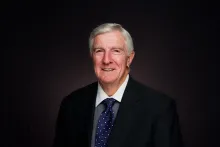
Before his retirement in 2021, Dr. Donald Ward pastored churches in Texas and Louisiana, and taught at Ambassador Bible College in Cincinnati, Ohio. He has also served as chairman of the Council of Elders of the United Church of God. He holds a BS degree; a BA in theology; a MS degree; a doctor’s degree in education from East Texas State University; and has completed 18 hours of graduate theology from SMU.
