
Rick Shabi
This transcript was generated by AI and may contain errors. It is provided to assist those who may not be able to listen to the message.
This morning, when I started the sermon over in Ann Arbor, I had high hopes of trying to finish the Book of Micah. And true to form, I only got through part of what I wanted to get through. You know, as a speaker, you're always concerned that maybe you're not preparing enough, you'll speak for 10 minutes, and you'll be done with the sermon. And people, they generally want to get their monies worth out of a sermon and not 10 minutes worth, so I tend to over-prepare. But that's okay. We will go through Chapter 5 and 6 of Micah today. Leave Chapter 7 for next week. And in Chapter 7 of Micah, Micah goes through and gives six major lessons we need to be learning from what he has to say, what God inspired him to write. So I think that would be a nice way to conclude the book on next Sabbath. Just to give you a little bit of a heads-up as to what I'm planning for the near future. After next Sabbath, the week after that, I want to get back into Deuteronomy.
We've not been there for a while. And then after that, an interesting thing happened to me. A member in the Ann Arbor congregation gave me a study paper from a group that she was aware of. And the study paper, this was a Protestant group, the study paper made a statement, why we don't need to keep the Sabbath.
Now, I'm sure you can go to many different types of Protestant or Catholic organizations and get a similar write-up. But this particular write-up was from Grace Communion International. You may not be aware of who that is, but formerly we were called the Worldwide Church of God. So what I want to do, probably for three Sabbaths, because the study paper was eight pages long, tiny little print, I want to go through that question by question. And as I go through it, I want to go through it slowly. They're going to say, here's why we don't keep the Sabbath, and there's like eight pages. And I'm going to just quote what they say, let you kind of ruminate on that a little bit, and then ask, how would you answer that? Some of those are relatively easy to answer. Others, I'm thinking here to scratch your brain, well, how do we answer that? As I made mention to you a while back, I want to go through a series called Defending the Faith. I gave two sermons talking about clean and unclean meats. That was an issue, but as I went through those two sermons, we were also talking about the old and new covenants and the law of God. So there was a larger issue, not just clean and unclean meats. And obviously the Sabbath is a tremendous issue for us to understand, and to understand why it is we do what we do. And if people say, well, here's an objection, well, I want you to be able to counter that. So I would imagine it would take at least three samples, because I said eight pages, tiny print, and almost every phrase has got something I feel I need to address. So we will do all that, starting probably in about three weeks. Here in the book of Micah, I did use the Bible Knowledge commentary, as well as the Expositor's Bible commentary in preparing for the message today. To give you a little bit of a background again, just a brief review, Micah wrote and prophesied about the same time as Isaiah. Steve was making mention of that earlier. He also wrote the same time as Amos and Hosea. Micah was prophesying during a time when the nation of Israel, ancient Israel, went into national captivity. But prior to going into national captivity, the nation of ancient Israel was a nation that was rich, a nation that was militarily strong. They almost, not quite, but they almost were at the place where under Solomon, they had the full extent of their borders, the full extent of their riches. It wasn't quite that good. Solomon's time was the time of a great grandeur in the kingdom. But both for the north and the south, both Israel and Judah, these were good times. Relative to speaking, these were really good times. But as good as they were economically, as good as they were militarily, the nation itself was corrupt. The nation itself was facing internal decay because of their wrong worship of God, because of their wrong lifestyles, and so forth. As we're aware, prophecy is dual. And what we're going to see in the book of Micah is also true of our nation today. We are militarily strong, even though we are going through some hard economic times for this country. Compared to the rest of the world, we live like kings. We live like kings. If you don't think that way, do a little international trouble. Let me tell you, I've done just a little bit in my life, not a great deal. Mary's done a whole lot more than I have. But every time I come back to the good old U.S. of A, I feel like getting down to that tarmac and kissing the ground, because this is good.
You can turn on a tap and get good, clean drinking water. You and I just don't think about things like that. But you go to other countries, you can't always just turn on a tap. Or if you do, when you drink it, you're going to have some real issues with what you drink. So we are blessed to be in this nation. And of course, we're blessed because of the promises that God made to Abraham, Isaac, and Jacob many, many generations ago.
Just a little bit more of review. I may mention that the book of Micah is in three portions. The first portion we've already covered. It's called the First Oracle or the First Prophecy. This covers chapters 1 and 2. In those chapters, Micah emphasizes the people's sins and the failure of the people to take God's laws seriously. That's the summation of those two chapters.
The second Oracle we need to finish today. The second Oracle or the second Prophet, the second major division of the book is chapters 3, 4, and 5. We've already gone through chapters 3 and 4. But here in his second prophecy, the leaders of Israel and Judah, God takes the task. And of course, today, when we look at the leadership of our nation, even the people of our country take our leaders to task. I think Congress has got a 6% approval rating. There are not too many people who are happy with what we see in government today. All the things that are taking place in Washington, the various scandals, people are not happy with all of that. Just one of those scandals, the IRS scandal. Almost every day we hear new revelations about how our government is coming after conservative political groups. But not only that, our government is coming after conservative religious groups.
Folks, have you not noticed, the United Church of God is a religious group that is conservative. How would you like good old Uncle Sam coming after us as a church? Well, it could possibly happen, given the political climate in our country today.
So that's the second section. And then the last section is chapters 6 and 7. We'll cover chapters 6 today. We won't finish the book. But the last section, the third section, is chapters 6 and 7. And basically here, God speaks in legal terms. God's asking, He's taking the whole of the world, He's taking the whole of the nation, people and the hills and the mountains. And God says, as my witnesses, God says, what have I done wrong to you as a people? I've given you everything. I've given you a choice land. I've given you good leadership in Moses and Aaron and Miriam. I've given you everything that you need. I've brought you out of Egypt. I've set you in a wondrous land, and yet you don't obey me. You don't take me seriously. What else can I do? And it's like a father talking to his children saying, haven't I been a good dad to you? Of course, now you know how kids are today. You know, they get out of college and, well, where's my million bucks? You know, it's kind of like, well, no one's ever given me a million dollars. I don't have a million dollars right now. But where's my... I want to have the same standard of living as mom and dad, although mom and dad have spent a lifetime getting to the point where they're at. Kind of an entitlement thing. But also in chapters 6 and 7, as Steve was saying with his message, Micah, again, who's a contemporary with Isaiah, both men wrote in the same vein. Both wanted to show the horrors that are coming, but then contrast those horrors with the fact that we've got a good time. The Kingdom of God is coming. The return of Jesus Christ is coming. Now, you know, between where we are now and the return of Jesus Christ and all the beginning of the millennium and all those good times, the Bible says, you know, Matthew chapter 24, that we're about to enter a time that the world has never seen. You thought you thought World War II and Germany was bad. You thought that the Inquisition was bad. You take all those things, you wrap them up, and this is what we are yet to face. We as a nation and we as a church and us as individuals. Picture yourself in the late 1920s, early 1930s, and you're a Jew, and you're living in Europe, and you know what's coming. Well, brethren, as a member of God's church living today in this nation, it's very much like a Jew living in the late 20s, early 30s in Europe. We, you and I, need to make sure we've got our house in order spiritually. It's not in my notes here. I'm just kind of summarizing some of the things we'll be covering today, but you have the parable of the virgins. You've got five of the virgins who were taking care of their spiritual duties. They were praying, they were studying, they were fasting, they were meditating, they were drawing close to God. But then you had five other virgins, and the Bible calls them virgins. They may well be converted people, but they aren't doing what they need to be doing spiritually. So much so that they have a lack of God's Holy Spirit, so much so that when they see the bad times coming, they realize, you know, I just don't have the faith, I don't have what it takes, I do have fear, because I don't have enough of God's Spirit, and then they go to members and say, well, you help me out, I need some help. But you know, you've got Scriptures there in the book of Ezekiel that say that we can't get into the Kingdom of God on anybody else's coattails. Mark, let's go over there to Ezekiel, because I don't think I'm going to get to it today in my regular notes, but this is really for the week after.
Ezekiel 14. Let's see what I have here.
Let me see, my eye falls on it here.
Yeah. Ezekiel 14. The Word of the Lord came to me saying, Son of man, when the land sins against me by persistent unfaithfulness. Now that is true for our nation today. I will stretch out my hand against it, I will cut off its supply of bread, send famine on it, and cut off man and beast from it. That's going to happen to our nation. Before services, I was talking to Mr. St. Charles. I said, you know, as I drive around where I live in the Ann Arbor, Ypsilanti area, I drive past a lot of farmland, and a lot of that farmland right now is underwater, which means those crops are going to rot, and we're not going to get those crops. Mr. St. Charles was saying that he can even smell mildew around the area where he lives because of the rain being so bad and so thick. It doesn't take very many crop failures for this nation to really be herded.
We think we can go to the supermarket, pick something off a shelf, but if it's not growing today, it's not on a shelf tomorrow.
Notice verse 14. Even if these three men, Noah, Daniel, and Job, were in it, they would deliver only themselves by their righteousness, says the Lord God. Now, those three men are named because those three men represent other than Jesus Christ, who is perfect, apart from Jesus Christ. Those three men are the three most righteous men who ever lived. That's why Ezekiel uses their names. But he says, even if those men, you know, they can only deliver themselves. We can't deliver our wives or our husbands. We can't deliver our children or our grandchildren. You know, each of us stand before God individually. Verse 15. If I cause a wild beast to pass through the land, and they empty it and make it wasted and desolate so no one might pass through because of the beast, even though these three men were in it, as I live, says the Lord God, they would deliver neither their sons nor daughters, only they would be delivered, and the land would be desolate. So a second time God makes mention of that. Verse 17. If I bring a sword on that land, say, sword, go through the land, I'll cut off man and beast from it. Even though these three men were in it, as I live, says the Lord God, they will deliver it neither sons nor daughters, but only they themselves would be delivered. A third time. You know, God is really trying to emphasize something here. Or if I send pestilence into that land and pour out my fury on it in blood and cut off the man and beast, even, and here's a fourth time, even though Noah, Daniel, and Job were in it, as I live, says the Lord God, they would deliver neither son nor daughter, they would deliver only themselves by their righteousness. Four is a number of testing. Four times God makes mention of this. So we need to take special note, and when you take a look at the things that are discussed here in Ezekiel 14, you see exactly what God has prophesied to happen to our nation. War, famine, pestilence, disease epidemics, and we stand before God individually. Just like the five virgins who had the oil, they couldn't give their oil to the other five who didn't, who lacked. So it's incumbent upon us to really know where we stand with God. Okay, that's some background. Let's go now to Micah chapter 5.
This is the last chapter in the second section, second prophecy, basically talking about the sins of the people. Now here in chapter 5 specifically, what we're going to see is some really good news, contrasted with some really bad news. That's just the way God has inspired Micah to write this. You know, we can listen to good news, and we think, well, everything's okay, and I don't need to do anything about anything.
Well, no. There's some really hard times coming, and we better keep both the good and the bad in mind. Chapter 5 of Micah verse 1. Now gather yourself in troops, O daughter of troops. He has laid siege against us. They will strike the judge of Israel with a rod on the cheek. Now we look at this, the United Church of God looks at this, and we see a couple of possible explanations of this.
We could see the invasion, where the people of God went into national captivity. We see where it says they will strike the judge of Israel with a rod on the cheek. That may be talking about King Zedekiah, who was the last king. He was the king that was one taken into slavery himself. So it may be talking about ancient Israel and the invasion that took place with them. Or, and it could be both. It doesn't have to be one or the other. It could very well be both. This can be talking about Christ's first coming. Because it talks about, in Mark chapter 15, how Christ was smowed on the cheek.
How he was handled by the crowds and by the people who crucified him. And both of those play into the rest of the chapter talking about the future of prophecy. Because prophecy is dual, yes. Just as ancient Israel wanted the captivity. So will our nation in the future. But secondly, Jesus Christ, when he came the first time, yes, he came humbly.
He came to give his life. He came, at one point he was riding on the donkey. Very humbly coming into Jerusalem to be crucified. But when Christ comes, he's not coming the second time. He's not coming on a donkey humbly. He's coming with an army. He's coming with an army of holy, righteous angels. And he's coming with us. We're going to be a part of that army. And he's coming to, not to allow himself to be smote on the cheek, but Christ himself will be doing the smithing.
He's going to be making sure that order is restored on this planet so he can begin the millennium. Chapter 5, verse 2. But you Bethlehem, Ephrathath, Bethlehem Ephrathath, Ephrathath is the ancient name for Bethlehem, so he's using a compound name there. Though you are little among the thousands of Judah, you're just a little town, Bethlehem. Yet out of you shall come forth to me the one who will be ruler in Israel, who's going forth from old from everlasting. So verse 1 talks about Christ who was smote on the cheek. But verse 2 talks about Jesus Christ who was from everlasting, from eternity.
He's coming from Bethlehem, and the second time he's coming is not going to be coming meekly or quietly. But it's also interesting, you might just make a side note of this, Bethlehem means house of bread. Bethlehem means house of bread. Every year at Passover, we take unloving bread. Every year at Passover, we read from John 6, where Christ tells his disciples, and it's in the Scriptures in John 6, that the people of old, they wanted manna from heaven. And they ate that manna, and they died, because that manna was only a physical thing. Then Christ says in John 6, but I am the true bread, and he who partakes of me will live forever. So here we see in verse 2 the beginning discussions of the beauty that we have in Jesus Christ, the hope we have in Jesus Christ, that from the bread we will have life eternal.
Again, this is set in the context of all these awful sounding prophecies, but God wants us to have hope. He doesn't want us to have false hope. He wants us to be fully prepared for what's coming. But he does want us to know that after all the bad times, we have this to look forward to. Verse 3, Therefore he shall give them up until a time that she who is in labor has given birth.
Then the remnant of his brethren shall return to the children of Israel. Now once again, the church views this in a couple of ways.
Very much when we're talking about giving them up, he shall give them up, it could be talking about God giving up the nation of Israel to national captivity and slavery. There will be a second Exodus. If you've got a King James on your lap, it talks about captivity. That our people will go into captivity. He's going to give them up to captivity. Certainly, we've read other scriptures and times past, both in Isaiah and here in Micah, talking about a time of a second captivity and also a second Exodus. But here's another level of meaning that we believe we see here in verse 3. It's talking about she who is in labor has given birth. This may well be talking about God's church at the return of Jesus Christ. Right now, we are converted people, but we are only partially converted. Part of our mind is converted, part of our heart is converted, but we're still physical human beings. There's coming a time at the return of Jesus Christ where we'll be totally converted. We'll be converted from physical into spiritual, from fleshly into spirit. All of our heart, all of our minds will be totally 100% converted. This also may be talking about that at the return of Jesus Christ. We definitely see both, in verse 1 and verse 2, things happening in ancient times and things that are happening in the future. Negative things and very powerful positive things. Let's turn and put a marker there. Let's look over here at the Olivet Prophecy in Matthew 24. Matthew 24. I think I may mention, and I can't remember, I should have written this down. There are those people in the world right now who believe Jesus Christ is already walking this earth. I didn't know that. I guess I should have known that. The religion is supposed to be my thing. I forget this gentleman's name, but I got a question from some person who is reading about him on the internet. He said, and I list his name as so-and-so Jesus Christ. This man actually has a following. This person who calls himself Christ has got a website. It's kind of amazing when you think about the ramifications of this, that Christ would need a website. But this guy has a website. His picture is there. There are people who literally think and sincerely believe this is Jesus Christ. So the person writes and says, well, what do you think? So I gave a number of proofs. When Jesus Christ comes, it will not be secretly. It's not some private thing. It's not some hidden thing. One of the sections I quoted is this right here, Matthew 24, verse 27.
For as lightning comes from the east and flashes to the west, so also will the coming of the Son of man be. You can have lightning without thunder, but generally you've got both. And certainly you see the lightning. It's not something that's hidden. You see that. It's striking. It flashes. Your eye catches that. Verse 29, immediately after the tribulation of those days, the sun will be dark and the moon will not give its light. The stars will fall from heaven, and the powers of the heavens will be shaken. Verse 29 is talking about the sixth seal of Revelation. The fifth seal is called the Great Tribulation. We believe that during that time is when our nation goes down. It's Satan's wrath on mankind in general, but in specific, Satan's wrath on the United States and Britain, the former British Commonwealth of nations. And even more specifically, it's the time of Satan's wrath on you, on us, because we name the name of Jesus Christ. So after that fifth seal, then you've got the sixth seal, which is the heavenly sign. So that's what we see here in verse 29. Verse 30, then the sign of the Son of Man will appear in heaven. We've covered this in times gone by in sermons where in Revelation 6, the peoples of the earth actually see the face of Jesus Christ as He returns. And we believe this is that sign. The sign of the Son of Man will appear in heaven, and then all the tribes of the earth will mourn, and they will see the Son of Man coming on the clouds of heaven with power and great glory. So notice, all the tribes of the earth will mourn, and they all will see the Son of Man coming on the clouds. So this is nothing that is hidden. This is not a secret rapture. This is something that everybody is going to see.
Verse 31, then He will send His angels with a great sound of a trumpet. You know, that's why we on the Feast of Trumpets talk about the return of Jesus Christ. And they will gather together His elect from the four winds, from one end of heaven to the other. So here we see a gathering up of God's people. We go back to Micah, Micah 5 and verse 3, and we see this time of a she. Normally she's talking about a woman. A woman who's giving birth.
Well, we're talking about here the church. The church is giving birth. The birth that is happening is Jesus Christ is now collecting His saints from around the globe, and they are being fully and totally converted, made spirit beings. So again, this is something very, very positive. Something we look forward to. Verse 4, And He shall stand and feed His flock in the strength of the Lord, in the majesty of the name of the Lord His God. And they shall abide, for now He shall be great to the ends of the earth. So verse 4 is very much talking about the ultimate victory that we have in Jesus Christ.
He is going to stand and feed the flock. You know, it's a wonderful thing to think about in the future, in the millennium, where we have schools, and we take those precious little people that we call our children, and we send them off to school, and we will be teachers. We'll be the ones who will be spirits.
We'll be teaching those children. They won't have to go to school and have assignments like they do today, where today the teachers want to teach them all sorts of things because it's politically correct to do so. You know, the little children get an assignment. Well, you tell us, write an essay, why it's good for us as little children to be in a family where you've got a dad and a dad, or a mom and a mom.
You don't have to have a mother and a father. You can have a dad and a dad and a mom and a mom. Just as last week, the Supreme Court gave forth a ruling talking about how, okay, now we'll let same-sex couples have certain monetary privileges and so forth, legal privileges and so forth. It's only a matter of time before we totally strike down all the laws, like the Defense of Marriage Act, which is becoming more and more under fire.
The Defense of Marriage Act is stating that under the law, a marriage is between one man and one woman. But I think there's 12 states now who say, no, forget that. We don't believe in that. And every day, more and more states are leaning that way.
More and more people, more and more of our citizens would vote for something like that. And that's one of the reasons why God is God to come and God Himself, Jesus Christ, has got to stand and teach people. He's got to say, no, your word is not as good as mine. I'm God, you're a human, and we're going to have class now. We're going to tell you the way it is. You don't want to hear your opinion because I'm God, you know, Christ is saying, I'm God, I'm Jesus.
In my opinion, what really matters here. It's always going to take things into His own hand and teach and teach the beauty of the truth of God. This we can look forward to. As I've said so many times in the past, I get tired of talking to my TV set. I mean, I don't know about you, but I start watching the news, national news, local news, international news. I see what's happening in the world, and it's just, you know, you wonder how much longer before Christ returns.
Verse 5, Micah 5, verse 5, And this one shall be peace. Jesus Christ, the Prince of Peace, will reign. He will feed the people. He will come with divine power and majesty and teach the people the beauty of His way. Now, that's the first part of verse 5, but the rest of verse 5 goes back to this contrast thing. When the Assyrian comes into our land, and when He treads in our palaces, then we will raise against Him seven shepherds and eight priestly men.
This section of the verse, Assyria is being spoken of, it's a figure of speech for powers, world powers that would be oppressive of God in His ways. World powers that would be oppressive of God in His ways. But again, Jesus Christ is going to come and make an end of that. Jesus Christ has the ultimate power. And it's interesting here, the end of verse 5, where God raises seven shepherds and eight princely men.
You know, in the world tomorrow, God does need leadership. They'll be God the Father, they'll be Jesus Christ, they'll be us the spirit beings. But another aspect that we see here is that God is going to use flesh and blood people too.
Flesh and blood people too. These might be our children who were raised in a church, who know the values, or our grandchildren, who know the values of God. They maybe didn't come to the place where they were converted, but they know the truth. And God is going to use them to teach other people. Or this way it may well be verse 6, we talk...end of verse 5, I should say.
Talking about people who become converted during the millennium. People need to look at other people. That's just the way it is. And we learn from watching other people. Sure, it's going to be great to have spirit beings talk to us, but we need other people as well. And so we feel that's what that's talking about.
Verse 6, they shall waste with the sword the land of Assyrian, the land of Nimrod, and its entrances. Thus he shall deliver us from the Assyrian, when he comes into our land and when he treads within our borders. So here in verse 6 we see that the returning Jesus Christ will take on the world powers. He will subdue the world powers. And of course, Nimrod is mentioned here because Nimrod is symbolic of the last Assyria and Babylon. And as Jesus Christ takes and sets them down, he takes and sets down the world powers that are fighting against him.
Now, verses 7 through 9 is a flashback into our history. Verse 7 through 9 talks about the rise of the American Empire. The rise of the British Empire. And boy, do we wish we had those days today. I remember as a young child taking history and looking at the history books.
And those of you who were older than me, you saw it even probably even more clearly. Where you would see a map of the world in the history book. And of course, they would color-code the map according to the major nations and those nations under the major ones that were associated with the major nations. When you looked at a map of the world back years ago, you saw that the map would be 25% red.
Not because of red China, not because of Russia, or the Soviet Union, or Soviet Union than Russia. Not because of that. It was 25% red because that was what the British Empire controlled. Great Britain, Canada, Australia, New Zealand, South Africa. All of that. One person in four on this planet was under British rule. And that's because of the birthright blessings that God gave to Abraham, Isaac, and Jacob. The greatest single nation was the United States of America. Manasseh. And of course, you've read this and times gone by in our literature about all of that.
But these three verses, 7, 8, and 9, talk about when we were hitting our stride as a national power. Verse 7, Then the remnant of Jacob, the remnant of Israel, shall be in the midst of many peoples. And that far-flung British Empire wasn't just one nation like America. They were all over the world. Shall be in the midst of many peoples like dew from the Lord.
Dew is symbolic of something that's rich and plentiful and health-giving. Like showers on the grass, you know, growth is taking place and Richmond is taking place. The tarry for no man nor wait for the sons of men. Now, is that happening in our nation today? No. In our nation today, our leadership in Washington, from the highest levels through Congress, through both houses of Congress, through Republicans and Democrats, you name it. Today we want to lead from behind. Today America says, well, we want to first check with the United Nations before we do anything. Now, some people, I think, well, you know, that's a good thing. But let me tell you what's happening. Powers around the world are watching the demise, the downward spiral of this nation. And they say, here's a tremendous world power of America, and yet they don't want to take the lead.
And brethren, whenever you have a vacuum like that, somebody's going to step up and take the lead. America won't lead, somebody else will. And a strong man will arise and say, well, you know, I've got some ideas, and here's what we need to be doing. America just wants to kind of sit on the side. They want to view themselves as just one of the many nations. Fine, let them do that. But we're going to do something different. So you see a mindset now that's going throughout our American society, starting in Washington, filtering through society. Well, you know, we don't want to get involved in things.
Well, you're going to have Europe wanting to get involved in things. And that's not going to bode well for us down the road.
Verse 8, And the remnant of Jacob shall be among the Gentiles, in the midst of many peoples, like a lion among the beasts of the forest, like a young lion among the flocks of sheep.
Why does God even use the phrase a lion?
When you take a look at symbolism, when you see the British Empire, what was one of the things that symbolized that empire so? It was the lion.
Like a lion among the beasts of the forest. In other words, here's countries that fear nobody.
They're going to do what they're going to do because they are so strong.
Like a young lion among the flocks of sheep, who if he passes through both threads down and tears in pieces, and none can deliver.
Nations of tremendous physical power.
Your hand shall be lifted up against your adversaries, and all of your enemies shall be cut off.
That's talking about the good old days. We've passed that point in history.
Starting with Vietnam, we've seen our nations to the place where, with everything we seem to touch, no longer turns the gold, turns to other things. Now we see a contrasting situation starting in verse 10.
And shall be in that day, says the Lord, talking about the end time, in that day, that I'll cut off your horses from your midst and destroy your chariots.
Brethren, take a good look at that. Notice the way God says that. God says, I will cut off your horses. You know, prophetically we know that there's going to be a united Europe, a strong third power block, there'll be what we call the western power block, United States, Britain, Canada, that sort of thing. A European power block and then a Eurasian power block. China, Russia, the eastern nations.
We see this taking place in prophecy. But it's not really going to be the Europeans who are the down throw of this nation.
God says, I'm going to do it. Remember when Israel was going through the Red Sea?
Was it Israel who took the wheels off the chariots?
Was it Israel who drowned Pharaoh's army in the Red Sea? No. It was God who did that. Just as God is going to take our wheels off, God says, you know, fair is fair. If I'm going to be one way with Pharaoh and his army who wouldn't follow me, my people won't follow me. Fair is fair. I'm going to take the wheels off of their chariots. I'm going to take the wheels off of their military.
All their vaunted things that they felt so... that would protect them, they're not going to be protected because you can't be protected from the power of God. Not when God has some issues with you. Verse 11, I'll cut off the cities of your land. I'll throw down all your strongholds.
You know, we could be talking about nuclear war here. We could be talking about biological warfare here. Chemical warfare. I mean, you know, my brother-in-law sent me an interesting article. It was a YouTube discussion. And it was credible because it was NBC reporting. NBC was reporting that in various places in the country and in Michigan, there's no plant that grows. It's a broad-leaf plant. It looks like, you know, any other kind of, you know, large, broad-leaf plant. But, you know, at some stage, it's little. You touch this plant, and there's a very good chance you're going to go blind.
Or the plant can kill you. Now, I sent this out to all of you who got an email. You got that. You maybe watched the video. And it's something to be concerned about because it does grow here in Michigan. Not in great quantities. But it just looks like a broad-leaf weed. But it's so powerful, so toxic, that just the touch can cause a person to go blind. You know, what if our enemies wanted to put, you know, just sow seeds of this? You know, you wouldn't even know it's being done. It could cause great havoc in the nation.
Verse 12, And I will cut off sorceries from your hand, and you shall have no soothsayers. You know, I made mention some time ago, I think when we first started the series, that Gerald Waterhouse years and years ago made mention that he didn't feel that the false ministers, false proclaimers of heresy would make it into the kingdom of God, into the millennium. If God's not going to allow Satan into the millennium, if God's not going to allow the demons to work during the millennium, why have these people preaching falsehoods?
False religion. Why have them come in? You know, God can resurrect them later, at the time of the last great day, and give them their opportunity at that point. But here it says, I will cut off the sorceries. And here we're talking, in the context of these several verses that follow, we're looking at false religion. God's going to cut that off. Your carved images, I also cut off. So here we're not just talking about Wicca people. We're talking about false religion.
Your carved images, I will also cut off. Your sacred pillars from your midst. You shall no more worship the work of your hands. I'll pluck your wooden images from your midst. I will destroy your cities. You know, brethren, it does make a difference how we worship God. Now, God gives us free moral agency. People say, worship the church of your choice. And you have that right as a human being. But as a person who wants to be a Christian, we need to ask, what does God want us to do?
How does God want us to worship Him? We're going to get into that more powerfully in chapter 6. Put a marker here. Let's go to Ezekiel chapter 6. Ezekiel chapter 6. Ezekiel chapter 6. Now, the context here, chapter 5 of Ezekiel, you see where Ezekiel is told to act out a certain vision. That a third of the people will be taken into national captivity. But prior to that time, a third of the people will be killed by the sword. And a third of the people will be killed by famines and epidemics of various natures. So that's the context. We get here in chapter 6, verse 1.
Now, the word of the Lord came to me, saying, Son of man, set your face toward the mountains of Israel and prophesy against them. And say, O mountains of Israel, hear the word of the Lord. Thus says the God to the mountains, to the hills, to the ravines, to the valleys. In other words, God speaking to all of Israel. Great men, small men, everybody in between. Indeed, I, even I, will bring a sword against you, and I will destroy your high places.
So notice the connection here. Israel is to be destroyed. And one of the reasons, the significant reason, is because of improper worship toward God. Then your altars will be desolate, your incense altar shall be broken, I will cast down your slain men before your idols. You know, people will think, well, we'll go to the church of our choice, we'll worship God, and He will give us strength. Just as He did in World War I and World War II, we will go to church.
Well, they're going to the wrong church. They're basically worshiping the wrong God. Verse 5, And I will lay the corpses of the children of Israel before their idols, and I'll scatter your bones around all your idols.
So it's not just a matter that, you know, it's our children, it's our grandchildren. It's some of the innocence, but because of the actions of the parents and the grandparents, the sins of the fathers are being visited to the children. And all your dwelling places, though the city shall be laid waste, the high places shall be desolate. So that your altar may be laid waste and made desolate, your idols may be broken and may be deceased, your incense altars may be cut down, your works may be abolished.
The slate shall fall in your midst. And notice this last phrase there in verse 7, And you shall know that I am the Lord. Why is that significant? That's exactly what God said to Pharaoh. And then you will know that I am the Lord. You see, God is fair. He doesn't just single out peoples for blessings, like our nation, because of the promises God made to Abraham, Isaac, and Jacob.
We are also singled out for curse. If we don't follow God, we're first in line for the curses. As we were first in line because of the blessings through our ancestors, we're also first in line for the curses. But, as Steve pointed out in his message, and this shows here as well, we'll see that another... back when we go back to Micah, the whole world will be facing the wrath of God. Not just this nation, the whole world, because the whole world is going the wrong way.
Go back now to Micah.
Micah 5, verse 15.
And I will execute vengeance and anger and fury on the nations that have not heard.
So it's not just the United States, Britain, and the former Commonwealth. It's the whole world that God is going to take issue with.
Okay, now starting here in chapter 6, we see God... Basically, it's like a court of law. God, in verses 1 and 2, is going to use basically legal terminology. He's going to talk about a case. He's going to talk about litigation. He's going to talk about a complaint. Because He's trying to get people to think.
Chapter 6, verse 1. Now what the Lord says, Arise, plead your case. Plead your case before the mountains. Let the hills hear your voice. Hear, O you mountains, the Lord's complaint. Again, a legal complaint. And use strong foundations of the earth, for the Lord has a complaint against His people. And He'll contend with Israel.
He has a complaint. He will contend.
And then verse 3. O my people, what have I done to you? Now here it's basically like a father talking to a wayward son or a wayward daughter. What else could I as a parent have done? What could I have done? Please let me know. He says here, how have I wearied you?
Testify against me. So here you've got a loving God saying, you know, you feel I've failed you. I've wearied you. You feel I've worn you down. I've been impatient with you. How so? And then God begins to bring forth His case. Verse 4. For I brought you up from the land of Egypt. I redeemed you from the house of bondage. I set before you Moses, Aaron, and Miriam. So God says, you know, you were in slavery, and I brought you out of slavery.
I was good to you. I gave you Moses. He led you physically. I gave you Moses. He led you spiritually. He was a prophet before you. I gave you Miriam, who was a prophetess among you. I gave you male and female leaders that would be there for you. I gave you Aaron, the progenitor of the priesthood. Not only did I give you physical leaders that would help you in a physical way, I gave you spiritual leaders that would be there for you.
Verse 5, O my people, remember now what Balak, king of Moab counseled, and what Balaam, the son of Peor, answered him, from Acacia to Grove to Gilgal, that you may know the righteousness of the Lord. Now, there are a number of historical situations that are being referred to in verse 5, where people wanted to have God curse Israel. God would not curse Israel. How God was there on these journeys through to Gilgal and beyond, where they defeated Midian, they crossed the Jordan, they conquered Jericho, and so forth.
And so in verse 5, what God is trying to get across here is a historical sweep of events. I brought you out of Egypt. I was with you along the way. I brought you into the Holy Land. What's so terrible about that, God says? When you were hungry, I fed you. When you were thirsty, I gave you drink.
What's so terrible, the Father says to His children? What have I done that's so bad for you? Verse 6, with what shall I come before the Lord? Verse 6 and 7 are important because they set up a very important question that will be answered in verse 8. Verse 8 is one of the key scriptures in all of God's Word. It is a beacon for every Christian who will ever live, for anyone of God's people who will ever live in verse 8. But we need to set verse 8 up by looking at verse 6 and 7. Verse 6, with what shall I come before the Lord?
And bow of myself before the high God? Shall I come before Him with burnt offerings? With calves a year old? Will the Lord be pleased with thousands of rams, ten thousands of rivers of oil? Shall I give my firstborn for my transgression, the fruit of my body, for the sin of my soul? Brethren, as I said earlier today over in Ann Arbor, I will say here, let's not just look at this section of scripture or any section of scripture as we go through Micah or something in the Old Testament and think that this is just talking about an historical situation.
The Bible is meant to be understood by us today, to be lived by us today. There are various levels of understanding here. And what we see in verse 6 and 7, how does a person come before the Most High God? That needs to be understood in Old Testament times and New Testament times. It needs to be understood in Old Covenant times and New Covenant times, by people of God of every age. And the basic thrust of the idea here is that people back in those days felt, well, if I just go sacrifice an animal, I can kind of buy God off. I will have done my bit. I will have done my bit. And sometimes people can be really superstitious about that.
Now, let's not just think that that's for these folks here. Today people can say, I came to Sabbath services. I went to the Feast of Tabernacles. I wrote out my tithe check. I don't eat pork. And if we do that strictly on a mechanical basis, we're no better than these folks.
We're no better than these folks. We need to make sure we're keeping the Sabbath, the Holy Days, the things of God, because we love the things of God. Because this is a part of who and what we are. It's not just something mechanical. I don't wake up on Saturday morning and say, Oh, today's church day. Jump in the car, go to church. Done with church. I'm done. I can do whatever I want. No. If you do that, then it's mechanical. You're like these people here. I've slipped the throat of that goat. How does one... And to make a point... Now, to add something here. Does God hate the law of sacrifices? Of course not. God was the one who established the law of sacrifices. The law of sacrifices were to teach people valuable lessons. But people weren't getting the point. The point was the lessons they were to learn was bringing these lessons into our hearts and our minds. They were willing to just do the superficial. And to make the point even more strenuously, at the end of verse 7, He said, Shall I give my firstborn for a transgression? Now, God always hated and spoke against infanticide, the sacrifice of our children. But Micah's using this as an extreme example. Again, God never wanted that. God never asked for that. God always spoke against this sort of thing. The nations around Israel did that. But Micah here, by inspiration of God, is saying this, Well, even this extreme, well, this please God. No, that doesn't please God. That's something God hates. But now, verse 8, now we've set up verse 8. Verse 8, He has shown you, O man, what is good, and what does the Lord require of you, but to do justly, to love mercy, and to walk humbly with your God? And, brethren, that is one of the great scriptures in all of God's word. If you and I, as New Covenant, New Testament Christians, if we can live by this, we are doing something. We are doing something very great in God's sight. We are to act justly. There's something we must do. Of course, God outlines what we are to do about His laws, His statutes, and His judgments. Steve is making a mention that he likes to read the Bible through from cover to cover. He's got a pattern that he uses for that. That's something we should all do. How can we live by every word of God if we don't read every word of God? It's going to take us a while to go from Genesis to Revelation. But people can do that. You can spend 20 minutes a day. Every day you spend 20 minutes. Then you have your other larger study. Spend 20 minutes a day or 15 minutes a day. You would read the newspaper. You're just reading through. You're not trying to do a deep research on anything. You're just reading for flow, reading for context. But we need to do something.
And it says here, and we need to love mercy. Now, doing something is something we do with our hands. But loving something is something we do with our hearts and our minds. With our hearts and our minds. Is your heart in the truth? Is your mind in the truth? Or do we just kind of wrap our arms around something physically? We have the appearance of good Christians. But we're really not doing what God wants us to do to actually love mercy.
Put a marker here. Let's go over to Mark 12. Because this bear is very much on what we're discussing here. Mark 12.
Mark 12, and verse 29.
Well, let's start in verse 28. Mark 12, 28. Then one of the tribes came, and having heard them reasoning together, perceived that he had answered them well. He asked them, which is the first commandment of all? Jesus answered them, the first of all the commandment says here, O Israel, The Lord our God, the Lord is one. You shall love the Lord with all of your heart, with all of your soul, with all of your mind, with all of your strength.
I've given sermons on that in times gone by. They mean this is a total giving of yourself to God. This is the first commandment. The second is like it. You shall love your neighbor as yourself. There is no other commandment greater than these. And so many times we'll stop right there, but let's keep on reading. So the scribes had done well said, teacher. They have spoken the truth.
There is one God, there is no other God, no other but He. And to love Him with all the heart, with all the understanding, with all the soul, with all the strength, and to love one's neighbor as oneself, is more than all burnt offerings and sacrifices. So here we've got something that verifies what we saw back in Micah. There's nothing wrong with sacrifices. As a Christian, we are to make spiritual sacrifices. But the greatest sacrifice we make is giving our hearts, our minds, and everything we have to the great God.
That's what it means to love mercy. We go back now to Micah 6. We look at verse 8 again. What does the Lord require of you? Because the question was asked, how do we come to the Most High? We must do justly. And only God's Word will tell us what that is. We've got all kinds of people today in religion. You've got major denominations now where women are ministers, and they say, well, there's nothing wrong with same-sex marriage.
And these are people of the cloth. No, we find out how we do justly by what God says in His Word. Do justly, love mercy. Then thirdly it says here, and walk humbly with your God. Walk humbly with your God. I'm in the process of counseling a couple of people for baptism. And those of you in the room who I have baptized, you know that I will go through three sessions with a person. Some ministers go through a whole lot more than that. I know of some fellows who will basically have you read half of the literature we've got online, maybe 12 visits.
And that's fine. But my feeling is we can get it down to where the tire hits the road. And where the tire hits the road is when all is said and done, are you going to do what God asks you to do? Whatever He says in the Bible, are you going to do that? Well, you cut through all the other extraneous things. And the bottom line, if you were ready for baptism, and if you're going to be a good Christian after baptism, the bottom line is, am I humble enough to walk with my God and do whatever this says?
And we're not talking about what some fellow says, because fellows can be wrong. But are we going to do what it says in here, no matter what, no matter what the cost? If we will do that, then we're going to walk humbly. We're going to be teachable with our God, and God will lead us the way we need to be going. So let's continue to finish up here, and we'll finish up the chapter, and we'll save chapter 7 for next week.
Verse 9, I think is better, a better translation than verse 9 is found in a New Living Translation. I never paid much attention to that. We had Larry Walker in during the Pentecost weekend, and Mr. Walker really loves the New Living Translation. That's his primary source, I believe, for study. So I was taking a peek at Micah 6, verse 9, in New Living, and it really does add quite a bit here. And the New Living is different. The Living Bible is a paraphrase, whereas the New Living is an actual translation.
It's a great deal of difference in terms of the technical aspects. Listen, let me read the New Living, Micah 6, verse 9, in New Living. Fear the Lord if you are wise. His voice calls to everyone in Jerusalem, The armies of destruction are coming, the Lord is sending them. The armies of destruction are coming, the Lord is sending them. Of course, we've gone through prophecies, and Revelation chapter 14, Revelation chapter 6, Revelation chapter 19. I won't go through those today with you. We've gone through those in the past. But as we said earlier today, it's God who's going to be fighting with Israel.
Starting in verses 10, 11, not starting, but in verses 10, 11, and 12, God catalogs just some of the sins that we find now in Israel, just some of the sins. It shows the problems that Israel has. Verse 10, Are there yet treasures of wickedness in the house of the wicked, and short measure that is an abomination? Shall I count pure those with wicked scales, and with a bag of deceitful weights, for where rich men are full of violence or inhabitants of spoken lies, that tongue is deceitful in their mouths?
Do we see any of that today in our culture? When you want to go get your car repaired, you just say, Well, you know, I just know I can take my car in and bless their hearts. They're looking for my best interests. You know, I will shell out all this hard-earned cash. You know, I'll hand over my first porn because it's so expensive, and my car will be good to go!
Well, one man was kind of crafty. He brought his car into a dealer, and of course, with this dealer, you had to park your car in a lot, and they'd come for it when they were ready, and drive it into the area where they'd work on the car.
When they were done, they'd go park it back in the lot. Well, this guy was kind of crafty, so he parked his car. We were supposed to park his car. He got out of his car. He had a piece of chalk with him, and he took him right where that front tire hit the parking lot.
He put a little mark right there where that tire hit the parking lot. And, you know, several hours later, well, it's going to cost you $800 and some dollars. We've got a fix. You're ready to go. So he goes back. He looks at that car, and there's that tire right next to that line. That car hadn't even been moved. Hadn't even been moved. I face something similar here. A month or so ago, our air conditioning went down. You know, our house was built in 2005. I'm thinking, why is my air conditioning going out after so few years? Well, I can live without air conditioning, but I'm married to somebody who really enjoys air conditioning. And so we need to get that fixed.
And so last year, we called somebody and said, well, we think that what you've got is a hole in your coil. And I said, well, what's that going to cost? Well, a new coil for that central area of yours. That's going to be $1,000. So I said, well, okay, you know, September, we'll leave it be until this spring. So this spring, I call and I say, well, I was told it's a hole in my coil. And so this guy's talking, he's talking jabbing, jabbering and so forth. He said, well, if you've got a hole in your coil, that's $1,000. But then you've got this other gizmo in there.
That's probably bad, too. That's another 800 bucks. And we're going to test this all for you. To test it, it costs $250. And then he's talked about all these other things before he does anything. He says, you know, why don't I just sell you a whole new central air conditioning unit? About $5,000. No big deal.
I said, would you mind opening up my air conditioner and actually looking at it? You know, is that a novel idea? Could we actually open this thing up and look inside? And three times I asked him, and three times he didn't do it. And I thought, well, what this guy wants, he wants a nice payday. He probably gets a percentage of whatever parts he sells people like me.
And so I thanked him and he went away and I said, I will never see him again. And so I called Sears up, who I bought the central air from, because my house didn't come with central. So would you please send somebody out here and look at this thing?
And so a fella came out and I told him the whole story and he opened it. The first thing he did, it got my attention, he opened up the unit. We're making progress. We're actually looking at the thing. He says, now, you do have a hole. It's large enough where I can't repair it. So we will need to order you the coil. I said, well, how about all these other gizmos?
He says, nah, that guy, he was looking for a big payday. You don't need any of that. And so he came out, he repaired everything, and I felt relieved. I felt relieved. I paid $1,200. And just the year before, I had to get a whole new sub pump for my new house, which was $900. So for those of you who are into the housing thing, it can be expensive, right? But you want to see somebody, you read these verses, you want to see somebody that, at least if you're in shell of that kind of money, you want the job done right.
Not the job done wrong. And six weeks later, they say, well, you know, we need to come out and do something else. Well, in this country, more and more, we just don't see that. We don't see people who labor properly. Verse 13. Now, as a result of what we see in verses 10 through 12, we see God responding here in verses 13 through 15.
Therefore I will also make you sick by striking you, make you desolate because of your sins. You shall eat, but not be satisfied. There's coming a time when I don't think any of us are going to have to worry about diets. Life is going to be lean in this country. Hunger shall be in your midst. You may carry someone away, but shall not save them. And what you rescue, I will give over to the sword. You shall sow, but not reap.
You shall tread the owls, but not anoint yourself with oil. So this discussion of verses 13, 14, and 15, basically God's saying, there's coming a day when all those crops you've labored for, somebody else is going to move in, they're going to take over the land, and your enemies are going to have your crops, your hoses, all that gold and silver you lied and cheated to get, all that's going to them. So you shall anoint yourself with oil and make sweet wine, but not drink wine. In other words, there's no healing here. Wine is symbolic of goods and so forth, oils, significant healing.
We're not going to be healed as a nation because we're so full of sin. These will not be the days of wine and roses. And lastly, in verse 16, a historical note, For the statutes of Omri are kept, and all the works of Ahab's house are done, and you walk in their councils. Now, who was Omri? Well, in the history of Israel, Omri was a very important individual. He didn't rule for a long period of time.
They think his rule went from 881 to 870 B.C. for 11 years, a relatively short time. This is after Jeroboam. We've got the next dynasty of importance would have been Omri. Now, he is so important that the Assyrians, for 100 years after he died, the Assyrians referred to Israel as the nation of Omri. They referred to Samaria, the capital of Israel, as the city of Omri. So he was a highly respected man internationally, but he's also one of the most evil kings Israel ever had.
So you can be a good king, get lots done, and be just extremely wicked. And of course, we know about Ahab. Ahab's name is a byword for wickedness. And it says, And you walk in their counsels. You do the same thing. So God says, I've got to deal with you. And you walk in their counsels, and I may make you a desolation. And your habitation is hissing, therefore you shall bear the reproach of my people.
Okay, so we'll stop there for today. Next Sabbath we'll conclude. We'll go through chapter 7. And chapter 7 contains six blessings that the people of Israel can experience if they properly follow God. So we'll take the time to go through that in more detail next week.
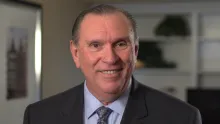
Randy D’Alessandro served as pastor for the United Church of God congregations in Chicago, Illinois, and Beloit, Wisconsin, from 2016-2021. Randy previously served in Raleigh, North Carolina (1984-1989); Cookeville, Tennessee (1989-1993); Parkersburg, West Virginia (1993-1997); Ann Arbor and Detroit, Michigan (1997-2016).
Randy first heard of the church when he was 15 years old and wanted to attend services immediately but was not allowed to by his parents. He quit the high school football and basketball teams in order to properly keep the Sabbath. From the time that Randy first learned of the Holy Days, he kept them at home until he was accepted to Ambassador College in Pasadena, California in 1970.
Randy and his wife, Mary, graduated from Ambassador College with BA degrees in Theology. Randy was ordained an elder in September 1979.
