
Rick Shabi
This transcript was generated by AI and may contain errors. It is provided to assist those who may not be able to listen to the message.
I was taking a look at the materials I've been covering with you for the last number of weeks and months. It's my responsibility to ensure that we've got a healthy variety in our diet in terms of the sermons that I give to you. We've done an awful lot with Christian living over the last weeks and months, done a little bit with doctrine, done very much at all with prophecy. So I thought what I would do is get into prophecy for the next several sessions that I'm with you in doing so. What I want to do is cover the book of Micah. So if you want to turn over to the book of Micah. Now, I've used the Bible Knowledge Commentary and the Expositor's Bible Commentary in preparing the message. Also, material from the Holman Bible Dictionary. I've used all three of those reference works. You might ask, why have I selected the book of Micah? Well, I wanted it to be a short series, not terribly long. I think I can cover this in three sermons this week, next week, and then two weeks from that week, the next week. So three of the next four weeks will be having this. But another reason I wanted to cover the book of Micah is because the book of Micah speaks to us today. It very much speaks to us today. Let me go through some background to the book and tell you why it does speak to us today. Now, for those of you who have internet, you know that you've already got a background to the book that's sitting in your inbox and email. So, what I'm about to go through is the background of the book. You've already got that, so don't feel you need to write all this down. For those of you who don't have internet, I made some copies and I put them on the grand piano out there in the information area. So just go up there and pick up a copy. Micah lived at a very challenging time in Israel's and Judah's history. Micah lived and prophesied during the reign of three kings, Jotham, Ahaz, and Hezekiah, which basically means that he was active from 750 BC, or there was a possibility of him being active from 750 BC to 686 BC.
Again, that's all in your background. But the thing that we want to concentrate on is the fact that Micah was a prophet when Israel went into national captivity. When Israel went down, he was there as a prophet. He was a contemporary with Isaiah. He was much different than Isaiah. If you remember our background in Isaiah, Isaiah was, I think, had a cousin in the royal court. So Isaiah grew up inside the royal court of Israel. He knew what it was like to hobnob with the upper crust of society. He was very familiar with that and an excellent education along those lines.
Micah, on the other hand, was just a common guy. He was the rank and file fellow. He didn't come from the upper crust whatsoever. He was from Judah, a town in Judah. But he was much different than Isaiah. Micah was a contemporary with Isaiah. He was a contemporary with Hosea and probably Amos. So there's a number of people he was contemporary with. Jeremiah in his writings refers to Micah. So he was a very well-known man at the time.
Now, unlike most prophets who would either prophesy to Israel or to Judah, Micah prophesied to both. So he holds a unique place in the history of the prophets of God that he prophesied both to Israel and to Judah. As I may have mentioned, he was prophesying at the time at the very end of the nation of Israel. And he's got something to say to that nation.
And you and I realize that prophecy is dual. What Micah has to say to the nation of Israel is very true for us today. And we need to think really hard about what Micah says in this book, because these words should be ringing loudly in our ears. Okay, so that's all I'm going to comment on at this point. But again, you've got that that I sent you, or you can pick one a copy of this up in the back of the room.
Let's get right into the book. Micah chapter 1, verse 1, The Word of the Lord that came to Micah of Moreschoth in the days of Jotham, Ahaz, and Hezekiah, kings of Judah, which he saw concerning Samaria and Jerusalem. Now verse 1 is important because it tells us a lot of key points of information. Point number 1 is that he wants us to understand this is the Word of the Lord. This is not something Micah concocted on his own.
This is not something he just developed some night after a nightmare. This is something that came directly from God, and he wants the people of Israel and Judah to understand that. These are God's words. It says here that he is of Moreschoth. That's a little town about 25 miles southwest of Jerusalem. So he basically grew up in the area near Jerusalem. As we see these kings that are being mentioned here, we get a flavor for the date that he's writing.
Prophesyne during the reigns, not through all three of the reigns, but parts of the three of these reigns of these three kings. So the dates of those kings, as I said, went from 750 to 686. But as I mentioned a moment ago, the thing that should catch our attention is when Israel went down, he was there. And he warned them about what they needed to do before they were to go down as a nation. Our nation is going down. You know, it's not comforting for me to say the things I'm going to be saying today.
You know, I gave this sermon over in Ann Arbor. It's not an easy sermon to give. When you love your country, you don't want to say something that, well, when Christ comes back, there is no United States of America. You don't like saying those things. But prophecy shows us that's going to take place. There's a number of things I'm not going to want to like to say today, but we just simply need to go through what the Word of God says, because it really is a wake-up for us.
It is a wake-up call for us, too. Just because we know the truth about the Sabbath and the Holy Days and the doctrines of the Bible, we can know all the truth we want to. Satan knows about the Sabbath and the Holy Days. What good has it done him? We can know about the Sabbath, the Holy Days, and all the points of God, but if we don't live by the Word of God, if we don't live by the precepts, God gives us what good is it.
We're going to see in this book, that's one of the things that Micah takes the nation to task. They know the truth of God, but they're not living by it. Because they're not living by it, they're going to pay a price for not living by it. We see here in verse 1 that he's going to be speaking to Samaria and Jerusalem. Samaria and Jerusalem. Samaria was the capital of the northern ten tribes, Israel. Jerusalem was the capital of the southern kingdom, the kingdom of Judah.
You don't have many prophets that prophesied of both nations. But there's another reason why Micah mentions Samaria and Jerusalem. That's because of the deep sin that's in both of those national capitals. The deep sin that is there. One of the things you're going to find that Micah takes a tremendous point, is the leadership of the nations. The leadership of the nations of Samaria and Jerusalem were just plain twisted, godless.
And I know that there are those perhaps in our room today who enjoy politics. And increasingly this is something I know for some of you who are into politics and you vote. When I say these things I know it's like a continual drip. You don't like hearing it. I don't care if you're a Republican, I don't care if you're a Democrat.
If you and I are preoccupied with politics, political leaders, I don't care what side of the aisle they're on. If we're all hung up on political causes, wanting our man in office, then our eyes are on the wrong thing. This last week, once a month, normally the first Wednesday of the month, the three pastors in Michigan get together for lunch. And we did that this last Wednesday.
Mr. Murray, Mr. Joseph, myself, and we always invite Mr. Rhodes. And I was relating to the fellows that I was in be giving this as a series. Mr. Rhodes said, you know, Randy said it's interesting, more and more of our people are becoming more and more political. They want their guy as a president, they want their guy as a senator or whatever, what a Republican or Democrat. And people feel that, well, if we just get the right guy, we can bolster this nation.
But Mr. Rhodes made a very interesting comment. He said, God wants this nation, God's will is that this nation learn their lessons. And this nation is going to learn their lessons when we go into national slavery.
Before God's kingdom could come, he said, America has to go. And so my comment to those who want to get into politics is, are we fighting God? If God is working to the end of bringing this nation down because he wants us to learn lessons, and we're trying to get our guy in office, aren't we working at cross-purpose as to what God wants? Our eyes need to be on Jesus Christ, our eyes need to be on Jesus Christ's will, Jesus Christ's cause, the kingdom of God, not the kingdom of America. And I know for some that's a hard thing to hear. But you know, my job sometimes is to give things that are hard for you to hear.
Just as Micah's doing here. Verse 2, hear all you peoples, listen, O earth, and all that is in it. Let the Lord God be witness against you, the Lord from his holy temple. So here we've got the great God summoning Israel, summoning Judah, and the whole world. The whole world. And as I mentioned in the past, when God gives us the summons, we better listen.
We better be there. The holy complications that we call the holy days and the weekly Sabbath. Those are summons from the great God, and we need to be there. And so here we see God calling the whole of the earth as a witness to what he was about to say. Now, the rest of chapter 1 here, verse 3 through verse 16. In the rest of chapter 1, God is going to talk about the peoples' sins.
Specifically in this section, verses 3 through 16, he's going to talk about false religion, religious infidelity. But he will talk about Israel and Judah's sins for the first three chapters of this book. So it's not just about false ministries, false pastors, that sort of thing. Wrong doctrine. Let's get into it. Verse 3, For behold, the Lord is coming out of his place. He will come down and tread on the high places of the earth.
The mountains will melt under him. The valleys will split like wax before the fire, like waters poured down a steep place. Verse 3 and verse 4 date-stamps this book, so far as prophecy is concerned, because verse 3 and verse 4 is talking about the return of Jesus Christ, the second coming of Jesus Christ. And notice something there in verse 3.
It says, He will tread on the high places of the earth. Tread on the high places. Biblically speaking, Christ here is talking about three things. Micah, who's inspired by Christ, is talking about three things here. A high place, as you are well aware, could be places of pagan worship. The false ministers, the pagans, would find high places, high elevations. They thought they were getting close to their God. They wanted everybody to see what they were doing.
They wanted to be a light and example to the community. So they would find high places. And yet God says, those high places aren't going to save you. The second way the Bible uses the term high place is a place of security and protection. Or something that will make you secure and protect you. Many times people want to view money as something that will protect them. And there are plenty of prophecies that talk about how people will throw their gold and their silver into the streets. And when the time comes when we can't grow a crop in this country, and we're facing starvation, we'll get to that in a few minutes, but facing starvation, you can't make a very good sound without a greenback.
They don't taste too good. I've never tried. I don't want to try. But money is not going to be our security. And the third way that the Bible talks about high places is the military. Having a military advantage. Have you been paying attention to the news, what's happening to our military? You know, in the United States, our military is second to none.
People say, well, how can prophecy come to pass when we've got the American military that's so strong, so haunted? Nobody in the world can touch us! And yet we found out, we're finding out, now that China steals $300 billion, with a B, billion dollars of our technology every year. They not only steal it from our government. You would think our government would have better controls on their intellectual property, but the Chinese steal it from other national concerns, other national companies, that make our weapons systems.
All of a sudden, what have we found in China? All of a sudden, they've got stealth technology. They were years behind. Now, all of a sudden, they've got stealth technology. Now, they don't have it like we have it. They don't have it as advanced as we have it. But we can tell they've got something.
How? Why? They stole it. And they keep on stealing it. And what do we do as a nation? We don't even use strong language against them. And this has been going on for years.
I'm not just talking about the current administration. I'm talking about Bush and before. This has been going on for some time. And we don't do much about it.
You know, brethren, people often wonder, how are things going to work out where, when we have World War III, that the first person knocked out of the box is the United States of America? How does that happen with our wanted military? And yet, when you look at our military, just looking at the computerization of it, how do our planes fly now that they've got so much involved with the computer aspects of flying a plane? Our ships, our missile systems, we even now have rifles that have computers in them to do various functions.
But if someone is able to take all of that down, bring and crash our computer systems, we are very vulnerable. And I give you a possible situation to make, and I'm speculating here, so let's label it as speculation. Prior to the return of Jesus Christ, the world's going to see three power blocks. Us in the West, you've got the European power block that's going to rise. We've not yet seen that come to pass. And you've got the Eurasian power block, Russia and China, three major power blocks. We know China is gobbling up our intellectual properties almost as fast as we can get it out.
Could it be? The Chinese, being as wise as they are as a people, will say to the Europeans, you know, let us sell you some technology that will give you an advantage over the good old United States of America, Britain, Canada, Australia. Let us sell you some technology that gives you a bit of a thumb up. Now, we're not going to sell you all we've got, because we want all we have. But we'll sell you a little bit. And maybe that's just enough to tip the balance so that when we are conquered by the Europeans, you know, China can sit back and say, well, we wanted to set those two together, you know, have America and the Europeans fight. We don't know who's going to win that fight. We know that whoever comes out on top will be greatly weakened.
And whoever wins that fight between the United States and Europe will take them on, and we'll be in charge. Now, that's just a scenario that may take place. I don't know. We'll have to watch. We'll have to see. But here we see Micah saying, you know, you're a vaunted military, all these high places, these things aren't going to see you. Your false religion is not going to save you. Your military is not going to save you. Your money is not going to save you. People back in those days were looking at the wrong things. And, brethren, our nation is looking at the wrong things. You know, again, as an American who loves this country, I watch even conservative television or listen to conservative radio, and they say, well, you know, America's in a tough spot, and we're not the nation we used to be, and we're just riddled with corruption or riddled with moral decay. But we're going to pull it out. I think to myself, say what? We're going to pull it out? Did Rome pull it out? Did the Persians pull it out? Did Alexander and his bunch, did they pull it out? Did the Aztecs pull it out? No, those are all empires that have gone down in history, and they all do. The American empire will be no different.
Put a marker here in Micah. Let's take a look at some other prophecies to touch on this. Let's go to Ezekiel chapter 5. Again, this is sobering stuff. Sobering stuff, but we need to get into it from time to time. Ezekiel chapter 5. Here, God is asking Ezekiel to portray something using his body. We'll see exactly what's going to take his beard and so forth. We'll take a look at something here. Ezekiel chapter 5. Again, he's talking to the nation of Israel. He's talking about Jerusalem, which portrays all of Israel. Ezekiel chapter 5 verse 1. And you, son of man, take a sharp sword, take it as a barber's razor, and pass over your head and your beard, and take the scales to weigh and divide the hair. So God is going to weigh and balance us as a nation.
How are we doing with his laws? Verse 2. You shall burn with fire one third in the midst of the city.
One third. We know because of prophecy that in the book of Revelation, you've got the seven seals. You've got the four horsemen. You've got plagues. You've got famine. Those plagues and that famine. That's going to take a tremendous toll in life. Here it indicates one third of our peoples in America will die. So many that we won't have time to bury everybody. We'll just have to do like they do in war zones where they simply pile the bodies up and we burn them. When the days of the siege are finished, then you should take one third and strike it around with the sword.
Again, something not positive, something that we don't like thinking about, that this nation will go into World War III and we will not come out as victors.
You know, when people study world history, they see that in World War I, America was late to the game, but America turned a tide. America helped the Allies win in World War I. The same thing is true in World War II. That lesson has been learned by those in Europe. They're going to say, you know, we're not going to allow America to get off the mat and turn the tide in World War III.
So, however this warfare gets going, when this warfare does take place, a third of our people are killed in this war. One third are already dead because of disease and famines. Another third due to the war, whether it be nuclear, thermal nuclear war, chemical warfare, biological warfare, some combination, we don't know, but large numbers, two-thirds of our people are going to be gone.
Then it says at the end of verse 2, and one third you shall scatter in the wind, and I will draw out a sword after them. How do you how do you break up your adversary? How do you bust them up? Well, chances are if you're alive at this point, you're going to hear of long lines, Americans in long lines. They're going to be in these long lines in port cities like New York, Miami, places like that. But they're not about to get on a ship to go on a carnival cruise line. They're being forced onto a ship because they're going someplace as slave labor. You want to bust up a nation, you take its peoples, and you repopulate them in other areas.
That's exactly what happened to Israel. When Israel went, and we're going to get to that little bit later on a sermon, but when Israel went into national captivity, the Assyrians took them, brought them back up to Assyria. Then they took other peoples and brought those peoples, and they replanted those peoples in Israel. Those peoples were called the Samaritans. We wonder why did the Jews seem to hate the Samaritans so much? Because the Samaritans were not their peoples.
They were transplanted peoples that the Assyrians brought in years before, hundreds of years before.
Now, when we think of things like this, brethren, these are very sobering thoughts, and we need to take stock in the fact that we have a work to do.
And we have a work to do not only corporately, but we've got a work to do individually.
How are you and I stacking up in that work that we need to do individually as men and women of God?
Nothing to play around with. Verse 3, Ezekiel 5, verse 3, You shall also take a small number of them and bind them in the edge of your garment.
So a small number are going to be protected. A small number are going to be hidden.
We felt in the past that this is the church of God.
Not all the church. They'll be martyrs.
But, you know, some of God's church are going to survive this because God loves His church and they've been faithful to Him. But then notice verse 4, Then take some of them again, now this is those who have been saved in verse 3, take some of them and throw them into the midst of the fire.
See, the Bible talks about the Laodiceans.
Bible talks about what Christ said in Luke chapter 18, when I come, will I find faith, the faith on the earth?
And so, you know, we will have our fence sitters in the church.
And the only way, you know, God's going to have to shake that fence. No one's going to be on, but when all is said and done, no one's sitting on a fence.
God's going to shake the fence. Satan's going to shake the fence.
And we want to make sure we're on the right side of that fence when all is said and done.
Verse 4, then take some of them again and throw them into the midst of the fire, and burn them in the fire. So in other words, fiery trial, even for those who were saved in the church. From there, a fire will go out into all the house of Israel. Thus says the Lord God. This is Jerusalem. I've set her in the midst of the nations, and the country's all around her. Jerusalem is supposed to be an example. And, brethren, you and I are supposed to be examples.
So what Micah is saying, let's go back now to the book of Micah. What Micah is saying is very relevant for us. We are Israel. Our literature, our study of the Scriptures prove that. We are Israel. So this book, the book of Micah, is dual. It was about the day that he lived in, but it's also about the day just prior to the return of Christ, and lessons for us to learn. Okay, so verse 3, verse 4, talking about the return of Christ. Verse 5, All this is for the transgression of Jacob, and for the sins of the house of Israel.
What is the transgression of Jacob? Is it not Samaria? What are the high places of Judah? Are they not Jerusalem? So again, you see, high places in sin, leadership in sin, connected.
This is why our view of leadership is, our leader is Jesus Christ. We put faith in Jesus Christ. We don't put faith in any human leader. Mankind will always disappoint us.
Verse 6, Therefore I will make Samaria a heap of ruins in the field.
We can think about Samaria as the United States. Samaria represented the northern kingdom. We are the descendants of the northern kingdom. I will make Samaria a heap of ruins in the field. Places for planting a vineyard. I will pour down her stones into the valley, and will uncover her foundations. All of her carved images shall be beaten to pieces, and all her pay as a harlot shall be burned with the fire. All of her idols I will lay desolate, for she gathered from the pay of a harlot, and they shall return to the pay of a harlot. So all this discussion about harlotry, talking about a false religion, talking about carved images, it does make a difference as to who we worship and how we worship. Some people say, well, we all worship the same God. No, we don't.
The God of the Scriptures does not say to worship on Christmas or Easter or on Sunday. He simply does not. We'll get to that a little bit later.
Let's take a look at this a little more closely, what happened at Israel back in 2 Kings 7-2.
2 Kings 17.
There's such irony in what we're about to read here. 2 Kings 17-1.
In the twelfth year of Ahab's king of Judah, Oshea, the son of Elah, became king of Israel and Samaria, and he reigned nine years. So here we've got this Oshea, king of Israel, and he did evil in the sight of the Lord, but not as the kings of Israel who were before him. In other words, he did a few good things. 1 Shalmaneser, king of Assyria, came up against him, and Oshea became his vassal and paid him tribute money. So here we see where the nation of Israel, and also is true of Judah, they realized that as powerful as their nations were, and Israel and Judah at this point in human history were not quite what it was under Solomon, but close. It was a guns and butter society. They had a tremendous standard of living. They had a great wealthy upper class. They had a pretty good military, but they realized that their military was no match for the Assyrians. And so basically, what could they do? Just open the gates of their cities and let the Assyrians walk in? No. They thought, well, we're a wealthy country. Let's buy them off. Let's pay tribute. If we can give them enough money, they'll leave us alone.
And that was the feeling of the king, Oshea of Israel. Verse 4, And the king of Assyria uncovered a conspiracy by Oshea, for he had sent messengers to sow, king of Egypt, and brought no tribute to the king of Assyria, as he had done year by year. Therefore, the king of Assyria shut him up and bound him in prison. So the reason why the final straw that got Assyria saying, let's go in there and take out Israel, is because Israel stopped paying their tribute. And the reason for that was, of all things, Israel went hand in hand to Egypt, saying, we want you to be our ally. Israel, who had been slaves in Egypt for all those generations, Israel goes back to the nation that had enslaved them and said, please be my partner.
The king of Assyria, who is quite astute, sees that and says, ah, no, that's not going to work.
And so he marches in, he takes the whole nation. Talk about irony, looking to Egypt. And yet, brethren, what are we doing? Again, are we watching current events? What are we doing internationally? Well, before we do anything as a nation, we've got to take a look at what the United Nations says. We can't just be America relying upon, you know, God. We've got to be, well, we've got to rely upon these other nations. We've got to have these larger groups of nations around us. Verse 5, Now the king of Assyria went through all the land and went up to Samaria and besieged it for three years. Now, if you'd like to take notes, and maybe even in your Bible, the dates are 721 to 718 BC. History shows when those dates are. Those three years, 721 to 718 BC. At the end of those three years, you know, the Assyrian Empire had been gobbling up parts of Israel piecemeal over those three years. By the time 718 comes around, they are completely gone.
The nation is gone. Verse 6, In the ninth year of Hosea, the king of Assyria took Samaria and carried Israel away to Assyria and placed them in Hala and by the harbor of the river of Gozan and the cities of the Medes. For so was that the children of Israel had sinned against the Lord their God, who had brought them up out of the land of Egypt from under the hand of Pharaoh, king of Egypt, and they had feared other gods. So God here says, Why am I doing this? Because my people that I brought out of slavery to worship me in the wilderness and to worship me in this beautiful land I gave them, they turned their back on me. And God says, Now I'm going to turn my back on them. And the land I gave them, I'm now giving them that land to the Assyrians.
The land between the Atlantic and the Pacific, from the Canadian to the Mexican border, this beautiful, rich country God has given us, protected for so many years by those very large oceans. But we're in a nuclear age now. We're in an age now where those oceans don't afford us that much protection. God says, You know, they've not been obeying me. They won't even let my name be named in schools anymore. They do these wonderful things like they did there in Wisconsin here last week where they have what they call a gender bender day, where the boys are to dress up as girls and the girls are to dress up as boys. And you know, the interesting thing about that is most of the kids didn't do that, but the teachers did, showing the kind of teachers we've got in this country.
That's why God says, you know, enough's enough. You know, when you love a child, you've got to discipline a child. And God loves us as a nation. But God is going to have to discipline us the only way that is left to Him. We have a ministry. We have proclaiming the truth of God for generations. We are a small little voice. Since the 1920s, Herbert Armstrong began teaching the truth. But even though we were a little voice, we had a powerful message for many, many years. And I'm hoping that we will have that again. We're doing it now.
But for many years, the plain truth, we were sending out eight million of those a month. Eight million a month all around the world. And every year, we would lose half our readership, but we would replace that with four million more. And we did that for years. So how many millions of people on this planet have some understanding of the truth of God? Now, of course, we got the today, beyond today telecast. And that certainly is not as strong as numbers-wise as what we once were, but it's powerful. You know, we had a Bible study this last Wednesday over in Windsor.
And we had two new people in our Bible study in Windsor. One lady had been there one other time. She was there for her second time. And one lady was there for her very first time.
And she got to hear some of the things I'm saying here.
Eyes, nice and wide. Nice and wide.
She probably wondered if she should leave the room or not. What else is this man going to preach at us?
Okay, so where were we here? We were over here in verse seven, I think. Israel is going captive because of their disobedience. Verse eight, they had walked in the statutes of the nations whom the Lord had cast out before the children of Israel and the kings of Israel, which they had made.
So there's a reason why God does what He does. It's not because, you know, He just wants to be mad at everybody. There's a reason. Tremendous irony. Verse nine, also the children of Israel secretly did against the Lord their God things that were not right. Well, it was not secret to God. God understands what people are doing. They built for themselves high places in all their cities from the watchtower to fortified city. They set up for themselves sacred pillars and wooden images on every high hill under every green tree. So false religion was right. Let's turn to Deuteronomy chapter 12 for a moment. We're going through the book of Deuteronomy. We've covered this section, but let's look at it again. Deuteronomy chapter 12, verse 29 through 32. Deuteronomy 12, verse 29. When the Lord your God cuts off from before you the nations which you go to dispossess and you displace them and dwell in their land, take heed to yourself that you are not ensnared to foul them after they are destroyed from before you, that you do not inquire after their God, saying, how did these nations serve their gods? I will do likewise.
You shall not worship the Lord your God in that way. For every abomination to the Lord which he hates, they have done to their gods. For they burn even their sons and their daughters in the fire to their gods. Whatever I command you, be careful to observe it. You shall not add to it nor take away from it.
And yet, you know, brethren, back in 1995, when we had to leave our former association because of doctrinal heresy, at a time when I lost all of my best friends in the ministry. I mean, every one of my best friends. You know, some people didn't lose any of their best friends in the ministry. I lost all of mine. But I remember them giving me phone calls. They wanted me to come up on board and do what they were doing. And then when I wouldn't do it, then one fellow that I really love still do, one of my mentors, he said, well, you know, Randy, I was really thinking about that. And you know, you as a Sabbath keeper, you keep the holy days like we used to, like I used to. But you fulfill a good niche in the Christian family. And now we are going to keep Christmas and Easter and Sunday and all those things. And there's a group of Christians we will serve. So between what you're doing and what I'm doing, we'll serve everybody. And, you know, I'm on the phone because he's in another state and I'm shaking my head and I said, you know, it just doesn't work that way. God said, don't ask what the other nations gods did and I'll do what they did.
That's what Christmas is. It's what the pagans did with their God. That's what Easter is.
Esther is the name of a pagan god. People want to talk about having your Christmas tree and having your Madonna and child. Well, there was a Madonna and child 2,500 years before the birth of Jesus Christ. You had Nimrod and Cimaramis, a son marrying his own mother.
And then when he died, somehow he became this evergreen tree.
And they did worship by putting these orbs on that evergreen tree. And people say, well, New Covenant Christians, we can do that. Well, God said here, whatever I command you, be careful to observe it. Well, he commanded us to observe the holy days in the Sabbath.
He never commanded us to observe Sunday and Christmas and Easter. But here God says, whatever I command you, be careful to observe it. You shall not add to it or take away from it. And people are adding and taking away. They're adding Christmas and Easter and Sunday and they're taking away the holy days in the Sabbath. So, brethren, it does make a big difference.
Don't let anybody fool you. It makes a big difference what we do. God wouldn't take his beloved nation of Israel, that he brought painstakingly out of Egypt. He wouldn't take that nation and throw them back into the world if he could have done it some other way.
But they needed to learn a lesson. And so do we. So do we. Okay, let's go back to Micah chapter 1.
Verse 8, Micah says, Therefore, because of all things that have been said to this point, therefore I will wail, and howl I will go stripped and naked.
I will make a wailing like the jackals, and a mourning like the ostriches.
For her wounds are incurable, for has come to Judah, and has come to the gate of my people to Jerusalem. Now, I don't know if Micah stripped completely naked.
What Micah the prophet was trying to picture in his own body was the fact of what's happening when a nation goes into national slavery. You don't have any rights. You don't have any privileges.
And you will be, the nation will be stripped down. There will be those long lines of people getting into those ships. Whether we're white or black or oriental in this country, we will, those who are not following God, will be slave labor. We will be carted to the nations. We'll talk more about that toward the end of the sermon. And as it says here, the wounds are incurable.
We've worked with the nation, and worked with the nation, and they will not repent.
And he says, where it's come to Judah, even to the gate of my people. And we're going to see in this a few more verses where Micah really feels the pain here. Israel is about to go into national slavery, not Judah, but we're going to see in a few minutes where Zanacharib goes through and conquers 46 cities in Judah. And the cities he doesn't conquer, the king of Judah simply says to Zanacharib, I'm going to give you the city. Would you leave us alone? How many cities do you want?
And one of the cities that he gives to the Assyrians is Micah's hometown.
Micah's hometown is given over to the enemies.
And when your town is given to the enemy, they come in and they do whatever they want to do.
Whatever they want to do.
This happened, if you're interested in it, you want to check this out. This happened in 701 BC.
When Zanacharib's Syrian army destroyed 46 towns in Judah and surrounded Jerusalem. They were knocking on the door, but God would not let it happen at that time. God was, because Judah had some good kings, had some righteous kings, had some revival from time to time, God says, well, maybe I can work with his people a little longer. But they were getting a full taste of what was about to take place years down the road. Okay, let's keep on going. Verse 10, Tell it not in Gath, wheat not at all. Where's Gath? Gath is the city of the Philistines.
Micah was ashamed of what was happening to his countrymen, both in Israel and Judah. He felt, you know, he felt a kinship, just as we would with the Canadians. He felt a kinship. He didn't want the whole world knowing that my brethren in the northern kingdom and my people here in Judah were going into slavery. Let's not tell the world. We're ashamed of this. But notice it says, in Beth-Afra, roll yourself in the dust. Now, that's the city of Judah.
Judeans, you know, we Judeans, we need to grieve. We need to roll in the dust because of what's happening in the world, what's happening to our peoples. Verse 12, pass by in naked shame, you inhabitants of Zephyr, the inhabitants of Zainen, does not go out. And Beth-Ezel mourns, its place to stand is taken away from you. So in verse 11, we see all these word pictures that Mike is now giving. Zephyr was a town that was called Beautiful. It was called Beautiful, but now it's called a naked shame. Zarenen was a town that means come out, but the people didn't want to come out for fear. They didn't want to go to their homes. They go to their home, somebody might grab them, put them into some other kind of slavery. Beth-Ezel meant the house of proximity, the house of nearness. It meant protection, and yet these people didn't feel protected.
A foreign army was invading their nation and gobbling up towns.
Verse 12, for the inhabitants of Maeroth pine for good, but disaster came down from the Lord, from the Lord. God was spanking his people.
Verse 13, to the gate of Jerusalem. O inhabitant of Lachish, harnessed chariot to the swift steeds.
She was the beginning of sin to the daughter of Zion, for the transgressions of Israel were found in you. Lachish was a noted fortification.
One of the strongest cities in all of Judah. That fell. That got their attention. It looks like if we have some Fort Bragg.
Get all those really good army guys down there. Fort Bragg is gone.
That sort of a thing.
Verse 14, therefore you shall give presence for more precious, gaff. That's Micah's hometown. Let's give Micah's hometown as a present to the enemy.
Micah probably had relatives still living there. Perhaps his parents lived there. Perhaps he had his sisters or brothers or nieces and nephews. Again, back in those days when you fell victim to a foreign invader, there were no rules of war. None whatsoever.
The houses of Zib shall be a lie to the kings of Israel. So here in verse 14 we see where just tremendous havoc is taking place in the cities.
Verse 15, I will yet bring an heir to you, O inhabitant of Marishath. The glory of Israel shall come to Adulim. Adulim connotes a time where David was fleeing from his enemies.
The leadership of these cities in Judah are fleeing. The leadership of Israel is fleeing. But you know what? You can run, but you can't hide.
Even the king himself was going to go into tremendous slavery, and his family was going to face a tremendous hurt. Verse 16, Make yourself bald, cut off your hair because of your precious children. Enlarge your bulb like an eagle, for they shall go from you into captivity.
Even the little children are inspired. We're going to see in chapter 2 where the most vulnerable in society, the women, the children, the aged, they're going to go through some very, very difficult times. Very difficult times. You know, something for us, you think you wonder what to pray about?
There's going to be a generation of Americans who will never know America like we've known America.
There'll be a generation of Canadians who will never know Canada like you know Canada.
People who will be in those long lines waiting to get into those ships, to be carted off to who knows where. That's going to be their life. Not going to the mall, not going to a movie on Saturday night. That's what their young lives are going to experience. And that could be our family members.
Very, very, you know, very sobering things for us to think about. Okay, chapter 2.
Let me give you a breakdown here. Verse 1-5, God's going to judge because of the heartlessness of the rulership. There's economic injustice that's taking place in Israel.
Verse 6-11, God is going to be coming down on false ministers.
And then you'll finish chapter 2 like he does. There's three major sections to this book. Each section talks about the return of Christ and gives hope. There's an awful lot of doom and gloom. There's a lot of bleakness in this prophecy. But he wants to end chapter 2 with some very good news. So let's start with these first five verses talking about economic injustice.
Chapter 2, verse 1. What are those who devise iniquity and who work out evil on their beds at morning light? They practice it because it's in the power of their hand.
So, Micah, here's a common working guy. He's not rich. He's not famous. He's not like Isaiah. Isaiah wasn't famous in one sense, but Isaiah came from a fairly well-to-do family. And they had political connections. Isaiah grew up in the courts of the king. But here's a man who realizes the devastation that takes place when you've got a very elite ruling class. Basically, in Israel this time, you either were upper class or you were poor. There wasn't much of a middle class.
And the upper class is really putting it to the lower class. And it says, they work out their evil on their beds. In other words, at night they devise ways that they can get their wealth from the people. And at morning, during the daylight hours, they actually go and put their plans into effect. And why? Notice the end of verse 1 here. Because it's in the power of their hand. Because they can do it. Because no one's stronger than them. They're the strongest in society. And they're going to do what they're going to do. Verse 2, they covet fields and take them by violence, also houses and seize them. So they oppress a man in his house, a man in his inheritance.
You know, what somebody might have gotten as a well-deserved inheritance, oh, that looks pretty good. I'll just simply take that. I've got the power. I'm going to take that.
Of course, in our country we have some laws that protect us from those sorts of things. But we also have the powerfulness country preying upon those who are just the little guy. We've got plenty of that happening in this country. Verse 3, Therefore, thus says the Lord, Behold, against this family I am devising disaster, from which you cannot remove your necks, nor shall you walk haughtily, for this is an evil time. So God says, I've got a plan. And this plan is going to come to pass. And those of you who are haughty, those of you who've gotten money, those of you who think you are something, there's going to come a time where I'm going to bring you down to the dust. Verse 4, In that day, once shall take up a proverb against you, and lament with a bitter lamentation, saying, We are utterly destroyed. He has changed the heritage of my people. How has he removed it from me to a turncoat? He has divided our fields.
Think about the wording here. Take up a lament, a bitter lamentation.
When our peoples are standing in those lines, waiting to board those ships, the ones who are still alive, realizing their life as they knew it was done, husbands, wives, families will be broken up. We are utterly destroyed. There is no more United States of America. He has changed the heritage of my people. God gave us, just as God gave Israel the Promised Land, God has given us these 50 states. He's given us the provinces in Canada. There's coming a time when God says, Well, you didn't do what you should have done. You didn't take care of it. I'm going to have to give that to somebody else. He has changed the heritage of my people. He has removed it from me.
The turncoat, He has divided our fields. The enemy has our fields. Verse 5, Therefore you will have no one to determine boundaries by lot in the assembly of the Lord.
The assembly of the Lord is simply talking about the nation. Don't worry about surveying land. Don't worry about going out and buying real estate. There's no reason. You've got no money. You're not even a citizen of the United States to be a citizen of anymore. Don't worry about your property. It's going to somebody else. Starting in verses 6 through 11, we've got the discussion about Israel listening to false ministers. Once again, people say, Well, we all serve the same God.
No, we don't. No, we don't. The true prophets spoke for God to the people. True prophets of God told people what they needed to know, what they needed to hear. If that was something that was hard to hear, they told it anyway. False prophets often said, well, you know, to put it in today's terms, this is America.
There's always going to be an America. Oh, we're going to find some hard times. We'll find a way somehow to pull through. We're Americans. We've always pulled through. But you know, brethren, when you take a look at the history of our nation, as America as an empire, we're only a couple hundred years old. Rome lasted over 400 years. The Mayans of the culture down there was like, what, 2500 years?
But again, they're no longer with us, those empires. So, verse 6, do not cradle, you say to those who prophesy. In other words, the people themselves will say, you know, prophet, I really don't care for what you're saying. It's not easy to listen to. I don't want to think about bad things. It's kind of like, what was her name there? And Gone with the Wind. Scarlett O'Hara. I'll think about that tomorrow. Well, and so that's what they're saying to the prophets. Do not prattle. Don't tell us what we don't want to hear. Don't tell us how good we are, how good things are going to be, how God loves us. So they shall not prophesy to you. They shall not return insult for insult. Now, they're going to say things that only people, they're going to say the smooth things, not the things that are needful. Verse 7, you are named the house of Jacob.
Is the spirit of the Lord restricted? Are these his doings? Do not my words do good to him who walks uprightly? So people are going to Micah and saying, you know, Micah, you need to say an awful lot of negative things here. Micah says it's really very simple. I say the negative things because that's the state of the union. That's the state of our country. If our country was following God, I can say all sorts of good things. God is very even-handed. It's not a matter I just I know only negative things to say. I'm just telling you what the truth is. Verse 8, let my people have, lately my people have risen up as an enemy. You pull off the robe with the garment from those who trust you as they pass by, like men returning from war. So what we see in verse 8 is it's a dog eat dog environment. People walk by. They've got nice clothing. People who are standing nearby that person say, you know, I want that clothing. And they'll jump them. They'll jump the person, take the clothing. It's a dog eat dog society. Verse 9, the women of my people you cast out from their pleasant homes, from their children. You have taken away my glory forever from their children. As I said a few moments ago, we're going to have a generation in this country who will never know the greatness of America. And women here, you know, in our day-to-day women have a lot more rights than ever before. Not like they should have. People still are discriminating. But in Bible times, if you didn't have a man, you were in bad shape. I mean, that's just the way it was in that society. And so in the Bible, when it talks about women, it's talking about the vulnerable of society. Here, the women are cast out, the vulnerable. This would include the old age, whether they be men or women. This would include the young people, people who had any kind of problems health-wise. We don't have time for them. Throw those out. Verse 10, arise and depart, for this is not your arrest, because it is defiled that shall destroy, yes, with utter destruction.
If a man should walk in a false spirit and speak a lie, saying, I will prophecy to you of wine and drink, even he will be the prattler of his people. So it's going to come to the place where you've got to say just the right thing, even when you're a false prophet, even when you're not a true minister of God. You've got to say just the right thing, even the people who don't want you to preach the truth.
But now, let's in conclusion, notice the last things that are said here, which are finally some light at the end of the very dark tunnel. Verse 12, I will surely assemble all of you, O Jacob. I will surely gather the remnant of Israel. I will put them together together like the sheep of his fold, like a flock in the midst of their pasture. They shall make a loud noise because of so many people.
So here we see, after all is said and done, when the plan of God has run its course, and Jesus Christ has returned, when Jesus Christ returns, where do we see God's the physical people of God? Now, talking about the church, we're talking about the nation that we call today America, or Canada, or Britain, or Australia. Do we see these peoples in their own nations? No. We see them coming from all over the world being gathered by God, individually.
Let's take a look at some prophecies in the major prophets, Isaiah 11.
Isaiah 11, verse 11 and 12.
Isaiah 11, 11.
It shall come to pass in that day. So it dates that. You know, that's prophetic terminology for the end of the age. It shall come to pass in that day that the Lord shall set his hand again the second time to recover the remnant of his people who are left.
You know, there was a gathering of God's people in Bible times, but now there's a gathering at the end of the age. From Assyria and Egypt, from Parthos, from Kush, from Elam, Shainar, from Hamath, the islands of the sea. He will set up a banner for the nations and will assemble the outcasts of Israel and gather together the dispersed of Judah from the four corners of the earth. The reason they're in the four corners of the earth is because they have been dispersed because of a national slavery that has taken place. Jeremiah 23.
Jeremiah 23, starting here in verse 3. Jeremiah 23, 3.
But I will gather the remnant of my flock out of all the countries where I have driven them, and bring them back to their folds, and they shall be fruitful and increase.
So this is after the return of Jesus Christ. I will set up shepherds over them who will feed them, and they will fear no more, nor be dismayed, nor shall there be lacking, says the Lord.
But when they were in national slavery and all these other nations, a slave very much lives in fear. A slave's life doesn't mean two hoots. Verse 5, Behold, the days are coming, says the Lord, that I will raise to David a branch of righteousness. A king shall reign and prosper, and execute judgment and righteousness in the earth. Verse 5 is talking about Jesus Christ.
Raise to David, out of the line of David, Jesus Christ. Verse 6, In his days Judah will be saved, and Israel will dwell safely. Now this is the name by which he will be called, the Lord our righteousness. Pretty obvious who we're talking about here, Jesus Christ.
Therefore, behold, the days are coming, says the Lord, that they will no longer say, as the Lord lives, who brought up the children of Israel from the land of Egypt, but as the Lord lives, who brought up and led the descendants of the house of Israel from the north country, and from all the countries where they had driven them, they shall dwell in their own land.
This has never happened before. This prophecy is yet to take place.
It's talking about the end of the age, after the return of Jesus Christ.
Ezekiel 34.
Ezekiel 34.
Verse 11.
For thus says the Lord my God, indeed I myself will search for my sheep and seek them out.
As a shepherd seeks out his flock on the day he is among his scattered sheep, so I seek out my sheep and deliver them from all the places where they were scattered on a cloudy and dark day. And I will bring them out from all the peoples and gather them from the countries, and will bring them to their own land, and I will feed them in the mountains of Israel, in the valleys and all the inhabited places of the country.
Again, this has never happened in Bible times for the land of Israel.
There was a coming back to the Holy Land from Jews, but this never happened to Israel.
So here's a prophecy that needs to be fulfilled. It will be fulfilled at the return of Jesus Christ.
Let's go back to Micah one last time. Take a look at the last verse in chapter 2.
So we see a regathering of the people of God at the return of Jesus Christ. This is the national people of God. Of course, you've got the spiritual people of God, the church. Micah chapter 2 and verse 13.
The one who breaks will open up and come before them. They'll break out, pasture the gate, and go out by it. Their king will pass before them with the Lord at their head. So here we see that one of the things we can look forward to is Jesus Christ as king. Not a Republican, not a Democrat, not an Independent, not something political. Jesus the Christ. Isaiah chapter 33. Just a couple of scriptures will be done for the day. Isaiah chapter 33 and verse 22.
And there was a number of scriptures I could have chosen, but I chose this one. I selected the scripture for a specific reason. Isaiah chapter 33 verse 22. For the Lord is our judge, the Lord is our lawgiver, the Lord is our king, he will save us. Now why if I take in that particular verse as an example? In our nation we've got three portions to the government.
We've got the judicial branch of government. That's being talked about here. The Lord is our judge. We've got Congress who writes the laws. Well, the Lord is our lawgiver, second branch of government. And the Lord is our king, the executive branch of government. So here we see the three branches of government that is all going to be fulfilled in Jesus Christ. Jesus Christ, our righteous king. Okay, final verse for the day is over here in Zachariah chapter 14.
Zachariah chapter 14 and verse 9.
And the Lord shall be king over all the earth, and that day shall be the Lord is one and his name one.
The king shall be king, the Lord shall be king over all the earth. Not just Israel, not just Judah.
All nations will be able to bask in the righteousness of God and Jesus Christ's reign.
That we can look forward to. So, brother, next Sabbath we'll go through more of this. We'll take a break. I'll be gone for the following Sabbath, and we'll continue when I get back.
These are things you and I need to think about. They're not pleasant things to discuss. They're not pleasant things to go through. But we need to think about the calling God has given us. We've got a job to do. Corporately as a church, individually, we've got a job to do as well. Let's be about our Father's business.
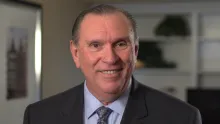
Randy D’Alessandro served as pastor for the United Church of God congregations in Chicago, Illinois, and Beloit, Wisconsin, from 2016-2021. Randy previously served in Raleigh, North Carolina (1984-1989); Cookeville, Tennessee (1989-1993); Parkersburg, West Virginia (1993-1997); Ann Arbor and Detroit, Michigan (1997-2016).
Randy first heard of the church when he was 15 years old and wanted to attend services immediately but was not allowed to by his parents. He quit the high school football and basketball teams in order to properly keep the Sabbath. From the time that Randy first learned of the Holy Days, he kept them at home until he was accepted to Ambassador College in Pasadena, California in 1970.
Randy and his wife, Mary, graduated from Ambassador College with BA degrees in Theology. Randy was ordained an elder in September 1979.
