

Gary Petty
This transcript was generated by AI and may contain errors. It is provided to assist those who may not be able to listen to the message.
Brethren, who do you trust? Who do you trust? When you think of your life, when you think of your life experiences, when you think of the relationships that you have, who is it that you put your trust in? Who can you trust? And again, who do you trust?
You know, trust is one of the most foundational ingredients to any good relationship. In fact, if you're going to have a fulfilling relationship, one that is frankly very satisfying and complementary between individuals, it does very much require a degree of trust.
Love involves trust. Commitment and dependability in relationships require trust, and it requires that that trust be extended between individuals. Darla and I coming down today, we're pushing it, I will admit, right to the moment, almost, stepping out the door. It was a busy morning and responding to some messages and kind of wrapping up preparations here on my message.
As we're heading down the freeway, you kind of have to set the cruise control to keep up with the pack. And in the back of my mind, I go, I hope the wheel bearings are good, because about a few months ago, it wasn't long ago, but I took my car into a neighbor who's a mechanic, and he replaced the front wheel bearings. They had gotten dry and were homing when you get out on highway speeds, and I didn't want them to simply go out at an unscheduled moment.
So I'm flying down the road today thinking, you know, I'm putting some trust in my mechanic. The fact that he knows what he's doing, the fact that he put this back together as it should be. We have relationships of trust in various degrees in our life, and trust is essential to holding together these relationships.
Trust is essential for marriages. It's essential for communities that would come together. It's essential for church and church members and church congregations, that there be a degree of trust between individuals.
And if that trust ends up broken, so often those relationships will end up broken as well, or at the very least it will take a lot of work and a lot of effort by all to rebuild what has been damaged through broken trust.
Now, trust ultimately would be a determining factor in the quality of our relationships. If we trust one another, that will lend itself to good quality of relationship and good back and forth. A number of polls have been conducted on the concept of trust. You can go online and Google. I pulled up three or four this week and was looking at them, and it's just kind of interesting to see how the numbers fall out in these polls. But a number of them highlight the human level of trust towards maybe other offices, other organizations, other industries of business. You can run through various different polls. I found one here from Gallup, which was conducted in June of 2023, and it surveyed U.S. respondents 18 years and older. And it asked questions about what is your degree of trust in these various American institutions. Basically, they rated it as these percentages are of people who have a high degree of trust in these categories. I just want to share a few of them with you. The highest one, at least on this list, that pegged at the highest, most trusted category of U.S. institutions was small business.
Small business, 65% said they had a high degree of trust for small business. I take that to mean like the mom-and-pop shops and the smaller, you know, personal business. You walk in, you know the owner, you can see the manager directly, and you can have actually a relationship with that business.
That's the high mark. It was 65%. It went down from there. 43%, less than half, said they had a high degree of trust in the police. You know, when I was a child, it was, you know, if you have a problem, find a policeman. You know, that's a trusted source, a trusted, you know, individual or authority that you can go to. 43% of Americans, 18 or older, say they have a high degree of trust in the police. As I said, it goes down from there. Church organizations or organized religion, 32%. Less than one in three said they have a trust for church organization or organizations of religion.
Supreme Court was 27%. We can lump banks, public schools, and the office of the presidency, all together at 26%. One in four, no matter who's in that office, you know, just say the presidency, one in four say they have a high degree of trust in that office.
We go down from there. Where do you get your news, right? Your trusted source for news. 18% have a high degree of trust in newspapers and 14% in television news. You know, the place you're supposed to go to be informed on what's happening in the world around you. Criminal justice system. What's your faith? What's your trust? The criminal justice system. 17% of adults. And finally, at the bottom of the list of this survey is Congress. Only 8% of American adults would seem to have a high degree of trust in Congress or much at all. So obviously, we live in a world where trust has been eroded, where it's been undermined. A place in a time in which trust is even outright broken in the eyes of many, because in many cases, untrustworthy individuals have stepped into positions to break the trust of the public, of the people, in various ways, by crossing the line. And the results show up in these poll numbers and in the statistics until most people today are not so quick to extend trust.
You know, it's just not something that is quickly to happen. In fact, many people now say that they don't trust anyone or anything except themselves. You know, it's just me. You know, I can trust me. And that's the extent of how far it goes. In fact, many people say that they don't, again, extend that beyond themselves. And it's always, we would say, a painful thing to be a victim of broken trust. And it's most painful when it's experienced in close relationships, in marriage, in family, in churches. But does that mean that we should not trust at all?
Does that mean we should not trust at all? Apparently, a good percentage of people say, I don't trust outside myself.
That's as far as I'm willing to take it. Does it mean that we should not trust at all? I want to scratch the surface on trust today. And this is by no means a deep dive into the topic, but I want to just kind of get our mind thinking on the topic of trust. And in doing so, hopefully it's going to heighten our awareness for what it is and who it is we must trust in ultimately. Because there is a place where our ultimate trust begins. And if that is the foundation, then it can move out in other relationships from there as well. The title for the message is Building Trust. Building trust. What does that look like? How does it occur? And really, even who should we deem as trustworthy? Brother N'Yew and I are called to be people who extend trust and to be people who are trusted. And we all have our part to play in that. But understand, trust is not something that should be easily given away. You know, I just trust everyone and everything and everything I see or hear or all that is said. You know, trust should actually be earned appropriately. So let's begin by understanding what the foundation of our trust must be and who it is that we can trust first and foremost. Let's go to Psalm chapter 20 to begin today. Psalm chapter 20. I think if I were to take a poll of the room, all of you could tell me who it is we must ultimately and can surely trust. Psalm chapter 20, and beginning in verse 7, this is a Psalm of David. In fact, Mr. Roque's sermonette actually broached the topic for us today on who can we trust. We do our part, but we actually rely on what it is that God adds and gives through His blessing. Psalm chapter 20 and verse 7, David writing, he said, Some trust in chariots and some in horses, but we will remember the name of the Lord our God. He says, They have bowed down and have fallen, but we have risen and we stand upright.
Going back to what we heard about the story of David and Goliath. Goliath fell, this mighty champion, and David stood upright because of where he put ultimately his trust. Verse 9, he says, Save, Lord, may the king answer us when we call. So David understood where he could place his trust unconditionally, and it wasn't in the same place as many of those around him. The armies that he faced, or the other kings, or even Saul at the time that David was on the run. David knew where he could put his trust. The strength and the might of armies, or horses, or chariots, wasn't going to be the source of his deliverance. Now, recall there was a time where David actually did number Israel. It says, Satan stirred him up and he numbered Israel. He counted his army is what he was doing. How many fighting men do I have? What is the strength of my hand as king? And God actually had to set him straight on that in a very direct way. And David learned a valuable lesson of not taking his eyes off of who is the source of my trust. And it's not in the chariots, or the armies, or the horses. Because when we're talking about salvation, in David's case, so many of the songs are written about salvation, maybe not in the eternal sense, but from the perspective of, you know, I was in the pit and God, you saved me from that place. It's only God we truly can look to and trust in that matter. And it's the same for you and I. Our ultimate trust must be placed securely in the Almighty God, not in the things of our own hands, not in other people at the level that we place it in God, because understand all human beings eventually, at some point, will let us down. Because we're all frail, we all struggle, we stumble at times. God is 100%. Mr. Klein spoke about purity, and our trust towards God indeed can be that 100% and 100% pure. Other things will let us down. Technologies will fail. Strength in might of hand will eventually fade. You know, you see somebody who's very strong in their youth, and then there's times then where actually that strength and vigor begins to break down. It's simply a matter of these physical bodies that we're born into, but the sureness of God remains steadfast forever. And it is He alone that the fullest expression of our trust can be placed in securely as one who will never let us down. Psalm 146, verse 3 and 4. Psalm 146, beginning in verse 3, again, David says, Do not put your trust in princes, right? This person who is actually your leader, the one who was leading the army, leading the kingdom, you know, the president, we could say, the governors, you know, pastor. Okay, not in the level that we put a trust in God. He says, Don't put your trust in princes, nor in a son of a man in whom there is no help. He says, His Spirit departs, He returns to His earth, and that day His plans perish. And so this is reminding us of the temporary nature of human beings, the weak nature of man, as compared to the eternal nature and the infinite might of God. His strength, His power, His wisdom. There is no comparison, brethren. I think we hope we clearly understand that that is the case.
Long after human beings have passed away, that's what David is telling us here, the strength and the power and the might of God continues on in glory, and we all must confidently express that trust in Him. Verse 5, David said, Happy is he who has the God of Jacob for his help, whose hope is in the Lord his God, who made heaven and earth the sea and all that is in them, who keeps truth forever. Who keeps truth forever. We begin to see here why it is and how it is that we can depend on God. Not only is he almighty and all-powerful, but he keeps truth forever. And isn't truth in relationships the source of trust? Isn't that where trust should spring from, in a relationship with someone who is true and expresses truth and speaks truth and is true to their word? And this is the God we worship. He keeps truth forever. And this is such a valuable principle, brethren, because there's no variation, there's no shadow of turning with God. As the book of James tells us, he is true and faithful and sure. When you come down to it, truth is a foundational element of trust. If you're going to trust someone, you have to know that their intentions and their actions towards you are true. That they're good, they're right, they're faithful. Again, they're true. Otherwise, there's no real security in that relationship. God keeps truth forever. That's where our trust ultimately is secure. Now think about the definition of trust. I'm going to give it to you here in just a moment. Think about the definition of trust, and then think about ultimately who God is. And consider how these two match up. Merriam-Webster online dictionary gives this definition of trust. It says, an assured reliance on the character, ability, strength, or truth of someone or something. Again, an assured reliance on the character, the ability, the strength, or the truth. It's like, or, or, or. God is all of these. Character and might and purity and truth. It says, it is one in which confidence is placed. That's what trust is. It's one in which then confidence is placed. And again, this is defining God. He's a God who is true at all times. And we never doubt where He stands. If trust is going to be extended, you've got to know where does the other individual stand. And with God, there is never any doubt. There's never any confusion as to who He is, that He is true, and where indeed He stands. This is where our trust begins to be built in knowing who God is, and indeed that He is trustworthy. If we go on in verse 7 here of Psalm chapter 146, speaking of God, here's his actions then that flow out from his integrity.
And he turns upside down, okay? This is our God. Verse 10 says, The Lord shall reign forever, your God, O Zion, to all generations. And so we trust God because, number one, we know His intentions. There's no mystery with God, I hope. If we've studied His Word, if we've prayed to Him each day and we've had this relationship, we know who He is, we know where He stands, and we know what His intentions are towards us. And then in addition, as we've read them, His actions follow up His intentions perfectly. It's not like God says, here's what I think about you, and then He goes and He does something completely opposite of that. His actions will always follow His intentions, and as such there is a consistency there that we can trust in. Human beings so often are misguided, and even if their intentions are good, just as human beings, I'll put myself here, at best we are inconsistent with our actions. You know, we say, well, my intentions were good. Well, my intentions may have been great, but if my action was lousy, we've got a problem. So this is us as human beings so often, is our intentions are not always consistent with our actions, or flip that around, our actions with our intentions, even if the intentions are good, but there's none of that misdirection with God. He is perfect. His purpose is perfect. His intent towards us is perfect. And what He does then in His action moving forward from His intention, we know where we stand.
We know where He stands, and we kind of have a relationship that's open and solid.
Jeremiah chapter 29 verse 11. Let's just take one verse to highlight God's intentions towards us so we can, again, be in understanding and agreement about why we can trust Him as we do. Jeremiah chapter 29 and verse 11. This is God towards Israel. Again, the principle is they're His covenant people. We are His covenant people as well. For I know the thoughts that I think towards you, says the Lord, thoughts of peace and not of evil, to give you a future and a hope. Okay, where does God stand? How does He look and think towards us? What are His actions then based upon? It is this. The thoughts He thinks towards us, His intent towards us. Verse 12, He says, then you will call upon Me and go and pray to Me, and I will listen to you, and you will seek Me and find Me when you search for Me with all your heart. So these are God's clear intentions towards His covenant people to give them a future and a hope, to set something before them that is an encouragement that we reach for and live towards, not to have discouragement in this life. And say, what's the point anyway? Darla and I this week received a phone call from our neighbors. And I'll maybe ask you to throw this into your prayers as well. Pray for the Humphrey family. You don't know them. But in 2017, when we were displaced from our home by the mudslide, our neighbor down the road had an extra residence on his property, and he opened it up. And we lived there for a year and a half at $250 a month rent. He says, I feel sorry for these people and what they have gone through. I want to help. And for us, that was an incredible blessing just to be, you know, two, three driveways down from our property for a year and a half while we got reestablished. And this man did an incredible blessing unto us.
Well, we got a call this week from our neighbors. He's home on hospice, was. Died on Thursday, I believe, or was it Wednesday? Wednesday. We got the call and came down and sat with the family there just within very short time of his death. And they said, would you pray with us? You know, we're not on the same understanding, but we believe in God. We both believe in God and Jesus Christ and God's Word filled with hope. And you know what? I could sit there and pray with the family as this man is at the end of his life and offer true hope and encouragement based on the Word of God. That he thinks these things towards us, thoughts of good and not of evil, to give you a future and a hope. That's for all of mankind. He will fulfill it in his time and in his way.
But again, his intents are clear and they give us confidence. But please pray for the family. As Darla and I were driving out today, the ambulance was taking the wife to the hospital in certain medical conditions as well. So they're going through a difficult time. They did a lot for us in our time of need. And we're very grateful for them as neighbors.
But again, when we come back to God and his intention, God backs those up with agreeing actions. In our case, he gave us his only begotten Son, didn't he, for the forgiveness of our sin. That was action he took to back up his intentions. He gave us his Holy Spirit by which we could live and grow and develop the mind of God and Christ. Again, his actions which back up his clear intent. We know where we stand with God and we know what he has done for us. He is worthy of our trust. Stephen Covey, Stephen R. Covey, because Stephen Covey is the father and then his son is Stephen Covey as well. They've both written books. Stephen R. Covey, this is the father. He has since deceased. But he said, trust is the glue of life. Think of life. It has all these pieces and what people and relationships and what holds it together. It's the glue. It's like if you drop a vase and it shatters and there's a lot of pieces. How do you put it together? You got to glue it and bring it together. Trust is the glue of life. It's the most essential ingredient to effective communication. It's the foundational principle that holds all relationships. Brethren, you and I cannot be in a rich relationship with God, such as he intends, apart from trust. And those who say, I trust nobody but myself. You know, the world has wronged me. God has wronged me. And I trust nobody but myself. They are doing themselves an incredible disservice because they're cutting themselves off from the only one who is perfectly trustworthy. Not to mention they're misguiding their own steps by trusting in themselves. Proverbs 3, verse 5 and 6, I'll just quote it for you. It says, Trust in the Lord with all your might. Lean not on your own understanding. In all your ways acknowledge him and he will direct your path. And so the foundation of our trust must absolutely be in God. As Christians, we're going to call ourselves Christians, followers of Jesus Christ. The source of our trust must be in the same place his was. He went to the grave, absolutely trusting his father to raise him up after three days and three nights. You can't trust in man for things at that level, no matter how close the relationship. I trust my wife, but I cannot trust my wife for my salvation. Right? Must work that out with fear and trembling with God. And when my time and day comes, my trust is in his strength and his truth and the actions that follow his intent for my future. So this is a level of trust that, when we're talking about God, can be invested in no human being. He is the source, though, from where all of our other trusting relationships should spring. They spring out of a foundation of being securely grounded in a trusting relationship with God first and foremost. If you go to God first, and your trust is with him first, then you will understand what it means, number one, to be trustworthy. And you'll understand the blessing as well that comes in trusting in someone in a relationship such as this.
So I would say that for all of us in this life, as we have relationships with other human beings, and trust is a factor in that, our trust in God is the foundation. It is the source and the model for which we must base our trusting relationships out of.
So the question comes up. What about other human beings, then? We just looked at two or three scriptures that said, trust God, don't trust princes, horses, other men. You can do a whole study on don't trust in men.
Does that mean we shouldn't trust any other human being?
Well, we need to look to the Bible as a whole package, understand the level of trust we put in God can't be taken and directed towards a human being, and expect that it will deliver, as only God can deliver.
But He does call us to have trusting relationships with other individuals as well.
Again, you can look at a lot of scriptures, don't trust in man. Cursed is the man who trusts in man, Jeremiah says. You can find a lot of those scriptures, but we also understand the context of the Bible shows that God desires human beings to live in trusting relationships with one another as well. I'll give you a couple of examples of that. Number one, a marriage.
Can you have a good marriage without trust?
I've seen a lot of challenged marriages because trust has been eroded or undermined.
Marriage is a sacred union ordained of God, where a man and a woman unite together in a loving and a committed relationship in which trust is foundational to the success of their union.
Trust absolutely must be in place in this human relationship. Notice Proverbs chapter 31. Proverbs chapter 31.
This is the passage describing the virtuous wife.
But I want you to notice what the foundation for this trusting relationship is.
Proverbs chapter 31, and let's jump into verse 10 and ask the question, who can find a virtuous wife?
It says, The heart of her husband safely trusts her.
Right? The heart of her husband safely trusts her.
So he will have no lack of gain.
He safely trusts her. This is a relationship that cannot exist of what you would read on through Proverbs 31 without an absolute trust actually going in both directions.
There's a living translation on this verse in verse 11. It says, Her husband can trust her, and she will greatly enrich his life.
Right? Her husband can trust her, and she will greatly enrich his life.
I point to the fact that trusting relationships, brethren, greatly enrich our life as the people of God.
And it's something we must pursue. And notice why this trust exists. Let's go to verse 12. Proverbs 31 and verse 12. It says, She does him good and not evil all the days of her life.
Her intent towards her husband is clear in their relationship.
She is a faithful companion. She's there to love him, to support him, to do him good and not evil all the days of her life.
And it must work in both directions. There's two sides to this coin. The trust goes both ways.
But remember what we noticed earlier about God. We trust him because we know what his intent is, that it is true, that it is good, that it is faithful, and his actions are consistent with his intent.
It's the same with a good marriage on the human level. If we were to read through, I'm going to let you go through it at your own timing.
But Proverbs 31, if you read forward from there, her actions, her actions, her actions, they are backing up to her husband, to her family, her intention.
Do him good and not evil all the days of his life. And it is why the husband trusts safely in her. And on the flip side as well, it is why she would trust safely in him if he were to perform in this same way.
This is just one clear example where trust between human beings is encouraged in the Bible. And maybe you can consider when I started the message, maybe you jotted down in your notes who you trusted, and maybe you jotted your spouse's name down there.
Or maybe you thought of your spouse. I hope you did. I hope you have a trusting relationship. That is the foundation of so much. But God says, you will have trust.
There are varying degrees of trust. I have a degree of trust in my mechanic, but I trust my wife more. I love my wife more. I love my mechanic too. He's given me some good work over the years.
But I love God most. Right? And my ultimate trust is in God first and foremost, but that is the foundation then for the rest of my trusting relationships to spring.
This leads me to the second example of a relationship that God expects to be trusting among individuals. It is trust within the body of Jesus Christ.
Trust within the body of Jesus Christ. Again, as I said at the beginning of the message, we don't just freely give trust. It must be earned.
And there's relationship that has to be built in this process, but ultimately what God desires is that trust would be extended in the body of Jesus Christ.
And I want to stick with this one for the remainder of the message today.
Again, trust is something that takes time to build within a community of individuals. It takes effort. It takes positive interactions among the people of God.
And trust involves risk at every level. Now, there's no risk in trusting God except the risk that we would bring into that equation.
But trust does involve a certain degree of risk. There's a possibility of getting hurt when we trust. There's a vulnerability when we trust one another.
We come into a place now where I open up to you. Maybe you know some of my challenges, some of my weaknesses.
And maybe I have to be willing to extend that with the hopes of you not taking it and just stomping on it or spreading it to everybody else.
But there's a vulnerability one to another when we decide to open up in trust. There's a chance that we might suffer loss through a relationship of trust.
I will have to say that for me, in the Church of God, some of the most painful times that I've experienced in the Church has been over a breach of trust in relationships that have occurred.
I mean, I think we could boil that down in a lot of ways going back in the history of the Church and maybe even various hurts that have occurred. But I think of the concept of it as better to have loved and lost than to never have loved at all.
It's better to extend that in the safe environment and at times suffer loss than to say, I will trust nobody but me.
Because that's not what God created us to do.
The blessing of trusting and building those relationships far outweighs the possible risks, even though there will be times of broken hearts and healing that must take place.
But God's called us into a spiritual body, and the only way the spiritual body is going to function well is if we are personally trustworthy.
That's step one. Again, we all work in this process, that I am personally trustworthy.
It's the only way the body is going to work together in the relationship that God intends. That's number one, personally trustworthy.
And number two, if we are building trusting relationships between one another.
We have to work both sides of the coin, and we all have work on both sides of the coin.
Notice the kind of relationship God has called us into as a church.
Ephesians 4.
The Apostle Paul writing, Ephesians 4.
And picking it up in verse 15, I'm just jumping into the context to pull out what I want to focus on here.
Ephesians 4.
But speaking the truth in love, May grow up in all things, and to him who is ahead Christ.
So we have truth, which has to be a foundation of a relationship, and we have love.
And through that it causes growth of the body to be built up to, ultimately, hopefully, the stature of the fullness of Christ.
Verse 16, So we're a group of people that God has called from different backgrounds, different professions, different places.
You know, it's very doubtful all of us, or any of us, would be together in this room, apart from the calling of God and His Spirit bringing us together.
But this is what He's done.
Upon our baptism, He brought us together to come together and work together in harmony, to build a functioning relationship together as one body.
That's what He calls us, one body.
God's all about taking multiples and making them one, right? Husband and wife, two individuals made one. Trust and love.
The body of Jesus Christ, multiple individuals but one.
Isn't that what Christ prayed on the final night before His crucifixion?
Father, that they may be one as You and I are one.
And it's taking of multiples, bringing them into a function of relationship as one, where love and trust must be the foundation if it's going to work according to what God has directed.
And again, it takes work, and it takes God's Holy Spirit.
It's kind of like slaying a giant, I would say, right?
Apart from God's direction and His Holy Spirit, we could put our best physical effort into it.
But how do you blend all of us together? It's by God's Spirit that He does these things.
But we have our part to play in this as well, and frankly, it's not always easy.
In a smooth-functioning physical body, the arm and the hand have to work together.
And the arm has to trust that the arm's going to do its thing.
The arm has to trust the hand's going to do its thing.
If you're just going to hardly even think about it, reach out and pick something up.
Or the rest of the body's got to trust that the leg's going to do what it's supposed to do to step forward when the rest of the body leans forward so you don't just go and face-plant, you know, and look silly laying there on the ground.
We have to work together in a way that brings in the spiritual body a synergy.
And apart from being trustworthy personally, and apart from building relationships of trust with others, the spiritual body would be dysfunctional. It would be divided into schisms. It would be fractured and disjointed. Just like any physical body, when we say someone has a disability, it is generally because a portion of the physical body has been damaged, and it can't work in the same cohesive way with the rest of the body.
And it produces something that is a physical disability, and the body of Christ really is no different.
Fortunately for us, God didn't leave us to our own devices. He gave us His Word. He says, you want to be a trustworthy individual, here's the guidebook. Live this. Be consistent day in and day out. Study it, grow it, live in it.
And He gave us also His Spirit, which is that portion of His divine nature that is actually God and Christ in us, building that character as we yield to them. So again, trust forms the bedrock of any healthy relationship, whether it's a family, a community, a workplace, a church family. Without trust, our relationships falter.
And our vision dissipates. You know, what's the vision of the church? Well, we might say, well, my personal vision is to be in the kingdom of God, but the church is the vehicle by which God is moving us forward together. And we're preaching a gospel, and we're preparing a people, and the vision has to be front and center, but if the body's falling apart at the joints, it's kind of hard to keep your eye on the vision.
Okay? And it's the same thing with our spiritual progress as well. As a group, it stagnates. And simply put, trust adds stability to our Christian lives. Trust adds stability to our Christian lives.
Trust is a calling that God expects each of us to take up, and it's essential to our faith towards Him.
We can't live this life apart from trusting God. Well, I'll just sit back and let God prove Himself to me, and maybe I'll respond if I feel like it. No, we have to respond to God's calling and see that He is trustworthy, because apart from that, we really cannot be in the relationship that He would desire with us.
And it goes out in direction towards our spiritual brothers and sisters as well. Trust must be the essence of our faith towards God, and it must be something we show to one another in the body, lest we bite and devour one another and consume one another. Paul, use those words. In Galatians 5, verse 15, he says, you know, to that group there, you're having troubles because of your trust, because of your love.
And he says, lest you bite and devour and actually eat each other up, consume each other, to the point that the process cannot continue.
But it comes back to trust, and trust being earned, trust being earned by each one of us, being trustworthy, and then trust in relationship as we're willing to reach out when we see that trustworthiness.
Of course, we know we have an adversary, right? Let's not forget about him. We have an adversary, Satan the devil, who goes about like a roaring lion, seeking whom he may devour.
And one of the ways he seeks to devour us is through broken trust. Satan seeks to break our trust with God.
And he seeks to break our trust with one another as well. And brethren, we must not allow him to succeed on either front, because, you know, we've seen the result of failed trust over the years.
And we see the biblical result in the spiritual realm of failed trust. This is Satan's device, okay?
He did it in heaven long ago with one-third of the angels. He convinced them that God was unfair and that he could not be trusted.
And as a result, a third of the angels followed him, broke away from God. We call them demons.
And he did it again in the Garden of Eden, didn't he? First man and the first woman in this perfect physical environment, God working with them in their midst.
Satan said, you can't trust God. Can you really? You will not surely die. I mean, come on. God knows that the day you eat of that, you're going to be like him.
Can you really trust what God's telling you? It was the division that Satan, he drove a wedge in a crack that he developed.
Broken trust is his playbook. The Bible tells us Satan is the accuser of the brethren.
Now, he accuses us before God, and he accuses us before one another as well. He's busy planting seeds of distrust everywhere in the hopes of breaking relationships apart.
And one of his greatest modes of destruction within the Church of God is to get us doubting one another's intents and motives, ultimately leading to doubting one another's actions.
Okay, I want to take us back to this foundational point. With God, we know where his intent is, and his actions follow faithfully on that. Satan says, don't trust their intent. You can't believe their intent, and therefore you can't believe even their actions.
He's busy planting seeds of distrust everywhere, again, in the hopes of breaking relationships.
Satan's work is using mistrust to keep believers divided and isolated from one another, so they eventually think, what? I'm the only safe place to put my trust in me.
And once he has you believing that you are the only person to trust, I trust me. He's got you. He's got you.
So, brethren, how do we show ourselves as trustworthy in the Church of God? I want to walk through a few concepts here as we move along.
How do we show ourselves trustworthy in the Church of God? How do we continue to build up trust among one another in the body?
After all, trust is not automatic. You know, just walk in a room with strangers and sit down, even in the Church of God.
There's probably a level of trust, because you say, this is God's church.
But if we're talking about building meaningful and strong relationships, it's not automatic to the full extent that we need to function back and forth.
It does indeed take quite a bit of work. Trust is cultivated over time through intentional and consistent practices.
So I want to give us some points to consider for building trust. This applies to our relationships in the Church. It applies to our relationships outside the Church as well.
In the community, in the workplace, in the home, you can take any of these points and I would just say, let's bring them together to understanding how we ourselves can be trustworthy and how we can look for signs of what makes somebody else trustworthy, by which we can extend our trust to them.
Again, this is just scratching the surface, but points to consider for building trust.
Be genuine and transparent with your intent and actions.
Be genuine and transparent with your intent and actions. People should not have to wonder what our motives and our intentions are.
They should be clearly demonstrated by our words, how we interact with one another, just like it is with God.
God is right up front. I know the thoughts I think towards you.
Thoughts of peace and not of evil, to give you a future and a hope. We know where God stands.
If we're going to trust one another, we have to know where one another stands.
The only way to bring that forward is to be open and transparent with one another.
If you're tempted to see your brother or your sister succeed, this calling towards the kingdom of God, which I hope that it is, know that I'm not here simply for me. I'm here for you as well. That is my intent.
And then follow through with your actions that are consistent with your intent.
Philippians chapter 2 verse 1.
I believe the Apostle Paul highlighted quite well how this is to be done within the body. Philippians chapter 2 verse 1.
Paul said, Therefore, if there is any consolation in Christ, if any comfort of love, if any fellowship of the Spirit, if any affection and mercy, he says, if this is going to be a place where there's relationships of trust and love and mercy and lifting one another up, he says, if that's your intent, we've got to do something.
Fulfill my joy by being like-minded, having the same love, being of one accord of one mind. That sounds very much like go-build trust among one another in the body.
Verse 3, he says, if you're going to do this, let nothing be done through selfish ambition or conceit. Don't go around saying, this is all about me, my needs and wants and desires and what's important to me.
If that's your intent, it's going to become clear very quickly, and it's not going to be a foundation for supporting trust. But if you say, I'm here for you as well as me, and we're in this together, then we have a foundation for a working relationship. Let nothing be done through selfish ambition or conceit, but in lowliness of mind, let each esteem others better than himself.
Let each of you look out not only for his own interests, but also for the interests of others. Let this mind be in you, which was also in Christ Jesus. Live like Jesus Christ lived. Have the mindset and the love and the care that he had when he walked the earth, and laid his life down as a sacrifice for everyone else.
This is what we must all be doing for one another as action steps. If we're going to present ourselves as trustworthy to one another, it says, be of the same mind. Look out for the interests of others. Encourage each other, lift each other up, help one another towards the kingdom of God. These are all action steps in support of your intent.
If your intent is open, if it is clear, people are going to trust it if your actions follow through and reinforce what it is you declare as your intent. If you say one thing, but you do another, that's not an atmosphere for building trust. Our intent must be clear, and our actions must be supportive and consistent. Remember, brethren, distrust flourishes when people are unsure about your intent.
That's why we tell our children, watch out for strangers. Don't talk to strangers. Why? Is it because every single stranger is bad? No. But you don't know their intent.
We live down a gravel driveway about a quarter mile down from the pavement, kind of in a private area a little bit. When a van, an old faded van with a dent in the side and rust on it comes rolling into our driveway, and I peek out the window and I see them roll up, which has happened a time or two. Not always a van, but something similar. You know what? My distrust radar goes up in a hurry. Why? Because I don't know who that is.
I don't know what their intent is. Maybe a single lady that's lost or somebody that needs help. I don't know. All I see is something that I don't know the intent. But if I hear gravel moving outside and I look out the window and I see the Amazon Prime truck roll down into the driveway, you know?
Okay. There's actually a level of trust right there before I even know who's behind the wheel because I know their intent. Why are they here? Are they coming to deliver a package or something I've ordered? Same with UPS, FedEx. My distrust radar, my sensitivity is going to be so much different than the unmarked, beat-up, battered whoever. And I think that's the way it is for all of us, brethren. The degree of trust then follows from that transparency.
So be genuine. Be transparent with your intent towards one another. Put one another at ease as to the type of person you are and the type of relationship that you're here to build. Have your actions follow through and trust will spring as a result. Point number two, be reliable and dependable. Be reliable and dependable. Again, this is a quality of God's trustworthiness, isn't it? We go to God and we know His standards and they are unchanging.
We know what to expect from God. It's actually us who has the problem of failing to meet the standard. Be reliable. Be dependable. This involves keeping your commitments. If you say you're going to do something, follow through and do it because doing what you say, even if it's tough, it's all about reliability and dependability.
Someone says they said they would do it and they did it. And frankly, maybe they didn't even fully understand what was involved before they committed, but they followed through anyway. Maybe even at personal loss. You know, that brings you up on the trust scale. Quite a bit. People say that they are going to do one thing but do another. Or don't follow through with their commitments.
Don't earn the trust of those around them. I'm not talking about an oversight. I'm not talking about a mistake. We're human beings. There's times where we drop the ball and we have to recover from that and be apologetic and move forward. But I'm talking about a habitual tendency to make promises that we don't keep. That breaks trust. Someone says they're not dependable. They're not reliable.
Why would I put my trust in them? Psalm 15 describes the kind of person who may dwell on God's holy hill. You could equate it to who is going to be in the kingdom of God. There's a listing there of qualities of character that are listed. One of the marks of a person that will be on the holy hill of God in his presence, Psalm 15, verse 4, is one who swears to his own hurt and does not change.
In other words, he gave his word and even though it may be difficult, he follows through anyway. Even if it's painful, he doesn't change his commitment. He doesn't change what he said was his intent to do. Brethren, the lesson for us is don't make promises you can't keep. You're going to be trustworthy, worthy of someone's trust. Be someone who is dependable and sure and true. Point number three is be upright in your speech with one another. The words that we speak to one another, brethren, convey a great deal about us and our integrity.
So always tell the truth. Honesty helps to establish a foundation of integrity and character that others can trust. If you say something and somebody else knows it's not true, they were there. Again, that diminishes the factor of your trustworthiness so quickly. Ephesians chapter 4 verse 25 says, Therefore, putting away lying, let each of you speak truth to his neighbor, for we are members of one another. And I just love the way Paul brings it back to that. We are members of one another. If you lie to your brother, you're lying against yourself. If you're cheating your brother or sister in the faith, you're cheating yourself.
And you're creating an atmosphere, frankly, that is, again, not trustworthy. If we're a body that's joined and knit together with every joint supplies, then we're going to be supplying things that are true. And that brings us back to God, doesn't it? He keeps truth forever. That's the God we worship. That's the foundation of our relationship. The truth he keeps forever. And brethren, we must be a people who do so as well. Don't be a spreader of gossip or slander.
Again, that's another way we can use our speech to undermine trust. One of the quickest ways to fall into distrust is to be a spreader of other people's business. You know, that erodes trust, not just for maybe the person you're talking about. But if somebody comes to you with a juicy piece of gossip, you're probably thinking, well, what are they telling other people about me? I trusted them with some of my personal secrets. Things that were close to me, I better not do that. They seem easy to just spread that around. Again, trust in using our words well.
Proverbs 11, verse 13 says, A tale-bearer reveals secrets, but he who is of a faithful spirit, or we could say of a trustworthy spirit, conceals a matter. It's actually trustworthy people who are not going to be spreading gossip. And other people say, you know what, I can trust them. I can give them a part of me that is actually very personal and precious to me, but it is a sharing and a relationship.
And I can trust they're not going to use it in some way that is damaging. So again, we must be careful with the words that we use and what we say about one another. Are our words ones that build up and encourage and incite trust? Are they words that tear down and cause people to step back and say, I don't want to be pulled into a relationship with this individual? Do they diminish confidence?
Stephen R. Covey once again said, When the trust account is high, as in when the trust level is high, you've built up that bank account. When the trust account is high, communication is easy, instant, and effective. Which if you're going to flip it over on the other end, you can say when the trust account is low, communication is difficult, drags its feet, and is unproductive. Right? Because you've got to have trust to open up in a way that really makes this a profitable relationship. People will often open up to you when they trust you, so use your words well.
And it goes a long ways, brethren, towards building and maintaining the type of trust that we need in the body of Jesus Christ. The words we speak, the actions we take, the intent we portray, it all has to be consistent for building trust. We're running out of time, so I'm going to give you bullet points on some remainder points here for building trust.
You can write quickly. Be consistent, as I've touched on already, be consistent. Let your words and your actions be consistent. Consistency builds trust. The mailman, every day, I know what he's doing there. And I appreciate him bringing the mail. If he shows up at 11 a.m. one day and 9 p.m. the next day, consistency is really hard to build your life on.
Be consistent. Listen actively. If you want to build up trust, listen actively. Let people know you want to hear from them, and then listen carefully to what they say. He listened. She listened. They're taking it to heart. They're not just blowing me off and have no time for me. Give feedback respectfully. Give feedback respectfully. There's times where we're asked for our opinion, or maybe we're working in a group, we're brainstorming for a project, and someone says, I've got an idea.
If you turn to him and say, well, that is the stupidest idea I've heard all month. Why don't you just keep it zipped? What kind of trust does that bring forth? One to another. So give feedback respectfully.
Be willing to help people in their times of need. Genuine kindness towards one another builds a trust. They care about me. They care about my well-being. It's not just, does it benefit them? Another point to building trust? Play together. Do activities together that build trust. Go on work parties together. Go play softball together. Go boating together.
Whatever it is that you can find to do together. Productive, good activities that bring you together allow you to build trust. Families that play together stay together. Finally, for my listing here, yield to God's Spirit. If you can build up trust, yield to God's Spirit. Let God guide and direct your approach to one another by his Holy Spirit so that the fruits of love and joy and peace and long suffering and kindness and goodness and faithfulness and gentleness and self-control so those fruits govern your interactions together within the body of Jesus Christ.
These are trust-building attributes of God's nature, right? That's why we can trust him. But we have to be displaying these fruits if we're going to be able to have an atmosphere for building the trust between one another. If we can apply all these principles to our relationships, then we'll be on a solid path towards building and maintaining trusting relationships in the church, in our communities, in our family, at the workplace. These apply everywhere. Be trustworthy and then find trustworthy people to trust.
Finally, I want to conclude the message by asking the question, Can God trust us? Can God trust us? Because this is what it ultimately boils down to, isn't it, brother? It's one thing to say that we trust God fully, but again, we come back to two sides of the coin. Can God trust us? Why would God need to trust us? Well, what's he setting before us as our future, as our potential? God's ultimate goal is to bring us to the place where he can completely trust us because if we're going to be a part of his eternal family in the kingdom of God, given the power and the glory and the might of an eternal God-being in his likeness, we shall see him as he is because we will be as he is. If he's going to give that to us, he needs to know that we have developed a character that is trustworthy as well. We're called to be trustworthy people of God. Now, we're still human. We still stumble and make mistakes. We're never going to be like God at that level. We have to be willing to cut one another a little slack when we see a good faith effort and positive intention and movement forward to recover from mistakes that we've made. But the fact is, God has to know about us. He's called us to be trustworthy. He's looking for the elements of trust in our character because that's what it comes down to in the heart. What is your character? What is not just your words, but what is it that comes forth from you? Is it being shaped into the likeness of God and Christ? It's one of the reasons God has put us all into a spiritual body together so that he can teach us about the importance of, number one, developing trust. That he can also teach us and test us as to the level of trust that we are developing in our own life. Are you trustworthy? Part of what God sees is how we interact in our interpersonal relationships. If he's going to trust us with everything, are you trustworthy? Ernest Hemingway stated, the best way to find out if you can trust somebody is to trust them. Well, that's interesting. Let me think about that for a minute. The best way to find out if you can trust somebody is to trust them. I want to say, brethren, God has trusted us with the sacrifice of His Son, Jesus Christ, while we were enemies of God. But He didn't just forgive our sins and give us His Spirit while we were untrustworthy. He saw our response to Him and acted accordingly. But He gave us His Son. He gave us the gift of His Holy Spirit. He charged us with the care of one another in the body of Jesus Christ. This is a training ground and a proving ground for the Kingdom of God. And the best way for God to find out if He can trust us is to, at some level, trust us and see what we'll do with it. And ultimately, He as the righteous judge will make the call. Brethren, let you and I continually grow in trustworthiness, becoming like God the Father and Jesus Christ in our very nature. Let us also trust others as they show themselves to be trustworthy in response. And let us all be a people of integrity who can be trusted with the hearts, with the well-being, with the feelings, with the giving of one another in the body of Jesus Christ. Let's work to build trust.
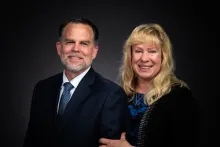
Paul serves as Pastor for the United Church of God congregations in Spokane, Kennewick and Kettle Falls, Washington, and Lewiston, Idaho.
Paul grew up in the Church of God from a young age. He attended Ambassador College in Big Sandy, Texas from 1991-93. He and his wife, Darla, were married in 1994 and have two children, all residing in Spokane.
After college, Paul started a landscape maintenance business, which he and Darla ran for 22 years. He served as the Assistant Pastor of his current congregations for six years before becoming the Pastor in January of 2018.
Paul’s hobbies include backpacking, camping and social events with his family and friends. He assists Darla in her business of raising and training Icelandic horses at their ranch. Mowing the field on his tractor is a favorite pastime.
Paul also serves as Senior Pastor for the English-speaking congregations in West Africa, making 3-4 trips a year to visit brethren in Nigeria and Ghana.
