

Steve Shafer
This transcript was generated by AI and may contain errors. It is provided to assist those who may not be able to listen to the message.
Okay, again, we're going to continue our study on the calendar here this morning. Look at it for about 40 minutes or so. And last time in part three, we looked at Genesis chapter 1, kind of looked at that in astronomy, at how God created the heavens and the earth, and how the earth's orbit around the sun is very precisely maintained by the other planets of our solar system. And at how the great... of course, now with the modern-day telescopes in astronomy, that means we have seen the universe in a way that has only been available in the last hundred years or so. You can see the tremendous expanse of the universe and all the other... not only billions of stars in our galaxy, but billions of galaxies there are beyond that. And the tremendous expanse of the universe, which really does indeed declare the glory of God and His awesome power. As I mentioned last time, Romans 1.20 says, since the creation of the world, God's invisible attributes are clearly seen being understood by the things that are made, even His eternal power and Godhead. And you see the heavens and stars and the galaxies and the tremendous power and expanse of the universe, and that indeed does show God's eternal power and glory in His Godhead. So today, in part four of this series, I want to look briefly at four things.
First, I want to look at two evolutionary concepts or theories that relate to astronomy. One has to do with the theory about the origin of the universe, and the other has to do with the theory regarding the origin of our solar system. Secondly, I want to look at how we tell time, because that ties into astronomy as well. And third, I want to look at the two things in Genesis chapter 1, more closely. I want to look at the Hebrew word translated, signs, in Genesis 1, verse 14. And then fourth, we want to begin to look at the Hebrew word translated, seasons. A very important word, very meaningful. It's translated, seasons, also in Genesis 1, verse 14. So if you want a title for this particular Bible study, it's the calendar, part four. And we're going to look at astronomy, time, signs, and seasons.
I want to begin with two theories proposed by Evelyn Nousis that relate to astronomy. One, we've heard these names. At least the first one we've heard quite often. We may not have heard the second one as much. But the first one, of course, is called the Big Bang theory. And as I explained last time down in Bellevue, by that I'm referring to the actual evolutionary theory, not the TV series, because there is a TV series called the Big Bang theory. I haven't watched it, but this is about the theory of evolution called the Big Bang. I want to begin by quoting from a... You can go to online, of course, and you'll see all kinds of things, explaining what the Big Bang theory is. But there's one particular one online article that I thought was a very good overview of what the Big Bang is. This is from a website. It's called Big Slash Bang... Not Slash, but Big Dash Bang Dash Theory dot com. It's the website. And I want to quote from that because it gives a good summary of what the Big Bang theory is. The premise. The Big Bang theory is an effort to explain what happened at the very beginning of our universe. Discoveries in astronomy and physics have shown beyond a reasonable doubt that our universe did, in fact, have a beginning. Prior to that moment, there was nothing. And during and after that moment, there was something. So you had nothing, now you have something. The Big Bang theory is an effort to explain what happened during and after that moment. According to the Standard Theory, our universe bring into existence as what they call a singularity. Let me explain that. Then they ask, what is a singularity and where does it come from? Here's their answer. Well, to be honest, we don't know. Singularities are thought to exist at the core of black holes. They have discovered black holes, and of course, they realize that the center of black hole, there's a tremendous amount of gravity that would pull anything in that would go into that area of that black hole.
They're thought to exist at the core of black holes. Black holes are areas of intense gravitational pressure, huge gravitational forces. The pressure is thought to be so intense that finite matter is actually squished into infinite density. Now, how do you have infinite density?
This is a mathematical concept, but truly boggles the mind.
It does boggle the mind. These zones of infinite density are called singularities. Our universe is thought to have begun as an infinitesimally small, infinitely hot, infinitely dense something, which is called a singularity. Where did it come from? We don't know. Why did it appear? We don't know. After its initial appearance, it apparently inflated, which is the Big Bang theory. Now, you think about that. You take all the matter in our universe, billions of stars, whatever solar systems there might be out there, plus ours, billions of galaxies, each containing billions of stars, take all that matter, which is all expanding and going out at tremendous speeds. So, sometimes you take that all back together wherever it started, and you compress it all into an infinitely small, infinitely dense piece of matter. That's what they're... that's the Big Bang theory. And all of a sudden, some reason, can you think of the gravitational force it would take to bring that... hold that together? Somehow, something can, where all of a sudden that force let loose and it starts to expand.
Atra's initial appearance, it apparently inflated this matter and expanded and cooled, going from very, very small and very, very hot to the size and temperature of our current universe. It continues to expand and cool to this day, and we are inside of it. Incredible creatures living on a unique planet, circling a beautiful star, clustered together with several hundred billion other stars in a galaxy, soaring through the cosmos, all of which is inside an expanding universe, begin as an infinitesimal singularity which appeared out of nowhere for reasons unknown. This is the Big Bang theory.
It says, misconception. We tend to imagine a giant explosion. Experts, however, say that there was no explosion. There was just and continues to be an expansion. That's the way they look at it today.
Only plausible theory? No, just one of the most popular ones.
Then it's interesting what they say here. Big Bang theory. What about God? Good question.
Any discussion of Big Bang theory would be incomplete without asking the question, what about God?
This is because cosmogony, the study of the origin of the universe, is an area where science and theology meet.
Creation was a supernatural event. That is, it took place outside of the natural realm.
The fact begs the question, is there anything else which exists outside the natural realm?
Specifically, is there a master architect out there? We know that this universe had a beginning. Was God the first cause?
We won't try to answer that in this article.
But to summarize, then, the Big Bang theory begins with all of matter in the universe compressed into an infinitely small, infinitely hot, infinitely dense mass, which they call a singularity, which then began to expand and cool to what we see today.
Now, they say this in regards to the singularity, also in this article. Prior to the singularity, nothing existed.
Not space, time, matter, or energy. Nothing. So where and in what did this singularity appear? We don't know. We don't know where it came from. We don't know why it's here.
We don't even really know where it is. All we know is that we are inside of it, and at one time it didn't exist, and neither did we. So that's the Big Bang theory.
So, in other words, the Big Bang theory is simply a far-fetched guess as to how the universe might have come into existence without a creator. It's trying to explain creation without a creator, what it's doing, of course. And it leaves many, many unanswered questions.
How did this singular mass come into being? How did it originate? What law held it together? What law caused it to expand? Where did the heat come from? Etc, etc, etc.
And all they say is, they don't know. They have no idea. Don't know. So it leaves a lot more questions unanswered than it does give explanations. Now, if this theory, here's the thing I want to bring up. If this theory had any basis, in fact, then all the matter in the universe would have originated from this singular mass, from this singularity, as they call it, which would have contained all the elements in the universe that we can see today.
And if all the matter in the universe originated in this particular way, from this singular mass, then those elements should be fairly evenly distributed throughout the universe. In other words, all the stars and bodies in the universe should have a fairly similar composition, if they all originated from a singular mass, as the Big Bang theory postulates.
Let's move on to the second theory, which has to do with the origin of our solar system. It's called the Nebula Hypothesis. And for a century or more, some astronomers have theorized, I should say, the sun, the sun, the planets, and the moons in our solar system, and all the comets, and so on, that they all coalesce from a single mass of swirling cloud and glass and dust and debris.
And this interstellar cloud of gas, dust, and debris is called a Nebula. The theory, then, of the origin of our solar system is called the Nebula Hypothesis. This Nebula, all this swirling matter of gas and all this stuff, somehow came about into what we have today, the form of the sun and the planets and the moons and comets in our solar system.
I want to quote from an article, which is, the website is universetoday.com, and it says, how was the solar system formed? The most popular theory is called the Nebula Hypothesis. According to the Nebula Hypothesis, our solar system began when part of a molecular cloud of interstellar gas, which was filled with particles of ice, dust, rock, and other particles, collapsed.
These clouds collapsed from some kind of turbulence that caused it to heat up and eventually turn into a star. Most of the cloud formed the sun. Other material from the cloud flattened around the sun formed a planetary disk. The material from the planetary disk, also known as the solar Nebula, went to form the planets and other objects in our solar system.
Although the Nebula theory is widely accepted, there are still problems that astronomers have not been able to explain away. One of these problems is the planets' axial tilts. According to the Nebula theory, they are supposed to have the same tilts, but the inner planets and outer planets have radically different axial tilts. So, you know, that theory breaks down. It doesn't fit. You know, what they see doesn't fit exactly.
Now, there's another website here I went to that's interesting. It's called icg.org article 6223. ICG is Institute for Creation Research out of El Cajon, California. They have a lot of scientists there, but they say this about the Nebula hypothesis. Among the questions, the hypothesis fails to answer are where the initial debris came from, how it separated from nearby suns, and what started its spinning motion. The Nebula hypothesis also fails to explain how the dust compressed into planets or the sun, and why Venus and Uranus rotate in the opposite direction to the other planets, and why the combination of elements, like iron, nickel, or carbon, is unique to each planet.
If they all had the same source, they should be comprised of similar components. That's the main point I want to bring out. So the bottom line in both of these theories is that since all the matter in the universe from these theories, all the matter in our solar system and universe, all came from a singular source of material, then they should all have similar components or similar compositions. They should have a lot of similarities, in other words. But that's not what they find today. That's not what they discovered. Instead, what they discovered is just the opposite of what these theories would tend to make you think that they should be.
Every planet in our solar system is unique, as we now know. Every planet differs widely from all of the other planets. There are no two that are even remotely close to being aligned. They all have different orbits, different axial tilts, far different compositions, different gravitational forces, different sizes, etc. In fact, some rotation in the opposite direction to other planets rotate. There are also over 100 moons now orbiting around the planets in our solar system. I think Jupiter alone has over 60 moons. And no two of those moons are alike.
Every single moon or so is different. And of course, no two planets are even close to being alike. Again, they all have different cores, different atmospheres, different densities, different orbits, different tilts, different rotation rates, different sizes, different gravitational forces, and far different compositions and elements to make them up. So each heavenly body in our solar system is unique. No two are even close to being alike, as if they were either created that way or allowed to come into existence that way.
Now, interestingly, what about the billions of stars in our galaxy? Are they similar? Since they all supposedly came from a singular source of material? Or do they widely differ from one another, even as the planets do? Is every star in our galaxy also unique? See, they can analyze. Now, they analyze the light spectrum from the stars. They can analyze that light spectrum and determine the composition of that star. And stars are basically composed of the same elements we find on the Earth. But after analyzing the compositions of millions and millions of stars in our galaxy, guess what?
They have never found two stars alike. Every star they've analyzed is different in some ways from other stars. There are no two stars to have identical compositions and make-up. Every star is also unique, as if they were almost uniquely created that way. They have different colors, different temperatures, different chemical compositions, different rates of rotation on their axis, different sizes. There are giant stars that are big. Some stars are as big as our entire solar system. There are dwarfs that are much, much smaller than our sun, etc., etc., etc.
But the unique make-up of each individual star and planet prove that the Big Bang Theory and Nibbler Hypothesis have very serious flaws. Now, it's interesting, I want to point out a couple of scriptures, because astronomers could have discovered the truth that each star is unique from the Bible. The Bible actually tells us that every single star is unique, that no two are alike.
There are two scriptures, actually, that tell us that. First is the Old Testament. Let's turn back to Psalm 147. Psalm 147 verses 4 and 5, especially verse 4. But Psalm 147 verse 4 says, He, God, counts the number of the stars. We can't count the number of the stars. There are billions of them.
He counts the number of the stars, but not only that, He calls them all by name. Great is our Lord and mighty in power. His understanding is infinite. But verse 4 says, He calls them all by name. Now, God names things for what they are. And since every star has a different name, which is implied here, then no two stars would be exactly alike. They would all be unique. Which is precisely what astronomers have discovered.
They've never found two stars that are exactly the same. They're all unique. They're all different. Notice also what God's Holy Spirit inspired the Apostle Paul to tell us in 1 Corinthians 15. Let's look at one verse there. 1 Corinthians 15 verse 41, where Paul wrote this, inspired by God's Spirit. 1 Corinthians 15, 41, There is one glory of the sun, another glory of the moon, another glory of the stars.
For one star differs from another star in glory. In fact, as they found, every single star differs from every other star in glory, in one way or another. They all differ. No two are the same. So the Bible may not be a scientific book, but it is scientifically accurate. And they are discovering things now in the last hundred years or so that confirmed things that were written centuries ago in the pages of the Bible.
Let's move on to the next question that I have here that I want to look at here this morning. And that is, how do we tell time? What is a calendar? Well, as I said, a calendar is a system for organizing units of time. Let's reach to this question. How do we know what time it is? Well, we look at our watch. I look at my watch. Let's see. It's about 7 minutes past 12. You look at your watch, or you look at a clock.
What determines the correct time for all watches and clocks around the world? Again, I want to quote from a book that I quoted from the last Bible studies, called the Astronomy Book by Dr. Jonathan Henry. Modern time-telling. Modern civilization continues to use the celestial bodies to tell time. All clocks on Earth are synchronized with Greenwich mean time. Greenwich is a suburb of London, England. Every day at Greenwich, astronomers note the position of the sun, a daily procedure which is nearly 200 years old. When the sun passes directly overhead, as observed through a special solar telescope, it is said to be exactly at noon Greenwich mean time. All clocks on Earth are set by Greenwich mean time. All clocks in a time zone east or west of Greenwich are set to show a different hour than at Greenwich, but the hours begin and end at the same moment everywhere on the globe, on the Earth. Modern civilization relies on the sun and stars for exactly the same reasons given in Genesis 1, verses 14 to 18, which tells us they're there to determine day and night, seasons, days and years, and to rule.
Our solar system is a very precise astronomical clock, which precisely rules over and regulates the time on the Earth. It's a master clock by which we tell time, and by which we set all our earthly clocks and watches. Now I want to go back to Genesis 1 again.
I'm turning back to Genesis 1. I want to look at two words that we just looked at briefly, but I'll look at them more closely. In Genesis 1, especially verse 14. First, I want to look at the word translated signs, and what that word signs means, and how it's used in Scripture. Let's go back to Genesis 1, verse 14. Genesis 1, 14, where God said, "...that there be lights in the expanse of the heavens, that there should be, to divide the day from the night, and let them be for signs and seasons, and for days and years." Now, the Hebrew word translated signs here is actually used 78 times in the Old Testament, and is veriously translated three basic ways most of those times.
Veriously translated sign, token, or mark. That's the way it's translated in those 70 places where it's found in the Old Testament. Now, Vines Expository Dictionary of Biblical Words says, this word, this word translated signs here, this word represents something by which a person or group is characteristically marked. Interesting. In fact, it's interesting. This word here translated signs is the same word used in Genesis 4, 15, where it's translated mark, and where it says, the Lord said a mark on Cain.
He said a mark on Cain, or sign. Same word is translated signs here in just 114. It's also, this same word is also used in Exodus 13, verse 9, where it refers to the feast of unleavened bread being a sign upon you for a memorial that God's law may be in your mouth.
So it's a sign for those who are keeping the days of unleavened bread. It's called a sign. So as Vines observes, this word represents something by which a person or group is identified or marked. So God here in Genesis 1, chapter 1, verse 14, is telling us that His people will be identified by how they organize units of time for observing seasons, days, and years. All of which, of course, relate to the calendar. So it becomes very interesting when you see it from that perspective.
Now, the most interesting and most important word here is the Hebrew word translated seasons. So I want to move on to the fourth and final thing we'll look at here. It's now this afternoon, I should say. It is that word seasons. What does the Hebrew word translated seasons mean in Genesis 1, verse 14? Now, first, before looking at what it means, I want to know what it doesn't mean. It doesn't mean seasons the way we think of seasons today.
When we think of seasons, we think of spring, summer, fall, and winter. It's not referring to those seasons that we think of today. It's not what it's referring to. The Hebrew word translated seasons here is mohad, and it would be spelled different ways. Strong spells it either M-O-W-E-D or M-O-E-D. The Englishman Hebrews, in accordance with the Old Testament, spells it M-O-H-G-E-H-D, mohad. It's 4150 in Strong's concordance. Here's how Strong defines it. He defines this word mohad as an appointment, a festival, an appointed time, a solemn assembly, or a set or solemn feast. In other words, this Hebrew word translated seasons here in Genesis 1, verse 14, literally means in referring to festival seasons.
It's the way it's used throughout Scripture, referring to festival seasons. So Genesis 1, 14 could correctly be translated to read, Let there be lights in the expanse of the heavens to divide the day from the night, and let them be for signs to mark and identify God's people, we could say, and for festival seasons and for days and years. Now, here's an amazing thing. Amazingly, I don't know if you have an Adam-Sclark commentary, I have it online. Adam-Sclark's commentary on this word season, Genesis 1, 14, has it correct.
Here is what Adam-Sclark's commentary says in regards to seasons, as it is used in Genesis 1, 14. Seasons, Moed, the determination of the times on which the sacred festival should be held. In this sense, the word frequently occurs, and was right that at the very opening of God's revelation, at the very beginning of His word, God should inform man that there were certain festivals which should be annually celebrated to His glory.
Wow! That's what Adam-Sclark says in regards to these words. It's right at front! God is telling anybody from His word that there are going to be certain festivals that should be observed to glorify God, because that's what that word means. So Adam-Sclark has it right. The Hebrew word here refers to God's festival seasons, of which overall there are two, we could say. The spring and early summer festival season, which consists of course Passover to Pentecost. And secondly, the fall festival season of the seventh month, which is of course Trumpet's Atonement, Pizza Jabber-Knackles, and Eighth Day.
And these two festival seasons, of course, correspond to the two overall harvest seasons, to the early spring harvest season, which culminates to Pentecost, and to the fall harvest season. Now, I just want to mention something here. The use of this word here, Moab, translated to seasons, but it really refers to festival seasons, right at the very beginning of God's word in chapter 1, verse 14. What does that insinuate? Well, insinuates to me that God established His feasts and holy days at the very beginning, at the time of Adam and Eve. Now, I want to give you a scripture that indicates that that was the case, right here, at the very beginning of God's word.
Let's go to Genesis 4, Genesis 4, verses 3, verse 3, 4, and 5. Genesis 4, beginning in verse 3, and nothing from the new King James, And in the process of time, it came to pass, that Cain brought an offering of the fruit of the ground to the Lord. Abel also brought of the firstling of his flock, and of their fat, and the Lord respected Abel in his offering, but He did not respect Cain in his offering. Of course, Cain became very angry, etc.
Now, the phrase translated in verse 3, as translated in the process of time, literally means, as it is indicated in the margin of my Bible, literally means at the end of days. That would be more correct translation, at the end of days. At the end of days, in other words, at the end of a specified period of time, Cain brought an offering. And of course, as we know, offerings were given at all of God's annual feasts and holy days. This indicates, then, that Cain and Abel, but it indicates that they knew in advance that it was the day that was going to occur, in which they were to bring an offering.
And God would just say, and God would have told them to specify what kind of an offering they were to bring. And Abel brought the offering, obviously, that God specified, which is why God respected that offering, and Cain didn't, was why God didn't respect Cain's offering.
Because you have to bring the appropriate offering for an appropriate feast day. Now, what feast day might this have been? Well, it was probably either, you could say, you could guess, it doesn't tell us, but it could guess it might have been Passover or Pentecost, but we're not told. But I would say it's most likely it was a Passover offering, because it was a firstborn of a flock that had to be offered on Passover, which is what Abel offered. He offered a firstling of his flock, and that would be an appropriate Passover offering.
But there's a scripture in the New Testament that would tend to support that view, that this is possibly a Passover offering, and that's in Hebrews 12. If I turn back to Hebrews 12, Hebrews 12 and look at verses 22 to 24. Hebrews 12, verse 22.
Well, the writer of Hebrews says, But you have come to Mount Zion, and to the city of the living God, you have come to the heavenly Jerusalem, and to an innumerable company of angels. You have come to the General Assembly and Church of the Firstborn, who are registered in heaven, to God, the Judge of all, and to the spirits of just men made perfect. And then verse 24, So that links this here back to what we just read in Genesis 4, to the offering that Abel brought.
But this indicates in the blood of Christ, which he shed on the Passover, as the Passover Lamb of God, speaks far better things than the blood of the Firstborn Lamb that Abel offered back in Genesis 4, verse 4. That's what this is saying. In other words, Hebrews 12, 24 tends to link the Passover offering that Christ made to Abel's offering in Genesis 4, verse 4, indicating that that very well could have been a Passover offering that Abel brought.
Now finally, in regards to the word translated seasons in Genesis 1.14, I want to notice, all of us to notice how that very same word is translated several times in Leviticus 23. Let's turn to Leviticus 23, which we know summarizes all the feasts and holy days.
Leviticus 23, verses 1 and 2.
Leviticus 23, when the Lord spoke to Moses, saying, speak to the children of Israel and say to them, the feasts of the eternal, which you shall proclaim to be holy convocations. These are my feasts. Now the word translated feasts in both cases here, in verse 2, is the same Hebrew word translated seasons in Genesis 1, verse 14. Hebrew word, mo'ak.
Verse 4 of Leviticus 23. These are the feasts of the eternal, holy convocations, which you shall proclaim at their appointed times. Now interestingly, the word mo'ak, translated seasons in Genesis 1, 14, is actually used twice in verse 4 here.
It's translated feasts, and then it's translated appointed times. That's the same word translated appointed times at the end of the verse. And then we've got verse 37 of Leviticus 23. These are the feasts of the eternal, which you shall proclaim to be holy convocations. And again, the word feasts is the Hebrew word mo'ak, translated seasons, in Genesis 1, 14. And finally, verse 44 of Leviticus 23. So Moses declared to the children of Israel the feasts of the eternal. Again, feasts being the word mo'ak, translated seasons, in Genesis 1, 14. So there's no doubt whatsoever to what seasons is referring to in Genesis 1, 14. It's referring to God's annual festival seasons. Now, I'm going to conclude there for today. But in conclusion then is for that purpose, for the purpose of preserving God's festival seasons, and for the purpose of preserving God's annual feasts and holy days, that we need a calendar. That's why we need a calendar. And of course, why do we need a calendar? Because there are appointed times. You have to have a calendar to observe appointed feast days and holy days in their proper seasons. They have to be observed in their proper seasons, or appointed times. But next time, in Part 5 of this series, we'll further examine the view of Scripture in regards to the two seasons in the Old Testament. And now I'll ask an answer to this question, what is a biblical calendar? What is it? Is there such thing as a biblical calendar? Do you have all the rules necessary for putting together a calendar in the Bible? Is there such a thing as a real biblical calendar? And if there is, what is it? So we'll go into that. That's a very important question to ask, and it's very revealing, so we'll look at that next time in Part 5.
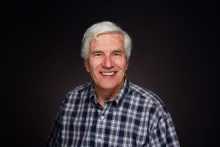
Steve Shafer was born and raised in Seattle. He graduated from Queen Anne High School in 1959 and later graduated from Ambassador College, Big Sandy, Texas in 1967, receiving a degree in Theology. He has been an ordained Elder of the Church of God for 34 years and has pastored congregations in Michigan and Washington State. He and his wife Evelyn have been married for over 48 years and have three children and ten grandchildren.
