

Mario Seiglie
This transcript was generated by AI and may contain errors. It is provided to assist those who may not be able to listen to the message.
It's very nice to be with you again.
In just two days, we are to observe the Feast of Trumpets, the first of God's fall feasts. Did you know there is a special relationship between this Feast of Trumpets and God's sacred calendar? How many knew that? Okay, a number did. But it's very important to understand. Here, we're just two days from keeping this Feast of Trumpets, and it does have a very special place in God's sacred calendar, and maybe many people don't pay much attention to it, but it is part of God's sacred truths found in the Bible.
So it's very important to understand it, because many people have been deceived and lost their faith by accepting a lie in this regard. In 1 John, chapter 5, in verse 4, 1 John, chapter 5, in verse 4, here's one definition of faith that we should not forget. First John, chapter 5, verse 4, it says, for whatever is born of God overcomes the world, and this is the victory that has overcome the world, our faith, which in this case has to do with the set of truths that are found in God's Word, that we hold dearly that it's going to help us overcome the world. Just one book over in Jude, verse 3, it tells us about that faith. It says, Beloved, while I was very diligent to write to you concerning our common salvation, I found it necessary to write to you, exhorting you, to contend earnestly for the faith which was once for all delivered to the saints. And so these aren't something new truths that people find. No, God established His truths. Now, we can grow in understanding, in faith, in understanding, in grace, but the faith is based on the truths that God has established in His Bible, which we are committed to keep. And one of those truths has to do with keeping the biblical calendar and not man's pagan ways. And this is something that Satan will use his leaders to deceive the world over that. Well, these calendars that are in the Bible and that his calendar established in the Bible is not that important. We can go ahead and change the calendars, and we can change the holy days, and we can add different types of holy days. That is part of Satan's clever ruse. His deception to the world is don't put emphasis on it. And this is where it's important, because when we keep the Feast of Trumpets, it is on the first day of the seventh month of God's sacred calendar. And the world doesn't know its importance. And so the feast days are, of course, intimately related with God's calendar. In Daniel chapter 7, in verse 25, you can see how Satan will use these leaders. He has used them in the past, and he will use them all the way to the time when Jesus Christ comes back. It says, Daniel 7, verse 25, the Good News Bible says, a little clearer, it says he will speak, talking about this beast power in the end time, he will speak against the supreme God and oppress God's people. He will try to change their religious laws and festivals, and God's people will be under his power for three and a half years, which are those three and a half years still ahead. So, Satan will continue to use deception. He doesn't want people to keep God's feasts, and he knows the best way to do it, at least one of the ways that's very effective is to get rid of the calendar, the observance of the calendar, because once you do that, then people start using other calendars with other types of holidays. Instead of holy days.
So here, when it talks about, in Daniel 7, it talks about changing the times. The term is Saman in Hebrew, and the word study dictionary mentions about this word. It says, an Aramaic noun, meaning a specific time, a time period in reference to the feast times. Daniel 7, 25. So when he uses Saman in this way, which actually is Aramaic, which is an old system related to Hebrew, that it's talking about the feast times. That's why we have here that this beast's power is going to try to change the religious laws and festivals.
So it shows us that just as God has a plan of salvation, Satan has a plan of deception. He has a plan of deception. And he's been working, and he's been very successful. By changing the laws and the times, so people will be deceived and take their eyes off the goal.
So Satan has his counterfeit calendars and times.
And today, in the Western world, the Egyptian Roman calendar is used. It's okay for civil business, but not religious.
So they have their own calendars with Christmas and Easter and all of these basically Catholic holidays, which substitute for God's festivals. So you have on one side, God has his calendar, his feast days, which he orders and commands us to keep. And on the other side, we have Satan with his calendar and his religious holidays to keep. And you see, you should never mix the two. You should never change one for another. And so when we study about the calendar, and I want to share with you the relationship between the calendar and also this feast of trumpets, but give you a little bit of background in the biblical calendar that we keep to be able to keep all of these holy days. How do we know it's on a Monday, this first day of the seventh month? So let's go back in time and start in Genesis 1, verse 14. This is the first time that God's holy days are mentioned in Scripture. Even before man was born, God already had these feasts in mind. As we know, it said Jesus Christ was actually sacrificed before the foundation of time. So this is all part of a plan that God had when he set up the earth and its rotation with the sun and the moon. And so it says in Genesis 1, 14, then God said, let there be lights in the firmament of the heavens to divide the day from the night and let them be for signs and for seasons and for days and years. Unfortunately, here it translates seasons, but the term is the Hebrew mo'adim, which primarily has to do with the festivals and the festival seasons. So a better translation would be for the festival seasons, not just seasons, because it says they're going to be signs. Notice in God's word translation is quite good. It says, then God said, let there be lights in the sky to separate the day from the night. They will be signs and will mark religious festivals days and years. So here God was establishing the basis for his sacred calendar. He set up the moon, the sun, the whole system so we could properly keep the days that he was going to give to his people. Notice it talks about religious festivals days. So you could count the days in a week, the days in a month, and the days in a year.
In the Good News Bible version, it says, to show the time when days, years, and religious festivals begin. So here it tells us, and it is all this astronomical system that we take for granted. We think everything of the skies are basically just haphazard, but they're so carefully calibrated so we can calculate. And no, yes, Monday is when that first day of the seventh month of God's calendar begins.
Just like Dave Wallach mentioned about the heart and the magnificent design that it has, being able to pump 100,000 times in a day, 3 billion times in an average lifetime in the same way. We look at the heavens that God designed so carefully. He placed the earth in its rotation so that you would have that solar year, which is 365 days and a fourth. So man would know when these feast days would come each year. Not only that, but God set up the moon as another one of these cogs in this giant clock that we have in the heavens.
And so the moon basically rotates once a month. So we have these 12 rotations of the moon, and these are the months in the biblical year. And then it's so precisely set up by God that we have Hailey's comment, which rotates around the sun, and just to show us His incredible preciseness, that little old comment that isn't that big, and yet it comes back around every 75 years.
Astronomers can calculate when it comes. So it's beyond all the planets. It's way beyond anything imaginable, and still it goes around the sun like the planets do. Now I think God created that just to let us know, you know, a wow factor. Boy, God has that position that you can mathematically calculate some piece of rock of ice. It comes back around the earth, and it goes by the earth because it goes around the sun every 75 years.
As a matter of fact, it was a famous humorist and writer, Mark Twain, who in the past century said, I was born on the day that Hailey's Comet came back.
And then he said when he was going to turn 75, and he says next year Hailey's Comet is coming, and I'm leaving with him. And sure enough, he died on that day when Hailey's Comet came through. That's the preciseness, and God expects us to have a calendar based on these facts that he has in God's Word.
We take for granted, we have a little pocket calendar, and it has all the years, and we know when all the feasts are coming because they are mathematically calculated. So we don't do the work. Now that would be a good project for us one day to be able to look and try to figure out when the feasts are next year according to their calculations, because we have it all done for us. But it takes a lot of work.
So the main parts of God's calendar, we're going to go through them and how they are connected to this feast of trumpets. So let's start in Genesis chapter one. We're right here in verse five. We have the first item in God's calendar mentioned in Genesis 1 verse 5. It says, God then called the light day, and the darkness he called night. So the evening and the morning were the first day. So here we see the 24 hours that constitute a day. This is one of the smaller units in this great clock of time that God has.
Notice that it says here that the evening is the end of one day and the beginning of another. It doesn't sort of make sense to us that for God, when sundown happens, it ends the day and begins a new one.
But for those that lived in an agricultural society, it made a lot of sense because the people would wake up and they would work all day until sundown. And then they said, good, our work is finished. Now we can go home. We start a new day resting and sleeping, recovering for the next day of work. So it makes a lot more sense. That's why God's days begin at sundown. God's festivals, which I already mentioned in Genesis 1.14, are described, are elaborated further in Leviticus 23.1-4. Let's go to Leviticus 23.1-4.
So here's part of God's laws that God warned man would try to change. He doesn't want people, Satan does not want people to observe these. It says in verse 1, And the Lord spoke to Moses, saying, Speak to the children of Israel, and say to them, The feasts of the Lord, which you shall proclaim to be holy convocations, these are my feasts. So if you believe you're a Christian and you worship the God that's there in the Bible, these are the feasts that God says they are my feasts. They're not man's feasts. They haven't been created by human beings. And so he takes ownership of them. The first of those feasts is the Sabbath, verse 3. Six days shall work be done, but the seventh day is a Sabbath of solemn rest, a holy convocation. So that means that's why we are assembling, because God says we should meet together on that day. You shall do no work on it. It is the Sabbath of the Lord in all your dwellings. And so no matter where you are, it's the Sabbath of the Lord, not of man, not of Buddha. It's not of anybody, religious group. It's of the Lord. And then verse 4, it says, these are the feasts of the Lord, holy convocations, which you shall proclaim at their appointed times. See, you need a calendar for that, because God sets it up. He doesn't let man set it up for them. Some people say, well, for God, all the days are good, and it doesn't matter what day we worship Him. He's setting up these special times. Again, the term here in Leviticus 23 verse 4, which talks about the feasts, that's the term, mola diem, which has to do with these special days that are holy. And actually, it's repeated twice the term mola diem. So it's not just these are the feasts, mola diem of the Lord, holy convocations, which you shall proclaim at their mola diem, appointed times. They're special times. They're sacred times. That's why it's so important to be in a church, which people are not setting up days on their own. No, we are bowing before our God and saying, what shall we do, Lord? How can we please You and obey You? Well, God says, here are my feasts for You to keep. And then, the third point in Genesis chapter 2, 1 through 3, it talks about the Sabbath day. This is right after the creation of Adam and Eve. Again, God gives His Sabbath day to mankind, not to a specific group. In chapter 2, Genesis verse 1, it says, Thus the heavens and the earth and all the hosts of them were finished. And on the seventh day God ended His work which He had done, and He rested on the seventh day from all His work which He has done. Then God blessed the seventh day and sanctified it, because in it He rested from all His work which God had created to make. The seventh day is called the Sabbath day, which is the seventh day of the week. Again, this marks, then, another unit in time, which is seven days that you are supposed to count and observe the seventh day as holy.
You would have four Sabbaths every month of God's calendar, because in the Roman calendar, sometimes you can have five Saturdays, but actually in God's you always have four, because you don't get to 31 days. It's always 30 days.
And then in Genesis 7 verse 11, Genesis 7 verse 11, we have the first mention of another unit of time in the Bible, which is the month. So we have the week, we have the day, now we have the month. Genesis chapter 7 verse 11, it says, in the six hundredth year of Noah's life, in the second month, the 17th day of the month, on that day all the fountains of the great deep were broken up, and the windows of heaven were open, and the rain was on the earth 40 days and 40 nights. So here's the first time mentioned about the month. The term in Hebrew is kodesh, kodesh, which means new moon or month. And it is used 279 times in the Old Testament.
So actually, you can literally translate this. It says in the six hundredth year of Noah's life, in the second new moon of the year, on the 17th day, that happened. Because this is, you start counting from that new moon. When that faint little crescent begins, when you see that, it's the beginning of a new month. And so you would have basically the second new moon, and then on the 17th day of that second new moon, you would have this happen.
Another term used is yerach, which means moon.
This is not used very many times, around nine times, but it literally means moon. And it's equivalent to month. Let's look in Exodus 12, verse 1. See, God reveals more and more about his calendar as time goes along. We know Noah already knew about this calendar because they had months, they had days, they had years. The patriarch counted their birthdays. They lived a certain amount of hundreds of years or whatever, but that meant that you had a starting date and that people counted every year that came around from their birth date. Exodus 12, verse 1, here they are, about ready to leave Egypt, about ready to keep the Passover. Verse 1, it says, Now the Lord spoke to Moses and Aaron in the land of Egypt, saying, This month, the term again is kodesh, this month shall be your beginning of months. It shall be the first month of the year to you.
Speak to all the congregation of Israel, saying, On the tenth of this month, every man shall take for himself a lamb, according to the house of his father, a lamb for a household. So here God gives the congregation and those leaders that are there the duty to find out which is that first month and be able to count and be able to keep the Passover and many other feasts. So the leaders had to establish and they had the responsibility to know in advance so people could know, okay, this is the day in that case, later, the day of trumpets. That's why we are announcing it to you, which is God's day that we should keep.
In Leviticus 23 verse 5, Leviticus 23 verse 5, it says, On the fourteenth day of the first month at twilight is the Lord's Passover. We see the importance. We couldn't keep the Passover properly. If we didn't know what day was the fourteenth. And then it goes on to say in verse 24, speak to the children of Israel, saying, In the seventh month, on the first day of the month, you shall have a Sabbath rest, a memorial of blowing of trumpets, a holy convocation. That's where we get the authority to say that on the first day of the seventh month, according to the biblical calendar, which is Monday, we are to keep a holy convocation. It's holy to God. It should be to us.
And who would oversee the calculating of the calendar and decide the precise times? Let's go to Numbers. This one book over Numbers 18. I mean Numbers 10 verse 8. Numbers 10 verse 8. Who were the ones that were to announce to the congregation when these festivals took place? It says in verse 8, The sons of Aaron, the priests, shall blow the trumpets, and these shall be to you as an ordinance forever throughout your generations.
And then in verse 10, also in the day of your gladness, in your appointed feasts, what's that word? Mo'adim, in your appointed feasts, and at the beginning of your months, when that new moon appeared. Guess what? In all of Israel. When that happened, when that day was beginning, at evening, all the trumpets sounded throughout all of Israel. Oh, it's the first of the month. This is the day when we should take into account. And many times people would fellowship together. Just like David mentioned, on that new moon, he would gather together and have a meal with everybody. But the importance is that you had to be aware of it to be able to properly determine the feast days of God.
Continuing on, it says, You shall blow the trumpets over your burnt offerings and over the sacrifices of your peace offerings, and they shall be a memorial for you before your God. I am the Lord your God. So that's why he says here that it was given to the priests to determine this. But of course, in the New Testament, we know those priests and the great majority and the leadership did not accept Jesus Christ, and Jesus Christ set up his church. He set up the leadership, and he gave them the authority and the responsibility over the sacred calendar so that the church would keep these holy days. Notice in Matthew 18, Matthew 18, verse 18, Jesus told his disciples, As surely I say to you, whatever you bind on earth, these are judicial decisions, because the church has to determine certain things based on God's laws. There are judgments to be made. They will be bound in heaven. It means God will back it, and whatever you lose on earth, which means unbind, will be loosed in heaven. And so he told his disciples, now they would have to take the leadership role in the church. And what is that new priesthood? That Jesus Christ is a high priest? It's a system. He is a high priest. His disciples and the apostles were not priests, but they had the high priest in heaven. And so it says in Hebrews chapter 7, in verse 11, Jesus Christ never gave his disciples the position of priests, but they were ministers of God. They were ordained. In Hebrews 7 verse 11, it says, therefore, if perfection were through the Levitical priesthood, talking about Aaron's priesthood, for under it the people received the law. What further need was there that another priest, talking about Jesus Christ, should rise according to the order of Melchizedek and not be called according to the order of Aaron. For the priesthood being changed from that of Aaron's to that of Christ's, of necessity there is also a change of the law of the priesthood. For he of whom these things are spoken belong to another tribe from which no man has officiated at the altar. For it is evident that our Lord arose from Judah, of which tribe Moses spoke nothing concerning priesthood. And it is yet far more evident if, in the likeness of Melchizedek, there arises another priest who has come not according to the law of fleshly commandment, but according to the power of an endless life. And so, yes, it's up to the church and those that God has placed in the ministry to determine according to the calendar that is found in the Bible, which was kept by Jesus Christ and the apostles, because he went to Jerusalem on the Passover. He kept the feast days. He kept the Feast of Tabernacles, as John chapter 7 brings out. That was the calendar at that time. And now we continue with that calendar up to our days. And so, brethren, we see the importance of the blowing of the trumpets. The first day of the seventh month is so important because it establishes that new moon, where everything else is calculated to that new moon, which will be the first month of the year so we can keep the Passover and everything else. So God very ingeniously and carefully set up one of his holy days on the first of the month to be able to calibrate that from this understanding, we can set up the calendar in its proper way.
It's such an important truth that the world has dropped. They have no idea of these things, but we should never forget this precious truth. Notice in God's kingdom, will God's calendar still be applicable? Will they still be keeping the feast days, the holy days? Will they still remember the first of the month and fellowship together? Notice in Isaiah 66 and verse 22. Isaiah 66 and verse 22. This is toward the end of the book. It says in verse 22, talking here, God, for as the new heavens and the new earth, which I will make shall remain before me, says the Lord, so shall your descendants and your name remain. And it shall come to pass, talking about when he returns and establishes his kingdom, that from one new moon, yes, Kadesh, to another, and from one Sabbath to another, all flesh shall come to worship before me, says the Lord. So this is projected in the future. So we know what calendar is going to be binding. We know what days God is going to be teaching the nations as they convert to the truth. So let's keep this vital truth binding, appreciating it, and in two days, keeping it.
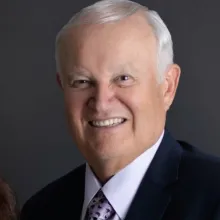
Mr. Seiglie was born in Havana, Cuba, and came to the United States when he was a child. He found out about the Church when he was 17 from a Church member in high school. He went to Ambassador College in Big Sandy, Texas, and in Pasadena, California, graduating with degrees in theology and Spanish. He serves as the pastor of the Garden Grove, CA UCG congregation and serves in the Spanish speaking areas of South America. He also writes for the Beyond Today magazine and currently serves on the UCG Council of Elders. He and his wife, Caty, have four grown daughters, and grandchildren.
