
John Elliott
The Bible from Genesis to Revelation records God’s instruction that man should obey His commands and reap His blessings. The human potential for doing so is awesome! Scripture also records efforts to promote His way of living by God personally and through His heralds. Soon, Jesus Christ will return to earth with judgment and reward for human compliance. We have a short time available to effectively proclaim the Gospel of the Kingdom in all the world. What are the challenges in doing so? What are God’s expectations for a positive response? Analyzing gospel proclamations from ancient times to our day will highlight the challenge that is our Commission.
Happy Sabbath, everyone! What a joy it is to be here together with you, and also to those of you who are listening in today. Thank you very much to the choir. You know, singing about the greatness of God for His wonderful plan of salvation is really an acknowledgment of God's supreme offering to mankind. It's the ultimate offering that He provides us through what we call the gospel message, the gospel of the kingdom of God. And that gospel message has several aspects of it. It announces, but it also is an invitation to change. It begins with the word repent, often, and then it speaks of the kingdom of God. It contains the Father's invitation to abundant life through His Son, Jesus Christ. And together they have given their all, down through time, even today and in the future, for the success of this wonderful opportunity for humanity to reach its greatest human potential. Everything that humanity does pales into significance compared to the ultimate achievement that humanity can have through Jesus Christ in becoming part of the divine kingdom of God.
Our motto, preach the gospel and prepare a people, is being attempted to be performed by all of us, all of us everywhere around the world. We are parts of that complex body that has so many different parts that contributes to this commission that God has given us.
And like the Israelites of old who were given God's Spirit to have talents that were above their human abilities, so God has given each one of us, through His Holy Spirit, the abilities and the talents to perform this covenant, this commission that you and I are living as a covenant and we are sharing with others as a potential walk that they can take as well. I'm often just dumbfounded and taken aback by the talents that individuals have throughout the body of Christ. Wherever I go, wherever I visit, be it congregation, an individual, an office, an international organization that often might be very, very small and congregations feel small. And parts of our work and our international operations are small. And yet, we connect, we collaborate, we team base, and we find individuals highly skilled in just what God needs for us to accomplish this work. And we feel like with the energy we have and the new initiatives and the strategies that we're ready to take off, right? We're ready to fill those congregations. We're ready to bring in a harvest, as it were.
Let's ask a question. What response can we realistically expect from our efforts? That's a good question. The Bible shows us at this time, at this period on the timeline of history and prophecy, in a very unique place. It's an important place. It has an objective that Jesus Christ says needs to be accomplished on time, on target. What can we expect from our efforts? If we look at the efforts before us on that gospel proclamation timeline, and those the Bible talks about happening beyond us on that timeline, perhaps it can give us a better expectation.
Let's view our place on the biblical timeline of gospel preparation today. That proclamation that's going out. Let's see how realistically we can sort of gauge what the response to the mission that we've been given will be. And perhaps just as important, it can help you and me gauge our own response to the gospel message, which is of vital importance as well. The title of this split sermon is The Challenging Gospel Commission. The biblical timeline of gospel proclamation is quite lengthy. It goes back quite a number of years, and it will go forward quite a number of years.
Let's step into a midpoint on this timeline and see how things are going. From there, we can look forward and backward. We know that Jesus Christ was sent by the Father to preach the gospel, bring good tidings to humanity. In Luke chapter 4 and verse 18, Jesus said, The Spirit of the Lord is upon me, because he, the Father, has anointed me to preach the gospel, or in the King James Version, the good tidings to the poor. Now when Jesus said those words, he was quoting from Isaiah chapter 61. Let's go back to Isaiah 61 and verse 1, where it says, The Spirit of the Lord is upon me, because the Lord has anointed me to preach good tidings, or the gospel, to the poor.
He has sent me to heal the broken-hearted, to proclaim liberty of the captives, and the opening of the prison to those who are bound in sin. So we find then there's a binding in sin of all humanity. And against this binding, and against this deceiver, and against this oppressor, our adversary, against what we in Jesus Christ and God the Father are trying to do, there will be pushback. As we go on, it says in verse 2, To proclaim the acceptable year of the Lord, and the day of vengeance of our God, to comfort all who mourn.
We then see an aspect of this message, this outreach, this teaching of the way of God, comes with a reward, comes with a responsibility. There is a day of vengeance of God associated with it. In verse 3, That they may be called trees of righteousness, the planting of the Lord, that he may be glorified. In verse 8, For I the Lord love justice.
But notice his last statement in verse 8, I will direct their work in truth, and I will make with them an everlasting covenant. So Jesus Christ is going to be directing the work. He's going to have an everlasting covenant. There are individuals who are going to be receiving this word, and associated with it are consequences for how they receive it and what they do with it. The Church has long taught what the true gospel of the kingdom of God is.
In the 1982 Good News, in an article entitled, What is the True Gospel? It says this, It is the good news of the kingdom of God. But what is a kingdom? Primarily, it's a government. And we see that in all of our lexicon definitions of the Greek word, basalia, translated kingdom, which say royalty, royal power, dominion, rule, reign, kingships.
Now this article written by Herbert Armstrong continues, four things are necessary to constitute a kingdom. So this gospel of the kingdom has four elements itself. One, the territory with its specific location. Two, a king or supreme ruler. And three, subjects or citizens. And four, laws that form a government. So as we preach the gospel of the kingdom, we're representing, really, the kingdom of God with its laws, its ruler, its territory, which humans can enter in the heavenly realm.
But also we have that government. And it goes on here, if we leave out any one of these vital requisites, we do not have and cannot believe the true gospel for this time. What this does is it shows how important it is for our gospel to be complete. The United Church of God has one of the most complete versions, or I should say repositories, of truth, of teaching.
I mean I've heard it, we have had a million pages of God's teaching about God, about his authority, about his laws, about his kingdom, and how to achieve that kingdom. The knowledge of the kingdom of God instantly conveys then a responsibility for one to change, change, change with a submission to that kingdom, to its rules, to the ruler, and ultimately receive a reward.
We see this responsibility of the gospel appearing throughout the timeline.
An example is Hebrews chapter 3 and verse 15. Hebrews 3 and verse 15. It says, While it is said, Today, if you will hear his voice, Do not harden your hearts as in the rebellion.
For who having heard rebelled, indeed, was it not all who came out of Egypt led by Moses?
Chapter 4 verse 2. For indeed the gospel was preached to us as well as to them.
So the gospel was preached to those who came through the Red Sea and saw all the miracles of God.
But the word which they heard did not profit them, not being mixed with faith in those who heard it.
Didn't profit them. So in reversing on the gospel proclamation timeline then, we come to Moses and God preaching it to those who came out of Egypt. This is found in Deuteronomy chapter 5.
Just as it said, it was preached to those. In Deuteronomy 5 and verse 1, Moses called all Israel and said to them, Hear, O Israel! The statutes and judgments which I speak in your hearing today that you may learn and be careful to observe them. In verse 6 he goes into the Ten Commandments that God himself spoke. I am the Lord your God who brought you out of the land of Egypt, out of the house of bondage. You shall have no other gods before me. And then dropping down to verse 22, Moses says, These words the Lord spoke to all your assembly in the mountain from the midst of the fire, the cloud and thick darkness with a loud voice. And he added no more, and he wrote them on two tablets of stone and gave them to me. So here God's word was taught by himself. He had miracles, just amazing, ten miracles in Egypt. Then crossing the Red Sea, pillar of fire, pillar of cloud, water, food. And yet we find that Israel did not profit from that.
All but two died in the wilderness. All but two died in the wilderness. Now when we think about that gospel proclamation, with all that went along with it, and we think of the response that carnal humans had to it, we see the response has not always been great.
But God's word didn't begin nor end with Israel. Let's go to Jude, verse 5. Jude in verse 5, I want to remind you that the Lord, having saved the people out of the land of Egypt, afterward destroyed those who did not believe. So hearing that word, hearing the word of God, hearing God's message of good news, which all of it is good news, and it contains obligations.
For God is the ruler. Laws to live by. It has an objective of the greatest ultimate thing humans can achieve. Life eternal. But he says, verse 6, there's another group before them.
The angels who did not keep their proper domain, but left their own abode, he is reserved in everlasting change under darkness for the judgment of the great day. When we go back in time to that period, we have an angelic being who evidently was one of the two caribs covering the throne, right there at the throne of God, who rejected God's truth, rejected God's rule, and took a third of the angelic realm of millions.
It's a challenge right there within the temple of heaven, experienced by God himself.
We fast forward from that time to the creation of Adam and Eve. Beautiful creation, Garden of Eden, God is teaching them. Both of them turned their back on God, his authority and his law, and they had to be expelled. We come down through the lineage of the righteous line, individuals like Enoch, various preachers of righteousness like Noah.
At the end of that epoch, pre-flood era, we find after the gospel is preached, taught Noah, a preacher of righteousness, there were eight on board. Eight on board.
We continue now in Jude, verse 14.
Now Enoch, the seventh from Adam, prophesied about these men also.
Behold, the Lord comes with ten thousands of his saints to execute judgment, execute judgment on all. Again, there is judgment because the message of God's law, God's way, God's rule, that has a responsibility to be followed and to convict all who are ungodly among them of all their ungodly deeds. So it is very important for us to cry aloud and spare not and tell my people their sins in the house of Israel their transgressions and spread that word everywhere. The question is, what expectation do we have? And as we go along the timeline, what do we see? We see great challenges from Satan. We see a snatching away of seed that is planted and starts to grow, but it seems it goes this way and that way and the other way before some of it actually comes all the way to harvest.
Even God in the flesh met stiff resistance through miracles in a perfect life and being the Messiah.
And he had minimal successes numerically during his life. Within 60 years of the founding of the church, we saw Jesus Christ come back in Revelation 2 and 3 and assess the seven conditions of the church. And there were quite a few challenges that are mentioned there.
Quite a few. Our job is hard work, and that's my point here today. And I want to acknowledge that.
It's not a downer. It's actually, I think, helpful for us to understand the difficulty, the challenges that we have in this world. And they're not just going to disappear because we find a new way to engage and reach people who are increasingly uninterested and deceived.
Jesus said, many will be called. The word will go out, few will be chosen.
We need to make sure that we are among those few and shore that up because the bride of Christ that will assist Jesus Christ in greater efforts of God's Word going out are very important and very necessary.
Reward fits a responsibility that the gospel hears in Kerr, including you and me. Let's go to 1 Thessalonians chapter 2 and verse 4. Paul, Sylvanus, Timothy, it says, 1 Timothy 2 verse 4, that as we have been approved by God to be entrusted with the gospel, even so we speak.
Not as pleasing men, but God who tests our heart, that's who we are pleasing.
In verse 9 it says, we preach to you the gospel of God. In verse 11 it gives some specifics about what they preached. As you know, we exhorted, we comforted, we charged every one of you as a father does his own children, that you would walk worthy of the God who calls you into his own kingdom and glory. There's that ultimate success, that ultimate human potential into the kingdom of God and his glory. And they are preaching here as a father would his children that we have to walk worthy of that.
We have to have the right response. Verse 13, for this reason we also thank God without seizing because you received the word of God. That's what they were teaching, the word of God, which you heard from us. You welcomed it not as the word of men but as it is in truth, the word of God. We proclaim the word of God in such detail when you look at our initiatives globally in all the languages that everyone is involved in, reproducing booklets and magazines, online content, streaming content, also some of our sermons. When you look at that, just look at the subjects. What is it we're teaching? We're teaching the word of God, the truth, the truth in love. And going on, verse 14, for you brethren became imitators of the churches of God. We're like Jesus Christ. We're Christ-like and growing in that way and therefore lights like He was to the world. Each one of us is part of that reflection or part of that message of the way of God is right, it's good, and we need to respond to it properly.
Now, what is, he says, in verse 19, our hope? What's the outcome of all of this? What is the joy?
What's the crown of rejoicing? Is it not even you in the presence of our Lord Jesus Christ at His coming? So ultimately, the gospel that goes out is to find ears where the Father is calling individuals, and then those ears hear and it goes to their heart and they respond and ultimately are in the presence of Jesus Christ at His coming. That is something that you and I live for. It's in our hearts. It is what we are about. It's certainly what we teach and what we share.
And so, as you and I then go to preach the gospel, notice what Peter, who was sent to preach to the Jews, wrote. 1 Peter 4 and verse 17. 1 Peter 4 and verse 17. For time has come for judgment to begin at the house of God, and if it begins with us first, what will be the end of those who do not obey the gospel of God? You see how this gospel really contains all those elements, those four elements of the kingdom of God? And there are some who would just want to take one little element, such as something happened in the Bible and focus on that, like a birth or a death, and that's all they want to know. They don't want any rulership. They don't want any governance.
They don't want any laws. And so they don't obey the gospel of God. Verse 18. Now, if the righteous one is scarcely saved, where shall the ungodly end sinner appear? You know, scarcely saved shows our responsibility to really obey that gospel, to submit to Christ's rule in our lives daily in the church. Carefully obey his commandments and see that God's will in heaven gets done in our lives. Then we can go on to help the next era accomplish that in their lives as well.
The apostle Paul was sent to preach the gospel to the Gentiles. Let's see what he wrote in 2 Thessalonians, chapter 1 and verse 8. 2 Thessalonians, chapter 1 and verse 8.
Breaking into this verse, it says, when the Lord Jesus is revealed from heaven with his mighty angels, in flaming fire, taking vengeance on those who do not know God and those who do not obey the gospel of our Lord Jesus Christ. Verse 10, when he comes in that day to be glorified in his saints and admired among all those who believe, because our testimony among you was believed. That is what we strive to do. Teach God's word in a way that it can be believed, understood, trusted, and yet we are in an age where trust and truth is collapsing. The apostle's testimony in the New Testament quotes Jesus Christ and also the Old Testament. And it just shows this responsibility for learning and obeying and growing all throughout the Word of God. And that's why we preach the entire Word of God, all of it. It's a wonderful Word of God. It's a wonderful opportunity that can end up in eternal life. But there's another reward. That's eternal not there. Eternal missing.
Non-existent. We look at God's message from start to eternity. It is to convert and submit to this kingdom of heaven. In 1 Peter chapter 1 and verse 25, Peter talks about this Word, this gospel.
1 Peter 1 verse 25, But the Word of the Lord endures forever. It's an everlasting Word.
God does not change. Jesus Christ is the same yesterday, today, and forever. He doesn't change.
He wants us all to change to be like Him. And that's our challenge. That's our quest.
But the Word of the Lord endures forever. God's Word, God's character, God's mindset, His laws are eternal. That gospel portion is an everlasting gospel, if you want to use that term.
Verse 13, Therefore gird up the loins of your mind, be sober, and rest your hope fully on the grace that is to be brought to you at the revelation of Jesus Christ as obedient children.
That just says it all, right there. Jesus Christ is coming. The gift is coming. The reward is coming.
And we can rest our hope fully on that which we will receive as obedient children. Now if we can convey that message to all of humanity and get them to say, oh, yes, Jesus Christ is Lord and Master. He is the head of the church today. I have an opportunity if God is drawing me to come into that body and have Him as my Lord, Master, and King now. That would be an awesome thing to do, a great, great opportunity. And so we strive to do that. We teach the entirely good gospel.
It is something that is large. It is huge. But as we look in Romans chapter 10 and verse 23, the Apostle Paul quotes the Old Testament writers the prophets quite a bit. And notice here he says he's going to quote Joel chapter 2 and verse 32, Romans 10-13, For whoever calls on the name of the Lord shall be saved. All right, there you go. And we want people to call on the name of the Lord. But then Paul now asks the questions. How then shall they call on Him whom they have not believed? That is part of our initiative to try to get people to believe. And how shall they believe in Him of whom they have not heard? Okay, now we need to reach them so they can hear. And how shall they hear without a preacher or a teacher?
And how shall they preach unless they are sent? And now he'll quote Isaiah 52 and verse 7, How beautiful are the feet of those who preach the gospel. The Greek word eulogilizo. He uses this, quoting back there. How beautiful are the feet of those who preach the gospel of peace. And he goes back, who bring glad tidings. Same word, eulogilizo. The gospel of good things. Verse 16. Now, notice, but they have not all obeyed the gospel. This is the Greek noun euogilion. It's a noun.
For Isaiah says, Lord, who has believed our report. So as we preach the gospel, what expectation can we have in a world that doesn't believe? Whose, Jesus said, eyes are closed, their ears are shut.
This is challenging. I think a top example is how Jesus Christ, he came and lived. He showed the way. He was the way, the truth, the light, and the life. He was Messiah. He was teacher.
He did miraculous healings. People followed him. He had a great impression on people.
At the end of his life, what metric maybe would reflect society's response?
Well, we all know that he was crucified. He was largely abandoned. The number of true disciples that followed him at the end of his life seemed small. In fact, in one of his parables, he said that his people, his citizens, would say, we will not have this man reign over us.
So when you and I don't have that kind of presence, that kind of audience with those miracles, can we really expect a whole lot more than what Jesus reaped, as it were, as far as faithful disciples at that time? Then opens up the new covenant, and through his blood, God's Holy Spirit comes, and we begin to see things begin to multiply. But 60 years down that Gospel timeline again, we come to Revelation 2 and 3, don't we? And we see a very mixed review of those who had been called. We see plenty of headwinds to a progression of people who were in God's Church towards salvation. And we saw several detours of people who are already making detours to something else. Our own Church today, our history, is really a trek along a challenging path where many have detoured in our lifetime. And as much as we like to think, oh, we'll just grow and grow, we can see that there are challenges to preaching the Gospel and having it really obeyed and faithfully followed. We, of course, could go to Matthew 24 and Luke 21.
There Jesus Christ warns of destruction ahead on the road, on the lineage. There's going to be a period of great destruction by Satan the devil. The Olivet prophecy kind of reads to me like like a tornado warning approaching F5 tornado upon the house. You know, here you have a house, and this house has a storm shelter, and then here comes, it kind of brews. You can see these on TV, on the news. Here it comes. Wow, look at this thing. It's coming. And the people are talking about it as it comes, and it draws an air, and certain things start to happen. But things, when it hits, just get blown apart. They're just, they're gone. As you go down through the 25th chapter of Matthew, it's like a strong deception, then a crackdown on the truth, and then arrested members and wars. And Daniel says the power of the holy people, the power of the holy people. I take that to mean our, the results of our efforts is completely shattered.
It's like this thing just blows apart. As it says in Isaiah 59 and verse 14, some of the obstacles and challenges is that truth is fallen in the street. And we see that more today than we probably would have ever guessed in our lives. Truth is fallen in the street where it can just be trampled on. It seems like nobody even cares about truth anymore.
Few do, anyway. And in verse 15, so truth fails, and he who departs from evil makes himself a prey.
And that's just what we see in Matthew 24, that those who are godly and righteous become a prey.
Well, thankfully, as part of that tornado process, there is a storm shelter.
And it's important that we remember that. In Luke 21 verse 17, in that same Olivet prophecy, Jesus said, and you will be hated by all nations for my namesake. Wait a minute.
We're preaching the gospel in all nations. What result can we expect? Oh, you will be hated by all nations for my namesake. Okay.
You talk about brand awareness. It looks like we achieve it. You know? Serious.
Verse 18, but not a hair of your head shall be lost.
Verse 36, watch therefore and pray always that you may be counted worthy to escape all these things that will come to pass. Be in the storm shelter, underground. Tornadoes don't bother people in storm shelters. And to stand before the Son of Man. Jesus Christ indicates his desire is for us to not be lost in all of that, not be trampled by all of that. But again, what is the anticipated outcome of our efforts to preach the gospel? I would say society's response indicates a low net promoter score, as they call it, because society is actually hostile. They're not going to say, oh yeah, this is great. Let me tell my friends. Let me pass this around. Let's spread this. Oh, everybody jump on board. No. We're told we'll have Jesus' help to escape the response that society brings. So we move along the gospel proclamation timeline. We come to the period of the two witnesses. Two witnesses. Now, a lot of guys dream of being the two witnesses. Maybe some of you guys do as well. Wouldn't it be cool to have all those miracles? Of course you do get killed in the end, but nevertheless. Let's notice the dramatic miracles, but the response is partly going to be this, Revelation 11 and verse 9. Once again, this gospel is going into all the world, to all nations, tribes, and tongues. Revelation 11, 9. Then those from the peoples, tribes, tongues, and nations, when they're killed, will see their dead bodies for three and a half days, and they won't allow those bodies to be put in graves. Verse 10. And those who dwell on the earth will rejoice over them, make merry and send gifts to one another. You can see the challenge that we have really emanates from the mind of Satan and the deception of Satan and the spirit of lawlessness and absolute rejection of authority. And here we are trying to teach submission to authority and lawfulness to a world that that increasingly will not even relate to.
There are those who come from it who are innumerable, and they are faithful, and they will face those headwinds, and they will suffer persecution and death. But finally, at the seventh trumpet, Jesus returns to rule the nations. Now oftentimes, if we don't think through this, we think, oh great, Jesus is here. It's all done. It's all over. Only to realize that when Jesus comes back, his rule is now challenged by Satan, by the demons, by everybody on earth, and the day of the Lord rolls out with the seven last plagues. When Jesus returns, we find in Revelation chapter 14 and verse 1, he now is going to announce his rulership. This is going to reach everybody.
Revelation 14, 1, Then behold, a lamb standing on Mount Zion, with him 144,000, having his father's name written on their foreheads. All right, here they are. And I saw verse 6, another angel flying in the midst of heaven, having the everlasting gospel to preach those who dwell on the earth to every nation, tribe, tongue, and people. And what does he say?
Fear God, revere God, give glory to God, look to him as the authority, for the hour of his judgment has come, and worship him, worship him, who made heaven and earth, the sea and springs of water. Knock off this evolution bit. Here's your creator. Here's his government. Here's his authority. Here's his laws. Submit. What is the response to that? If we could do that, I think we would really have a gospel message, wouldn't it, that really resounded with people? If we go to chapter 16 and verse 9, as this rulership of Jesus Christ is confronted and resisted by Satan and humanity, we find a result breaking into verse 9 of chapter 16. And they blasphemed the name of God who has power over these plagues, and they did not repent and give him glory. Verse 11, they blasphemed the God of heaven because of their pains and their sores, and they did not repent of their deeds. Verse 21, men blasphemed God because of the plague of hail. You march along that timeline a little further, and you find the final metric of the day of the Lord phase shows that many, if not most, still refuse to repent because you have what we call the Battle of Armageddon, the gathering at Megiddo. And they're going to try to kill Jesus Christ, to kind of fight against him. And so ultimately, Jesus comes in chapter 19 with a sword that he should strike the nations and tread the wine-press to fierceness and wrath of Almighty God.
So this is kind of a mature, more realistic view of how this gospel timeline has worked so far.
At that point, Satan will be put away for a thousand years, and we'll have an opportunity to have a fresh audience that comes out of deception, that steps into truth. The knowledge of the Lord will cover the earth as the waters cover the sea. It's going to be an exciting time.
Right after that, Satan is released. And once again, from the four corners of the earth, armies gather. The Word of God continues then afterward with the second resurrection of all humanity. And without Satan, guess what they have? The books. The books are opened, along with the Book of Life. In mankind, all mankind who has never had the opportunity to taste this goodness that you and I taste with God's Spirit have the opportunity to accept and submit and participate in godly governance and family unity. They will have that opportunity.
But it will come with a reward as well. And that reward will be given out, either as eternal life or the heavens and earth will burn up. So the Gospel of the Kingdom of God is offering an incredible, incredible human potential. It will occur in stages, and it is going to be so great that God the Father and Jesus Christ have designed the whole universe and everything in it and all the timeline to accomplish that. And we devote ourselves to that. We stand at a critical point in this timeline of Gospel proclamation, proclaiming the Gospel of the Kingdom of God in all of its phases. Let's go as we wrap this up to 2 Thessalonians 2 and verse 13. 2 Thessalonians 2 and verse 13.
This brings you and me into the equation as well as recipients of the Gospel.
2 Thessalonians 2 verse 13, breaking into the verse, because God from the beginning chose you.
That should encourage us. That should awaken us. That just that realization that God has chosen you and me personally for salvation, through sanctification, by the spirit and belief in the truth. This is what we teach. This is what we are. This is what we promote. This is what we are becoming. Truth. Verse 14. To he who calls you, how does he call us? By our Gospel, for the obtaining of the glory of our Lord Jesus Christ. Therefore, brethren, stand fast and hold the traditions which you were taught, whether by word or by our Gospel, for our epistle. They wrote the New Testament, Jesus Christ teachings, the epistles, quoting the Old Testament. In verse 16, now may the Lord Jesus Christ himself and our God and Father who has loved us and given us everlasting consolation and good hope by grace comfort your hearts and establish you in every good word and word. So in conclusion, together, as we are energized for another year of proclaiming God's word, preaching the Gospel, and preparing the people and being prepared, let's make sure that we are fully submitting to Jesus Christ's direction and rulership, not any man. Let's grow in more careful and deeper obedience to them. Let's grow in forgiving. Let's grow in loving. Let's grow in oneness. Let's grow in serving. Let's grow in radiating to the world that we indeed are the disciples of Jesus Christ by the love that we have for one another. So may God lead us into unity and oneness with him and each other as we preach the Gospel of the kingdom in all the world. Thank you.
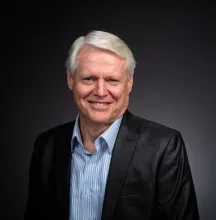
John Elliott serves in the role of President of the United Church of God, an International Association.
