

Ben Light
This transcript was generated by AI and may contain errors. It is provided to assist those who may not be able to listen to the message.
Well, brethren, when I was first hired at Waldo Middle School in 2007, it was during the time of the No Child Left Behind Act. For those of you who were educators at that time, some of you may have just had a nervous tick as a result, kind of involuntary, hearing about No Child Left Behind again, and rightly so. It was a very difficult time in public education.
You know at its core, the No Child Left Behind Act was one that had its heart in the right place, but it frequently happens when good intentions meet passionate emotion. A knee-jerk reaction takes place that often causes more issues than it solves. For those that were not in public education in the early 2000s and mid-2000s, No Child Left Behind was an initiative that was signed into law by President George W. Bush. It mandated that all children, all students, achieve at very specific levels by a certain time frame. Everyone in education agreed, yes, 100 percent. Children needed to achieve at greater levels of achievement. They agreed the current levels of achievement were unacceptable. Everyone was in agreement in that regard. Everyone was on the same page, on those things. But there was a very large amount of disagreement as to the how and the by when.
The law stated that all schools needed to meet certain metrics of achievement by certain time frames. It started at 50 percent. 50 percent of all students needing to pass their state assessments in reading, math, and science. We can all agree 50 percent should, yeah, 50 percent, of course, yes. Then the following year it would increase to 60 percent, and then 70 percent, and then 80 percent, and then 90 percent.
And finally, 100 percent of all students passing their state assessment testing, as was written into the law. And when that happened, well, no child would be left behind. That would be the eventual end result of that legislation. What the law didn't take into account and didn't consider were the differences in learning needs, poverty level, where students are coming to school already knowing. It didn't take into account language barriers, home life, teacher ineptitude. There's a complex variety of factors that make education a tough nut to crack in the first place. There were students in the school district, in the district in which I taught, that were enrolled in what's known as the Developmental Learning Center, DLC. You might have heard it referred to before. And in the DLC, these were students with severe disabilities. These were students where their graduation goal was to learn how to wipe their own face, to wash their hands, etc.
That was their graduation goal. But based on this law, the expectation of No Child Left Behind is that those students would achieve at 100% just like everyone else. It didn't take account the students in our newcomer center that had just arrived in America who didn't write, speak, or read English and were sub-literate in Spanish. It simply wasn't realistic.
I come to MALDO in the year that we were expected to make 50%. That was the bar that we had to meet that they had to jump over. The year that I started at Waldo Middle School in 2007. We had to have a 50% pass rate in math, reading, and science. We went to work. We taught our hearts out. We did test prep. We coach these kids on how to take tests. We connected our curriculums across the school. The things I was teaching in science were being backed up by the English department. We were all working together on these things. We were conferencing regularly with each other to see how this kid was doing in your class. I could scoop in and grab them on this end if it didn't work. We did more professional development and meetings than I care to remember. When testing season came around, we didn't meet the bar. We missed the bar completely. We were not at 50% that first year. We were concerned. We were concerned because the law had a few provisions in place at that time. What would happen when a school didn't make the cut? They could be taken over by the federal government. That was written in the law. The federal government could come in and take over the school. They could fire the principal. They could fire whole sections of the school. They could keep the principal, but they could maybe fire the entire math department, or the entire science department, or the entire English department.
Or a school could choose to undergo what was called restructuring. Restructuring essentially involved this complete and total overhaul of how things were done at your school. So we chose to restructure. Waldo that first year, we missed the bar. They could have come in. They could have taken out the principal. They could have taken out sections of the school. We all, as a collective group, said, no, let's restructure. Let's go through the restructuring process. We established a committee. I served on that committee as a science representative. And what we did was we, for a year, took apart every single thing that we did at our school. The minutiae. The small things. The big things. And what we asked is we put it on the table, and all of us looked at it, and we said, is this working or not? And if it wasn't working, we got rid of it. When it was, we either kept it or we improved it. And during this time, that we're doing this, that's a small group of people acting on behalf of the entire school, this restructuring committee is making decisions that the rest of the staff had to trust were the right ones. It was a time of incredible upheaval. That first year, going into the next year, a number of our staff just up and quit. They decided that the changes that were going to be taking place, they were close enough to retirement, they didn't want to mess with it. I'm out. I'm done. They put in their years, rather than make all the changes that were being proposed, they decided they didn't want to do it anymore. A number decided, quite frankly, I don't want to teach anymore. I'm out. Those that did stick around, though, those that remained, we spent a lot of time that year talking about change. Organizational change, how to cope with change, how to handle things when they do change. We talked at length about the difference between first order change and second order change, and how people react to these kinds of changes. First order change is a change in individual parameters. It's like a difference in how we teach math, for example. We still teach math, but the difference is how do we do it. The system itself stays in place. And for most people, first order change is a change that's more easily acceptable. It doesn't cause huge amounts of anxiety, typically, because it's something that could be easily reversed without a lot of extra work. The systems, they're all still in place. But second order change, on the other hand, it's a change or an overhaul of the entire system. It's not the same thing. In second order change, it's a complete rethinking of the process. It is taking a look at the existing, and it's throwing away the old way of doing things and starting new and fresh from the very beginning. And it's this style of change that we learned at Waldo that year that makes people incredibly anxious. Incredibly anxious. Second order change is irreversible. It's a structure that's put into place that once those changes are made, it's really tough to go back. It's really tough to go back. It's a change that results in a new way of thinking. It's a change that really results in a new world view.
So during this process, we were all being asked to take on second order change, make huge shifts in the process, completely dismantle what we do and remake how we do things. Change, essentially, how school was being done. So as we're going through this process, we're meeting with business leaders. We're meeting with people who have gone through this in their organizations, who ultimately have merged companies, who have restructured companies, who have gone in and had to fire entire sections and restructure the entire company and build over and build up again from the very beginning. But one of the things that kept coming up as we're going through this process and we're listening to these individuals that had been through it, there are three camps of people when it comes to change. There are three camps of people that sort themselves out. And the articles we read, one of the articles named them. They're named the resistors, the undecideds, and the embracers. The resistors, the undecideds, and the embracers. And in every situation that we were coming across, these three camps kept popping up. The resistors are those that resist all change. And why? Well, because it's change. Just period. Because it's change. Anything new is immediately dismissed as unnecessary or impractical. Why don't we just do it the way we've always done it? I see no reason to change anything. Maintain the status quo. Those are the resistors. Those are the ones that quit en masse the first year. We're the resistors. In between those, the other side of that coin, sorry, the other side of that coin is what's known as the embracers. And these are the folks that excitedly explore change. These are the ones that are like, hey, we're changing something? I'm in! I'm in! What is it? I don't care? It doesn't matter. We're changing something. Let's do it. That's these folks who enjoy trying new things, making changes, who enjoy living in uncertainty. They tend to be innovators. They're always kind of looking for new and innovative ways of shifting the process. And then in between those two extremes, you have the vast majority of people that are the undecideds. They're not 100% for it. They're not 100% again it. Right? They're kind of right in between.
And they're watching and they're listening. They're trying to decide what they should do. And often folks in these camps tend to lean one way or the other. So the undecideds tend to be a little bit of a resistor maybe, or a little bit of an embracer. But they're really not so sure exactly which direction they're going to go. And frequently, when they're provided enough evidence, they'll make their choice. Brethren, which camp do you tend to find yourselves in when it comes to the concept of change?
What's your initial reaction? Your initial knee-jerk when it comes to change? Are you a resistor? Are you a resistor? Are you an embracer? Or are you one of the undecideds? But Waldo, the year that we were going through this, we had all three. And throughout that restructuring process, we made a ton of changes. We put a number of new systems in place. Again, we taught our hearts out. We worked and worked and worked and worked. And the following year, we almost made it. We almost made it. We did not achieve the overall requirement of 60-60-60, which was 60% in all three of those subject areas. But we met something called adequate yearly progress, which showed that, essentially, compared the previous year and this year, we made a significant enough gain that the federal government said, you know what? You're on to something. Let's give you one more year to make it. Let's give you one more year to try before we come in here and start messing with stuff.
So we met that year in math. We met in science. We did not meet in language arts. And so we need a little more work there. So we went back to the drawing board. And because we'd restructured, they'd given us that requirement. We had another year to do it. We needed 60% to meet it. The next year, the following year, we not only met AYP, we also met the 60-60-60 requirement. We were actually one of the first schools in the country to restructure and meet No Child Left Behind requirements. There was a party. We had cake. I got a T-shirt. That was it. Back to work, everybody! So, you know, I will say, for those of you that did not teach during that time, it was a very tough and very stressful period of time in education. It was. It was difficult. As humans, we're creatures of habit. We don't like change. In fact, in some cases, we fear it. Metaphysophobia is the name of the condition itself. And it's a very real and very de-appilating fear for a lot of people. They really struggle with it. It prevents individuals from being able to even go outside. Why? Because life is unpredictable. There's not a predictable routine. There's not something that happens in every scenario. It's a challenge. At home, when they're at home, they can control the variables. They can keep things the same. They can watch the same shows at the same time. They can eat at the same time. They can follow the same procedures. Without worrying that anything out of the ordinary is going to affect their routine. These individuals experience incredible degrees of stress and anxiety from any sort of change. It's outside of the control of their normal parameters. Even if we don't suffer to this degree, and the vast majority of people don't, but we still don't like change.
Most of the time, we don't. There are some who thrive on constantly changing circumstances. And quite frankly, when it becomes stable in their life, they say, No, no, no. I need some chaos. I need some instability. I need some things to change things up. And that's not the majority of people. Most people prefer a consistent, stable routine that is predictable and largely unchanging with time. You know, when I did my student teaching, I had an opportunity to work with a fantastic chemistry teacher. He was actually my wife's chemistry teacher when she was in high school. And we became good friends. And he had his lesson plans. This guy had his life figured out to where he could know exactly what was being covered on any given day in the semester.
A year out, he knew exactly what it was. He had it to a tee. And he could be like, Oh, you're going to be gone on, you know, April 28th? Okay, perfect. Flip through the file cabinet, grab the sheet. Here it is. Here's this. Here's that. I remember thinking when I was teaching, I aspired to that. I was like, Oh, I want that kind of stability. That would be amazing. It would be so wonderful. You know, just teach the class, give the kid the thing, set some stuff on fire, do it all over again the next day.
Sounded like the perfect, perfect scenario to me. I wanted that level of routine, and I wanted that level of habit, that level of sameness. Instead, what I got in education was constant change. Constant change. The first seven years of my career, I had to move out of my classroom at the end of every year. I had to move everything out because it was either being remodeled, or one year I came in, state and high school, one year I came in to state and high, at the end of the year, we were two weeks from the end of the year, they handed me a hard hat, and they said, Go up and get everything you need out of your room for the next two weeks.
You're teaching in the auditorium. And I said, Excuse me? And they said, Oh, by the way, the roof's been condemned. You can't go up there and be up there for any length of time. Here's your hard hat. Go get your next two weeks of material. And then I had to move everything back out, you know, so they could remodel the roof and do all that stuff. It was crazy. Constant change, essentially. Every year brought a new reset of routine and procedures based on locations and previous year experiences, academic and behavioral levels of the kids, new programs, new initiatives, new district mandates.
It was constantly changing. Now, I look back on that, and I remember it being really chaotic then, but I'm absolutely certain in the long run that my career actually benefited from that constant change. It forced me to reinvent every year. It didn't let me stagnate. It didn't let me get used to it. There's a gentleman named Heraclitus, who was an Ephesian philosopher, who's attributed to saying nothing is permanent except change, which is often adjusted to the colloquial, the only constant in the world is change.
You've probably heard that. In his writings and his observations, he observed the world was constantly in flux. A hot coal cools, wet parchment dries, nothing stays the same. Everything changes. He took that step or two further, and he made the claim that a person never steps in the same river twice. He said, you never step in the same river twice. The river's constantly changing, and that the person and the river are never the same again as a result of that interaction.
Now, his thoughts and his ideas get really existential, really fast, but he is right on one account. Nothing, save God, stays the same. The only constant in this world is God. Change is inevitable, and that's the title for today's message. Change is inevitable. In fact, I would argue as Christians, change is not just inevitable, it is mandated.
Change is not just inevitable, it is mandated. You know, when we're born, we develop through childhood, adolescence, adulthood, we go through our golden years, and eventually we die. If you want to turn over to begin today, Ecclesiastes 3 and verse 1, let's turn over to Ecclesiastes.
Solomon wrote along these lines in the book of Ecclesiastes regarding the transitions of life, regarding the seasons that we have of life. This song, or this has been turned into music, it's been recorded by artists, I believe it was the birds that sang this song, turn, turn, turn, right? I think it was the birds. But Ecclesiastes 3, we'll go ahead and we'll begin in verse 1. We go through change. We change constantly. We go through seasons of life, right? The next season of life is not the same as the season of life before it. Time changes you. Things shift. Ecclesiastes 3 and verse 1 says, There's a degree of stress, there's a degree of anxiety because it's not the same.
It's not routine. It's not what it was before. Things are different. And so, as a result, we as humans, well, we develop routine. We develop ruts. We develop habits, which help to keep some semblance of normalcy in the face of a life that is constantly changing. And these habits, these ruts and these routines, they can be healthy and they can be unhealthy.
They can be healthy and they can be unhealthy. But regardless of their outcome, whether they're a healthy habit or an unhealthy habit, what they both are is an attempt to control certain aspects of our lives to maintain and to manage change.
Again, the title of the sermon today is that change is inevitable. And with the time that we have left today, I'd like to examine this concept, kind of look at what God thinks about change and how we as Christians can and should view change. Let's go to Hebrews 13. Hebrews 13. So we do want to establish that there are some things that are unchanging.
Hebrews 13. We'll pick up the account, kind of breaking into chapter 13 here, or chapter 13 in verse 8. Hebrews 13 and verse 8 says, Jesus Christ is the same yesterday, today, and forever. He is the same yesterday, today, and forever. The writer of Hebrews is making the point to those that are reading this particular epistle that Jesus Christ does not change. He does not change. His doctrines, His teachings, His nature, His character, it remains the same. Whether that was the past, whether it's today, whether it's in the future, those things do not be carried about with various and strange doctrines.
They don't change with societal adjustments. They don't change with cultural changes. They are the same. James 1 verse 17 records the unchanging nature of the Father. It records the unchanging nature of the Father. James 1 verse 17. Again, we've already seen Jesus Christ doesn't change. He's the same yesterday, today, forever. What about the Father? Does the Father change? Verse 17 of James 1. James 1 verse 17 says, Every good gift and every perfect gift is from above and comes down from the Father of lights, with whom there is no variation or shadow of turning.
Brethren, it's important for us to recognize this and to remember it and to revisit it occasionally. God the Father and Jesus Christ are unchanging. Again, they don't shift with the times. They don't bend. They don't adjust to cultural or societal expectations of them. As we've said before, God is not an American. He's not a European. God is God. He doesn't espouse American values, European values. He espouses the values of the kingdom of God, which are unchanging. They do not change with the times.
They do not change with society. Those expectations that society puts on things do not change. We, as Christians, don't put God in a box that agrees with everything that we agree with and conclude that God bends to our will and our desires. God is God. You and I are not. It's that simple. When it comes to the standard that God has set, it's that simple.
God is God. We are not. And because God is God and because He's unchanging, we're able to hang onto the promises that He's provided us. We can absolutely trust with full assurance that the kingdom of God, which He has promised His firstfruits, is coming.
We absolutely can hang on that promise. We know that He'll send Jesus Christ to this earth. He'll establish that kingdom. That is assured as a result of His unchanging nature and His personal promise.
Let's go to Philippians 1. Philippians 1. And we'll pick up the passage in verse 3 of Philippians 1. The Apostle Paul writes to the church in Philippi here to encourage them and to provide them with the understanding that if God has promised it, that it will occur. Philippians 1. Philippians 1, and we'll pick it up in verse 3.
Paul writes here in verse 3 of Philippians 1. He says, I thank my God upon every remembrance of you, always in every prayer of mine, making requests for you all with joy, for your fellowship in the Gospel from the first day until now. And then verse 6. Being confident of this very thing. Remember, God doesn't change. That He who has begun a good work in you will complete it until the day of Jesus Christ.
God will complete the work that He has begun in us because God does not change. He is the same yesterday, today, and forever. He fulfills His promises. He follows through. God does not change. But when it comes to us, He absolutely expects us to change. 100% expects us to change.
Let's turn to 2 Peter. 2 Peter. You will see Peter describing here the promises of God. And you know what addressing, as we've been talking about in our monthly epistle study, we've been talking about the things that Peter was addressing at the time and what he was dealing with. And the accusations that were being made at this time, that, well, the Lord delays His coming. Maybe this promise that He's given is not going to happen. 2 Peter 3, Peter's point to them is this. 2 Peter 3 and verse 9 says, The Lord is not slack concerning His promise. He's not slack concerning His promise, as some count slackness. But He says, He is long suffering toward us, not willing that any should perish, but that all should come to repentance. In other words, when you take a look at the timing, and you take a look at the timeline of the coming of the kingdom of God, it's not slackness. It's on account of God providing people with the time to repent, providing people with the time to change. The word repent in Greek, the word metanoeo, means to change. It means literally to change, specifically to change one's mind, to change one's mind, to change how they think, to change how they process, to bring their thoughts, their mind, and ultimately through that, their actions in line with God and with God's expectations. God's not slack. He's patient with us, because He desires that none should perish. But instead, that all should change. That all should repent. And when that repentance, when that change occurs, a person brings forth what's described in Matthew 3, in verse 8. We won't turn there, but it brings forth what is described there as fruits of repentance, a product of their life, that the actions of their life would illustrate, then, the changed mind that is taking place internally. These fruits of repentance are described in 2 Corinthians in a little bit more detail. If you want to turn over to 2 Corinthians, we'll look at it there. And we also see them represented in Galatians 5 and the fruit of the Spirit. But these fruits of repentance in 2 Corinthians 7 help to give us an idea of what a repentant life looks like. What is it that a repentant life looks like? 2 Corinthians 7 went right past it. 2 Corinthians 7, and we'll go ahead and pick it up in verse 8. It says, Paul writes here, I don't regret it, though I did regret it, for I perceived the same epistle, made you sorry, though only for a while. He says, Now I rejoice, verse 9, not that you were made sorry, but that your sorrow led to repentance. For you were made sorry in a godly manner, that you might suffer loss from us in nothing. For godly sorrow produces repentance leading to salvation, not to be regretted, but the sorrow of the world produces death, he says.
Verse 11, For observe this very thing that you sorrowed in a godly manner, and what diligence it produced in you, what clearing of yourselves, what indignation, what fear, what the eminent desire, what zeal, what vindication, in all things you proved yourselves to be clear in this matter. Therefore, although I wrote to you, I did not do it for the sake of him who had done the wrong, nor for the sake of him who suffered wrong, but that our care for you in the sight of God might appear to you.
You recall the situation in the Corinthian church. 1 Corinthians, Paul, writes him a letter of scathing rebuke regarding the issues that he had caught wind of. And here he states he didn't regret making them sorrowful as a result of the letter because the letter caused change.
It resulted in change. It encouraged a true, lasting repentance. And the fruit of that repentance then are listed in 2 Corinthians 7. A diligence, a clearing of themselves, indignation, fear, a vehemently desired, zeal vindication. Their repentance had caused an eagerness, a desire for God, a zeal that had reignited a fire under them for God. They were willing now to defend the faith. They were willing to see injustices righted. These were the fruit of their repentant hearts. They walked away from their sin, from their issues they were unwilling to see, and they changed.
Paul utilized tough love here to help them to see that they had issues. They'd become too accepting of sin. They'd exalted themselves as a result of it. And thankfully, as a result of his letter, they saw it and they were willing to make the difficult choice to change. Again, God doesn't change, but he absolutely expects that we will. And it's tough! It's tough. Man, change is hard. It is tough. It is not something that is easy. It's not something that's otherwise painless. Or everyone would do it. Right? If it was simple, if it was easy, if it was painless, everyone would be walking around the best version of themselves possible.
But change is hard. Change is hard. The irony of change, and the dislike of it, is that every year, once a year, everyone seems to desire it. You come to the end of December, going into January, going from the new year into January, people look back over the previous year, they take stock, they examine, they start to make resolutions, most cases making promises to themselves that they have no intention of keeping. They don't know that yet. They'll find that out about February. They decide they want to quit smoking, they want to lose weight, they want to eat better, they want to stop drinking.
And all of these things are noble things. All of these things are noble things. But again, mid-February, March, usually reveals reality. They may have desired change, but the habits, the routines, the ruts, that were in place in their life, maintained control. Those habits, those ruts, those routines resisted change, and come February, March, they're right back where they were before. Right back where they were before. The joke that I've seen a few different times online is that somebody could make an absolute killing if they opened a business.
At the beginning of the year, it would be a gym called Resolutions. And then in February and March, you drag all the gym equipment away, and it becomes a bar. For the rest of the year, until January again. Pull all the gym equipment back out, and put it all back away again. Change is hard. Change is really, really tough. And because, as humans, we tend toward the path of least resistance in general, that's what we do as humans. We do a lot like electricity in that way. Path of least resistance. Because that's the way we are, true lasting change in our life requires that the pain of not making a change is greater than the pain of change.
I'm going to say that again, because it's important. But the everlasting change requires that the pain of not making any changes is greater than the pain of change. What that usually means is that change has to become the path of least resistance. Which typically is going to require that someone reaches a very difficult place in their life. I want you to direct your attention to the screen here real quick.
I'm going to have Mr. Jackson go ahead and put this up. I'm going to hand out a handout. I went ahead and put this up digitally. But if you could direct your attention to the screen, you're going to see a diagram. This particular diagram is taken from the work of Prokashka Norcross and Diklamente. It's published in a book called Changing for Good, a revolutionary six-stage program for overcoming bad habits and moving your life positively forward. I would have picked a shorter title, but here we are.
This diagram is more commonly referred to as the change cycle, or the stages of change. It comes from work primarily in addiction psychology. That's where it comes from initially. But the reason that I share it with you today is because it has a number of parallels to change itself. Not just when dealing in addiction, but in changing of habits, in overcoming sin, and of a number of other things that are expected of us as Christians.
So I'm going to have you... hopefully you can see... oh yeah, good. That's a nice sized... thank you. That's good and big. Everybody can read that. The cycle starts at the top. Okay, so find yourself to the very top here. Most people live their lives in a stage that's called pre-contemplation. That's the normal resting place for most people.
They live in this place called pre-contemplation. They're living their life. They see no point to change. They're not actively considering change. They're simply living their life, so to speak, oblivious to the need for change until something jolts them out of their comfort zone.
Perhaps that person gets a DUI. Maybe their marriage starts to suffer as a result of revelation and indiscretions. Maybe they begin to think that life should be more than this. There should be something more than this. And at that point, they enter what's called contemplation. Note that the arrow moves on down to contemplation. And they recognize at that time that there is a problem, and they're now considering change. Now, maybe at this point they ask for advice. They ask for counsel. They begin to look up on their own information as to how to make the necessary changes, how to actually change their life.
They haven't done anything yet. There's no action, quote-unquote, taken. This is just the exploratory phase. Reaching a point where I start to look at, and we start to look at, how do we fix this? At this point, they're simply reaching out. They're beginning to contemplate some solutions to the problem. Now, encouragement and support at this phase can sometimes move people to the preparation and action stage.
However, sometimes it bumps them back into pre-contemplation again, where the conclusion is that everyone else is the problem, not them. Everybody else is the problem, not them. Now, if they've moved from there to preparation and action, then they've got a couple of feet on the road.
They're taking the necessary steps at this point. They've started the process. The alcoholic puts away the alcohol and starts a program. The person that's trying to lose weight joins a gym. They hire a personal trainer. The person quitting pornography takes the necessary steps to be able to prevent access, to change the pattern, change the routine. They begin to make necessary changes. Now, you'll notice preparation and action down at the bottom. And so, at this point, once they've initiated change, they enter a stage known as maintenance.
Now, in this phase, they're adjusting to the changes in their life. They're practicing the new skills. They're adjusting the behavior to meet the various situations that are going to come their way. You've probably heard it takes 21 days to make a new habit. You know, it's kind of the common timeline that most people say, which is largely true. And after 21 days to a month, the person's well on their way. But there's a danger in the maintenance phase. In the maintenance phase, it doesn't take too much to fall off the wagon. It does not take too much to fall off the wagon.
If that behavior isn't internalized, or if that person's making the change for someone else and not for themselves, if they're tempted or they're dealing with other difficulties, stresses, anxieties, they are going to be enticed to go back to the comfort of the previous routine, rut and habit. And they relapse. They relapse. Now, we think of that term from a standpoint of drug abuse, alcohol abuse, but it can be sin.
It can be a number of things. They go back to the rut. They go back to the routine. They go back to what's comfortable. They're tempted. They're enticed. And they go back to their old life. Depending on the support network, depending on their desire for change, they might be able to go back through this cycle again quickly.
They might be able to go from maintenance once it's been relapsed back into pre-contemplation and contemplation. They might be able to do that relatively quickly, but for some, they may just relapse and stay there. Some, they may take quite a bit of time before they even make another run at it. Might be years before they make another run at it. Change will not happen until the pain of remaining the same is greater than the pain of change.
That is change psychology. Only then will a person be bumped out of pre-contemplation and begin to head down a road to recovery. And it's scary. Scary. Because it's uncertain. When you take that step out into uncertainty, when you step out away from what's comfortable and what's routine and what's normal, that's scary. It's scary. Sometimes it's new territory. Sometimes we're afraid. We're uncertain. Let's go over to book of 2 Timothy. 2 Timothy 1. We're going to pick it up in verse 7. We're going to grab it in verse 3 and work our way through to verse 7. The apostle Paul writes to Timothy.
He's the new pastor of the church in Ephesus at this time, someone who was younger and someone that Paul loved dearly. Providing him with some encouragement, with some understanding of what it is that he was going to be dealing with and preaching about and working with. 2 Timothy 1 and verse 7. Paul writes, Paul talks about how he saw, was able to reason, that this faith was present in Timothy's life as well. He says, Therefore, verse 6, I remind you to stir up the gift of God, which is in you, through the laying on of my hands.
For God has not given us a spirit of fear, but a spirit of power and of love and of a sound mind. The power of God's Holy Spirit, the transformative power of God's Holy Spirit, is what allows change. It's what enables us to make the necessary changes in our life. God has not given us a spirit of fear. Fear is of the enemy. Over and over again, God told Joshua, be strong and have good courage. He told his people, do not be afraid, for I am your God. He said he would never leave them, that he would never forsake them.
Through the times of intense doubt, anxiety, and concern, God promises that he is there and that he is with his people. So how does God view change in our life? How does God view change in our life?
How should we view it? We should view it as an opportunity for growth. Because that's how God views it. Change is an opportunity for growth. It's inevitable. It's a constant in life. And honestly, in many ways, we have an illusion of control. More frequently, change happens to us, and it's outside of our direct control. The only thing that we have the ability to control is how we respond to that change as it occurs, how we view it, and how we respond.
But there are things in our life in which we have to make changes. We have to shift. We have to change things. We are expected to, and certainly make choices, to change certain aspects of our life and to make change in our lives where it's needed. But again, we don't always have the ability to control the change that happens to us. So how do we view it when it does happen? Do we see change as an opportunity for growth?
Do we see it as something to be afraid of? Do we see it as something to shy away from?
Will we resist it? Or will we embrace it? What is going to be our response to change? Do we have the strength individually to make the changes in our life that is needed? Or do we need to recognize our need to rely upon God? To yield ourselves to His Spirit, to allow that Spirit to change the way that we think, the way that we process, and to think differently, and to speak differently, and to act differently.
Brethren, one thing is certain from Scripture. Our great, nor mighty God, does not change. But He absolutely expects that we will.
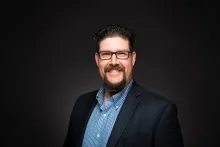
Ben is an elder serving as Pastor for the Salem, Eugene, Roseburg, Oregon congregations of the United Church of God. He is an avid outdoorsman, and loves hunting, fishing and being in God's creation.
