
Greg Thomas
If you are like most people, you probably resist change! You many not personally like to change. If you do feel this way you were born in the worst possible time in human history. More change has occurred in the last 100 years than in the previous 5,000 years combined. Today, we are on the cusp of another technology and medical revolution. In this Sermon, I would like to discuss the issue of accepting change. It’s all around us, and constant. How are we adapting to a world of continuous change, and how should we respond to it?
This transcript was generated by AI and may contain errors. It is provided to assist those who may not be able to listen to the message.
Well, thank you, Mr. Scapura and Mr. Graham, and happy Sabbath to all of you. Welcome back from the Feast of Tabernacles. Hope you had a wonderful feast this year. My wife and I had a lovely feast in England and Wales. There were about 170 brethren in the Dudno Wales. We had a wonderful time. Actually, I was going to try to visit some of my relatives there, but their parole officer said no, so that didn't happen. But we are glad to be home and to be with all of you as we begin this Sabbath day or continue this service. I have a question for you to begin my sermon today. How well do you adapt to change? The reason I ask you that is most of us don't deal with change well at all. We tend to be, because we're human, we tend to be creatures of Hamlet. We tend to like things smooth and quiet and nothing shocking and nothing out of the ordinary. But have you ever considered that the subliminal message behind all of God's holy day seasons is change? They're based on a teaching to get us ready to accept change. Let me give you some examples. So you're a quiet, cheap herder in Naphtali, but three times a year, no matter how normal and quiet your life is, you have to pack your mule, grab your family, and go to one of the pilgrimage festivals in Jerusalem. That's change. You leave your home, you leave your comfortable surroundings, you travel to Jerusalem, which would have been very difficult at that time by just road, pitch up a tent, or try to stay in an inn, or do something so that you can be there for the three festival seasons. And of course, they were the days of Unleavened Bread, what we today call Pentecost, and then the Fall Holy Days was the third festival pilgrimage of the year. And look at the Holy Days even more closely. What do we do during the days of Unleavened Bread? We do something that totally breaks most of our habits. We throw out all that soft, loving bread that we have in our homes, and we eat unleavened bread. We eat something like cardboard for seven days. That's a change for most of us that is totally getting us out of our routine of what we normally do. How about atonement? What do we do in atonement? We fast! We don't eat or drink for 24 hours. That pretty well shakes us up that day and gets us out of our routine. And of course, there's the Feast of Chapernacles, in which for eight days we live in temporary dwellings.
So is there a subliminal message that God is teaching us in these actions by His instructions on His Holy Days? If you're like most people, you probably resist change. You may not personally like change. If you do feel this way, I have some really bad news for you. You were born in the worst possible time in human history.
Because more changes occurred in the last 100 years than in the previous 5,000 years put together. And they say those who study technologies and medicine and those who look at our world say that we are in the cusp of another breakthrough that is going to be as revolutionary as the Industrial Revolution was near the end of the 1700s. With AI and other technologies evolving, medical care just leapfrogging the medicines, the technologies they have today, they say we are in the cusp of another entire revolution. Well, in this sermon, I would like to discuss the issue of change. After all, it's all around us, isn't it?
It's not only around us, the reality is it's constant. And how are we adapting to a world of change? Now, I'm not talking about changing our Christian values. I'm not talking about the need to change our belief system. I'm not talking about changing our lifestyle to conform to the world. Now, I'm not talking about that at all. But I am asking how well we adapt to change in everyday events and how an ever-changing world is affecting our lives. Here's the reality. The reality is, and we don't like to hear this, but change is a constant and natural part of human life. If I took a picture, a snapshot, a picture of all of you today, that will never exist again because of change. Next week, some of you may not be here, you may be ill that week. If I took that same snapshot a week later, we may have some visitors. You may have moved in a row. At least you'll have different color clothes on, most of us. Hopefully. But the point is that everything is a snapshot in time. Life is constantly changing. Modern technology is rapidly advancing. We have AI, which is literally going to change the way a lot of us do things, including the way governments interact with us as citizens, interact with each other. The scripture said in Daniel 12, verse 4, that knowledge shall increase. So none of this should be surprising to us that we are living in an age of rapid change. We're all aging. I know we don't like to admit that, but no matter what age you are, if you take a look at a picture of yourself ten years ago, you will see that you changed. That your physical features change. Our children change rapidly, especially when they're younger. And they grow up. And in some of our cases, our grandchildren are growing up, and they're leaving home. Society is constantly changing. You know, I've lived long enough to see our society and our culture swing from a left perspective to a right perspective. About when I was born, the president was General Eisenhower. And before him were some very progressive presidents, and the nation switched from left and swung to the right. And then in time, as I'm a small child, it switches back to the left again. And then you had the Reagan Revolution. It swung to the right. And then after Ronald Reagan, we had a few intermittent presidents, and eventually it swung to the left. Now it's swinging to the right again. You see, it's constant change. And as I've said before, the pendulum never seems to settle in the middle. That would be too easy. It's always on the far side of the left or far side of the right. So things are changing. Fads change. Just look at TikTok and see the latest fads that are all constantly going on. Kids trying new things, swallowing this or doing this. Fads are constantly changing. Fashions, I finally figured out. The fashion world is a scam.
Because just when ties are wide, and I buy all wide ties, then now narrow ties come back into fashion. So they're just waiting for you to throw away all your clothes into a rummage sale so that they can bring that style back. So you have to go out and buy clothes all over again. The way businesses are changing, the way they treat customers, the way we do business online, and the way that we are targeted by the analytics and so on of businesses today just has been rapid change. Government, you know, what can I say about government? It's more intrusive than ever when my wife and I went to Ireland. Now they're scanning your face. Security is nothing like when we went to Britain two years ago. Now you walk up there and they've got this scan of your face. They know immediately who you are. It's easier to get through security and passport and everything to get into a foreign country. But, you know, Big Daddy is watching and knows a lot more about us than we realize or would care to admit. And, of course, education has changed dramatically. The traditional kinds of things that I was taught, like civics and American history, as a young person, are no longer taught in many schools today. They've been replaced by other things. So education has changed. The church has changed.
I've been in the church well over 50 years and I can tell you that it has changed over 50 years and virtually all of it for the good and for the better. After all, the Scriptures do say in 2 Peter 3, 18, grow in grace and knowledge of the Lord. And that's what the Church of God tends to do.
Change is all around us and will continue around us at an ever increasing pace. And we have been called to a life of change. We started that process. Think about it. Was repentance a change in your life? Wow, what a dramatic change. We were heading in one direction and repentance said, I'm going to turn around and now I'm going to walk towards a godly way of life. I'm no longer going to live the life I was living before. That's pretty dramatic change. And conversion is a process, not an event. We receive the gift of God's Holy Spirit. So we understand the need for change, for constant change. But it is so easy for us because of our natural resistance to change, to try to mute it.
But we should never forget that God gave us the ability through His Holy Spirit to accept change, to adopt the change, and to make important personal changes in our lives. Let's go to Ecclesiastes chapter 3 and verse 1 and see an example of the dynamics of change.
That's Ecclesiastes chapter 3, verse 1.
The author was inspired to write, To everything there is a season, A time for every purpose under heaven, A time to be born, A time to die. That's a pretty dramatic change. A time to plant, a time to pluck with His planet, a time to kill, a time to heal, a time to break down, a time to build up, a time to weep, a time to laugh, a time to mourn, a time to dance, a time to cast away stones, a time to gather stones, a time to embrace, a time to refrain from embracing, a time to gain, and a time to lose, or railways, and a time to trust. A Sic Installation. Wyoming.
But what is Biblical Scripture telling us? Is that the truth? Life is constantly changing. And we live our life in chapters. That's really how we live our lives. Being a small infant was one chapter in our lives. Adolescence was another chapter in our lives. Being a teenager was another chapter. Being a young adult was another chapter. Having an intimate marriage relationship is another chapter. The introduction to children in our lives is another chapter. And I could go on and on and on through the whole life process.
But I think you understand, then appreciate, that we live our life in chapters. And they're all different. And they're supposed to be different. Would you buy a book in which you read chapter one and chapter two was exactly the same as chapter one and chapter three the same as chapter one, chapter four? No, you wouldn't buy that book. It's boring. There's nothing new. There's no progression of events in that story. And the same is true for our lives. Today, I'd like to contrast a few individuals who experienced great change in their lives.
Some embraced it, and they're to be commended for that. And some, unfortunately, resisted it with every fiber of their being. And I want to see what we can learn from these examples. There are three lessons or three examples that I'm going to mention today. And we're first going to start out by looking at Lot, Abraham's nephew.
If you'll turn to Genesis chapter 19 and verse 13. Now, he was called by the Apostle Peter in 2 Peter chapter two and verse seven, righteous Lot. And we're going to see here that this is a chapter in his life. He is not demonstrating very much righteousness. We don't have the story of his entire life. Perhaps he learned many things through the experience of Sodom and Gomorrah, and later came to change his life and turn his life around. I don't know. I'm not going to judge him. I believe what Peter said, but I also know that what we're about to read about him is not a compliment.
It shows a man who was so deeply in a rut in his life that he resisted any attempt to change, even to the point of allowing himself to come very close to death because of his disobedience. So let's read about it. Genesis chapter 19 and verse 13. I think we know the story. God has decided to destroy Sodom and Gomorrah, and he sends two angels to scout out the city, and they go in the city, and they're welcomed by Lot into his home.
Things turn ugly from there, and there are some very deviant behavior that's demonstrated by people who come to Lot's home, asking for the strangers or the angels so that they can be abused, and one thing leads to another, and here's the statement we'll pick up in verse 13. The angel says, for we will destroy this place because the outcry against them has grown great before the face of the Lord, and the Lord has sent us to destroy it.
So Lot went out and spoke to his son-in-law who had married his daughters, sons-in-law who married his daughters, and said, Get up, get out of this place, for the Lord will destroy this city. But to his son-in-laws, he seemed like he was joking. So it seemed like something that was certainly not going to happen. Lot is told to leave the city to spare his life, and he's also told to tell his relatives to leave at once before the destruction could begin. As a matter of fact, the destruction couldn't begin until he got out of town.
Lot lived in Sodom because he liked it there. He had become spiritually blind to the perversion and corruption that existed in Sodom. But in his mind, it was stable. It was his home. Everybody knew him. He knew everybody. He had become complacent. He had accepted a kind of lifestyle that had grown up in that city. He didn't want anything different. The way he offered his daughters to the degenerate men of the city of Sodom shows how far his values had eroded. Lot was at ease with his dysfunctions. He really didn't want to change. He wanted to stay where he was. Verse 16. So he's told he needs to leave.
It says, And while he lingered, instead of saying, Okay, I'm ready. Yep, need to get out of here. Time for a dramatic change. This place is going to be destroyed. Let's go. No, while he lingered, he doddled. The men took hold of his hand, his wife's hand, and the hands of his two daughters, the Lord being merciful to him.
Why is the Lord merciful? Because he is being disobedient. The angel said, Get out. Get out now. How does he respond? He did theirs. He lingers because he doesn't want to go. He doesn't want the change to happen in his life. The Lord was merciful to him, and they brought him out and set him outside the city. So it came to pass when they had brought him them outside that he said, Escape for your life.
Do not look behind you nor stay anywhere in the plain. Escape to the mountains lest you be destroyed. But you know what? Lot doesn't want to escape to the mountains. Again, he's being disobedient. He's told, Escape to the mountains? His response really is, No. I don't want to escape to the mountains. He was comfortable in Sodom, and he really didn't want to leave. This was a time of great change in his life. He was unprepared for it.
He resisted it. He would have rather stayed there, and if the angels hadn't literally dragged him and his family out by their hands, they would have died right there and then. But God was merciful. Even though his life was in danger, he loved his routine, everyday life too much. Lot loved the rut his life was in. He was comfortable accepting and adopting the lifestyle around him. He didn't want to change any part of his daily existence or habits. He was satisfied with them.
So how about us, brethren? How about us? I can remember as a small child, now I explained this because the last generations of 20-30 years old can't relate to this. When I was a small child, we had a record player, and it played 33 RPM records, which were pretty big. But when the record got worn, it would skip, and we would get to a certain place in the record, and it would say the same thing over and over again. Now, I learned that many years later when I was trying to convert a bunch of records I had to CDs.
So I wanted to take the record and burn them on CDs, because that was better technology. So I thought until the records, I'd walk away, and the record had been skipping for 20 minutes, and the CDs are burning, the skip into it. But that's how some people's lives are. This is how Lot's life was. He was like a phonograph needle, needles stuck in a rut, just skipping through the same old acceptance of things day after day, over and over again. Verse 18, Then Lot said to them, Please, know my lords, remember they told him to escape to the mountains.
Indeed, now your servant has found favor in your sight, and you have increased your mercy, which you have shown me, by saving my life. But I cannot escape to the mountains, lest some evil overtake me, and I die. Does that even make sense?
The alternative is that you stay here and you get roasted.
That doesn't even make sense. Continue in verse 20. See now, this city is near enough to flee to, and it's a little one. Please let me escape there, it's not a little one, and my soul shall live. And he, the angel said to him, See, I have favored you concerning this thing also the second time you have been disobedient, but we are cutting you some slack. We are giving you mercy. In that I will not overthrow this city, for which you have spoken. Hur, he escaped there, for I cannot do anything until you arrive there. Therefore the name of the city is called Zor. The sun had risen upon the earth, when Lot entered Zor, and the Lord rained brimstone and fire in Sodom and Gomorrah, from the Lord out of the heavens. And so he overthrew those cities, all the plain, all the inhabitants of the cities, and what grew on the ground. To reading closely here, we see that Lot didn't even want to go to the mountains. To escape death, even though he was specifically told to go there. He was resistant. Resistant to change. Sometimes, are we really that much different than Lot? When God is trying to send us a message, Hello! You need to change this in your life. You need to progress to another level. It's time to grow in the grace and the knowledge of the Lord. Can I get your attention? Hello! And how oftentimes are we just absolutely oblivious to the signals and what God is asking us to do regarding changing something in our lives? Verse 26, But his wife looked back behind him, and she became a pillar of salt. I like to say the very first deer lick that ever existed on earth. Lot and his wife were apparently matched bookends. They were made for each other. She didn't want to leave Sodom either.
She also liked the rut her life was in because ruts are easy. All you do is go through the motions and routines. When your life is in a rut, it requires minimum effort. There is minimum risk. The results are usually predictable, but the downside is nothing new is really accomplished.
Usually, there are fewer opportunities, greater challenges, but fewer opportunities because we just see them go by. We don't want anything new. We don't want to try anything new. We want to just stay in the comfortable rut that we're in.
I think this is something that, as we come back from the feast this year, is really good for us to think about. They had an opportunity to change and learn, but all they wanted to do was to return to their own little world of comfort and the sameness.
Nothing challenging them, nothing new, nothing different. They wanted to go back to a dying world that had nothing to offer them.
I believe that this warning was what the late pastor, Rick Shabie, was concerned about in many of his messages. Listening to many of his messages over the years, I think that was kind of the theme of his message.
He was concerned that many brethren are not growing, that they're stuck in a rut, their spiritual growth is muted, and they're just not taking advantage of the opportunities that God gives us through His Holy Spirit to take our lives to an additional level. I think that was a concern that he had reflected in a lot of his messages.
Brethren, it's far too easy to get into a spiritual rut and become too comfortable with things, too comfortable with ourselves, and to stop growing.
The purpose of change is to purposely challenge us outside of our comfort zone, because that's where growth occurs when we get outside of our comfort zone.
Isn't this an example of a lot like us, brethren? Sometimes, at least, within our Christian walk. Oftentimes, we also experience dramatic changes in life. Sometimes we face conditions where we are forced to change, and that's always more painful.
The truth is, it's much easier to be proactive about change when we see something that needs to be changed to make the conscious choice to begin that change. Because if we don't, in time, that change will be forced on us, and that'll be much more confusing, much more emotionally devastating, and much more challenging when it is forced on us against our will.
Do we get angry with God, or with the circumstances we find ourselves in when something unusual crops up or change occurs? Do we get upset because change may wrench us out of our routines and our ruts? Or do we view them as we should, as opportunities to experience something new? To go to a new place? How do we view change?
Now, don't get me wrong. Some routines are good. For example, consistent Bible study and prayer every day is good. But even these can lose effectiveness if they become a mere ritual, and we don't add some element of change into these important habits every once in a while. I mean, billions of people on earth read their Bibles every day.
They're not getting much out of it, but they're faithfully reading their Bibles every day because it's become a ritual to them.
So we've been looking at the example of Lot. Now I'd like to look at his uncle, Uncle Abe. Lot was the polar opposite of Abraham when it came to accepting and adapting the change.
Let's go to Genesis 12 and verse 1 and see the different approach that Abraham had compared to what we just saw in Lot's life.
Genesis 12 and verse 1, And in a direct reference to the eventual birth of the Messiah, Jesus Christ, or Savior, and in you all the families of the earth shall be blessed. So Abraham departed when the Lord had spoken to him, and Lot went with him, and Abraham was 75 years old when he departed from Haran.
So God calls Abraham, shall we say, to a sudden dramatic change? At the age of 75, he tells a 75-year-old man to pack up his bags and get moving, and I will tell you where later.
So do you think that was difficult to do? I was thinking about this this morning. Now, I'm not quite 75 years old, but I thought, how would I react, even if I knew it was the voice of God?
And a voice came to me and said, Gather your passport, and BJ's passport, and you and BJ fill up the tank of your car, and take your nephew, Joe Horton, with you.
And I thought, do I have to take Tina as well? I thought.
Because all of her plants won't fit in my car.
But if the voice said, anyway, get in your car, and I want you to drive to Chile, and when you get to Chile, then I'll tell you where you go next. Would I do that? I'm not sure I would. That's really a bold thing to ask of anyone to do. But you know what? Abraham accepted this opportunity without whining, without questioning why God asked him to do this. He didn't say, God, why me? What did I do wrong?
Abraham was to wander from place to place for the rest of his natural life. You don't see a record of him complaining that God asked him to make a dramatic change in his life.
And why did he accept this? Because Abraham had the vision to understand that change is a natural part of life.
Life is a pilgrimage. It is for all of us. And it was for Abraham. He looked into the future, and he saw the long-term benefits of accepting, even embracing a lot of change.
And God encouraged him by telling him what would be the result of him willingly saying, I'll do it. Okay, great. And that's what he did. Let's see another dramatic change later in his life. Let's go to Genesis chapter 23 and verse 1.
Genesis 23, 1. It says, Sarah lived 127 years. These are the years of the life of Sarah. So Sarah died in Kurjah Arba, that is Hebron, in the land of Canaan. Abraham came to mourn for Sarah and to weep for her. So here we see in this chapter of his life, he lost his beloved wife Sarah.
And he wept for her. He loved her. He loved her deeply. She was his life partner. And he mourned her loss. This, too, was a big change in his life when you lose your life partner. That is a huge change in your life. By now he was an old man at this time. But how did he view this dramatic change? Genesis chapter 24 and verse 1. It says something about Abraham.
It could also be said, the same thing about Mark Graham. It says, now Abraham was old, well advanced in age, and the Lord blessed Abraham in all things. So let's go to Genesis chapter 25. A little more time goes by. Verse 1. Abraham again took a wife and her name was Keturah.
And she bore him Zimran, Jokshan, Midan, Midian, Ishbach, and Shua. Now Abraham may have been around 150 years old when he married Keturah. There's an old southern expression that says, he old but he ain't dead.
And that's the case here with Abraham in his latter years. Yes, he's a very old man. Yes, he deeply loved Sarah. But yes, he looked upon change, even dramatic change. Not as the total end of the book of his life, but as a new chapter in his life. Verse 7 states, he was 175 years old when he died.
So he may have been married for about 25 years to this woman. You see, to Abraham, life was still worth living and enjoying. He was still open to change. He was still willing to do something new and different. Life was enjoyable and worth living. There are still more experiences for him to learn in life. He wasn't about to quit living and fall into a rut for the rest of his existence. Because he accepted change throughout his life, he demonstrated faith in God and his promises and became the father of many nations. One final example today about accepting change. The final example of one who accepted dramatic change is none other than our Lord and Savior, Jesus Christ.
Now that may surprise you because Malachi chapter 3 and verse 6 states, quote, God does not change. And many people take that out of context. In context, that's in reference to his character, his laws, his values, his ethics. It's not talking about everything regarding God. Actually, the most dramatic change that ever took place in human history that has ever occurred was for your benefit and for my benefit. It was because God loves us. God himself was willing to experience a sudden and dramatic change for us. Let's read about it here in Philippians chapter 2 and verse 5. Now I'm going to quote from the translation God's Word, and I'm sure our crew will maybe put up the New King James Version for you to read along, but I'll be reading just a little bit of an enhanced translation. Here's what it says. Have this same attitude that Jesus Christ had, although he was in the form of God and equal with God, he did not take advantage of this equality.
In other words, he didn't say, wait a minute, I'm part of the Godhead. I'm not giving this up. I'm not going to change. I like the rut that I'm in. He didn't say that. It says he didn't take advantage of the fact that he was equal with the Father, and when it came time for the most dramatic change ever to occur, for him to go from the Godhead to a mere human being, he was willing to do it. He did it. Verse 7, instead he emptied himself by taking on the form of a servant, emptied himself of his glory, emptied himself of his full spiritual nature to take on the form of a servant by becoming like other humans, by having a human appearance, and having the same problems that humans have. He sweat like humans have. He felt pain like humans do. Verse 8, he humbled himself by becoming obedient to the point of death on the cross. Verse 9, this is why God has given him an exceptional honor, the name honored above all other names, so that in the name of Jesus everyone in heaven and earth and in all the world below will kneel and confess that Jesus Christ is Lord to the glory of God the Father. So he started out as God with all spiritual glory and splendor, and then he accepted the most dramatic change, or you can put it this way, the greatest demotion that ever occurred in the history of mankind, ever to take place. He was humbly born of a woman. He lived as a human male, and at this time he was no longer fully spirit. Now when he became of age and was baptized, the Father gave him his spirit that he used, and of course he had a close relationship with the Father, and he relied on the Father as he walked on earth, but he was dramatically different. He was actually lower in glory and splendor than the angels, and that's what Hebrews chapter 2 and verse 9 and 10 tells us. He was lower than the angels. Talk about change. Talk about a culture shock. Yet he did this willingly because he loves you, and he loves me. He put all of his greatness aside to live as a mere man because he believes we are worth the effort and sacrifice. The humble demotion that Christ willingly accepted made him more fitting as a high priest. So the change not only helped us, but do you realize the change helped him? Let's read about that, Hebrews chapter 4 and verse 14.
First, before we go to verse 14, let's go to chapter 5 and verse 8. And see, this change not only helped us, it made it possible for us to have a Redeemer and Savior. The change also benefited him. Chapter 5 and verse 8, Though he was a son, yet he learned obedience by the things which he suffered. And having been perfected, he became the author of eternal salvation to all who obey him. Jesus Christ even stepped it up a notch by that experience. So the change not only benefited us, him being willing to change, except that dramatic change, also helped him to grow. And benefited him. Now let's go back to chapter 4 and verse 14. He was able to learn firsthand what we call today empathy. Identifying with someone, understanding another person's situation, their feelings and their motives, and why they're struggling and why it hurts emotionally or physically. Today we use the expression, been there, done that. Let's take a look here in chapter 4 and verse 14. Seeing then that we have a great high priest who has passed through the heavens, Jesus, the Son of God, let us hold fast our confession. For we do not have a high priest who cannot sympathize with our weaknesses, but was in all points tempted as we are, yet without sin. Let us therefore come boldly to the throne of grace, that we may obtain mercy and find grace to help in time of need. So it not only helped us, it helped Jesus Christ. He became more empathetic to the fears and the anxieties and the struggles we go through as a human being. Why? Because he became human. That's why. Brethren, we must start by accepting the fact that change is constant, and it is an everyday part of life. And if we don't proactively begin making some of those changes we need to make, sometimes events will force us into that change. Sometimes it may even be God's correction, whether we want it or not. And it'll be a lot more difficult if it's forced upon us. Then if we say to ourselves, hey, you know what, I need to change that attitude. I need to get rid of that bad habit. I need to acquire a new habit, something good and healthy that benefits my life.
If we don't do that, then we're going to interpret change as a loss of something, or an elimination of something important, much like Lot did. We may get negative and view all change as the end of something important. That's what Lot himself struggled with. But the right perspective is to view change as an opportunity to gain and experience something new.
Just like Abraham. Just like our great High Priest, Jesus Christ. Brother, in our book, our life is a book with many chapters, and each chapter has a beginning, and each chapter has an end. And each following chapter is intended to lead us to something new. And that's always going to require change. We need to view change, and we need to look at change as something positive, natural, intended by God, built into the system of this physical world, and look at it as something positive. And not just simply as something that's negative, or evil, or bad. Again, change is easier when times and events are stable.
This is the time when things are good, when life is stable and comfortable, this is the time for self-reflection and examination. This is the time to make change proactively, to say, yes, I need to make those changes. Again, that's a lot easier than going through a period of neglect, or when a situation forces us to change.
It's much harder, it's more stressful, and it's more confusing when we're forced.
In closing, as human beings, we are creatures of habit, and we tend to resist change. We like the stability. We like routine. But remember to look at all the possible long-term effects and options possible through change.
Abraham could see it. It made him a better patriarch, made him a better servant of God.
Even Jesus Christ, our great High Priest, grew through the process of emptying Himself of His glory and walking on this earth as a mere human being.
And we need to keep that in mind. After all, it was through dramatic change that we started this process in the first place. We repented. That was pretty dramatic. We began the process of conversion. But somewhere along the line, it's too easy to just settle in and to allow that process to begin to stall out.
But allow that process to work with you because you have a very special tool. You have the gift of God's Holy Spirit, which can help us to accept change, to adopt the change, to realize change is natural, and it's always going on even though we may want to deny it, and to allow that change to help us to grow.
Brethren, God is not done with us yet. We are still His work in progress. Let's take what we learned from the recent Feast of Tabernacles and embrace the change we need to make. Have a wonderful Sabbath.
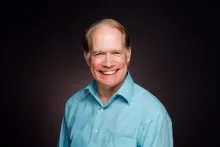
Greg Thomas is the former Pastor of the Cleveland, Ohio congregation. He retired as pastor in January 2025 and still attends there. Ordained in 1981, he has served in the ministry for 44-years. As a certified leadership consultant, Greg is the founder and president of weLEAD, Inc. Chartered in 2001, weLEAD is a 501(3)(c) non-profit organization and a major respected resource for free leadership development information reaching a worldwide audience. Greg also founded Leadership Excellence, Ltd in 2009 offering leadership training and coaching. He has an undergraduate degree from Ambassador College, and a master’s degree in leadership from Bellevue University. Greg has served on various Boards during his career. He is the author of two leadership development books, and is a certified life coach, and business coach.
Greg and his wife, B.J., live in Litchfield, Ohio. They first met in church as teenagers and were married in 1974. They enjoy spending time with family— especially their eight grandchildren.
