
Gary Petty
This transcript was generated by AI and may contain errors. It is provided to assist those who may not be able to listen to the message.
Ab Sabbath, everyone! I didn't realize I forgot to look at the schedule. I didn't know we didn't have a sermonette speaker either, so I'm sitting there anticipating someone to give a sermonette.
A couple of announcements. We don't have a sermonette speaker, do we? I just... okay, I just... You'd think I'd have that schedule memorized, but I don't, you know, so... A couple things to be aware of. Remember the Feast of Trumpets coming up on the 14th. Services are at 10 a.m. and 2 30 p.m. or I'm sorry, 10 30 a.m. 2 30 p.m. right here. Murfreesboro will be coming to spend the Holy Day with us, so that'll pack this place. I know that means a few people will have to meet downstairs, and that's unfortunate, but we'll make do with the best we can, but it's nice to have everybody together for the Holy Day. And the David Tomitz will be here at normal place, normal time, just on September 23rd. I also have the excused absence, the letters that people need for schools and work. I've been sending them out. I know this week and other people, I brought some last week, but a number of people emailed me and said, hey, I need to pick one up, so I have those with me this week. Go for a couple other quick announcements. One, there had been some interest in maybe having a Sposos Club. We do have the sign-up sheet back at the information table. We've had two men approach me in Murfreesboro and said, hey, if we have one, they would like to participate. So if you would like to participate in a Sposos Club after the feast sometime, please be sure and sign up, because we need to have a minimum number of men. We need 12 to 15 men to really be able to do it. So I encourage all of you that would like to participate in that to please do so. And then I had a number of people ask if I might start doing a monthly Bible study in Dickson just once a month. That is possible. Once again, I need to know how many people are really interested. So if you're from the Dickson area and you would like to attend a monthly Bible study in the middle of the week sometime on a Wednesday night, once a month during the up there in that area, please be sure and sign up at the information table so I know if there really is an interest in that. A couple prayer requests. Aetha Elephorp is in a considerable amount of pain in her jaw. Of course, you know the difficulty she's been going through. Request prayers for relief as she waits for her surgery to be scheduled. So please keep her in your prayer. She has just been through a... that's a horrible trial that she's been going through. And didn't please pray for Francis and Lee Robinson? I usually see them because they know where they sit. They aren't able to be here today, and they do need all of our prayers.
If you would, let's turn to Mark 15.
A little passage of Scripture you see read quite often. Mark 15. But there's a phrase in here that I want to zero in on. Verse 43.
Joseph of Erthabea, a prominent council member who was himself waiting for the kingdom of God, coming and taking courage, went into Pilate and asked for the body of Jesus. And just a little bit of commentary here that Mark puts into this about Joseph. He says he was waiting for the kingdom of God. You think about if you had something to be said about you in one sentence. So he's a prominent council member, so he's a member of the Sanhedrin. Okay, well that's an important thing. But what would you say about somebody to sum up their whole approach to life? He was waiting for the kingdom of God. It's interesting in Greek, the word waiting there, it's not passive. It's a very active word. You know, you could wait for something in a very passive way, or you could wait for something anticipating it. So this was a very active anticipation. He was anticipating the kingdom of God. You and I are about to enter into the Holy Day season, the Fall Holy Day season. We're going to be observing the Feast of Trumpets in just a few weeks, and the Day of the Hautomans going to the Feast of Tabernacles. And we're starting to get ready. I know some of you have already talked to people who have started packing already. They're all excited. People are making plans. We had to buy some airline tickets, which are very expensive. You know, we're getting ready. We're thinking about it. Just last Sunday, I had to sit down with a group of men on a Skype meeting, and we had to go through all that we were going to be...the subjects we were going to be covering, and what we're going to be doing at the Feast, or we're going to be speaking about, so we can sort of coordinate, so we're not overlapping each other. So we're getting ready. Halls are rented. We're getting excited. We're looking forward to those times that are ahead of us. But in addition to the physical parts of these days, because we do eat better. We get away from the house. In many ways, it is like a vacation, or it can be like a vacation. And there's lots of fellowship. And we do enjoy, of course, going to services. And we get to learn things. We take notes. We look at our Bible. We have an opportunity to discuss things with other people. But I want to talk about what do we bring home? Here we are just looking forward to these events. But I want to talk about what happens on the way home. What happens a week after the last great day is over? You're back at home, and you walk in. You walk in from the feast, and you're on this high. I can remember one time coming home from the Feast of Tabernacles, just excited. The next day I went into work. I was excited to go to work. And my boss said, oh, it was so terrible while you were gone. He called me into his office, and he spent about two hours just telling me all the bad things that had happened while I was gone. At the end of the two hours, I went out, got in my car, and went home.
I had to go home for about a half hour just to decompress from all this bad stuff. It seemed like all this spiritual energy that had come in from the feast was just drained, just like that. I want to talk about four things that can happen to us at the feast. It takes a little work. It takes a little concentration. It takes some prayer. But four things that can happen to us that will transform us, that when we come home, that can help carry us through what God wants to do in our lives. The first thing I want to talk about is visualization. Okay, what's that mean? That means the ability to visualize something. Now, salespeople do this all the time. Just think of yourself driving this car. Think of yourself sitting behind the wheel. Think of yourself in that suit. Think of what this piece of furniture would look like in your house. Now, there's a reason they do that, because if you can visualize it, it becomes yours. It becomes part of the way you think. It is the ability to create a mental image that is real. All great things that are done by human beings are done because somebody could visualize it. Somebody saw it in their mind before it existed. All great inventions, solving problems. Now, I talk to people all the time. They say, well, I had this problem. I couldn't figure it out. I couldn't figure out how to fix my car. And one night, I wake up in the middle of the night, and there it is, the solution. They can see the solution. The brain is working while they're asleep and actually fixes the problem. So what happens is they can visualize it. One of the reasons we go to the Feast of Tabernacles is so that God can help us visualize what He's doing, the future that He has planned, so that we can see it so clearly that we want to go there. Now, it's easy to get so caught up in either how nice your motel room is or how not nice it is, or the fact that your car broke down, or the fact that the kids just seem to be out of control because they're not in their normal environment, your little kids are running around, or you know, you don't feel good that day, or all the other things that just happen to us. It's just normal human experiences that we can get so caught up in the physical things of the Feast that we don't get what God wants to give to us. What He wants to give to us is a mental picture. That mental picture isn't about it can, you know, it isn't about all the fun we have at the Feast. Now, we should have fun at the Feast. That's part of the experience. But if we come home with a vision of what vision did you get from the Feast this year? Oh, it's great. I beat my handicap. I mean, I did really good out on the golf course. A bunch of us went golfing one afternoon after services, and it was great. I could visualize in my swing, you know, if you're an athlete, visualization is very important what they teach. You see what you're going to do before you do it. And you practice it in your mind over and over and over again, so that your brain just does it. So if you come home from the Feast, having visualized your golf swing, and it worked, you may be missing something.
Have we...do we come back with what God wants us to have implanted into our minds? That's what the future is supposed to look like, not just for us, but for all of humanity. One of the great themes you will find throughout the Scripture, and it's interesting, is that we live in spiritual darkness. And God uses this analogy that we live in darkness, and He turns on the light. In fact, He is the light, and we can see something that we could not see before. And if someone doesn't have that light turned on, they can't see it. Let's look at John 12, John 12.
Here, Christ is talking about Himself, and He's talking to His disciples. And, you know, when you read through what Jesus told those disciples, you'll see much of the time they walked away. I would have loved to see that part of the conversations afterwards. What do you think He meant? What was He talking about? And as you see, if you go through, essentially, John, you see a progression of understanding as they were with Him over the time period they were with Him. Verse 35 says, and Jesus said to them, A little while longer the light is with you. Walk while you have the light, lest darkness overtake you. He who walks with darkness does not know where he is going. While you have the light, believe in the light that you may become sons of light. These things Jesus spoke and departed, and was hidden from them. He said, you see me. I'm showing you what you cannot see, what nobody else can see. He was telling them, on the face of the earth, nobody sees what you see because you're with me. Therefore, become sons of light. That theme that carries through the New Testament, that if God shows us the light, and remember the light is from God, it's His light, it's actually Him. Jesus says He is the light. So if God comes into our lives so that we can see, He expects something from us, now that we can see, we get a vision.
And I can remember being a child, and coming home from the Feast of Tabernacles, and I don't even remember how old I was, but I had this little bit of a vision of what the world would be like after Christ come back. I'll never forget that feeling of, oh, that's what it's going to be like. Little bit, you can just see it.
Well, by now, for most of us, we've been doing this a long time. That viewpoint, that vision, should be very strong. But there's a funny thing about doing it for a long time. It can become weak. Actually, a weak vision. We'll talk about that in just a minute. Let's go to Ephesians 5. Paul uses the same analogy.
Ephesians 5 verse 8.
Now, this is very interesting how Paul writes this. Take it from Greek into English. They had to capture the meaning. They had to interpret it in a very sort of strange way. He says, verse 8, For you were once darkness. We would think it's the way you were once in darkness, but that's not the meaning. You were darkness. Living in darkness, in darkness of our minds. He says, You were once darkness, but now you are light in the Lord. Walk as children of light. The fruit of the Spirit is in all goodness, righteousness, and truth, finding out what is acceptable to the Lord, and have no fellowship with the unproof works of darkness, but rather expose them.
Here's the funny thing about light. When the light comes on, you can't hide things. You ever walk into a house where there's roaches, and you turn on the light? They're just scurrying on. That's right. You're not from Texas. You know those great big ones that fly? You can actually hear them, and they just scurry. They scurry all over the place. In the darkness, you don't know they're there, but as soon as they're exposed, they run to find more darkness. If you are a child of light, you will find difficulties in life because when you're with other people, they will feel exposed. Not that you're going on purpose, but you can help it.
Light's an amazing thing. I love Phil Bois, the old movies, because of what they did with light. But I also have to laugh when you watch old television shows. I was watching in Western a while back. I forget what it was. I sat down at lunch, and I was flipping. There's this scene.
I don't even know what the Western was, but I caught it because it was so funny. A guy goes into a room and lights a lamp. Now, remember, there's a big spotlight so they can film what's going on. He lights the lamp, and the lamp casts a shadow. How does a lamp, a lighted lamp, cast a shadow? The only way that can be is if there's a greater light shining on it.
So it had to be the spotlight for the camera, because it's not possible for a lighted lamp in a dark room to cast a shadow. Light lights up. That big spotlight lit up that room. Well, when we are the children of light, we will expose darkness.
Here's what happens, though, over time. Most of you are here because at one time or another, that light came into your life, and you could see it. You didn't go to the Feast of Tabernacles just to have a good time.
You went to the Feast of Tabernacles because you came home, and you had a vision for humanity. You had a vision of what God was doing, that Christ is coming back, and that the world doesn't come under His direction. And we're not going to have crime anymore, and war anymore, and it was real to you. But over time, that light is on so much, and if we don't take care of it, what happens is we sort of live in fog. Now, you know, when you're in fog, it's early morning and you're in a heavy fog. It's not dark, but it's not really light either, is it?
I don't know about you, but I drive way too fast in fog, at least according to my wife's opinion. And one reason why is it's not dark, but you know, when you're in fog, you really can't see what you think you see.
And what happens with us over time, and I think this is one reason why God has given us the Sabbath every week, and the Holy Days on an annual basis, is because we have to come back into the light and melt away the fog. You know, how do you get rid of fog? The sun comes up and it flares off, right? The light has to be strong. Or what we do is we live in that fog, and we sort of live in a half Christianity. Let me ask you this. How many of you have heard of the Battle of Kiska? My wife raised her. She's heard the sermon before. Oh, one! There's okay, two.
You don't study Kiska. It was a battle in World War II. You know, it's the Battle of the Bulge, the Battle of Midway. No one talks much about the Battle of Kiska. The Japanese took the Aleutian Islands off of Alaska as the only part of the actual United States that they invaded and took. So we decided at one point we needed to go in and take those islands back. So some American, there was an army unit and a Canadian unit got together. They got this big navy fleet, but they really weren't well trained, especially for what they were going into as far as weather. And so they landed 7,000 American and Canadian troops on Kiska. And Kiska is an island that's usually covered with fog, and it's very cold. So they all landed in the fog. They start to move inland pretty soon. A firefight breaks out. And it gets very intense. It took days to take Kiska, and it not only took days to take it, but we took scores, us and the Canadians took scores of casualties. And at the end, they finally took the island and they realized they'd captured two Japanese. And they asked them how many Japanese soldiers were on Kiska. And they said, the two of us. And we surrendered. And they realized that the Canadians and Americans had been shooting each other.
That's what fog does. And they said, the two of us. You think it's light, but it really isn't. You only see things sort of halfway. We can't come back from the Feast of Trumpets, the Day of Atonement, the Feast of Tabernacles, and the eighth day. We can't come back from that in the fog. We have to come back with a vision that God wants us to have. We're going to keep that Feast of Trumpets. And while we do, we should come to a clear vision of the seven great trumpets, the return of Jesus Christ, the resurrection of the saints. We observed that Day of Atonement, that time when God brings us, brings all the saints into this special and unique relationship with Him and Christ. Then we should be looking at that Feast of Tabernacles, that time when Christ is reigning on this earth. And we're supposed to be helping Him change the world. And then that day, the pictures when all the people that ever lived come up out of the ground and have an opportunity to know God. The end of the great white throne judgment is God's throne coming to earth. Now, that's quite a vision. That has to come back real to us, because that means we have another year where, if we're not careful, we'll fade into the fog. The second thing we need to do at the Feast this year, outside of visualization. You know, part of this is you have to talk about it with each other. You have to talk about these things. You have to share it. You've got to listen to every sermon and sermonette. You know, it's easy. Oh, I have heard how many thousands of sermonettes in my life? How many thousands of sermons? But you have to ask God, help me get out of these messages what you want me to get. Help me to get what you want me to get. It might be a phrase that just turns out a little bit light. It might be a passage of the Scripture you've read a hundred times. And there's something in there that for the first time, the light will come on. And you'll see a little bit more what God is telling you, what God is showing you. The second thing, if we're going to visualize, we have to anticipate. Now, anticipation is an emotional reaction. It is wanting and waiting for something. Now, when you're anticipating, when you're a child and you're anticipating getting a bowl of ice cream, nobody can move fast enough, right? You're anticipating. Now, you've all been anticipating going into the dentist chair. It's a totally different anticipation. Let's go to Luke 2, Luke chapter 2.
Luke 21. I actually read part of this in a sermon last month, but I want to hit it again. A little different viewpoint. I want to bring up a different point in it. Verse 21 is talking about Jesus Christ and says that when He was eight days were completed for the circumcision of the child, His name was called Jesus. The name given to Him by an angel before He was conceived in the womb. Now, when the days of her purification, Mary, according to the law of Moses, were completed, they brought Him to Jerusalem to present Him to the Lord. As it is written, the law of the Lord, every male who opens the womb shall be called holy to the Lord, and to offer a sacrifice according to what is said of the law of the Lord, a pair of turtle dogs or two young pigeons. And behold, there was a man in Jerusalem whose name was Simeon, and this man was just and devout, waiting for the consolation of Israel, and the Holy Spirit was on Him. Verse 26, it had been revealed to him by the Holy Spirit that he would not see death before he had seen the Lord's Christ. What do you think about this? This man has a purpose in life. Oh, he had hopes and dreams like everybody else. He had friends. He had family. But he had a purpose. He had been told by God, you will see the Messiah before you die. And every day he got up and said, is it today? Now, can you imagine that? Can you imagine getting up every day and saying, is it today? Is it today? Well, Christ isn't coming back today or tomorrow. We know that. But we have to have that kind of anticipation. Today, God, what is it you want me to do? An anticipation of that event. If you read all it's very interesting because he runs up to Mary and Joseph, grabs Jesus out of their hands and holds him up and says, look at verse 29, Lord, now you are letting your servant depart in peace. I can finally die because it's here. I've seen him. This is him. According to your word, from eyes have seen your salvation, which you have prepared before the face of all peoples, a light to bring revelations of the Gentiles, the glory of your people, Israel. Anticipation. We have to anticipate what God is doing. We have to look forward to it. We have to think about it. It's so easy for anticipation to get clouded out by everything else. I'm not saying we shouldn't anticipate good things and physical things, but that has to be secondary to our anticipation of Christ's return, the establishment of that kingdom and our calling to participate in that.
Or what happens is we get so influenced by the immediate anticipations of life that we stop visualizing what's happening. We stop visualizing. We stop seeing it. This is a common... the visualization and anticipation go together. I can remember seeing Salesman with the radio stations I worked at. He had a picture of a Mustang by his desk. He said, that's why I work. He visualized the car. He anticipated owning that car. It was that real. Every day he came in and said, I have a reason for being here, that car. Well, our anticipation is... yeah, we anticipate physical things, but it's for the great God, and what he is doing, and our remarkable opportunity given to us by his favor to participate in this. So we'll go along with what he's doing to be part of what he's doing.
You know God anticipates these times? God anticipates these times. Look at something interesting in Malachi chapter 3. Malachi chapter 3.
The end of the Old Testament, the last of the Mitre prophets.
Malachi 3.16.
Verse 16. Now, you think of a book of remembrance. Now, if God doesn't have to write things down to remember them, there's a point being made here. He remembers. Everyone who's ever turned to him, who's ever turned to him, who's ever turned to him, who's ever turned to him, he remembers. Everyone who's ever turned to him, everyone that he's ever given his spirit to, he remembers and anticipates their resurrection. Look what it says in verse 17. They shall be mine, says the Lord of Hosts, on the day that I make them my jewels.
That means treasure. Now, what an anticipation. God says, I look forward to the day, and I resurrect these people, and they're my treasure.
I mean, if I told you, I just put in your car a treasure chest with a million dollars in it, I think you would be anticipating that, right? My treasure. What is God anticipating? He says, I will spare them as a man spares his own son. Who serves him? God anticipates when you will see him as he is.
He is looking forward to the time when you stand before his throne, and he says, hey, Bob! Or she and I will be flat on her face, right? Just absolutely in awe. He anticipates that.
See, these holy days express part of God's anticipation, too. What he's working for, what he's looking forward to, what he's going to bring about. So as we learn to anticipate, we're actually learning to anticipate what he does.
We anticipate the time when we stand before him. We anticipate the time when we're changed, and we're rising to meet him, to meet Jesus Christ as he comes down. We anticipate that oneness with God and David Tolman. I mean, the David Tolman to me is so profound. What will it be like to be in that kind of relationship with God? We can get so caught up in, I'm hungry today, that we miss what's actually happening. We should anticipate the fulfillment of that day. I can't even imagine what it's like not to have Satan influencing me. Can you? Because I don't know what that means, because he's been around ever since I was born. What is it like not to have Satan around? I anticipate that.
The third thing, if we're visualizing what God wants us to visualize, we're anticipating it, we will now be motivated to perform preparation. Visualization, anticipation, preparation. We will want to prepare. And if you anticipate something, you don't just sit around idly and say, oh yeah, it'll happen. Oh, that'll be nice. You actually want to prepare for it. You want to be ready for it. So the light came on so you could see, so you can prepare. Luke 12. Luke 12.
Verse 35. So, you know, in other words, be dressed. Be dressed and prepared, but it says, let your lamps be burning. We'll see throughout the parables of Christ, where lamps are symbolic. That light is the light that God gives us. The oil in those lamps is God's Spirit. So he says, let your lamps be burning. Be close to God. Let God be working in your life so that light is bright. So that you're not living in fog, you know, that light's little, damn little lights you're living in fog. Let it be bright so you can see, you can see the world around you. You can see yourself. You can see what God is doing. And you yourselves be like men who wait for their master. When he will return from the wedding, when he comes and knocks, they may open him immediately. Blessed are those servants who the master, when he comes, will find watching. Surely, I say to you, he will gird himself and have them sit down to eat and will come and serve them. That's a remarkable little statement because he's talking about himself. And it's sort of like when you enter into the kingdom, you can't believe what I'm going to do for you. If you could just keep the lamp burning and let God work in your life.
He says that if he should come, verse 38, to the second watch or the third watch and find them so, blessed are those servants. Remember, the watch was on the walls. They had to have somebody look out over the walls and make sure they weren't being attacked. So they had watchtowers. And there were people stationed, the men stationed in those watchtowers, and they would watch. And every so many hours, someone would come and replace them. But there was always somebody watching.
And he said, you know, if you knew exactly when Christ was coming, I guess you wouldn't have to worry about having your lamp lit today. I mean, oh, well, he's coming back in 30 years. Okay. Well, I'll do other things.
Remember, if you die today, Christ comes for you right now. Because when you wake up, where are you?
It's right now. Verse 39, But know this, if the master of the house had known what hour the thief would come, he would have watched and not allowed his house to be broken into. Therefore, you also be ready for the Son of Man is coming in an hour when you do not expect. You and I must be personally preparing with our lamps. We have to be looking with this light.
But it's so easy for it to go dim. There's so many other things that keep us distracted and put us more and more into a fog so that we're not really in darkness, but we're not really a light either. We just live in the fog.
Look at Hebrews 10. Hebrews 10.
10, verse 32.
He's trying to encourage these people and of course the book of Hebrews was written to Jewish Christians who are about to watch the temple be destroyed. All the things that they do as worship towards God was about to disappear. A way of life. And they were going to have to remember how to worship God now in this new way, this new Christian way. And he's trying to tell them, remember when you moved from Judaism into Christianity. He says, or recall the former days, which after you were illuminated, after the light came on. Go back to that time when you endured a great struggle with sufferings, partly while you were made a spectacle, both by reproaches and tribulations, and partly while you became companions of those who were so treated. He says, remember what that was like? Some of you, when you came into the way of God, it was very difficult. To come into the way of God today is fairly easy, right? Some of you, when you came into the way of God, you lost friends. You lost family members. You lost jobs.
You couldn't believe how people turned against you. We live in such an open world today, everybody says, oh, that's nice. It's not seen as weird. I mean, when you worship rocks, it's not seen as weird. But in conservative Christendom 34 years ago, it was weird. It was weird.
And he says to those people, go back and remember what it was like when the light came on. Remember you would do anything? Remember when you would drive two and a half hours to church? And two and a half hours back? He said, remember that?
Because he said, that should help you remember what it's like to want to prepare because you see what God is doing. You anticipate what God is doing, and you'll do anything to prepare. You'll pray. You'll study. You'll prioritize what God wants prioritizing your life because you want so much to be part of what he's doing. He goes on, he says, verse 34, sort of a personal comment made by Paul. He says, for you had compassion of me and my chains, and joyfully accepted the plundering of your goods, knowing that you have a better and an enduring possession for yourselves in heaven. He says, he thanks them because they help pay his way. He says, I thank you for that. Therefore, verse 35, do not cast away your confidence, which has great reward. Don't cast away the confidence of what God will do. Not your own confidence, but what God is going to do. But you can't have confidence in God unless you understand and see it. You have to see it first. Then you can have confidence in it. That's the reason for the holy days. That's the reason every year we go through a rather painful, just little bit of understanding of what Jesus Christ went through. Right? There's something painful about that Passover. It's supposed to be. Now, there's something joyful about the Passover. It's supposed to be.
Because we're seeing what happened and then we see what the Passover means of the future. Because it's very real in our lives now.
He says, verse 36, For you have need of endurance. The light flickers. It gets foggy. And it's hard to keep fighting. It's hard to keep going forward. He says, you need of it, have need of endurance. So that after you have done the will of God, you may receive the promise. For yet a little while, and he who is coming will come and not tarry. Now, the just shall live by faith, but if anyone draws back, my soul has no pleasure in him. And he's quoting from the Old Testament. That says, you can't turn back. Now, I've given you the light. You can't go back into darkness. Verse 39, But we are not of those who draw back into perdition, but of those who believe of the saving of the soul. You can't go back into darkness. We forget how terrifying it is to live in that darkness. How many of you have ever been in a cave and had them turn out the lights? Isn't that weird? You can be waving your hand in front of your face, and you can't see it. There's just nothing there. There's no light you can't see. I was about 16 years old. I was with a group of teenagers, and we were in a cave, and some of us were late. So I had to wait for them. They all went down into the cave. And so, after 15-20 minutes, I'm supposed to catch up to everybody. So I go into the cave, and I'm climbing down a rather steep incline, and I drop my flashlight, and when I hit the ground, it went out. I had nightmares about that until I was in my 40s.
Breathing. All I can hear was my breathing. You can't see anything. And I'm like, well, I can't go down. I can't go up. And I thought I had to tell myself, literally, just sit down and think this through. I don't know. I probably said it out loud. But I just remember hearing my breathing, which really wasn't breathing. It was panting at this point. It's terrifying to be in that kind of darkness. I sat down, and there was my flashlight at my feet. But that was a fear I'll never forget. Total darkness alone. And I don't know if I'll ever find that light. I'll find it set there sooner or later. Someone would have stumbled across me, right? But at that time, I did not think all that through. You don't want to go back in the darkness. We forget how terrifying it is. That's why Paul says, Remember when the light came on? Remember you would do anything to be in that light. Anything! You would go to the Feast of Tabernacles, stay in a leaky tent, and have it rain all week, just to go in, hear a sermon, and sit around with people and talk about it for two hours. Remember that?
Yeah. Because the light had come on. And you didn't want to go back in the darkness. So we have to prepare. Life is about preparing for the reality of these holy days. And then the last point, after preparation, is declaration. Once God turns the light on, you and I are children of light. Where to shine that light? Look what Paul says in Colossians 1. Colossians 1 verse 12.
Now we're breaking into a middle of a long, long thought. I think the sentence begins... Well, there's a sentence that goes from verse 3 to verse 7. I think then starting in verse 8, and it's still rambling on here in verse 12.
But verse 12, the middle of the thought, he says, giving thanks to the Father who has qualified us, the Father has taken us, and He's making us, He's preparing us for a specific purpose. To be partakers of the inheritance of the saints in the light.
He has delivered us with the power of darkness and conveyed, or moved us. We have been moved, we've been transferred into the Kingdom of the Son of His love. You and I have been moved out of the darkness into light. God moved us there. And we have our lamps with God's Spirit. We have the truth. We have the Scripture. We have the Sabbath. We have the Holy Days. We have each other. Don't discount that. I do believe there will come a time when all we have is God, our Bibles, and each other. So we better learn to get along. So God has given us this. He says, in whom we have redemption through His blood, the forgiveness of sins. With that light, how can we hide it?
With that light, you can't. I don't mean we go out and try to cross light to everybody. I'm just telling you, if you're really a child of light, in a dark world, you can't help it. Every time you go by, people say, oh man, what is that? That's light. That's who we're supposed to be. When God looks down on this earth, spiritually speaking, you know what he sees? A dark place. And little pinpoints of light. That's what he sees. He sees a dark place with little pinpoints of light. Those little pinpoints of light, you and me walked around with our candle, with our lamp. Our little lamp with the oil in it, and a little pinpoint of light moving in his darkness is us. That's what he sees. Because it's a dark place.
It may not be much this little lamp we carry, but it is the light in the world. And remember, it's not your light, it's not my light. It's not my fire, it's not my light. If God blows it out, it goes out. Everything we receive is from God. And if we forget that, we'll think we do this. We came up with this. We wrote the Bible. We discovered all of its truths. God turns the light on, hands you a lamp, and says, walk through this dark place. And that's what we do. That's why Jesus says in Matthew chapter 5, now you all know this, but we're going to read it anyways. Matthew chapter 5.
You are the light of the world. A city that is set on a hill cannot be hidden. Now, I mentioned how when we had the meteor shower here a couple weeks ago, I went out in my yard and watched it. Actually, I couldn't in my front yard because in my front yard, I could look off and I could see the glow of the city of Murfreesboro. So I had to go in the backyard. I couldn't see the glow of the city.
You can't hide a city at night if all the lights are on. It glows. He says, you are that light. That's who you and I are supposed to be. Remember, though, we don't generate the light. That light comes from God. Nor do they light a lamp and put it under a bushel, but on a lampstand. And it gives light to all who are in the house. So let your light so shine before men that they may see your good works and glorify your Father in heaven. That they may glorify your Father in heaven. Now sometimes when we stop, they may see my good works. No. We don't carry around this lamp so people can see us because the light doesn't come from us. What we're supposed to do is have people say, how do I get some of that light?
We're supposed to share the light which is God. That's what we're supposed to share. That's what these holy days are all about. It's illumination. It's God intensifying the light so that we see little bits and pieces of what He's doing. And you know what? With all that God has given us, we only see a little of it. But all that God has given us, we only see a little of it. Sometimes we're so proud of our knowledge that God is so much greater than we can ever imagine.
God has given you a lamp. He's lit so you can see. He's given you His Spirit as the oil. The holy days help focus us in on what that light can show us, what He's doing. It's going to Luke 10 here. Luke 10 is our last scripture. Luke 10, verse 23.
Because remember this and be a little bit humbled by this. We need to be humbled by what Jesus says here because He says it to His disciples, but it's just as true for us today. Lest we become so enamored by the light that we think it's us. Then He turned to His disciples and said privately, blessed are the eyes which see the things you see. Oh, He's not talking about physically here. He's talking about spiritually. For I tell you that many prophets and kings have desired to see what you see and have not seen it. And to hear what you hear and have not heard it. You know, when we keep the Holy Days, we have a unique vantage point. You and I live in between the first and second comings of Christ. When we keep the Holy Days, we look back and we can see what God has done all through history. And we can look ahead and see what He's going to do. Nobody. Abraham. Isaiah. Jeremiah. Paul. Peter. John. None of them could see what you and I see. None of them. Not in the degree that we see it. Why? Well, time has passed. I mean, Peter or Paul never even had the book of Revelation. You know, we talk about the seven last trumpets. How do we know about the seven last trumpets? Book of Revelation. I don't know what Paul do about the seven last trumpets because he never talks about it. It's never explained as a revelation where it's revealed to John.
You and I have all this light.
Many years ago, I was talking with a minister with a church who keeps the Sabbath but does not keep the Holy Days. And we were talking, tried to find things we agreed on, you know, things we had in common. And he said to me, I have a question for you. He said, why do you keep the Holy Days? I just came out of nowhere. I said, wow, what can I do in five minutes, God? You know, I said, well, the Holy Days picture what God is doing through Jesus Christ. Jesus is the Lamb of God, right? He's the Passover Lamb. Yes, he said, I agree with that. And I just went through every Holy Day, Days of the Love of Bread, Pentecost. Pentecost is the pouring out of God's Spirit. We see in the New Testament. He says, yes, yes, yeah, I agree with that. Feast of trumpets. Well, if you look at the imagery of Revelation, I went through a little bit of that, the return of Jesus Christ, the millennium, great white throne judgment, when God judges the world through Christ and then brings his throne to this earth. I did it in less than five minutes. Now, I thought he would say, well, that's rather strange, or whatever. I didn't know what his reaction would be. He just shook his head. I got up to leave, and I was getting ready to leave. He said, do you mind if I pray? Well, I don't mind if you pray. He reached over and he laid hands on me. He said, God, you give each of us little pieces of light.
Help this man and ministers like him to hold on to the pieces of light that you have given him. A profound effect on me. That's 20 years ago. It still has a profound effect on me. This man saw the light, and he asked God, help this guy to keep it. That's amazing. You gave him some light.
God has given all of us light. It's little pieces. Sometimes it's not near as much as we think it is, wait till we're changed. Wait till we live in the light. It'll be different. Right now we live sort of in and out of the fog a lot.
Come back from this feast, visualizing, anticipating, anticipating, preparing, and declaring. God has called you to be children of light. Let's walk like children of light.
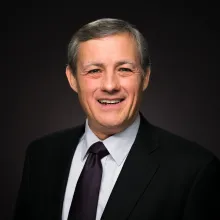
Gary Petty is a 1978 graduate of Ambassador College with a BS in mass communications. He worked for six years in radio in Pennsylvania and Texas. He was ordained a minister in 1984 and has served congregations in Longview and Houston Texas; Rockford, Illinois; Janesville and Beloit, Wisconsin; and San Antonio, Austin and Waco, Texas. He presently pastors United Church of God congregations in Nashville, Murfreesboro and Jackson, Tennessee.
Gary says he's "excited to be a part of preaching the good news of God's Kingdom over the airwaves," and "trusts the material presented will make a helpful difference in people's lives, bringing them closer to a relationship with their heavenly Father."
