
Gary Petty
This transcript was generated by AI and may contain errors. It is provided to assist those who may not be able to listen to the message.
If you'll turn to Mark, Mark 15. By the way, Mr. Keller said that sometimes after service you all go out to eat. Are you planning on doing that? You all go eat together? Sometimes you do, sometimes you don't. I just thought if you are, don't forget us. We'll tag along. I did enjoy the potluck last night. I told my wife, I said, they had enough food for 50 people. Mark 15, verse 43. A well-known story of the Scripture, but I just want to pick up one little phrase, part of the story here in the middle of the sentence, to launch you into what I'm going to talk about today.
Joseph of Arithamea, a prominent council member who was himself waiting for the kingdom of God, coming and taking courage, went into Pilate and asked for the body of Jesus. Now we look at what Joseph of Arithamea did, and we say what courage that took, and to know he could be persecuted by the Romans, or even his fellow Jews, but he goes and he asked for the body of Jesus because the Sabbath was coming on, the beginning of the first holy day of the Days of Unleavened Bread.
But look at the phrase, was himself waiting for the kingdom of God. It's interesting, the Greek word there that's translated waiting is an active word. You can wait for something passively, right? I'm just going to sit here and wait for the bus. But when you're actively waiting for something, you're having anticipation. You're looking forward to it. So the word here implies an active waiting.
So Joseph of Arithamea was actively waiting for the kingdom of God. Now you and I are about to launch into the holy day season. I mean, it's only a week from Monday until we have the Feast of Trumpets. And the next week is the Day of Atonement.
In fact, I told my wife as we were driving over, I said, do you realize three weeks from today, I'll be giving the sermon in France for the Feast of Tabernacles. Which I'm more excited about, but she hates traveling. So, you know, it was like, oh, you know, in France. She'd love if I was giving it in the Smoky Mountains over here.
That would be perfect. But to be giving it in France is a little overwhelming to her. So we're coming up on the holy day season. The Feast of Trumpets is right around the corner. We're preparing. We gave out the forms today to get children out of school. You have to tell your boss, you have to get ready that you're going to go to work. You're packing. You're looking, you're budgeting your money.
We're really budgeting our money. You know, going overseas is expensive. So we're budgeting our money. We're trying to figure out what we can't afford, can't afford. It's been ten years since we've gone overseas, because you just can't afford it that often. But we had a little extra that we could throw in this year that we could do this. So we're all preparing physically. But what I want to talk about here this morning is how we need to be able to go to the Feast of Trumpets Day of Atonement, Feast of Tabernacles, and come back and have received a spiritual benefit from it.
A spiritual benefit from keeping these holy days. What we're going to do is we're going to look at four very simple but very important transformations that can take place in us if we get out of these holy days what God intends. Now I have to tell you, and many of you have attended the holy days for years, is there anyone here? This will be your first holy day season. How many of you have been going for at least ten years?
Okay. Now, you know that as you go to the holy days that it seems like there's always something that comes along to try to get you distracted from them. To try to get you where you don't get the benefit that God gives you. You know, every year when I go to the Feast of Tabernacles, I have people come up to me part way during the Feast and say, can we talk? And they'll talk about how something terrible is happening at the Feast, keeping them from getting what they know they should be getting out of the Feast. My dad died in the middle of the Feast of Tabernacles in 2010.
It in some ways took away from the Feast, and in another way it didn't. I mean, we had to leave the Feast. I had to go to the funeral to come back. So I was going for three days in the middle of the Feast or four days. But it was also every time the Feast of Tabernacles comes around, it reminds me of his resurrection. You know, that first resurrection when Christ comes back and he's resurrected, he's going to be there. And one of his last things he said to me was how he was looking forward to that. So that memory actually adds to the Feast of Tabernacles. But every time at the Feast there can be things that come along that seem to take away from it. Well, these are the four transformations, things that God wants to happen to us because we observe these days. The first one I'll call visualization. Now, visualization is the ability to visualize something, to see something, before it happens.
Salesmen use this all the time. Just picture yourself driving this car. Just picture yourself doing this. Just picture yourself looking like this. So there's this constant attempt to get us to visualize ourselves doing something. Once we do that, it becomes a motivation.
You know, I knew a man one time, who was a salesman, that he was a single guy. And if you went into his office, he had a big picture of, I think it was a brand new Mustang.
And he would go to work every day and he'd look at that and he'd say, that's why I'm working, because I'm going to own that car. He probably did. He was so driven. I'm going to work today so that I can buy that car. So there's a lot of motivation that comes from visualization.
Now, there's a certain theme you'll find in the Old and New Testament that really plays into what we're going to talk about today. That is, humanity, cut off from God, is in spiritual darkness.
While God is light, and God gives light so that we can see. When you're in darkness, you can't see.
But when you have light, well, you can see. I mean, if you ever get up in the middle of the night, stumble around the house, walk into things that you know are there.
I got up last night in the middle of the night to get a drink of water. And I walked over to the door in the bedroom and I couldn't remember where the handle was. So I'm doing this, trying to find the handle of the door, trying not to wake her up.
Something you can't see, there's no light. Let's look at John 12.
And verse 35.
Christ is talking about Himself here.
He's telling His disciples, look, you can see things because I am the light. I'm here lighting your way. You live in darkness and you never realized how much the darkness was until I showed up. And this is what He's telling them here. Jesus says to them, verse 35, A little while longer, the light is with you. Walk while you have the light, lest darkness overtake you. He who walks in darkness does not know where he's going. While you have the light, believe in the light, that you may become, this is real important, that you may become sons of light. These things Jesus spoke and departed, it was hidden from them.
He said, walk in the light so that you may become children, sons of light.
We don't generate the light. The light has to come from God. The light that comes into our lives as He shows us who He is, who Christ is, as He shows us His way, has to come from Him. We must never forget that. That light comes from Him. If we bring that light into our lives, we become not just seers, because we see what the light is showing us, but we are to actually become children of light. Look what it says in Ephesians 5. Paul takes this theme years later, continues to develop it. This is a major theme in the whole, especially the whole New Testament. Ephesians 5, verse 8.
For you were once darkness. Now, I find it interesting. He doesn't say you were once in the darkness.
At one time, you and I were so surrounded by darkness and filled who we are. We just became darkness.
We lived in darkness. We fought in darkness. We existed in darkness. We didn't even know we lived in darkness. He says, you were once darkness, but now you are, you are light. He doesn't say you're in the light. He says, you are light in the Lord. Walk as children of light. When God brings light into our lives, it isn't just external. If you have God's Spirit, then God's light is inside you. You now are light. But the light of God is inside of us so that we not just can physically see what is around us, but we can spiritually understand what is around us and spiritually understand what God is doing with us.
So, walk as children of light.
When we receive the light, we can't stay in the darkness. We're sort of halfway in the darkness. But the fruit of the Spirit is in all goodness, righteousness of truth, finding out what is acceptable to the Lord, and have no fellowship with the unfulfool works of darkness, but rather expose them. In other words, if the light is in us, we can't help but expose darkness. You know, if we truly are living in the light, we will actually make other people uncomfortable, not because we're trying to preach to them, but because of our very example.
They will find us uncomfortable because of our very example, because we don't drink like we used to, but they still do. So they find us uncomfortable.
We don't do what we used to do, but they still do. Why? Because the light in us exposes the darkness in them.
That's why it's so difficult to continue to have close friendships sometimes with us. People that we used to, because the light that is in it. Now we're going around trying to preach to them, but driving them away, that's one thing. But we don't have to preach. The light exposes. Our very example exposes.
But here's what we do.
If we are not in constant contact with God, and this is one reason why there is the Sabbath and the Holy Days. You know, the themes of the Sabbath and the Holy Days continue to bring us back into the light. Because what we do is it's easy to live the rest of our lives out in this half darkness. We're not totally in the darkness. We have to go back to the darkness. We're sort of part of the darkness, part of the light, because we live in the world, don't we?
So what happens is we live in a spiritual fog.
You know what fog is like? It's not dark, but it's not light. I mean, have you ever been in a really thick fog? It's light, but you can't see very far in front of you, can you?
Well, if we're not careful, what we do is that we live in this spiritual fog. The light's on, God's there, but because we're sort of accepting and living by certain standards of the world, giving in to our own human nature, we're spiritually not seeing through the fog. Fog could be very dangerous.
How many of you have heard of the Battle of Kiska? My white voice races are here.
The Battle of Kiska.
Of course, there were lots of battles in World War II. Most people have never heard of Kiska. Kiska is an island that's in the Aleutian chain off of Alaska. It's the only place where the Japanese actually captured American territory. They took those series of islands. Well, at first we didn't take them back because we didn't see a lot of purpose in them, but we realized that it was a communication issue and we eventually had to take them back. So I think it was 1943. We, you know, it was August 43. We planned along with the Canadians and launched an attack on Kiska, the first of the islands we wanted to take. We knew there was a Japanese force there. We brought in a fairly large fleet. Now remember, there's all these huge battles going on. So it was a fleet of not the most up-to-date battleships. There were no aircraft carriers or anything like that. And the soldiers weren't as highly trained as they should have been.
But we launched 7,000 men on the Kiska, landed them. But Kiska was just that the weather there is strange. Part of it is because it's even in August it's cold. So the island is covered in fog most of the time.
So they launched 7,000 men onto an island in fog. They can't even see where the Japanese are. So they land on the island, and very quickly they get into a firefight. And it goes on for days, a very intensive firefight, where the enemy would disappear, hit, run, show up in this fog.
Between the Americans and the Canadians, they took scores of casualties. In fact, there was a destroyer that blew up, hit a mine out in the bay, and it just scores of casualties, scores of infantry casualties. Finally, they took Kiska, consolidated the island, and they had two Japanese prisoners. So they asked them how many Japanese troops were on the island. And they said, the two of us.
They said, the two of you, but you surrendered right away.
In the fog, the Americans and Canadians have been shooting each other.
This is what fog does. Well, they were in the light. Not really, were they? All they could see was shadowy figures, and once someone started shooting, so Americans shot Americans, Canadians shot Americans, Canadians, Americans shot each other, and in the end, it goes down as this enormous victory for the Allies with scores of casualties.
And the Japanese had two captured, because they were only two. They had been left there to try to spy on the fleet as it went up and down the islands. That's why they were there.
Fog is a dangerous thing.
We are to visualize, and that's one reason why we're the Sabbath, is to visualize God's ways, to come back into what is God's vision of my life. The holy days are to help us visualize what God's doing. I mean, we're coming up with a Feast of Trumpets, where we're going to visualize Christ's return, right? The seven trumpets.
That tribulation, the day of the Lord. Christ's return.
The armies gathered together to fight Him as He comes back to save humanity. We're going to observe the day of Atonement, where we're going to visualize. But we're all going to, after that resurrection, we all become into this intimate relationship with God through His Spirit. Where Jesus Christ is the High Priest, then we're going to observe the Feast of Tabernacles.
And we're going to visualize. There'll be sermons where we'll talk about what is it going to be like? You know, you'll hear Isaiah read and Zechariah read, and what it's going to be like during that time period.
Then we'll keep that last great day, where we'll think about and we'll try to visualize all humanity.
That all humanity hasn't been lost.
And I think visualizing that day is very, very important. Because that's God's endgame. Okay, this is what He's working on for that last great day. That's the endgame. Everything He's doing is to bring up humanity and say, now let me teach you, and now you choose. But you choose after you get taught.
So these days help us visualize. Now, as we celebrate these days, so we visualize what God's doing. And He gives us this vision. Something else begins to happen. And you'll know how strong your visualization by what happens the second step, and that is anticipation. We begin to anticipate those times. We want them. We can see them. We desire them. Remember Joseph, who was waiting for, anticipating the Kingdom of God. Are we waiting for that? Is it on a regular basis, a daily basis? Are we anticipating Christ's return? Luke 2.
Luke 2.
The Holy Days are such a wonderful time. We can't waste them and live in a spiritual fog. When we go into the Holy Days, that fog clears, and God lets us see where we are. He lets us see what He's doing.
And then we can begin to anticipate it. Luke 2, verse 21.
Let's talk about Jesus Christ. When the eight days were completed, for the circumcision of the child, his name was called Jesus, the name given by the angel before he was conceived in the womb. Now, in the days of her purification, talk about Mary, according to the law of Moses were completed, they brought him to Jerusalem to present him to the Lord, as it is written to the law of the Lord, every male who opens the womb shall be called holy to the Lord, and to offer a sacrifice according to what is said in the law of the Lord. A pair of turtledones and two pigeons. And behold, there was a man. So Jesus is coming into the temple to be presented to God in accordance with the law that are in the Torah. The holder was a man in Jerusalem whose name was Simeon, and this man was just and devout, waiting for the consolation of Israel, and the Holy Spirit was upon him. This man has spent his whole life anticipating the Messiah. He had a purpose. Every day he would have got up and said, maybe today is the day. Now, you and I don't get up every day and say, well, maybe today is the day Christ comes back, because we look forward, we realize there's events that must happen before he comes back. But you know, in all reality, if you go home today and you're in a car accident, you die, Christ came for you today. Because what's your next waking moment?
So are we anticipating, are we living every day anticipating, He's coming back? I must be prepared for that. This man anticipated the coming of the Messiah. The Holy Spirit was upon him. Verse 26, and it had been revealed to him by the Holy Spirit that he would not see death before he had seen the Lord's Christ. So he runs up to Mary and Joseph, takes Jesus out of their hands and says, this is Him! You can read, he quotes passages from the Old Testament, this is Him to everybody! This is the Messiah! This is why I come to temple every day, because I've been waiting for this all my life. Verse 33 says, So that the thoughts of many hearts may be revealed.
Can you imagine how shocked they were? And what's amazing is, if you read the rest of this chapter, there's a prophetess there named Anna, who basically the same thing, waiting, and she's an elderly woman. She's been waiting years and years and years, and she had been told she would get to see the Messiah. And so they both say, now we can die. Now we can die and come up with a resurrection, because we have waited for what God told us we were waiting for. You and I are waiting for the coming of the Messiah. You and I are to be anticipating that. We are to be looking forward to that. You know God anticipates that time? God anticipates the time when we will be resurrected and be able to see Him as He is. See, we don't think about God anticipating. We don't think about God looking forward to something. But God looks forward to that time. And I'll show you Scripture where He says that. Look at Malachi 3. Malachi 3.
Malachi 3, verse 16.
That those who feared the Lord spoke to one another, and the Lord listened and heard them. So a book of remembrance was written before Him for those who fear the Lord and who meditate on His name. So God says, you know, what is a spiritual book? I don't know. He gives us images that we can understand so we can visualize it. A book is open and God writes down everybody's name in it. And He says, I remember them. Of course, He remembers us. He doesn't need a book to remember us. I remember them. Why? Verse 17. Look at the anticipation of those two verses. I remember. Now we think of someone who dies in the faith. And God says, oh, no, I remember them. Does He remember Abraham, Isaac, Jacob, Moses, and Mary? Of course He does.
He remembers them, and He anticipates when they will be His treasures.
So one of the reasons God gives us the Holy Days is to help us understand His anticipation. To be with us as His children. You know, if you haven't seen your children for a while, you anticipate seeing them, don't you? Well, He anticipates seeing His children. So when we think about our anticipation, I do believe God's anticipation is a whole lot more profound than ours. For one thing, He knows it's going to happen. He knows it's going to happen. We wonder around in the fog, wondering when it's going to happen, how it's going to happen, if it's going to happen. He doesn't. There's no fog. It's all light.
So He anticipates when these days are going to be fulfilled.
If then we visualize and we anticipate, the third thing we must do is preparation. Visualization, anticipation, preparation. If your mind, in my mind, is illuminated to what God is doing by God, if we are the children of light, we must be preparing for these days. It doesn't mean anything to know the prophecies of these days and not prepare. You know, there's lots of people who have prophetic knowledge, and it's rather meaningless. Because the prophetic knowledge is supposed to help us prepare for what these days actually happen. If I can see it and I anticipate it, I want to prepare for it.
If, you know, if you turn on the news tonight and there is a storm that's going to hit your house in three hours, and you could visualize it, and there's all kinds of tornadoes and hail, and now you're anticipating it, although in a negative sense, are you just going to sit there? Or are you going to go prepare for it? You've got three hours to prepare. Well, if I really visualize what God's doing, and I anticipate it, we would have prepared. Look at Luke 12. Luke 12.
Luke 12, verse 35.
A well-known parable given by Jesus.
That's a fascinating image that we see in numerous of Jesus's parables. We don't produce the light. The light is given to us. We have a lamp. And of course, we know that the oil of the lamp symbolizes God's Holy Spirit. So we have a lamp. As long as we have that lamp with us, and it's filled with oil, and it's lit, we can see. So he says, keep your lamps burning. Stay in the light. And you yourselves be like men who wait for their master when he will return for the wedding, that when he comes and knocks, they may open to him immediately. Bless all those servants who the master, when he comes, will find watching. Assuredly I say to you that he will gird himself and have them sit down to eat and will come and serve them. That is a remarkable statement.
Jesus says, because he is the master in the parable, he says, you're waiting. You're there. Your lamps are burning. And he says, when I come, I'm going to be there, not just to be your master. I'm going to be there to serve you. The anticipation of, you know, we think, I don't know what's going to happen when, you know, when we appear before Jesus Christ, I imagine every one of us is going to fall on her face and be frightened. And I think probably every one of us will experience a hand reaching down and saying, stand up, get a hug, I'm glad to see you. This anticipation, we're prepared. He says, he's coming. He's just, this anticipation is, hey, I'll even serve you. I'll take care of you. Just show up. Just be there. And if he should come in the second watch or come in the third watch and find them so, blessed are those servants. You know, in those ancient cities, they had watches on the towers, looking out over the darkness at night with lights, you know, big fires burning to make sure that they weren't going to be attacked at night. And every so often, they ever so often, they had to change the watch. Now they did it in the day too, but the whole image here is at night. They would change the watch. A group of guards would go off duty and a group of guards would come on duty. And what they had to do was watch. So he says, it doesn't matter when he comes. What matters is being prepared for when he comes. So we find these people that just, they have to know exactly when he's coming. They make up dates. There was a road in Texas that for years has had a big sign, huge billboard, they're paying a lot of money for it, that Jesus is coming back, has the exact day, month, date, and it's I think a 2020-some, I can't remember the exact year. And Jesus is coming back then, so be prepared. Well, you know, it says no man knows. So it has to be a false prophet.
His Bible says no man knows.
He says it doesn't matter when. We have to be prepared. And you know what? If you lived 500 years ago and were called by God and he gave you the light of his spirit, you had to be just as prepared as we are now. It didn't matter that he didn't come. You have to be prepared. And that's the point.
We have to be constantly preparing for that. But know this, verse 39, that if the master of the house had known when our thief would come, he would have watched and not allowed his house to be broken into her. Therefore, you also be ready for the Son of man is coming in an hour you do not expect. You do not expect. So we have to be prepared.
We have to watch what's going on in the world around us. Not because we'll always be able to predict events. It's because we'll know what's happening when the events happen. Sometimes we're so desiring to be able to predict the events, missing the fact that the Bible doesn't let us predict every event. What it does is it lets us know, ah, I can see what's happening.
He says you'll be surprised by the events.
It doesn't work out using the way I've made up all kinds of prophetic scenarios through the years. Now, they're all wrong.
It always works out different than I think. So I've come to the realization that's the prophetic scenario I'm supposed to come up with. But it's going to be chaos, and whatever we come up with, we'll be wrong.
We'll see it. We'll know what we see. We have the outline, and we do have an awful lot of knowledge. God has given us a lot of knowledge, but He hasn't given us the ability to predict the exact events. Hebrews 10. Hebrews 10.
Carrying the same theme of light and darkness. Hebrews 10.32.
The writer of Hebrews is trying to get the Jews to understand that the whole system of Judaism was about to be wiped out. The temple was going to be gone. Everything that they knew was going to be gone. And they were going to have to realize that Jesus as the Messiah had brought some new ways.
The temple foreshadowed. Now, there was all the sacrifices told about Jesus Christ, but the sacrifices were about to end. And a whole book of Hebrews is saying, look, understand all those physical rituals pictured Christ. Now that we've had Christ, we can understand what God's doing. Now, this wasn't going to be as great a shock on the Gentiles in the church as it was for the Jews in the church. And so, they're also suffering some persecution at the time. And He says to them in verse 32, but recall. So He's trying to encourage them. Recall the former days in which after you were illuminated, after the light went on, you endured a great struggle with sufferings, partly while you were made of spectacle, both by reproaches and tribulations, and partly while you became companions to those who were so treated. He says, remember when the light came on and how you suffered because of that. Now, if you've come into the church, into the truth in the last 20 years, you probably did not suffer a lot of persecution. Some do, most don't. For those who came into the church 30 and 40 years ago, many times your whole family turned against you, because it was a much more religious society. Just going to school was tough. Getting off for the holy days was easy. People lost their jobs over the Sabbath all the time and got almost no. Now, if you lose your job over the Sabbath, you could sue the company if you could prove it was over the Sabbath. 40 years ago, that wasn't that way. You lost your job over the Sabbath. You lost it. It was a different time. You could find yourself an outcast very quickly, where it's not quite as much today. He's telling them, remember that? Remember what you went through?
He says, remember those days? Then he gives a little personal comment here. He says, For you had compassion on me and my chains, and joyfully accepted the plundering of your goods, knowing that you have a better and an enduring possession for yourselves in heaven. So he says, you know, and you help me, Paul says, by giving me, you know, giving your tithes to me. And he says, that I appreciate that, and thank you for it. Therefore, do not cast away your confidence, which is great reward. For you have need of endurance. As we face coming back from the holy days, we will have need of endurance. You know, you come back from the Feast of Tabernacles just excited, just excited. But being in the world, it doesn't take long until you're in fog again. Right? I remember coming back from the Feast one year, went into the radio station where I worked, and I went just on a high because of the Feast, the spiritual high, emotional high. And the manager said, hey, called me into his office, set me down. It's been two hours, telling me all the bad things that had happened in the week and a half I was coming. Just dumped on me. After two hours, I had to get in my car and go home. I had to go home for a half hour. I was so discouraged, I couldn't get any work done. It was like, oh, we're up here. No, we're back in the real world now. Okay? We're back to the real world. We can't let go of the vision and come back into the real world. He goes on, he says, for you have need of endurance, so that after you have done the will of God, you may receive the promise. For yet a little while, and he who is coming will come and will not tarry. Now the just shall live by faith, but if anyone draws back, my soul has no pleasure in him. But we are not of those who draw back into perdition, but of those who believe in the saving of the soul. We can't go back into that darkness. We should fear to go back into that darkness.
We should actually fear that darkness, because that darkness is complete. God has called us to be children of light. Have you ever been in a cave and turned out all the lights?
You could do this, and you can't see your hand. It is amazing. With no light, there's nothing but darkness, right? There's nothing but darkness. I can remember as a teenager, we were doing some cave exploring, and the group went ahead. We were missing somebody, and the leader of the group said, hey, Gary, why don't you wait here in case they come along. Wait 15 minutes, and they don't come catch up with us. But they took all the backpacks and everything, and all I had was one light.
After that, I always went in with more than one light. Okay, good. I had one light. So I wait 15, 20 minutes. There, good. The person we were waiting for did show up, so I go into the cave. I'm crawling down a very steep incline, and I'm climbing down this incline, and I drop my light. And when it hit the ground, it went on. And there's that total darkness.
For years, I was in my 40s and had nightmares about that being in total darkness. And I am on this steep incline. I can't go up. I can't go down.
I could just hear myself breathing so hard out of fear.
Unfortunately, I had the presence of mind to sit down as I talked to myself. And what I did, I bumped the flashlight with my foot, picked it up, turned it on, and was able to go on. But for a couple of minutes, it was terrifying. I never want to go back into that kind of darkness without a light again.
We should fear going back into the darkness.
So we need to be preparing as children of light for when these days actually happen.
Now, as we do this, there's one last final transformation that takes place. We visualize, we anticipate, we prepare. And that is declaration.
We can't hide our light. We must, through our example, declare the kingdom of God.
Through our example, every day in life, we must declare this thing we see, this time we see, the Messiah that we see, the King. Look at Colossians 1.12.
Colossians 1.12.
Breaking into the middle of the thought here, Colossians, Paul writes a really long sentence in some of his books. Of course, in ancient Greek, there's no punctuation. So they would know when a thought ended and didn't by the way it was written. Well, we can't do that. So we have to try to punctuate these very long sentences. But he says in verse 12, beginning in the middle of the sentence, giving thanks to the Father who has qualified us to be partakers of the inheritance of the saints in the light. He has delivered us from the power of darkness, from the power of darkness, that power of being permeated by darkness, our thoughts, our own emotions, everything about us is in darkness. We have been delivered from the power of darkness and conveyed us or transformed us into the kingdom of the son of his love and who we have redemption through his blood and forgiveness of sin. He has brought us into this kingdom. You know what God sees spiritually when he sees the world? I mean, God sees everything. But when he looked at this earth spiritually, you know what he sees? Darkness. And in that darkness, he sees little pinpoints of light. You get those pinpoints of light? Us. Where he has put light.
He sees darkness and he sees these little pinpoints of light, us. Now, some of us, he looks and is pretty dim because we're in fog. Really in fog. He wants those lights to be bright. So that we declare him in our lives. And that declaration is there for others to see. That's what Jesus said in Matthew 5, another very common scripture.
Matthew 5. And verse 14.
You are the light of the world.
If God has called us and we become the disciples of Jesus Christ, we are the light of the world. Not because the light comes from us. It is God's light. But it is to shine through us. It is God's light that shines through us.
A city that is set on a hill cannot be hidden. You know, we had this meteorite shower here, what was that, about a month ago or so. I could walk out my front yard and not see it very well because off in the distance I could see the lights glowing from Murfreesboro. I go out the back door where all the back here is woods and farms. I can watch those things streak across the sky all over the place.
You can't hide a city. The lights glow at night. He says we are like that city. You can't hide us. We should not try to hide.
You don't have to shine your light in people's faces either.
It's just got to glow. Because it's God's light. Remember, if we're trying to shine our light in people's faces, the problem it means is we think the light's ours. God's light just shines.
Verse 15, Nor do they light a lamp and put it under a basket, but on a lampstand, and it gives light to all who are in the house. Let your light so shine before men that they may see your good works, and what? Glorify you? No, glorify your Father in heaven.
Our light should cause people to turn to God.
If we use the light just to get people to turn to us, we're misusing it.
Our light is to shine so that people can say, I would like to be able to see like that.
And they turn to God. They glorify God.
God has given every one of us a lamp, and He lit it, and He gave us the oil of His Holy Spirit.
This lamp illuminates all these great truths. The plan of God outlined in all the Holy Days, and this fall Holy Day season really pictures the future. It gives us a whole prophetic vision of what God is doing.
We don't see all of it, but it lights it up so that we can see where we're going. We can see what God is doing. We have a unique perspective because of that. You know, you and I live in a very wonderful time. You and I live between the first and second coming of Christ.
People who lived before His first coming could not see what those... Moses never could understand what maybe Paul or Peter could, because they lived during and after the first coming.
You and I see things Paul and Peter never understood. For what they think about it, they never had the book of Revelation. You and I do.
Because of where we are, we have a unique illumination of what God is doing. We can look back through all these millennia of history and see what God's doing, and we can look forward and see what He's doing.
So we live in a very bright time in many ways. Let's look at Luke chapter 10, our last scripture here. Luke chapter 10.
Luke 10, and let's start in verse 23.
Jesus turns to His disciples and said privately. This is what He told them privately, without all the others around, all the crowds around. Blessed are the eyes which see the things you see.
For I tell you that many prophets and kings have desired to see what you see, and have not seen it, and to hear what you hear, and have not heard it. Many people have wanted to get a glimpse into what God is doing in a way that you have been privileged to be given to. I mean, God gives you the light. God gives you the vision.
And others have wanted it and not received it. Many of the prophets wanted to see what you and I see.
Did Isaiah understand when he wrote the prophecies about the first coming of the Messiah and the second coming? We don't know what he understood. We don't even know what he wrote.
How about Daniel being told, seal these things up, Daniel. But I don't know what they mean! No, you won't. You will die and not know what they mean. Only people at the end will know what they mean.
Many people have wanted to see what you and I are privileged to see, to understand what we do. An interesting thing that happened years ago. I was talking to a minister that said, the Sabbath-keeping Church that does not keep the Holy Days.
We were talking and he, in the conversation, I told him that there were other ministers like me who believed in the Holy Days and believed in the Sabbath. He said, why do you keep the Holy Days?
He kept the Sabbath. He could understand the Sabbath. He could understand the Holy Days. So I said, well, how do I put this in a very short, compact way which he could connect to? So I said, well, the Holy Days picture everything that God is doing through Christ. I said, just think about it. The Passover.
Well, we know that ancient Israel came out of Egypt, but Jesus Christ is called the Passover. He said, well, that's true. So I went through the Days of Unleavened Bread. I went through Pentecost. I said, well, you keep Pentecost? He said, well, yeah, I do. I said, because why? Because the Holy Spirit was given on Pentecost, the beginning of the church. Well, that's true. I went through the Feast of Trumpets. And you have the seven last trumpets and quoted just something from Zachariah and said, you know, Christ is coming back.
David Tobit pictures Christ as high priest. And he had the two goats. And just very brief. I mean, the whole thing probably lasted five minutes. And I said, and then he had the Feast of Tabernacles. Christ on earth reigning for a thousand years. I said, we believe in the pre-millennial return of Christ. Well, he did too.
And I said, and then you have the last great day, which even the Jews recognize has something to do with judgment. But I said, we really understand it because of Revelation and the great white through judgment. He just sat there and he listened. So I got up to leave and he said, do you mind if I pray? I said, no. And he got up from behind his desk. He walked over and he laid hands on me. And he said, God, you give each of us only a little bit of light. Help these men not to give up the light that you have given to them.
It was a very profound experience for me. He sat there, he understood the Sabbath, and the little light of the Holy Day sort of came up. I understand why you do this. And he actually asked God, don't let him give up that light. I thought what he said was also profound. You give all of us only a little bit of light. Not all of us have all the light of God, do we? But God has given us a lot. And to whom much is given, much is required.
God has given us a lot of light. He's given us a lot of pieces of light. So coming up into this Holy Day season, spend the next month and a half as you go through these Holy Days, asking God to help you visualize, anticipate, prepare, and declare. Because God has called you to be children of light. And remember what we're told in the Scripture. Therefore, walk as children of light.
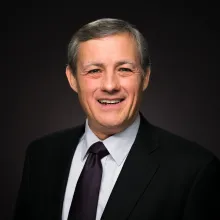
Gary Petty is a 1978 graduate of Ambassador College with a BS in mass communications. He worked for six years in radio in Pennsylvania and Texas. He was ordained a minister in 1984 and has served congregations in Longview and Houston Texas; Rockford, Illinois; Janesville and Beloit, Wisconsin; and San Antonio, Austin and Waco, Texas. He presently pastors United Church of God congregations in Nashville, Murfreesboro and Jackson, Tennessee.
Gary says he's "excited to be a part of preaching the good news of God's Kingdom over the airwaves," and "trusts the material presented will make a helpful difference in people's lives, bringing them closer to a relationship with their heavenly Father."
