
Don Ward
This transcript was generated by AI and may contain errors. It is provided to assist those who may not be able to listen to the message.
The title of the sermon today is Christ in the Midst of the Seven Golden Candlesticks. Christ in the Midst of the Golden Candlesticks. That is depicted in Revelation 1. If you would turn to Revelation 1, we will get, first of all, the setting here.
We will get the chain of Revelation. Then we will get the time setting of this prophecy. Revelation 1 and verse 1 often times overlook verse 1 and what it really says. The Revelation of Jesus Christ, which—and a lot of people just read there—the Revelation of Jesus Christ put a period in, keep going.
The Revelation of Jesus Christ, which God gave unto him—so the prophecy initiates with God the Father—which God gave unto him to show unto his servants things which must shortly come to pass. He sent and signified it by his angel, his Angelos—we'll say more about Angel Angelos and what it means later on. He can refer to a spirit being or a human being—and his servant John.
So the chain of Revelation is God the Father. The Revelation began with God the Father, originated with God the Father. It was given to Jesus Christ. Jesus Christ gave it to an angel, and the angel gave it to John. And now verse 2, For the time is at hand. A lot of people get caught up with that, of the time is at hand.
And also it says things that shall quickly come to pass, or shortly in verse 1, which must shortly come to pass. So what is the time setting when John received this prophecy? Well, John had been exiled by the authorities to the Isle of Patmos, which is just off the coast of western Turkey.
In those days, Asia Minor, in the various provinces in Asia Minor, Patmos in the sea there. And we look at verse 10, I was in the spirit on the Lord's day, as the old King James. It should be translated, I was in the spirit in the day of the Lord. So this accounts for things that must shortly come to pass, and where it says it is the time is at hand in verse 3.
I was in the spirit on the Lord's day. Now, hold your place there. Look at 1 Thessalonians 5, verse 2, and we'll see that it is correctly translated there. The identical Greek syntax is given in 1 Thessalonians 5, verse 2, For yourselves know perfectly that the day of the Lord ... See, what they did, the translators did in Revelation 1.10, was to reverse that clause and say, in the Lord's day instead of the day of the Lord.
The Greek there is Hekumara, I'm sorry, Hekuriakehemera, which should be translated, the day of the Lord. So, yourselves know perfectly that the day of the Lord shall come as a thief in the night. And we go back now to Revelation 1, verse 10, and we read it.
And I was in the spirit on the day of the Lord, and heard behind me a great voice as of a trumpet. Now, we notice there in chapter 1, also, verse 3, that we just read, that there is a blessing pronounced here. There are seven blessings that are pronounced in the book of Revelation. Let's briefly look at those blessings. Remember that Christ said the words that I speak, their spirit and their life, and blessings to those who read and take heed. So, verse 3 again, remember seven blessings.
Revelation 1, verse 3, Blessed is he that reads, and they that hear the words of this prophecy. So, hearing, of course, can just mean to audibly hear what somebody said. But hearing, did you hear what I said, boy? It has a different connotation than just to hear it audibly. It's to hear it to take heed, to understand, to act upon it.
So, blessed is he that reads, and they that hear the words of this prophecy, and keep those things, which are written therein, for the time is at hand. Now we look at Revelation 14, verse 3, and you can study these in more detail of these seven blessings, and that which surrounds these seven blessings. Revelation 14, verse 3, And they sang, that is, the 44,000 on Mount Zion, and they sang as it were a new song before the throne, and before the four beasts and the elders, and no man could learn that song, but the 144,000 and those that were redeemed from the earth.
In...that's the wrong verse. I want 13. In Revelation 14, 13, And I heard a voice from heaven, saying unto me, Right, blessed are the dead, which die in the Lord from henceforth. Blessed are the dead, which die in the Lord from henceforth. Yes, says the spirit, that they may rest from their labors, and their works do follow them. Of course, we'll be judged and rewarded according to our works. In Revelation 16, verse 15, Revelation 16, 15, Behold, I come as a thief. What did it say in 1 Thessalonians 5, verse 2? Behold, I come as a thief. Be ready. I come as a thief in the night. And sometimes I wonder...I was wondering about this this morning.
You know, when you read the various prophecies, it's like people think, Well, we've got this all figured out, and how is this going to come upon any of us as a thief in the night? Well, it goes on to say in 1 Thessalonians 5, verse 2, That you are to be wakeful, watchful, that it not come upon you as a thief in the night. But apparently it comes on the world as a thief in the night, because this is repeated more than one time in the Bible.
Behold, I come as a thief. Blessed is he that watches and keeps his garments, lest he walk naked, and they see his shame. Blessed is he that watches. And so we try to stay abreast of world situations and what's going on in this world. Look at Revelation 19, verse 9. Revelation 19, verse 9. And he said unto them, Right, blessed are they which are called unto the marriage supper of the Lamb.
God has called you. God has called you personally, individually, distinctly. And of course, with the youth, one of the first things that the United Church of God did in the late 90s, after its beginning, was to write a paper titled, God is Calling Children. And, Mr. Philp, I believe it was, wrote a hymn, God is Calling Children. And so if you grow up in a church family, you have the opportunity to partake of the tree of life that is symbolized, that is, the tree of life symbolizes the Holy Spirit.
And so blessed are they which are called to the wedding supper of the Lamb. Your calling is no accident, and God has a purpose for you in your life. And you can heed it, or you can go the other way, obviously. In Revelation 20 and verse 6, in Revelation 20 and verse 6, Blessed and holy is he that hath part in the first resurrection. On such the second death has no power, but they shall be priests of God and Christ, and shall reign with him a thousand years.
Of course, that is the greatest of rewards in the sense of being an inheritor of eternal life. Now, going back to the theme we saw at the very beginning in chapter 1, in the last chapter, look at Revelation 22 and verse 7. Revelation 22 and verse 7, Behold, I come quickly. And people read this and say, well, we're two thousand years or so down the road, and he hasn't come. And remember that John says, Behold, I was in the Spirit on the day of the Lord, and told to write these things. Behold, I come quickly. Blessed is he that keeps the sayings of the prophecy of this book.
Of course, that is not to say that everything in the book of Revelation happens during the day of the Lord. That is not true either. We'll read the verse. It says, John was instructed to write in three dimensions of time, past, present, and future, but with a lot of emphasis on the future. And then, Revelation 22 and verse 14, Blessed are they that do his commandments, that they may have right to the tree of life, and may enter in through the gates of the city.
So the messages to the seven churches are for everybody, as we shall see. They reveal much about Jesus Christ's role in the church. Remember the title? Christ in the midst of the seven golden candlesticks. Christ is the head of the church. We look at Ephesians chapter 1 now. Ephesians chapter 1, verse 18. I believe in Ephesians 1 and verse 18.
Ephesians reveals one of the great mysteries of God, how the Jew and Gentile are melded together in one body through the Spirit of God. Ephesians 1 and verse 18. The eyes of your understanding being enlightened, that you may know what is the hope of his calling, and what the riches or the glory of his inheritance is in the saints, and what is the exceeding greatness of his power toward us, who believe according to the working of his mighty power, which he wrought in Christ when he raised him from the dead. The Father raised Jesus Christ from the dead. He will also raise us from the dead, as it says in Romans 8, verse 11. Raised him from the dead, set him at his own right hand in the heavenly places, far above all principalities in power and might and dominion, and every name that is named not only in this world, but also in the world to come, and hath put all things under his feet, and gave him to be the head over all things to the church. So Jesus Christ, in the midst of the seven golden candlesticks, and as we shall see, the seven golden candlesticks, represent the seven churches, which is his body. Of course, the church is called the body of Christ because Jesus Christ lives in the church through his spirit, and so does the Father. We will both make our abode in him, as it says in John 14.23, which is his body, the fullness of him that fills all in all.
And then we see in Ephesians 5 and verse 23. Ephesians 5 and verse 23. For the husband is the head of the wife, even as Christ is the head of the church, and he is the savior of the body.
As we know from 1 Corinthians 11 and verse 1, and 1 Corinthians 15, 23 through 29, I'm going to quote, well, let's turn there, 1 Corinthians 11 and verse 1. 1 Corinthians 11 and verse 1.
In 1 Corinthians 11 and verse 1, Be you followers of me, even as also I am of Christ.
Now praise you, brethren, that you remember me in all things, and keep this ordinance, as I delivered unto you. But I would have you know that the head of every man is Christ, and the head of the woman is the man, and the head of Christ is God. So the hierarchical structure of authority for the church, God, Christ, man, woman, and then, of course, children, and children are commanded to obey their father and mother, that their days might be long upon the earth.
Now you turn forward to 1 Corinthians 15, and we know from this that Jesus Christ is the head of the church. All things have been placed under him with one exception. And here we see what that exception is, and it is very clear, very plain, the exception. In 1 Corinthians 15, in verse 22, for as an Adam all die, even so in Christ shall all be made alive. The only way that our sins can be remitted is through repentance and faith in the sacrifice of Christ. There is none other name given under heaven whereby men must be saved. In verse 23, but every man in his own order, Christ the firstfruits afterward, they that are Christ, at his coming. Then comes the end, when he shall have delivered up the kingdom to God, even the Father, delivered the kingdom to the Father, when he, the he here has, and I don't want to get into this controversy right now, when he shall have put down all rule and all authority and power. For he must reign till he hath put all things under his feet. The last enemy that shall be destroyed is death, for he has put all things under his feet. But when he says all things are put under his feet, it is manifested that he, the Father, is accepted, which did put all things under him. And some people get confused with regard to who puts what under the feet. This makes it clear, if you read it, we'll read it again. For he must put all things under his feet, but when he says all things are put under his feet, it is manifested that he is accepted, which did put all things under him. And when all things shall be subdued unto him, then shall the Son also himself be subject unto him that put all things under him, that God may be all in all.
So Jesus Christ is the head of the church, as we see clearly. There's only one exception of what Christ is not over. And the word head means basically the preeminent one, the chief, the supreme, the master. And we know from the verses that we have read so far that the church is the body of Christ. And then we read from Ephesians 5 that he is the Savior of the body. The Father also lives in us, as we have noted from John 1423. So in the first chapter of the book of Revelation, it's turned back there now to Revelation. We left off in reading verse 10, so we'll pick it up in verse 11. In the first chapter of the book of Revelation, we see Christ, the head of the church. We've made that very clear. There's only one exception of what he is not over, and that is God the Father. And so we see Jesus Christ walking among the seven golden candlesticks. In verse 11, saying, I am Alpha and Omega, the first and the last, what you see right in a book, send it unto seven churches which are in Asia. Evidently, these seven churches were on a male route, and probably the order of the churches had to do with the starting point and which one was the nearest and the next nearest, and so on. Under Ephesus, under Smyrna, under Pergamos, under Thyatira, and asartis, under Philadelphia, and unto Laodicea. And I turned to see the voice that spoke with me, and being turned, I saw seven golden candlesticks. And in the midst of the seven candlesticks, hence the title, Christ in the Middle of the Seven Golden Candlesticks, in the midst of the seven golden candlesticks, one like unto the Son of Man, clothed with a garment down to the foot, and gird about the peps with a golden girdle. Then it goes on to describe his head and his hair and the feet, and so on. Verse 16, He had in his right hand seven stars, and out of his mouth went a sharp two-edged sword. Well, we know that the sharp two-edged sword is the Word of God. And when Jesus Christ comes again, many leads in the battle against those that are gathered there at Armageddon against the returning Christ, He smites them with the two-edged sword by the word of His mouth.
The two-edged sword and His countenance was as the sun, shining in its strength.
And when I saw Him, I fell at His feet as dead, and He laid His right hand upon me, saying, Fear not! I am the first and the last. He that lives was dead, and behold, I am alive forevermore, amen, and have the keys of hell and death, the grave and death. Otherwise, life and death. I have the keys to life and death. There's none under the name given under heaven, whereby men must be saved. Of course, God the Father has a role in it, as we know very clearly. Write the things which you have seen, so the past, the things which are, the present, and the things which shall be hereafter the future. The mystery of the seven stars which you saw in my right hand, and the seven golden candlesticks, the seven stars are the angelos, the angels of the seven churches, and the seven candlesticks which you saw are the seven churches.
Now, with regard to these messages, so we note that John was instructed to write in three dimensions of time to send the message to the seven churches. Through the ages, people have viewed these messages in at least three ways. Seven literal churches on a mail route in Asia Minor, which is now modern-day Turkey. These churches were basically on the western side of Asia Minor and near the Ionian or the Aegean Sea, and they were fairly close together. So that's a fact of greed upon just about everybody, seven literal churches that receive these messages. And then there are those who believe these are seven distinct historical periods or eras in which the principal characteristics of that era are depicted by the principal characteristics of that particular church. And I'm not getting into that debate today of church eras more than to say what we hope to do is to know what the Bible says.
And then the third view is that of the messages relevant for the church of God throughout all ages.
So we know that the messages are for all time because near the end of the message, we clearly know that God says, remember the chain of revelation, God to Christ, Christ to the angel, the angel to John, John to the seven churches. So let's look at Revelation 2, the message to Ephesus. And in verse 7, he that hath an ear let him hear what the Spirit says unto the churches. Now I could read all of these, Smyrna, Pergamos, Thyatars, Sardis, Philadelphia, and Laodicea. We'll read the last one. We'll look over here in chapter 3. But at the end of the message to all seven churches, we have this admonition.
In verse 22 of Revelation 3, he that hath an ear let him hear what the Spirit says unto the churches.
So we're to listen to the messages to all of the churches. It's not just a message for one specific church. And basically these messages characterize and capture the conditions that might be extant in any church at any time through the ages. Now we have a biblical example of this, of letters being read and passed along. If you look now at Colossians chapter 2, Colossians chapter 2, Colossae was very close to Laodicea. And Paul addresses both in his epistle to the Colossians. That is, he addresses Colossae and Laodicea in Colossians chapter 2 and verse 1. For I would let you know what great conflict I have for you and for them at Laodicea.
Paul was a person of great emotion. He deeply felt within the very bowels of his being and his concern for those to whom he ministered. I have great conflict for you and for as many as have not seen my face in the flesh, that their hearts might be comforted being knit together in love unto all riches of the full assurance of understanding to the acknowledgement of the mystery of God and the Father and of Christ. Now, in chapter 1, the greatest mystery in one sense of all is identified. There are several mysteries. You might give a sermon one of these days addressing all of these mysteries. There are also competing mysteries. There's the mystery of iniquity led by Satan and there is the mystery of God and Christ. You look at verse 26, even the mystery which has been hid from ages and from generations but is now made manifest to his saints to whom God would make known the riches of his glory of this mystery among the Gentiles, which is what is a mystery? Christ in you, the hope of glory. How that through God's Spirit and Christ's Spirit that a divine being can live within you and influence your mind and heart and you can have a new knowing within. Now we look at Revelation. Now I want to turn to Colossians 4. We'll see more about this. I haven't yet illustrated the point I turned here to make. Look at Colossians 4.13 that these messages were read in the various churches. Who read the messages? Did a spirit being read the messages to physical beings? Well, actually a spirit being was revealing the message from Christ to John and John was told to write the message down and the message had to be delivered and read in some way.
So you look at Colossians 4.13, the Epaphras who was of you a servant of Christ, salutes you always, laboring fervently for you in prayers that you may stand perfect and complete in the will of God. For I bear him record that he had great zeal for you and them that are in Laodicea and them in Heropolis. Luke, the beloved physician and demons greet you. Salute the brother in which are in Laodicea and Nymphus and the church was in his house. And when this epistle is read among you, cause that it be read also in the church of Laodicea, which was about 25-30 miles from Colossae, and that you likewise read the epistle from Laodicea. So you have the biblical example of these letters that the apostles wrote being passed along to the various churches. Now in Revelation chapter 1, once again, John is told to write these things down and to send them to the churches. In Revelation chapter 1, we want to read the last two verses where clearly these the stars in his right hand and the candlesticks are identified. In Revelation 1.20, the mystery of the seven stars, which you saw in my right hand, and the right hand is the symbol of power and might and safety, preservation, and the seven golden candlesticks. What do they represent? The seven stars are the angels, the angelos of the seven churches, and the seven candlesticks, which you saw, are the seven churches. Now once again, the Greek word here, angelos, for angel, can represent, oh, your place there, go to Mark chapter 1. In Mark chapter 1, we see that angel can represent a physical being or a spirit being. In Mark chapter 1, first few verses, it's speaking of John the Baptist and is quoting the prophecy from Malachi 3.1, and obviously this is a physical being. Mark chapter 1 verse 1, the beginning of the gospel of Jesus Christ, the Son of God, as it is written in the prophets, which prophet, Malachi chapter and verse Malachi 3.1, Behold, I send my messenger, my angelos, before your face, which shall prepare the way before you. The voice of one crying in the wilderness, prepare you the way of the Lord, make his paths straight. So we see that angelos can be used to refer to a physical being.
Now back to Revelation chapter 2. Revelation chapter 2. So the letters were sent by the angelos, a messenger overseer, probably the pastor of the church. You notice in chapter 2 verse 1, under the angel of the church of Ephesus, write. So did John write a message to a spirit being who was then going to read the letter to Ephesus? Well, we just read from Colossians the example of how read this epistle from Colossae, send it to Laodicea, make sure that it is read in Laodicea.
Now we want to look at this. Some people make a lot over the literal meaning of those seven churches. In other words, saying that, well, whatever the literal meaning of that church is, that has a great deal to do with what the church and what the people will be like.
Now, if we want to be facetious, we can look at, take Los Angeles. See, that's from the same word, Angelos. So Los Angeles means the city of angels. Well, we would be hard pressed to justify saying that it's the city of angels. We could call it the city of fallen angels, maybe, but not, and of course, God has some people in Los Angeles. I remember we would have this, the traveling evangelists would come through and make a lot over the names of the churches, and that that would mean that, and also tying it to an era.
So, with regard to Ephesus, Ephesus was a city on the west coast of Asia Minor, which is modern-day Turkey, and Ephesus literally means permitted.
So, what did Ephesus, the church at Ephesus, permit?
And just because it is called one thing doesn't necessarily mean that it's the way everybody is going to be there. And we had to look at one particular church era that seems to fit our history in the past two or three decades. The one, the message to Ephesus, seems to fit us quite well in various aspects.
We'll come back to that in just a moment. Let's finish here with the literal meaning of the seven churches. Smyrna is a maritime city, the capital of Ionia, under the Romans. And, of course, it was the city of Asia Minor, and it was a coastal city on the Aegean Sea, 40 miles north of Ephesus.
So, Smyrna really literally means myrrh, and myrrh is a precious spice, or from it you get a precious perfume, a sweet-smelling odor, which is exuded from the leaves of the rock rose.
And myrrh is an ancient spice going way back in time.
Then Pergamos, Pergamos literally means height or elevation, also a city in Asia Minor.
It was known for the dynasties of atlas and humanities, famous for its temple of Aesculopius. Aesculopius was one of the gods of medicine. Then Pergamos, height of elevation, as we have said, Pergamos literally means height of elevation. We have said that one. Thyatira literally means odor of affliction.
And if you read about Thyatira, they surely had a lot of affliction, according to the description. Once again, a colony of Macedonia was on a river in the western part of Asia Minor.
They were known for a special dye that they had made of purple.
Then we have Sardis. Sardis was a luxurious city in Asia Minor, the capital of Lydia.
Sardis literally means red ones.
Then we have Philadelphia, a city in Asia Minor situated near the eastern base of Mount Timolis, founded and named by Pergamene, the king Pergamene. And Philadelphia literally means brotherly love.
And of course, we have one church organization that has named themselves after this, saying that they are the Philadelphia Church of God. And we have Laodicea. And much is made about the name of, especially these last two, of Philadelphia and of Laodicea. Laodicea is a compound word. It's composed of two words, Laodicea, meaning the people, and Dyke, meaning principle or decision.
So from it, some people get the government by the people, decision by the people, and hence say, well, at the end of the age, the people in that particular period of the church will be people who are governing themselves, government by the people. I don't place a lot of stock in the literal meaning of the name. It's like some people have... I used to, when I was teaching classes at Ambassador University, like you draw two blocks on the board and you label one Philadelphia, you label one Laodicea, and you say, okay, if I step from this Philadelphia to Laodicea, does that make me a Laodicea? Or if I go in the reverse and say, okay, here's Laodicea, and I step to this block, you see, what is in the mind and heart of a person before God? That's what really matters. What is in the mind and heart of a person? God wants us to be wholehearted toward Him. So now let's go back to chapter 2. In chapter 2, we note here in each of these messages to the seven churches that there are principal characteristics of Christ given at the beginning of each message. So you learn a good bit about Christ and various characteristics by the first words in each message to the churches. In chapter 2, verse 1, under the angel of the Church of Ephesus, write, these things says, He that hath the seven stars in his right hand, who walks in the midst of the seven golden candlesticks. So it's not in just one, it's in the midst of the seven golden candlesticks. Now you look at verse 6, and unto the angel of the Church in Smyrna write, these things says, the first and the last, which was dead and now alive. Now in verse 12, unto the angel of the Church in Pergamos write, these things says, He which has a sharp edge, a sharp sword with two edges. And then you look at verse 18 in Thyatira, and under the angel of the Church in Thyatira write, these things says, the Son of God, who has his eyes like unto a flame of fire, and his feet are like fine brass. So the various characteristics that are listed there from verse 11 through verse 16, basically in Revelation 1, are brought forth. Then you look at Sardis, and unto the angel of the Church in Sardis write, these things says, He that has the seven spirits of God and the seven stars. Now the seven spirits, that's something else. The seven spirits and the seven stars. In Revelation chapter 1, verse 20, it says, the stars in his right hand are the seven angels. Here we have spirits and stars. If you look at Revelation 1, verse 4, John to the seven churches which are in Asia, grace be in you, and peace from him which is which was which is to come, and from the seven spirits which are before his throne.
Then you look in chapter 5 and verse 4.
I reverse this. Chapter 4, verse 5. In chapter 4, verse 5, and out of the throne proceeded lightnings, thunderings, and voices, and there were seven lamps of fire burning before the throne, which are the seven spirits of God. Then you look at chapter 5 and verse 6.
And I beheld, and in the low and the midst of the throne, and of the four beasts, and in the midst of the elders, stood a lamb. And we know the lamb is Jesus Christ, that it has been slain, having seven horns, seven eyes, which are the seven spirits of God sent forth through all the earth.
So we see in this message to Sardis, he that hath the seven spirits of God and the seven stars, I know your works, that you have a name that you live, but on the other hand you're dead.
Then to Philadelphia. In verse 7, to the angel of the church in Philadelphia write, these things says that is holy, he that is true, he that hath the key of David.
You remember back in chapter 1 it says that he has power over the grave and death.
He that hath the key of David. David was a king.
David was a king. If you have the keys of David, you have the keys to the kingdom.
The keys to the kingdom. You remember in Matthew 16, starting with verse 18, Jesus Christ says to Peter, you are Peter, Petra, Petra's little rock, and upon this rock, Petra, big church, or big rock, I will build my church, and the gates of hell shall not prevail against it. Then he goes on and talks about, and I will give you the keys to the kingdom.
The keys to the kingdom has to do with how do you enter into the kingdom of God.
And Jesus Christ came preaching, as it says in Mark 1, the kingdom of God. Repent, for the time is at hand, as it says in Mark chapter 1. You see how beautifully the Bible is woven together. He that hath the key of David, he that opens, and no man shuts, and shuts, and no man opens. And then to the church at Laodicea, verse 14, and unto the angel of the church of the Laodiceans write these things, says the Amen, the faithful and true witness, the beginning of the creation of God. I don't have time to go fully into the beginning of the creation of God, but Jesus Christ was the firstborn of the dead.
He was the firstborn of the dead, and he was raised as a life-giving spirit. We, too, will be raised as spirit beings. Jesus Christ is referred to as our elder brother. We are heirs of God and join heirs with Jesus Christ. So we see that each message reveals aspects about Jesus Christ.
Now we want to look at these seven candlesticks, seven candlesticks in his hand, which he says are the seven churches. As we have already noted, the message is to all of the churches for all times, because each message concludes with, He that hath an ear, let him hear what the spirit says to the churches. So we should note the Greek word that is translated candlestick in Revelation 1.20. It is luchniya, it is translated as candlestick. It can be translated in singular or plural form. Look at Matthew 5 and verse 15. Matthew 5 verse 15, it is translated in the singular sense. Matthew 5 and verse 15. I find this very fascinating with regard to the seven spirits. Remember we read from Revelation 5 verse 6, the seven eyes, which are the seven lamps, which are the seven spirits of God sent forth to all the earth.
The church is commissioned to go forth into all the world, preach the gospel to everyone, and they are to be. Verse 14, Matthew 5, you are the light of the world, a city that is set on a hill cannot be hid. Neither do men light a candle and put it under a bushel but on a candlestick.
Lushniya, and it gives light unto all that are in the house. Let your light so shine before men that they may see your good works and glorify your Father who is in heaven.
Then we note in Hebrews chapter 9 and verse 2. Now in Hebrews chapter 9, at the beginning of this chapter, Paul is showing them some of the things that were in the tabernacle in the wilderness, especially within this tabernacle. He focuses on the candlestick, so we'll read into it from Hebrews 9.1.
Then verily the first covenant also had ordinances of divine service, that's the old covenant, the first covenant, and a worldly sanctuary. Remember in Exodus 25 it says, build me a sanctuary. I want to dwell with you. Even after they crossed the Red Sea, they talked about building God, a habitation.
Verse 2, for there was a tabernacle made, the first were in was the candlestick and the table and the showbread, which is called the sanctuary. Now this candlestick, as we shall read from Exodus, was really a candelabra that had seven candlesticks within it. So we go to Revelation 2 and verse 5. In Revelation 2 and verse 5, of course, there are people who don't like a lot of scriptures read, and they want more stories and entertainment with regard to the scriptures. So we can be scripturally dense or we can be scripturally light. I prefer scripturally dense. Preach the word.
Be instant in season, out of season. In Revelation 2 and verse 5, remember therefore, from whence you are fallen, repent and do the first works. Else I will come unto you quickly and remove your candlestick out of his place, except you repent. To remove it out of his place indicates that there are other candlesticks, and this one is removed out of its place.
And of course, if you were removed out of its place, then you were cut off from the source of oil or the Holy Spirit that is within the greater candelabra. Okay, we're going to note that.
We go to Exodus 25. In Exodus 25, we shall see here that God told them to build him a sanctuary.
In Exodus 25, they crossed the Red Sea. They received the Ten Commandments.
In chapter 24, they've entered into the Old Covenant.
Verse 25, chapter 25 of Exodus, and the Lord spoke unto Moses, saying, look at verse 8, and let them make me a sanctuary that I may dwell among them. And according to all that I show you after the pattern of the tabernacle, and the pattern of all instruments thereof, even so shall you make it. So he gave Moses specific instructions, and it was patterned after the heavenly. That on earth was to be a replica of that in the heavens. So look at verse 31. Exodus 25, 31.
And you shall make a candlestick of pure gold.
A beaten work shall the candlestick be made, his shaft and his branches his bowls.
See, it had bowls on it, his knops, his flowers shall be of the same pure gold.
Now this was a big candelabra, and eventually you'll see a place where it has seven candlesticks within it. Verse 33, and six branches shall come out of the sides of three branches of the candlestick, out of one side three branches of candlestick, out of the other side.
Then we come down to verse 37. All the various aspects are described there in those verses. But now we come to 37. And you shall make the seven lamps thereof, and they shall light the lamps thereof, that they might give light over against it. See, the tabernacle was lighted by light from these seven lamps. Now with regard to those lamps, it is God who provides us with light. Jesus Christ says that he is the light of the world. It was all made of fine gold, which is representative of the highest level of character.
The candlestick served as a symbol of the church, or people of God, who are the light of the world. As I just read from Matthew chapter 5 verses 14 through 16. The light symbolized the knowledge of God is it wasn't the sun, it wasn't natural light, or anything like that. It was the light from the oil of the candlestick inside this bowl that had the oil in it. So Jesus says we are the light of the world. The candlestick was placed on the south side of the holy place. It was lighted every evening and extinguished in the morning.
In the morning, it was extinguished and they would trim the wicks, and they would check the oil, and so it was renewed every day. We're admonished in 2 Corinthians 4 and verse 16 to renew the inward man every day. So we read verse 38, and the tongs thereof and the snuffers thereof shall be a pure goal of a talent of goal shall he make it. And look that you make it after the pattern which was showed you in the mouth, and that pattern was of the heavenly. Now we go to Zechariah. In Zechariah, we shall see in chapter 4 a vision of a candelabra with a bowl on it and seven golden candlesticks on it, but there is another dimension added to this vision that is not in those descriptions given in Exodus and in Leviticus. In Zechariah chapter 4 and verse 1, And the angel that talked with me came again and waked me as a man, wakened out of his sleep, and he said unto me, What do you see? And I said, I have looked and behold a candlestick all of gold, and a bowl upon the top of it, and his seven lamps thereupon, and seven pipes to the seven lamps are upon the top thereof. So not all that long ago, I gave a sermon here on the visions of Haggai and Zechariah and gave a handout that showed this candelabra with a bowl on it, the two olive trees on either side with the seven candlesticks in the midst of the bowl, and all the various words and the definitions thereof. So here is the the vision in verse 4. So I entered and spoke to the angel that talked with me, saying, What are these, my Lord? Then the angel that talked with me answered and said unto me, Don't you know what these are? And I said, No, my Lord. Then he answered and spoken to me, saying, Thus says the word of the Lord, not by might nor by power, nor by more power, not by might nor by power, but my Spirit says, the Lord of hosts. Then various aspects are described, but we want to focus now on what are the two olive trees on either side of the bowl. And so in verse 12, And I answered again and said unto him, What are these two olive branches, which through the two golden pipes empty the golden oil out of themselves?
And he answered me and said, Don't you know what these are? And I said, No, my Lord. Then said he, These are the two anointed one, the sons of oil that stand by the Lord of the whole earth.
And so we see that these seven candlesticks, which I'm convinced represent the seven churches, and the messages to the seven churches that are for all time, that we should take heed to. Now we go to Revelation chapter 11, and we see the two olive trees clearly identified as the two witnesses. There are seven candlesticks. There's oil in the bowl.
And these two witnesses are imbued with power from God, the Holy Spirit, and they are preaching with all their might. They're performing miracles and providing great strength and nourishment to those who stand by and to the church at that time, to the remnant.
Revelation 11.3, Now we'll give power to my two witnesses. They shall prophesy a thousand and three score days, 1260 days clothed with sackcloth. Verse 4, These are the two olive trees and the two candlesticks standing before the God of the earth. Now here, the olive trees, it says from the olive trees, there are pipes coming down. From the olive trees, this pipe coming down into the bowl, and they are emptying oil out of themselves. They are called the sons of oil, the two anointed ones. And this oil symbolizes the Holy Spirit. Remember the 10 virgins, five wives, five foolish took, five wives took oil, and five did not. The lamps, the oil was going out. And so the pipe might be, or might represent the candlesticks. That's why these are the two olive trees and the two candlesticks standing before the God of the earth. Because it's out of the two olive trees that the oil through the two pipes are emptied into the bowl.
If any man shall hurt them, fire proceeds out of their mouth, and devours their enemies. If any man shall hurt them, he must in this manner be killed. These have power to shut heaven that it rain not during the days of their prophecy, and have power over waters to turn them to blood, and to smite the earth with the plagues as often as they will.
And when they shall have finished their testimony, the beast that ascends out of the bottomless pit shall make war against them, shall overcome them, and kill them. And their dead bodies shall be in the streets of the great city, which spiritually is called Sodom and Egypt, where also our Lord was crucified. Now, one of the articles that I had for the news items talked about the gay pride days and celebrations that are taking place in Tel Aviv and Israel, known as the gay capital of the Middle East, probably the gay capital of the world, where 200,000 are going to participate in this celebration of, quote, gay pride. Here, the scripture says, at the end of the age, spiritually Jerusalem is called Sodom and Egypt, because it's clearly that where also our Lord was crucified.
So, brethren, the great message in the message to the seven churches, we need to examine ourselves in light of these seven messages to the seven churches.
And one of the great messages to the seven churches, we go back to Colossians chapter 2. Remember, we read Colossians 2 verses 1 through 3, where it talked about Paul having great passion for Colossae, the Colossians, and for the Laodiceans. Then he talks about the great problem in Colossae was aesthetic gnosticism, that is, denying the flesh to purify the body and thinking that salvation can come eternal life through some other means than through Jesus Christ. And the great message of these seven churches is each message begins with characteristics of Christ, and that he has the key to grave and death. He has the key of David. Know another name is given into heaven whereby men must be saved. Of course, man is trying to create ways whereby they can live forever apart from God. One of the great news items this week, oh, we're pretty sure we just know now that we have discovered there was life on Mars. So what?
Does that negate the Bible? In Colossians chapter 2 verse 16, say, in view of the things that are going on in Colossae of ascetic gnosticism, denying the flesh to purify the body, in which they had all of these ordinances. So, Colossians 2 16, let no man therefore judge you in meat or drink, or in any respect of an holy day, or of the new moon, or of the Sabbath days, which are a shadow of things to come, but the body is of Christ. Now, is is in italics, literally, but the body of Christ. In other words, the church is the ground and pillar of the truth, as it says in 1 Timothy 3 16, that the only way to salvation is through what is revealed in the body of Christ, the true church of God. Let no man beguile you of your reward in a voluntary humility and worshiping of angels intruding into those things which is not seen, vainly puffed up by his fleshly mind, and not holding the head. Who is the head? I read several verses from Ephesians and from Corinthians. Jesus Christ is the head of the church, not holding the head from which all the body, by joints and bands, having nourishment ministered, knit together, increases with the increase of God. Wherefore, if you be dead with Christ from the rudiments of this world, why as though as living in the world are you subject to ordinances? Now, this word rudiments is the word from which we get elements, and the elementals were those things that were not seen and can refer to demonic powers. And they teaching that there was some other way, as in verse 21, touch not, taste not, handle not, which are all to perish with the using after the commandments and doctors of men, which things have indeed a wisdom in will worship and humility and neglecting of the body, not in any honor to the satisfying of the flesh. But if you be risen with Christ, seek those things which are above where Christ sits at the right hand of God. So, we need to make sure that we're holding to the head, that we are the light of the world, that we remember all the things that are in the seven messages to the seven churches.
And I'll leave you with this little outline. For each message to the seven churches, they're the characteristics of Jesus, which we've read. Then there is the commendation, what they have done right. Then there is what is wrong, what are your sins, what do you need to repent of. Then there is, if you don't, what is going to happen? Like with Ephesus, the candlestick will be removed. Then there is the command, what do you need to do? With Ephesus, repent and do the first works, which I believe are judgment, mercy, and faith. When is this going to happen? Well, I will come unto you quickly and remove the candlestick unless you repent. Then the reward he overcomes will be given to eat of the tree of life, which is in the midst of the paradise of God. And then every church gets the warning. He that hath an ear, let him hear what the Spirit says to the churches. So study these messages to the seven churches and examine yourself in the light of these seven messages with this outline in mind.
And remember to hold fast to the head.
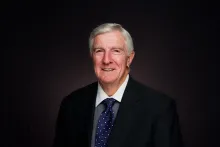
Before his retirement in 2021, Dr. Donald Ward pastored churches in Texas and Louisiana, and taught at Ambassador Bible College in Cincinnati, Ohio. He has also served as chairman of the Council of Elders of the United Church of God. He holds a BS degree; a BA in theology; a MS degree; a doctor’s degree in education from East Texas State University; and has completed 18 hours of graduate theology from SMU.
