

Don Ward
This sermon was given at the Galveston, Texas 2023 Feast site.
This transcript was generated by AI and may contain errors. It is provided to assist those who may not be able to listen to the message.
To the Bible study. Okay, let's rise and I'll ask God's blessing on you.
Well, I'm caught here in between the chair and the ridge. Our Father in Heaven, our great God and Creator, we come before you, Father, to give you thanks for the blessings you give. We thank you, Father, for the precious gift of life and the promise of eternal life in your kingdom. Father, we thank you that you have called us out of this world. You reveal yourself to us through your word, your spirit, and your Son, Jesus Christ. So, Father, we are so thankful for the calling. So few people really understand your plan, your purpose, your providence. Father, we are most blessed to understand you and what you're doing here on this earth. And, Father, we're not here just to congratulate ourselves, but to understand that you have called us out to share what we know with the rest of the world and eventually in your kingdom. So, Father, we ask you to bless us here this evening, give us the spirit of understanding, and we may more deeply understand your word and how it is woven together like a beautiful tapestry. And so, Father, we thank you for the opportunity for this study. And we ask, Father, that you would give a special blessing to each person that's here this evening. And, Father, we remind you of all those who are suffering in pain around the world tonight. And we ask, Father, that you raise them up, restore them according to your will through your minister and servants. And we give you thanks in Christ's name. Amen. Amen.
Well, good evening again. We have titled the study tonight Christ in the Midst of the Seven Golden Candlesticks. So, if you would open your Bibles to Revelation chapter 1. Revelation chapter 1 and verse 20, we see that the mystery of the seven stars which you saw in my right hand and the golden candlesticks, the seven stars are the angels and the seven churches and the seven candlesticks which you saw are the seven churches. Now, if you look at Revelation 2 and verse 1, under the angel of the church of Ephesus, right, these things says, he that holds the seven stars in his right hand who walks in the midst of the seven golden candlesticks.
So, we have titled this evening Christ in the Midst of the Seven Golden Candlesticks or the Seven Churches. I began this presenting this material part of this in 1988 to a refresher in Pasadena. At that time, we were living in Pasadena and we had a refresher program coming in where ministers came in from all over the world and we gave this study. Some of this study, not all of this study by any means.
So, we have seven messages to the seven churches and the seven candlesticks. Now, people have wondered at times about the candlesticks. Some say, well, the candlesticks stand alone. But if you look at Exodus chapter 25, and we'll go back there and look at the original candlestick where God instructed Moses to build the tabernacle and to how he wanted all the various instruments in the tabernacle to be. Of course, the tabernacle had no windows, it had no natural light coming into it.
So, all the light in the tabernacle was from candlelight, was from what he might call artificial sources. So, in Exodus 25, God begins to instruct Moses on how to build the tabernacle and the various instruments in it. So, in Exodus 25 and verse 31, Exodus 25 and verse 31, and you shall make a candlestick pure gold beaten work shall the candlestick be made, his shaft and his branches, his bowls, his knobs, his flowers shall be of the same.
So, it was a very expensive kind of material that it was built of, and the candlesticks were seven in number, just like we have seven candlesticks in the vision in Revelation chapter one. Seven candlesticks in his hand representing the seven churches. So, this number seven in the candelabra goes all the way back to Exodus and what God instructed Moses to place in the tabernacle. Now, look at verse 37, and you shall make the seven lamps thereof, sometimes called candlesticks, sometimes called lamps, and they shall light the lamps thereof that they may give light over against it.
The light of the candlesticks would burn to dust, dark, and then they would be extinguished. Then in the morning, the priests would get up early. They would empty the ashes. They would trim the wicks. They would replenish the bowl with oil. Now, if you, I have a diagram. I wish I had printed that off. The candelabra was like a great bowl and then with a stand under it, and then these seven individual candlesticks within it. Now, one thing was added to this chapter 37. I'm not going there, but just to tell you, 37 basically repeats what we have here in 25 of Exodus.
Now we go to Zechariah. There is a close connection between the book of Zechariah, Exodus, Zechariah, and Revelation. So now we want to go to Zechariah in chapter 4, and we'll see here a vision that Zechariah was given of a candelabra with seven candlesticks in it. There were pipes going up and a light on top of each candlestick, and on either side of the bowl were two olive trees, one on each side, two in number. So Zechariah 4 and verse 1, and the angel that talked with me came again and waked me as a man wakened out of his sleep, and he said, What do you see? And I said, I have looked and behold a candlestick, olive gold.
Now this candlestick, sometimes the candelabra of itself was called a candlestick, but inside the bowl were these seven sticks, just like we read from Revelation 1.20, where Christ walks among the seven candlesticks or the seven churches with a bowl on top of it, and the seven lamps thereon, and seven pipes to the seven lamps. See, the pipes went up to the lamp, and then inside the side of this bowl was oil, and oil, of course, representing the Holy Spirit.
And there's seven lamps and seven pipes to the seven lamps, which are upon the top thereof, and the two olive trees by it, one upon the right side of the bowl, and the other on the left side thereof. So I answered and spoke to the angel, and interesting, we're going to talk a little bit about angels. The Hebrew word for angel is malak, m-a-l-a-k, and it can be used for a human being or a divine being. In the New Testament, the word for angel is angelos, and it can be used for a human being or for a spirit being. And sometimes it is translated messenger, sometimes it's translated angel, both in the New Testament and the Old Testament. Malak is sometimes translated as a human being, sometimes as a spirit being. In the New Testament, angelos is sometimes translated as a spirit being, and sometimes translated as messenger. And the context will usually tell you which one it is. So I answered and spoke to the angel and talked with me, saying, what are these, my Lord? And the angel who talked me said unto me, don't you know what these are? And I said, no, my Lord. So I always get a kick out of that. He didn't know what it was at all.
Now we go to verse 11. Then answered and said unto him, what are these two olive trees upon the right side of the candle-sick and upon the left side thereof? And I answered again and said unto him, what be the two olive branches which through the two golden pipes empty the golden oil out of themselves? So God, of course, is the source of the Holy Spirit. I'm not going to turn to the scripture, but John 1526 says that the Holy Spirit proceeds from the Father. In Titus chapter 3 verses 5 and 6, also in Acts 2, we see that the Holy Spirit is shed on us through Christ. Once again, the Holy Spirit proceeds from the Father. That's John 1526. And that it is shed on us through Christ. Somehow Christ plays a role in it. Both the Father and the Son dwell in each one of us. We're called the body of Christ because Christ, through His Spirit, lives in each one of us. Now in Revelation chapter 11, you see the two olive trees and the candlesticks are talked about once again. So I'm just making a connection here between Exodus, Zechariah, and Revelation. This part about the candlesticks and the bowl and the oil and giving the light and all of that has been around for millennia. So in Revelation chapter 11 verse 3, and I will give power unto my two witnesses and they shall prophesy a thousand two hundred and three score days clothed in sackcloths. These are the two olive trees. So they weren't especially identified by the angel that spoke to Zechariah back in Zechariah chapter 4, but here you definitely see that the two olive trees represent the two witnesses. These are the two olive trees and the two candlesticks standing before the God of the earth. So the two witnesses were represented in that vision that Zechariah had in chapter 4. Once again, it's taken up here and then their mission is further enhanced there in the rest of Revelation chapter 11.
John was instructed to write down the things that he saw, so we want to get now the chain of Revelation. He should turn back to Revelation chapter 1. This is the chain of Revelation for all time, really. A lot of people say the book of Revelation is the revelation of Christ. The revelation is the revelation of God to Christ. Remember that Christ even said that he did not know the day nor the hour in which the Son of Man would come. So here we see in Revelation 1.1 where the revelation was developed. It resides with the Father. The revelation of Jesus Christ, and I think a lot of people maybe stop reading there, which God gave unto him. So the revelation came from God to Christ, and then Christ gave it unto the servant's things which was shortly come to pass. He sinned and signified it by his angel and his servant John. So the chain of Revelation in Revelation is God, Jesus Christ, the angel, and then John. John wrote and was to write down what he was shown.
John wrote in all three dimensions of time, past, present, future. Now the timing of the time setting is verse 10. I was in the Spirit, and the Protestants used this word and translated the way it is. It really should read, I was in the Spirit on the day of the Lord. Now in 1 Thessalonians 5.2, if you want to quickly turn back to 1 Thessalonians 5.2, you see that the very same Greek is translated. It's a matter of the Hebrew word for day is hemera, whether you put hemera in front of the Lord or you put hemera after the Lord. So in 1 Thessalonians 5.2, for yourselves know perfectly that the day of the Lord, same Greek, if you look at it interlinear, you'll see that 1 Thessalonians 5.2 and Revelation 1.10 are identical in their structure. The day of the Lord so comes as a thief in the night. So we go back to Revelation 1.10 again. I was in the spirit on the day of the Lord. So many of the events in Revelation occur on the day of the Lord. Just a few words here about the day of the Lord. You remember back a few years ago there was a big hullabaloo from prophecy teachers and television evangelists and Jonathan Cahn, and he wrote the Harbinger 1, and now he's got Harbinger 2, and he's got something else out. And Jonathan Cahn has a lot to say about the sins of America which are true, but when it comes to theology, he is rather weak. He doesn't really understand the plan, purpose, and providence of God. He holds a service on Friday night for Gentiles in a Sunday morning, I'm sorry, Friday night for the Jews, and then Sunday morning for the Gentiles. That's how he divides it up. Of course, the Bible doesn't divide. He's not the God of the Jews, only he's the God of all men.
They made a lot about blood moons. Now, the blood moons that we saw back then were natural phenomena, only occurring every so many years. It had nothing to do with God intervening and especially presenting a blood moon at that time. It was a natural phenomenon. Blood moons will occur again if time goes on enough, and the heavenly bodies get arranged in that particular order. Now, when God intervenes, it is God doing it. Where it says in Revelation 6, when the sixth seal is open and the moon becomes his blood, that's God's action. That is not a naturally occurring phenomena, so you can keep that in your mind. So, I was in the spirit of the day of the Lord and heard behind me a great voice as a trumpet, and that great voice of a trumpet is sounding out, the Word of God, lift up your voice like a trumpet, show Israel my people their sins, which we are commanded to do in the ministry. Then it goes on ascribing to Christ and various characteristics and physical sense. And so, you look at that and you notice how Christ has various body parts that human beings have. John was instructed to send what he saw and what he wrote down to the seven churches. Now, how people viewed the message to the seven churches over the years? There were seven churches along a mail route in Asia Minor, and the seven churches have been viewed in at least three ways. One, seven literal churches on a mail route in Asia Minor. That's one way these messages to the seven churches have been viewed. Two, seven historical periods or eras in which the principal characteristics of that era are depicted by the principal characteristics of that particular church. And then the message relevant for the church of God throughout all ages. Now, if you were reading the messages to the seven churches, in every message to the seven churches, it says clearly, listen, he that hath not let him hear what the Spirit says to the churches. All of the churches. The message is for all the churches.
Now, there was a close connection also between the Colossae and and the church at Ephesus and other other places. Now, if you look at Colossians chapter 4 and verse 13, what happened with these letters that Paul and others wrote, want to go to Colossians 4 and verse 18, what happened was when it was read in one church, it was passed on to the other churches. Now, I don't know if that was what happened exactly in the message to the seven churches, but we know it was a practice along the way.
So, in Colossians 4 verse 16, and when this epistle is read, talking about the epistle to the Colossians, it's read among you, cause that it be read also in the church of the Laodiceans, that you likewise read the epistle from Laodicean. And, of course, one of the messages to the seven churches went to the church at Laodicean. Now, let's talk about how the, further about how the the message was distributed. If you look at Revelation 2 and verse 1 again, we've already looked at it once. We'll look at it again, and notice what it says, Unto the angel of the church of Ephesus write. So, we ask the question, did John write letters to angels? The answer is no. The angel had revealed the message to John, and he would not make any sense for him to turn around and write a letter back to an angel. Remember that angel is from the Greek word, angelos. It can refer to a human being or a spirit being. The pastor of the particular church to whom it was sent would read the message, just like we just read from Colossians 4, verse 16. When this epistle is read in Colossae, then you pass it on to Laodicea, make sure that it's read there. So, it would not make sense for John to write a message to an angel, so that would an angel appear then at this church and say, I am an angel, I want to read you the message that I gave to John, where John had already written down. If you look at Strong's, it'll include, the messenger there, it will include the pastor of the church.
And you may say, well that sounds strange to me, but it makes sense to me that you did not write a letter to an angel.
So, once again, this is very important in your study of the Bible. If you understand that the Hebrew word malak refers to a human being or a spirit being, and it's oftentimes translated messenger, and sometimes it's translated angel. And the same is true for Angelos in the New Testament. Sometimes translated messenger, sometimes translated for a spirit being or an angel as we know angels. Now, if we notice in the vision that Christ gives us in Revelation 1.20, he's holding seven stars in his right hand. These are the seven spirits or the seven lamps or the seven angels that are equated in the book of Revelation. Now, I know that might have left you, but once again we go back to Zechariah. Aren't you glad we're studying Zechariah tonight?
In Zechariah, most people have left Zechariah's visions alone, but fools dare to tread where angels won't even go. So we have in Zechariah 3 verse 8, Here now, O Joshua, with a high priest, you and your fellows that sit before you, for they are men of sign. That's what the Hebrew actually says. They are men of sign. For behold, I will bring forth my servant the branch, and my servant the branch is identified as Jesus Christ in Isaiah 11 verses 1 and 2. My servant the branch, Christ is often referred to as the branch. For behold, the stone which I have laid before Joshua upon one stone shall be seven eyes. And if we hold our place there, we go quickly to Isaiah 28 verse 16. Isaiah 28 verse 16, my body will just happen to open there. In Isaiah 28 16, therefore it says, The Lord God, behold, I lay in Zion for a foundation, a stone, a tried stone, a precious cornerstone, a sure foundation, he that believes shall not make haste. So we know that from Matthew 16 18 that Christ said to Peter, upon this rock, peach or big rock, I will build my church big stone. And then in 1 Peter chapter 2, the church members are called living stones. You are lively stones built up to this chief cornerstone. So here in Zechariah, we have seven eyes upon one stone. Doubtlessly, these seven eyes are the seven churches once again. We'll show more about that in Revelation.
So upon one stone shall be seven eyes. Behold, I will engrave the engraving thereof, says the Lord of hosts, and I will remove the iniquity of the land in one day. Well, on the day of atonement, when that day is fulfilled in its final sense, iniquity is going to be removed in one day and Satan placed in the bottomless pit and not released for a thousand years. In that day, says the Lord of hosts, shall every man, shall every...
in that day, says the Lord of hosts, shall you call every man his neighbor under his vine and under his fig tree, which immediately gives it a millennial setting. So now we go to Revelation 1 and verse 4, and I'll show you that the eyes, the lamps are equated.
The lamps, the eyes, and the spirits are equated in the book of Revelation. So this number is seven. Seven eyes upon one stone, seven candles sticks in the bowl, two olive trees on either side of it.
Now in Revelation 1.4, John to the seven churches, grace be unto you, and peace from him which is, which was, which is to come, and from the seven spirits which are before his throne. Seven spirits before his throne. Now watch this, and listen to this. Now look at 5, at 4-5. Revelation 4 verse 5. Revelation 4 and verse 5. And out of the throne proceeded lightnings and thunders and thunderings and voices, and there were seven lamps of burning before the throne, which are the seven spirits. So the seven lamps are equated with the seven spirits. Now there's more. Go to Revelation 5 and verse 6. So you got 4, 5, and 6. Easy to remember. Chapter 1, 4, chapter, chapter 4, 5, chapter 5, 6. So you got to memorize already. Now in Revelation 5 verse 6, And I beheld and lo in the midst of the throne, and of the four beasts, or whatever, and in the midst of the elders stood a lamb as it had been slain, having seven horns, seven eyes, there will be seven eyes on one stone, which are the seven spirits, seven spirits are before the throne of God, sent forth into all the earth. The church is the light of the world, according to Matthew chapter 5, and we are to be the light of the world. Remember in the in the tabernacle, there were no windows. And so all the light came from this oil that was being burned in this candelabra up through the pipes and into the lamp. And so the church is the light of the world. The priest went in and trimmed the wicks and renewed the oil every morning. We're to renew the inward man every day, as it says in 2 Corinthians 4 16. 2 Corinthians 4 16, and the inward man is renewed daily. So there is much more and more scriptures we can turn to, but for the length of time, I'm going to watch. I mean, we've already used 30 precious minutes. Okay, continuing.
So there were seven churches along this mail route, and the letters were sent to the seven churches. Now, with regard to the seven churches, you can outline the messages to the seven churches with the following seven steps. Now, every step is not in every message to the church, but in most messages it is. First of all, in the messages to the seven churches are the characteristics of Christ, something about what Christ is. Then there is a commendation. It's not always in this exact order, but this is usually the order. Accommodation, I know your works that you have done such and such. And then there is what's wrong, but I have a few things against you, and so those are enumerated. Then there is a call to repent of what's wrong. Then there is the punishment. If you don't repent, here's what's going to happen to you. Then there is the reward. Here's what you're going to get. Sometimes the reward is at the end of the message, but in every message there is he who hathn't here let him hear what the Spirit says to the churches. So one of the handouts I give when I'm teaching the book of Revelation or giving a sermon on the seven messages is to use that outline in going through the various aspects of the church. First of all, the characteristics of Christ. If we look at Ephesus and the characteristics are given in the first verse, and we'll go back now to Revelation 2 and verse 1. And unto the angel of the church write, these things says he that holds the seven stars in his right hand. So the action of Christ, of what he's doing, he holds the church in his right hand. He holds the seven stars in his right hand. If you hold something in your right hand, that means that you are the one responsible for stabilizing it, holding it, making sure that it doesn't slip away, that it is preserved by you. And Christ has promised that he will never leave us nor forsake us. Now, some people might say, well, he's forsaken Laodicea because Laodicea doesn't have not much good said about Laodicea. Other churches not much good said about them either, but in all of them he has not forsaken any of them. And in all of them, there is this urge for them to repent. So he that holds the seven stars in his right hand and walks in the midst of the seven golden candlesticks, I know your works. So he knows their works, he knows their labor, he knows their patience. He cannot bear, you cannot bear them that have said they are apostles and are not. Much of what is written here to Ephesus would apply to the church of God right now, or in the past couple of decades especially. So let's just read here the message to Ephesus in its entirety. I know your works, your labor, your patience, how you cannot bear them that are evil and have tried them which say they are apostles and are not, and have found them liars. Now the Bible doesn't meant words. And have borne and have patience and for my namesake have labored and have not fainted. You're still here, you're with it, you've gone through a lot, you're still here.
Nevertheless, but I have somewhat against you because you have left your first love. Let's talk about first love for just a moment. A lot of people think, well first love has to do with I really loved the truth when I first heard about it. Then I, it's sort of after a while it was like an old sock. You know I can put it on and I can put it off and it's there, but I'm really not that excited about it. But I believe that first love has a deeper meaning than just your first flush of love for the truth. What are the weightier matters of the law? Matthew 23, 23, judgment, mercy, and faith. These ought not to have left the other undone, is what it says. That the first works to me are judgment, mercy, and faith. Oh, if the church from the time it was the inception of the church to the present day, if we had only exercised judgment, mercy, and faith, how different the church would be. But oftentimes, and it's even more true today, if the minister says something that we think is not quite right, who do we tell? We go to the minister and say, you said such and such. I'd like to have a better understanding of that. Is that true? No, we go tell our neighbor, well, he said such and such, and I wonder what you think about that. Well, he probably thinks the same thing you thought about it. Why not go to the source that said it instead of somewhere else? I could cite several examples, but you understand what I'm talking about with regard to exercise and judgment, mercy, and faith. See, all things spiritual spring from faith. I quoted this in the first sermon here. He who would come to God must, first of all, believe that he is. You have to have faith that he exists and faith that what he says is true.
So you have left your first love. Remember, therefore, where you are falling and repent, and do the first works. Do something. Do the first works. Do the first works.
Or else I will come into you quickly. How serious is this? And I will remove your candlestick out of its place. There will only be six candlesticks in there if you don't repent. So it is a very serious matter. If you're taken out of the bowl, you're not receiving any Holy Spirit, especially during the time of the two witnesses, because they empty out of themselves oil into the bowl, which they receive from God the Father through Christ. Here's an accommodation. But you hate one thing that I really like about you. You hate the doctrine of the Nicolae Iotans. Now, the doctrine of the Nicolae Iotans, some say that it was the doctrine of the more sin, the more grace, and the greater the glory of God. But other sources say that there was a person named Nicholas who loved paganism so much that it's no big deal if you mix a little paganism with the truth. And we have a lot of churches that mix a lot of paganism with a little of the truth, and we know what they are. So the doctrine of the Nicolae Iotans, which I also hate, so God hates the works of the Nicolae Iotans, he that hath an ear let him hear what the Spirit says unto the churches. To him that overcomes, and every message to all the churches, it has this word overcomes. To him that overcomes, to him or to he that overcomes, I will give to each of the tree of life which is in the midst of the paradise of God. And so, I think I skipped seven, he that hath an ear let him hear what the Spirit says unto the churches. Every church has this statement made to it. He that hath an ear to hear let him hear what the Spirit says to the churches, and to the angel of the church at Smyrna. Now, a lot of people have made a big thing over the meaning of the word. Well, what does Ephesus mean? What does Ephesus mean? Ephesus means permitted.
And each one of these words here has a obviously a meaning to it.
Smyrna means myrrh, sweet-smelling spice that you can get from certain plants in the Middle East. Smyrna means myrrh, sweet-smelling. So, I don't know, I guess, all the people at Smyrna smell real sweet, but I don't think that's exactly what they meant. So, I think one of the reasons why people did this was try to justify the idea of heiress. Now, a lot of people in the church still hold the idea that there are distinct heiress of the church. Whereas United has taken a softer approach on that and not dogmatically said, this is this era and that's that era and so on.
And a lot of people make a lot over the name Philadelphia because Philadelphia means brotherly love. And a lot of people make a lot over Laodicea, and Laodicea means the laity in which the people rule the church. They say, okay, the laity stands there, for the people rule the church. But it doesn't seem to me that the name of the church really indicates what the church is because any of these activities that Christ says, I've got a problem with such and such, that there'll be people in almost the smallest congregation you can name. There's a lot of the congregations in United now are less than 25 people or so. And they may not have various characteristics that God takes them to task for. Okay, let's look at Smyrna. We said means sweet-smelling characteristics of Christ that is given here for Smyrna.
And the angel of the church in Smyrna write, these things says, the first and the last, which was dead and is alive. That shows that Christ was resurrected from the dead. He was the first and the last. He was the first to be resurrected from the dead. He is the Alpha and the Omega. He was dead and he is alive. It says, I know your works, tribulation, poverty, but you're rich. But you're rich. They were rich spiritually, hopefully, and those they are persecuted by those who say they're Jews but are of the synagogue of Satan. Well, we don't have anything about Smyrna that is said is wrong with them or a type of punishment. There is the following commands are given. Fear none of those things which you shall suffer. Cast into prison that he be tried. The devil shall cast some of you into prison to try you. Tribulation for ten days be faithful unto death. He that hath an ear let him hear what the Spirit says to the churches. So after ten days of tribulation, it's implied you will be rewarded. Be faithful unto death, and I will give you a crown of life. He that overcomes shall not be hurt by the second death. Notice that once again that the second death part is in this message to the churches. I doubt if you've taken the time, I encourage you on your own to take these seven things, characteristics, commendations, what is wrong, cause repentance, punishment, reward, and exhortation to heed the message what the Spirit says to the churches. Do your own outline with that. You'll be surprised what you see there in the messages to the seven churches. Now we go to Pergamos. Pergamos means height or elevation. The characteristics of Christ, he has a sharp edge. He has a sword with two sharp edges, and of course the sword is the Word of God. I know you works, you've not denied the faith, you dwell where Satan's seat is. So there was a person there that typified Satan in Pergamos.
Type, repent, or I will come against you with the sword of my mouth. The command some who hold the doctrine of Balaam. What is the doctrine of Balaam? The doctrine of Balaam, he did it for hire. He did it because of money. And you have some there to hold the doctrine of the naked layiatens. I tend to think it's more this Nicholas mixing paganism with the truth. Now on the other hand, some think it's the more sin, more grace, and the greater the glory of God, which of course is a fallacy within itself. God would rather, if that's the only way God can get glory through your sinning, he would rather not have glory.
And then their reward, the heat of the hidden manna, and they're given a white stone which no man knows. I don't know what the white stone is. And the hidden manna, of course manna, Israel received the manna on the sixth day. They go out and gather it for the seventh day. And manna, Jesus Christ says that he is the, in John 6, Jesus Christ says that he is the true manna that came down from heaven. So manna perhaps represents the word of God. Now thiatira. Thiatira means odor of affliction. The odor of affliction. I wonder what that smells like? The odor of affliction. Well, if you've ever walked into a room where cancer was raging, you might understand what the odor of affliction is. Back in Isaiah, it talks about, I think it's chapter 3, where you smell the body parts of people who are being afflicted because they have disobeyed God. The characteristics of Jesus, these things says the son of God whose eyes are like a flame of fire and feet like brass. So what is wrong in thiatira? They permit Jezebel to teach. And it says, I will cast her into a bed, a literal place or position of reclining.
In other words, we'll place the woman in a position. We'll make it very easy to influence others for this woman to commit spiritual fornication with the world. So we have to be careful with spiritual fornication with the world. We can commit spiritual fornication with the world and on that side, before we know it, we have done something that we should not have done. And notice that kill her children with death, those children, churches who go and commit spiritual fornication. Spiritual fornication with this woman leads to being cast into great tribulation and hence being indicating that thiatira, that that is one of the main ideas that permeates the church at the end of days. They're cast into you in a great tribulation if they don't repent. Also to thiatira, it says, That which you have, hold fast till I come. Those who do not hold the doctrine of the woman, or those who do not know the depths of Satan, I will put upon you no other burden. So the admonishment, overcome and keep the works into the end and listen to what the Spirit says to the churches.
Now we come to Sardis. Sardis literally means red. Of course, we've heard a lot about Sardis through the years, being the church that was dead. As the seven spirits or the character issues of Christ have the seven spirits, it has the seven stars. So what is wrong? You have a name that you're alive, but you are dead. Strengthen the things which are ready to die. There are a few names, even in Sardis, which have not defiled their garments. Your works are not perfect before God. And they are worn. Now come as a thief as a knight. So, for example, the parable there in Matthew 25 with the ten virgins, where the knock comes on the door, and they were not expecting it. And all of the virgins get up, those who have oil into their lamps and those who do not. And evidently, even those who had oil in their lamps were not expecting the knock at that time.
So, always the message is, always be ready. I think someone talked about that. Well, I know they did, and a sermon here, Are You Ready?, was one of the main things that he emphasized in the sermon. We're to be remembered, we're to be ready at all times. So, they are admonished, remember the basics, go on to perfection. Now, one of the things that, one of the doctrines in the Church of God is to go on to perfection. Look at the Hebrews chapter 6. We often, we used to have a booklet, it was titled, The Six Great Doctrines of Hebrews 6. Actually, it's seven. There are seven great doctrines. The first one, therefore leaving the principles of the doctrine of Christ, let us go on to perfection. That's a doctrine. We're to go on to perfection. We're to grow in the grace and knowledge of our Lord and Savior, Jesus Christ. Not, you know, laying again the foundation of repentance from dead works and of faith toward God. Then the other doctrines, the doctrine of baptism, the laying on of hands, resurrection, dead and eternal judgment. This will we do, and God permits. So, God will permit, hey, you striving for perfection. And I don't know why we're so quick. No, in one case, it's more in one place, but Peter says, Be you holy, for I am holy. God says, Be you holy, for I am holy. And then we're quick to say, But I'm not holy. God says, Be you only. And we're to strive for perfection. Another verse says, Become you therefore perfect, even as your Father in heaven is perfect. So, that is a doctrine, perhaps, that we should emphasize more of going on to perfection. So, in Sardis, those who walk with me will receive the rewards, be clothed in white raiment, will blot out his name out of the Book of Life, and will confess his name before my Father and his angels. Now, one of the things that he should be getting, and some may take homage to this, in one or two cases, maybe there are exceptions, of basically everyone gets the rewards that are mentioned in the messages to the seven churches. Everybody gets white raiment. Everybody gets eternal life. If you're there, you have eternal life. And so, now we go to Philadelphia, and much has been made of Philadelphia because it means brotherly love. And there was a person who broke away from the church, one of the earliest ones, who calls his church the Philadelphia Church, claiming that he is the Philadelphia-era of the church. He now claims that he is the third from God and Christ. He sits in the third position from them. I don't know which scripture he gets that from, but I talked with a couple who had recently left his fellowship not all that long ago.
One of the things that we see here about the Philadelphia Church is, because he has the key of David, opens and no man shuts, and shuts and no man opens. I would encourage you, if we go back to Isaiah 22 and verse 22, we don't have time to go into an in-depth study of the key of David. But the key of David really is, see, David was a king, and David had the key into the physical kingdom. Jesus Christ has the key into the spiritual kingdom. He gave that key, and we'll turn to Matthew and read it in just a moment, he gave that key to Peter and the church. The church now holds the keys to the kingdom of God, and we're commanded. The Great Commission says, go you therefore, disciple all nations, teach them to observe all things once ever I've commanded you, and lo, I'm with you even to the end of the age. In Genesis 22, we have a story of play on words in one sense. In verse 15, we have Shevna, who is really a type of the adversary or the devil, and then we have Eliachim in verse 20, and then in 22, and the key of the house of David will lay upon his shoulder, that is Eliachim, so the he shall open, and none shall shut, he shall shut, and none shall open. So make a study of Isaiah 22 in conjunction with Revelation chapter 3 here with regard to the church at Philadelphia. It says you have a little strength. The word strength there is dunamis. It means dunamis is a word from which we get dynamite. It means supernatural power. You have a little supernatural power. You have kept my word. You've not denied my name. There is no type of punishment given. There is a command whole fast that which you have that no man take your crown. And of course, people that go out from among us, they're trying to get your crown. Don't know. Let's be clear on that. They're clear and they're trying to get your crown. They're trying to get you to go somewhere else. And brethren, as I said in the sermon, if it were not for the church of God, those people who are branched off into little conclaves or whatever you want to call them, they are discussing things among themselves. You know, I'm reminded of the Ethiopian eunuch who sat in the chariot and Philip approached him. He was reading from Isaiah and he said, do you understand what you're reading? He said, how can I unless some man teach me?
Just because a person is a teacher in the church doesn't mean that he's going to get a greater reward than you. I've often said that I believe that a lot of the widows will have a greater reward in the kingdom of God than I have, but God gives us gifts according to several abilities. He uses natural abilities and he uses that which he imparts. And God does give spiritual gifts. I'm not getting off into that. Hopefully that's a dangerous place to go. He that hathn't here let him hear what the Spirit says to the churches.
Trying to get this to roll.
Okay. Okay, the reward for Philadelphia. One of the things that this is not said about any of the other churches per se, I will keep you from the great hour of tribulation. That is said of Philadelphia. And we mentioned in Thyatira, it is said, unless you repent, I will cast you into great tribulation.
Now we come to Laodicea.
Laodicea means the rule of the laity or the laity. And some people have made a big to-do about that. What is wrong, they have, they're neither hot nor cold. There's one thing about Laodicea, perhaps you didn't know.
Laodicea was a very rich city. They had a lot of gold there, but they did not have a water supply of their own. They had to use the conduits, whatever they called them, aqueducts. I've seen those that marching into Petra.
They had to bring water in from a distance, and by the time the water got to Laodicea, it was lukewarm. But at Laodicea, they had a famous school of the school that esculapus for eyes treatment, I believe. And that's some of the language that is there about Laodicea is taken from what was there physically.
So let's talk about Laodicea.
Because you say that you're rich and criss with goods, and have need of nothing, you're wretched, miserable, and blind, I counsel you to buy me gold tried in the fire, raiment that you may be clothed, and that your nakedness do not appear. Nakedness in the Bible symbolizes sin. If the Bible talks about you're walking naked, you're walking in sin. Anoint your eyes with eyesab. See, that goes back to the medical school.
And it seems that the Laodiceans were filled with self-righteousness, that they really liked where they were. God says, as many as I love, I rebuke and chasten, be zealous and repent, and he that has an ear let him hear what the Spirit says to the churches. And he tells Laodicea that he stands at the door and knocks, and God is knocking on the hearts of each one of us every day. We're standing before the judgment seat of Christ, and he's saying, Open the door, let me end, and I will sup with you. You know, we can go to Bible studies like this, and perhaps we pick up something that may help us along the way. But each day, Christ is standing at the door, and he wants to share who he is and what he is with us in every sense of the word, he and the Father. And notice the great reward, to him who overcomes will I grant to sit with me in my throne. You pick that up with my throne, even as I overcame, and am sat down with my Father in his throne. Now, if you go to Revelation 20, let's go there. Revelation 20.
Verse 4, And I saw thrones, and they sat upon them, and judgment was given unto them. And I saw the souls of men that were beheaded. Some speculate that the beast power is going to cut people's heads. You know, during the time of Al-Qaeda and the other group, what's the name of that other group that came on? When ISIS came on, they were beheading people. For the word of God, which had not worshipped the beast, neither his image, neither had received the mark upon their foreheads or in their hands, and they lived and reigned with Christ a thousand years. But notice that thrones were cast, and they sat upon them. And Christ is saying that He will also allow us to sit with Him on His throne, and all authority has been given to Christ, like we read about in John 13, just before He washed the disciples' feet. He realized that all power had been given to Him in heaven and in earth. So, brother, hopefully we have been able to make the connection between Exodus, Zechariah 3, Zechariah 4, between the stone, the churches built upon the stone, Peter the big stone, 1 Peter. Let's turn to 1 Peter. We didn't read that.
In 1 Peter chapter 2, we refer to it where it says, you are living stones built up. 1 Peter chapter 2, to whom coming, this is 1 Peter 2.4, to whom coming, even unto a living stone, disallowed indeed of men, but chosen of God and precious, you also, as living stones, are built up a spiritual house, a holy priesthood, to offer up spiritual sacrifices acceptable to God by Jesus Christ. Wherefore also it is contained in the Scripture. Behold, I lay in Zion. See, he's quoting now Isaiah 28, 16. I lay in Zion a chief cornerstone, and we can hearken back to Zechariah 3 upon one stone will be seven eyes, seven churches, eyes the light, where the light of the world the church is set to spread the gospel to the whole world.
Precious and he that believes shall not be compounded. So, brethren, we have been given a powerful witness through the message to the seven churches. I hope that we take heed to them. We could go on and on all night. I have much more material, but I know there's now 20 till, well, I think I've got about 18 or 19 till nine. What time is it? 9 o'clock? Yeah. Okay, we're dismissed.
You're welcome.
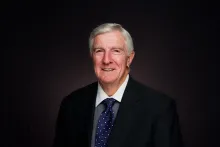
Before his retirement in 2021, Dr. Donald Ward pastored churches in Texas and Louisiana, and taught at Ambassador Bible College in Cincinnati, Ohio. He has also served as chairman of the Council of Elders of the United Church of God. He holds a BS degree; a BA in theology; a MS degree; a doctor’s degree in education from East Texas State University; and has completed 18 hours of graduate theology from SMU.
