
Don Ward
This transcript was generated by AI and may contain errors. It is provided to assist those who may not be able to listen to the message.
The title today, Christ our Passover. And the subtitle, rather lengthy, Christ the Passover for All Nations and the Key for Keeping the Days of Unleavened Bread Because He Is the Unleavened Bread of Sincerity and Truth.
Christ our Passover. Let's turn to 1 Corinthians 5 and verse 7. As we read the Bible and as we rehearse the Holy Days in their seasons, practically every person in here who is baptized and many who aren't, and even our preteens, many of them, can tell you what the Holy Days represent, symbolize, as we might say, because we basically teach it from cradle to grave, which we should.
But when talking about the Holy Days or any other of the truths of God, we should really come to a greater, deeper understanding of the total significance of what all of this represents for all of humanity and for ourselves to come to a deeper understanding of all of the Holy Days and all of the Word of God.
In 1 Corinthians 5 verse 7, purge out therefore the old leaven, evidently the physical leaven, that you may be a new lump, because they surely were not unleavened in the spiritual sense, that you may be a new lump as you are unleavened, for even Christ our Passover is sacrifice for us.
Therefore, let us keep the feast, not with old leaven, neither with the leaven of malice and wickedness, but with the unleavened bread of sincerity and truth.
And so, once again, Christ the Passover for all nations and the key for keeping the days of unleavened bread, because He is the unleavened bread of sincerity and truth.
He is our Passover, and He is the unleavened bread of sincerity and truth.
I doubt that any of us really understand all that is conveyed and implied by the fact that Christ is our Passover, and that He is the unleavened bread of sincerity and truth, not only for us, but for the whole world.
When Israel observed the first Passover, they sprinkled blood on the doorpost of their homes. Let's look at that in Exodus 12.
They had been told to set aside on the tenth day of the month, on blemish sheep or goats, and given instructions on how to keep the Passover.
In fact, even the sacred calendar was revealed, the first part of Exodus 12, it says, And this month shall be the first month unto you.
And so here they were in Egypt, had been there for many decades, scores of years, and now in servitude, and probably had lost much of the truth.
And so in Exodus 12, verse 20, we want to read here, You shall eat nothing, leaven in all your habitation shall you eat unleavened bread.
Then Moses called for the elders of Israel and said unto them, Draw out and take you a lamb according to your families and kill the Passover.
You shall take a bunch of hyssop, dip it in the blood that is in the basin, and strike the lentils on the two-side post, with the blood that is in the basin, and none of you shall go out at the door of his home until the morning.
For the Lord, some people talk about a death angel. There's nowhere in the Bible here that this says a death angel.
For the Yahweh, all caps, L-O-R-D, for the Yahweh, the Eternal will pass through to smite the Egyptians and when he sees the blood upon the lentil and on the two-side post, the Eternal will pass over the house or the door and will not permit the destroyer to come in unto your houses to smite you.
And you shall observe this thing for an ordinance to you and to your sons forever.
And it shall come to pass when you come to the land which the Lord will give you according as he has promised that you shall keep this service.
And so it came to pass in verse 29 that at midnight the Lord smote the firstborn of the land of Egypt from the firstborn of Pharaoh that sat on its throne unto the firstborn of the captive that was in the dungeon and the firstborn of cattle.
And so that was the highlight of the first Passover.
Now, what is the relevance of the first Passover to the Passover that we are observing under the terms of the New Covenant?
First, we need to understand that the Old Covenant was a national covenant.
It was made with the nation of Israel.
Let me say that again. The Old Covenant was a national covenant. It was a covenant made with the nation of Israel.
It was not made with Egypt. It was not made with Syria. It was not made with Turkey.
It was not made with any other nation or peoples that you want to name on the face of the earth.
Now, a lot of people say, well, why did he start with Israel?
Well, you can read, and it surely wasn't because they were greater or better than any other people, like you read in Ezekiel 16, where the analogy is given that they were likened unto a newborn that was unwashed when it came out of its mother's womb.
So it wasn't because of any kind of greatness. So he had to start somewhere, and he started with Israel.
Dating back to calling out Abraham and the promises that were made to Abraham, that in your seed, as in one seed, all the nations of the earth will be blessed.
So let's look at Exodus 24. We'll see here where God does enter into this covenant with Israel.
Romans 24, verse 6.
Moses took half of the blood and put it in the basins, and half of the blood he sprinkled on the altar.
And he took the book of the covenant and read in the audience of the people.
And they said, all that the Lord has said will we do? I do.
It's also like an unto a marriage.
God, of course, had to eventually give them a bill of divorcement because of their unfaithfulness, their spiritual harlotry.
And Moses took the blood and sprinkled it on the people and said, Behold the blood of the covenant which the Lord has made with you concerning all these words.
So it was a national covenant.
The sacrifices consisted of the blood of bulls and goats.
Now go to Hebrews chapter 9.
In Hebrews chapter 9, remember in the book of Hebrews what is happening?
The writer, Paul, is comparing elements of the old covenant with elements of the new covenant, showing how the new covenant far surpasses the old covenant.
How the new covenant far surpasses the old covenant.
In Hebrews chapter 9 and verse 13. For if the blood of bulls and goats and ashes of an heifer sprinkling the unclean sanctifies to the purifying of the flesh, how much more shall the blood of Christ, who through the eternal Spirit?
See, we are partakers of the eternal Spirit.
Sort of a side note here when the big issues were being discussed in which this monumental doctrinal change and heresy entered the church over the Trinity, one of the things that would claim, well, you cannot be a spirit son of God because you are a created being.
You see, we are partakers of the eternal Spirit, the Spirit that has existed in eternity.
And if on resurrection you will be a spirit being of that eternal Spirit, and that eternal Spirit abides in you even now.
Who through the eternal Spirit offered Himself without spot to God, purge your conscience from dead works to serve the living God.
See, the blood of bulls and goats could not purge the conscience.
The blood of bulls and goats made them ceremonially clean, and they could approach to God through sacrifice, the sacrifice of animals.
Now, all of this, you think, well, I've heard all of this before. Well, you have, hopefully.
But let's bring it all together to see the great significance of what has happened through the ages.
Moreover, the blood of bulls and goats could not pay the penalty for sin.
Look at chapter 10, probably across the page in verse 4, for it is not possible.
It is not possible that the blood of bulls and goats should take away sins.
It's not possible. Why? Because the wages of sin is death, and someone had to qualify to take away sin and death.
And that one, of course, was Jesus Christ.
So what was the purpose of those sacrifices that were offered under the law of Moses?
Where did that get Israel? Where did that get anyone?
So we look at Galatians chapter 3.
I don't think that we, as a church or as a people, not just that the significance and the difference between the Old and the New Covenant, what the Protestant world has done is, with the New Covenant, is try to make it into just believe in Jesus Christ. Many of the elements of what some term the Old Covenant or carried over, God's immutable spiritual law.
But in Galatians chapter 3 and verse 14, verse 14 hearkens back to Genesis chapter 12, where the promises were made to Abraham, in which it was promised that through his seed all of the nations of the earth would be blessed.
Now what has happened today is that Israel and those who, and I don't see anything wrong in supporting Israel in a way, because it seems that some of the prophecies of the future depend upon the restoration of Israel in a limited sense, but not the ultimate restoration of Israel, but some of the claims that are made with regard to the right to the land and what the conditions that must be met in order to have the right to the land.
And also, this blessing is for all people.
It is not just for the nation of Israel. It is not just for the nation of you fill in the blank.
It is not for just any race. Black, yellow, white, you fill in the blank.
It is not for just any ethnic group. It is for everyone.
So here we are at Galatians 3, 14.
So starting back with that Passover in Genesis, I mean in Exodus chapter 12, and tracing it up to today, what was the significance of those sacrifices that were offered under the terms of the Old Covenant?
Well, this is one of the most comprehensive explanations of that, probably in the Bible.
There are other places, obviously, that deal with it as well.
That the blessings of Abraham might come on the nations.
The word for Gentiles is ethnos, and generally it means those who are not of Israelite-ish descent.
That the blessings of Abraham might come on the Gentiles through Jesus Christ, that we might receive the promise of the Spirit through faith.
Brother and I speak after the manner of men, though it be but a man's covenant, yet if it be confirmed, no man disannuls or adds thereto.
So the covenant was made with Abraham, that in your seed all of the nations of the earth will be blessed.
Now to Abraham and his seed where the promise is made, he said, Not into seeds as of many, but as of one.
For it is through this one seed, through this one seed, that all of the nations of the earth will be blessed.
And to your seed, which is Christ.
That's the identity of the one seed.
And this I say that the covenant that was confirmed before of God to Christ, in Christ, the law which was 430 years after, cannot disannul that it should make the promise of non-effect.
Now a lot of people go back into on what was added and what wasn't added.
See, the promises to Abraham were made way before Israel entered into the Old Covenant.
Let's just say circa 1900 BC, somewhere between 1900-1800 BC, somewhere along in there, the promises were made to Abraham.
But Israel entered into the Old Covenant, circa, say, 1420 BC.
Some 430 years later.
And so there was something that was added.
You look at, ho your place, look at Jeremiah chapter 7.
Jeremiah chapter 7.
I would encourage you during the days of Unleavened Bread to study Jeremiah chapter 7.
In Jeremiah chapter 7, it is a judgment chapter, the judgment that is coming upon Israel, and for that matter the whole world, but especially taking Israel to task and Judah to task, saying, oh, the temple, we have the temple here.
Nothing's going to happen to us. And he says, well, go look at Shiloh, what happened there.
And sometimes maybe we say, oh, we're in the church.
Nothing's going to happen now as we go to church.
We're in the church of God.
And yet, there's a parable of the ten virgins in Matthew 25.
Five wise and five foolish.
Apparently, all ten doing the same thing.
So in Jeremiah 7, in verse 22, let's read 21, Thus says, The eternal host, the God of Israel, Put your burnt offerings unto your sacrifices, and eat flesh. Oh, they were diligent to offer sacrifice. Oh, we've got to offer sacrifice.
We've got to do these physical things.
For I spoke not unto your fathers, nor commanded them, In the day that I brought them out of the land of Egypt, Concerning burnt offerings or sacrifices.
And so these burnt offerings and sacrifices were added when they entered into the old covenants. So we go back to Galatians and pick it up again.
So this verse 17 again, In this I say that the covenant that was confirmed before of God in Christ the law, which was 430 years after that covenant with Abraham, or promise, Cannot disannoy that it should make the promises of not effect, Or if inheritance is be of the law, it is no more a promise, But God gave it to Abraham by promise. It was a promise. He didn't see it, and he didn't fully receive it, As you read in Hebrews chapter 11, Where all the men and women of faith are chronicled in chapter 11.
In verse 19, Wherefore then serves the law, It was added because of transgression. It was to keep them in mind that they were not to break the law of God, And if they did, there was a sacrifice to be made, And it was the blood of bulls and goats. Till the seed should come, and that seed is Christ, Till the seed should come, to whom the promises was made, And it was ordained by angels in the hand of a mediator. Now a mediator is not a mediator of one, but God is one. Is the law then against the promise of God? God forbid. Obviously, the spiritual law is not against the promise of God, Or Christ coming on the scene, of course, is not against the promises of God. For if there had been a law given which could have given life, The law cannot give life. Now in Romans, it talks about this. Basically, what the law was given for, and what the law helps to do, Is to sustain life. To sustain life.
But it cannot give life. For if there had been a law given which could have given life, Verily righteousness should have been by the law. See, in the times of the Old Covenant, righteousness, You look at Deuteronomy 6, verse 25. There are many implications throughout the Scriptures regarding this, That the measure of righteousness was measured by doing the works of the law.
And so that's where the world goes off with, Well, you can't be justified by the works of the law, So then they do away with the spiritual law and the law of Moses. Then we have people who contend that there's just one law, That it's all united together. There is definitely, as we shall see, a separation between The spiritual law and the law of Moses. Otherwise, we'd still be under the Old Covenant. Deuteronomy 6, verse 25, And it shall be our righteousness if we observe to do all these commandments before the Lord our God, As He has commanded us.
It will be our righteousness. I use this verse because it is somewhat of a summary verse Of what constituted righteousness under the Old Covenant. So we'll read this, 21 again. Is the law against the promises of God? God forbid. For if there had been a law given which could have given life, There would have been righteousness by the law. Man is made of the dust of the ground.
He does not have inherited eternal life abiding within him. But the Scripture hath concluded all under sin, That the promise by faith in Jesus Christ might be given to them that believe. But before faith came, we were kept under the law, Shut up unto the faith which should afterwards be revealed. Wherefore the law was our school, master, To bring us unto Christ, that we might be justified by faith. And over and over again in Paul's epistles, It's this message that you're justified by faith. But while being justified by faith, If you are found a sinner, then it is of non-effect. You can look back there at Galatians 2.
Oh, your place here. You look at Galatians 2. In verse 17, But if while we seek to be justified by Christ, We ourselves also are found sinners, Is therefore Christ the minister of sin, God forbid. Now you have to repent and exercise faith in Christ. For if I build again the things which I destroyed, I make myself a transgressor.
So continuing here, it's justified by faith, But it does not do away with God's immutable spiritual law. Verse 25, But after that faith has come, We're no longer under a schoolmaster. That is, we are now under the spiritual law of God. We have come to Christ for the remission of sins that are passed. For we are all children of God by faith in Christ Jesus. Christ our Passover is sacrificed for us.
Christ the Passover for all nations, The key for keeping the days of unleavened bread, Because He is the unleavened bread of sincerity and truth. How are we all children of God? By faith in Christ Jesus. For as many as us of you, as have been baptized into Christ, have put on Christ. There's neither Jew nor Greek. There's neither bond nor free. There's neither male nor female. For you are all one in Christ Jesus. Now that doesn't do away with ethnic identity.
It doesn't do away with racial identity. It doesn't do away with national identity. It does not do away with gender identity. But in Christ you're all one. You are of that spirit. And if you be in Christ then are you Abraham's seed, And heirs according to the promise. So what are the terms of the Old Covenant? The nation of Israel only and proselytes were able to have any kind of relationship with God.
Even while Jesus was here on the earth, and even after he ascended to his father's throne, the Israelites, who most part in the New Testament are called Jews, still thought that the promises and covenants pertain to them only. Have you ever just thought about that? I'm going to say that again. But while Jesus was here on the earth, and even after he ascended to his father's throne, the Israelites, Jews, still thought that the promises and covenants pertain to them only.
And how do we know that? Let's go to Acts 2. In Acts 2, remember we're talking about how all nations can observe the Feast of Unleavened Bread. We live in such a troubled world. We don't know where the next shoe will drop. Seven people were gunned down in a home in Ohio just a few days ago, of telling how many people were victims of terrorism and war in the Middle East, from Yemen going back toward the west into Syria. In Acts 2, the account of the Holy Spirit being sent, we're going to pick it up in verse 6.
It came as a mighty sound of the rushing of a wind. And in verse 6, Now when this was noised about with a multitude through the multitude, the multitude came together and were confounded because every man heard them speak in his own language, in his own language. They were all amazed and marveled, saying one to another, Behold, are not all these which speak Galileans. And how is it that we hear every man in our own tongue wherein we were born? Parthians and Medes, Elemites, and dwellers in Mesopotamia, Judea, Cappadocia, Pontus, Asia, Phrygia, Pamphylia, and Egypt, and to the parts of Libya about Cyrene and strangers of Rome, Jews and proselytes.
Notice that Jews and proselytes. The proselytes had, there was a process ordained whereby non-Jews could enter into the congregation after going through certain rituals and after a certain period of time. Cretes and Arabians, we do hear them speak in our tongue the wonderful works of God. And they were all amazed and were in doubt, saying one to another, What does this mean? And others mocking said, Well, they're probably just drunk. But Peter got up and he began to speak. But Peter, standing up with the 11, verse 14, lifted up his voice and said unto them, You men of Judea and all that dwell in Jerusalem. Notice that you men of Judea and all you that dwell in Jerusalem, Be this known unto you and hearken to my words.
Now look at verse 22. You men of Israel, hear these words, Jesus of Nazareth, man approved of God, a man approved of God among you by miracles and wonders and signs, which God did by him in the midst of you as yourselves also know. So even though Peter seemed to grasp that the promises would be extended to other peoples a little later on, those who were afar off, he and the apostles did not understand that the promises were for all nations, races, kindreds, and tongues, until he went to the house of Cornelius and the Holy Spirit fell on the Gentiles who were not Jews.
Now it would seem from this verse here, you look at Acts 2, verse 37, They were pricked into heart and said, Men and brethren, what shall we do? And Peter said, Repent, be baptized, every one of you in the name of Jesus Christ, for remission of sins, and you shall receive the gift of the Holy Spirit. Now you look at this verse 39, which implies, well, it's for more than just the Jews, but they didn't grasp it until Acts 10, For the promises unto you and to your children, and to all that are afar off, who are those that are afar off, those who were not given the promises initially, and to all that are afar off, even as many as the Lord our God shall call.
But it was in Acts 10, if you go to Acts 10, in Acts 10, in verse 34, we'll begin. Peter had this vision of the unclean and saying, rise and eat. He said, No, my Lord, I've never eaten anything unclean. He finally figured out that he was talking about men and not animals. And so, verse 34, Peter opened his mouth and said of a truth I perceive that God is no respecter of persons.
But in every nation he that fears him and works righteousness is accepted with him. The word which God sent unto the children of Israel preaching peace by Jesus Christ, he is Lord of all. Is he the God of the Jews only? No. Is he the God of the Greeks only? No. He's the God of all peoples. Verse 37, that word I say, you know, which was published throughout all Judea and began from Galilee after the baptism which John preached. How God anointed Jesus of Nazareth with the Holy Spirit with power who went about doing good, healing all that were oppressed of the devil.
For God was with him. And as he continued to preach, verse 44, while Peter yet spoke these words, the Holy Spirit fell on them which heard the word, and they of the circumcision which believed were astounded as many as came with Peter, because that on the Gentiles, the nations, the non-Jews, also was poured out the gift of the Holy Spirit, where they heard them speak with tongues and magnify God, then answered Peter, can any man forbid water that these should be baptized, which I received the Holy Spirit as well as we? And he commanded them to be baptized in the name of the Lord, then prayed him or that they would tarry their certain days.
You look in these verses and you just see that until this event, then the Acts 15 conference was over the question of circumcision, where the Judaizers were saying you had to be circumcised according to the law of Moses in order to be justified. And of course, that was settled. And the way it was settled, you look at Acts 15, is that James quoted from the prophecy in Amos that all nations would be a part of the tabernacle of David, tabernacle of David, of course, used as a figure of speech, a metaphor, or in metonymy.
In Acts 15, 16, after this, I will return and will build again the tabernacle of David, which has fallen down, and I will build again the ruins thereof, and I will set it up, that the residue of men might seek after the Lord, and all the nations upon whom my name is called, says the Eternal, who does all these things. So that question was settled as well.
God struck down the greatest persecutor of Christians of all times, the Apostle Paul on the road to Damascus. He was on a mission to go persecute, arrest, jail, maybe even kill Christians. And he was struck down and said, you are to take the gospel to all the nations. Remember just before Christ ascended to heaven, the Apostle said, Lord, will you restore the kingdom to Israel at this time?
And he said, well, it's not in my hands to know the times and the seasons. It's in my father's purview to know this. But here's what you're going to do. You're going to preach the gospel beginning at Judea, into Samaria, and to the uttermost parts of the earth. So the Apostle Paul was called out. Now, with this background, can you put this together and in perspective? Some of the things that are written in the epistles should make a lot more sense and have greater understanding. Look at Ephesians now, Chapter 2, beginning in verse 11. Ephesians, Chapter 2.
Now, Ephesus was one of the great sin cities of the ancient world, somewhat like the Las Vegas of the day, with the great temple of Diana there steeped in all kinds of evil practices. So we pick it up in verse 11, Ephesians 2, wherefore remember that you being in time past Gentiles in the flesh. God is not so much interested in your ethnic origin, your national origin, the color of your skin. He's interested in your heart, your being. Who are you? What are you?
Who are called uncircumcision by that which is called these circumcision, the Jews, in the flesh made by hands. That in times past you were without Christ being aliens from the commonwealth of Israel. You were on the outside. How do you get on the inside? Is it through the Mosaic law? Is it through keeping the law? Well, actually, even those who are on the seat of Abraham in the physical sense cannot be a part of the Israel of God, apart from Christ. It is not possible. I just read it from Galatians 3. If you be in Christ, then are you Abraham's seat and heirs according to the promise?
So that in the past you were without Christ aliens from the commonwealth of Israel, strangers from the covenants of promise, having no hope and without God in the world. See, that's where the world was up until the time that Peter went down in the house of Cornelius. There were a few proselytes.
See, I read from Galatians 3, there's neither Jew or Gentile, there's neither bond or free, there's neither male nor female, for you are all one in Christ.
And made the twain one, had broken down the middle wall of partition between us. There was an outer court that the Gentiles were relegated to, even those who were becoming proselytes. Having abolished in his flesh the enmity under even the law of commandments contained in ordinances, abolished that which is contained in ordinances, for to make in himself of twain, Jew and Gentile, one new man so making peace, that he might reconcile both unto God, Jew and Gentile, in one body, as we'll see that one body is the church, by the stake, having slain the enmity thereby.
So it is through the sacrifice of Jesus Christ that the penalty can be paid for sin, and came and preached peace to you which were afar off the Gentiles, and to them that were near the Jews. For through him, that is through Christ, we both have access by one Spirit unto the Father.
Therefore, you are no more strangers and foreigners and fellow citizens with the saints and of the household of God, and are built upon the foundation of the apostles and prophets, Jesus Christ himself being the chief cornerstone, in whom all the building, fiddly framed together, grows into a holy temple in the Lord, in whom you are also built together for a dwelling place of God through the Spirit. So this eternal Spirit, it's in Jew and Gentile if you be in Christ, then are you Abraham's seed and heirs according to the promise for this cause, I call the prisoner of Jesus Christ for you Gentiles. If you've heard of the dispensation, the oeconomia, it means an administration, a period of time of testing and proving. We're in what there are seven basic administrations or dispensations mentioned in the Bible. We're in the sixth one right now. It is the church age. It is the age of grace.
If you look in chapter 1, verse 10, you'll see the goal of God in the seventh dispensation, Ephesians 1.10, that in the dispensation of the fullness of times, He might gather together and one all things. See, that's what's coming in the millennium.
Of all things in Christ, both which were in heaven and which are on earth, even in Him. Now continuing in chapter 3. So you've heard of the dispensation of the grace of God, which had given me to you, how that by revelation He made known unto me the mystery, as I wrote before, in a few words. Chapter 2, He said, well, these two have been joined together. He said, by revelation, Jesus Christ taught it to Him.
Before Jesus Christ taught Paul this mystery, see, this was locked within the world of the Israelites, the Jews, and even they didn't really grasp the total significance of it.
And they wanted to place themselves above everybody else.
You know the story of the Good Samaritan. There are many such stories and accounts.
The Jews would not have anything to do with other people. And in fact, this thing of Jewish superiority has continued to this very day.
And with the Gentiles, and they view all of us as, based, I guess, I don't know, there may be some Jews here of the flesh, and perhaps many of us trace our ancestry back to Abraham, Isaac, and Jacob.
But even there, they would view us as goim, that is, the implication is of the cattle of the earth.
I don't want to get all that sidetracked on that. Verse 3, How that by revelation he may known unto me the mystery as I wrote before in few words, whereby when you read you may understand by knowledge in the mystery of Christ, which in other ages were not made known unto the sons of man. This is a new thing.
It is now revealed unto his holy apostles and prophets by the Spirit that the Gentiles should be fellow heirs of the same body and partakers of the promise in Christ by the gospel. Wherefore I was made a minister, according to the gift of the grace of God, given unto me by the effectual working of his power. You can read the rest of the chapter. Once again, the Old Covenant was a national covenant. The New Covenant is an individual covenant, and it is for everyone. See, we read on Passover evening from Romans chapter 10, and I believe it is in Romans 10, that every knee shall bow and every tongue shall confess. It is an individual and specific thing. Faith in the sacrifice of Christ our Passover is the key to entering into the New Covenant. It is the key to keeping the days of unleavened bread. So let's note some of the scriptures that confirm what I've just stated, that is, faith in the sacrifice of Christ our Passover is the key to entering into the New Covenant.
So let's look at Hebrews 12-24. I'm just going to read these quickly. I'm not going to take the time to... I'm not going to turn to them. You write it down if you wish. If you're a student of the Bible. If you're a listener only, go to sleep. Not really, but let's go.
In Hebrews 12-24, And to Jesus the Mediator of the New Covenant, and to the blood of a sprinkling that speaks better things than that of Abel. The Mediator of the New Covenant, to the blood of sprinkling, Hebrews 13-12. Wherefore Jesus also that he might sanctify the people with his own blood. Hebrews 13-20. Now the God of peace that brought again from the dead our Lord Jesus, that great shepherd of the sheep through the blood of the everlasting covenant. 1 Peter 1-2, Elect according to the foreknowledge of God the Father through sanctification of the Spirit, unto obedience and sprinkling of the blood of Jesus Christ, grace unto you in peace be multiplied. Revelation 1-5, And from Jesus Christ who is the faithful witness, and the first born of the dead, and the prince of the kings of the earth, unto him that loved us and washed us from our sins and his own blood. So I doubt that we really grasp the significance of what the Apostle Paul explained to us and his epistles, and we can dig and dig and hopefully we dig for the rest of our lives. I know all of us have probably read the epistles of Paul many times, but to grasp all of what is being said here and the depth of it, there's so much. We've already noted that the Apostle Paul spent three years or more being taught by Jesus Christ. As we have already noted, the Old Covenant righteousness was based on the works of the law. We read Deuteronomy 6.25. The transition in thinking from works and symbols of righteousness, from the wearing the holy underwear, to wearing the phylacteries on the hymns of the garments, to the various outward symbols, to offering animal sacrifices, to being circumcised, just going on and on with all the various outward symbols of righteousness. It is quite shocking, then, and difficult for the Jews of the first century to grasp, just like we're going to switch overnight from that to this. Of course, there was a period of time of the transition. The Holy Spirit sent 31 AD, and then the Romans came and destroyed the temple circa 70 AD. So there's a period there of 39, 40 years, something like that, in which this trend, the temple was still there. And the apostles went to the temple initially and preached and taught. You remember all the difficulties they had and the persecution they received, the beatings that they took when they did that. And eventually, they were scattered abroad after the temple was destroyed. These works, under the terms of the Old Covenant, could never pay the penalty for sin. You ask any person today, basically sitting here, just in even a lot of the preteens, what is symbolized by unleavened bread? Unleavened bread is putting sin out of our lives. Putting sin out. And we'll talk more about how that's done in just a bit. The wages of sin is death, but the gift of God is eternal life through Jesus Christ our Lord. So, look at Hebrews 9. These things that were done under the Old Covenant, what does Paul call them here? In Hebrews 9, verse 8, The Holy Spirit thus signifying that the way into the holiest of all was not yet made manifest while as the first tabernacle was yet standing. As long as that tabernacle was there, as long as the Old Covenant was in effect, they didn't really understand how to go into the holiest of all. The high priest went into the holiest of all, that physical holy of holies on the day of atonement. But no one else could go in, and even the high priest could only go in on the day of atonement, which was a figure for the time then present in which were offered both gifts and sacrifices that could not make him that did the service perfect as pertaining to the conscience.
See, the Holy Spirit, if you are an active participant, if you are reading and studying the Word of God, you will actually have the law of God written on your inward parts. That won't make the decision for you. You still have to make the decision. But there will be this knowing within yourself, this tugging to do the right thing.
Verse 10, which stood only in meats and drinks and different washings and carnal ordinances, imposed on them until the time of reformation. But Christ being come and high priest of good things to come by a greater and more perfect tabernacle, not made with hands, that is to say, not of this building, neither by the blood of goats and calves, but by his own blood. He entered in once into the holy place, having obtained eternal redemption for us, eternal buying back. He paid the penalty for sin and death.
So if you just stop and think how shocking and difficult it was for the Jews to give up their old ways. Christ, who taught Paul, righteousness is through faith in God and Christ, first of all being justified through repentance and faith in the sacrifice of Christ, and then living by every word that proceeds out of the mouth of God. Look at Romans chapter 3.
I think you'd also get an idea here of how the, even though the non-Jews were steeped in paganism, but they seemed to be more ready to accept the Gospel than the Jews who were steeped in the elements of the Old Cup and really were steeped now into the various doctrines that the various Jewish sects, S-E-C-T-S taught, and the Pharisees being the principal and dominant Jewish sect. In Romans 3.21, being justified freely by His grace through the redemption that is in Christ Jesus, whom God has sent forth to be a go-between of propitiation through faith in His blood to declare His righteousness for the remission of sins that are passed through the forbearance of God. To declare, I say at this time, His righteousness that He might be just and the justifier of Him that believes in Jesus.
Verse 29, Is He the God of the Jews only? Is He not also of the Gentiles? Yes, of the Gentiles also. Seeing it as one God which shall justify the circumcision by faith and uncircumcision through faith, do we then make boy the law? Do we do away with the law through faith? The answer is, God forbid. No way. Yes, we establish the law. And I've explained this three or four times in the past four or five years. Can you explain how do you establish the law through faith? You see, if the law were not in effect, it would be a travesty for Jesus Christ, who have come and suffered and died for the sins of the world.
The wages of sin is death. And so why, if the law is not in effect, then why would He come and pay for the sins of the world? The very fact that He had to come and pay for the sins of the world establishes the fact that the law is in effect and that the wages of sin is death. Now we note in verse 8, verse 7 of 1 Corinthians 5, says that Jesus Christ, our Passover, sacrificed for us.
Then verse 8 says, Let us keep the feast with unleavened bread of sincerity and truth. And almost every church member, when asked what do the days of unleavened bread represent, will say, well, putting sin out of our lives. So how do we put sin out of our lives? How do we put on Christ? Go back to John 6. We read portions of John 6 Passover on Thursday night. Jesus Christ says that He is the bread of heaven.
It's sent down from heaven. He says that He is the bread of life. He says that you have to eat of this bread and drink this wine. He said, and it literally said, you have to eat my flesh and drink my blood. It's a figure of speech. But then the key verse that I've emphasized so many times, verse 63, John 6, 63, it is a spirit that quickens, it makes alive. See, unless we receive the Holy Spirit, there's only one way to receive the Holy Spirit.
That's repent and exercise faith in the sacrifice of Christ for the mission of sins that are passed, be baptized, and receive the Holy Spirit. That's the only way. There's only one name given under heaven whereby men must be saved. That's Acts 6, 12. Only one way. The Jews don't have a separate path, contrary to what John Hagy, Joel Osteen, or anybody else says. They're just one way. This is the way that we're declaring unto you today. The words I speak, see, the flesh profits nothing, as he says here. Let's read it.
It is a spirit that makes alive the flesh profits nothing. The words that I speak unto you, they are spirit, and they are life. Look at Psalm 119. See, it requires our active participation. How are we going to put on Christ? How are we going to root sin out during Unleavened Bread, or for that matter, any day of the week? Because really, we're supposed to live all of the holy days right now. This is our one and only opportunity to live the holy days in the flesh.
In Psalm 119, verse 9, Wherewithal shall a young man cleanse his way? How do you get sin out? By taking heed according to your word, with my whole heart have I sought you, or let me not wander from your commandments. Your word have I hid in mine heart, that I might not sin against you. See, the words I speak, they are spirit and they are life.
The Matthew 4, 4, the Scripture of the day. And Christ said to the devil, Man shall not live by bread alone, but by every word that proceeds out of the mouth of God. Paul writes in 2 Corinthians 4, 16, that the inward man is renewed day by day. But how much do we live by the word that proceeds out of the mouth of God? See, you can hide the word of God in your heart. It says that we might not sin against him.
There are people who can basically quote the whole Bible, but really don't have the understanding of what life is all about. They don't really understand who is God, what is God, what is His purpose, who is man, what is man, what is His purpose. Yet, they can quote it. The devil quotes Scripture. The devil can make so many things sound like the truth. Look at Psalm 119 further in verse 97.
O, how love I your Lord is my meditation all the day. You, through your commandments, have made me wiser than mine enemies, for they are ever with me. You have to meditate. You have to think about it. You can even think about all of us having certain weaknesses. Whether it be we remain silent when we should speak up, or we speak up when we should remain silent.
And oftentimes, our strongest point is also our weakest point, potentially. See, Peter was quick to speak up virtually all the time. But sometimes he put his foot in his mouth. His mouth was engaged before his brain sometimes. But meditating on what are you going to do if they say X, Y, or Z? What are you going to do if they don't do this or that or the other?
What are you going to do? What are you going to say? Through your commandments have made me wiser than my enemies, for they are ever with me. I have more understanding than all my teachers, for your testimony is for my meditation. See, none of this happens axiomatically. That means just by the nature of that I have memorized the Scripture. It is said that—I can't think of this guy's name right now— that he can quote over 3,000—it's Jack Ben-Impi. It's said that Jack Ben-Impi can quote over 3,000 Scriptures.
I can't quote 3,000 Scriptures, no way. But does he really understand who God is and what man's purpose really is? Well, he believes that God is a trinity, believes that man is immortal already, is either going to spend eternity in hell or in heaven, and doesn't understand the purpose and plan of God.
Verse 100, I understand more than the ancients because I keep your precepts. I have refrained my feet from every evil way that I might keep your word. I have not departed from your judgments, for you have taught me. How sweet are your words unto my taste, yea, sweeter than honey to my mouth. And through your precepts I get understanding, therefore I hate every false way. Your word is a lamp unto my feet and a light unto my path.
See, the spiritual mind is a new mind. It is by definition a spiritual mind. Look at Romans 8. Romans 8 is one of the most encouraging passages, chapters in the whole Bible. Romans 7 talks about the war that goes on between the old man and the new man.
Some think that Paul is excusing sin, and he's not excusing sin. The last verse of Romans 7, he says, I thank God through Jesus Christ our Lord. So then with the mind, and this is the spiritual mind, I myself serve the law of God, but with a flesh the law of sin.
See, verse 7 of Romans 8 says, it is not possible that the carnal mind should be subject to the law of God. You have now the new conscience, the new knowing within, which the Mosaic law could not bring to pass. But through God's Spirit and through His Word, the words I speak, they are Spirit in their life, it can come to pass.
In Romans 8.1, there is therefore now no condemnation, no judgment to those which are in Christ Jesus who walk not after the flesh, but after the Spirit. Verse 5, for they that are after the flesh, do mine the things of the flesh, but they that are after the Spirit, the things of the Spirit. See, this is a mind that's supposed to direct you, and that mind is to be guided by the words I speak. Man shall not live by bread alone, but by every word that proceeds out of the mouth of God. And of course, it's much more than just knowing what it says. Be you doers of the word, not hearers only, as James says in chapter 1, verse 22.
They that are in the flesh, do mine the things of the flesh, but they that are after the Spirit, the things of the Spirit, to be carnally minded is death, but to be spiritually minded is life and peace. Because the carnal mind is enmity against God, for it is not subject to the law of God, neither indeed can be, so then they that are in the flesh cannot please God. So we are to be directed by this new mind and to put on that new mind. Look at Colossians 3.12. Another chapter I would ask you to really focus on during the days when living bread is Colossians chapter 3.
Colossians chapter 3 gives you the most succinct, summarized, viewed description of the new mind, what it's like, what it's supposed to do. Colossians 3.12, put on therefore as the elect of God, holy and beloved, bowels of mercy, kindness, humbleness, meatness, longsuffering. In verse 10, and have put on the new man, which is renewed in knowledge after the image of him that created him. Once again, there's neither Greek nor Jew, circumcision, uncircumcision, barbarian, Scythian, bond-free, but Christ is all in all. So that whole chapter describes the mind of the new man, the mind that we're to be directed by. So as we keep this Feast of Unleavened Bread this year, let us focus on the great spiritual truth that Christ indeed is our Passover.
And he is the key for all humanity keeping the Feast of Unleavened Bread.
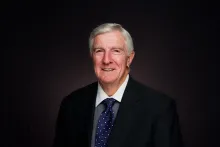
Before his retirement in 2021, Dr. Donald Ward pastored churches in Texas and Louisiana, and taught at Ambassador Bible College in Cincinnati, Ohio. He has also served as chairman of the Council of Elders of the United Church of God. He holds a BS degree; a BA in theology; a MS degree; a doctor’s degree in education from East Texas State University; and has completed 18 hours of graduate theology from SMU.
