
Mario Seiglie
Take a look at Jesus Christ's ministry in this PowerPoint presentation, His travels and the people He dealt with. There were four main groups of people with different beliefs. In Part 2, we focus on the last two groups: those who were religiously compromised and the gentile world around the Sea of Galilee. Download the PowerPoint to view in a separate tab or window.
This transcript was generated by AI and may contain errors. It is provided to assist those who may not be able to listen to the message.
We're doing a sermon today. This is part two of Christ's prophetic Galilean mentorship. Now, that's a mouthful, but God the Father and Christ had so much time to plan everything. Where Christ was going to be born, where he was going to do his ministry, and all of this was the planning, the preparation that was involved. So, as we go through these different areas, and since I have this second part, I was able to, from four groups to five groups that we're going to look at today, that lived around Lake Galilee. So, in the second part, we will cover the three remaining main groups. All these groups served Christ to broadly train his disciples in dealing with the different populations in the world where they would be sent to. So, this was the training ground, and you can see the Dead Sea is in the bottom area. You have the Mediterranean, then you have the Dead Sea, and then at the top you have that little lake Galilee, probably about 12, about eight miles broad. Not very big, but that's where Christ established his ministry. So, it says, as the lexan, geographic commentary of the Gospels, which is my main source for this, Jesus' ministry base in Galilee prepared his disciples to take the gospel into all the earth. The training ground Jesus chose for his desolitically, culturally, and economically diverse region. A wide array of people lived in Galilee. Jesus' travels. Various population groups prepared the disciples, and you can also add equipped, efficiently, the disciples to be sent out into the world with all nations. This is vital for us since Christ is now preparing us to be kings and priests in his kingdom, says in Revelation, read it, Revelation 20 verse 6.
It says, blessed and holy is he who has part in basically, that is our goal. That's our main goal. Christ said there in Matthew 6, 33, seek ye first the kingdom of God and the things. Well, this is what we are seeking to be part of that first resurrection of human beings, the G-d-e-f. He says, over such the second death has no powers. Never again will a person die. But they shall be priests of God and of Christ and a thousand years. So just like Christ was preparing his disciples, so we are his 21st century disciples now. And the training continues. So God exposes us to different people groups in many trials and circumstances to build godly character and empathize, be compassionate with others as these disciples learn to do. So don't think our life is just some stroke of what happened, whether luck or not. No, it's there's a purpose that God is working out here below.
Let's see if I can get...
Okay, so here we see that lake of Galilee.
And Christ's ministry dealt with five people groups and beliefs.
It was an ideal training area for his disciples to watch how he dealt with people, issues, and perspectives. Preparing them to go to the whole world with God's truth and God's holy laws to be kept. Now here you see on the western side, which is you see here, be to your right. That's the area toward the Mediterranean, and that's where Christ did most of his ministry on that lake. The left side to the east, halfway up, was still part of the Jewish area. But then the bottom, you had the Gentiles living there in a place called Decapolis. And so Christ did go to that area of the Decapolis, and we're going to be covering it, because they were in that area. That God used to train the disciples.
Now we're going to look at the... Let me go forward.
There we go.
We have five different groups. The one at the top and to your right is the triangle, Capernaum, Coruscant, and Bethsaida. That's what Christ interacted with most of the time. Then you had the second, which was the financial support group in Magdala, where Mary Magdalene came from. And these were most ladies that had money. And although their husbands were doing other things, they were supporting Christ financially, as we saw the last time. And then the third group is Tiberius. You can see going south from Magdala, about three miles away, is these were the politically compromised Jewish group of the Herodians, with Tiberius as the northern capital. The fanatical zealots of Gamla, that's up at the top, and be to your left, Gamla.
And the fifth, again to looking at it from your side to the right area, let's see, no it'd be to your left, it would be the alluring Gentapolis. So we're going to cover the ones in the Herodians. We're going to cover the zealots and the Gentiles from the... and how Christ trained his disciples, dealing with all of these groups. Okay, so now we're looking more of a close-up of those five groups. You have that religious triangle at the top. These are the strongly religious groups, that triangle. The second one going south, you have the financial support group.
Hypos learned that it wasn't just men, it was women that were part of God's work at that time. These were the main supporters, so important.
And then you have the third group, further south, in Tiberias, where you had the Herodians. They are the religiously group.
Then you have, up at the top, your left, Gamla. These are the religious fanatics at the time. I could almost give a sermon just on these zealots, what they were. And then the fifth, the Gentiles, the alluring, Gedara, and other parts there along the eastern lakeshore, to the south.
Continue. Let's review the two lessons in part one.
We learned this last time, number one, about the religious triangle of Capernaum, Bethsaida, and Coruscant. Since they had a lot going for them, being at the pre-existent word, God in the flesh. Yet, there are set ways influenced by Rabbanism, which is from the rabbis. Remember, these were the Pharisex, the ones that were the religious... I would... they would be like the pastors of the Jewish church. Today, they... same thing. You go to a Jewish church, you go to synagogue, and you get a man who's in charge. So this is where the people were focused on. And so, influenced by Rabbanism, did not allow them to have the parable of the wineskins also applied to them. Luke 5, 36-39, which we read the last time, they were not like the Bereans with an open mouth they should have. In Acts 17, verse 10, I'll read it, because that's what God was looking for. That's what Christ was looking for, disciples that would go to the Bereans. In verse 10, it says, then the brethren immediately sent Paul and Silas away by night to Berean. They arrived, they went into the synagogue of the Jews. They went to many synagogues, but same attitude and spirit. These were more fair-minded than those in Thessalonica, in that they received the word with all readiness daily to find out whether these things were so. They didn't care so much what the rabbi said. They searched the scriptures. They checked things out on their own.
And as a result of Jesus, therefore, many of them believed. And also, not a few of the Greeks, prominent women as well as men. So you see, it's both men and women that have Paul by God.
And because they did not have an open mind, Christ had to rail against, said, Oh, woe be to Capernaum, Bethsaida, and Coruscant, all the miracles he did. And the people were not willing. They were too afraid of the authorities, too afraid. And minds just like the hard wineskins, the old wineskins, are just hardened. And God says we have to have that tenderness and a tender, open-mindedness to be willing to change if seen and shown that we're wrong. Then the second group, the financial supporters at Magdala, here, mostly women, took up the role in Christ's ministry. And we can, too, for God's work still needs us. Those that are blessed with finances that are there to help get the work done. And so that begins now the second part of this topic is the Herodians, religiously compromised, which means, and we'll just read here, it says, the Herodians with their northern capital, because they had one in the south in Jerusalem, but this was their northern capital, Tiberius, of about 15,000 inhabitants, were the religiously, for they put first their politics, riches, and prestige instead of God. They put them ahead of God. They weren't going to give up. After all, they were politically in charge of the country. These were the Jews that backed the Romans, backed the Herodians, and they didn't want to change. And so they compromised.
Here is a drawing of ancient Tiberius. It had a long street with colonnades covered by a red roof and a theater. And Herod and Tipos' palace was there. It was a city dominated by the Herodians, who were fierce political supporters of Herod's dynasty. It was a corrupt system, and they profited and went along with it. Anybody here been to Tiberius by any chance? Oh, good. Okay. Dave and Laura. I didn't get that far south, but this was the political capital at the time. It reminds us of people that get so involved in politics, so involved in influence, and power, and all of this. It reminds me, in Chile, I went to the church. He went to one of the lectures that I had in the southern part of Chile, and he started reading and got quite interested. I visited him in his home. He had an industry. He also had sold timber and made a lot of money. And Cady and I, he had a German wife, and when I baptized both of them in our little makeup pool there, in the back of the house, and they had two children under full time. He told me, you know, I once got offered to get into politics there in the southern area since I had been here. And he said, I got involved, and I couldn't believe the sleaze, the corruption. And he said he just couldn't go on, because it's an eye-open going on behind the panels and doors and things like this. So I never forgot what he said. Being into politics is very tough, because you have to compromise a lot.
Let's continue on. Here's another another drawing of ancient Tiberias. It was named after the reigning emperor Tiberias. It was built over a Jewish cemetery whose would not visit it because they viewed it as ritually unclean. It reflected Greco-Roman culture. Christ directly avoided it and his disciples to the Herodians' viewpoint, so they would know how to deal with them and their type in the future. So this is interesting, because he didn't just shy away, he said, we have to learn how to deal their viewpoint.
And we do have an incident where the Herodians are there in Jerusalem. Notice in Matthew chapter 22. I always remember this section of the Bible, because I pondered it. I puzzled over it until I finally understood exactly what the Scriptures were saying in Matthew 22 and verse 15. Went and plotted how they might entangle in his talk. And they sent to him their disciples with the Herodians.
This is a biblical, influential people saying, teacher, we know that you are true and teach the way of God in truth. Anyone? For you do not regard the person of men. So Christ was not compromised. He always told the truth.
And then they throw a very dangerous question to him. Tell us, therefore, what do you think? Is it lawful to pay taxes to Caesar or not? This is a very controversial issue. Some Jews believed you didn't have to pay taxes because these were Gentiles. They had captured the country.
They were running it. And they just wanted to follow God and His way. But then you had who's sexist? And we have to obey Herod and his sons who took over after him. But Jesus perceived their wickedness. So they weren't trying to trap him because if Christ said, no, you shouldn't pay taxes, then they say, oh, he's a rebel.
And they always had kind of soldiers around there in Jerusalem who would listen. Oh, advocating no taxes. He's a traitor. You put him in jail. But then if Christ said that, yes, it is lawful to pay taxes, well, then he's in with the Herodians. Christ is following the Herodians. So they thought, you can't answer either way without getting into trouble. And so he says, why crits? Show me the tax money. So they brought him at Daenerius, which was a silver coin. And he said to them, whose image? And then this. And they said to him, Caesar's.
This would have been Tiberius Caesar, whose image was there. And he said to them, render therefore to Caesar, are Caesars that are gods. And when they had heard these words, they marveled and left and went their way. So he just disarmed. So the principle is, and this is the lesson, that which you see, lesson number three, his disciples learned the balance about being faithful to God while being a good citizen.
And Romans 13, 6 and 7, let's read that. Romans 13, 6 and 7, because of this, you also pay taxes. Talking about the brethren. For they are God's ministers, those that administer government, attending continually, render therefore to all they're due, taxes to whom taxes are due, customs to whom customs, fear to whom fear, honor to whom honor. At the same time, there's a second lesson here. Lesson number four. When having to choose between obeying God or man, not we have to obey God first.
Acts 5, 29, what the apostle said to the ruling Sanhedrin, he said, we must obey rather than men. So that's the part. Remember the famous movie, Sergeant York, and he used this because he was a preacher in War One, and he had this problem. Then he got up on the top of the mountain and then he read this about render to Caesar with God. So he said, okay, well, that means I can just obey Caesar and go out and fight battles and things like that. But you see, that's not what it says, because it says render to God what is God. And when there is like that, you have to put God first.
And Acts 5, 29, 29, when the disciples were in prison there, and they were being threatened, but Peter and the other apostles answered and said, we ought to obey God rather than men. So yes, be a good citizen. For instance, if they say, no, you have to work on the Sabbath day, because the government tells you because the rulers tell you you have to keep work on the Sabbath day. God is higher, fourth commandment, and it overrides any human institution. So that's when there's a conflict, you put God first. Okay, let's continue. We finished with the Herodians, and there's another time when Christ was with them in Mark 3, 1, which just basically healed the man on the Sabbath, and the Herodians were trying to get him, saying, well, he's breaking some of these Pharisaic laws, and he healed the man anyways, because you can do good on the Sabbath.
But you're not working on the Sabbath. But if you see somebody, you go and take care of that. If you're neighbor's house, they have a fire, don't say, well, I've got to read my Bible. It's the Sabbath day. Now you go and help that neighbor. But again, just like what Christ said about the ox and the ditch on the Sabbath day.
Yes, that's an emergency. You pull the ox out of the ditch, because it's an animal that's hurt. You don't want them suffering that way. But don't make the mistake and start throwing oxes into the ditch every time to break the Sabbath day. Don't use it as an excuse. It can happen once in a while.
Come up, and they don't, they're not an excuse to do work. All right, let's continue with this fourth group, known as the zealots. It's a word, means very zealous. Zeal means very zealous, very emotional, and fired up.
Another name they used from was Sicari, or assassins, murder to undermine Roman rule. I mean, these were fanatics. They would have what they would call their daggers, and they would come up to a Roman soldier and stab him and kill him. Or somebody like the Herodians that backed them, too, the Herodians. And this was a group that even the Bible mentions one of the leaders.
Gamla, which was a little above the lake of Galilee, with its many caves. And it was basically an area that had cliffs that were over 100 feet high, and they had caves. And all because this was their headquarters to send out these hired assassins. And it was very hard to get to those caves. And they were there for decades, and Roman new groups would come in.
One of these, Judas of Galilee, was from Gamla. Josephus, in his antiquities of the Jews, mentions of Galilee. And he's actually named in Acts chapter 5 verse 37 as one of these zealots. Notice in Acts 5 verse 37, the apostles in their custody, and they're debating what to do with these apostles. And then Gamaliel, who was a balanced ruler, said the following thing in Acts 5, 37.
He said, after this man rose up in the days of the census. This is one day the Romans imposed this temple tax, sorry, the Roman tax, and everybody had to pay once a year, this tax, from 6 AD on. And so it caused a whole group to say, we're not paying. And so they rebelled. And Judas of Galilee, which is that area of Gamla, rose up in the days of the census and drew away many started a rebellion and also perished. And all who obeyed him were dispersed. So Romans came and also, and Herod's sons were there and they trapped Judas and ended this rebellion at the time. But living in that area, breeding that resentment. And yet, Christ called one of these zealots to be an apostle. Simon, let's look at Luke chapter 6 verse 15. Luke chapter 6 verse 15, talking about the apostles. He said here, he named the twelve and also named them apostles in verse 13. And then in verse 15, it says, James, the son of Alphaeus, and Simon called the zealot. This is where he had come way out there in the scales of just political fanaticism. And they didn't care if they had to die or not. They were going to overthrow the Romans. Because of the zealots, they actually were part of the trigger that finally came that rebellion in 64 AD against Rome. Sorry, 66 AD. It lasted four years, that rebellion in Israel. And that's when the temple was burned down and the Romans just raised Jerusalem. But a lot of it had to do with the zealot, that the Romans were just fed up with them.
The lesson we can learn, the son can use people from extreme viewpoints if they repent and change. So I've seen in the church, you know, people come left, and some will come from the extreme right, and some will be more from the center. But if you leave politics to the side and you're just preparing yourself for it, doesn't mean you don't have a point of view of things, but it is something more personal. You don't go about, you know, trying to undermine others' points of views or Torah and all of this, because this is what the zealots did. They really did not belong with them. But here, this Simon, he did repent. He did change. And I have here seen an example because I saw a gentleman who came to one of the lectures there in Chile, and after the series was over, he was still interested. And so he came up, I thought they were interesting, but you know what? I'm an atheist. I don't believe in God. And I looked at him and said, congratulations, you don't believe all the—you're halfway to the truth. Now you got to just find the truth, but you got rid of so many wrong things. And it threw him, because instead of opposing him, I said, you're halfway. And you know what? This house, he eventually became a church member, and he became one of my right arms to help throughout those years. And he changed. And so it can happen. And so you don't discard people because of their past background. But the church is a filter. You're supposed to filter all of these things. Zellows' passions and things like this. Be able to focus on things that are lasting.
So then we come—this is going to be the last group that we're going to cover. The fifth and last group was the Decapolis. See, on this area again with the lake, it was the southeastern end of it. Ten cities in Greek. And these were founded in the third century BC as a Greek colony. And so the Greeks, under Alexander the Great, actually did conquer that area. He came into Jerusalem as well. And he was about ready to destroy Jerusalem. He destroyed just about everything in his path. And Josephus mentions this, that when he came to the gates to say, we want surrender or you're going to be all destroyed, the high priest came out dressed in white. And the great said, I had a dream about you the other night. And I saw that this white guard person was going to come. And so I'm going to respect, I'm not going to destroy Jerusalem. And Alexander the Great was actually quite respectful after that. Changed his whole mind. It's interesting. I don't know. There's an area around the lake of Galilee. They found one of these synagogues. And I remember the archaeologist in San Diego that was giving the conference and they had a mosaic synagogue with a picture of the high priest meeting Alexander the Great. Anybody ever see? No. So it's more recent, but it's actually a mosaic. I think I've shown it in some of my studies in the Gospels. But anyways, it showed that this was an actual event. The archaeologist Jodi Magris is her name. She's a very good archaeologist, but boy is she ever an atheistic feminist. And I came and she said, well, you know, these are kind of myths. But Alexander there with the people. And I just raised my little finger and said, respectfully, do you think that in a Jewish synagogue where people worship and they and all of a sudden they're going to come up with a myth and they're just going to put it there in front of you? She didn't have an answer for that. Of course, she wasn't very happy with me afterward either, but that's the price you pay. Okay, so this area was the Las Vegas of the Gentile region. From Capernaum, that area had about 1,500 people at the top. If you looked across, you would see the Decapolis. And guess what? There were beautiful cities made of white limestone and white marble. And at night, the thing was lit up. They had entertainment. This was a Greco-Roman culture at its height.
From Capernaum, you could see the opposite shore, the white limestone. Anybody went to Hippos at all? Okay, I didn't make it either, so I had to go one day. But you'll see, Christ visited the area, but not their cities. He didn't go into Las Vegas. His ministry included people from the area of Decapolis. So he didn't go directly, but they came to Him. Notice in Matthew 4, Matthew 4, verse 23.
Oops, got the wrong scripture here. Let me look it up. Yeah, here it is. It says 4.23, And Jesus went about all Galilee, teaching in these synagogues, preaching the gospel of the kingdom, and healing all kinds of sicknesses, and all is among the people. Then his fame went throughout all Syria, which is the northern past higher up than Galilee, and they brought people who were afflicted with various diseases and torments, and those who were demon-possessed, epileptics and paralytics, and healed them from Galilee and from Decapolis, Jerusalem, Judea, and beyond the Jordan. So Decapolis knew about Jesus Christ.
Let's go into it a little deeper.
Urgisot was one of the cities of the Decapolis. You can see from the top in Capernaum, they went down to that area of the Decapolis. A demon-possessed man came, and everybody was scared of him. And Christ cast the demon out of that person into a herd of swine that perished. Mark 514. Read that. Mark 514.
It says, the swine fled, and they told it in the city and in the country. This was Decapolis. And they went out to see what it was that had happened. Oh, these things off. That's a lot of money that these people lost. Of course, the capitalists, they ate ham there. So if you want to go and eat ham, well, you're part of the Decapolis group. That's what they did. They came to Jesus and saw the one who had been demon-possessed and had the legion, which was a multitude of demons inside him, sitting and clothed and in his right mind, incomplete of demons. And these men were afraid. And those who saw it told them how it happened to him, who had been demon-possessed and about the swine. And then it goes. Well, in verse 20, when he told the old demon about your friends, about what you have witnessed, the great things, and tell them in verse 19, what great things the Lord has done for you and how he has had compassion on you and departed and began to proclaim in Decapolis all that Jesus had done for him and all marveled. So they're receiving the testimony as well. And Christ's disciples were watching all of them in the midst of these Gentiles there. Well, he was teaching them. One day you're going to have to go to the Gentile world. You're going to have to face these perspectives and points of view. As we start concluding, we have one more example. Lastly, the parable of the prodigal son is a story to a Gentile region where he could splurge his inheritance. He took the father's money, went out, and as the archaeology study Bible says, likely would have imagined the younger son traveling to Decapolis and easily fallen into debt and reckless living. You want to go? There are shows and gambling and entertainment and well, that was the Decapolis.
The Lexham commentary adds when Jesus referred to the Gent district, which is Korah in Greek. It doesn't mean he went to just another country, another region that was not the Jewish region. And where was this place? Decapolis. That was the city with all the lights.
In the prodigal son, it is possible that he is referring to the Decapolis. It was outside the predominant Jewish settlement.
Most certainly to a Galilean villager in Lower Galilee. Swine were present. This quote distant Korah or region area was socially and metaphorically one far away from the love and grace of the father. Remember how the father met him at the end? And so the final lesson, there is always a Decapolis waiting to trap us as it did the prodigal son. That's when Revelation 18.4 tells us, he says, do not participate in their sins. It says, come out of her, because if you don't, you are going to also be punished along with the rest. So don't become one like this prodigal son or a Demas who actually was a minister under Paul, who has forsaken me having loved the present world. And on occasions, we have that. And that type of world and gets sucked up and leaves the church over it.
So these are the five six lessons we have now learned by using biblical geography, by understanding a little bit more of the background of a lot of these stories. So I hope you've learned a lot like I have, making a study of this.
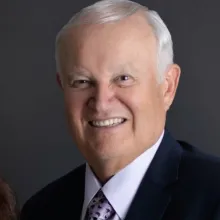
Mr. Seiglie was born in Havana, Cuba, and came to the United States when he was a child. He found out about the Church when he was 17 from a Church member in high school. He went to Ambassador College in Big Sandy, Texas, and in Pasadena, California, graduating with degrees in theology and Spanish. He serves as the pastor of the Garden Grove, CA UCG congregation and serves in the Spanish speaking areas of South America. He also writes for the Beyond Today magazine and currently serves on the UCG Council of Elders. He and his wife, Caty, have four grown daughters, and grandchildren.

