
Mario Seiglie
Take a look at Jesus Christ's ministry in this PowerPoint presentation, His travels and the people He dealt with. There were four main groups of people with different beliefs. In Part 1, we focus on the first two groups: those who were strongly religious and those who gave Christ financial support. Download the PowerPoint to view in a separate tab or window.
I have a new PowerPoint presentation to give you today. That helps us visualize and not just listen to things, which is always very helpful. You have a thousand... an image is worth a thousand words, and certainly that is the case. And this is a fascinating subject. To me, it is evidence about the accuracy of the biblical record, and also how it had to be inspired by God.
Because it's so accurate. And I want to share with you about Christ's prophetic Galilean mentorship. That's a mouthful, but it means that all of this was planned ahead of time. Nothing was left to chance. And it shows God the Father's and Jesus Christ's manner of doing things with so much humility. As it mentions, the principle of the mustard seed, the smallest of them all, but it becomes the greatest of them all.
Well, here's another example we can have in the Bible. And so God the Father and the Word carefully prepared for the Messiah's three and a half year ministry and his mentorship of the disciples, letting it be known ahead of time. So if we go to Daniel chapter 9, Daniel chapter 9, and verse 24, in the 70 weeks prophecy, it tells us how long that ministry was going to take place.
And approximately at the time when Christ began his ministry, that was all calculated ahead of time in Daniel chapter 9, verse 24. It mentions here, it says, 70 weeks are determined for your people, and the term is 77. It's not talking about days, talking about years, prophetic years. 70 times seven prophetic years are determined for your people and for your holy city to finish the transgression. In other words, end to make an end of sins, to make reconciliation for iniquity, pay the price, the sacrifice for it, to bring in everlasting righteousness.
That's what Christ is going to do when he returns, to seal up vision and prophecy, and to anoint the Most Holy about Christ being enthroned. It goes on to say, verse 25, Know therefore and understand that from the going forth of the command to restore and build Jerusalem.
That was one of the decrees. We have the date 457 BC as the date. Until Messiah the Prince, talk about when he is going to appear, it says here to restore and build Jerusalem, until Messiah the Prince, there shall be seven weeks and 62 weeks, which is a total of 69 of those prophetic weeks.
And if the day for a year prophecy, it would be 490 years from the time of that decree, less one week, which would be seven years. So you're talking about seven years before the Messiah would come. He says the street shall be built again in the wall, even in troublesome times. Remember, at that time the temple had been destroyed. So of course the decree to rebuild it, that would be called the second temple, the time of the Raba bell and Ezra and Nehemiah.
And so it says, and after 62 weeks, so the seven weeks, remember, is before that, so you have to add the seven weeks to the 62 weeks, says Messiah shall be cut off, but not for himself. So once you get to that 69th week, when the Messiah appears, that's 27 AD, is 483 years from the time of the decree of Artaxerxes, it says, and he will be cut off, which means he will be killed, which he was when he was crucified by the Romans. He says, but not for himself.
He didn't do it on his own. It wasn't for his sins or anything like that. It was not for himself that he did the sacrifice. And the people of the prince who is to come shall destroy the city and sanctuary, which happened during General Titus, 70 AD. The city was destroyed and the sanctuary. And the end of it shall be with the flood until the end of the war desolations are determined. Says then he, talking about the Messiah, shall confirm a covenant with many for one week. That's part of the fulfillment of his ministry. He says, but in the midst or the middle of the week he shall bring an end to sacrifice and offering.
So this is when tells us when he dies, which is at the middle of that last week. He had a three and a half year ministry.
And so, Christ didn't come accidentally. He had a purpose to fulfill. And we can better understand the Bible, knowing the precise geography involved, how precise the incredible accuracy. It's a proof of biblical inspiration, God's inspiration. And we're going to see it here with this map. It shows basically where Christ operated during his lifetime. You know, he was born in Bethlehem and then he went to Nazareth. And you can see the big sea there is the Dead Sea. And then the smaller up in the north, that's the Lake Galilee. And Christ spent 90% approximately of his ministry around that lake, training and preparing his disciples during those three and a half years until he is the one that gives his life up and bring an end to sacrifice and offering. Now, it's his sacrifice that is active, binding. That's why we don't have to do animal sacrifice, because he brought an end to that and he was a substitute for those sacrifices. And so, let's go here, he gave me this, the clicker.
If I'm doing it right here.
Aha! There it goes. And I'm sorry if it's hard to see, but right in the center you see the sea or the Lake of Galilee. And you'll see the area of Nazareth. His place to live was prophesied. Nazareth. So that was also not given as something variable. And no, it was definite. It had to be because that had been prophesied in the Bible. Notice in Matthew 2 verse 23. So as you become more familiar with the places, you can orient yourself better, understand it better, and appreciate the Bible that we have. It says, Matthew 2, 23, and he came and dwelt in a city called Nazareth, that it might be fulfilled which was spoken by the prophets, he shall be called a Nazarene. That's why throughout the New Testament it talks about Jesus of Nazareth, because that's where he grew up. And God's work began again like the proverbial mustard seed. Matthew 13 and 31-32 talks about the kingdom of God is like a mustard seed. It's a tiny thing, but then it grows to be the biggest of all what would be the biggest, not tree, but a big orchard type of tree where it does have birds that can have their nests there.
So again, God the Father and Jesus Christ had programmed this and said he is going to be called a person from Nazareth. Now Nazareth is a small town and estimate around 300-400 people. It was tucked in between the hills. It was a backwater place. This wasn't some big city and powerful place. It was a very small area. It was actually nestled in some hills, and the land wasn't too good there, so they couldn't do too much agriculture, and just to be able to have sufficient for the people there. They couldn't export it. They weren't rich. They weren't prosperous. And again, it shows God's humility, not only the way Christ came and basically was in a manger. He wasn't in some palatial place. Here's the Word that created all things, and how did he come? And he comes to this small town. Basically, it's a backwater place. It's just isolated, and that's how Jesus Christ lived for 30 years. The term now is better understood. It's called in the Greek tek, craftsman. He was a stonemason. He did a lot of buildings. They usually had one main person, like in a small town like that, that when people built things, they needed help. It's kind of like an architect. His father had taught him the profession. But it was a small town out of the way.
Now here's another prophecy. It wasn't just that he was going to be called a man from Nazareth. Also, it mentioned that he would travel from the area or the land of Zebulun to the land of Naftali. These were two tribes. You can see that Nazareth was part of Zebulun, and Capernaum, where he was going to travel to, was in the land of Naftali. Notice in Isaiah chapter 9, Isaiah chapter 9 verses 1 and 2, says, "'Nevertheless, the gloom will not be upon her who is distressed. And when at first he lightly esteemed the land of Zebulun and the land of Naftali, and afterward more heavily oppressed her by the way of the sea beyond the Jordan.'" You're going to see another slide shows how the river Jordan goes all the way to the area of the lake of Galilee, where Christ set his headquarters in Capernaum, the way of the Jordan in Galilee of the Gentiles. Now this was written 700 years before the birth of Christ, and it had already how he was going to travel, where he was going to go. He was going to go to the Galilee of the Gentiles, because a lot of that area had been populated by Gentiles. It says, "'The people who walked in darkness have seen a great light.'" So in Christ's day, they were going to see a great light, something marvelous, and increased its joy. They rejoiced before you according to the joy of harvest, just like a time of harvest which is so joyful. His men rejoice when they divide the spoil. "'For you have broken the yoke of his burden and the staff of his shoulder, the rod of his oppressor, as in the day of Midian.'" And then it goes on to say, verse 6, who is this person that people are going to rejoice over? Verse 6, "'For unto us a child is born, unto us a son is given, and the government will be upon his shoulder, and his name will be called Wonderful, Counselor, Mighty God, Everlasting Father, Prince of Peace, of the increase of his government and peace, there will be no end, upon the throne of David and over his kingdom, to order it and establish it with judgment and justice from that time forward, even forever, the zeal of the Lord of hosts will perform it.'" It means, you know, God is going to carry this out. Whether you believe it or not, you're going to see it in history, all fulfilled to the last detail.
And this Isaiah 9, when Christ moves from Nazareth, from the land of Zebulun, to the land of Naphtali, where Capernaum is, it is quoted in the Scriptures as a fulfillment of that prophecy. As we have brought out, there are over 300 prophecies that Christ fulfilled during his lifetime. Notice in Matthew 4, verse 12, Matthew 4, verse 12.
It says, now when Jesus heard that John, talking about the Baptist, had been put in prison, he departed to Galilee. That was officially the beginning of his ministry. They weren't going to have two different types of ministries at the same time. No, at first it was John's ministry. He had to carry out his job, and once he was arrested, that was the end of his ministry, because he will soon die. But it's Christ's turn now to begin. And so once that happens, it goes on to say, and he departed to Galilee. And leaving Nazareth, he came and dwelt in Capernaum, which is by the sea in the region of Zebulun and Naphtali. That it might be fulfilled, which was spoken by Isaiah the prophet, saying, the land of Zebulun and the land of Naphtali, by the way of the sea beyond the Jordan, Galilee of the Gentiles, the people who sat in darkness, have seen a great light, and upon those who sat in the region and shadow of death, light has dawned. That's descriptive of what Christ was doing, bringing light, the light of truth, the light of understanding, the light of joy, and God's Spirit is there.
That takes us to the next slide. Here's a slide of the route that Christ took from Nazareth. He had to go from, you see how hilly that area is? It goes all the way down the path to the town of Cana. Cana was where he made his first miracle, with a changing of water to wine. And he continued all the way to Capernaum. It's about 23 miles from Nazareth to Capernaum.
So Jesus' ministry began with John the Baptist being arrested and Christ going to Capernaum. About 90% of his ministry would be in Galilee, around its lake. He started with his own funds and with no support, even from his own family. So he didn't have anybody bankrolling him at all, just from his job, what he had done. And he goes on his own. His family didn't believe that he was a messiah. Notice in Mark chapter 3 verse 21. Mark chapter 3 verse 21. It says, talking about his own family, but when his own people heard about this, they went out to lay hold of him. For they said, he is out of his mind. So they didn't believe in him. He didn't have any support. He had to do that courageously on his own. Again, what humility, what modesty, how God does things. Here's the Word sitting at the right hand of God the Father. God the Father said, go ahead and create the universe. And the pre-existent Christ says yes. And he brings all of the universe with all of us being part of this material thing that he creates. And now he's going to Capernaum on his own. Where is he going to sleep? Where's he going to eat? He didn't worry about that. He knew God was going to take care of him, but it took faith. That takes us to the next slide.
Oh yes, okay. This is the next slide. Now this is basically the area that he would spend the majority of the three and a half years around this lake of Galilee. This was all carefully planned. Capernaum would be the ideal place as his headquarters and for training his disciples for the coming multifaceted world mission. So here are these men. They're fishermen. They're basically blue collar workers going over here to Long Beach, San Pedro. And picking up a couple of the fishermen there. And now I've got a couple more. I've got a tax collector. That usually is not very popular. But he had one of these. So he had a very varied group of people. Matthew 28, after three and a half year ministry, it's not very long. It's less than what you need to get a Bachelor of Arts degree at a college. College takes four years. Here, just three and a half years with Jesus Christ. And it says in Matthew 28, this is what I want you to do. Now you graduated. I'm going to go up to heaven. Matthew 28 in verse 18. Then it says, And Jesus came and spoke to them, saying, All authority has been given to me in heaven and on earth. Go therefore and make disciples of all nations, baptizing them in the name of the Father and the Son and of the Holy Spirit, teaching them to observe all things that I have commanded you. And lo, I am with you always, even to the end of the age, until he returns. It's going to be with his church, with his people. And so you can imagine what a shock. Now he's gone. We've got three and a half year training. And he says, Go to all the world. Go to India, go to China, go to Africa, go to all these places in the world. And notice what Christ also says in Mark 16, verse 15 and 16. Mark 16, verses 15 and 16.
Christ told them, he said to them, Go into all the world and preach the gospel to every creature. He who believes and is baptized will be saved, but he who does not believe will be condemned. And so he says, You're ready to go to every place you've been trained, you've been prepared. How could he do that around this little area of the Lake of Galilee, only three and a half years? And you know, they did it. They went around the world. And they revolutionized world history. Because even though there's all kinds of different ideas about Christianity, it's approximately two billion people that are considered that they follow the Bible and Christ. And so they sure didn't slack off, did they? They were prepared. So this was all carefully prepared for them. Now, how could they do that? Well, Galilee was ideally located 100 miles from the Jewish authorities who were hostile to Christ. They would have had their ministry right there in Jerusalem. They would have strung them up a long time ago. But he was 100 miles away. And Capernaum was the second rabbinic center in Israel. The first one was Jerusalem. But the second one had a lot of religious studies right there in Capernaum where Christ could speak and deal with people and not have all of these Jewish authorities you know, after him, persecuting. So there was a plan there. There were four governing regions in this whole area. One was led by Herod and Tipos. He was the one that was in charge of Galilee. So that's where Capernaum would be. That was one of Herod the Great's sons. The second Herod, Herod Philip, was in charge of the area which is called Golanitis. Golanitis, rather. And that was also a section of Galilee, the lake. About half of the eastern part was this other king, Herod Philip. Philip. And then you had the blue area with Samaria, Judea, and Edumea. That was in charge of the Roman governors, of which one was Pontius Pilate. And then you have this very interesting area in the red called Decapolis. From the Greek, it means ten cities. These are ten major cities in the red. And they were governed directly from Rome, because these were more Greek ancestors that had established it. It was a very Greek area. If you want to have a comparison, that was a Las Vegas of this area, of the world. I mean, you wanted entertainment. You wanted to go gambling. You had the Hippodrome. You had all of these areas. They had nothing to do with Israel and their religion. And they were independent. And so, we're going to talk about that, God willing, next week, because I can't cover the whole thing today. I'm just going to cover the first two.
And of course, all this was supervised by Rome. In addition, let's see here, I go forward. Capernaum was where two international highways intersected. Anything remarkable Jesus did could be divulged in a 20-mile radius. So, here you have two main highways. One is by the sea, and the other one is inland. It was called the King's Highway. Because back in Genesis, remember when Abraham rescued Lot, and these kings came down, and Abraham defeated them. And as a result, that was called the King's Highway, because they came down that way. So, of course, this is very different from Nazareth. If Christ would have remained in Nazareth, very little influence, very little could have been done. But here, Capernaum, that was a neurologic center for all of this region, with a lot of people coming in, coming and going.
Let's continue. Here's another view. From south to north, and you'll see Nazareth on the side to Capernaum. This is from the Jordan Valley. This is where the Jordan River descends from the north into the Red, to the Dead Sea.
So, so far, we see everything's accurate. Archaeologists have examined everything, and they can't really find any fault. The geography is right, the history is right, the people are right. And so, this is the lake where Jesus Christ spent the great majority. He basically only went to Jerusalem during the feast days. These are tabernacles, or the Passover, but besides that, he was in this area. Christ's ministry involves dealing with four people, groups, and beliefs. It was an ideal training ground for his disciples to accompany him and watch how he dealt with the people and their different issues and perspectives. You see, they weren't in some rabbinical center. No, this was a hands-on teaching that they could see how Jesus Christ interacted with all of these different groups of people that are representative of the peoples of the world, that one day they would go out and deal with them. Here we see the towns of Galilee, and there are over a thousand at that time, small and great. But you see here the four main people groups, representative of all the world. First, you had the strongly religious triangle. Up in the top you had Chorosim, Capernaum, and Bethsaida. These were the areas that Christ interacted with more than any other. I like a triangle there. These were the strongly religious people, because it was a rabbinic center. They had an educational system where people would study in the synagogues, and there was a lot of money, a lot of investment put there. Number two, you have Magdala. Magdala was the financial support group. This is where people gave Christ the funds to carry out his work. Remember, he wasn't a Levite, so he couldn't take the tithes. The tithes all went to Jerusalem. Basically, he was a rabbi, and rabbis usually had a profession on the side to be able to develop and generate funds. But now, he was full-time as an itinerant teacher and mentor to these disciples. Magdala is another group of people that we're going to study today. The third group is from Tiberius. Tiberius was the largest town in this lake of Galilee. This was the center of Herod's Antipas Empire, his region. He set up Tiberius as the headquarters. So this was the government station center. We'll cover that, God willing, next week, because there's so much to learn about that. And then the fourth group, and this group in Tiberius called the Herodians, were politically compromised. So these were the ones that were wishy-washy. They needed the backing of Rome. They're willing to lie, cheat, whatever, to keep the status quo, because they were part of the workers employed. They associated with the Romans. And so this was a politically compromised group. And the third is in the Decapolis, where Christ and his disciples went. They dealt with the Gentiles, with the Gentile world, and that alluring area. It was like Las Vegas. Imagine that some of these Israelites in some of these small towns, and all of a sudden they go over to the Decapolis. It's like a country bumpkin going to Las Vegas, because I mean they had every type of entertainment. They had marble colonnades, and just it was it blew their minds when they went there. We'll see an example of someone who lost his way going there.
And so, again, look at the triangle there in the top. That's the strongly religious group — Capernaum, Coruscant, Bethsaida. Then you have the financial support group, Magdala. The third, the Herodians, religiously compromised. And then the fourth is the alluring. Alluring means just drawing you into that world of evil and debauchery and wild stuff. That's the area of Gadara. Now we're going to focus on the first two. So let's go into this triangle of Bible students. Much of Christ's ministry and miracles took place in these three towns. Capernaum has three accounts in the Bible — I'm sorry, 13 different stories. Bethsaida had two stories — defeating of the 5,000 and the healing of a blind man. Coruscant has only one. And yet, after three and a half years, Christ condemns these three places for their hardness. That even all the miracles He did in these places, more than any other place, they still lack faith. Notice in Luke chapter 10, verse 13. He says, Woe to you, Coruscant! Woe to you, Bethsaida! For if the mighty works which were done in you had been done entire in Sidon, which are an area of Phoenicia — and these were Gentile areas — He said if those same miracles and teachings that would have done, they would have repented long ago. Sitting in sackcloth and ashes, they would have changed their lives. But that didn't happen. Neither in Capernaum, neither in Coruscant, or Bethsaida. He says, but it will be more tolerable for Tyre and Sidon at the judgment than for you. In other words, when people go up, let's talk about the second resurrection, and people are going to say, and you were there when Christ did all of this, and you didn't believe, and you didn't change? What an opportunity you pass by! Verse 15, And you, Capernaum, who were exalted to heaven — because that was where most miracles were done — will be brought down to Hades, which means to the tomb. He who hears you hears me. He who rejects you rejects me. And he who rejects me rejects him who sent me. So, you know, you had your witness. He did everything. Probably hundreds of healings. Multiplication of bread and fish. Christ doing all of these things. And yet, how many people followed Christ of that whole group? Very few.
Notice in what happened was that people had become so accustomed to the rabbis, and the teachings of the rabbis, they didn't want to read the Bible on their own. It's almost like what happens with a Catholic Church, where it actually banned Catholics in the past, not to read the Bible, because you can get confused. And sure enough, you get confused because you don't find the teachings of the Catholic Church in the Bible. And so they don't want you to do that. This was the same thing the rabbis were saying. We're going to interpret Scripture for you. We don't want you to read the Scriptures for yourself, because then you can find the truth there, and you're going to find out we are deceivers. People would rather don't shake the boat, don't rock the boat, just go along. I don't want to cause problems. And truth means you have to put it first in your life, or else you're going to have to give account to God for that. And so it says in Matthew 28 verse 7 that the only time people believed was not while Christ was alive. It was when they saw Him resurrected that many believed. In Luke chapter 10, let's see, in Matthew 28.7, go to Matthew 28.7, it says here, in Christ, the resurrected Christ, talks to His disciples and said, and go quickly and tell His disciples that He is risen from the dead. This is an angel, rather, I want to correct that. It's an angel that talked to them. Go quickly and tell His disciples that He is risen from the dead. And indeed, He is going, talking about Christ, before you into Galilee. There you will see Him. Behold, I have told you. So they went out quickly from the tomb with fear and great joy and ran to bring the disciples word. And so this is when Christ was resurrected. He says He is going to Galilee. Why? Because that's where He worked. And that's where He is going to appear. And He actually appeared, as it tells us there in 1 Corinthians 15, 6. There were 500 at one time that saw Him, the resurrected Christ. And so there was a tremendous witness afterwards. But how many believed before that? Very few. Something in a person's life has to open up and click for something to happen and change the person's heart. Still, there were only about 120 at that Pentecost in Acts 2. So 50 days after Christ was resurrected, you have Pentecost. They're all meeting. And how many? 120. So even those 40 days in which Christ showed up and people could see His wounds and that He was made of spirit. And still, where are those 500 at that time? We don't hear about them yet. So it is very shocking and surprising how people just get used to something so much. They get so fanatical. They don't have an open mind. They already have everything that the rabbis have funneled into their heads, brainwashed them. Because it was a system. They took you when you were about five years old, and in the synagogue they started this training, training. And everything had to do with the traditions that the rabbis had established. For you, this is the way you should obey God. And the Scriptures were left secondarily. It was what the rabbis judged, which was the most important. And so people had closed minds. Let's go to this area of Capernaum, with its large synagogue, that white structure in the front.
And actually, that's about a fourth to fifth century synagogue. But underneath, there is another foundation about the same size for a synagogue that is dated to Christ's time. And I remember when I had a chance to visit Israel with the kadi and the girls, I would sneak out real early in the morning, because I wanted to see everything. And I went there, and I had my archaeological magazines about that foundation. And I wanted to see it for myself. And it's not made out of this white limestone. It's made out of basalt, which is a dark. It's made basically from pumice or this lava. It's very gray. It's hard. And sure enough, I saw that foundation. Anybody ever seen that? Okay, Wolf. Okay. Ara and Gene and Dave. Who else was over here? Okay, Gene. Did they show you that foundation a little bit? So to me, it just shows, yes, when Christ went to the synagogue, there was a synagogue right there. And then they have this other structure, which is kind of a round area. And underneath, they found a house that was very unique because it's octagonal. It's eight-sided and a tribute to the house of Peter at that time. So the Catholic Church built this kind of big protection over that area. Those are the two big things you see in Capernaum. But it shows that this was an actual place and that it was one of those. It's the biggest synagogue in Israel and in very good condition for being a fourth or fifth century synagogue. Now let's go to a chorazin. Remember, this is part of that triangle. Christ is recorded to have gone once to a chorazin. And archaeologists have found a synagogue there with a stone, quote, Moses' seat. I don't know if you can see it. It has a writing, but it's a stone seat that was part of the synagogue. And that's where the rabbis sat and taught the people and their traditions. So this is the only time we've seen Moses' seat that existed at that time. In Matthew 23, verses 1 through 5, Christ said, he spoke to the multitudes and to his disciples, saying, the scribes and the Pharisees sit in Moses' seat. In other words, they were in charge here of these synagogues. Therefore, whatever they tell you to observe that observe and do, but do not do according to their works, for they say and do not do. For they bind heavy burdens, hard to bear, and lay them on men's shoulders, but they themselves will not move them with one of their fingers. But all their works they do to be seen by men, they make their phylacteries broad and enlarge the borders of their garments. They love the best places at feasts, the best seats in the synagogue, greetings in the marketplaces, and to be called by men, rabbi, rabbi. And this is something even today, same type of almost worship of the rabbis. They call the shots. They actually decided that if the rabbis in their meanings, the Sanhedrin, if they decide something should be interpreted this way in the Bible, they say even God the Father can't change that. Because it's already established, they've been given the authority, and so even God the Father can't change it.
Okay, let's go on to the next slide. Okay, so that is a triangle, the religious triangle. Now, going south to Magdala, this was a city of around 30,000 people. They calculate Capernaum was about 1,500 only. So this was the big financial and industrial center in Galilee. It was an industrial hub for smoking and salting fish, manufacturing boats. They also made a lot of different metal and clay wares, and two synagogues have been found there. It was a religious and financial powerhouse. So from 1,500 to 30,000, it was there that Jesus received much of his financing during those three and a half years of his ministry. The modern-day Magdala is seen here next to the lake of Galilee. With numerous archeological sites, Jesus received much of his financial support from some of the ladies there, including Mary Magdalene, and Herod's treasurer's wife. Notice what it tells us in Luke 8, 1 through 3. Luke 8, 1 through 3. It says, Now it came to pass afterward that he went through every city and village, preaching and bringing the glad tidings of the kingdom of God, and the twelve were with him, and certain women, who had been healed of evil spirits and infirmities. Mary called Magdalene, which is where she was from Magdala. And Joanna, the wife of Chousa, Herod's steward. So the person the steward in those days was a manager of Herod's things. And here the wife of Herod's chief financial officer is actually helping Jesus Christ with his ministry, while Herod is trying to persecute and catch Jesus Christ. It says, And Susanna, and many others who provided for him from their substance. So this is where they got the money. They didn't require it. It was something these women, many of them wealthy, they were out there supporting Jesus and these twelve disciples, because hospitality was very important. Now he didn't have a nice credit card and go into an inn. And how did I have 13 people in your home? 13 men. That's a lot of food. That's a lot of sleeping quarters. But people did that in those days. So as I'm winding down, last slide, what lessons can we learn from these first two groups? It says, The religious triangle of Capernaum, Bethsaida, and Coruscant, they had a lot going for them, being the headquarters of Jesus Christ. The pre-existent Word, God in the flesh, yet their set ways, influenced by rabbinicism, which is the system of rabbis governing, did not allow them to have an open mind. That's why people that come to our church, we encourage them. Check things out. Have an open mind. Prove it for yourself. Don't take somebody as an authority unless you check it out.
The parable of the wineskins also applied to them. In Luke chapter 5 verse 36, just a couple pages over, in verse 36, says, then he spoke a parable to them, talking here about the Pharisees and the disciples of John. Then he spoke a parable saying, no one puts a piece from a new garment on an old one, otherwise the new makes it tear, and also the piece that was taken out of the new does not match the old, and no one puts new wine into old wineskins, or else the new wine will burst the wineskins and be spilled, and the wineskins will be ruined. I once brought one of these wineskins, it made out of leather, and so when it's new, it can expand, but after some time it gets hardened, just like the leather gets hardened, and it can't expand anymore. And then if you put the new wine, the ferments in it, it'll blow up like a balloon, and then finally burst. That's what he's talking about there. But new wine must be put into new wineskins, and both are preserved, and no one having drunk old wine immediately desires new, for he says the old is better. So that's the mindset that the Pharisees and the rabbis of that time, you know, they already had their wineskin. It was hard. They didn't need to be taught by Christ. They didn't have an open mind. They didn't examine the scriptures. They already had the answers that their rabbis basically had for everything. They had their interpretation, and you had to unquestionably accept it. They were not like the Bereans in Acts 17, verse 10. Acts 17, verse 10.
It says, then the brethren immediately sent Paul and Silas away by night to Berea. When they arrived, they went into the synagogue of the Jews. These were more fair-minded than those in Thessalonica, in that they received the word with all readiness and open mind, and searched the scriptures daily to find out whether these things were so. They weren't going to the rabbi about it. They were checking it out for themselves. Therefore, many of them believed, and also not a few of the Greeks prominent women as well as men. So we have to examine the scriptures and see what they say, not some interpretation of someone else. The Bible interprets itself. It's one of the first principles of reading the Bible. You check out the Bible will clear itself. It'll have additional information that will validate what you're reading. And secondly, the second lesson, we went through the religious triangle of Capernaum at Seda and Coruscant. Now, the second lesson from the financial supporters at Magdala. Here, mostly women took up the challenge and found their role in Christ's ministry. Proverbs 31 about the woman, the Proverbs 31 woman. It says in verse 20 that she has mercy and extends her hand to the poor. Christ, many times, was quite poor. In Matthew 8 verse 20, Matthew 8 verse 20, says, and Jesus said to him, foxes have holes, and birds of the air have nests, but the Son of Man has nowhere to lay his head. And so, not much hospitality did he complain. He just went on serving and sacrificing for those that were so ungrateful. So, my source material, mainly a book called Lexum, Geographic Commentary of the Gospels, and also from an archaeologist's friend, Brad Gray. In his lectures, I've met Brad a couple of times in some of these archaeological conferences at different parts, and he's also did some presentations on this. So, I hope this has been helpful. Illuminating how incredible is our Bible, isn't it? Let's take advantage of it, learn much more from it. Next week, God willing, part two. We've still got two other groups to cover.
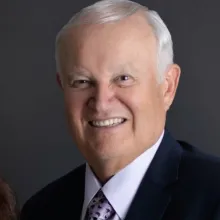
Mr. Seiglie was born in Havana, Cuba, and came to the United States when he was a child. He found out about the Church when he was 17 from a Church member in high school. He went to Ambassador College in Big Sandy, Texas, and in Pasadena, California, graduating with degrees in theology and Spanish. He serves as the pastor of the Garden Grove, CA UCG congregation and serves in the Spanish speaking areas of South America. He also writes for the Beyond Today magazine and currently serves on the UCG Council of Elders. He and his wife, Caty, have four grown daughters, and grandchildren.

