
Don Ward
This transcript was generated by AI and may contain errors. It is provided to assist those who may not be able to listen to the message.
I guess you would say the title today, Is There Authority in the Church and Is the Church Organized? Or you could say, Church Government and Organization.
Fools rush in where angels dare to tread.
And a lot of people would not approach this subject in the times which we live. But this might be the most important sermon you will hear in quite a long time. Not because I give it, but because it is from the Word of God.
It will be long, and you will need to really stay with it. You will really need to take notes. Most people don't write anything down until they say, so it is now turned to Genesis 1.1. But the thoughts and the ideas should be what captures your mind and your desire to pursue. If someone came along and said to you, The church is a spiritual organism and not a physical organization. Therefore, the members of the body of Christ, the church, the spiritual organism, is not subject to physical humans. What would your response be? Or what if they ask you, Is the church organized? What would you say? Another way of expressing the question is for the game-sayer is to state the essence of what they are saying. What is the game-g-a-i-n-sayer saying? Is he saying that the church is ruled through Christ and not man? That man has not been given the responsibility of making decisions concerning a member of the spiritual organism, the church, the body of Christ? Here's another way of expressing the question, which the game-sayer is posing. In talking with people who are in the process of leaving the church, I ask, Are you going to disassociate yourself from the church of God? They ask, Do you mean the physical organization or the spiritual organism?
The question amounts to whether or not God has placed men in positions of offices of authority and responsibility to govern the spiritual organism, the church of God. Over the past 45-plus years, I've dealt with these people of this mind and their questions many times. So today I would like for us to examine the very foundational structure in the organizational, both in the physical and spiritual sense, to some degree, of the church of God. It is true that the church is a spiritual organism. The church of God is not a building. It is not a corporation.
But does that mean that the church is not organized?
In 1 Corinthians 14.33, the apostle Paul writes, God is not the author of confusion, but of peace in all churches of the saints. God is not the author of confusion, but he is the author of peace in all the churches of the saints.
Do we have peace in the churches of God throughout the world?
So many people who have their websites would hope that any minister from various organizations would say something that they could jump on and say, Oh, see there? Just like I told you, they're about to jump over the moon, which is quite a feat within itself and probably won't be done. But it's also true that God does not dwell in buildings made by hands. The church is a spiritual organism, and God does not dwell in buildings made by hands. You'll find that in Acts 7, Stephen's inspired sermon, and also in Hebrews 8. He dwells in those who have repented, exercised faith in the sacrifice of Christ, have been duly baptized, and have received the Holy Spirit. You are the temple of God, as Paul writes in 1 Corinthians 3, 16. So one might ask, where is the church of God? And you may correctly answer, the church of God consists of those who have been begotten by God the Father, who have God's Spirit dwelling within them. Let's notice 1 Corinthians 12. So you can write down your first note now. In 1 Corinthians 12, the little facetious remarks doesn't help anybody. It might motivate some. But anyhow, in 1 Corinthians 12, in verse 12, For as the body is one and has many members, and all the members of the one body being many are one body, so also is Christ. Of course, the great rhetorical question in 1 Corinthians is, in 1 Corinthians 1, 13, is Christ divided? And Paul painstakingly, from your calling in Chapter 1 through resurrection in Chapter 15, shows that no, the body of Christ is not divided. For by one Spirit are we all baptized into one body, whether we be Jew or Gentile, whether we be bond or free, and have been all made to drink into one Spirit, for the body is not one member, but many. So many members making up one body. And then Paul uses the analogy of the human body to show that there are many members to the human body. And when one member suffers, we all suffer, the little toe can keep you up all night, just as much or as often, perhaps, as something wrong with your head or whatever part of the body. In James Chapter 1, Verse 17, we'll probably read that again in a different context here this afternoon. In James Chapter 1, Verse 17, every good gift, every perfect gift is from above and comes down from the Father of lights, with whom there is no veribleness, neither shadow of turning. Of His own will, God's will, God the Father, begat He us with the word of truth, that we should be a kind of first-roots of His creation.
So have you seen the Holy Spirit today? Have you ever seen the Holy Spirit? You might see the fruits of the Holy Spirit manifested in a person's life. Have you ever been to a church of any kind where you could see the Holy Spirit? Well, you might walk into a church, and of course the church has synergy. It's more than the sum of its parts, just like a team is. And you could say, well, there was a good feeling there. Today there's a good feeling. You could just sense it. You might make that kind of remark.
But of course you have not seen the Holy Spirit. The Holy Spirit is invisible, and God is invisible, except when He chooses to manifest Himself to humankind. Let's turn now to Matthew 16 and verse 18. Leading up to this, Matthew 16, Christ answered, asked the apostles, who do men say that I am? And they gave various answers. And then Peter spoke up and said, you are the Christ, the Son of the living God. And Christ said, flesh and blood does not reveal this to you, but my Father who is in heaven. And I say unto you that you are Peter and Petros, Little Rock. And upon this rock, Peter a big rock, I will build my church in the gates of the grave, or hell as in the Old English, King James. And the gates of hell shall not prevail against it. So then we look at verse Matthew 16, 18. And Jesus says, see, and I say unto you, you are Peter, upon this rock. I've already quoted that. Pick it up in 19. And I will give to you the keys of the kingdom of heaven. I will give to you the keys of the kingdom of heaven. Did he mean to Peter only, and Peter's successors? I will give to you the keys of the kingdom of heaven, and whatsoever you shall bind on earth shall be bound in heaven, and whatsoever you shall loose on earth shall be loosed in heaven. The Catholics say that he only gave the keys to Peter and his successors, so they develop the Petrine Doctrine and the infallibility of the Pope, who supposedly sits in the seat of Peter. For a short time and worldwide, there was a type of embracing of the Petrine Doctrine.
Thankfully, that didn't last. There's no telling how many unscriptural doctrines and practices that various Popes have foisted off, installed and enforced in the Catholic Church. Some believe that he gave the keys to the kingdom to the apostles only.
If we really believe that Christ gave the keys to the kingdom to only an apostle, there can be no new revelation today, because apparently there is no apostle on the scene. Now, we have some of the splendor groups led by different people who claim that they are an apostle, or more than an apostle. Some even say that they are that prophet, prophesied in Acts 3, which obviously that prophecy is referring to Christ and not a man.
If it were true that the key to the kingdom was only given to an apostle, then the keys to the kingdom have been lost since they were only given to an apostle and not to the church. Thankfully, we know, and as we shall see, Christ gave the keys to the kingdom to the church of God.
The key to anything implies opening and closing, to open it and to lock it, to open it and to shut it. Thus, the keys to the kingdom means, how do you enter into the kingdom of God? Jesus Christ holds the keys, and He gives the keys and has given the keys to the church.
Look at Revelation 3.7. Revelation 3 and verse 7.
In Revelation 3 and verse 7, and to the angel of the church in Philadelphia write, these things says, He that is holy, he that is true, he that hath the key of David.
Now, I've got a sermon that I'll probably follow up on later about the keys to the kingdom, and cover from Isaiah 22 as well. Who has the keys of David? It is Jesus Christ. What are the keys of David? David was a king. How do you enter into the kingdom? Jesus Christ is coming back as King of kings and Lord of lords.
He that opens and no man shuts and shuts and no man opens.
I know your works, behold, I've set before you an open door, and no man can shut it, for you have a little strength, a little dunamis. Dunamis is a word in which we get dynamite, supernatural power.
And you have kept my word, and have not denied my name.
Now, further here, so we see that Christ has the keys to the kingdom. He's given them to the church. So, let's notice what did Christ preach. Did He preach the keys to the kingdom? Look at Mark 1.
After John was put in prison, Jesus Christ came preaching, and what did Jesus Christ preach? In Mark 1, Mark 1, and verse 15, and saying, well, let's back up to 14. Now, after that John was put in prison, Jesus came into Galilee preaching the gospel of the kingdom of God. In other words, how are you going to enter into the kingdom? And saying, the time is fulfilled that the kingdom of God is at hand, repent you, and believe the gospel. So, one of the great keys to the kingdom is the gospel has to be preached.
It is through the Word of God and the Spirit of God that we are convicted of the truth, and then after you are convicted of the truth, the first thing that you need to do is to repent, to call upon God, confess your sins, repent. Turn to God, ask for forgiveness, exercise judgment, mercy, and faith in your life before God. Repent you and believe the gospel. And the gospel, of course, has many elements. Of course, after repentance is faith in the sacrifice of Christ, baptism, laying on of hands, receiving the Holy Spirit.
On the day that the New Covenant Church began, the Church of God, 31 A.D., the Apostle Peter summarized the keys to the kingdom. Look at Acts 2.38, which I've essentially just said. Of course, Peter gives the shortened version of it. He doesn't include faith in the sacrifice of Christ. Obviously, we know that we can only have our sins covered through the sacrifice of Christ. Peter gives his great inspired sermon on the day of Pentecost.
They are cut to the very quick of their hearts. They were pricked in their hearts, verse 36, and it says, Men and brethren, what shall we do? And Peter responds in Acts 2, verse 38. Then Peter said unto them, Repent and be baptized, every one of you, in the name of Jesus Christ, for remission of sins.
And you shall receive the gift of the Holy Spirit. See, that's a shortened version of the keys to the kingdom. A more complete summary is given in Hebrews 6. Repentance from dead works, faith in the sacrifice of Christ, or faith in God, baptism, laying out of hands, resurrection, judgment, and going on to perfection. Where going on to perfection cuts through all six of the first ones of repentance.
Faith in Christ, baptism, laying out of hands, resurrection, and judgment. We come up out of the baptismal waters to live the resurrected life, and judgment is now on the house of God. The church consists of human beings in whom the Holy Spirit dwells. Let's look at Ephesians 2, verse 20. Ephesians 2, verse 20. In Ephesians 2, verse 20, we'll see, of course, in Ephesians 4, it says, there is one Spirit, the same Spirit, that is in God, is in Christ, is in each one of us.
In Ephesians 2, verse 20, and are built upon the foundation of the apostles and prophets, Jesus Christ himself being the chief cornerstone, in whom all the building, fitly framed together, grows into the holy temple and the Lord, the dwelling place of the Holy Spirit, in whom we also are built together for an habitation of God through the Spirit. Christ is the head of the church. You look back at chapter 1, verse 20. Chapter 1, verse 20, Ephesians 1, 20. Which he wrought in Christ when he raised him from the dead. We might mention that a little later about Christ being raised from the dead.
Christ did not resurrect himself. The Father raised Christ from the dead. There are many places in the New Testament. Which he wrought in Christ when he raised him from the dead and set him at his right hand in the heavenly places, far above all principality and power and might and dominion, in every name that is named, and not only in this world, but in the world which is to come.
And hath put all things under his feet, and gave to him to be the head over all things to the church. Which is his body. Why is it his body? Because he dwells in it, and so does the Father. John 14, 23 says that we both will make our abode into him. Which is his body, the fullness of him, that fills all in all. We shall see that God the Father and Jesus Christ are the great organizers of his spiritual organism.
Who organized the church? Who set the offices in the church? God the Father and Jesus Christ. The church is a spiritual organism and should be organized to fulfill the commands of the head. Christ personally taught the apostles. The apostles were commissioned to preach the gospel. We're very familiar with the last couple of verses there in Matthew 28. Go ye therefore into all the world. Discycle all nations, teach them all things whatsoever I commanded you. And lo, I am with you even to the end of the age. God and Christ committed to us his word of truth.
Look at John 8, one of these four or five verses here among the most beautiful verses in the whole Bible. It is the bedrock for my philosophy of education. There's only one institution and its subsidiaries. Mainly that is the church. We do have a small Bible college now in Cincinnati. Or if you want to say the suburb there. In John 8, verse 32, And you shall know the truth, and the truth shall make you free.
Now that is conditional on verse 31. Then said Jesus to those Jews which believed on him, If you continue in my word, then... What's the condition? If you continue in my word, then you are disciples, and you shall know the truth, and the truth shall make you free. Let's continue reading. They answered him, We are Abraham's seed, and were never in bondage to any man, And how say you, you shall be made free.
And Jesus answered them. Of course, how could you even possibly say that? They were in servitude. They were a vassal state to the Roman Empire at that time. And Jesus answered, Verily, verily, I send you, whosoever commits sin, is the servant of sin, and the servant abides not in his house forever, but the son abides ever.
If the son therefore shall make you free, you shall be free indeed. And that is the only way that you can be set free is through the truth of the Gospel and all that it implies. Now look at John 1717. Hopefully everyone in here can quote John 1717. Sanctify them through your truth, your word is truth. And then we want to look at John 663.
We are laying the foundation that we can draw on. It is the Word of God. You'll know the truth, and the truth shall make you free. If the son sets you free, you shall be free indeed. What is this truth? One of the great questions of the ages, what is truth? John 1717, sanctify them, set them apart through your truth.
Your word is truth. Now there's another element about this truth, and we should all have memorized this scripture as many times as I have quoted it. And that's John 663. It is the Spirit that quickens, or makes alive. The flesh profits nothing. The words that I speak unto you. They are spirit, and they are life. So Spirit is equated with word and life. We'll read it again. It is the Spirit that makes alive. The flesh profits nothing. The words that I speak unto you.
They are spirit. See, they are God-inspired. Of course, Jesus Christ Himself, the Word that became flesh, was speaking this. They are spirit, and they are life. In order to preserve the truth, here is a great pivotal point in what I'm saying here today. We talked about the truth, and how you come to the truth, and what it is.
The word equated with the Spirit and the truth. In order to preserve the truth, there must be authority through humans in order to preserve that truth. And from time to time, it is necessary to exercise authority. Christ gave His apostles and ministry authority in order to preserve the truth and the well-being of the temple of God, the church, and to hopefully preserve some semblance of unity individually and collectively.
Can I show that from Scripture? Look at 1 Timothy 3.15. Now, just from this verse, you hear the gainsayer might say, Oh, well, it doesn't really say everything, but it says a lot. In 1 Timothy 3.15, But if I tarry long, Paul is talking about I may not see you for a long time, that you may know that you ought to behave yourself in the house of God, which is the church of living God, the pillar and ground of the truth.
It is the pillar and the ground of the truth. Christ knew the apostles would not live forever, so He inspired Paul to instruct those who would come after the apostles on organization and government. Note what the apostle Paul writes in 1 Corinthians 12 in verse 20, beginning with verse 27.
We've already turned 1 Corinthians 12 once. By one spirit or you all baptizing the one body, whether you be Jew or Gentile, been all made to drink of that one spiritual drink. That's not there, but another place.
In 1 Corinthians 12, verse 27, we are the body of Christ and members in particular. I think we've established that the body consists of those who have the Holy Spirit, that God and Christ dwells in the body, the church of God.
God has set some. Who? Who? God hath set some. God has set some in the church. First, apostles, secondarily prophets, thirdly teachers. After that, miracles, then gifts of healings, helps governments, different tongues.
Are all apostles? Are all prophets? Are all teachers? Are all workers of miracles? Do all have the gifts of healing? Do all speak in different languages? Do all interpret? Well, obviously the answer is no, but God has set some in the church. It says, in God, theos.
So who is the author of that? According to what we read here, it is God. God has set some. God has given the responsibility of setting people in offices to the ministry. So you look at Titus chapter 1. Look at Titus chapter 1. If you want to ordain someone to the office of deacon, deaconess, elder, then the pastor or an elder, pastors are elders, are elders, pastors are elders, are instructed to seek out men of good report and to pursue that and follow up on it. So we note here what Paul writes to Titus.
Titus 1.4, To Titus, mine own son, after the common faith, grace, mercy, and peace from God the Father and the Lord Jesus Christ our Savior, for this cause left I.U. in Crete, that you should set in order the things that are wanting.
Set in order. Get it organized. Don't have confusion.
Set in order the things that are wanting and ordain elders in every city as I had appointed you.
Then the qualifications, any be blameless, husband of one wife, having faithful children, not accused of riot or unruliness, for a bishop must be blameless as the steward of God, not self-will, not soon angry, not given to wine, no striker, not given to filthy lucre, not in it for the money, a lover of hospitality, a lover of good men, sober, just, holy, temperate, holding fast the faithful word as he has been taught, that he may be able by sound doctrine both to exhort and to convince the gainsayers.
For there are many unruly and vain talkers and deceivers, especially they of the circumcision, that is, the Jews, whose mouths must be stopped, who subvert whole houses, teaching things which they ought not for filthy lucre's sake. And so Paul instructed Titus to ordain elders. Christ set various offices for a purpose. Principally, once again, preserve the truth so you would not have heresy popping up all over the place, to ensure the unity of the body of Christ, the church of God. We'll see that clearly. Let's go back once again to Ephesians.
Ephesians, we read about, we are the body of Christ, the Spirit of God dwells in us, Christ is the head of the church.
And so in Ephesians 4, in verse 7, Ephesians 4, 7, Ephesians 4, 7, But unto every one of us is given grace according to the measure of the gift of Christ, according to the measure of the gift of Christ.
Of course, Paul talks about we have different gifts in the first part of 1 Corinthians 12. We don't all have the same gifts. Everybody, it seems that so many people want to be the ones who speak and teach, but of course they receive double scrutiny and a greater judgment.
That's a different subject. Wherefore, he said, when he ascended up on high, he led captivity captive. Satan is the one who is responsible for the captivity of humankind. Dating from the Garden of Eden to the present time, he is the God of this world.
Jesus Christ has overcome Satan the devil, as he said, just before he was crucified on that night. Thank you very much for bringing this. I failed to bring it up from my seat. He led captivity captive and gave gifts unto men. Satan, of course, has certain powers at the present time, God of this present evil age.
But God has said, you can overcome Satan. Be of good cheer, I have overcome the world.
Now that he ascended, what is it but that he also descended first in the lower parts of the earth? He, first of all, was crucified and in the lower parts of the earth for three days and three nights.
But his flesh did not see corruption. He was raised from the dead.
He that descended is the same also that ascended up far above all heavens, that he might fill all things.
And he gave some, very similar to 1 Corinthians 12, he gave some apostles, some prophets, some evangelists, some pastors and teachers. For what purpose? Why did God organize the church and set the various offices in the church?
You know, it says in John 16, 13, that the Holy Spirit does not speak of itself whatsoever it hears it speaks. Well, what does it hear? It hears the truth.
There have been a few cases in which there was a voice from heaven as Paul on the road to Damascus, and he was struck down and blinded and spoken to.
But God does not speak audibly to us through, I mean directly through audible channels, audibly to us. He speaks to us through men. And so he set these various offices in the church. For what purpose?
For the perfecting of the saints for the work of the ministry, for the building up, edifying of the body of Christ, till we all come in the unity of the faith.
Preserve the truth and unity within the body.
Preserve the unity of the faith, till we all come in the unity of the faith and of the knowledge of the Son of God, until a perfect man, until the measure of the stature of the fullness of Christ.
That we henceforth be no more children tossed to and fro, carried about with every wind of doctrine by the slight of men and cunning craftiness, whereby they lie and wait till to see you.
But speaking the truth and love may grow up unto him in all things, which is the head, once again Christ the Head, even Christ, from whom the whole body fitly joined together and compacted by that which every joint supplies, according to the effectual working in the measure of every part, makes increase of the body unto the edifying of itself in love.
Therefore, I say, this I say therefore, and testify in the Lord, that we henceforth walk not as other Gentiles walk in the vanity of their mind, having their understanding darkened, being alienated from the life of God through the ignorance of that that is in them because of the blindness of their hearts.
Brother, we supposedly have been called into God's marvelous light. Jesus Christ is the Head of the Church. He likens himself to a shepherd who nourishes and who takes care of the Church. He has set various offices in the Church for that same purpose as we read right here.
Look at John 10. John 10. Call it the Good Shepherd chapter. In John 10, verse 1, Now verse 11. I am the Good Shepherd. The Good Shepherd gives his life for the sheep. And of course, we are called to lay down our lives. Foot washing has to do with laying down our lives, symbolic of laying down our lives for one another in the body of Christ.
But he that is in the hireling and not the shepherd, who is on the sheep or not, sees the wolf coming and leaves the sheep and flees. Oh, I'm getting out of here. And the wolf catches them and scatters the sheep. Does that sound familiar?
The hireling flees because he is a hireling and cares not for the sheep. I am the Good Shepherd, know my sheep, and am known of mine, as a father knows me, even so know I the father, and I lay down my life for the sheep.
Another sheep I have which are not of this fold, and I am convinced, speaking of the Gentiles who were grafted in, them also I must bring, and they shall hear, my voice and theirs shall be one fold and one shepherd. Therefore does my father love me, because I lay down my life, that I might take it again.
Now these two verses here, 17 and 18, are greatly debated in the world of religion, and it has to do with whether or not Jesus Christ did or could resurrect himself. If he was totally dead in the grave, and he was totally dead, Jesus Christ had the Spirit without measure.
The essence, the Spirit essence, which is the essence of the Word, and the Word exists in eternity, without beginning or end of days, always existing, without father, without mother, without beginning or end of days. That's Hebrews 7.3. So Jesus Christ exists in eternity as a Spirit being, but he gave up his glory and became flesh. He had the Spirit without measure. He was God in the flesh, Emmanuel, God dwelling with us.
But he voluntarily gave up his life. Keep that in mind. Therefore, does my father love me because I lay down my life that I might take it again. No man takes it from me, but I lay it down myself.
I have power to lay it down, and I have power to take it again. And so he gave his life voluntarily. He could have said, no, I'm not going through with this and take it again. Now some take this, take it again, and you can look at this in the concordance.
This commandment have I received of my father. He voluntarily did it. He did not resurrect himself. We have just read from Ephesians chapter 1, verse 21, or 20, that God raised him from the dead. So he voluntarily laid down his life.
You and I have God's spirit dwelling in each one of us. When we die, that spirit essence that is in us is without consciousness, but it's in the hands of the Father. Before Jesus Christ died, he prayed, Father, into your hands, commend I you my spirit.
This life essence that it exists in eternity. See, the life essence we have in us is called the eternal spirit. That life essence we have in us is of the eternal spirit is of God. It is the eternal spirit. God is eternal. He is spirit. Then you look at verse 30. This is a bit beside the point, I guess, wondering a little. In verse 30, I and my Father are one. My Father, verse 29, my Father gave them me, that is, the disciples, those, the believers, is greater than all, and no man is able to pluck them out of my Father's hand. I and my Father are one. Now, this word, one, is very important to understand this. Heis, H-E-I-S, is the masculine form of one. In other words, in Greek, H-E-I-S is the masculine form of what we call one. And hein is the neuter word. Since these forms convey different meanings, one must determine whether heis or in is assigned in a particular verse. Jesus declares, I and my Father are one. The interlinear, transliterated Bible notes that hein is used here. Hein is in the neuter, and hein means that it is of the same essence. It means I and my Father are of one essence. There is one Spirit. It does not mean that I and my Father are one numerically, as in Trinitarianism. And that's a very important distinction to make. Barnes notes states the following. The word translated one is not in the masculine, but in the neuter it expresses union, but not the precise nature of the union. It may express any union in particular kind. Indeed, it is to be inferred from the connection. An erroneous application of heis could lead one to conclude that Christ and the Father are numerically one person.
But what it's saying, they are of one essence. They are two distinct beings. A side point to this. So Jesus Christ is the Good Shepherd. He likens Himself to the Good Shepherd. So who called us and placed us in the body of Christ? We look back at John 6.44. We could probably all quote this Scripture in John 6.44.
He draws us. Now look at 1 Peter 1. When we were covering the general epistles in our Bible studies, we spent a lot of time on this verse here.
In 1 Peter 1, verse 1, Peter 1, 1 Peter, an apostle of Jesus Christ, to the strangers scattered throughout Pontus, Galatia, Cappadocia, Asia, Bithynia, the Gentiles, elect according to the foreknowledge of God the Father. No man comes to me unless the Father draws him. Through sanctification, setting apart of the Spirit into obedience and sprinkling of the blood of Jesus Christ, grace and peace be multiplied. Blessed be the God and Father of our Lord Jesus Christ, which according to his abundant mercy has begotten us again unto a living hope by the resurrection of Jesus Christ from the dead, to an inheritance incorruptible, undefiled, and that fades not away, reserved in heaven for you, who are kept by the power of God through faith unto salvation, ready to be revealed in the last time. So who are you to say you don't want to be here? You were called through the work of someone preaching and publishing the gospel. That someone had to be called and sent. So who are you or any one of us to fight against God? Of his own will, he set us apart. He chose us. He drafted us into his great spiritual army. He called you and I for a great purpose, for a great mission.
We're called to do the work of Elijah in Elijah-type work. What is it to prepare a people for the coming of Jesus Christ?
Are you going to fall for the age-old lie that God does not have a structured government and recipe for eternal life?
Adam and Eve fell for this lie, and humankind has been choosing it for themselves from that day to the present time.
Paul instructed Timothy to commit this truth to others. Look at 2 Timothy 2, verse 1.
This truth has been committed to you. Brethren, we are in the time in which we are not here to play church. We are here to really understand what this is all about and what God is doing.
And whether Jesus Christ comes within the next decade or this decade is not going to come this decade, if you're talking about by 2020, it won't be happening. In 2 Timothy chapter 2, or whether Jesus Christ comes 100 years from now, this is true for us here and now. You therefore, my son, 2 Timothy 2.1, you therefore, my son, be strong in the grace that is in Christ Jesus. And the things that you have heard of me among many witnesses, the same commit you. Place in sacred trust, like you might put your valuables in a safe, some safe place, or some trust fund, but God has given us the pearl of great price. There is nothing more precious. There is nothing of more value.
The same commit you place in sacred trust to faithful men who shall be able to teach others also. Yes, God has given the keys of the kingdom to the church of God.
So we are here for a great purpose and a great mission. We are here to prepare a people for the Second Coming of Jesus Christ. Elijah did a great work.
John the Baptist then came in the spirit and power of Elijah and did a great work. Look at Luke 1, verse 12. Luke 1, verse 12. The very motto of the United Church of God is that preaching the gospel and preparing a people.
Well, I have a lot more to say, but we'll get down to even more. In Luke 1, the angel appears to Zacharias telling him that he and Elizabeth are going to have a child. They've been bearing all these years. They're old age now. This is verse 12.
He should be filled with the Holy Spirit, even from his mother's womb, like Jeremiah was. As far as I know, two men and Jesus Christ filled with the Holy Spirit from his mother's womb. And many of the children of Israel shall he turn to the Lord their God. And he shall go before him in the spirit and power of Elijah to turn the hearts of the fathers to the children. And the disobedient to the wisdom of the just to make ready a people prepared for the Lord. And that's one of the reasons why you and I have been called. We have had this precious truth committed to us, placed in sacred trust. The Spirit and the Word of God convicts a person, and God has committed the preaching and teaching of his Word to the church.
As noted earlier, someone preached and published the Gospel, and that's why you're sitting here today. And remember, it is the Spirit of God and the Word of God that convicts. But we have to choose whether or not we're going to quench the Spirit, whether or not we're going to totally surrender and submit to serve God.
For example, if one of the ministers ceased to be faithful, would you leave the body, the flock, your mother, and womb? 1 Corinthians 11 is often quoted, where Paul writes, "'Follow me as I follow Christ.'" What did Paul mean by this? Was Paul saying that if he stopped following Christ, that you should leave the body of Christ and seek some man who is following Christ. Do the actions of one man or a dozen men stop the body from being the Church of God? No. If that were true, Christ would be a liar because it said the gates of the grave would not prevail against the Church.
However, if Church leadership departs from the truth, should you remain in an organization that has left the faith once delivered? Some say, "'I was called here. I must stay here.' Christ is the head of the Church, and in good time he will correct the heresy." So we have had people who have gone down that road of reasoning, some until the time that they were given the choice of, "'Retire, or you won't receive your payment.'" So some say, "'I was called here. I must stay here.' Christ is the head. He will correct it." However, God and Christ have committed the truth into our hands, as we've just read, and we are responsible for preserving God's truth. Remember, the Church is the pillar and ground of the truth.
However, you are personally responsible before God for your actions. You better look before you leap.
It is not wise to sit and listen to heresy, and it is especially dangerous for children to sit and listen to heresy. You're responsible for searching the Scriptures daily whether these things be true.
And silence gives consent. A lot of people sit and put up with a lot of things, falsely in the name of unity, which really is no unity at all.
At the same time, we are commanded to grow in grace and knowledge. There is a distinction to be made between heresy of one or a few as opposed to the entire leadership. If we look at the Church around the world, basically on any given Sabbath, there are things spoken that cannot be substantiated by Scripture. This is usually out of a lack of understanding. It happens here from time to time. And depending on various factors, I try to gently point out the misstatement or misapplication. And my wife corrects me. However, this does not change the core teachings of the Church.
The core teachings of the Bible are always going to be there. If I go astray, if anybody else goes astray, the core teachings are there, clinging to the trunk of the tree. And the keynote address I gave at the GCE year before this past year was about the trunk of the tree and the core teachings.
How that we have to be faithful to those. And administrative decisions are to be distinguished from heresy. I have experience, and many of you have too, many administrative decisions that tested me to the very core of my being. However, none of that changed one jot or tittle of Scripture. None of it. My commitment is to God and Christ as the truth. And you would say the same thing, hopefully.
In our youth instruction, we are trying to get the young people to come to understand, to have a relationship with God the Father and Jesus Christ, and learn to love the truth, develop a love affair with the truth. But my commitment to God and Christ does not do away with authority and organizational structure in the church.
Once again, we're reminded of 1 Corinthians 12, verse 27, to the end of the chapter, and God set some in the church, and He named the offices. Or Ephesians 4, where He set some for the purpose of edifying the saints, preserving the truth that we no longer be tossed to and fro. So if we're looking for a man or an organization to save you, then you will come up short. Because all men are subject to error, but God never makes a mistake.
So does that mean you should be a freelance shop-around Christian, not committed to anything but your view of what the Bible teaches? You're above it all. You only want to do good and serve everyone. Let someone else do all the work of making it possible for us to have a holy convocation on the Sabbath and preach and publish the Gospel. People ask me if I think that the splinters of the former worldwide church of God will ever get back together.
They go on to say, after all, we basically believe the same thing. And I say, no, I don't think they will get back together. And there are far more differences than one might discern at a distance. And it generally has to do with a mindset and the culture of an organization. The mindset and the culture. Of course, the culture is a reflection of everything you believe at the core of your being.
There are a large group of so-called Independents and Floaters. Quite a few call me and ask me about the time and place of services, and I tell them. And many will go on to say, well, we don't attend any particular congregation. We like to visit around. They're, in essence, saying we have made no commitment to any organization. They're also saying, by their words and action, we will not be subject to anyone's authority. Me and Jesus got our own thing going.
But we like to fellowship and examine everyone to doctrine. They go on to say, sometimes a group of us will get together and study. Nothing wrong with that, unless it takes the place of commitment and forsaking the assembling of yourselves together, as God gave instruction in a holy congregation. Or we may have our own chat room, a group of us getting together for the feast, and so it goes.
The Internet also lessens the probability that the church organizations will unite, and it also decreases the probability that individuals will commit to any organization, because sermons from virtually all the congregations of many of the organizations are posted online and people know what is being said in the various church organizations. And sadly, many do not have the scriptural depth of understanding to discern between what is a sound expository sermon that potentially enhances their understanding of God, Christ, and their responsibility and accountability of what they do with their lives. A sermon that provides anchors for the inner man.
Now, you contrast that with a sermon that only provides an emotional lift, that provides no lasting anchors for the inner man. If no one made a commitment, then there would be no way to sustain a congregation, no way to preach the gospel, no youth instruction, and on and on you could name no this or that. Thank God for the faithful few. You know, we have a faithful few, and I know the way that things are where people are scattered so far, even in a place like this, which is one time like the second headquarters of the Church of God.
And one time, when the college was moved back here in Pasadena, in Big Sandy Consolidated in 1990, we would have 2,500 people in attendance. We met for quite a while in the convention center while they were finishing up the field house. Thank God for the faithful few. When Paul said, follow me as I follow Christ, he was saying, take note of the way I live and imitate the way I live in faith.
In no way was he saying that as soon as I stopped following Christ, you should become an independent Christian or shop around until you find one that agrees with you. The body is where the Spirit of God dwells. It is in you. Are you going to look for yourself? Well, that would be ridiculous, wouldn't it?
So when you make a value judgment about the conduct of a person, you're not free to make that judgment about the entire body of Christ. If you leave the body of Christ over a man, you're indeed saying that you're following a man and not Christ. We're admonished by Scripture to follow God in the ultimate sense. Humans can be an inspiration or an hindrance to your spiritual growth.
Humans can and will take your crown if you let them.
There are those who preach many things that are not scripturally correct, tossed to and fro by every wind and doctrine. You know, Paul writes, preach the Word, be incidences and out-of-season, reprove, rebuke, with all long-suffering and doctrine, for the time will come when they will not endure sound doctrine, but will heap to themselves with itching years teachers who are turned to fables.
Preach the Word. In 1974, I tried to help many students who parroted the line that the church is a spiritual organism and left with about 10,000 people in 1974-75 and joined the associated churches of God.
There are many of you who sit here this afternoon who heard, who were here in the congregation, in Big Sandy, and other places when that happened.
I wonder where that 10,000...where are the 10,000 today?
I don't know how many students. And of course, we had an underground movement kind of thing with some of the faculty and ministers at the college and in the church at that time.
Any time anyone leaves the church, it is divisive.
You're not thinking of your brother. You're not staying on the cross for him. It's like we read from John 10, 11, 12, 13, 14, when the wolf comes, the hireling flees because he does not love the sheep.
What did Christ inspire to be written? Peter wrote about living life in the spiritual nation, the Church of God.
Look at 1 Peter 2.
1 Peter 2.
In 1 Peter 2, verse 9, you are a chosen generation, a royal priesthood, a holy nation, a peculiar people or purchased people that you should show forth the praises of him who has called you out of darkness into his marvelous light. See, a holy nation, God's active presence is within you, which in times past were not a people.
But now the people of God, which had not obtained mercy, at one time you were low, Ruhama, not having obtained mercy, as Hosea writes about in Hosea 1, but now have obtained mercy, Ruhama.
Dearly beloved, I beseech you as strangers and pilgrims, abstained from fleshly lusts which war against the soul, having your conduct honest among the Gentiles, that whereas they speak against us as evildoers, they may by your good works, which they shall behold, glorify God in the day of visitation.
Not that it matters a whole lot in some ways. I just wonder what the people of the world, they've had a heyday writing about the church of God.
It's a very sad commentary.
And the future lies within our hands, and we to a large degree will determine which way it will go.
When the sheep are scattered, what should they do?
They should be ready to give answer for the hope that lies within.
They may even preach the word, but they were driven away by the smiting of the shepherd.
They did not lead by choice.
Now let's note an example of that in Acts 8.
In Acts 7, Stephen gives his inspired sermon for which he was stoned and put to death.
And a great persecution came upon the church, and they were scattered.
Of course, our scattering is not because of great persecution from the outside.
Our scattering is internal, and that makes it even sadder.
And we should be sobered by what we are, who we claim to be, and what really our fruits are.
I speak to myself, I speak to us all. I know the times in which we live.
And I believe I know at least some of the will of God, of what he wants and what he expects.
In Acts 8, verse 1, Saul was consenting unto his death out of Stephen. And at that time there was great persecution against the church, which was that Jerusalem. And they were all scattered abroad throughout the region of Judea and Samaria, except the apostles.
And devout men carried Stephen to his burial and made great lamentation over him. And for Saul, he made havoc of the church, that's one who became Paul, entering into every house and hauling men and women, committed them to prison. Therefore they were scattered abroad and everywhere preaching the word.
There is a decision you may have to make of whether you will take action if the core teachings of the Gospel are being changed, people being disfellowshipped if they refuse to accept the heresy. We've gone through that. Turn to Revelation 2. See, at the present time, we're not being forced out of the church because of heresy, as in the time of the late 80s and the early 90s, and when the big split from worldwide occurred in 1995.
In Revelation 2, verse 1, Under the angel of the church of Ephesus write these things, he that hath the seven stars in his right hand, each of these messages begin with characteristics of Christ, who walk in the midst of the seven golden candlesticks. I know your works and your labor and your patience, and how you cannot bear them which are evil, and you have tried them which say they are apostles and are not, and have found them liars.
I mean, we have gone through so much. So what are we going to do with our future?
At the present time, we're not being driven from the body of Christ for truth's sake. If the time ever comes when we are driven from the body because we're preaching, and teaching the truth, then I hope and pray God will give us the strength. If we're driven from the body because we're preaching and teaching the truth, standing against heresy, I hope that God will give you and I the strength to fight apostasy with every fiber of our being.
But that is not happening at the present time. God allows testing of all men, even if anyone in authority does not respond perfectly at first. It doesn't mean that they won't eventually, and it doesn't mean God has forsaken them. The key to all of this is our response. Do you believe that He who has called you is faithful and just and able to deliver you and make your calling and election sure? Or are you led by the cunning craftiness of men whereby they lie and wait to deceive, tossed to and fro by every wind of doctrine, pursuing some new thing? No, you can't separate the government of God administered through human beings from the spiritual organism without organization, without authority being administered in the church. Without human beings, there is no temple or body of Christ or spiritual organism on earth today. God has committed the governing of the spiritual organism to men, yet that does not absolve any of us from our own personal responsibility. So many people go along with the crowd, or so many people go along and say, well, that's where my children want to go, that's where all the activities are. That's where they're playing basketball. Well, I don't know if they'll play basketball in the kingdom or not, but... So, God at times does intervene, and God does at times turn things around. But He has committed to us His precious truth, and He is looking to us to make the right decisions, not make the decision that Adam and Eve made in the Garden of Eden. We're absolutely assured that if we remain faithful to the calling, God has assured us that all things work together for good, those who love God and call it according to His purpose.
So, brethren, I encourage you, hold fast that which you have, and let no man take your crown. I want to close now with Ephesians chapter 3, the last few verses. Ephesians chapter 3, beginning in verse 14. Ephesians 3, verse 14.
Ephesians chapter 14.
Ephesians chapter 14.
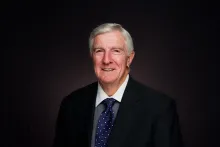
Before his retirement in 2021, Dr. Donald Ward pastored churches in Texas and Louisiana, and taught at Ambassador Bible College in Cincinnati, Ohio. He has also served as chairman of the Council of Elders of the United Church of God. He holds a BS degree; a BA in theology; a MS degree; a doctor’s degree in education from East Texas State University; and has completed 18 hours of graduate theology from SMU.
