

Paul Moody
Understanding our identity is important. The United Church of God is not a new organization but a continuation of the Church Jesus Christ established. This sermon highlights identifying characteristics of the true Church and reports on a recent trip to visit a Sabbath group in Liberia.
This transcript was generated by AI and may contain errors. It is provided to assist those who may not be able to listen to the message.
Well, today, brethren, for the message, I want to speak about something that's foundational to everything we believe and practice as a church. I want to speak about our identity as the church, our identity. I appreciated Mr. Klein's sermonette because he very much touched on the concept of identity.
And in Israel's case, they forgot who God was, therefore forgetting their close connection as the people of God, and that took them down another trail because their identity was not first and foremost in their mind. For us as the church of God, do we remember our identity? And do we recognize just how important that is to us in the day today?
Here yesterday, Darla was on the phone because she got online to pay a bill, and as you're online, you can look at your credit card account, and a surprise hit her nearly a $5,000 expense that was not her own. Apparently, somebody was able to make off with convenience checks like what the credit card sends in the mail, so probably emptied it out of our mailbox at some point and wrote a rather large check in the transfer fee. It's like $5,000. So she had to call the credit card company and say, this isn't me. Stolen identity, faked identity. And so we understand just how important our identity is and preserving and protecting our identity.
Identity is not a small thing, and to understand our identity shapes how we think, it shapes how we live, the decisions we make day by day. As a church, it shapes where we're going, what our purpose and direction is, and ultimately where it is that God is taking us. And so our identity is something we never want to lose sight of. As you're aware, I recently made a trip to Monrovia, Liberia, following the Passover in the days of Unleavened Bread. I spent those holy days with our congregations in Nigeria and Ghana, but the Sabbath to follow then.
I made my way over to Liberia to meet this congregation face to face that has been in communication for about three and a half years, at least the leadership has. And they're a group that keeps the Seventh-Day Sabbath. They discovered the holy days, and now they're exploring and they're learning, and they're walking through and keeping the holy days. And they went out to explore around to see, are there others like them? And so they found the United Church of God online, and they reached out to me about three and a half years ago and said, we'd like to get to know you.
Maybe one day be a part of you. Would you please respond? Would you teach us? Would you guide us in these things? We see this commonality. Again, as a group, they had identified the holy days as something that must still be kept by God's covenant people. It was a recognition that actually brought some of their members out of another Sabbath-keeping group that did not keep the holy days to assemble together with others who are keeping the Sabbath and the holy days. But they're walking through these things and discovering.
And it's been a very interesting process to communicate back and forth with them and to explain these days to them, because they recognize they must be observed. A few scriptures for us here in PowerPoint. But Psalm 111.10 says, a good understanding have all those who do His commandments, who do them.
Good understanding. And so we learn by doing, don't we? You can read a manual on how to drive a car. You know, I could give you instructions on how to drive a stick shift. It doesn't mean you're going to jump in there and know how to use the clutch and shift the gears.
My children grew up never driving a stick shift. So, you know, I could tell them about it. That would be an adventure. But a good understanding by doing these things. So I want us to consider the blessing we've had, and maybe we take for granted, literally by keeping the holy days year after year after year, by going through that cycle.
Just consider the depth of understanding we've had by God's inspiration and direction, and by experience, just keeping those days. I believe we have such a deep understanding of those meanings, and they're so fulfilling to us. You know, here we have a group that looks at Leviticus 23 and says, okay, we believe these are God's commanded and appointed times, and we see them kept by the church in the New Testament, and we must keep them.
But how do you keep them? One says, you put out leavening and you eat unleavened bread. Okay, we can do that. One says, you fast for a day. We can do that. One says, a memorial blowing of trumpets. So there's descriptions, but again, there is so much wealth of understanding we have through living these year after year that they don't have. So that's been a part of this relationship, is to help to give them understanding and instruction into the holy days, what they mean, and where they stand in a new covenant context of our relationship with God.
And really, it's been an interesting journey for me as well. Over the course of the last three and a half years, there's been a lot of emails that have gone back and forth. There's been a lot of questions asked and answered. There's been sermons that I've sent their way on particular topics. There's been literature I've sent them to study together as a group.
And as a result of all that, their response has come back with, this is good. You know, this is good. We bring it out on the Sabbath. We discuss it as a group. We read the Scriptures, and we agree this is good. Please, please instruct us in more. And so late last August, you'll recall that when Ben Light and I were in Ghana, we flew two of their leaders, brothers Richard and Harrison Clark, flew them from Liberia to Ghana so that we could sit down and have a meeting with them and discuss this relationship and where it might go from here.
And that meeting ended with basically my guarantee, God willing, that I would come and see them as soon as I was able. So this was then that trip here following the days of Unleavened Bread. Steve Koussi and I made the trip from Accra, Ghana over to Liberia. Some of you know Steve. He spent time in Cincinnati. He went to ABC. He is the Ghanaian. And as a young man, he spent 13 months in Monrovia, Liberia as part of the Ghanaian military.
They were part of a UN peacekeeping force because Liberia had a civil war from the late 80s to probably around 93, 94. And so Stephen spent 13 months there as part of that peacekeeping force and actually seeing a bit of hot battle in the time. But I said, well, good, why don't you come with me? You've been there before. I don't have to walk in the door to really meet people I haven't met face to face before in a country I've never been to before. And I appreciated his willingness very much to come along. And he contributed greatly as well. But we went to meet them face to face to see if indeed this is a workable relationship.
Again, they've claimed the Sabbath and the Holy Days. They're learning and growing in these things. And the meeting for us, I think, was very good. As that Sabbath approach, the questions in my mind focused around concepts of identity. Again, who are they truly? Part of the point of walking in the door is for me to ascertain, you know, who are they? What is the foundation of their understanding? Is a calling from God apparent here? It seems apparent that God is working and guiding these people by his Spirit. And on the flip side as well, my purpose was to present our identity to them. And to, again, see if there is a working relationship. How much do we really have in common? Because interesting as it is, my experience in Africa has been just because a group claims the Sabbath and the Holy Days really doesn't mean we're all that compatible. We could be a world apart in so many things. So much even including, like, culture and tradition and customs. A number of years ago, some of us went and sat down with a group in Nigeria that said they kept the Sabbath and they kept the Passover and they were exploring the Holy Days and they were interested in more of a relationship from us. So we went and we visited their group and we sat there and talked to their leaders and they said, yes, we keep the Passover. So we just said, you know, so what do you, how do you keep the Passover? Well, we all gather as a congregation. We get our trumpets, our drums, and our tambourines and we go out and we march around the village and, you know, we blow the horn, we make music and we gather in with us anyone we can gather and we bring them back here to the church hall and we take of the symbol, as they put it. So things can look quite different. Dari actually maintained a bit of a relationship for some time, went and visited their congregation, stood up and gave some messages and I believe the last time it was that he visited here, again now probably several years ago, but he's up there speaking and then right in the middle of his message up jumps the prophetess and starts, you know, wailing and waving her arms around and speaking in gibberish, which they called tongues, which is not, started rolling around in the isle and Dari had to rebuke the demon. And so, again, there can be a world of separation between where we're coming from and where maybe another group is coming from. So you have to establish enough of a relationship to determine, you know, do we have enough compatibility and foundation to go forward from here? So as I approached that time and considering what I wanted to present to them, I settled on that concept of identity as the main focus of our meeting. Again, discovering who they are, what they're about, but also presenting to them who we are as the United Church of God. Because if they want to be a part of us, which they say that they do, it's important for them to understand as well who we are, the principles we stand on, and truly who it is that we are. So as I stood before that congregation on the Sabbath, that was my purpose. It was to answer the question for them, who are we?
Who are we? It's important, brethren, we can answer that question for ourselves as well, because you see, we can become so comfortable in what we've believed for decades. We can just go year after year, almost sort of fall into a rote pattern if we're not careful, and we can forget truly what our identity is by God, and what the level of our calling is, what He's called us to be.
We can forget and lose clarity as to who we are really. Are we just another church among the many churches of this world? Or is there something truly unique about us as the United Church of God? And I would say others who would legitimately claim and live by the same Church of God identity that we hold to. And we recognize we're not the only ones. The United Church of God is a corporate structure, but we recognize the body of Christ is a spiritual body. So we're not alone, but again, do we understand the uniqueness of what is truly called in the Bible, the Church of God? The title of my message today is The Church Jesus Built, Our Identity and Calling.
And today I want to take some of what I shared with that group in Monrovia and bring it here to us today and remind us of some things that we must never forget about our own identity as a people and our own calling. Now, one of the main points that I brought out in that meeting with that congregation is that the United Church of God is not a new church. The United Church of God is not a new church. It's not even a recent church. Now, in terms of corporate founding, right, 1995, we would say we are a recent organization in that way. But in terms of a church and what we would call a church, we are not recent. I explained to them what necessitated our reorganization in 1995. They knew some of that. You know, if you can go exploring online, you'll find a number of things. You know, we may trace our modern-day revival back through the work God did through Herbert Armstrong and through the Worldwide Church of God through the majority of the 1900s, but we are not a new church, nor are we a modern invention of our own devising or a modern organization in the spiritual sense, because our understanding of the church is that it is a spiritual body. Portions of it may function under the umbrella of a corporate organization because we need to function in this world to do a work, to preach a gospel, and to do those things that we need to do for the expression of the work of God in the world. But we don't lose sight of the fact that the church is not corporate first. The church is spiritual. And so from that perspective, we don't view ourselves as a new church, but rather the modern continuation of the church that Jesus built. And brethren, that's important. It's important to never lose sight of that, because you could go out on the street and you could talk to most anyone who would call themselves a Christian, and probably all of them would say, well, yes, we consider ourselves an extension of that church that Jesus built. But just understand the church that Jesus built to claim that identity comes with some very important things. It means that what He taught, we teach. It means that what He lived and exemplified, we live and exemplify as well. It means what the apostles in the early church preached and practiced, we practice. And it means the faith that was once for all delivered to the saints is the faith we hold dear and maintain and fight for and live by. To say you're an extension of the church Jesus built in identity, again, are going to have characteristics of that identity. You step away from certain identity characteristics, you'll still have an identity, but it won't be that. And so to understand who we are and what our calling represents, indeed, is very important. Let's go to Matthew chapter 16.
Matthew chapter 16. I'm going to read verse 13 through 20. I don't have the whole thing on the screen, but a point of emphasis nonetheless. Matthew chapter 16 verse 13 through 20. Let's understand the foundation of the church that we go back to. Matthew chapter 16 and verse 13. Jesus came into the region of Caesarea and Philippi. He asked his disciples, saying, Who do men say that I, the Son of Man, am? You know, what are people calling me?
Jesus says. When they look at me, what are they thinking my identity is? This ultimately boils down to identity. Verse 14. So they said, Well, some say John the Baptist, some say Elijah, others Jeremiah, or one of the prophets. And he said to them, to his disciples, But who do you say that I am?
Do you know my identity? Do you know why I've come? Because tied to who Jesus Christ was, was what he said and what he would do. Again, that identity is so important. Verse 16, Simon Peter answered and said, You are the Christ. The anointed, the Messiah, the Son of the living God.
Jesus answered and said to him, Blessed are you, Simon Barjona, for flesh and blood has not revealed this to you, but my Father who is in heaven. And I say to you that you are Peter, and in this verse we understand it's important to go back to the original Greek. I say to you, you are Peter Petros, which means a little rock, okay, small stone, little rock. You are Peter, that's who you are. And on this rock crisis, referring to himself, on this rock, Petra, meaning big rock, on this rock I will build my church, and the gates of Hades, or the grave, shall not prevail against it.
You know, some have taken this verse and run with it and basically said, See, Peter was the first pope, and Christ built the church on Peter, and he was the pope. But understand, sometimes translation things get lost, and it's important to understand what he was saying. He's saying, On this rock, on myself, I will build my church. Of course, he is the chief cornerstone. Verse 19, I will give you the keys of the kingdom of heaven, and whatever you bind on earth will be bound in heaven. Whatever you loose on earth will be loosed in heaven, so their identity and perspective to all that Jesus is doing. And then he commanded his disciples that they should not tell anyone, or they should tell no one, that he was Jesus the Christ.
So, you know, not time for who he was to become openly evident quite yet. But Jesus said, I will build my church, and the gates of Hades, or the grave, shall not prevail against it. That's a promise. It's a promise of a direct and unmistakable identity and continuance. Jesus says, It's my church. It's mine. Now, it's called throughout the New Testament, the Church of God, and we are the Church of God the Father, as it says, of whom the whole family in heaven on earth is named.
Okay, so we understand that perspective, but the Church of God is the Church Jesus built. He says, I will build it, and it will endure. And as such, the Church he built has never ceased to exist. It's never been lost to history. And to see religious confusion and all kinds of false teachers claiming false christs and false traditions of men, the Church Jesus built still continues even today through a spiritual body of believers. This is our identity. It's the Church Jesus built. It's who we are as the Church of God. Now, admittedly, the Church hasn't been very large in numbers.
You know, you can look around. There's mega churches, mega organizations, tens and thousands of people, millions of people, okay? So not incredibly large in scope. At times, the Church hasn't been very visibly prominent. There was a time it was visibly prominent. Read the book of Acts to the point that they said, you know, the people have turned the world upside down and come here, too.
So there was a time and a place. But through much of the history of the Church, it has not been big numbers. It has not been prominence. It has not even been this bold spotlight and booming voice in the world. And many times, it has simply been survival and holding fast to the truth. Times where the Church has been persecuted and scattered to various places. Times where it's thread through history, at least from our perspective looking back, you almost can't find it. And it's almost like following this trail of breadcrumbs down through history, much of the history of the Church has been written by people who persecuted the Church.
As in, you know, we had to put down this movement of people that aren't like us, you know, those Seventh-day Judaizers, those people who keep the Jewish Holy Days or however it would have been stamped. And you kind of see some of these points through history and you're like, huh, interesting.
Looks like a faithful group of the people of God under persecution by even in some cases where those that call themselves the Church had gone to. In terms of their political alliance and movement away from God's truth, the people that held to it, who kept the identity, sometimes that's the only way you see them as a blip on the radar screen in history through the persecution that came against them. I do believe in our modern day, God has raised up a resurgence in a more visible presentation of the Church once again over the course of the last hundred years for the purpose of doing a work at the end of the age before the return of Jesus Christ because that is prophesied as well.
So we just have to understand the thread and the history and the promise that it would always remain until the end and our place in it, you know, a link of a chain, essentially. This is our day and our part that we have to play.
But again, this isn't something new. Jesus said, fear not, little flock, little flock, for it's your Father's good pleasure to give you the kingdom. So again, the Church has not been defined primarily by its visibility or its size or its corporate structure. It's defined by its faithfulness to Jesus Christ and the truth He delivered. And it brings us back then to that defining statement that I brought to this group in Liberia. We don't see ourselves as something new.
We see ourselves as something continuing that began in the first century with Jesus and the apostles, something that continued down to our time today. And so the Church that Jesus built is our identity. Again, as He built it, as the apostles built it, in form, in teaching, in substance, in spirit. And it has not, we pray, deviated from that course. Indeed, the Church that Jesus built, the apostles defended. And it's a Church that will be built upon the truth of God's Word, even if it means we're different, even if it means we're marching at a different direction or a different pace than all the other churches in the world, even if it means we're persecuted, that has been largely the history of the Church, frankly, persecution. But I want us to notice a couple scriptures pointing to identifying principles of this Church. Acts chapter 2, we'll look at verse 41 and 42.
Acts chapter 2 and verse 41, and this of course is now the day of Pentecost, bold and dramatic day in the history of the Church. Here, the birth in that sense of the Church that Jesus said would be.
Acts chapter 2 verse 41, and those who gladly received His Word, okay, Peter's sermon, were baptized. In that day, about 3,000 souls were added to them.
And where did they go from there, it says, and notice, they continued steadfastly in the apostles' doctrine. In the apostles' doctrine. Well, what would be the apostles' doctrine?
Or you recall Jesus, some of his final instructions, Matthew 28, when he sent them out, telling them to preach and make disciples of all nations and baptize them. He says, teaching them to observe all the things I have commanded you. The apostles' doctrine, which is doctrine is established teaching, was the doctrine that Jesus Christ taught, which is the doctrine that is foundational to all of the Scriptures. So this is what they continued steadfastly in, the apostles' doctrine and fellowship and the breaking of bread and in prayers. So we see that description of the early New Testament church. It wasn't a church defined by buildings or wealth or power. It was a church defined by the apostles' doctrine, a specific set of teachings that were directly tied to their identity, as well as fellowship grounded in truth and a shared commitment to obey and worship God. Of course, ultimately, this was verified and confirmed by God's Holy Spirit as it was poured out on that day of Pentecost, a group led and guided by His Spirit. So truth was important to this church and preserving the truth all along the way, as they have been taught, has been an important and ongoing part of the structure of the church Jesus built. Now, during the second to fourth century AD, following the time of the apostles, many changes crept in. And you can read the New Testament during the apostles' lives, and they said, beyond guard, watch out, defend, for you'll have assault from the outside. And even from among yourselves, he said, false teachers will rise up. So this has always been something the church has had to watch out and defend for to maintain and hold fast to the truth. But many changes came through the second to fourth century AD to the church. Some came through the Roman Emperor Constantine. You remember the name Constantine? Right here's a man over a great empire who says there's division in this empire between our Roman customs and these Christians. So let's have some peace. Why don't we just kind of blend these practices together, syncretism? Instead of Passover, let's have Easter. Instead of Saturday, let's worship on the day of the sun. You know, various things introduced where maybe we can blend together. We can be happy about the church. We can be happy about this empire that we're all in together. He wanted peace under his reign. So a number of things happened under Constantine, who claimed to have converted to Christianity. Other things came through various church councils down through history. I'm not going to go through all of these in detail, but you can study into the Council of Nicaea, 325 AD, and the Council of Constantinople, 381 AD, 300 years after Jesus walked the earth, 300 years after the death of the majority of the apostles, changes which came in which were dramatic.
In the group that called themselves the church, but again, identity was shifting away from the church Jesus built. When others turned the Sabbath into Sunday, the church of God's identity was seen in those who held fast to the truth, who kept the Sabbath, who kept the holy days. Because again, my Sabbath, plural God says, are signed between me and my people. It's an identifying sign. When others turned Passover into Easter, the church of God's identity was seen in those who held fast to the truth. And when the oneness and the unity of God was turned into the Trinity, the church of God's identity was seen in those who again held fast to the truth. Now they're the minority. Now they're the persecuted. Now they're the ones that the church that has become intertangled with the political and all these other things. They're being persecuted by them. That indeed, holding fast to the unchanging truth has always been an identifying characteristic of the church Jesus built. That's how you can trace it down through history. Notice again the serious nature to holding fast what was given from the beginning. Jude, read verse 1 through 4.
There's only one chapter to the book of Jude. Jude verse 1 says, Jude, a bondservant of Jesus Christ and the brother of James.
James here was the half-brother of Jesus. Physical father was Joseph, mother Mary, so Jude as well, half-brother of Jesus Christ, the siblings which doubted during his life, but seeing as believing, he was crucified and resurrected and appeared to them. Now we have some of the siblings as solid leaders of the church. To those who are called, sanctified by God the Father, preserved in Jesus Christ. Okay, it's addressing the church. Mercy, peace, and love be multiplied to you. Beloved, while I was very diligent to write to you concerning our common salvation, I found it necessary to write to you, to exhort, exhorting you, to contend earnestly for the faith, which was once for all delivered to the saints. For certain men have crept in unnoticed, who long ago were marked out for this condemnation, ungodly men who turned the grace of our God into lewdness and deny the only Lord God and our Lord Jesus Christ. Okay, so, so fight Jude said, essentially, contend earnestly, hold steadfastly, because there's people coming in trying to tear away from you the foundational truths once for all delivered to the saints. As in, this isn't an evolving package. This is a foundational set of truths that will always remain the truth, no matter what century, no matter what nation, no matter what's happening, or what any other church would say. Contend earnestly, stand up, and in some cases, if you must, do battle in order to hold fast to and maintain the faith which was once for all delivered to the saints. And so, again, brethren, this is an identifying characteristic of the true church, one that would push back against false teachers, false doctrines, always seeking to maintain possession of the faith once delivered.
And again, they were rising up in the time of the apostles, and Paul gave the warning, Peter gave the warning, John gave the warning, Jude here gives the warning. So again, brethren, our identity.
If you step off of the Sabbath unto Sunday, you might just say it's a different day. Your identity has stepped away from what was once delivered. If you step from the Holy Days to the holidays, you've stepped from the identity. You still have a identity, but it's not the identity of the faith of the church Jesus built. So preserving these things are essential. So when I spoke with that congregation in Liberia, I made this point very clearly that the United Church of God is not simply a continuing organization of man. We're not trying to create a new kind of Christianity, and we're not a modern invention. Indeed, we're striving to grow in and uphold the original.
That this is who we are. That the church of the New Testament that you see in the Bible is the church we identify with as our fathers. And as Mr. Klein again said in the first message, it's an important concept, how will that transmission carry on? And what will we do in our generation to preserve and then to pass on that which has come down to us today?
It's why we keep the Sabbath the same day Jesus and the apostles kept. It's why we observe the Holy Days outlined in Leviticus 23, again showing God's plan of salvation for mankind.
That's why we seek to follow the unity of both the Old and the New Testament. We don't just throw half the Bible out and say Jesus fulfilled it all. We understand there is a continuing progression of what he has done and fulfilled. But when the apostles went out, they didn't have what we call the New Testament. Paul went and proved from the Scriptures that Jesus is the Christ. Right? And what we call the Old Testament. It's there. And he says, here is the fulfillment of all you see prophesied, and here's how it impacts our lives today. Because for us, we see these things that we keep not as new innovations of our devising, but they are in many ways restorations, I would say, in the modern day. Maybe you had a thin thread down through time and points come where there's a revival. We can use that word. There's a restoration. There's maybe a resurgence when God says, okay, here's a point in history. I want to use a people to do a work in my name.
And we do very much consider ourselves a part of this chain of progression down through history.
So this time, I would like to show you some pictures, some video of my trip to Monrovia. Again, my point was to walk in the door and to get a little feel for who they are, their identity, to express our identity to them, to see if there's a foundation we can build on. And I do believe there is, but there's culture. There are differences. So as we go through some of this, you might see a surprise or two pop up. Again, our customs are quite different. Yet my job, in part, is to try to bridge this gap and to reach a connection of unity, if God is willing, and if this is where He is working. So let me just take you through a few things that will give you just a little insight to their day-to-day. This is the commute, right? If you're going to go to church, what's your commute look like? We got pretty smooth roads in AC. Most of the brethren commute much this way.
Some live 15 minutes away. Some come two hours in church service.
Most every vehicle on the road here is a taxi of one form or another. The motorbikes, tricycles.
It's a Saturday, so it's market day, oftentimes around the region.
No AC. Moving air. By the time I got back to my hotel at the end of the day, I was soaked through everything. Just what it is. This is Stephen Koussi here with me and a gentleman accompanying us. We got off at the closest intersection and walked about a mile back into essentially a village-type region to where the church hall is. Just walking a trail and cutting between houses and around goat pins and back to where you'll find the people meeting. This is the building that they meet in. Right adjacent to it is the house that Richard Clark lives in. As he described it, were squatters. He says of this building the landlord has allowed them to use it for a church hall. This is Richard and Harrison Clark. Richard on the left there is the one who originally reached out to me and he is the one that I have. He's the older of the two brothers and he's the one that I have the continual dialogue with. Interestingly, both of them have degrees in theology, you know, from the education there in Liberia. So at the very minimum, they have a pretty thorough understanding of what the scriptures say. So I think that has helped quite a bit in teaching how they fit together because they can see these things. So I want to play for you. I don't generally play videos of myself preaching in church. You see that every other week up here. But, you know, I'll just maybe give you a little insight into what it's like. Steve Cusi was along and he sent me a couple videos. So what I'm expressing to them goes hand in hand with what I've expressed to you thus far. I've been in communication with brother Richard for about three years now. As he reached out and introduced all of you to me through email, he said, you'll keep the Seventh-Day Sabbath and you're learning and growing in God's annual Holy Day and annual feasts, which is what we do in the United Church of God as well. We are a Seventh-Day Sabbath-keeping festival-keeping church and we have congregations all around the world, a number of them here in Africa. So part of my responsibility as a senior pastor from the U.S. is to come visit English-speaking West Africa congregations at the United Church of God.
It's truly a privilege to be here with you for the first time in Liberia. This is my first visit here to your beautiful country and again I appreciate your hospitality. See the UCG sign in the background. So just a little bit of introduction about myself. They've adopted that name for themselves.
I live in the United States in the Pacific Northwest in a state called Washington State.
I am married to my beautiful wife for 32 years. We have two children, a son who is 31 years old, a daughter who is 24 years old, and I pastor three congregations at home. I thank my home congregations for their support so that I can come over here to visit God's people in West Africa.
On this trip I have been to Nigeria. We have three congregations in Nigeria. Following that, I was in Ghana. We have 11 congregations in Ghana from North Korea.
And so now I'm happy to meet all of you people here, to see you face to face, and to tell you a little more about the United Church of God. Because the desire that has been expressed was for you to fellowship with and come to be associated with the United Church of God. So it's part of my purpose to help introduce ourselves to you, to help further our dialogue in our relationship. Okay? So I thank you for the opportunity to come see you here on the Sabbath.
I see all the energy you have. I hear the singing and the dancing and the energy, and I, as the white man, am sweating, just watching.
Where I come from, for where I come from, it has been winter. Very cold, snow on the ground.
So when I come to Africa, it's very hot, and I leak. I leak.
But again, so nice to be here with you. I would like to take some time to convey to you our identity as a church.
We got to be like this thing.
I see. You have a garment for me. Yes. The matches. Yes. Okay.
I have to dress as they dress before I could speak to them. Well, let me continue until it arrives.
Okay. So you wear matching garments that show an identity, right? It shows a unity.
So let me tell you a little bit about the unity and identity of the United Church of God.
We do not consider ourselves to be a new church. We look at the church that Jesus Christ founded in the Bible, the church that the apostles went out and raised up and taught. We identify as a continuation of the true church of God. That was its name in the Bible, the church of God.
Right? You know, Paul, in his writings, when he wrote letters, he said, the church of God who is in Corinth, the church of God who is in Philippi. And so the United is a church of God. That's why we call ourselves the United Church of God. We identify with the church with Jesus built and the apostles built. And so our teachings are built on that foundation. Okay. Our understanding is built on that foundation. Ah, thank you. Let's see if this can fit over.
All right. As I'm coming. Okay.
As if I was not warm enough, I'll put one garment on top of the other.
All right. Very nice.
So we are gathered here today on the Sabbath, right? On the seventh day.
Why is the seventh day important to us as a church? Can anybody tell me why? Why is the seventh day Sabbath the important day that we come together for worship? Yes. God rested on the seventh day. That's right. Six days He made the creation. On the seventh day, He rested from all His labors. And He set the example for us. When Jesus Christ walked the earth, what day did He keep as the day of worship? Yes. The seventh day, the Sabbath, right? Jesus kept the Sabbath. His disciples kept the Sabbath. The Sabbath is not just a Jewish thing, as some like to tell you. The Sabbath is a sign between God and His people, as God says in the Scriptures, that His covenant people will keep this day that He has set apart as holy. So that is why the United Church of God keeps the seventh day Sabbath. It's what God commanded. It's what Jesus did. It's what the disciples did and taught the church. Now, truth is very important.
And a big part of who we are is searching the Scriptures for truth and living that truth.
Because there are so many traditions of man. So many false teachings of man about Jesus Christ. False teachings about God. But as His people, we want to live according to truth. Jesus said, the Father is Spirit, and those who worship Him must worship in Spirit and truth.
Okay. So truth is very important. What the Bible says is true.
When a man says, might be true or might not be true, when you hear a man speak about God, you must then always go to the Word of God and prove if what he says is true.
Even if it's me or Mr. Cusi or Brother Richard or Brother Harrison, whatever you hear us say, it must be proven true by God's Word. Because as God's people, we don't come together just to do our own tradition. We come together to worship God in Spirit and truth. Okay. So this is the foundation of the United Church of God. That we study the Scriptures like the Bereans. Study the Scripture daily to see if these things are so. And when we find God's Word commanded in here for us, we take it and we live it. Even if it's different than the world around us. Even if it's different than what other churches are doing, because it is what God has given us to do.
So we give us the Seventh-day Sabbath. And I rejoice that you're all here today to worship God on the Sabbath day. Because God said it's holy. Holy means God's presence is there.
God says, I will be there, you be there as well. And we'll be together in fellowship on the Sabbath.
Additionally, in Leviticus chapter 23, there's listed out feasts of the Lord, appointed times, which God gave his people. Like the Passover, the days, the feasts of unleavened bread, the feasts of Pentecost. Get a little bit of an idea. We did have special music as well. As I was there, I'll give you just a taste of that.
In addition to the congregation, we had, I think, including children, 50 were there overall.
They have a number of children, 25 to 30 adults. The ladies outnumber the men, but about a half a dozen men there. We had the service, and then we had about an hour Q&A afterwards. We wanted to make it as full of a day as we could, so I purchased for us to have a meal. So a meal was put together, and we sat out under the trees, and we spent a few hours out there. We were able to eat meals, fellowship, interact for a good portion of the day. I'm grateful I've come to the point after all my years in Africa that I can usually eat something that's set before me in the village and walk away from it okay.
But it was a very good time to be together. A number of the children.
Again, this was about identity. Who are we as a church? Who are they? And is this a workable and a buildable relationship? And I do believe it is. Like I said, there are a number of differences in things that are maybe cultural, and we've exchanged even this week email messages discussing things. They said, well, tell us what we did right. Tell us what we could change. And I'm not trying to change churches in Africa into a U.S. church, but you do want some uniformity across the United Church of God. So you go to United Church of God in the U.S. or in Nigeria or elsewhere. You walk in the door, and you're not shell-shocked by something just completely foreign.
There is a unity to what it is that we do. Also expressed, and part of the reason I was there, was to look for fruits of God's calling. Because we understand a church is not something that you just sign up for, like a fitness club or a bowling league or something else we'd like to join. We understand it's something that comes directly from a calling by God. And Jude brought that out in his letter as we began what he had written. He wrote to those who were called, sanctified by God, which means set apart by God, and preserved in Jesus Christ. And Jesus himself makes it even more direct in John 644, where he says, no one can come to me unless the Father who sent me draws him.
And so this makes our presence in the church personal, because it's a relationship that God first reached out and began with us. And we're here as well, by our response then to his calling.
But none of it starts with a full understanding. None of us walked in the door day one with a full understanding of all that's involved around Sabbath and Holy Days and these things. And such as with them, they're learning, they're growing. And it's an interesting process, because if we get a new congregation in Nigeria or Ghana, there's a support structure already in place of congregations that have decades of history in the church. As far as I'm aware, there has never been a congregation of the Church of God in Liberia. And so their support system is me explaining various things to them, not to say that God has not called and worked with people in that place. You know, he does what he will do, and we're doing what we can do with the scope of what he has given us to do. But again, this is a calling, which means this is not organizational first and foremost, it is spiritual. As a church, that is our identity. Mark chapter 1, this connects us to something else that's a very important part of our identity. It connects us to a work, not just the belief package, but a work, the gospel, the very message that Jesus Christ came preaching.
Mark chapter 1 in verse 14 and 15 says, Now after John was put in prison, Jesus came to Galilee, preaching the gospel of the kingdom of God, and saying, The time is fulfilled, the kingdom of God is at hand, repent and believe in the gospel. It's an invitation that Jesus Christ was extending. But what he taught was the gospel of the kingdom of God, and that's our primary focus, our primary message. Gospel means good news. I asked them what it meant, they knew what it meant. But it does not only mean the good news of Jesus Christ, it also means the good news of the coming kingdom of God, and indeed that was Jesus' primary focus. But he did say, repent and believe in the gospel.
And so through our repentance, we can then have our sins forgiven through his sacrifice, and we can become a part of that work that God is doing towards his kingdom. So we taught about that kingdom where the righteous rule of God will replace the confusion and the suffering and the injustice of this world with true righteousness and justice and peace.
Yesterday evening, I was on the lawnmower for about 30 minutes, and I had the audio Bible plugged into my headphones, and I couldn't tell you chapter and verse because I was listening through, but it was a point where the multitudes basically swarmed Jesus and he healed, he did various things, and it says, and he taught them things pertaining to the kingdom of God.
So that was his focus, the better age to come, and enabling people to move towards that destination. That is a part of our identity as well. It is what we teach, it is what we reach out to the world. So just like our doctrines, our work as a church goes back to the foundation of what Jesus said and did in the church that he built. And I would say my presence in Liberia is a direct result of that work, of the work that is being done today in the modern day, that we can be found, that we could extend to them a help. And as I explained to them, our mission as a church is summarized as preaching the gospel and preparing the people.
That's on our seal, and it is twofold. And the work that we do as a church stems from our identity. Matthew 24, verse 14. Again, why do we do these things? Do we just invent them on our own, or is it not the package of responsibility that has been passed along? Matthew 24, verse 14, and this gospel, words of Jesus Christ, this gospel of the kingdom will be preached in all the world as a witness to all the nations, and then the end will come. Okay, this is a prophecy, a prophecy connected directly to what God would accomplish through the efforts of the church. It's the same commission that comes down to us today. The Bible calls it the Everlasting Gospel. It began in Genesis, carried on through, you know, Noah was a preacher of righteousness in his day prior to the flood, and it came through Abraham, it came through Moses, it came through David, Jesus Christ, the church. Through us today, we will preach it as long as we have strength.
And when the strength and the ability is not there, there will be two witnesses that will take the gospel dramatically and openly to the world. They will be killed. But you know what? The gospel will still go. There will be an angel, as it says, that will take the Everlasting Gospel. But we are here now and today. This is our link. We're the link in the chain, and we carry forward with this commission given by Jesus Christ. Last scripture for today, Matthew 28. Again, this all surrounds our identity, who we are and what we do, what we do. Matthew 28 and verse 18. This is following Jesus' crucifixion and resurrection. He spent some days with his disciples. And in verse 18, Jesus came and spoke to them, the 11, saying, All authority has been given to me in heaven and on earth. What does he do with that authority? He says, I give you instructions. Buy that authority. Go, therefore, make disciples of all nations, baptizing them in the name of the Father and of the Son and of the Holy Spirit, teaching them to observe all things I have commanded you. It comes back to the foundation. What you receive from me, you carry out. You teach, teaching them to observe. And as faithful individuals would go out from there, they would teach the same things as well, teaching them to observe all things I have commanded you. And lo, I am with you always, even to the end of the age. And so the church has always had a two-fold focus outward and inward, outward with the gospel message, with the calling, with the calling of repentance and a future hope in the kingdom of God, and inward as well through our understanding of the teachings of God by His Spirit, coupled with the Spirit, learning, growing, changing, overcoming, becoming as God and Christ are in character and in likeness. Because the church is not just about what we believe, brethren, it is also about who we are and what we are called to become. As I kept the holy days with the brethren in Nigeria and Ghana, as I visited this group in Liberia, I was reminded that God's calling extends out in all directions. People of different culture, different languages, different backgrounds, they're all created in the image of God, destined for the same eternal purpose as all of us who have heard the message. And so the calling goes out, but it's always into the same truth and the same identity. The church Jesus built, brethren, was not defined by size, by popularity, or political influence. It's defined by faithfulness. Faithfulness to the word of God and to the teachings of Jesus Christ and the apostles, where those original teachings are preserved, where they are taught, where they are lived, is where you will find the church Jesus built.
Of course, God's Spirit will be there. Our claim is not one of human authority or institutional power. As the United Church of God, our claim is one of alignment. Alignment with the teachings of Jesus Christ, of the laws and the standards of God contained in His word, and alignment with the understanding and the practices of the early New Testament church that church Jesus built.
So let us never forget who we are. Let us never lose sight of what has been entrusted to us.
Fear not, little flock, Jesus said. We are a little flock, but we have God's focus. We're the apple of His eye. We're doing the work in the world that God has given us to do. So, brethren, let us go forward with conviction, commitment, and courage, holding fast to the unchanging truth that we are not a new church, but we are in a continuation of the church Jesus built. And with that, identity comes purpose, responsibility, and an incredible future in the kingdom of God.
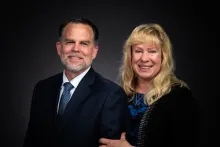
Paul serves as Pastor for the United Church of God congregations in Spokane, Kennewick and Kettle Falls, Washington, and Lewiston, Idaho.
Paul grew up in the Church of God from a young age. He attended Ambassador College in Big Sandy, Texas from 1991-93. He and his wife, Darla, were married in 1994 and have two children, all residing in Spokane.
After college, Paul started a landscape maintenance business, which he and Darla ran for 22 years. He served as the Assistant Pastor of his current congregations for six years before becoming the Pastor in January of 2018.
Paul’s hobbies include backpacking, camping and social events with his family and friends. He assists Darla in her business of raising and training Icelandic horses at their ranch. Mowing the field on his tractor is a favorite pastime.
Paul also serves as Senior Pastor for the English-speaking congregations in West Africa, making 3-4 trips a year to visit brethren in Nigeria and Ghana.

