
Paul Moody
Every member of the body is essential. Each of us contributes something unique, and together we form a stronger, unified whole. In that unity, we encourage one another to grow spiritually and live according to God’s way. God's love is the glue that binds us all together.
This transcript was generated by AI and may contain errors. It is provided to assist those who may not be able to listen to the message.
In the early years of the United Church of God, our family had a particular feast site that was one of our favorites. It was Reading, California. This would have been in the mid-to-latter 1990s. We would load up all of our belongings that were going to the feast with us. We'd put the car seat in the Ford Bronco. We were driving at the time, strap our two-and-a-half-year-old son into it. And because it was a 14-hour drive from Spokane to Reading, we'd usually break that trip up into two days and kind of explore what points of interest there would be to see along the way. More than once, we stopped at the Trees of Mystery.
You know, maybe that sounds kind of exciting. The Trees of Mystery. I suspect one or two of you have been to that location yourself. The Trees of Mystery is a tourist attraction along Highway 101 in Klamath, California, featuring trails through the Redwood Forest. It's kind of a unique section of it that they've taken and developed trails through there. They've put up signs by various trees because there's a lot of not only massive trees but unique tree formations that you can read about as you tour through there.
Out front in the parking lot along the highway was kind of this very distinctive landmark if you were looking for a river to turn off. There was a 49-foot tall—I had to Google it, I couldn't remember—49-foot tall statue of Paul Bunyan. Paul Bunyan out there with his axe and his faithful blue ox babe there next to him. I distinctly remember Austin, two and a half.
Again, I remember his, shall we say, worry and dismay when he spotted Paul Bunyan, you know, because Paul Bunyan would do things like move his hand and wave like this and he would say things like, hello, kids. And to a two and a half year old, that was enough to make them go scrambling up Dad, like a ladder. You have to understand, this was just a couple weeks Darlow reminded me after the bumblebee costume incident at the family buffet. So, you know, Austin's 30 now, I think a family trip would be okay, you know, but there's times and places where these things can seem a little intimidating.
But the attraction wasn't so much Paul Bunyan and babe, it was those trees. Those amazing giant redwoods. We would walk through those forest trails and gaze up at those massive trees, some large enough that you could drive a vehicle through. And at some of the redwood attractions, in fact, they have trees where, you know, an opening is cut out and you can drive a vehicle right through the middle of the tree. Just incredible. So we'd walk through those, we'd read the signs that told about the history and the uniqueness of those trees. And frankly, we were just in awe over the massive nature and the majesty of those trees.
You know, redwoods are some of the tallest living things on the planet. They can reach up to over 300 feet high, with many of them living for over a thousand years. You know, average in the California redwoods is 500 to a thousand years. Some could extend up even into 2,000 years or longer. There's an incredible lifespan of these trees. Just one of these trees can weigh over a million pounds. And again, as such, they're incredible to look at and to stand at the base of one of these trees and just, you know, gaze up, gaze up at this giant massive tree as it goes out and the branches expand out.
There are literally some of those, like, trees themselves, these massive branches that go out. And to consider that there's literally an ecosystem that exists up in this canopy. Because as you think about it, you have moss that grows and water that's held in some of the pockets of these trees and on top of these limbs, you have leaves that have fallen down and bugs that live up there and birds.
And it's literally an ecosystem that thrives in the top of these trees. And so you'd think that one of these massive trees would need to have a deep and a massively deep reaching root system to keep them anchored. Again, over a million pounds at some places. And the fact that they're upright and you've got to keep this thing from toppling. Think of leverage as you get out on the end of something tall or long and the wind is blowing on that. What sort of an anchor system would this need to have to hold this tree in the place?
But what's incredible to understand is that the redwoods have a very shallow root system typically six to twelve feet deep. And you might say, well, the tree in my yard's got a root system like that. Okay, fine. But again, the volume, the mass of this tree compared to the root system that exists in place, six to twelve feet is quite shallow. So how do they remain standing? You know, in the face of fierce winds, in rain, in floods, and maybe as you would have in California redwood forests, the occasional earthquake.
You know, how can they stand and not topple? Well, the key to their strength doesn't come from growing as a solitary tree with, again, deep roots. It's not going to be out here on its own and standing. Actually, the secret to its strength comes from growing in groves, growing side by side with other trees with roots that fan out wide and intertwine and interlock together amongst this grove, forming a support for these massive trees.
Redwood roots can extend outward over 100 feet from the base of the tree. Again, as they go out from there in this grove and other trees send their roots out from there, they intertwine and they interlock under the earth, forming a vast interconnected network of support to the point that one tree's strength actually ends up being the strength of multiple other trees and vice versa as well. The strength of the other trees end up being the strength of the one tree, and it's a shared relationship. And as such, they literally hold each other up with no redwood standing tall on its own.
You know, brethren, that's what the body of Jesus Christ is called to be. This is what has been formed in this relationship that we call the Church of God, a group of believers growing side by side, lending to each other a network of support through which each member supplies strength to the whole. You know, as we could call ourselves a grove, I suppose, the Bible uses a different term. The Bible uses the term a body.
But again, many aspects, many individuals whose strengths support one another. And that's what I'd like to talk today about. The title is, We Are All in This Together. We are all in this together. And it's a concept which appears all throughout the Apostle Paul's writings. So let's begin in Ephesians chapter 4 and look at this concept of the body. Ephesians chapter 4 and verse 16, the context here is Jesus Christ as the head of the body and then the members that are linked together to Him.
Ephesians chapter 4 and verse 16, the Apostle Paul, again, if you back up at the end of verse 16, he talks about growing up into all things and to Him who is the head Christ. Verse 16, from whom the whole body joined in it together by what every joint supplies. According to the effective working by which every part does its share causes growth of the body for the edifying of itself in love. It's as Mr. Perky was saying, this is about relationships. It's about interconnectivity.
It's about us being together and supporting one another. And this is a powerful verse, because it's saying that we add to one another as collective members and we contribute our strengths, not simply for ourselves, so that we could stand alone, but we contribute our strengths indeed for the benefit of all, for the growth of all.
Understand the growth that God intends for us as a spiritual body doesn't happen in isolation.
It's a body. It's a collective bringing together of members and functioning together. And it happens through this growth, through connection and through relationships with one another. It's one of the major reasons we're called to assemble on the Sabbath. And we assemble on the Holy Days, so that not only do we come together to worship God, but we come together to fellowship, to rub shoulders. So iron can sharpen iron and we can encourage each other and uplift each other.
It's the purpose of fellowship. It's the purpose of breaking bread together, such as we will this evening. The early church was a church that broke bread together, a church that had all things in common. A church that came together in relationship and, frankly, a shared purpose and zeal for that purpose and zeal for what God was accomplishing in their midst. And so we do these activities together.
It's why we call one another during the week, why we send text messages and emails and Facebook Messenger chats. You know, we're in an age that it's actually easier to chat somebody up than to actually pick up the landline and call or the phone and call, but we're interconnected in so many different ways. You and I may live in a world that promotes independence and self-sufficiency, and that indeed is the culture of the country in which we live. The concept of, you can go it alone.
You can handle this. You got this. You don't need somebody else to do this. You're your own person.
You know, stand on your own two feet. And there is legitimacy in context and imbalance of those principles, but understand God's Word tells us something very different about the body of Jesus Christ. God's Word tells us that He has called us to be interdependent, not independent, woven together in love and fellowship and in a shared purpose. And so just like those massive redwood trees, our strength doesn't come from standing alone. It comes from standing together in the Spirit, because that is truly a binding factor, a primary binding factor, God's Holy Spirit.
That's what's brought us together and drawn us together. We're bound together by that Spirit and in love. And it's in that standing, coupled with His Spirit, that we can grow up in all things and to Him who is the Head, Christ. You know, Jesus Christ wasn't a go-it-alone person. You know, He relied on His Father, but He also surrounded Himself with people. And we can look at the example of the disciples and say, boy, they had a lot to learn along the way. But truly, there was comfort, even, that Jesus Christ took in having the companionship He had with the 12 who traveled with Him and worked with Him. And my recent trip to West Africa highlighted this point for me all along the way. Ben Light and Darla and I returned here just about a week and a half ago from Nigeria and Ghana. We spent close to three weeks there on this last trip. And for me, the lesson that played out over and over as we walked through various experiences was this. We are all in this together. We're all in this together. One of the main focuses of this trip was the leadership conference that we ran in Ghana. And as I've mentioned before, it's a time of transition for the leadership in that region. Indeed, for, I would say, the Church as a whole in many ways.
As many of our longtime leaders come to the point of retirement, or frankly, sometimes health basically brings an end to their ability to carry forward as they do, things are happening. Transitions are taking place. There's people who are coming into that pipeline on the other end of the spectrum who are walking in now and picking up a load of responsibility themselves. And this conference in West Africa was about current ministerial development as well as our need to build for the future. We had 18 individuals gathered together. We didn't have all the leaders of all the congregations all around, but there were certain ones that were called and asked to come together for some specified training. 12 men and six of their wives. There were two couples from Nigeria who came over to Ghana for this. And we covered topics ranging from the calling to teach, qualifications of the ministry, fundamental beliefs. We took the fundamental belief test. It's essentially a test that's archived on the ministerial website, and we took that and we used it as a guide to basically have a couple of interactive sessions where we just brought forward questions out of this fundamental belief test, discussed what the answers were, discussed what the answers were not in some cases as well. Why not this over that? And we discussed as well what are challenges you're facing here. You know, various doctrines that perhaps are are unclear or uncertain here. So it was very productive discussions that we had.
Counseling skills, principles of peacemaking, servant leadership, and congregational care as well. We're all a part of this package, and Ben Light and I shared in a bit of that teaching, and we also incorporated some messages that have been given in other presentations archived on the ministerial website. But something that I repeated to them often throughout this process is we're all in this together. We're all in this together. Again, like those redwoods that stand side by side, it's a grove that supports one another through the interactive strength of one another. And it's not that I can look at the 13 congregations that we have in Nigeria and Ghana and say, well, I can pastor them. I cannot pastor them from here. Not in the way that I pastor locally, but what I can do is to support the leadership that is in place there so that they can go on to serve the 500 brethren that we have between both Nigeria and Ghana. So the point is we're in it together. I need them, those leaders that were there and that are going out and doing. They need the support that I provide and Ben Light provides and that the home office provides.
And you know, we need each other. We need each other. I need you, if all of this is going to work, because I need those who step in and carry forward in my absence, those who run the circuit and give messages, those of you who call and visit one another and support one another, especially in my absence. This is truly a team effort. So I need them. They need me. And I need you.
And you know what, brethren? You need them as well, because this is the system that God has built, a body of believers together, bound together by His Holy Spirit. And all of this is part of the growth process that God has called us to together. We're all interconnected. We're all God's people.
We're all bound together by His Spirit. They ask about you and they pray about you.
Just as you ask and pray about them. And you know, I'm on Facebook and I notice a number of you are friends with a number of them, even over Facebook, and you communicate. So there is a relationship here that is supportive and encouraging. And it goes both ways. And we're all in this together.
Notice 1 Corinthians chapter 12 and verse 12.
1 Corinthians chapter 12.
Here the Apostle Paul again uses this concept of the human body to describe how we are all called to function together in the Church. 1 Corinthians chapter 12 and verse 12. Paul says, For as the body is one and has many members, but all the members of that one body, being many, are one body. So also is Christ. For by one Spirit we were all baptized into one body, whether Jews are Greek, whether slaves are free. We've all been made to drink into one Spirit.
For in fact, the body is not one member, but many. If the foot should say, Because I'm not a hand, I'm not of the body. Is it therefore not of the body?
And if the ear should say, Because I'm an eye, I'm not an eye, I am not of the body. Is it therefore not of the body? It says, If the whole body were an eye, where would be the hearing?
If the whole were the hearing, where would be the smelling? But now God has set the members, each one of them, in the body, just as He pleased. And if they were all one member, where would the body be? But now indeed there are many members, yet one body. Okay? Many members, many individuals, many people, as Mr. Fricke said, from different backgrounds, from different experiences. You know, I would dare say many of us would not be together in this same room today, if not for our common calling. And yet God says, I have reached out to each one of you individually, and I have brought you to a place, and placed you together for the blessing of all.
And as Paul here says, each of us has a role to play in the church, and it's not all the same.
You know, you think of a body, and again, all the members, and everybody can't be the same member.
If the whole body was a foot, again, I guess maybe it could hop somewhere, but it wouldn't be all that exciting. But a foot is necessary, a hand is necessary. Some are hands in this body, some are hands. And what do hands do? Well, you know, hands do much practical and needful work.
Hands set up equipment.
Right? We have hands today that are running sound, and have connected the internet so that the Sabbath service can go out, and connect our congregations on the circuit together. Congregation in Eureka is connected with us today. Hands paint widows' houses.
Hands fix their cars, and cut firewood. Hands make them meals when they're sick or they're shut in.
The Bible calls that pure and undefiled religion, by the way. Okay, things which people do with hands. Hands knit hats and make quilts and write cards. And they do so many other important things. And hands are just one part of the body. One part. But it's needful, and it is essential to all. Some are eyes. You know, eyes see things.
Eyes look around. Eyes see needs. Eyes see needs. They see where somebody has a need, and they make notes. And perhaps the message gets to the hand. But eyes see things. They see who's happy. They see who's hurting. They see the best in people. They see who is at church today, and who is missing. I have people that come up to me and say, you know, someone's not been at the service for a few weeks, and it may be that I haven't always noticed, because I'm around out on the circuit in different places on the Sabbath.
And they say, I haven't seen them. I haven't heard from them. I've reached out. I'm concerned. And they see. Someone else might, you know, they're busy with their task, might not notice. We need eyes in the congregation. They're observant. So maybe the tongue. Tongues speak words of encouragement and compassion. Tongues speak truth. Tongues cry aloud and spare not. So we're not all the same according to where God has placed us in the body, but we are all essential to the body, to the function of the church of God. And brethren, we need one another. Because what each of us does is unique. But as it comes together, it is for the strength of us all.
Now, I'm going to start with Matthew 16. For the strength of us all. Now, verse 21, still in 1 Corinthians chapter 12. Paul says, In the eye cannot say to the hand, I have no need of you. Nor again the head to the feet, I have no need of you.
Again, God has not called us to independence, but rather interdependence. And the body of Jesus Christ was intentionally designed to need one another for our growth. For opportunities for growth in ways that we could not experience on our own. So that none of us becomes an island to ourselves.
Again, in that sense, we're much like those redwood trees growing up in a grove. With our roots intertwined together, strengthening and supporting one another. In our common calling, loving one another and serving one another faithfully for the benefit of all. You know, the hand doesn't do what it does just for the benefit of the hand.
You know, if it picks up some food and puts it in the mouth, does it not benefit the whole body? And that's what God has given us the ability to do among one another. It's only by yielding ourselves to this intimate relationship that we come to the point where we can bear one another's burdens.
And so fulfill the law of Christ. Escalation 6, verse 2, bearing one another's burdens. It's coming alongside someone and saying, you know, I see you are heavy laden. You're carrying a load. And I have some capacity. Let me help. Let me walk alongside. Let me be a partner with you in this. It's only through this intimate relationship that we can comfort and edify each other. Just as you also are doing. 1 Thessalonians 5, verse 11. It's only through this intimate relationship that we can stir one another up to love and good works.
Hebrews chapter 10, verse 24. This happens in a relationship. You know, church means assembly. Literally by definition, church means assembly. It's called out ones, called out of the world, called into assembly. And so to fulfill the meaning and the purpose of the church, it's a call to assemble. And not to be an island off onto ourselves. We have people who are shut in, people who are sick, people who are at distance, people who cannot travel. But you know, they are still part of the body and have much to contribute. But we have to find ways and be creative.
How do we keep that intimate relationship alive with them? To reach out to them, to call them, to send them a message and to say, I'm thinking of you today. Again, church means assembly. We're still in 1 Corinthians 12. At the end of verse 10, what you're going to note is it says, different kinds of tongues. To another, the interpretation of tongues. We're talking about here spiritual gifts.
Paul's walk through a listing of spiritual gifts. And spiritual gifts, which are essentially abilities God provides through His Spirit for the prophet of all. And again, it's laid out there for us to understand that not everyone has the same gifts, but the faithful use of the gift which God gives us. Again, it's for your brother and your sister in the faith. It's for the strength of this body.
So it talks about, again, at the end of verse 10, tongues and interpretation in tongues. And I want to draw out one illustration on this for you. In Ghana, Stephen Koussi is one of our developing leaders. A few of you actually know Stephen because Stephen was here in the U.S.
and attended ABC several years ago. But Stephen has a gift of translation, and he's used that gift to benefit the church in many ways. Stephen recently completed the translation of our fundamental belief booklet into the Tui language. Tui. Okay, and I want you to understand just how significant this is because it is literally game-changing for the people in Ghana.
Earlier in July, I wrote to the home office, sharing the news of the booklet having been completed, and we printed it and rolled it out. And I want to share with you some of what I shared there in the hopes you can understand the value, even of what one member can offer to the benefit of all.
I said, I'm pleased to report that we've successfully completed the translation and printing of the fundamental beliefs of the United Church of God into the Tui language. Tui is a major dialect of the Akan language family, spoken predominantly in Ghana's southern and central regions, where around 85% of the population speaks it, either as a first or a second language.
With approximately 8 million speakers, Tui is also spoken in parts of Cote d'Ivoire, as well as smaller populations in Togo and Benin. You have to understand, many of these West African countries were either British or French colonies, and they're mixed together.
In the English, Nigeria, for example, you go west and you come into Benin, which is French, then west again Togo, which is French, and then west into Ghana, which is English, then west again Cote d'Ivoire, Ivory Coast, which is French. They're interspersed there together, but when those colony lines were drawn, they were drawn right down through the middle of tribes.
So here you have on both sides of a border of English and French, you have people of a tribe who speak Tui as their native tongue. An estimated 98% of the United Church of God members in Ghana's ten congregations speak Tui as a primary or secondary language, with 85% being more proficient in Tui than English.
Understand, all our booklets, all our magazines, everything comes into Ghana in English, and it's dispersed out from there. But there's a reason, when I go outside of the Accra congregation, that I am translated. Most of our leaders speak English, but many of our congregation members, especially in the village congregations, Tui is their language.
It is what they speak at home, it's what they speak in the congregation, and when I'm not there, the service is presented in Tui. In fact, at the feast, we have those translations which goes both ways. 85% have Tui as being more proficient in that than English. This makes the booklets' publication into the native tongue such a valuable tool.
Many thanks goes to Stephen Koussi, a former ABC student and Ghana resident, for his tireless work over the past several months to make this goal a reality. The translation involved many hours of intensive research and attention to detail. It was truly a labor of love on Mr. Koussi's part. Ben Light took the fundamental belief booklet and he fed it into AI, and it spit out a Tui translation. We sent that over to Stephen. AI translated it in a matter of minutes. But understand, it's problematic. Stephen looked at it and the thought was, maybe you can work off this as a base for translating the book. He got into it a little bit, but eventually had to abandon it. We would say it was maybe 70% correct, but 30% incorrect is a big deal. To try to manage that, it was easier to go back to the booklet itself and to work directly through the translation. You don't want resurrection coming across rapture. There are specifics in these details that have to be paid attention to by someone that knows both languages. Frankly, in this case, somebody that is well studied in our doctrinal beliefs. This is very valuable. Perhaps as we have more twee translations, we can feed them into our own AI model. It can begin to learn how we translate what, and that process may be able to be improved with time. But for now, this is a manual labor job. The booklet went to the printers in Ghana at the end of May with 500 copies being produced. I said, these will be distributed among the Ghana church members. First, as Mr. Cusi accompanies the rollout with a multi-congregation tour, reinforcing our fundamental beliefs, and guiding the members through their study of this booklet. This is actually what he has been doing the last three months of the summer. The booklet is out and distributed, and he has been walking through our basic fundamental beliefs with the congregations. It's our hope that this translation will further solidify the Ghanaian brethren in the foundational doctrines of the Bible, which we hold so dear. This translation will also provide the church in Ghana with another tool for preaching the gospel and preparing a people for the return of Jesus Christ in the soon-coming kingdom of God." So, incredible blessing. Again, one man, essentially. He had some people that helped to proofread and to kind of come along and sort of back up his work. But this was primarily one man putting his effort, putting a gift that he has by God's blessing and God's Spirit, to translate this in a way that is helpful to many. And I would say this is a living example with the Apostle Paul described here in Ephesians 4 verse 16, where he said, "...from the whole body joined and knit together by what every joint supplies." "...according to the effect of working by which every part does it share, causes growth of the body for the edifying of itself in love." So understand, this was not just a completed task. You know, check off the list. Let's go on to do something else. This is more than a completed task. This was a spiritual service offered by one member and those who helped him to the benefit of many. And the result has been now to edify, to lift up, and to... It's very encouraging to the brethren in Ghana to have this in their language, in their hand, in their home, for their own study.
This is what it means to do your share, which is also what Paul lays out there.
That each member does their share, that they look at what they've been given, physical talents and abilities, coupled with the blessing of God, and say, How can I help serve? How can I help support? Because we're all in this together, and we lift one another up by our common strengths together.
Probably none of us speak twee or very few words. You know, madasa. Thank you. It's about the only twee word I know, madasa. And probably most of us will never travel to Ghana. But you know, when one member of the body works in love and service, we all benefit. Because their joy becomes our joy. And their service, and their work and effort, and their labor of love actually becomes our collective success. As the body of Christ. 1 Corinthians chapter 1 and verse 10.
Carrying on with Paul's thoughts on these concepts. 1 Corinthians chapter 1 and verse 10. Paul says, You know, this principle doesn't apply just across one language. It applies across the church as a whole. And when something such as the translation of this booklet gets done, it moves us all closer to the place where we are speaking the same thing worldwide.
And again, these are the doctrines we hold dear.
This is what the body of Jesus Christ looks like in action. It is united, it is active, and it is growing in love with each part doing its share for the benefit of all.
So I would say we should be encouraged by these things. And in all things we do among one another in the body, we should be encouraged.
Whether the part we play is visible or behind the scenes, we each have something to contribute. And when we do it faithfully, God uses it to build us all up to His glory.
It's His gifts, it's His Spirit, it's His calling that brought us together. And the glory of what is produced always goes to God. And that glory will come as we use these things He's provided together.
Our trip to Ghana also included meeting with the Liberian leadership.
Before I left, I mentioned that I've maintained a dialogue for two and a half years with a small group from Monrovia, Liberia.
As far as I'm aware, the Church has never had a congregation, even going back in the worldwide days in Liberia.
There's been some that had received the magazine. And in fact, during the time of the Liberian Civil War, there were some that moved to Ghana and actually became a part of the Church, escaping the war.
But we flew Richard and Harrison Clark to Ghana for two days following the leadership conference. This was our first face-to-face meeting after having communicated for two and a half years. And Ben Light and I, along with some of the Ghanaian leaders, sat down together, and we spent a day together discussing our doctrines, discussing our common beliefs, answering and asking and answering questions back and forth to one another. And it was an encouraging meeting. And we came away from it feeling the sincerity was evident, and they appear to be on the right path, doctrinally.
So, upon return, I've reported this to the Home Office, and we'll just discuss what the next steps will be.
We'll perhaps bring them back to Ghana again, or perhaps a trip to Liberia will be in the near future.
Either way, it was a blessing to be together and to grow. To grow in this relationship. It is about relationships and supporting each other through relationships. In fact, Darla was our Goodwill Ambassador.
We had an afternoon out with the Liberians doing some activities around Accra, and Richard and Darla got on a horse. I said, well, I don't know, but maybe this is the first time you had a man from Liberia and a woman from the U.S. riding horse together in Ghana. Who knows? But, you know, opportunities, interactions, activities, build relationships, and give us opportunity just to spend time together.
But here's where I want to turn now this focus back to all of us, because we're over there meeting and doing various things, but you are a part of this effort as well. We're all in this together. Because your prayers, your questions, your interests, I've had a number of people reach out to me since I've been back wanting to know how those meetings went.
They say, we're praying about it. Your support. You know, these aren't simply minor contributions, but rather you're sharing in the common labor, even from afar. Again, I can't go do what I do without you doing what you do. They need me, and I need them, and I need you, and we need each other. And we're all in this together. Romans 12, verse 4. Romans 12, verse 4 says, For as we have many members in one body, but all the members do not have the same function, so we being many are one body in Christ, and individually, members of one another.
Paul is saying that each member is inextricably linked to one another. He says you belong to one another. And in fact, we're all in this together. From that perspective, brethren, our faith isn't private. Our faith isn't isolated. When we become a part of the body of Jesus Christ, we aren't just connected with God and Christ. We are connected with each other in a living, breathing, active, spiritual relationship. And that's why these times together are so important.
It means that we have an obligation to one another. And I hope we think about that often. When you get down on your knees to pray and to deepen your relationship with God, and when you open your Bible to study and to deepen your relationship with God, I want you to think not just about your relationship with Him, I want you to think about your obligation to one another in the body of Christ. Our obligation to be as strong of a member as we possibly can be, not just for my benefit, but for the benefit of all.
Indeed, as we stand side by side supporting one another, I need your strength. And hopefully there's some strength that I can contribute to you. And in this, we need to seek to fulfill this obligation, join to knit together in a relationship that draws strength from one another. But for the benefit of all. I personally love this phrase, We're all in this together. Okay? If you can't tell.
It's the title of my sermon, We're all in this together. There's something powerful about it. There's relationship there. There's shared purpose there. And frankly, brethren, there's this concept of the fact that when we are together, we form an unbreakable bond of spiritual strength, knowing that if God is for us, who can be against us?
Again, intimate relationships. Let's take work. Let's take time to maintain. They take interaction. Ecclesiastes chapter 4. Ecclesiastes chapter 4. We always have to remember, brethren, that Christianity is not a solo proposition. Again, assembly. Church means assembly. And this bond that we have with one another, in that relationship there is strength. Ecclesiastes chapter 4 and verse 9. Two are better than one, because they have a good reward for their labor. It says, For if they fall, one will lift up his companion, but woe to him, who is alone when he falls.
Again, that isolated, lone redwood with root system that goes down 6 to 12 feet is not going to reach full maturity, not the full potential it could have apart from the others it would be bound with. And to stand alone would lead to a fall. Woe to him, who is alone when he falls.
For as no one help him up. Again, if two lie down together, they will keep warm, but how can one be warm alone? Though one may be overpowered by another, two can withstand him, and a three-fold cord is not quickly broken. So in the body of Jesus Christ, we are woven together in relationship, and we must be just like this cord, bound together, drawing strength from each other and recognizing that, you know, isolated and alone, we can be snapped a lot easier than when we are braided together in unity.
Each one of us bound together in love and faith, adding strength to the whole. And when we allow God to be at the center of that bond, then the result is a unity that is unbreakable as he intends. Again, a three-fold cord is not quickly broken.
From Ghana, we made our way to Nigeria, where we wrapped up the majority of the rest of our trip participating at the United Youth Camp at Agaja Beach outside of Lagos. If you looked at the Thursday Home Office update, you saw the report and a couple pictures there from the youth camp. One of the activities that Darla organized was a craft project, okay? And her specific project involved weaving together all of these little stretchy bands. I brought one up here, these stretchy bands, right? Weaving together all these little stretchy bands on a loom, and in doing so, they were making potholders. We thought, well, the girls will love this, but, you know, hopefully the guys buy in. And it was kind of humorous to watch as camp went on, because we brought tons of these bands. And you know who the ones that really went for it were? The guys! I was surprised! They made these potholders, okay? This is a potholder, you know? Weaved all weaved together. Just a bunch of these little bands weaved together. But they took and they weaved these together, and then they weaved these together. And they made backpacks, and they made all kinds of cool stuff. Sling bags on the side, you know, and they take these bands and make all kinds of handles and straps and all of that. And it was a wildly successful project. Now, on their own, these individual bands aren't very strong. I mean, there's some flexibility. There's a little bit of strength here. But it wasn't take much to snap one of these bands independently on its own. This potholder is made up of bands.
The same band, and I could spend all day, and I could snap this number one by one by one. But when they're put on the loom, and they're crossed over, and they're weaved together, you know, I'm not even going to try. The greatest strength I could put into this, I would not be able to rip apart this potholder. And these bands that are woven together by what each one supplies. And the strength that each one supplies.
There's actually a synergy in this. There's a synergy. And that is one of the lessons that we taught the young people through this process. So, when it's woven together in a fabric, and it forms a beautiful pattern, and they made all kinds of colors and all kinds of patterns, you know, this is us, essentially. On God's loom. What God is doing, as he calls us from various places, various backgrounds, various languages, experiences, we bring something different. But he weaves us all together, and it's a pattern that's beautiful, and it's a strength that is unbreakable. And again, I could pull these apart one by one, on their own.
That's one of the lessons that we taught them at camp. We taught them there is strength in unity. Because we do have an adversary, we never want to forget about him. We have an adversary that's looking to get somebody off on their own, so simply, he can snap them.
You know, we might have some flexibility. We might say, I can tolerate, I can stretch. But Satan's stronger than we are on our own and apart from God. If we ever separate ourselves from the relationships that God himself has called us to, we end up in a place where isolated, we could be snapped. We could be snapped. We need to be joined and knit together by what every joint supplies, creating a strong and unbreakable bond.
When we come together, there is strength. There is, we can resist the heat. Again, this is a pot holder, right? You can reach into the oven with this and pull out something that is scalding hot. You could grab the handle of a boiling pot off the stove with this and pick it right up, and it withstands the heat. There's not a lot you can do in the same regard with a single individual band. And we want to be able to withstand the heat in this world and from the adversary.
We want to be bound together in love where we can resist, overcome, and grow. That's what it means to be a part of the body of Jesus Christ. I want to wrap up today with the concept of the United Youth Camps. When I look around the room, there's a lot of young people here that attended the United Youth Camp this year and in previous years. And there's a lot of other people, parents and relatives, that played a part in camp this year as well.
That's just one piece of the pie of the church demonstrating what it means for every part to do its share. This is the 30th year of the United Youth Camps. 30 years this program has been going on. None of our campers were born when it started, and we've had it in different places, but it certainly has grown over the years. This year, the United Youth Camps in the U.S. had 920 campers this summer thus far. It also had 911 volunteer staff.
That was pretty amazing to me. The ratio was nearly 1 to 1. Campers to staff. Many people gave up their jobs for a week to come support our youth through camp. I mean, if you want to calculate a large number of those people walking away from their jobs, perhaps unpaid for a week, even what's the investment there? I'm grateful for what people are willing to do to put their lives on hold and say, this is important. Our youth are important, and they are our future, and they engage in that process.
Others supported financially. There are tuitions to be paid to every camp, and parents sacrifice to send their children to camp. Others donated financially so that we could have scholarships to send people to camp, who maybe could not have gone otherwise. Others gave rides. Remember, the years of my kids being in camp, and you loaded up the vehicle, right? People would come down from north of Spokane and over from Montana, and they'd pile in our vehicle, and we'd come through the Tri-Cities and pick up some of you, and we'd be full vehicle as we're heading to camp. People still do that. Others made sacrifices on the home front so their youth could attend.
Many others prayed. Prayed for the success of the camp. Prayed for the protection of everybody participating in it. In so many ways, United Youth Camp is a whole church effort. It's a whole church effort. And it's a brilliant example of each part doing its share for the benefit and the growth of the body. Just imagine how many other ways this plays out in the church and can play out when we come together in such a focused, common purpose to accomplish what God has given us to do.
How good and how pleasant it is for brethren to dwell together in unity, David said. Psalm 133 verse 1. And indeed, so much can be accomplished when we do. What a blessing it is!
For our final passage, let's look at the glue, then, that holds all of this together. Colossians chapter 3. Again, back to the words of the Apostle Paul. You get the feeling this was a major focus throughout his ministry. Colossians chapter 3 and verse 12. What is the glue? Colossians chapter 3 and beginning in verse 12 says, Therefore, as the elect of God, holy and beloved, put on tender mercies, kindness and humility, meekness, long-suffering, bearing with one another and forgiving one another. He says, If anyone has a complaint against another, even as Christ forgave you, so you also must do.
Appreciated Mr. Fricke's message, and it reminded us we're in a relationship, but sometimes we bump into each other. And sometimes, oftentimes, in ways we don't intend, but Paul's just saying, okay, this is real, but let's exercise these things among each other. Indeed, our calling insists that we work these things out together. Verse 14, he says, But above all these things, put on love, which is the bond of perfection. The bond of perfection. The glue. Right? Love is the glue that holds all this together. If we have the agape love of God towards one another, then these things will naturally be flowing forth. The mercies, the humility, the kindness, the meekness, the long-suffering, these things. But it begins with the love of God, and that is the glue that holds it all together, brethren. Specifically, the love of God that comes through His Spirit. Right? That's the fruit of His Spirit among us. God has called each of us individually, and He's placed us into a spiritual body. And as such, we're called to bind ourselves together in strength, just, again, like those redwood trees with our roots which reach out, which intertwine, which interlock together and offer support one to another to encourage each other, to lift each other up, and to edify each other in love. Because, brethren, we are all in this together. We're all in this together. And I can tell you there was no other place in the world I would rather be than that.
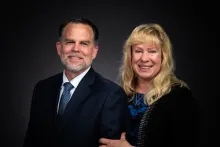
Paul serves as Pastor for the United Church of God congregations in Spokane, Kennewick and Kettle Falls, Washington, and Lewiston, Idaho.
Paul grew up in the Church of God from a young age. He attended Ambassador College in Big Sandy, Texas from 1991-93. He and his wife, Darla, were married in 1994 and have two children, all residing in Spokane.
After college, Paul started a landscape maintenance business, which he and Darla ran for 22 years. He served as the Assistant Pastor of his current congregations for six years before becoming the Pastor in January of 2018.
Paul’s hobbies include backpacking, camping and social events with his family and friends. He assists Darla in her business of raising and training Icelandic horses at their ranch. Mowing the field on his tractor is a favorite pastime.
Paul also serves as Senior Pastor for the English-speaking congregations in West Africa, making 3-4 trips a year to visit brethren in Nigeria and Ghana.

