

Gary Antion
As the world watches the Winter Olympics, we’re reminded that greatness isn’t achieved in a single moment—it’s the result of thousands of unseen decisions made long before the competition begins. In the same way, our spiritual lives are shaped not by one act of examination, but by the daily choices that form our character. In this message, we explore the Olympic motto—Faster, Higher, Stronger, Together—and as we prepare for the Passover, let's look beyond a simple pass-or-fail mindset and instead examine the small, daily “votes” we cast with our decisions—choices that determine who we are becoming.
This transcript was generated by AI and may contain errors. It is provided to assist those who may not be able to listen to the message.
Thank you, Mr. Janisic. You know, we can see it when you're yawning during the sermon, too, it turns out. Just kidding. No, it's true, though. We can. But I am joking with you guys. You know, last evening, the 2026 Winter Olympics kicked off with the opening ceremonies. And for the next 16 days, the world is going to be glued to events that have some of the best winter athletes in the world in their respective events, competing in Cortina, Italy, for greatness and for a chance at a gold medal. For many of these athletes, this latest winter games are the end result of years. Years, sometimes upwards of decades of work to reach. And not even just reach. You know, there's something to be said for making it to the Olympics. But being able to go to the Olympics and actually compete at the highest possible levels is an incredible thing. For the majority of those individuals, their event, their particular thing that they do is an obsession. It's an absolute obsession. They're up before the sun in the mornings to get their workouts and their training in.
Of that, they're going to complete four to six hours of training. Specific training. Weights, cardio, specific event training. They have to make sure that they build in proper recovery, proper nutrition, proper sleep discipline. The remaining hours of their day is spent in massage. That doesn't sound terrible. But mental training, other things, you know, for recovery and for helping them with their training. James Clear once quoted in his book Atomic Habits, every Olympian wants to win a gold medal. Every candidate wants to get a job. And if successful and unsuccessful people share the same goals, then the goal cannot be what differentiates winners from losers. The mindset of these elite athletes is frequently what makes the difference. It's the discipline. To be fair, a healthy dose of genetics, right? When you get to that level, a healthy dose of genetics is present as well. But many of these individuals have a ready willingness to sacrifice anything that gets between them and the goal that they're seeking. Elite training crowds out comfort and convenience. It crowds out comfort and convenience. Excellence requires sacrifice. And spiritually, that's also true. Excellence spiritually requires sacrifice. Everyone wants to be a gold medalist, but there are very few people who are willing to put in the work or make the sacrifices necessary to get there. You know, that gold medal, that event that they're going to participate in, or event-s, whichever it is, that they're going to participate in, that represents the ultimate test. The ultimate test. It's a culmination of every bit of work that is led up to that moment. It is really, in a sense, the cumulative value and effect of thousands of individual votes that have been cast, so to speak, with every single decision that they have made.
Every decision, a vote cast for excellence, a vote cast for something that they're striving for. Do I want to be a gold medalist or not? Do I want to be a gold medalist or do I want that piece of chocolate cake? Do I want to be a gold medalist or do I want to lose some sleep and spend a night out with my friends? Do I want to be a gold medalist or do I want to skip the training tomorrow? I just can't handle it. I'm done. I'm so tired! Each of those individual decisions, each of those individual choices, is a vote that is cast for becoming the gold medalist or not, and becoming something very, very different.
Now, in the midst of the event, I mean, you've all seen the Olympics. Conditions can make a difference. Mental fatigue can make a difference. Overtraining, a number of other factors, could cost someone the gold in that moment. I mean, you could have a situation where you're ahead for three quarters of the speed skating race and then you slip and fall.
You know, and everybody sails right past you and that's that. That was your Olympics. All that training, all that work, all that attempt. Right there. Down it goes.
You know, it's interesting. When we watch the events from home, when we go in and we look at those things, what we're seeing is the end of the journey.
We're seeing the end of the journey. We do not have, we're not privy to the myriad of steps that it took that athlete to reach that point.
We're not there for those individual decisions. We're not there for those individual choices, for those votes that they've cast to become who they've become.
But in many ways, it's in those steps that the real work is done.
Yeah, the event, the end result is important. But it's in the little choices and the little decisions where the real work is done. If you would turn with me, please, to 2 Corinthians 13. 2 Corinthians 13.
During these weeks leading up to the Passover, we enter into a period of examination.
We enter into a period in which we reflect on our lives. We consider Scripture. We consider our interaction with the Word of God, with the relationship that we have with Him, how we allow His Spirit to lead us.
And we compare ourselves to the Scriptural standard. And spoilers, we're found wanting.
I don't know how many of you reach a point in your examination and go, yep, I'm a rock star! Actually, I'm doing great!
And if you have, please don't raise your hand. Okay? Please.
The reality is, when we go through and we do this examination, we do this reflection, frequently we come to the realization that we are found wanting.
We're not there yet.
In 1 Corinthians, now I had you turn to 2 Corinthians. Just hang out for a second. I'm going to build some context. We're going to go there.
In 1 Corinthians, Paul speaks to the importance of this examination process. So he talks about this need, so that we don't enter into the Passover in a manner that is unworthy.
And Paul's not saying that we're not worthy to take of the Passover. That's not what he's talking about. He's not saying that we're unworthy to take of the Passover.
In fact, his conclusion is examine yourself and then take the Passover. That's Paul's whole point.
Examine yourself, then take of the bread, then drink of the cup.
But what he's concerned about is that we approach the Passover in an attitude or a mindset that is not acknowledging appropriately the sacrifice of Jesus Christ on our behalf.
That we're not considering what that means for us. We're not considering how important that is. And Paul's conclusion, again, that we should examine ourselves and then we should eat of the bread and drink of the cup.
But that examination process leads us to a recognition of our need for that bread and for that blood.
The word that Paul uses in Greek is dokimatsu. And it's a term that describes a test, describes an examination, scrutinizing or otherwise proving whether something is genuine.
It's kind of interesting, as I've been learning Spanish, I bought myself a Spanish English Bible this year for the feast.
And so I can go through and I can look at it in Spanish and then I can look at it in English because most of the time I go, yeah, what was that? Okay, hold on. Where's the English?
But we're able to look at it. What's interesting, when you work in Bibles that are in different languages, you get the opportunity to see how the translator chose to translate certain words that you might see translated in different ways within an English Bible.
For example, for dokimatsu, in that particular passage in 1 Corinthians, in the Spanish Bible, the word is translated prbece, which is from the root prbar, which means to test, to prove, or to try.
Okay, so that's where it comes from. But what's really kind of interesting is there's a different shade, a slightly different shade of meaning in that word in Spanish.
Prbece, if you were to go into a department store and you were to go to the fitting rooms and you were to try on an outfit of clothing, you've prbece. That's what you're doing. You're trying it on to see whether or not the clothing fits.
2 Corinthians 13, verse 5. 2 Corinthians 13 and verse 5. It says, It says, We have the Spirit of God dwelling in us. Christ is dwelling in us in that spirit.
What God is saying and what Paul's writing here is that we put our life and our character under a magnifying glass, so to speak, and we examine it. We put it to the test.
In a sense, we try on the label of a follower of Jesus Christ, then we ask ourselves, does this fit? Does this label a follower of Christ, does it fit?
Can we examine ourselves in that way and can we determine it?
All those senses are present in this concept of Dokimatsu. It's all present.
And I think sometimes when we look at this examination period, we're coming into the past, or I know I've been guilty of this, I've done it before, I'm sure you have as well, there's a tendency to think about this examination period as a one-time test. That it's a summative assessment, so to speak. We get to the point of the Passover and we look and we go, well, did I pass or did I fail?
Am I in the faith or am I not in the faith? I got a gold medal or didn't get a gold medal?
We have this one-time sort of binary assessment in a way when we think about this.
But what we do is reduce the examination to a singular event. Reduce it to this moment in time. Similar to those competing in this upcoming Olympics, did your effort win the gold or not?
What's interesting is Scripture illustrates this examination period as really more of a process.
The true determination is in the little choices and the little decisions that bring us to this point.
The work that we put in on the day-to-day, so to speak, which leads us to this end result.
That training schedule, so to speak, that builds godly character that we then examine.
Now, it's important to examine ourselves before the Passover. Paul is abundantly clear in 1 Corinthians.
But when we do, do we think about it as that one-time event or do we consider the thousands of individual votes that we have cast with our decisions and our choices?
Do we want to be a follower of God or do we want to follow Jesus Christ?
Do we want to follow Jesus Christ or do we want to do this?
Each of those decisions, each of those choices, is what brings us to the event prior to the Passover.
In those day-to-day moments, have we cast the votes that correspond to who we want to become and what we want to become?
Or have the votes that we've cast actually led us further away from what it is that we desire to become?
How many of you know the Olympic motto? I'll give you a hint. It's in Latin.
So I had to look it up. I didn't know this up front. But I found it kind of interesting. The Olympic motto, and they recently added to it. So I think in 2023 they added another word to it.
It's been the same three words for like the last 40 years or something like that, and then they've just added another word.
It is Citius Altius Fortius Communitaire. Citius Altius Fortius Communitaire, which translates to faster, higher, stronger, together. Faster, higher, stronger, together. And it represents the ideals of athletics and the goal of the pinnacle of human achievement.
That to achieve excellence, you must be faster, you must go higher, you must be stronger, and you must do so together as a team.
That's going to be our title today. Citius Altius Fortius Communitaire.
And that's what we're going to operate from. And with the time that we have left, I'd like to explore this concept in the vein of like our day-to-day decisions. The things that we look at, the things that we do, keeping in mind that we still have time between now and Passover. We still have time as we're coming into this spring Holy Day season to be able to consider the choices and the decisions that we make.
So we're going to begin with the concept of Citius, this idea of faster.
Athletics in the Olympic Games spend months and months and months of training just to shave milliseconds sometimes off of their time. The difference between them and the next person could be tenths of a second and they will dedicate months of training to gain that tenths of a second edge. To be able to shave that time off of a downhill run. Be able to complete that course in a time that's faster than the others that they're competing with. Speed matters. Speed matters. The speed with which things are done matters.
So we think about our spiritual lives. There's a whole lot of things that we see in Scripture that we are encouraged to do quickly.
James actually encourages us to be quick to hear. Quick to hear. Right? We're often quick to speak. That's the way we tend to work. James actually says we should be slow to speak and quick to hear. But we're often quick to speak.
We understand we need to be quick to obey God. We need to be quick to forgive. We see that we're not to let the sun go down on our wrath. If we have something against our brother, we're to bring it to them. We're to settle it before. Okay? We bring our gift to the altar.
But, brethren, do we often think about being quick to repent? Being quick to repent.
Let's go over to Matthew 4. Matthew 4. Matthew 4, if you want to turn over there. After Christ's temptation and after the time that was spent in the wilderness and Satan's attempt to get Christ to trip up, after he countered those attempts with Scripture, Jesus moves into the beginnings of his ministry.
John was imprisoned. Christ left a Galilee and he dwelt in Capernaum in order to be able to fulfill prophecy in Isaiah 9. But in Matthew 4 and verse 17, we see some of the first words that Christ speaks as a part of his ministry.
Matthew 4 and verse 17, it says, From that time, from the time in which John was arrested and was imprisoned, Christ began to preach, or Jesus began to preach, and say, Repent for the kingdom of heaven is at hand. Repent for the kingdom of heaven is at hand. We recognize Matthew frequently refers to the kingdom of God as the kingdom of heaven. It's not two different things. It's the same thing. But repent for the kingdom of God, or heaven is at hand. So Christ brings out that there's an urgency in this process. There's an urgency here.
It wasn't a situation where Christ was advocating for us taking our time.
He commanded to those that he ministered to to repent now. Repent now! For the kingdom of heaven is at hand. The kingdom of God was coming. The preparation for that kingdom, the change in character, the change in nature, was a critical component of that preparation. Here we are 2,000 some years later, and we're still waiting. So did he mean that it was near in that sense?
The reality is, none of us know whether we have tomorrow or not. We have no idea whether we have tomorrow. So in that sense, yeah, it's really near. It is really near. And so there's an urgency there. There's an importance there. There's a need for us to do the work while we can do the work.
I'm sure most of you have painted a room before. I'm going to guess every single person in here has manned a paint roller in their lifetime at some point. If you never have, talk to me afterwards, because it's an experience you should definitely experience. Shannon and I had an opportunity over the years to paint the entirety of the interior of our house. I don't know that we have a single wall in our home that is the same color it was when we moved in. Some of the walls have actually changed color two or three times since we've lived in the home. Shannon is a really good painter. She's a really good painter. She does a fantastic job. She gets great coverage. She doesn't make a huge mess. She's efficient. She's quick. I, on the other hand, am a dumpster fire when it comes to painting. I'm terrible. I'm terrible at it. I have paint everywhere. It's in my beard. It's in my hair. It's on my face. It's on the ground. It's on the countertops. I mean, I can't... Even when I'm trying, even when I'm literally trying to not slop paint everywhere, it's flying off the... It's a disaster. It's a disaster. It's not good. I missed the wall. I hit everything that I shouldn't hit. For those of you who have experienced a similar situation where you've gotten a little bit of over... What do they call it? Overspray or over slop? Whatever we'll call it. Have you ever waited to wipe the paint up? Or have you ever come back to something where you didn't even realize you'd spilled a little bit of paint, but you did, and then you find it later, and you're trying to get it cleaned up, you're trying to get it taken care of? You know, it's amazing. If you use a wet cloth right after you make the spill, it cleans up immediately. Immediately! There's no stain. There's nothing left. It wipes right up. You don't even have to work that hard. It comes right up. No problem at all. But if you wait, that paint begins to dry, begins to harden, it starts to adhere to the surface. It's a lot more challenging to remove. It's a lot harder to remove. Brethren, repentance isn't a slow, reflective hobby. It's not a slow, reflective hobby. Examination is. Absolutely it is. Repentance, however, has a certain immediacy to it that is required. Sin hardens fast. Sin hardens quite. It dries quickly. And the delay in that time frame dulls our conscience. It dulls our conscience. It dulls the way we feel. It dulls the connection that we have with God. If you would turn over to 1 Timothy. Paul warns Timothy in 1 Timothy 4 and verse 2 that this dulling of this conscience is a concerning condition at the time of the end. One that we as believers need to be aware of. We need to be combating. Let's go ahead and turn over there. We'll pick it up in verse 1 of 1 Timothy 4. Verse 1, verse Timothy 4.
1 Timothy 4 and verse 1 says, Now the Spirit expressly says that in latter times some will depart from the faith, giving heed to deceiving spirits and doctrines of demons, speaking wise in hypocrisy, having their own conscience seared with a hot iron, forbidding to marry, commanding to abstain from foods which God created to be received with thanksgiving by those who believe and know the truth. For every creature of God, it says, is good. Nothing is to be refused if it is received with thanksgiving for a disenctified by the word of God and prayer.
Paul speaks to doctrines of demons. He speaks to things that demons would introduce, that would bring in deceiving spirits people would listen to, that they would be deceived by.
He says the individuals who experience those things will be led astray by that deception, led astray by that demonic doctrine, belies that were spoken in hypocrisy. And he tells Timothy that their consciences would be seared with a hot iron. Now when we think of iron today, we think of the little thing that irons are close. Like if you think of an iron, that's what I think of, is an iron like that. That's not what this is referring to. This is a dressing like a brand. Like a hot chunk of metal that is stuck in a fire.
All of you have seen the movies, old medieval movie, some guy takes an arrow to the gut. What do they do? They snap the arrow off, they push it through, they put something in the fire, and then they go... And then they go... As he sits and screams, as they cauterize this flesh around the wound, they create a scar. How many of you have scars? Most of you guys have scars. I have a lot of scars. You know what's interesting? Scars, frequently the nerves never re-innervate in scar tissue. So you have a little dead spot where that scar is at.
You have feeling all around it. That little scarred spot, there's nothing there. You tap on it, you can barely tell that anything's going on. That's what Paul's talking about here. That these individuals with a seared conscience, that this iron, this hot brand burns and sears and scars that conscience. And that conscience is then beyond feeling. It's beyond being convicted of its sin. It doesn't even think that it's sinning.
It doesn't even realize that it's sinning. It's been dulled enough times that it's no longer responding. It's no longer convicted of those things. It's no longer repentant of error. Each time that we turn to God in repentance, each time we come to Him, we return to His presence. Sin drives us away.
Repentance brings us back. Brings us into His presence. We return to Him. We come under the sacrifice of Christ. Each choice, each decision to do that, every time we do, builds and strengthens a relationship with Him, rather than driving us further apart from Him as a result of that unrepentant sin. Rather, we need to be quick, quick to repent fast, to repent faster, Sidious faster.
The second thing we can be is higher, Altius. Okay? We can be thinking higher. I didn't watch a lot of the Olympics growing up. We didn't really have all the channels that the Olympics were on. Honestly, I probably won't watch a whole lot of them this year, either. I love the concept of the competition that comes in between the athletes, but it's the most random times that it's on Italy's nine hours ahead. It's just weird. It's hard to keep track. It doesn't really work well.
But I remember as a kid being just blown away by the event of the ski jump. The ski jump. I just remember as a kid being blown away by this idea. I think it was like what we all wanted to do on our bikes. We just wanted to hit the top of that ramp on our bike and just off the end of that thing. Of course, probably die at the end. But moral of the story, I just remember thinking that was so cool as a kid. I've never skied once in my life.
I've never put skis on my feet and gone downhill. I can't appreciate the complexities of the ski jump, but I will say we went to Steamboat for the feast one year, and there's a spot in Steamboat where there's this 130-meter long ski jump that's in Steamboat. When you look up at it, you realize the scope of these jumps. It's just incredible. There's a little itty-bitty person at the very top of that thing, and then they just fly downhill and launch and hit that little movement.
Anyway, so cool. So cool. Each of those skiers, when they do that particular event, they are trying to get more air, more lift, less drag. They are trying to aim for hitting the peak of that ascent at the right time so they can have a controlled descent and increase the distance that's present. But to do that, they have to aim to go higher at the right perfect time in their arc.
And it can't go too high too quick, or it ends up has to be the right distance, the right location. I want to turn over to Isaiah, the book of Isaiah. In Isaiah 55, God provides the prophet Isaiah with a message for the people of Judah. They had been taken captive. They were exiles in Babylon. And yet God had not forgotten his people. He had not forgotten his people.
Even though they had been put away, even though they had experienced horrific things, God had not forgotten them. He had a plan for them. Even though they had been taken captive, even though their present circumstances were difficult, He sends this message to them with the prophet Isaiah. Isaiah 55, and we'll go ahead and pick it up in verse 8. Again, if you are in captivity and you are thinking, how could God possibly have done this to us? How could He have done this? To His own people, delivering us up to a foreign nation, to be captive, to be enslaved, to be killed? How could God have done this?
God provides a reminder. For us, it's important. Verse 8, from my thoughts, are not your thoughts, nor are your ways my ways, says the Lord. For as the heavens are higher than the earth, so are my ways higher than your ways. My thoughts than your thoughts. God looks at the world. His perspective is different than our own. He understands that sometimes what is best for us, we don't think is best for us. He understands those things. He points out to them that their thoughts, their ways, the way of the wicked that's addressed in verse 7, isn't the path that they should take.
They should be going His ways that are higher than their own ways. His thoughts higher than theirs. We're going to go to verse 6. Verse 6 of Isaiah 55 says, Seek the Lord while He may be found. Again, urgency. Call upon Him while He's near. Let the wicked forsake His way, the unrighteous man, His thoughts. Let Him return to the Lord and He'll have mercy on Him and to our God, for He will abundantly pardon. God encourages, again, a sense of urgency. Call while He is near. Seek Him while He may be found.
Find Him. Forsake the wicked way. Forsake the unrighteous thought. And focus on God, on His ways and on His thoughts. Seeking and striving for that higher perspective, for that higher viewpoint, so that we can understand the things that we see and that we experience, and understand and accept those things, recognizing that His will is not always our own. How do we do that? What does that actually look like? Let's go to Romans 12. Yeah, Romans 12, please.
Romans 12. It takes a shifting in the way that we process. It takes a shifting of our own mindset in that sense. Romans 12. We'll pick it up in verse 1. Romans 12 in verse 1. It says, I beseech you therefore, brethren, by the mercies of God, that you present your bodies a living sacrifice, holy, acceptable to God, which is your reasonable service.
Do not be conformed to this world, but be transformed by the renewing of your mind, that you may prove what is that good and acceptable and perfect will of God. We see that we are to present ourselves as a living sacrifice, as a living sacrifice, willingly giving up our way, willingly giving up our thoughts, yielding ourselves to God's will in our life, not allowing the world.
There's another translation that talks about how, you know, conformed to the world, talks about letting the world squeeze you into its mold. Like you're all familiar with injection molding. You have a metal mold, and you take pot plastic, and you inject it into there, and when you pop the mold off, the thing inside looks just like the mold. Right? It's been squeezed into its conformed nature. It says, don't do that. Don't allow yourselves to be conformed to this world, and instead be transformed by the renewing of our minds through the Spirit of God, enabling those higher thoughts to dwell in us, enabling those to lead us.
And what that's going to look like is a whole lot of small decisions that yield to God's way and not our own way as we go through life. You're talking about the work that goes into bringing us to this point. Each of those reps, each of those opportunities, when we have that chance to make a choice, we have that chance to either do it God's way or to do it our way, every time we make the decision to do it God's way, we strengthen that.
We're yielding to that higher thought process, that higher perspective. But in those moments when we would rather follow our own way or our own thoughts, in those moments where we refuse, just outright refuse to forgive, in those moments when we're unwilling to focus on our own shortcomings and what we want to do instead is focus on the shortcomings of everybody else because it's a whole lot easier to point fingers than to do the real work in here.
Times that we won't obey God out of pride, out of fear, out of anger, in those moments we're yielding to our human nature. We're not yielding to the nature of God. We're choosing lower ways. We're not choosing higher ways, we're choosing lower ways. And when we do repetitions with the wrong form, if we practice the wrong form over and over and over and over again, we'll default to the wrong form. And the converse is also true. The more we practice the right form, the more chances that we'll do it right. We have to seek the higher ways of God in everything because every time we cast a vote for those things, we become more like God.
Another thing that we need to look at is becoming stronger, becoming stronger. Strength's a critical component in all athletics. Everything, no matter what it is. Strength forms a base upon which you build everything else. Whether you are a figure skater or a power lifter, muscle is important in both of those scenarios. That figure skater has got core strength that that power lifter could dream of in the ability to do the graceful movement that they do.
Almost everything that an athlete does is based on that fundamental strength that's present. And so a lot of your athletes, those elite athletes, are going to spend a whole lot of time in the weight room. Speed skaters are probably the best example I can think of where they do very core, specific things.
You see a figure skater, and from top to bottom, they're normal, normal, normal, normal, and then you get to their quads, and they're freakish. Their quads are just massive, just huge, because of the different things that they consistently do, the different activities that they do strengthen those muscles.
And with time, they hypertrophy, they increase in size. They allow for more blood flow to the muscle to be able to exert more energy in a short period of time. But whether or not you are a speed skater with the strongest quads known to the human race, whether you are a figure skater or whether you're just a regular Joe, all of our muscle fails. Eventually, it fails. We are not capable of being able to go consistently and constantly.
The Bible is replete with scriptures that talk about human strength failing, but the strength of God being never-ending, being infinite. It's true about Isaiah 41. Isaiah 41 is God's working to comfort His people through the prophet Isaiah, reminding them of where their strength comes from, reminding them of where they received their strength.
Isaiah 41. We'll go ahead and begin in verse 8. Isaiah 41 in verse 8 says, God is saying, I am your strength. Your own human strength will fail. God says, I am your strength. When the strength of Israel failed, when their fear got the better of them, and when they were dismayed, God said, He would strengthen them. He would help them. He would uphold them. Let's go up to Isaiah 40.
Let's back just a little bit here. Isaiah 40, we'll pick it up in 29 to 31, because He promises that He will give power to the weak, to those who have no strength. He will increase. Isaiah 40, verse 29, says, He gives power to the weak, and to those who have no might, He increases strength. Even the youths, even those individuals that you would think can just go and go and go, energize their batteries. Even the youths, their strength will fail. The young men shall utterly fall. Verse 31, but those who wait on the Lord shall renew their strength. They shall mount up with wings like eagles. They shall run and not be weary.
They shall walk and not faint. Even youth, even the epitome of strength and vitality, God tells Isaiah, they will faint and they will be weary. The young men will utterly fall. So where does our strength come from? Where does our strength come from? Planet Fitness is not the right answer. Where does our strength come from? It comes from waiting on the Lord. Verse 31. Verse 31, it says, Those who wait on the Lord shall renew their strength. They will mount up with wings like eagles.
They will run and not be weary. They shall walk and not faint. Our strength comes from the Lord. It's not a bad idea to go to the gym, too, but our strength comes from the Lord. And we have to deal with these difficult things, and we have to deal with these challenges in life. And so as we go about our daily lives, and as we make the decisions and the choices that we make, are we relying on Him? Are we relying on Him, or are we relying on our own strength? Do we allow Him to uphold us? Or are we constantly trying to uphold our own burdens?
Brethren, are you tired? Are you wore out? Are you spiritually exhausted? Are you worn out? Do you find yourself having a hard time praying? Hard time studying? Hard time meditating? Is it possible that you're trying to carry too much on your own?
What can you give to God? What can you hand to Him to carry for you? It's really easy to fall into the trap. Well, I could do better if I was just a little bit stronger, or if I had a little more energy, or if I could just keep pushing.
Your strength will fail. Your strength will fail. Gods will not. Gods will not. How do we get stronger? How do we go faster? How do we go higher? By learning to trust God more fully. By learning to trust God more fully. By trusting that He can handle what it is that we give to Him, that ultimately He can help us bear our burdens. And little by little, every choice, every decision that we're able to give to God, when we're able to trust and rely upon Him, it's like another rep.
Us growing stronger with each and every repetition. The last word is the word that they added to the motto. Communitaire. It means together. Many Olympic events are team events. You have to learn to share the burden with other people. You have to learn to help carry the burden for others and to trust other people to help you carry your own. Whether it's bobsled, whether it's ice hockey, mixed-pair figure skating. I mean, if you think about it, that poor girl that's flying around up there in mixed pairs, as he's flinging her all over the place, skating around the ice at Mach 10, she's trusting that he is not going to drop her on her head.
And he probably has, a few times in practice, dropped her on her head. But she's trusting that he is not going to do that. All of us need teammates that we can rely on. And it's no different in a church setting. We are all in this together. We are all in this together. Let's go to Ecclesiastes 4 as we start to close today. Ecclesiastes 4.
Ecclesiastes 4, Solomon here writes, pick it up in verse 9 of Ecclesiastes 4, he says, He says, Frequently we're in need of help. We need to lift us up when we're down, we need to lift others up when they're down to be able to help when they're struggling. Brethren, we are stronger together than we can ever be apart. We're stronger together than we can ever be apart. But sometimes that strength requires some patching up of things that need patching.
Some fixing of things that need fixing. Passover season naturally points toward us making things right. Reconciling differences, reconciling estranged relationships. And so in that sense, togetherness is not just support. Togetherness is humility. It's seeking counsel. It's making peace within the body so that as a body we can be stronger. In the next few weeks, the world is going to be glued to the Winter Olympics taking place in Cortina. There's going to be some incredible moments that take place. There are going to be some inspiring victories. And there are going to be some crushing defeats. Times in which someone gave everything they had and it just wasn't quite enough.
That's part of what makes sport so incredible. It's part of what makes sport so endearing. But as you watch these events, if you happen to tune in, as you watch these events, keep in mind that what you're seeing is the end of their journey. You're seeing the summit of assessment of their preparation. All the decisions, all the choices that have led to that point, thousands upon thousands of hours of preparation, has gone into getting them to that point in time.
And all that preparation comes down to one single run, one lap around the ice, three to four minute routine, you know, for figure skating or something along those lines. But that moment doesn't tell the entire story. That event was won in those thousands and thousands of moments leading up to that moment. That is what won that event, was the preparation that went into it. The choices, the decisions, the sacrifices, the discipline, that's where the test was passed or failed. Those are the moments. It's where the proof lies in the work of things that were done.
And brethren, in our spiritual lives, that's where the proof of Christianity lies as well. In those moments when no one sees the decisions, the choices that we make, whether or not we're willing to live a life that fits that label that we claim, or whether we'd like to do our own thing, we'd like to live our own way, we'd like to do it our own path.
As we come into Passover this year, we begin this process of examining our lives. And often, again, we want to take a look at this end product and conclude, yes, no, pass, fail, gold medal or not. I hope you'll consider these moments that lead up to that moment this year. And as you reflect, consider the little choices, the small things, as you cast a vote for who you want to be, and be thinking about how you can get faster.
You can think higher, become stronger and work more effectively together. I'll leave you with a couple of things to consider this year. Where do you need to repent more quickly in your life? Where are some places in your life where you've let the paint dry a little bit too long?
And now it's hard to wipe up. It's more challenging to take care of because it's gone a little too long. Where in our lives do we need to repent more quickly? Who do we need to reconcile with? What relationships do we have that are estranged and we need to fix?
Do you have a habit in your life that is gradually numbing your conscience towards God? Do you have something in your life that is numbing that conscience, that is searing it a little bit to where you're not maybe convicted of sin as readily? And then what's one daily practice that you can adjust between now and the Passover? What's one thing that you can do to change that process? Onward, brethren. Onward. Sidious, altious, fortious.
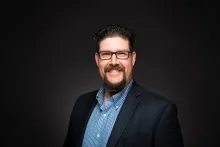
Ben is an elder serving as Pastor for the Salem, Eugene, Roseburg, Oregon congregations of the United Church of God. He is an avid outdoorsman, and loves hunting, fishing and being in God's creation.
